1
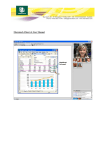
1 Introduction 1.1 Desktop Conferencing systems Conferencing systems cover a wide range of interaction between team members. They range from computer conferences to video and desktop conferences. As Videoconferencing has been experienced through lab 3; lab 4 focuses more on desktop conferencing systems. Desktop conferencing is a combination of real-time-computer conferencing and teleconferencing. Normally, people involved in desktop conferences are distributed across several meeting rooms. Between these meeting rooms, there is an audio link and –for the transfer of gestures in case of desktop video conferencing- also a video connection. In addition to audio and video connections, desktop conferencing uses personal computers which support shared applications, thus enabling joint manipulation of common electronic information. The video images are integrated into a screen window. The major focus lies on the integration of the work environments of the geographically dispersed group members rather than on the display of the videos of the group members on the screen. For communication between audio, video and data, a multimedia network is used. 1.2 PASSENGER: a synchronous groupware for desktop conferences Modern software engineering in any case signifies team work. The world-wide extension of the data networks and the continuing globalization add another component to software engineering: the development in worldwide distributed teams. The usage of this forward-looking work method in university education can render a special contribution to future and practice operations of students. Thus, a synchronous groupware named PASSENGER was developed at the University of Duisburg – Essen throughout the last years. The synchronous groupware PASSENGER can support synchronous meetings with up to four members. It provides video- and audio channels for communication purposes, a floor control mechanism to support the course of discussion and several measures for carrying out group awareness information, as explained in the following. The overall PASSENGER concept sees Windows-based systems as its target platform and the global internet as its transport medium. It is implemented as a client/server architecture and several methods of data transfer have been implemented: TCP based unicast connections for reliable client/server-communications and UDP based unreliable multicast connections are implemented as interclientcommunications. Comparing the professional field in software engineering with software engineering education the following aspects have to be put into consideration: Working in a team, dividing the given task into subtasks, discussing temporary results and integrating first results afterwards, already require a certain portion of discipline without using groupware. The usage of videoconference techniques also requires that users work in an unaccustomed scenario. Thus interface design and group awareness support obtains an outstanding meaning. The PASSENGER user interface contains video screens of each member and a CASE-tool (CASE - Computer-Aided Software Engineering) in a public window -1-