1
CuPit-2
| A Parallel Language for Neural Algorithms:
Language Reference and Tutorial
Holger Hopp ([email protected])
Lutz Prechelt ([email protected])
Institut fur Programmstrukturen und Datenorganisation
Universitat Karlsruhe
76128 Karlsruhe, Germany
++49/721/608-f3972,4068g
Fax: ++49/721/694092
March 3, 1997
Technical Report 4/97
Abstract
CuPit-2 is a parallel programming language with two main design goals:
1. to allow the simple, problem-adequate formulation of learning algorithms for neural networks with focus on algorithms that change the topology of the underlying neural network
during the learning process and
2. to allow the generation of ecient code for massively parallel machines from a completely
machine-independent program description, in particular to maximize both data locality
and load balancing even for irregular neural networks.
The idea to achieve these goals lies in the programming model: CuPit-2 programs are objectcentered, with connections and nodes of a graph (which is the neural network) being the
objects. Algorithms are based on parallel local computations in the nodes and connections
and communication along the connections (plus broadcast and reduction operations). This
report describes the design considerations and the resulting language denition and discusses
in detail a tutorial example program.
This CuPit-2 language manual and tutorial is an updated version of the original CuPit
language manual [Pre94]. The new language CuPit-2 diers from the original CuPit in several
ways. All language changes from CuPit to CuPit-2 are listed in the appendix.
1
2
CONTENTS
Contents
Part I: Introduction
1 Purpose and scope of the language
2 Motivation
3 Language goals and non-goals
3.1 Goals . . . . . . . . . . . . . . . . . . . . . . . . . . . . . . . . . . . . . . . . . . . . . . .
3.2 Non-Goals . . . . . . . . . . . . . . . . . . . . . . . . . . . . . . . . . . . . . . . . . . . . .
3.3 General purpose languages versus domain specic languages . . . . . . . . . . . . . . . . .
4
CuPit-2
4.1
4.2
4.3
4.4
4.5
Overview
Overall language structure . . . . .
Special declarations . . . . . . . .
Program structure and parallelism
Input and output . . . . . . . . . .
Kinds of semantic errors . . . . . .
5 About this report
Part II: Tutorial
6 Tutorial
.
.
.
.
.
.
.
.
.
.
.
.
.
.
.
.
.
.
.
.
6.1 The problem . . . . . . . . . . . . . . . .
6.1.1 Overview . . . . . . . . . . . . . .
6.1.2 The network . . . . . . . . . . . .
6.1.3 The algorithm . . . . . . . . . . .
6.1.4 Inherent parallelism . . . . . . . .
6.2 Properties of a problem-adequate solution
6.2.1 Description of the network . . . . .
6.2.2 Description of the algorithm . . . .
6.2.3 Description of parallelism . . . . .
6.3 The rst solution . . . . . . . . . . . . . .
6.3.1 Overview . . . . . . . . . . . . . .
6.3.2 The \weights" . . . . . . . . . . .
6.3.3 The \units" . . . . . . . . . . . . .
6.3.4 The multi-layer perceptron . . . .
6.3.5 The forward pass . . . . . . . . . .
6.3.6 The backward pass . . . . . . . . .
6.3.7 The weight update . . . . . . . . .
6.3.8 Processing one example . . . . . .
6.3.9 The reduction function . . . . . . .
6.3.10 External program parts . . . . . .
6.3.11 Global data denitions . . . . . . .
6.3.12 The central agent . . . . . . . . . .
6.3.13 The whole program . . . . . . . .
6.4 Introducing Example Parallelism . . . . .
6.4.1 Replication of networks . . . . . .
6.4.2 The MERGE procedures . . . . . .
6.4.3 Getting examples . . . . . . . . . .
6.4.4 The whole program . . . . . . . .
6.5 Introducing Connection Pruning . . . . .
6.5.1 Eliminating connections . . . . . .
6.5.2 The whole program . . . . . . . .
6.6 Introducing Network Input/Output . . . .
.
.
.
.
.
.
.
.
.
.
.
.
.
.
.
.
.
.
.
.
.
.
.
.
.
.
.
.
.
.
.
.
.
.
.
.
.
.
.
.
.
.
.
.
.
.
.
.
.
.
.
.
.
.
.
.
.
.
.
.
.
.
.
.
.
.
.
.
.
.
.
.
.
.
.
.
.
.
.
.
.
.
.
.
.
.
.
.
.
.
.
.
.
.
.
.
.
.
.
.
.
.
.
.
.
.
.
.
.
.
.
.
.
.
.
.
.
.
.
.
.
.
.
.
.
.
.
.
.
.
.
.
.
.
.
.
.
.
.
.
.
.
.
.
.
.
.
.
.
.
.
.
.
.
.
.
.
.
.
.
.
.
.
.
.
.
.
.
.
.
.
.
.
.
.
.
.
.
.
.
.
.
.
.
.
.
.
.
.
.
.
.
.
.
.
.
.
.
.
.
.
.
.
.
.
.
.
.
.
.
.
.
.
.
.
.
.
.
.
.
.
.
.
.
.
.
.
.
.
.
.
.
.
.
.
.
.
.
.
.
.
.
.
.
.
.
.
.
.
.
.
.
.
.
.
.
.
.
.
.
.
.
.
.
.
.
.
.
.
.
.
.
.
.
.
.
.
.
.
.
.
.
.
.
.
.
.
.
.
.
.
.
.
.
.
.
.
.
.
.
.
.
.
.
.
.
.
.
.
.
.
.
.
.
.
.
.
.
.
.
.
.
.
.
.
.
.
.
.
.
.
.
.
.
.
.
.
.
.
.
.
.
.
.
.
.
.
.
.
.
.
.
.
.
.
.
.
.
.
.
.
.
.
.
.
.
.
.
.
.
.
.
.
.
.
.
.
.
.
.
.
.
.
.
.
.
.
.
.
.
.
.
.
.
.
.
.
.
.
.
.
.
.
.
.
.
.
.
.
.
.
.
.
.
.
.
.
.
.
.
.
.
.
.
.
.
.
.
.
.
.
.
.
.
.
.
.
.
.
.
.
.
.
.
.
.
.
.
.
.
.
.
.
.
.
.
.
.
.
.
.
.
.
.
.
.
.
.
.
.
.
.
.
.
.
.
.
.
.
.
.
.
.
.
.
.
.
.
.
.
.
.
.
.
.
.
.
.
.
.
.
.
.
.
.
.
.
.
.
.
.
.
.
.
.
.
.
.
.
.
.
.
.
.
.
.
.
.
.
.
.
.
.
.
.
.
.
.
.
.
.
.
.
.
.
.
.
.
.
.
.
.
.
.
.
.
.
.
.
.
.
.
.
.
.
.
.
.
.
.
.
.
.
.
.
.
.
.
.
.
.
.
.
.
.
.
.
.
.
.
.
.
.
.
.
.
.
.
.
.
.
.
.
.
.
.
.
.
.
.
.
.
.
.
.
.
.
.
.
.
.
.
.
.
.
.
.
.
.
.
.
.
.
.
.
.
.
.
.
.
.
.
.
.
.
.
.
.
.
.
.
.
.
.
.
.
.
.
.
.
.
.
.
.
.
.
.
.
.
.
.
.
.
.
.
.
.
.
.
.
.
.
.
.
.
.
.
.
.
.
.
.
.
.
.
.
.
.
.
.
.
.
.
.
.
.
.
.
.
.
.
.
.
.
.
.
.
.
.
.
.
.
.
.
.
.
.
.
.
.
.
.
.
.
.
.
.
.
.
.
.
.
.
.
.
.
.
.
.
.
.
.
.
.
.
.
.
.
.
.
.
.
.
.
.
.
.
.
.
.
.
.
.
.
.
.
.
.
.
.
.
.
.
.
.
.
.
.
.
.
.
.
.
.
.
.
.
.
.
.
.
.
.
.
.
.
.
.
.
.
.
.
.
.
.
.
.
.
.
.
.
.
.
.
.
.
.
.
.
.
.
.
.
.
.
.
.
.
.
.
.
.
.
.
.
.
.
.
.
.
.
.
.
.
.
.
.
.
.
.
.
.
.
.
.
.
.
.
.
.
.
.
.
.
.
.
.
.
.
.
.
.
.
.
.
.
.
.
.
.
.
.
.
.
.
.
.
.
.
.
.
.
.
.
.
.
.
.
.
.
.
.
.
.
.
.
.
.
.
.
.
.
.
.
.
.
.
.
.
.
.
.
.
.
.
.
.
.
.
.
.
.
.
.
.
.
.
.
.
.
.
.
.
.
.
.
.
.
.
.
.
.
.
.
.
.
.
.
.
.
.
.
.
.
.
.
.
.
.
.
.
.
.
.
.
.
.
.
.
.
.
.
.
.
.
.
.
.
.
5
5
6
6
7
7
7
8
8
8
9
9
9
10
11
11
11
11
12
12
13
13
14
15
15
16
16
17
17
18
19
20
21
23
23
23
24
25
26
27
27
28
29
29
31
31
33
35
CONTENTS
3
6.6.1 The IOSTYLE denition . . . . . . . . . .
6.6.2 The central IOSPEC denition . . . . . . .
6.6.3 The object IOSPEC denitions . . . . . . .
6.6.4 The central agent with calling network I/O
6.6.5 The whole program . . . . . . . . . . . . .
6.7 What is not shown here . . . . . . . . . . . . . . .
Part III: Language Reference
7 Type denitions
7.1
7.2
7.3
7.4
7.5
7.6
7.7
7.8
7.9
Overview . . . .
Simple types . .
Interval types . .
Record types . .
Node types . . .
Connection types
Array types . . .
Group types . . .
Network types .
.
.
.
.
.
.
.
.
.
.
.
.
.
.
.
.
.
.
.
.
.
.
.
.
.
.
.
8 Data object denitions
9 Subroutine denitions
9.1
9.2
9.3
9.4
9.5
.
.
.
.
.
.
.
.
.
.
.
.
.
.
.
.
.
.
Overview . . . . . . . . .
Procedures and functions
Reduction functions . . .
Winner-takes-all functions
Merge procedures . . . . .
.
.
.
.
.
.
.
.
.
.
.
.
.
.
.
.
.
.
.
.
.
.
.
.
.
.
.
.
.
.
.
.
.
.
.
.
.
.
.
.
.
.
.
.
.
.
.
.
.
.
.
.
.
.
.
.
.
.
.
.
.
.
.
.
.
.
.
.
.
.
.
.
.
.
.
.
.
.
.
.
.
.
.
.
.
.
.
.
.
.
.
.
.
.
.
.
.
.
.
.
.
.
.
.
.
.
.
.
.
.
.
.
.
.
.
.
.
.
.
.
.
.
.
.
.
.
.
.
.
.
.
.
.
.
.
.
.
.
.
.
.
.
.
.
.
.
.
.
.
.
.
.
.
.
.
.
.
.
.
.
.
.
.
.
.
.
.
.
.
.
.
.
.
.
.
.
.
.
.
.
.
.
.
.
.
.
.
.
.
.
.
.
.
.
.
.
.
.
.
.
.
.
.
.
.
.
.
.
.
.
.
.
.
.
.
.
.
.
.
.
.
.
.
.
.
.
.
.
.
.
.
.
.
.
.
.
.
.
.
.
.
.
.
.
.
.
.
.
.
.
.
.
.
.
.
.
.
.
.
.
.
.
.
.
.
.
.
.
.
.
.
.
.
.
.
.
.
.
.
.
.
.
.
.
.
.
.
.
.
.
.
.
.
.
.
.
.
.
.
.
.
.
.
.
.
.
.
.
.
.
.
.
.
.
.
.
.
.
.
.
.
.
.
.
.
.
.
.
.
.
.
.
.
.
.
.
.
.
.
.
.
.
.
.
.
.
.
.
.
.
.
.
.
.
.
.
.
.
.
.
.
.
.
.
.
.
.
.
.
.
.
.
.
.
.
.
.
.
.
.
.
.
.
.
.
.
.
.
.
.
.
.
.
.
.
.
.
.
.
.
.
.
.
.
.
.
.
.
.
.
.
.
.
.
.
.
.
.
.
.
.
.
.
.
.
.
.
.
.
.
.
.
.
.
.
.
.
.
.
.
.
.
.
.
.
.
.
.
.
.
.
.
.
.
.
.
.
.
.
.
.
.
.
.
.
.
.
.
.
.
.
.
.
.
.
.
.
.
.
.
.
.
.
.
.
.
.
.
.
.
.
.
.
.
.
.
.
.
.
.
.
.
.
.
.
.
.
.
.
.
.
.
.
.
.
.
.
.
.
.
.
.
.
.
.
.
.
.
.
.
.
.
.
.
.
.
.
.
.
.
.
.
.
.
.
.
.
.
.
.
.
.
.
.
.
.
.
.
.
.
.
.
.
.
.
.
.
.
.
.
.
.
.
.
.
.
.
.
.
.
.
.
.
.
.
.
.
.
.
.
.
.
.
.
.
.
.
.
.
.
.
Overview . . . . . . . . . . . . . . . . .
The I/O style denition . . . . . . . . .
The central I/O specication denition .
The object I/O specication denition .
.
.
.
.
.
.
.
.
.
.
.
.
.
.
.
.
.
.
.
.
.
.
.
.
.
.
.
.
.
.
.
.
.
.
.
.
.
.
.
.
.
.
.
.
.
.
.
.
.
.
.
.
.
.
.
.
.
.
.
.
.
.
.
.
.
.
.
.
.
.
.
.
.
.
.
.
.
.
.
.
.
.
.
.
.
.
.
.
.
.
.
.
.
.
.
.
.
.
.
.
.
.
.
.
.
.
.
.
.
.
.
.
.
.
.
.
.
.
.
.
.
.
.
.
.
.
.
.
.
.
.
.
.
.
.
.
.
.
.
.
.
.
.
.
.
.
.
.
.
.
.
.
.
.
.
.
.
.
.
.
.
.
.
.
.
.
.
.
.
.
.
.
.
.
.
.
.
.
.
.
.
.
.
.
.
.
.
.
.
.
.
.
.
.
.
.
.
.
.
.
.
.
.
.
.
.
.
.
.
.
.
.
.
.
.
.
.
.
.
.
.
.
.
.
.
.
.
.
.
.
.
.
.
.
.
.
.
.
.
.
.
.
.
.
.
.
.
.
.
.
.
.
.
.
.
.
.
.
.
.
.
.
.
.
.
.
.
.
.
.
.
.
.
.
.
.
.
.
.
.
.
.
.
.
.
.
.
.
.
.
.
.
.
.
.
.
.
.
.
.
.
.
.
.
.
.
.
.
.
.
.
.
.
.
.
.
.
.
.
.
.
.
.
.
.
.
.
.
.
.
.
.
.
.
.
.
.
.
.
.
.
.
.
.
.
.
.
.
.
.
.
.
.
.
.
.
.
.
.
.
.
.
.
.
.
.
.
.
.
.
.
.
.
.
.
.
.
.
.
.
.
.
.
.
.
.
.
.
.
.
.
.
.
.
.
.
.
.
.
.
.
.
.
.
.
.
.
.
.
.
.
.
.
.
.
.
.
.
.
.
.
.
.
.
.
.
.
.
.
.
.
.
.
.
.
.
.
.
.
.
.
.
.
.
.
.
.
.
.
.
.
.
.
.
.
.
.
.
.
.
.
.
.
.
.
.
.
.
.
.
.
.
.
.
.
.
.
.
.
.
.
.
.
.
.
.
.
.
.
.
.
.
.
.
.
.
.
.
.
.
.
.
.
.
.
.
.
.
.
.
.
.
.
.
.
.
.
.
.
.
.
.
.
.
.
.
.
.
.
.
.
.
.
.
.
.
.
.
.
.
.
.
.
.
.
.
.
.
.
.
.
.
.
.
.
.
.
.
.
.
.
.
.
.
.
.
.
.
.
.
.
.
.
.
.
.
.
.
.
.
.
.
.
.
.
.
.
.
11 Statements
11.1
11.2
11.3
11.4
11.5
11.6
11.7
11.8
Overview . . . . . . . . . . . . . . . . .
Assignment . . . . . . . . . . . . . . . .
I/O assignment . . . . . . . . . . . . . .
Procedure call . . . . . . . . . . . . . . .
Reduction statement . . . . . . . . . . .
Winner-takes-all statement . . . . . . .
Control ow statements . . . . . . . . .
Data allocation statements . . . . . . .
11.8.1 Connection creation and deletion
11.8.2 Node creation and deletion . . .
11.8.3 Network replication . . . . . . .
11.9 Merge statement . . . . . . . . . . . . .
11.10Write statement . . . . . . . . . . . . .
12 Expressions
12.1
12.2
12.3
12.4
.
.
.
.
.
.
.
.
.
.
.
.
.
.
.
.
.
.
.
.
10 I/O Specications
10.1
10.2
10.3
10.4
.
.
.
.
.
.
.
.
.
.
.
.
.
.
.
Overview . . . . . . . . . . . . . . . . .
Type compatibility and type conversion
Operators . . . . . . . . . . . . . . . . .
Function call . . . . . . . . . . . . . . .
13 Referring to data objects
36
37
37
38
40
42
43
43
43
44
45
45
46
48
49
49
50
50
51
51
51
53
54
55
56
56
56
58
59
59
59
60
61
61
63
64
64
66
66
67
67
68
69
69
69
69
70
75
76
4
LIST OF TABLES
13.1
13.2
13.3
13.4
ME, YOU, INDEX, and explicit variables
Selection . . . . . . . . . . . . . . . . . . .
Subscription and parallel variables . . . .
Connection addressing . . . . . . . . . . .
.
.
.
.
.
.
.
.
.
.
.
.
.
.
.
.
.
.
.
.
.
.
.
.
.
.
.
.
.
.
.
.
.
.
.
.
.
.
.
.
.
.
.
.
.
.
.
.
.
.
.
.
.
.
.
.
.
.
.
.
.
.
.
.
.
.
.
.
.
.
.
.
.
.
.
.
.
.
.
.
.
.
.
.
.
.
.
.
.
.
.
.
.
.
.
.
.
.
.
.
.
.
.
.
.
.
.
.
76
76
77
77
14 The central agent
15 Overall program structure
16 Basic syntactic elements
78
78
79
17 Predened entities
18 Compiler-dependent properties
Appendix
A Terminology and Abbreviations
B Language changes from CuPit to CuPit-2
C Operator correspondences to Modula-2 and C
D Possible future language extensions
E Implementation status
F Availability of compilers and literature
G The example programs
81
82
83
83
83
84
84
85
85
86
16.1 Identier . . . . . . . . . . . . . . . . . . . . . . . . . . . . . . . . . . . . . . . . . . . . . . 79
16.2 Denoter . . . . . . . . . . . . . . . . . . . . . . . . . . . . . . . . . . . . . . . . . . . . . . 80
16.3 Keywords and Comments . . . . . . . . . . . . . . . . . . . . . . . . . . . . . . . . . . . . 80
G.1
G.2
G.3
G.4
Simple Rprop . . . . . . . . . . . . . . . . . . . . . . . . . .
Rprop with example parallelism . . . . . . . . . . . . . . . .
Rprop with example parallelism and connection elimination
Rprop with network I/O operations . . . . . . . . . . . . .
Bibliography
Index
.
.
.
.
.
.
.
.
.
.
.
.
.
.
.
.
.
.
.
.
.
.
.
.
.
.
.
.
.
.
.
.
.
.
.
.
.
.
.
.
.
.
.
.
.
.
.
.
.
.
.
.
.
.
.
.
.
.
.
.
.
.
.
.
.
.
.
.
86
88
91
94
99
100
List of Figures
1
2
3
Kinds of parallelism inherent in the backpropagation problem . . . . . . . . . . . 13
Part of backpropagation concept taxonomy . . . . . . . . . . . . . . . . . . . . . . . 14
CuPit-2 type taxonomy . . . . . . . . . . . . . . . . . . . . . . . . . . . . . . . . . . . .
43
List of Tables
1
2
Operators in CuPit-2 . . . . . . . . . . . . . . . . . . . . . . . . . . . . . . . . . . . . . . . 70
Operator correspondences: CuPit-2 vs. Modula-2 vs. C . . . . . . . . . . . . . . . . . . . . 84
5
Part I: Introduction
Section 1 sets the stage. Section 2 sketches why CuPit-2 has been designed and what it is good for.
Section 3 lists what the language design goals were and which aspects have deliberately been taken out
of consideration. Section 4 gives a supercial overview of the design. Section 5 contains a few hints on
how to use this report.
Section 6 contains a detailed discussion of a tutorial example program and can be read rst if the reader
wishes to skip sections 2 to 4.
The rest of the report describes the language design in detail and serves as (a) language reference manual,
(b) language user manual, and (c) source program for the scanner and parser of the CuPit-2 compiler. In
order to fulll purpose (c), the report contains a complete syntax specication of CuPit-2 in the notation
of the Eli [GHL+ 92] compiler construction system. This specication is typeset with FunnelWeb [Wil92]
and can automatically be extracted and used to generate the front-end of the CuPit-2 compiler.
1 Purpose and scope of the language
Before anything else, it is necessary to describe what the scope of CuPit-2 is. The purpose of this
description is merely to give an idea what the rest of this report is all about; I will thus give a fuzzy
description here only and complement it with some counterexamples.
First of all, CuPit-2 is a language for programming neural algorithms . The purpose of a neural algorithm
in the sense of CuPit-2 is learning by example . This means that a neural algorithm processes a set of
examples ; usually each example input is processed several times. Note that using the learned structure
can be seen as a special mode of learning and is thus subsumed here. The goal of the learning process
is to construct an automaton with certain properties, which are dened by the neural algorithm (e.g.
approximate a certain mapping on the examples with a given precision).
The central data structure of a neural algorithm is the (neural) network , a directed graph of nodes and
connections . The purpose of the neural algorithm is to modify this graph by adding or deleting nodes
and connections and by changing the internal states of the nodes and connections. The result of the
neural algorithm's computation is the structure of the graph and the internal states of its nodes and
connections.
The operations in neural algorithms are triggered by a central agent (the main program) and can roughly
be divided into the following classes:
1. local operations in a node or connection,
2. local operations in the central agent,
3. transportation of data from one node to another through an existing connection,
4. combining data from many nodes or connections into a single value (reduction operations),
5. creation or deletion of nodes or connections,
6. organizational stu, e.g. accessing the examples.
The operations on nodes and connections can be applied in an object-parallel fashion and are the main
source of parallelism.
The typical overall structure of a neural algorithm is
1. Look at n examples.
2. Modify the network.
3. Begin again (using the same or new examples), unless some stop criterion is satised.
The value of n can be 1 or the number of examples available or somewhere in between. If it is possible to
look at all of those n examples independent of each other (i.e., n > 1), this is another important source
of parallelism.
Among the things not possible in a neural algorithm are
6
3 LANGUAGE GOALS AND NON-GOALS
1. Arbitrary interaction of data from dierent nodes or connections (including non-local pointers).
2. Arbitrary threads of parallel execution (including arbitrarily nested parallelism).
3. Arbitrary distributed data structures.
2 Motivation
While both, the eld of parallel computation and the eld of neural networks, are booming, relatively
little is done in the eld of parallel neural network simulation. Only a few specialized implementations of
individual popular learning algorithms exist and even fewer attempts to provide parallel implementations
of more exible neural network simulators have been made. Even the existing programs are usually quite
limited in scope. They are targeted at people that apply neural networks, but are not of much value for
people that explore new neural network learning methods, since only well-known learning methods are
implemented and the programs are not easily extendible.
The reason for this situation is the lack of compilers for programming languages that allow easy implementation of such software on parallel machines in a portable fashion. Most currently implemented
parallel programming languages force the programmer to bother with the communication topology and
number of processors of the machine at hand, requiring much work for the mapping of data and algorithm
onto a certain machine in addition to the work required for the algorithms themselves.
Those languages that try to overcome these programming diculties have inherent eciency problems.
Very sophisticated optimization methods, which have not been developed today, will be necessary to
overcome these problems | if it is possible at all. Other languages do a somewhat halfhearted job
by solving some aspects of the eciency problem, but taking only part of the mapping work o the
programmer.
It looks as if parallel machines suggest the use of domain-specic languages much more than sequential
machines do: To exploit domain-specic constraints in order to improve the optimization capabilities
of the compiler seems to be necessary if we want to compile problem-oriented languages into programs
that run as fast as equivalent programs that are written in a machine-oriented language. At least it
may be much simpler to write good optimizing compilers for a domain-specic language than for a
general-purpose language.
Neural algorithms have two properties that make them a particularly rewarding target for a domainspecic parallel language:
They usually have a strong and well-known computational structure (regularity) that can be ex-
ploited by a compiler.
Their runtime on sequential machines is so long even for moderately sized problems that using
parallel machines is an urgent need.
3 Language goals and non-goals
CuPit was designed and implemented as part of a Ph.D. thesis. The focus in that thesis is compiler
technology: A data mapping for irregular neural networks on massively parallel machines that achieves
load balancing and data locality at once. This means that the goals of the language design are chosen as
to open new perspectives on the design of parallel languages that can be compiled eciently and at the
same time will neglect some important properties of programming languages in general. This is necessary
in order to keep the design and implementation of the language feasible. Those aspects of a language
that are usually considered important but are neglected here are explicitly listed as non-goals.
CuPit-2 is the successor of CuPit. The main improvements of the new language are the possibility
to compile it more eciently on sequential machines (without losing performance on massively parallel
machines), and the possibility for Input/Output of complete networks using small additional declarations.
3.1 Goals
7
3.1 Goals
The following properties are central to the design of CuPit-2 and mark the dierence in comparison to
most existing parallel programming languages in respect to the implementation of neural algorithms.
1. Adequateness. The language has constructs that allow to express those operations that are usually
needed to specify neural algorithms easily and in a compact and understandable form.
2. Eciency. Properly written CuPit-2 programs contain enough structure for a compiler to exploit in
order to compile into ecient code for various kinds of sequential and parallel machines, even | and
this is the most important point | for irregular networks.
3. Flexibility. While the scope of CuPit-2 places strong restrictions on what can be implemented with
it, no arbitrary additional constraints are enforced within this scope.
4. Portability. Those properties of the target machine that can not be expected to be identical or very
similar on other possible target machines shall be completely hidden in CuPit-2. These are number of
processors, interconnection topology, SIMD/MIMD mode, message routing, memory management,
etc.
3.2 Non-Goals
The following properties are explicitly not targeted by the language design presented in this report.
These properties are usually considered necessary in order to achieve maximum ease of writing, reading,
porting, and debugging programs. On the other hand, they are relatively well-understood after decades
of research in sequential programming languages and can later be added to the design if the overall design
proves to be useful in respect to its main goals. The reason for leaving these aspects out of the design
is that they would result in much more additional work to design and implement them properly than
additional benet to the language for my research purposes.
1. Fine-tune portability. For perfect portability, a language must provide exact denitions of the
behavior of arithmetical operations, sizes and layout of data objects, etc. CuPit-2 takes a \we do
just what this machine usually does" approach instead.
2. Handyness in all aspects. All aspects of a language should be elegant, compact, handy, and convenient
to use. CuPit-2 allows itself to be a bit clumsy and inconvenient in some respects, where these are
merely technical deciencies that are not too dicult to to repair and that do not impair the central
goals of the language design.
3. Debugging support. CuPit-2 does not allow for easy observation or manipulation of what is going on
while a program is running.
4. Object-orientedness. In procedural languages, facilities for object-oriented modeling with inheritance are becoming more and more standard. While CuPit-2 has some constructs that support an
object-centered way of programming (and these are in fact closely related to the key ideas of CuPit2's design), mechanisms for inheritance and dynamic dispatch have been left out of the language
completely.
5. Genetic algorithm support. No attempts have been made to support working with populations of
networks in a genetic algorithm fashion.
6. Hybridism. There is no special support in CuPit-2 for combination of neural algorithms with other
algorithms that do not obey the neural algorithm program model (e.g. that require direct access to
arbitrary data). It is quite dicult to dene such capabilities without losing much of the domainspecic constraints that are so useful in CuPit-2 for ecient implementation.
3.3 General purpose languages versus domain specic languages
The general requirements for general purpose languages dier somewhat from those for domain-specic
languages. For a programming language to be useful, it must make it easy for programmers to learn
and use it. For high-level general purpose programming languages, the following overall properties are
required to achieve ease of use:
8
4
CUPIT-2
OVERVIEW
1. Orthogonality of language constructs, i.e., the ability to combine all constructs that are combinable
conceptually.
2. Consistency in spirit of language constructs, i.e., the presence of one and only one \programming
model" that can explain all constructs1.
3. Simplicity of language constructs and their interaction.
For domain specic languages, orthogonality and simplicity are not absolutely needed, because the domain metaphor guides the programmer and can make lateral restrictions or complicated semantics of
constructs appear quite natural, and thus acceptable. Consistency in spirit, on the other hand, is extremely important in this case, in order to make the implementation of the domain metaphor clear to
the programmer.
4
CuPit-2
Overview
This section will give an overview of how the individual goals of the design are realized: what kinds of
language constructs are present and how they are integrated into an overall structure.
4.1 Overall language structure
The overall structure of CuPit-2 is mostly the same as for any procedural language: There are denitions
of types and data objects, denitions of procedures and functions, and statements that dene actions and
control ow. What is dierent in CuPit-2 is
1. There are special kinds of data types (nodes, connections, networks) that exploit the restrictions
CuPit-2 imposes on programs. This allows to make the neural network data structure that underlies
the program more explicit.
2. There are some statments and expressions doing unusual things; especially calling a procedure or
function for a group of objects in parallel. This allows to restrict the forms of parallel operations
that can occur, which in turn allows for better optimization of the program on a parallel machine.
4.2 Special declarations
In addition to the usual records and arrays, there are three special categories of data types in CuPit-2
that are used to describe parallelism and allow problem-oriented programming of neural algorithms:
1. Network types that describe arrangements of nodes and connections.
2. Node types that describe the structure of what is usually called units or neurons.
3. Connection types that describe the structure of what is usually called connections or weights.
All Connection, Node, or Network data types consist of a record data type plus some additional functionality; this makes nodes and connections in CuPit-2 much more general than they are in most other
neural network simulation software. These three kinds of data types are used to introduce three kinds
of parallelism into CuPit-2: parallel execution of operations on sets of connections (including reduction),
parallel execution of operations on sets of nodes, and parallel execution of operations on replicated exemplars of a whole network. Most of the special statements and expressions that CuPit-2 introduces are
related to these three categories of data types.
These special categories of data types also motivate the name of the language: CuPit-2 is named after
Warren McCulloch and Walter Pitts, who published the rst description of a formal neuron in 1943
[MP43].
1
Or at least: that explains most constructs and is not broken by the others
4.3 Program structure and parallelism
9
4.3 Program structure and parallelism
The overall structure of a CuPit-2 program is as follows: The main program consists of a procedure that is
executed sequentially. It may call other sequential procedures or functions, too. This part of the program
is called the central agent , because it activates all parallel operations that can occur. The central agent
may declare one or more variables of network type and call procedures that operate on them. These
procedure calls can activate one of the four levels of parallelism that are possible in CuPit-2:
1. A network procedure can call a node procedure for a whole group of nodes of the network in parallel.
2. This can also be done for several groups (with dierent node types) in parallel.
3. A node procedure can call a connection procedure for a whole group of connections coming into the
node or going out of the node in parallel.
4. The whole network can be replicated to execute on several input examples in parallel.
In addition, there are a number of special statements that allow dynamic changes in the topology of a
network. These statements imply similar kinds of parallelism.
4.4 Input and output
Since there is no agreement today about how parallel I/O should be dened on various kinds of parallel
machines, it has been left out of CuPit-2: I/O has to be performed by calling external procedures. This
means that in order to achieve full portability of CuPit-2 programs, a standard I/O library has to be
dened.
There are three kinds of I/O in CuPit-2, all of them with additional language support for an easy use of
the external procedures:
1. Standard sequential I/O like printing of strings used in the central agent. In addition to the standard
library I/O functions a PASCAL-like sequential write statement is introduced for easy use of the
standard library output functions.
2. Parallel I/O to and from a parallel variable selections, e. g. for assigning a pattern to a certain eld
of each node in a node group. Since the data distribution to be used for the actual data of the neural
network is the secret of the compiler and may change often, we need an additional interface structure:
CuPit-2 denes a sort of variables called I/O objects that have a well-dened memory layout. These
variables are used for communication between the CuPit-2 program and external program parts.
3. I/O of a whole network, usually from or to a le. This feature is also left to an external libary. There
are special I/O specications inside CuPit-2 which describe the parts of each connection, node, or
network that should be saved to or fetched from a le.
4.5 Kinds of semantic errors
There are three kinds of semantic errors in CuPit-2:
1. Errors in static semantics that will be detected by the compiler. Anything that is said to be illegal,
not allowed , or the like and is not explicitly tagged to belong to (2) or (3), belongs into this category.
2. Run-time errors. The program may or may not detect the occurrence of a run-time error when the
program executes. The compiler may provide options to turn checking for certain kinds of run-time
errors on or o. It is allowed for the compiler to ag a run-time error already at compile-time, if it
will occur in every run of the program where the statement or expression in question is executed.
Typical kinds of run-time errors are arithmetic overows, out-of-memory errors, out-of-range array
indexing, and so on.
3. Undetected semantic errors. The language manual denes certain behaviors of a program that are
illegal, but will not necessarily be detected by the compiler (usually, because it is not possible to
do so). For instance, a program may not rely on a certain kind of implementation for a language
construct to be used by the compiler unless the manual explicitly states that this implementation
10
5 ABOUT THIS REPORT
will be used. A program that contains this kind of error is called erroneous . The behavior of an
erroneous program is completely undened.
This denition of error categories is similar to that used in Ada [Uni81].
5 About this report
This report does not contain any kind of complete formal description of the CuPit-2 semantics. Instead,
it partly relies on the intuitive understanding of the CuPit-2 semantics, based on the reader's (assumed)
familiarity with other programming languages.
Various techniques are used in order to informally describe the semantics of language constructs on
dierent levels of detail, preciseness, and \intuitiveness"; these techniques are not orthogonal:
1. natural language description
2. example application
3. case discrimination
4. equivalent CuPit-2 program fragments
5. reference to well-known other programming languages, especially Modula-2 [Wir85], Ada [Uni81],
and C [KR77]
Given these techniques of description, it is impossible to guarantee that the language denition is precise
enough and complete enough to be unambiguous for practical purposes. If you nd any aspects of the
language that are not made suciently clear in this report, please contact the author.
Most of the language denition is given in bottom-up order. This approach was chosen, because those
aspects of CuPit-2 that discriminate it most from ordinary procedural languages are based on the connection, node, and network types; thus these kinds of type denitions have to be introduced rst.
A tip for reading: You may nd it useful to consult the index at the end of this report in order to
nd certain aspects of the denition more quickly. Index entries that have a page number in italic type
indicate pages that contain a denition or description of the entry.
11
Part II: Tutorial
6 Tutorial
This section aims to introduce the concepts and constructs of CuPit-2 using a tutorial example. It serves
two purposes: First, an aspiring CuPit-2 programmer shall learn what language constructs are available
and how to use them. Second, the example shall explain what the major design decisions in the design
of CuPit-2 were and why they have been made the way they have.
We will proceed in three steps: First the example CuPit-2 programming problem will be introduced
(section 6.1); we will use the well-known backpropagation algorithm with two extensions as the example.
Second, we will discuss what properties a description of a solution to this problem (i.e., a program for it)
should have in order to be problem-adequate and what the major design decisions in CuPit-2 were in order
to introduce adequate language constructs (section 6.2). Third, we will step by step introduce CuPit-2
programs for the backpropagation algorithm. We start with a simple sequential solution (section 6.3),
then introduce example parallelism (section 6.4), a simple connection elimination scheme (section 6.5)
and network input/output (section 6.6).
In this section, I assume some (but only little) basic knowledge about neural network terminology and
about the way the backpropagation learning algorithm works.
6.1 The problem
6.1.1 Overview
The problem we will use to discuss the concepts and constructs of CuPit-2 is a neural network learning
algorithm known as \the back-propagation of error", usually just called backpropagation or backprop.
The original reference to backpropagation is probably [Wer74], the most often-cited one is chapter 8 of
[RM86], which also contains a quite nice mathematical derivation of the algorithm. We will extend the
original algorithm by the RPROP rule for the computation of learning step sizes at each weight [RB93]
and by a simple connection elimination scheme.
Backprop is a so-called supervised learning algorithm. This means that it learns from examples. Each
example consists of n input values and m output values, all in the range ,1 : : : 1. The learning task is
to nd a mapping that describes with good precision for all examples the relation between the input and
the corresponding output values. Such a mapping for instance allows to compute approximate output
values for a set of input values for which the real output values are not available (\generalization").
The overall structure of the algorithm is as follows:
1. The process starts with a random mapping that is dened by a number of parameters in the network
called the \weights".
2. Each example is processed once (see below).
3. After all examples have been processed, the algorithm computes for each weight how it must be
modied to maximally improve the accuracy of the mapping and modies the weights accordingly.
This is done by computing a gradient descent for a global error function.2
4. With this improved mapping the same process-examples-then-modify-weights step (called an
\epoch") is started again.
5. This process is iterated until the quality of the mapping is satisfying or until we somehow decide to
give up.
The operations with which each individual example is processed are the following:
1. The input values of the example are fed into the network.
2 Actually, the RPROP learning rule does not perform gradient descent, but uses the gradient only as a hint to what the
best direction to move within the parameter space is.
12
6 TUTORIAL
2. The network processes these input values and produces output values.
3. These output values are compared to the original output values (i.e., those given in the example)
and the dierences are computed.
4. From the dierences, an error measure is computed for each output value.
5. These error measures are fed backwards through the network.
6. During this backward pass through the network, the network uses the error measures to compute
changes that should be made to each weight.
7. These changes are accumulated (averaged) over all the examples.
This algorithm works for a class of neural networks called \multi layer perceptrons" that will be described
in the next section.
6.1.2 The network
The central object for any neural network learning algorithm is the network itself. Thus, it is also the
central data structure in any program that implements this learning algorithm. The kind of network that
is usually used with the backpropagation algorithm is called a \fully connected multi layer perceptron".
In the following, we assume a 3 layer perceptron. It consists of three groups of units and two groups of
weights. Both kinds of groups (unit groups as well as weight groups) are sometimes called \layers" which
makes the term a bit confusing (and has the eect that some people would call our network a 2 layer
perceptron). The groups of units are the input units, the hidden units, and the output units. The groups
of weights are the hidden weights and the output weights. A weight is a weighted connection between
two units. The set of hidden weights contains exactly one connection from each input unit to all of the
hidden units. The set of output weights contains exactly one connection from each hidden unit to all of
the output units. There is one additional unit, called the bias unit, that constantly outputs the value 1
and that has exactly one connection to each hidden and output unit.
6.1.3 The algorithm
The input units do nothing special, they just broadcast the input value they receive (from the example)
to all the connections they have to the hidden units. Connections deliver a value they receive at one
end to the other end after multiplying it with the weight that is stored in the connection. Hidden and
output units accumulate the values delivered by the connections that they receive and apply a so-called
activation function to the result in order to compute their output value. In the case of hidden units this
output value is again broadcasted to the outgoing connections. In the case of output units the output
value is not broadcasted but instead compared with the correct output value given in the current example.
The dierence of these two values is squared and the result used as the error value for this example at
any single unit. The process so far is called the forward pass through the network.
The error values are then propagated backwards through the network. This process is called the backward
pass and gives the whole algorithm its name. The purpose of the backward propagation of errors is that
each weight can compute its contribution to the overall error for this example. From this contribution,
each weight can compute a delta which describes how the weight should change in order to reduce the
error most. The output weights multiply the errors by their weight values and propagate the product
to the hidden units. The hidden units accumulate these weighted errors and multiply the sum with the
derivative of the activation function of the value they received as input in the forward pass. This hidden
unit error value is further propagated backwards to the hidden weights, which operate on them just like
the output weights did on the output errors.
This combination of forward pass and backward pass is repeated for each example. The connections
accumulate the delta values they compute in each backward pass. When all examples are processed, each
connection weight adapts by adding the product of its accumulated deltas and a parameter called the
learning rate to its current weight value.
This example processing and weight adaption is repeated until some custom termination criterion is
fullled.
6.2 Properties of a problem-adequate solution
13
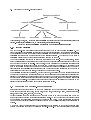
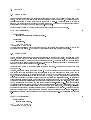
Backprop parallelism
network object parallelism
connection parallelism
node parallelism
algorithm parallelism
example independence
weight multiply
accumulate
broadcast activation
This gure shows the taxonomy of the main kinds of parallelism that are embedded in the backpropagation programming
problem. Similar kinds of parallelism apply to most neural network learning algorithms.
Figure 1: Kinds of parallelism inherent in the backpropagation problem
6.1.4 Inherent parallelism
One of the often-cited properties of neural networks is that they employ \massive parallelism". And
indeed there is a lot of parallelism inherent in the backpropagation algorithm for multi layer perceptrons.
This parallelism comes in two dierent forms: Parallelism that is coupled to objects in the network and
parallelism that stems from a global property of the learning algorithm. The taxonomy of the kinds of
parallelism present in the backpropagation algorithm is shown in gure 1.
The object parallelism is attached to either the connections or the units. For the connections, all the
weight multiplications of connections that connect the same pair of layers are independent of each other
and can thus be executed in parallel. For the units, the computations of the activation functions in all
units of a layer are independent of each other and can be executed in parallel. The reduction that is
used to accumulate the inputs of a unit and the broadcast that is used to send the output of a unit to
all connections are parallelizable operations that can be executed in time logarithmic in the number of
connections (for broadcast even faster, depending on the actual hardware).
The parallelism inherent in the algorithm, on the other hand, has nothing to do with individual objects in
the network but stems from the independence of the computations for each individual example: Since the
result of the processing of an example is nothing more than to compute one delta value per connection,
and since these delta values are just accumulated over all the examples, all the examples can just as well
be computed in parallel. The results of such independent example computations can be reduced to the
result that sequential computation had achieved in logarithmic time.
6.2 Properties of a problem-adequate solution
Several important concepts turn up in the above description of the backpropagation learning method.
These are for example: input unit, hidden unit, output unit, connection, weight, activation function,
error, forward pass, delta, example, and epoch.
Trying to classify the above concepts we nd that some have to do with the objects from which the
network is built and others with the learning algorithm itself. Among the concepts that describe objects
we can identify the connections, the units, and the network as a whole. Among the algorithmic concepts
we nd some that are tightly connected to parts of the network and others that relate to global algorithmic
control.
We want to dene the requirements that a description of the solution of the backprop programming
problem must satisfy in order to be considered problem-adequate. To guide this requirements denition
14
6 TUTORIAL
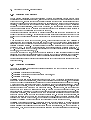
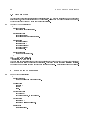
Backprop concepts
network object concepts
connection
node
delta
...
...
network
...
algorithm concepts
network object operations
activation function
...
global operations
process one example
...
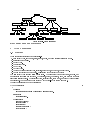
This gure shows the rst two levels of concepts that are embedded in the backpropagation programming problem. Only
few of the concepts from the third level are given as examples, the others are left out. Similar concept hierarchies occur in
most neural network learning algorithms.
Figure 2: Part of backpropagation concept taxonomy
process we use the concept taxonomy, which is shown in gure 2, plus the following general idea: A
programming language should allow to model a problem and its solution in natural terms in order to ease
understanding of the program (see e.g. [Hoa83, Wir83]). Thus, a program that denes a problem-adequate
solution to the backprop learning problem must explicitly map the above concepts onto program entities
and should provide appropriate abstractions that allow to use these concepts in a problem-oriented way.
We will now discuss what an adequate description should look like, rst for the network objects, then for
the operations (the algorithm itself), and last for the embedded parallelism. In these discussions, we list
what language constructs we would like to have in a language to solve our programming problem.
6.2.1 Description of the network
The description of the network consists of several parts:
1. The data structure needed to represent a weight.
2. The data structure needed to represent an input/hidden/output unit.
3. The description of the layers of units (which and how big).
4. The description of which connections between units actually exist.
Obviously the data structures can be dened as data types. The data types used to describe connections
and units are records. The layers can be described by arrays of units.
Since certain operations can be performed only on connections and others only on units, and in particular
since connections have to be attached to nodes and nodes have to be part of a network, it is sensible to
dene type categories for these kinds of data structures, i.e., not to say for a connection type X that \X
is a record type", but instead to say that \X is a connection type" etc.
To describe which connections actually exist may be more complicated. In simple cases, such as the fully
connected multi layer perceptron, we can describe the set of existing connections by just giving a few
cross products: \Each unit in layer A is connected to each unit in layer B by a connection of type C "
etc. In more complicated, irregular cases, no compact declarative description saying which connections
exist is possible; the easiest way to dene which connections exist is to have statements to create them
(individually or in groups).
There should be an additional type category that covers complete networks (i.e., several groups of units
plus the connections among them).
These language features allow to express all the network object concepts in the concept taxonomy (gure
2) in a suciently explicit and problem-oriented way.
6.2 Properties of a problem-adequate solution
15
6.2.2 Description of the algorithm
For the program description of the actual algorithm to reect the distinction between network object
operations and global operations (gure 2), it is best to attach the network object operations to the object
types they work on. For example the weight multiply operation that computes a connection's output from
its input is best given as a procedure or function that is declared in the context of the connection type
denition. This approach is in the spirit of object oriented languages, where each method declaration
is attached to a class declaration. Using the same approach, the unit activation computation operation
that computes a unit's output by applying the activation function to the unit's input will be declared in
the context of the type declaration of the unit type and so on.
Connection procedures are only allowed to access the local data elements of the connection they are
applied to (reading and writing). Unit procedures can access the local data elements of the unit they are
applied to and can also call the connection procedures of the connections that connect into or out of the
unit.
When the input of a node must be computed, though, these procedures do not suce: A collection of
values (one from each connection that goes into the node) has to be combined into a single value; this
single value must then be delivered to the unit as an input value. This problem is most elegantly solved by
declaring a reduction function . A reduction function combines two values into one by applying a binary
operator to them. In the case of backpropagation, this operator is simply addition: Reduce(a; b) =
a + b. To reduce more than two values, this operator can be applied recursively if it is associative, e.g.
Reduce(a; b; c) =Reduce(Reduce(a; b); c).
To compute the input of a unit, we can dene that it is allowed to call a reduction function for values
residing in the whole set of connections ending at that unit and that such a call shall mean the recursive
application of the reduction function to all the connection's values resulting in the unit input value.
Global operations are simply global procedures just like in any other programming language that has a
procedure concept.
6.2.3 Description of parallelism
The kinds of parallelism in neural network learning algorithms can best be divided according to the
second level of gure 1 into
1. parallelism of operations on connections,
2. parallelism of operations on units or concerned with units, and
3. parallelism of examples.
Parallelism of examples (\example independence" in gure 1) can be described transparently: If the
network is modeled as an explicit entity, we can couple operations to this network object. Such operations
can then be applied to a single instance of this network or to several instances at once without any change.
We might then have a statement that says \Now take this network and make several copies of it. Whenever
I call a network operation, apply it to all of the copies in parallel". All that is left to do then, is to fetch
several examples at once whenever a new example is needed. After each epoch, all the copies of the
network have to be united to a single network again, in order to make the proper weight change. This
recombination can be described by a call to a procedure that merges two networks into one (another kind
of reduction operation). This call has to apply the merge function recursively to all the copies of the
network in order to reduce the whole set of copies to a single copy. In the case of backpropagation, all
this merge procedure has to do is to sum the deltas at each weight. Since the merging process is a local
process at each unit and at each weight, we can declare the merge procedure for the network as a whole
implicitly by declaring a merge procedure for each connection type and for each unit type.
Parallelism of operations on units (e.g. \activation" in gure 1) is best described by coupling procedures
to each unit type as described in the previous section. Given such unit procedures, we can operate on
units in parallel by just calling such a unit procedure not only for a single unit, but for a whole group of
units at once. Thus, the same feature of the language serves two important abstraction purposes at once.
16
6 TUTORIAL
Parallelism of operations on connections (e.g. \weight multiply" in gure 1) is also best described by
coupling procedures to connection types as described in the previous section. Calls to these connection
procedures are made from unit procedures, achieving nested parallelism.
Broadcast operations from units (\broadcast" in gure 1) are described most simply by the passing of
parameters to connection procedures that are called from unit procedures. The parallelism inherent in
such a call can then be handled in any appropriate way when the program is compiled.
Reduction operations at units (i.e., the operations that reduce the values delivered by all the connections
that go into the unit into a single value, e.g. \accumulate" in gure 1) are most appropriately described
by dening reduction functions as described in the previous section. The parallelism inherent in a call to
a reduction function can then be handled in any appropriate way when the program is compiled.
6.3 The rst solution
The next two sections show how the \properties of an adequate solution" as described in the previous
section are achieved in a CuPit-2 program for backpropagation by using appropriate CuPit-2 language constructs. In each case we discuss why this language construct is present in CuPit-2 and how it can be used.
During these discussions, we step by step derive a complete CuPit-2 program for the backpropagation
task.
This section shows a backprop algorithm which can run eciently on a sequential machine. This includes
the implicit parallelism on connection and unit level mentioned in the previous section. In order to
exploit example parallelism (which is sensible on parallel machines only) we introduce the \replication
and merge"-method in the next section.
In fact, we do not derive a program for \vanilla" backpropagation, but for the RPROP Backpropagation
variant [RB93]. In this variant, the learning rate is not xed for the whole network, but instead each
weight possesses its own learning rate and adapts it at each learning step using a simple learning rate
adaption rule: The learning step at each weight is not proportional to the delta value of the weight,
but instead starts at a certain xed value InitialEta and is increased by multiplication with a factor
EtaPlus (here: 1.1) as long as the sign of the weight's delta values does not change. When the sign
changes, the learning step size is decreased by multiplication with a factor EtaMinus (here: 0.5). This
change speeds up the backpropagation learning dramatically for most problems; often by an order of
magnitude.
6.3.1 Overview
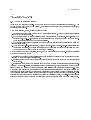
introduces special categories of types to catch the important properties of units (called nodes ),
connections, and networks (see sections 6.1.2 and 6.2.1). In each type declaration T the operations for this
type T of network objects are included (see sections 6.2.2 and 6.2.3). Reduction functions (see sections
6.2.2 and 6.2.3) are declared separately and the same reduction function can be used in operations of
several dierent types.
Reading the examples is done via special buers: An external procedure written in any appropriate
language lls the examples into a special buer. A CuPit-2 statement exists to transfer the examples
from this buer into the nodes of the network replicates (or vice versa).
A main procedure (called the central agent in CuPit-2) calls the appropriate network procedures to
perform the backprop learning steps and controls the termination of the whole learning program.
So much for the global picture, now let's look at the details. We begin with the network object type
declarations, then discuss the network object procedures, and last describe external parts of the program
and the central agent. If you want to take a look at the whole program at once, see appendix G on page
86.
CuPit-2
6.3 The rst solution
17
6.3.2 The \weights"
For the backpropagation learning problem, only a single connection type is needed. We call this type
Weight:
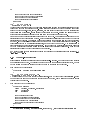
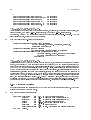
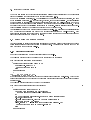
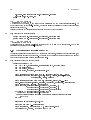
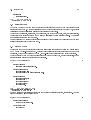
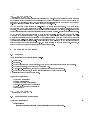
example connection type denition[1] 1
f
TYPE Weight IS CONNECTION
FROM SigmoidNode OUT out;
TO
SigmoidNode IN in;
Real
weight :=
olddelta:=
eta
:=
delta
:=
RANDOM (-0.5...0.5),
0.0,
initialEta,
0.0;
example forward pass connection operation[6]
example backward pass connection operation[8]
example connection adapt procedure[10]
END TYPE;
g
This macro is invoked in denition 23.
This connection type connects two nodes of type SigmoidNode (introduced in section 6.3.3), namely from
an out interface of a node of type SigmoidNode to an in interface of a node of type SigmoidNode.
As we see, there are four data elements in a connection: weight stores the weight value itself and is
initialized to a dierent random value in each connection object. olddelta stores the weight's delta of
one epoch ago; this value is used to detect the change of delta's sign as needed by the RPROP rule. eta
is the current local learning step size of this connection and delta is the variable that accumulates the
error values over the backward passes of all examples.
How these values are used in the forward and backward pass and in the weight update is shown in sections
6.3.5, 6.3.6, and 6.3.7.
6.3.3 The \units"
Despite the dierences in functionality for the input, hidden, and output nodes in the multi layer perceptron, we can implement all three sorts by the same type. Some of the data and functionality of this
type is not used in all three layers, but here we prefer to declare only a single type instead of saving a
few bytes of storage. We call this type SigmoidNode, after the kind of activation function used in it:
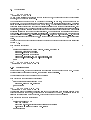
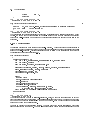
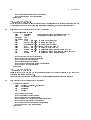
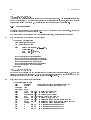
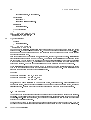
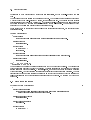
example node type denition[2] 2
f
TYPE SigmoidNode IS NODE
Real
outData;
Real
teach;
IN Weight
in;
OUT Weight out;
Real
bias
:=
Real
delta
:=
Real
olddelta :=
Real
eta
:=
Real
error
:=
Real
cumErr
:=
Int
errN
:=
(* activation (input units: net input) *)
(* teachinput (output units only) *)
0.0; (* bias of this unit *)
0.0; (* delta for bias *)
0.0; (* olddelta for bias *)
initialEta; (* eta for bias *)
0.0; (* error of this unit *)
0.0; (* cumulated error (output units only) *)
0;
(* number of error bits (output units only) *)
18
6 TUTORIAL
example forward pass node operation[7]
example backward pass node operation[9]
example node adapt procedure[11]
example resetErrors procedure[22]
END TYPE;
g
This macro is invoked in denition 23.
There are nine data elements and two connection interface elements in a node: outData stores the output
value of the node for the current example. teach stores the teachinput at output units and is not used
in input or hidden units. bias, delta, olddelta, and eta store the bias weight and the corresponding
delta values like a connection. error stores the error value of the unit. cumErr and errN are used to
accumulate error statistics over all the examples if the node is used as an output node.
in and out are the connection interface elements of the node type. Connections must always end at an
interface element that has interface mode IN. Such connections are called inputs to the node to which this
interface element belongs. Connections must always originate at an interface element that has interface
mode OUT. Such connections are called outputs of the node to which this interface element belongs. All
connections attached to a particular interface element must have the same type. The functionality of
input interfaces and output interfaces is identical.3 In the case of the multi layer perceptrons, all nodes
have but a single input interface (called in) and a single output interface (called out). Both of these
interfaces are declared to accept connections of type Weight.
How these data elements and interfaces are used in the various node operations is shown in sections 6.3.5,
6.3.6, 6.3.7, and 6.3.12.
6.3.4 The multi-layer perceptron
It is possible to represent multiple networks in a single CuPit-2 program. Each such network is a variable
of a particular network type. To declare the network type for the multi layer perceptron (Mlp), we rst
have to declare types for the groups of nodes that make up the layers in that network.
3
example layer type denition[3] f
TYPE Layer
g
IS GROUP OF SigmoidNode END;
This macro is invoked in denitions 23, 31, 40, and 54.
We declare Layer to be a dynamic array of SigmoidNodes. Such a dynamic array has initial size 0. Since
we can adjust the number of nodes used for each layer at run time, only a single type is needed for all
three layers of our network.
4
example network type denition[4] f
TYPE Mlp IS NETWORK
Layer
inLayer, hidLayer, outLayer;
Real
totError;
Int
errorsN;
example create network[5]
example processing one example[13]
example network adapt procedure[12]
example train epoch procedure[20]
example compute total error procedure[21]
END TYPE;
g
3
The discrimination is necessary for technical reasons: in order to know where to place the actual connection data
6.3 The rst solution
19
This macro is invoked in denition 23.
An Mlp object consists of one element for each layer of nodes, two elements to store the global error
measures, and ve network procedures.
The connections of a network have to be created dynamically. In our case, the same is true for the
nodes as well. We dene a procedure that performs this node and connection creation below. An EXTEND
statement adds a certain number of nodes to a node group. The rst CONNECT statement says that one
connection shall be created from each input node's out interface to each hidden node's in interface. Such
a connection will have the type Weight because that is the type of the participating connection interfaces.
Analogously, the second CONNECT statement says that one connection shall be created from each hidden
node's out interface to each output node's in interface. The [] notation in the CONNECT statement and
other CuPit-2 statements stands for `all', here 'all nodes'. The CONNECT statement and other statements
can also be called on slices, i. e., CONNECT ME.inLayer[3...5].out TO ME.hidLayer[1...3].in would
connect the three input nodes with index 3,4,5 with the three hidden nodes with index 1,2,3 (9 connections
total).
The ME keyword in an object procedure denotes the object for which the procedure has been called (like
this in C++).
example create network[5] f
5
PROCEDURE createNet (Int CONST inputs, hidden, outputs) IS
EXTEND ME.inLayer BY inputs;
EXTEND ME.hidLayer BY hidden;
EXTEND ME.outLayer BY outputs;
CONNECT ME.inLayer[].out TO ME.hidLayer[].in;
CONNECT ME.hidLayer[].out TO ME.outLayer[].in;
END;
g
This macro is invoked in denitions 4, 30, 39, and 53.
6.3.5 The forward pass
For the forward pass, we have one operation in the connection type and one in the node type. The node
operation calls the connection operation, thus achieving nested parallelism.
This denition is part of the connection type denition:
example forward pass connection operation[6] f
6
Real FUNCTION weightMultOutput () IS
RETURN ME.weight * out.outData;
END FUNCTION;
g
This macro is invoked in denitions 1, 28, 37, and 51.
This function simply multiplies the weight element of the connection with outData element of the
connected FROM node (named out, because it is the out interface of the node). The result is used in the
following reduction inside a node procedure, which is part of the node type denition:
example forward pass node operation[7] f
PROCEDURE forward () IS
Real VAR inData;
REDUCTION ME.in[].weightMultOutput():sum INTO inData;
ME.outData := sigmoid (inData + ME.bias);
END PROCEDURE;
7
20
6 TUTORIAL
g
This macro is invoked in denitions 2, 29, 38, and 52.
First the input value is computed in inData. The computation is carried out by calling the reduction
function sum (see section 6.3.9) for the results of the weightMultOutput function of all connections that
are attached to the interface in. Then the output value is computed by applying the activation function
sigmoid to the input value. The activation is stored in the outData eld of the node.
6.3.6 The backward pass
For the backward pass, most of the technical points are analogous to what happens in the forward pass.
The algorithmic details, on the other hand, are much dierent. The backward pass is where the main idea
of the backpropagation algorithm comes into view: computing the gradient of the error at each weight
by propagating error values backwards through the network.
This denition is part of the connection type denition:
8
example backward pass connection operation[8] f
Real FUNCTION weightMultError () IS
RETURN ME.weight * in.error;
END FUNCTION;
PROCEDURE incDelta (Real CONST error) IS
ME.delta += error * out.outData;
END PROCEDURE;
g
This macro is invoked in denitions 1, 28, 37, and 51.
Analogous to the forward pass, the rst function simply multiplies the weight element of the connection
with the error element of the connected TO node (named in, because it is the in interface of the node).
In the second procedure, the local delta value that accumulates the weight changes induced by the
examples is changed: The product of the connection's input from the forward pass out.outData and the
error propagated through the connection in the backward pass is added to the delta value. Note that
both error and out.outData may be negative.
This denition is part of the node type denition:
9
example backward pass node operation[9] f
PROCEDURE backwardOutput () IS
Real VAR diff, error;
diff
:= ME.outData - ME.teach;
ME.cumErr += 0.5 * diff * diff;
(* error function: E (target, actual) = 1/2*(target-actual)**2 *)
IF absReal (diff) > errBitThreshold THEN ME.errN += 1; END;
error
:= diff * sigmoidPrime (ME.outData);
ME.error := error;
(* for the weightMultError function *)
ME.delta += error;
(* bias delta *)
ME.in[].incDelta (error); (* weights deltas *)
END PROCEDURE;
PROCEDURE backwardHidden () IS
Real VAR diff, error;
REDUCTION ME.out[].weightMultError():sum INTO diff;
error
:= diff * sigmoidPrime (ME.outData);
(* ME.error := error; *)
6.3 The rst solution
21
(* not needed in networks with only one hidden layer *)
ME.delta += error;
(* bias delta *)
ME.in[].incDelta (error); (* weights deltas *)
END PROCEDURE;
g
This macro is invoked in denitions 2, 29, 38, and 52.
The backward pass is fundamentally dierent for output nodes and for hidden nodes. For the input layer
no backward procedure is necessary, since there are no incoming connections.
For output nodes, the network error for this example and this node is computed. These error values serve
as the basis of the whole backward propagation process. The error Ei of an output oi given the correct
output ti (\teaching" input) is dened to be Ei = 1=2(oi ,ti )2 , known as the squared error function. In our
case, ti is stored as ME.teach and oi is stored as ME.outData. The error value that has to be propagated
backwards through the network is the derivative of the error function in respect to the node's input.
This derivative is (oi , ti )sigmoidPrime(ME.outData) in our case. This error is stored in ME.error for
computing the actual backward propagation value of the connection in the weightMultError function,
which is done during the following backward operation on the hidden nodes. Then the delta values of
the node bias and all incoming connections are computed. The error derivative is broadcast to the input
connections of the node using the parallel procedure call with an error argument. The pure error value
is accumulated in the cumErr error statistics data element. A threshold-based error count is accumulated
in errN.
For hidden nodes the error values that come backwards through the output connections of the node are
accumulated. The result is multiplied with the derivative of the activation function at the point used in
the forward pass. The derivative of the activation function is called sigmoidPrime here. Analogous to
the output nodes the delta values are computed. There is no need to store the error of the node, since
no further back-propagation (call of weightMultError) follows, because we dene only one hidden layer.
Note also that connection input reduction can just as well be called \against" the formal direction of
connections, i.e., for OUT interface elements of a node. Analogously, broadcast to connections can just as
well be done for input connections, i.e., connections that are attached to an interface element with mode
IN. Connections are formally directed but can be used in both directions for all operations.
For the items appearing in the above source code that have not yet been declared, see sections 6.3.10 and
6.3.11.
6.3.7 The weight update
After each epoch, i.e., when all examples have been processed once, the weights have to be updated. This
is done according to the RPROP learning rule as described in section 6.3.
This denition is part of the connection type denition:
example connection adapt procedure[10] f
PROCEDURE adapt () IS
Real VAR deltaproduct := ME.olddelta * ME.delta,
deltasign := signReal (ME.delta);
ME.delta -= decayterm * ME.weight;
IF deltaproduct >= 0.0
THEN IF deltaproduct > 0.0
THEN ME.eta := minReal (ME.eta * etaPlus, maxEta);
END;
ME.weight
-= deltasign * ME.eta;
ME.olddelta := ME.delta;
ELSE ME.eta
:= maxReal (ME.eta * etaMinus, minEta);
ME.olddelta := 0.0;
10
22
6 TUTORIAL
END;
ME.delta := 0.0;
END PROCEDURE;
g
This macro is invoked in denitions 1, 28, 37, and 51.
This procedure is where the dierence is located between vanilla backpropagation and RPROP backpropagation. In vanilla backpropagation, a learning rate is used that is global and xed. Weight adaption
always adds delta times this learning rate to the current weight value. In RPROP, the learning step is
dierent in each connection and is computed according to the following rule: Initially, the learning step
size is some xed value initialEta. In each weight adaption step, if the sign of delta is the same as
in the last step, the local learning step size eta is multiplied by etaPlus (which in this example is 1.1).
If, on the other hand, the sign of delta is not the same as in the last weight adaption step, the local
learning step size is multiplied by etaMinus (which in this example is 0.5). The weight is then changed
in the direction indicated by the sign of delta by the new local learning step size. Finally, the delta is
reset to zero for the next epoch. This behavior is implemented in the above procedure.
This denition is part of the node type denition:
11
example node adapt procedure[11] f
PROCEDURE adapt () IS
(* adapt bias: *)
Real VAR deltaproduct := ME.olddelta * ME.delta,
deltasign := signReal (ME.delta);
ME.delta -= decayterm * ME.bias;
IF deltaproduct >= 0.0
THEN IF deltaproduct > 0.0
THEN ME.eta := minReal (ME.eta * etaPlus, maxEta);
END;
ME.bias
-= deltasign * ME.eta;
ME.olddelta := ME.delta;
ELSE ME.eta
:= maxReal (ME.eta * etaMinus, minEta);
ME.olddelta := 0.0;
END;
ME.delta := 0.0;
(* adapt incoming weights: *)
ME.in[].adapt ();
END PROCEDURE;
g
This macro is invoked in denitions 2, 29, 38, and 52.
The node adaption procedure adapts the node bias with the same RPROP rule as the connections and
calls the weight adaption of the input connections.
This denition is part of the network type denition:
12
example network adapt procedure[12] f
PROCEDURE adapt () IS
ME.outLayer[].adapt ();
ME.hidLayer[].adapt ();
END PROCEDURE;
g
This macro is invoked in denitions 4, 30, 39, and 53.
This procedure triggers the adaption of the weights for the whole network by calling the weight adaption
of the hidden and the output layer. Since the layers adapt their input connections' weights and there are
no input connections to the input nodes, no such call for the input layer is necessary.
6.3 The rst solution
23
6.3.8 Processing one example
After we have loaded the next example (not yet shown), all we have to do to process the example is to call
the forward and backward propagation procedures of the nodes. This is done in the following procedure
which is part of the network type denition:
example processing one example[13] f
13
PROCEDURE example () IS
ME.hidLayer[].forward ();
ME.outLayer[].forward ();
ME.outLayer[].backwardOutput ();
ME.hidLayer[].backwardHidden ();
END PROCEDURE;
g
This macro is invoked in denitions 4, 30, 39, and 53.
6.3.9 The reduction function
The denition of the reduction function used in the backpropagation algorithm to compute inputs of
nodes and to compute global error values is almost self-explanatory. The reduction is needed for real and
for integer values:
example reduction function denition[14] f
14
Real REDUCTION sum NEUTRAL 0.0 IS
RETURN (ME + YOU);
END REDUCTION;
Int REDUCTION sumInt NEUTRAL 0 IS
RETURN (ME + YOU);
END REDUCTION;
g
This macro is invoked in denitions 23, 31, 40, and 54.
A reduction function has two implicit parameters called ME and YOU. These parameters have the same
type as the result of the reduction function. The values of the parameters cannot be changed. Apart of
that, a reduction function is just a function like any other, which means that it can declare local variables,
call other global functions, and so on.
A reduction function should be associative (else chaos in the parallel case is guaranteed). The NEUTRAL
value assigns the neutral element of the reduction operation. This value is the result of a reduction
statement if there were no elements to reduce.
6.3.10 External program parts
Our CuPit-2 program is not completely stand-alone: Some arithmetic functions and the procedures that
supply the examples have been put into external program parts.
For the arithmetic functions this was done deliberately; they could also be dened in CuPit-2 itself. Moving
them to an external module, however, oers capabilities for ne-tuned, machine-dependent optimized
implementation. We could for example implement the sigmoid function using a lookup table. Such an
implementation can not be expressed in CuPit-2 if the lookup table shall exist once per processor of a
parallel machine, since CuPit-2 completely hides the structure of the machine.
example external arithmetic functions[15] 15
24
6 TUTORIAL
f
Real
Real
Real
Real
Real
Real
g
FUNCTION
FUNCTION
FUNCTION
FUNCTION
FUNCTION
FUNCTION
sigmoid (Real CONST x)
sigmoidPrime (Real CONST x)
absReal (Real CONST x)
signReal (Real CONST x)
minReal (Real CONST x, y)
maxReal (Real CONST x, y)
IS
IS
IS
IS
IS
IS
EXTERNAL;
EXTERNAL;
EXTERNAL;
EXTERNAL;
EXTERNAL;
EXTERNAL;
This macro is invoked in denitions 23, 31, 40, and 54.
These functions mean (in order): The activation function, its derivative, the absolute value function, the
signum function, the minimum-of-two-values function, the maximum-of-two-values function.
Furthermore, we need a few procedures for reading the examples into the CuPit-2 program. They are
also declared globally, outside of any type denition:
16
example external example-getting procedures[16] f
PROCEDURE openDatafile (String CONST filename;
Int VAR iInputsN, rInputsN, iOutputsN, rOutputsN,
examplesN) IS EXTERNAL;
PROCEDURE initIOareaR (Real IO ioarea;
Int CONST nodesN, maxreplicates) IS EXTERNAL;
PROCEDURE getNetExamplesxRxR (Real IO rIn; Real IO rOut;
Int CONST howmany, startI, endI; Int VAR firstI;
Int CONST index; Bool VAR overflow)
IS EXTERNAL;
g
This macro is invoked in denitions 23, 31, 40, and 54.
openDatafile opens
the example data le with the given name, reads all the examples from the le into
memory, and returns how many examples there are in the le and how many real and integer input and
output coecients each example has. initIOareaR initializes the I/O buer object ioarea as soon as we
know how many network replicates will be used at once. Finally, getNetExamples reads examples into
the I/O objects rIn (input coecients) and rOut (output coecients). getNetExamples can be used in
parallel context, howmany is the number of replicates, startI and stopI are the rst and last index of
the examples to get out of the I/O buer. The in and out parameter firstI denotes the current example
index of the I/O buer, it is usually increased by howmany during the procedure. index is the replication
index, and overflow assigns an overow, i. e., firstI + howmany endI, in this case the firstI index
begins new with startI. The name sux xRxR indicates that the variants for real-coecients-only (and
no integer coecients) shall be used; there are also IRIR etc. variants of the procedures available.
6.3.11 Global data denitions
Some global constants and variables have to be dened for our backpropagation program. Most of the
constants have already been used above.
17
example global constant denitions[17] f
Real CONST initialEta
:=
etaPlus
:=
etaMinus
:=
maxEta
:=
minEta
:=
decayterm
:=
errBitThreshold:=
Int VAR
inputs,
0.05, (* initial learning step *)
1.1, (* learning step increase step *)
0.5, (* learning step decrease step *)
50.0, (* maximum learning step *)
1.0e-6, (* minimum learning step *)
0.0, (* weight decay *)
0.3; (* max. difference for correct outputs *)
6.3 The rst solution
25
hidden
outputs;
g
:=
4,
This macro is invoked in denitions 23, 31, 40, and 54.
example global variable denitions[18] f
Real IO
Mlp VAR
g
x1, x2;
net;
18
(* I/O-areas, allocated and managed by external program *)
(* THE NETWORK *)
This macro is invoked in denitions 23, 31, 40, and 54.
The variable net is the central variable of our program. It represents the multi layer perceptron we want
to train. x1 and x2 are the buers (called \I/O areas") through which the examples are communicated
between the CuPit-2 program on one side and the external procedures that supply the examples on the
other side.
6.3.12 The central agent
This section contains the main routine of the CuPit-2 program. This procedure and all invocations of
other procedures and functions that are not network object operations comprise what is called the central
agent of the CuPit-2 program. Certain operations can only be called by the central agent (most notably
the replication of networks in section 6.4.1).
example central agent[19] f
PROCEDURE program () IS
Int VAR i := 0, nrOfExamples, examplesDone := 0, epochNr := 0;
Int VAR dummy1, dummy2;
Real VAR error, oldError, stoperror := 0.1;
openDatafile ("Data", dummy1, inputs, dummy2, outputs, nrOfExamples);
net[].createNet (inputs, hidden, outputs);
initIOareaR (x1, inputs, 1);
initIOareaR (x2, outputs, 1);
REPEAT
epochNr += 1;
net[].trainEpoch (nrOfExamples);
net[].adapt();
net[].computeTotalError ();
error := net[0].totError;
WRITE ("epoch ", epochNr, ": error = ", error,
", errorsN = ", net[0].errorsN, "\n");
UNTIL epochNr > 4 AND error <= stoperror END REPEAT;
END PROCEDURE;
g
This macro is invoked in denition 23.
This procedure should be more or less self-explanatory. First, we read the examples into memory and
create the initial network conguration. initIOareaR allocates space for the I/O areas x1 and x2 based
on the number of network replicates and the number of nodes. Here we just implement a sequential
program so the number of replicates is 1.
The loop embodies the actual training process. The main part of the loop is trainEpoch, which runs
all examples through the network. The next statements call the weight adaption process and compute
19
26
6 TUTORIAL
and show the global error measures for the network. The loop runs until the global error is lower than a
certain threshold.
The two network procedures trainEpoch and computeTotalError are described now. The trainEpoch
network procedure is where the backpropagation process is carried out for all the examples:
20
example train epoch procedure[20] f
PROCEDURE trainEpoch (Int CONST nrOfExamples) IS
Int VAR i := 0;
Bool VAR done := false;
REPEAT
getNetExamplesxRxR (x1, x2, 1, 0, nrOfExamples-1, i, 0, done);
ME.inLayer[].outData <-- x1;
ME.outLayer[].teach <-- x2;
ME.example();
UNTIL done END REPEAT;
END PROCEDURE;
g
This macro is invoked in denition 4.
The getNetExamplesxRxR procedure loads one example per network replicate into the I/O buers: x1
holds the input values and x2 holds the output values. These values are then transferred into the input
elds of the input layers (one value from x1 per node per replicate) and the output elds of the output
layers (one value from x2 per node per replicate). Once the examples are loaded into the network
replicates, a single call to net[].example suces to process the example in each network replicate. This
is how example-level parallelism is expressed in CuPit-2.
Finally, here is the computeTotalError function which is still missing from the denition of the network
type:
21
example compute total error procedure[21] f
PROCEDURE computeTotalError () IS
REDUCTION ME.outLayer[].cumErr:sum INTO ME.totError;
REDUCTION ME.outLayer[].errN:sumInt INTO ME.errorsN;
ME.outLayer[].resetErrors();
END PROCEDURE;
g
This macro is invoked in denitions 4, 30, 39, and 53.
. . . and the procedure resetErrors which is missing from the denition of the node type:
22
example resetErrors procedure[22] f
PROCEDURE resetErrors () IS
ME.cumErr := 0.0;
ME.errN
:= 0;
END PROCEDURE;
g
This macro is invoked in denitions 2, 29, 38, and 52.
6.3.13 The whole program
This is how the program parts shown in the last few sections t together in the complete program. You
can nd the program listed as a whole in appendix G.1.
23
tutorial-rprop1.nn[23] 6.4 Introducing Example Parallelism
27
f
(* Example CuPit program for rprop Back-Propagation
Lutz Prechelt, Holger Hopp 1997/01/24
*)
example global constant denitions[17]
example external arithmetic functions[15]
example external example-getting procedures[16]
example reduction function denition[14]
example connection type denition[1]
example node type denition[2]
example layer type denition[3]
example network type denition[4]
example global variable denitions[18]
example central agent[19]
g
This macro is attached to an output le.
6.4 Introducing Example Parallelism
The RPROP program described in the last section includes connection and node parallelism. In this
section we will describe what to do to introduce example parallelism.
Example-level parallelism is achieved in the transparent fashion outlined in section 6.2.3: A REPLICATE
statement is used to create multiple copies (called replicates in CuPit-2) of a network and MERGE procedures
are declared for each connection type, node type, and network type to describe how such replicates are
to be recombined into a single network.
6.4.1 Replication of networks
This program creates replicates after the creation of the network with the REPLICATE statement:
example central agent with replicate and merge[24] f
PROCEDURE program () IS
Int VAR i := 0, nrOfExamples, examplesDone := 0, epochNr := 0;
Int VAR dummy1, dummy2;
Real VAR error, oldError, stoperror := 0.1;
openDatafile ("Data", dummy1, inputs, dummy2, outputs, nrOfExamples);
net[].createNet (inputs, hidden, outputs);
REPLICATE net INTO 1...nrOfExamples;
WRITE ("created ", MAXINDEX(net) + 1, "replicates.\n");
initIOareaR (x1, inputs, MAXINDEX (net) + 1);
initIOareaR (x2, outputs, MAXINDEX (net) + 1);
REPEAT
epochNr += 1;
net[].trainEpoch (nrOfExamples, MAXINDEX(net));
MERGE net; (* collect and redistribute results *)
net[].adapt();
net[].computeTotalError ();
error := net[0].totError;
WRITE ("epoch ", epochNr, ": error = ", error,
", errorsN = ", net[0].errorsN, "\n");
UNTIL epochNr > 4 AND error <= stoperror END REPEAT;
24
28
6 TUTORIAL
END PROCEDURE;
g
This macro is invoked in denition 31.
requests that exactly as many copies (replicates) of the network
shall be made as there are training examples. This works only for small training sets. A better choice
would be REPLICATE net INTO 1...nrOfExamples which lets the run time system chose any number
of replicates it considers sensible for optimal eciency (but at most one per example). On sequential
machines this would be obviously one; the number of the processors available on a parallel machine is
certainly an upper bound. On parallel systems it is often useful to choose of a power of two.
The initialization of the I/O buers depends on the number of replicates, that can be determinded by
the MAXINDEX function. MAXINDEX returns the highest currently available index of a connection, node or
network. For networks this is the maximal index for replicates. Replicates are indexed between 0 and
MAXINDEX, so the real number of replicates chosen by the run time system is simply (MAXINDEX(net)+1).
In the epoch loop a MERGE statement is introduced. MERGE net merges data from the network replicates
into the rst network replicate and then immediately redistributes this data into the other replicates.
The number of replicates is thus not changed, but instead all replicates are made identical (at least the
relevant part of the data in respect to the MERGE operations declared in the types (section 6.4.2) is made
identical).
REPLICATE net INTO nrOfExamples
6.4.2 The MERGE procedures
This is how corresponding connections of several replicates of a network are recombined into a single
connection:
25
example connection merge procedure[25] f
MERGE IS
ME.delta += YOU.delta;
END MERGE;
g
This macro is invoked in denitions 28, 37, and 51.
In this procedure, ME is the name of the connection object that is the result of the merge operation and
YOU is the name of the connection object that is being merged into ME by this procedure. The merge
procedure is recursively applied to replicates and merged replicates until only a single merged exemplar
of the connection object is left. In this respect, merging is much like reduction. The dierence is that
merging works on objects and is formulated in the form of procedures, while reduction works on values
and is formulated in the form of functions.
This is how corresponding connections of several replicates of a network are recombined into a single
connection:
26
example node merge procedure[26] f
MERGE IS
ME.delta += YOU.delta;
ME.cumErr += YOU.cumErr;
ME.errN
+= YOU.errN;
END MERGE;
g
This macro is invoked in denitions 29, 38, and 52.
Only bias delta and the error statistics have to be retained, all other data in a node is dispensable. The
merge procedure for the connections does not have to be called here, because all merge procedures are
called implicitly when merging of networks is performed.
6.4 Introducing Example Parallelism
29
6.4.3 Getting examples
The getNetExamplesxRxR procedure needs the number of replicates and the local replicate number as
parameters:
example train epoch procedure in parallel context[27] f
27
PROCEDURE trainEpoch (Int CONST nrOfExamples, maxindex) IS
Int VAR i := 0;
Bool VAR done := false;
REPEAT
getNetExamplesxRxR (x1, x2, maxindex + 1, 0, nrOfExamples-1, i,
INDEX, done);
ME.inLayer[].outData <-- x1;
ME.outLayer[].teach <-- x2;
ME.example();
UNTIL done END REPEAT;
END PROCEDURE;
g
This macro is invoked in denitions 30, 39, and 53.
The INDEX expression returns the index of the current index in a connection, node or network procedure.
In network procedures like trainEpoch this is the replicate index.
6.4.4 The whole program
This boring section shows the complete program which enables example parallelism. You can nd the
program listed as a whole in appendix G.2.
In the connection and node type denition the MERGE procedure is introduced, all other functions remain
unchanged.
example connection type denition with merge[28] f
28
TYPE Weight IS CONNECTION
FROM SigmoidNode OUT out;
TO
SigmoidNode IN in;
Real
weight :=
olddelta:=
eta
:=
delta
:=
RANDOM (-0.5...0.5),
0.0,
initialEta,
0.0;
example forward pass connection operation[6]
example backward pass connection operation[8]
example connection adapt procedure[10]
example connection merge procedure[25]
END TYPE;
g
This macro is invoked in denition 31.
example node type denition with merge[29] f
TYPE SigmoidNode IS NODE
Real
outData;
Real
teach;
(* activation (input units: net input) *)
(* teachinput (output units only) *)
29
30
6 TUTORIAL
IN Weight
OUT Weight
Real
Real
Real
Real
Real
Real
Int
in;
out;
bias
delta
olddelta
eta
error
cumErr
errN
:=
:=
:=
:=
:=
:=
:=
0.0; (* bias of this unit *)
0.0; (* delta for bias *)
0.0; (* olddelta for bias *)
initialEta; (* eta for bias *)
0.0; (* error of this unit *)
0.0; (* cumulated error (output units only) *)
0;
(* number of error bits (output units only) *)
example forward pass node operation[7]
example backward pass node operation[9]
example node adapt procedure[11]
example resetErrors procedure[22]
example node merge procedure[26]
END TYPE;
g
This macro is invoked in denition 31.
The network denition is mostly unchanged from the previous section, only the trainEpoch function is
changed:
30
example network type denition in parallel context[30] f
TYPE Mlp IS NETWORK
Layer
inLayer, hidLayer, outLayer;
Real
totError;
Int
errorsN;
example create network[5]
example processing one example[13]
example network adapt procedure[12]
example train epoch procedure in parallel context[27]
example compute total error procedure[21]
END TYPE;
g
This macro is invoked in denition 31.
This is the new example parallel program, which summarizes all changes of this section:
31
tutorial-rprop2.nn[31] f
(* Example CuPit program for parallel rprop Back-Propagation
Lutz Prechelt, Holger Hopp 1997/01/24
*)
example global constant denitions[17]
example external arithmetic functions[15]
example external example-getting procedures[16]
example reduction function denition[14]
example connection type denition with merge[28]
example node type denition with merge[29]
example layer type denition[3]
example network type denition in parallel context[30]
example global variable denitions[18]
example central agent with replicate and merge[24]
g
This macro is attached to an output le.
6.5 Introducing Connection Pruning
31
The above formulation of the backpropagation algorithm allows for easy exploitation by a compiler of all
kinds of parallelism that are inherent in the problem (see section 6.1.4).
Some of the parallelism is explicit, e.g. the parallelism in the node and connection operations, and some
of the parallelism is implicit, e.g. the broadcast, reduction, and example parallelism. But all parallelism
whether explicit or implicit can be extracted straightforwardly from the CuPit-2 program and can be
implemented on real parallel machines easily; no complicated program analysis is necessary. Another
important point is that the parallelism is formulated in a problem-oriented fashion; it is always objectbased parallelism achieved by applying an operation to many objects at once.
All parallelism is dened with asynchronous semantics in CuPit-2, i.e., all parts of a parallel operation
may be executed in absolutely any order by an actual implementation of a CuPit-2 program. Such
asynchronous semantics are adequate for a local computation paradigm such as neural networks and
allow for implementation with maximum eciency.
6.5 Introducing Connection Pruning
Another extension to plain backpropagation is present in the program derived below: once in a while we
delete all connections whose weight is below a threshold value. We include it in order to show how one
form of topology change works in CuPit-2.
6.5.1 Eliminating connections
Removing connections from a network is straightforward in CuPit-2.
The following procedure has to be included in the connection type denition:
example connection elimination procedure[32] f
32
PROCEDURE eliminate (Real CONST p) IS
IF absReal(ME.weight) < p
THEN REPLICATE ME INTO 0;
END;
END PROCEDURE;
g
This macro is invoked in denitions 37 and 51.
It makes all connections whose weights have an absolute value of less than p self-delete. Note that the
parameter passing from the nodes into the connection procedures implements the broadcast mentioned
in section 6.2.3.
The following procedure is part of the node type denition:
example node connection elimination procedure[33] f
PROCEDURE modify (Real CONST p) IS
(* during this procedure, we re-interpret
errN as number of just deleted connections
*)
Int VAR oldConN := MAXINDEX(ME.in[])+1; (* count connections *)
ME.in[].eliminate (p);
ME.consN := MAXINDEX(ME.in[])+1; (* count connections *)
ME.errN := oldConN - ME.consN;
IF ME.consN = 0
(* no more input connections present -> *)
THEN REPLICATE ME INTO 0; (* self-delete *)
END;
END PROCEDURE;
33
32
6 TUTORIAL
g
This macro is invoked in denitions 38 and 52.
This procedure does three things: (1) it eliminates all of its inputs connections with weights below threshold p by calling the connection type's eliminate procedure, (2) it counts how many input connections
are present at the node before and after the connection elimination, and (3) it the node deletes itself if
no input connections are left after the elimination.
Finally, to call the connection elimination we need an appropriate network procedure:
34
example network modify procedure[34] f
PROCEDURE modify (Real CONST p) IS
ME.outLayer[].modify (p);
ME.hidLayer[].modify (p);
ME.countConnections ();
ME.outLayer[].resetErrors();
END PROCEDURE;
g
This macro is invoked in denitions 39 and 53.
This procedure calls the connection elimination for the output and hidden layer (since there are no input
connections to the input layer, a call for the input layer is not useful) and then counts how many weights
were present before and after the elimination by calling the procedure countConnections shown below.
Finally, it resets the \misused" value of errN in the nodes of the output layer so that it can be used for
actual error bit counting in the next epoch again.
35
example network count connections procedure[35] f
PROCEDURE countConnections () IS
Int VAR outConsN, outConsDeleted;
REDUCTION ME.outLayer[].consN:sumInt
REDUCTION ME.outLayer[].errN:sumInt
REDUCTION ME.hidLayer[].consN:sumInt
REDUCTION ME.hidLayer[].errN:sumInt
ME.consN += outConsN;
ME.errorsN += outConsDeleted;
END PROCEDURE;
INTO
INTO
INTO
INTO
outConsN;
outConsDeleted;
ME.consN;
ME.errorsN;
g
This macro is invoked in denitions 39 and 53.
Last but not least we insert a call to modify into the central agent:
36
example central agent with replicate and merge and modify[36] f
PROCEDURE program () IS
Int VAR i := 0, nrOfExamples, examplesDone := 0, epochNr := 0;
Int VAR dummy1, dummy2;
Real VAR error, oldError, stoperror := 0.1;
openDatafile ("Data", dummy1, inputs, dummy2, outputs, nrOfExamples);
net[].createNet (inputs, hidden, outputs);
REPLICATE net INTO 1...nrOfExamples;
WRITE ("created ", MAXINDEX(net) + 1, "replicates.\n");
initIOareaR (x1, inputs, MAXINDEX (net) + 1);
initIOareaR (x2, outputs, MAXINDEX (net) + 1);
REPEAT
6.5 Introducing Connection Pruning
33
epochNr += 1;
net[].trainEpoch (nrOfExamples, MAXINDEX(net));
MERGE net; (* collect and redistribute results *)
net[].adapt();
net[].computeTotalError ();
error := net[0].totError;
WRITE ("epoch ", epochNr, ": error = ", error,
", errorsN = ", net[0].errorsN, "\n");
IF epochNr % 10 = 0 THEN
IF epochNr <= 20 THEN oldError := error/2.0;
ELSIF error < oldError
THEN REPLICATE net INTO 1;
net[].modify (0.25);
WRITE (">>>>>>>>>>> weights remaining: ", net[0].consN);
WRITE (" deleted: ", net[0].errorsN, " <<<<<\n");
oldError := error;
REPLICATE net INTO 1...nrOfExamples;
END IF;
END IF;
UNTIL epochNr > 4 AND error <= stoperror END REPEAT;
END PROCEDURE;
g
This macro is invoked in denition 40.
The additional IF controls the call of the connection elimination scheme: Connection elimination is
performed with a threshold of 0.25 and is called rst when the epoch number is divisible by 10 and the
error is less than half that of epoch 20. Subsequent calls of the weight elimination occur when the error
is less than it was just before the previous connection elimination step4 .
In order to perform the connection elimination, CuPit-2 requires that the number of replicates be one,
because otherwise the topology of the replicates might diverge and the replicate correspondence as dened
by the MERGE operation would be lost. Thus, we call REPLICATE net INTO 1 before the connection
elimination, and REPLICATE net INTO 1...nrOfExamples to create replicates again afterwards.
6.5.2 The whole program
This is another boring section that shows the complete program that enables the connection pruning
mechanism. You can nd the program listed as a whole in appendix G.3.
In the connection type denition the eliminate procedure is inserted, the rest remains unchanged:
example connection type denition with merge and eliminate[37] f
TYPE Weight IS CONNECTION
FROM SigmoidNode OUT out;
TO
SigmoidNode IN in;
Real
weight :=
olddelta:=
eta
:=
delta
:=
RANDOM (-0.5...0.5),
0.0,
initialEta,
0.0;
example forward pass connection operation[6]
example backward pass connection operation[8]
example connection adapt procedure[10]
4
No, we do not think that this elimination scheme is actually useful.
37
34
6 TUTORIAL
example connection elimination procedure[32]
example connection merge procedure[25]
END TYPE;
g
This macro is invoked in denition 40.
In the node type denition the modify procedure and the consN element to store an accumulated number
of connections (computed after connection elimination) is inserted, the rest remains unchanged:
38
example node type denition with merge and modify[38] f
TYPE SigmoidNode IS NODE
Real
outData;
Real
teach;
IN Weight
in;
OUT Weight out;
Real
bias
:=
Real
delta
:=
Real
olddelta :=
Real
eta
:=
Real
error
:=
Real
cumErr
:=
Int
errN
:=
Int
consN;
(* activation (input units: net input) *)
(* teachinput (output units only) *)
0.0; (* bias of this unit *)
0.0; (* delta for bias *)
0.0; (* olddelta for bias *)
initialEta; (* eta for bias *)
0.0; (* error of this unit *)
0.0; (* cumulated error (output units only) *)
0;
(* number of error bits (output units only) *)
(* number of input connections *)
example forward pass node operation[7]
example backward pass node operation[9]
example node adapt procedure[11]
example resetErrors procedure[22]
example node connection elimination procedure[33]
example node merge procedure[26]
END TYPE;
g
This macro is invoked in denition 40.
is used to hold the number of connections attached to the input interface of the node when
connection elimination is carried out.
In the network type denition the modify and the countConnections procedure are inserted:
consN
39
example network type denition with modify[39] f
TYPE Mlp IS NETWORK
Layer
inLayer, hidLayer, outLayer;
Real
totError;
Int
errorsN;
Int
consN;
example create network[5]
example processing one example[13]
example network adapt procedure[12]
example train epoch procedure in parallel context[27]
example compute total error procedure[21]
example network count connections procedure[35]
example network modify procedure[34]
END TYPE;
g
6.6 Introducing Network Input/Output
35
This macro is invoked in denition 40.
This is the new example parallel program with the simple connection elimination scheme, which summarizes all changes of this section:
tutorial-rprop3.nn[40] f
(* Example CuPit program for parallel rprop Back-Propagation
with connection elimination
Lutz Prechelt, Holger Hopp 1997/01/24
*)
example global constant denitions[17]
example external arithmetic functions[15]
example external example-getting procedures[16]
example reduction function denition[14]
example connection type denition with merge and eliminate[37]
example node type denition with merge and modify[38]
example layer type denition[3]
example network type denition with modify[39]
example global variable denitions[18]
example central agent with replicate and merge and modify[36]
g
This macro is attached to an output le.
6.6 Introducing Network Input/Output
In this section we introduce how to read and write complete networks from and to les or to UNIX pipes.
The reading and writing of networks is a little complicated, because the elements of a network (node,
connection) are user dened, so that we cannot implement a xed WriteNetwork procedure in the library
that could save all kinds of networks CuPit-2 can produce.
A language like CuPit-2 should be able to create dierent style network les; such network les should
not be dependent on this language. So network I/O should be done by library functions but CuPit-2 must
have methods to control their use. This control should be embedded in other language constructions,
e. g. the elds of a CONNECTION type to be written to a le should be specied in the CONNECTION type
denition and the I/O function to write a network to a le should be called like a normal function, i. e.,
like a normal network procedure call.
In order to read or write networks in CuPit-2, there are four things to do:
Dene a style of a network le, i. e., in which format and order which parts of the network should
be saved. This is usually done in a library, the user need not know all details of the le format.
The libary contains several functions, whose interfaces must be introduced to CuPit-2. This is done
by an IOSTYLE denition in CuPit-2. This IOSTYLE denition contains information like \one Real
is saved for each connection" or \two Reals are saved for each node". This I/O style is then used
by I/O specications as follows:
Dene functions to use this IOSTYLE, e. g. read or write functions. This is done by a central IOSPEC
denition.
For each IOSPEC dene the elds in each CONNECTION, NODE, or NETWORK type which are used for
I/O. This is done by IOSPEC denitions in the object types (connections, nodes, networks).
Finally call the I/O function like a procedure to invoke the real input or output of a complete
network network, node or connection.
The following sections will introduce these four parts for the SNNS [ZMV+ 95] style network le format
in the RPROP program. SNNS is a widely used neural network simulator.
40
36
6 TUTORIAL
6.6.1 The IOSTYLE denition
The I/O style denition is the description of a collection of libary procedures, but it is more complex
than the EXTERNAL denition of procedures and functions. The IOSTYLE denition for the SNNS style
network le format is as follows:
41
example external snns io style denition[41] f
IOSTYLE snns IS
CASE CONNECTION :
Real weight;
CASE NODE :
CONNECTION inConnection, outConnection;
String typename, unitname;
Real act, bias;
Int xpos, ypos, zpos;
(Int nodeNo; String st);
CASE NETWORK :
NODE GROUP in; NODE GROUP + hid; NODE GROUP out;
(String netname, learnFunction, updateFunction; UnitDefaultRecord rec);
KINDS
IN input (), fileinput (String CONST infilename);
OUT output (), fileoutput (String CONST outfilename);
END;
g
This macro is invoked in denition 54.
The IOSTYLE denition contains two parts, the I/O style description and the kinds description. The I/O
style description indicates what elds and types are used for the I/O transfer in each CONNECTION, NODE,
or NETWORK. In this SNNS example every CONNECTION is saved/restored as one Real called weight. Every
NODE is saved/restored as 2 connections, 2 Strings, 2 Reals and 3 Ints. Every network saved/restored
consists of several node groups: Exactly one in and one out node group and one or several, but at least
one (indicated by the +) node groups hid. The so-called optional parameters in the parentheses dier
from the style parameters, that the style parameters are described in the object I/O specication, while
the optional parameters are passed in the I/O procedure call. To write a network to stdout you type e. g.
42
example snns write procedure call for network[42] f
ME.write ("NameOfNet", "Rprop", "Topological_Order", noRecord);
g
This macro is NEVER invoked.
This looks like an object procedure call in which the optional parameters are passed. The style parameters
are described in the network I/O specication (see section 6.6.3). The optional parameters in the node
part are only for writing a single node (i. e. one line of the SNNS network le which describes the node)
with an I/O procedure call. This is usually not used.
The type UnitDefaultRecord is a record type of the SNNS-I/O-library as follows:
43
example external snns unit default record denition[43] f
TYPE UnitDefaultRecord IS RECORD
Bool exists := false;
Real act, bias;
String st;
Int subnet, layer;
String actFunc, outFunc;
6.6 Introducing Network Input/Output
37
END;
g
This macro is invoked in denition 54.
The kind description part describes which kinds of inputs (IN) and outputs (OUT) are possible for this
I/O style. In this case there are screen input and output and le input and output. The le I/O needs
and additional kind parameter denoting the le name. Kind parameters are passed before the optional
parameters in the I/O procedure call, e. g.
example snns fwrite procedure call for network[44] f
44
ME.fwrite ("filename.net", "NameOfNet", "Rprop", "Topological_Order", noRecord);
g
This macro is NEVER invoked.
The IOSTYLE denition is the interface to the library. Now the program-dependent parts are introduced:
6.6.2 The central IOSPEC denition
This is a declaration of two I/O specications fread and fwrite for le input and le output, both of
the style snns:
example central io specication[45] f
45
IOSPEC fwrite IS STYLE snns KIND fileoutput END;
IOSPEC fread IS STYLE snns KIND fileinput END;
g
This macro is invoked in denition 54.
The central I/O specication declares a new identier, which can be treated like an object procedure as
introduced in the previous section. The actions of this I/O specication are dened in the object I/O
specications.
6.6.3 The object IOSPEC denitions
Now the I/O specications dened in the previous section are lled with life. The IOSTYLE snns wants
to save/restore one Real for each connection. The following part of the connection type denition denes
that the weight eld of the connection type is used for I/O:
example connection io specication[46] f
46
IOSPEC fwrite IS ME.weight; END;
IOSPEC fread IS ME.weight; END;
g
This macro is invoked in denition 51.
Note that expressions are needed for OUT kinds and variables for IN kinds. In the following node I/O
specication, which is part of the node type denition, we skip the typename attribute for the IOSTYLE
snns by using the nil string for output and a dummy variable for input:
example node io specication[47] f
IOSPEC fwrite IS
ME.in; ME.out; ""; ME.unitName; ME.outData; ME.bias; ME.x; ME.y; ME.z;
END;
IOSPEC fread IS
47
38
6 TUTORIAL
ME.in; ME.out; dummyString; ME.unitName; ME.outData;
ME.bias; ME.x; ME.y; ME.z;
END;
g
This macro is invoked in denition 52.
We dene new node elds x, y, and z for the node positions in the SNNS graphical user interface. We
do not change them in our CuPit-2 program, but simply reuse the positions of the input network for the
trained output network.
Finally the network I/O specication is dened in the network type denition:
48
example network io specication[48] f
IOSPEC fwrite IS ME.inLayer; ME.hidLayer; ME.outLayer; END;
IOSPEC fread IS ME.inLayer; ME.hidLayer; ME.outLayer; END;
g
This macro is invoked in denition 53.
That's all we need to dene in CuPit-2 for the network I/O to or from SNNS network les. Now we can
use fread and fwrite in our CuPit-2 program:
6.6.4 The central agent with calling network I/O
This is the central agent which reads a SNNS pattern and network le, performs the Rprop algorithm, and
writes the trained network to another le. The names of the pattern and network les and a maximum
number of epochs are given as command line arguments.
49
example central agent with network io[49] f
PROCEDURE program () IS
Int VAR i := 0, nrOfExamples, examplesDone := 0, epochNr := 0;
Int VAR maxEpochNr;
Int VAR dummy1, dummy2;
Real VAR error, oldError, stoperror := 0.1;
WRITE ("reading patterns from file '", getName(1,"pat"), "' ...\n");
openSnnsPatternFile (getName(1,"pat"), dummy1, inputs, dummy2, outputs,
nrOfExamples, false, false);
WRITE ("reading network from file '", getName(2,"net"), "' ...\n");
net[].fread (getName(2,"net"), netname, learnFunc, updateFunc, dummyRecord);
WRITE ("network '", netname, "' read\n");
WRITE ("with ", MAXINDEX(net[0].inLayer )+1, "inputs, ",
MAXINDEX(net[0].hidLayer)+1, "hidden, ",
MAXINDEX(net[0].outLayer)+1, "outputs\n");
IF (inputs <> MAXINDEX(net[0].inLayer )+1) OR
(outputs <> MAXINDEX(net[0].outLayer)+1)
THEN WRITE("*** ERROR: Patterns do not match network description\n");
exit (1);
END IF;
maxEpochNr := Int(getArg(1,200.0));
REPLICATE net INTO 1...nrOfExamples;
WRITE ("created ", MAXINDEX(net) + 1, "replicates.\n");
initIOareaR (x1, inputs, MAXINDEX (net) + 1);
6.6 Introducing Network Input/Output
39
initIOareaR (x2, outputs, MAXINDEX (net) + 1);
REPEAT
epochNr += 1;
net[].trainEpoch (nrOfExamples, MAXINDEX(net));
MERGE net; (* collect and redistribute results *)
net[].adapt();
net[].computeTotalError ();
error := net[0].totError;
WRITE ("epoch ", epochNr, ": error = ", error,
", errorsN = ", net[0].errorsN, "\n");
IF epochNr % 10 = 0 THEN
IF epochNr <= 20 THEN oldError := error/2.0;
ELSIF error < oldError
THEN REPLICATE net INTO 1;
net[].modify (0.25);
WRITE (">>>>>>>>>>> weights remaining: ", net[0].consN);
WRITE (" deleted: ", net[0].errorsN, " <<<<<\n");
oldError := error;
REPLICATE net INTO 1...nrOfExamples;
END IF;
END IF;
UNTIL (epochNr > 4 AND error <= stoperror) OR (epochNr >= maxEpochNr)
END REPEAT;
net[].fwrite ("learned.net", "netname",
"Rprop", "Topological_Order", noRecord);
END PROCEDURE;
g
This macro is invoked in denition 54.
First the patterns are read in the openSnnsPatternFile procedure. This is just a replacement for the
openDatafile before, but reads patterns saved in a dierent le format. All further handling of patterns
and use of IO areas is the same as before.
Then the network is read in the fread I/O specication which was dened before. After this a short test
checks if pattern and network match, i. e., if the number of input and output units match.
The main learning process is the same as before (section 6.5). At its end we save the trained network in
the le \learned.net".
Here are the interfaces of the procedures and functions and of some variables used for the network I/O:
example additional functions and variables for network io[50] f
Real FUNCTION getArg (Int CONST argI; Real CONST deflt) IS EXTERNAL;
String FUNCTION getName (Int CONST argI; String CONST deflt) IS EXTERNAL;
PROCEDURE openSnnsPatternFile
(String CONST filename;
Int VAR iInputsN, rInputsN, iOutputsN, rOutputsN;
Int VAR examplesN;
Bool CONST inputsAreInt, outputsAreInt) IS EXTERNAL;
PROCEDURE exit (Int CONST status) IS EXTERNAL;
String VAR dummyString, netname, learnFunc, updateFunc;
UnitDefaultRecord VAR noRecord, dummyRecord;
50
40
6 TUTORIAL
g
This macro is invoked in denition 54.
The getArg and getName functions return the command line arguments. The openSnnsPatternFile
reads the patterns in SNNS pattern format similar to the openDataFile procedure. exit is an external
function for stopping the program. The variables are used during reading the network le.
6.6.5 The whole program
This is the complete program that enables the I/O of SNNS style network and pattern les. You can nd
the program listed as a whole in appendix G.4.
In the connection type denition the I/O specication is inserted, the rest remains unchanged:
51
example connection type denition with iospec[51] f
TYPE Weight IS CONNECTION
FROM SigmoidNode OUT out;
TO
SigmoidNode IN in;
Real
weight :=
olddelta:=
eta
:=
delta
:=
RANDOM (-0.5...0.5),
0.0,
initialEta,
0.0;
example connection io specication[46]
example forward pass connection operation[6]
example backward pass connection operation[8]
example connection adapt procedure[10]
example connection elimination procedure[32]
example connection merge procedure[25]
END TYPE;
g
This macro is invoked in denition 54.
In the node type denition the I/O specication and additional node elds unitName, x, y, and z are
inserted, the rest remains unchanged. The new elds just pass the values from the input network to the
trained output network without any change during the CuPit-2 program.
52
example node type denition with iospec[52] f
TYPE SigmoidNode IS NODE
Real
outData;
Real
teach;
IN Weight
in;
OUT Weight out;
Real
bias
:=
Real
delta
:=
Real
olddelta :=
Real
eta
:=
Real
error
:=
Real
cumErr
:=
Int
errN
:=
Int
consN;
Int
x
:=
Int
y
:=
Int
z
:=
(* activation (input units: net input) *)
(* teachinput (output units only) *)
0.0; (* bias of this unit *)
0.0; (* delta for bias *)
0.0; (* olddelta for bias *)
initialEta; (* eta for bias *)
0.0; (* error of this unit *)
0.0; (* cumulated error (output units only) *)
0;
(* number of error bits (output units only) *)
(* number of input connections *)
0;
(* x coordinate for SNNS xgui *)
0;
(* y coordinate for SNNS xgui *)
0;
(* z coordinate for SNNS xgui *)
6.6 Introducing Network Input/Output
String
unitName := "";
41
(* unit Name for SNNS .net file *)
example node io specication[47]
example forward pass node operation[7]
example backward pass node operation[9]
example node adapt procedure[11]
example resetErrors procedure[22]
example node connection elimination procedure[33]
example node merge procedure[26]
END TYPE;
g
This macro is invoked in denition 54.
Finally the I/O specication is inserted in the network type denition:
example network type denition with iospec[53] f
53
TYPE Mlp IS NETWORK
Layer
inLayer, hidLayer, outLayer;
Real
totError;
Int
errorsN;
Int
consN;
example network io specication[48]
example create network[5]
example processing one example[13]
example network adapt procedure[12]
example train epoch procedure in parallel context[27]
example compute total error procedure[21]
example network count connections procedure[35]
example network modify procedure[34]
END TYPE;
g
This macro is invoked in denition 54.
This is the new Rprop program with SNNS network I/O, which summarizes all changes of this section:
tutorial-rprop4.nn[54] f
(* Example CuPit program for parallel rprop Back-Propagation
with connection elimination and network I/O
Lutz Prechelt, Holger Hopp 1997/01/24
*)
example global constant denitions[17]
example external arithmetic functions[15]
example external example-getting procedures[16]
example external snns unit default record denition[43]
example external snns io style denition[41]
example central io specication[45]
example reduction function denition[14]
example connection type denition with iospec[51]
example node type denition with iospec[52]
example layer type denition[3]
example network type denition with iospec[53]
example global variable denitions[18]
example additional functions and variables for network io[50]
example central agent with network io[49]
54
42
6 TUTORIAL
g
This macro is attached to an output le.
6.7 What is not shown here
There are many features of CuPit-2 that are not used in the above tutorial example programs. Most
of them are not very dicult or important, for instance enumeration types, additional operators, or
additional kinds of loops.
A few other features, though, shall be mentioned here:
1. Nodes are numbered within a group (from 0 to MAXINDEX(group)). These node indices are available
in node procedures as INDEX.
2. Node operations can be called on slices of node groups: Instead of saying ME.hid[].adapt() you
might say ME.hid[4...7].adapt() in order to call adapt only for the nodes 4 to 7 of the hid group.
There is an interval data type to support this slicing.
3. You can also call a network operation for only some of the existing network replicates by using the
same slicing syntax.
4. There are winner-takes-all operations, working with user-dened winner-takes-all operators (similar
to reduction functions), that call a connection or node operation only for one connection of a node
or one node of a node group based on a maximum criterion.
More important than these operations, though, are the other variants of topology-changing operations
not used in the example above:
1. EXTEND can be used not only for initial node group creation but also for dynamic extension of a node
group by one or several additional nodes.
2. EXTEND can also be used with negative numbers in order to delete the node with the highest indices
in the group.
3. DISCONNECT is the antipode to CONNECT and can be used to delete connections under central control.
Together with the self-deletion capabilities of nodes and connections, these operations simply and exibly
allow to create and destroy nodes or connections while learning is in progress (see section 11.8). Such
a capability is important for the description of constructive learning algorithms that learn not only the
values of parameters (weights), but also evolve a suitable network topology during the learning process.
The connection elimination scheme shown above is only a very simple example of such an algorithm. It is
generally dicult to support such algorithms eciently on parallel machines, but CuPit-2 was specically
designed to support dynamic network topologies and can thus be implemented with good performance.
43
Types
Simple types
Number types
Integer types
Int
Int2
Bool
Complex types
String
SYMBOLIC
Real
Int1
Interval
Structure types
Interval types
Interval2
Record types
Interval1
Figure 3:
CuPit-2
Part III: Language Reference
7 Type denitions
Array types
Connection types
Group types
Node types
Network types
Realerval
type taxonomy
7.1 Overview
There are several categories of types in CuPit-2:
1. Elementary types, such as Int, Real, Bool, String, and enumerations (SYMBOLIC types).
2. Intervals of Int or Real.
3. Record types.
4. Connection types.
5. Node types.
6. Network types.
7. Arrays of objects of simple types, intervals, record types, node types, or array types.
8. Groups of objects of node types (i.e., collections with or without xed order)
The elementary types are also called simple types . The elementary types except Bool, String, and
enumerations are called number types . The interval, record, connection, node, and network types are
also called structure types . The structure types, interval types, array types, and group types are called
complex types . You can see the whole taxonomy of the CuPit-2 type system in gure 3.
This is the general syntax of type denitions:
Type Denition[55] f
TypeDef:
'TYPE' NewTypeId 'IS' TypeDefBody 'END' OptTYPE.
NewTypeId:
UppercaseIdent.
TypeDefBody:
SymbolicTypeDef /
RecordTypeDef /
NodeTypeDef /
ConnectionTypeDef /
ArrayTypeDef /
55
44
7 TYPE DEFINITIONS
GroupTypeDef /
NetworkTypeDef.
OptTYPE:
/* nothing */ /
'TYPE'.
Symbolic Type Denition[56]
Record Type Denition[57]
Node Type Denition[60]
Connection Type Denition[62]
Array Type Denition[63]
Group Type Denition[64]
Network Type Denition[65]
g
This macro is invoked in denition 114.
A type denition may appear only on the outermost level of a CuPit-2 program (i.e., not within procedures). The TypeId mentioned in the TypeDef is introduced as a new type name and bound to the
denition given in the TypeDefBody. The new TypeId is dened and visible in the rest of the program
after the point where it appears rst in its own denition, i.e., types must be dened before they can be
used in the denition of another type or in the denition of an object. Type names must not be redened.
All types that occur in a CuPit-2 program have an explicit name and two types are identical only if they
have the same name. Design rationale: This makes the semantics of the language much simpler.
The individual kinds of denitions will be explained in the next few subsections.
7.2 Simple types
Among the basic types of CuPit-2 are truth values Bool, integral numbers Int and oating point numbers
Real. The exact representation and operation semantics of these types is machine dependent. There are
three variants of Int, namely Int1, Int2, and Int. These are one-byte, two-byte, and four-byte signed
integers, respectively.
Other simple types are the String type, which represents pointers to arrays of bytes terminated by a byte
with value 0 (like in C), and the so-called SYMBOLIC types, which are dened by giving a list of names
that represent the set of values of the type. Thus a SYMBOLIC type is similar to an enumeration type in
MODULA-2 or in C, except that in CuPit-2 symbolic values are not ordered and cannot be converted into
or created from integer values. The only operations that are dened on symbolic types are assignment
and test for equality.
Objects of simple types may occur as members in any other type, as global variables and as local variables
in all kinds of procedures and functions.
56
Symbolic Type Denition[56] f
SymbolicTypeDef:
'SYMBOLIC' NewEnumIdList OptSEMICOLON.
OptSEMICOLON:
/* nothing */ /
';'.
NewEnumIdList:
NewEnumId /
NewEnumIdList ',' NewEnumId.
7.3 Interval types
45
NewEnumId:
LowercaseIdent.
g
This macro is invoked in denition 55.
7.3 Interval types
Types can be dened that can hold two integer or real values and mean the compact integer or real
interval between the two. Objects of interval types may occur as elements of any complex type, as global
variables and as local variables in all kinds of procedures and functions.
Objects of type Interval, Interval1, and Interval2, use objects of type Int, Int1, Int2 respectively,
to represent their current maximum and minimum; Realerval objects use Real values. The strange
name Realerval is just a play on words.
Design rationale: The reason for introducing Interval types explicitly in the language is that some
special operations shall be dened for them.
7.4 Record types
Records are compounds of several data elements (also called components or elds ) and are similar to
RECORDs in Modula-2 or structs in C. Records types consist of internal data elements and a number of
operations, which can be performed on them, the so-called record procedures (and record functions).
Objects of record types may occur as elements in any other complex type, as global variables, and as
local variables in all kinds of procedures and functions.
Record Type Denition[57] f
57
RecordTypeDef:
'RECORD' RecordElemDefList.
RecordElemDefList:
RecordElemDef ';' /
RecordElemDefList RecordElemDef ';'.
RecordElemDef:
RecordDataElemDef /
MergeProcDef /
ObjProcedureDef /
ObjFunctionDef /
ObjIOSpecDef.
g
This macro is dened in denitions 57 and 58.
This macro is invoked in denition 55.
For the meaning and restrictions of procedure and function denitions in records, see section 9. The data
element denition will be explained now:
Record Type Denition[58] f
RecordDataElemDef:
TypeId InitElemIdList.
InitElemIdList:
InitElemId /
58
46
7 TYPE DEFINITIONS
InitElemIdList ',' InitElemId.
InitElemId:
NewElemId /
NewElemId ':=' Expression.
NewElemId:
LowercaseIdent.
Type Identier[59]
g
This macro is dened in denitions 57 and 58.
This macro is invoked in denition 55.
59
Type Identier[59] f
TypeId:
UppercaseIdent.
g
This macro is invoked in denition 58.
Each name in the initialized-identier list introduces an element of the record in the sense of a record
eld in Modula-2 or a component of a struct in C. The name of the element is local to the record, i.e., the
same name may be used again as the name of a procedure or data object or as the name of an element
in a dierent structure type.
Elements of records may be of simple type, interval type, record type, or array of those. Initializers for
individual elements in a record type may be given. The meaning of an initializer x at an element c is that
for each object A of the record type the element c of this object is initialized to the value of expression
x upon creation of that object A. The initializer may consist of any expression of objects visible at that
point in the program. The type of the expression must be compatible to the type of the element.
Other initializers for elements of the record type may exist in the object declarations using the record
type or in the declarations of types that contain elements of the record type. These initializers apply
later and thus overwrite the eect of the initializers here.
Example:
TYPE Atype IS RECORD
TYPE Btype IS RECORD
Int a, b = 7; END
A x = A (2, 5);
Int c = 0;
END
Here, element b will be initialized to 7 in an Atype object, while element x.b will be initialized to 5
in an Btype object. Element a will be initialized to an undened value in an Atype object, because no
initializer is given. Programs that rely on certain values in such undened objects are erroneous.
7.5 Node types
The nodes are the active elements of neural computation (some people call them units or even neurons ).
In CuPit-2, Nodes consist of input and output interface elements, internal data elements, and a number of
operations, the so-called node procedures , that operate on the internal data elements and the connections
attached to the interface elements.
Objects of node types may only occur as members in objects of group types and array types. They are
not allowed as global variables or as local variables or parameters in any kind of procedure or function.
60
Node Type Denition[60] 7.5 Node types
47
f
NodeTypeDef:
'NODE' NodeElemDefList.
NodeElemDefList:
NodeElemDef ';' /
NodeElemDefList NodeElemDef ';'.
NodeElemDef:
NodeInterfaceElemDef /
NodeDataElemDef /
MergeProcDef /
ObjProcedureDef /
ObjFunctionDef /
ObjIOSpecDef.
NodeDataElemDef:
TypeId InitElemIdList.
g
This macro is dened in denitions 60 and 61.
This macro is invoked in denition 55.
For the meaning and restrictions of procedure and function denitions and merge procedure denitions
in nodes, see section 9. The data element denitions are analogous to those in record types and obey the
same rules. The node interface element denitions will be explained now:
Node Type Denition[61] f
NodeInterfaceElemDef:
InterfaceMode TypeId InterfaceIdList.
InterfaceMode:
'IN' /
'OUT'.
InterfaceIdList:
NewInterfaceId /
InterfaceIdList ',' NewInterfaceId.
NewInterfaceId:
LowercaseIdent.
g
This macro is dened in denitions 60 and 61.
This macro is invoked in denition 55.
Interface elements are no data elements but instead have the property that connections can be attached
to them. The type name given in an interface element denition must be the name of a connection
type; only connections of this type can be attached to the interface element. For interface mode IN,
the connections are incoming connections: the output of these connections is connected to the interface
element. For interface mode OUT the connections are outgoing connections: the input of these connections
is connected to the interface element. The name of an interface element of a particular node object stands
for all the connections that are attached to that interface element at once. The visibility of the name of
an interface element obeys the same rules as the visibility of the name of a data element.
It is allowed to have several interface elements with the same interface mode in a single node type.
Initializers for interface elements cannot be given in a node type declaration.
61
48
7 TYPE DEFINITIONS
7.6 Connection types
Connections are the communication paths along which data ows from one node to another in a network.
A connection object may contain arbitrary data and may perform arbitrary operations on it.
Objects of connection types cannot be declared explicitly; they may occur only implicitly connected to
an output interface element of one node and to an input interface element of another (maybe the same)
node. They are not allowed as members in any other type, nor as global variables nor as local variables
in any kind of procedure or function. They can, however, be passed as parameters to external functions.
Connections are directed, i.e., they are not connections between A and B , but either from A to B or
from B to A. Nevertheless, data can be transported along a connection in both directions. Design
rationale: Connections must be directed because otherwise it is very dicult to provide an ecient
implementation: Without direction it is not possible to store the actual connection data always at, say,
the input end of the connection; thus we could not achieve data locality between connections and (at
least one of the two) attached nodes.
The node interfaces of the nodes that this connection connects must be explicitly reported in the FROM
and TO part of the connection denition. Both interfaces are given by a type name (which must be a
node type) and the interface name. The FROM interface must be an OUT interface of the node, and the
TO interface must be an IN interface of the node. Both node interfaces must have this connection type.
Design rationale: The node types must be known for direct access to node data from connection types.
This is necessary to achieve high performance of connection operations. This is the most important
language improvement of CuPit-2 over CuPit.
62
Connection Type Denition[62] f
ConnectionTypeDef:
'CONNECTION' ConConnectedNodes ConElemDefList.
ConConnectedNodes:
'FROM' ForwardTypeId 'OUT' Elementname ';'
'TO' ForwardTypeId 'IN' Elementname ';'.
ForwardTypeId:
UppercaseIdent.
ConElemDefList:
ConElemDef ';' /
ConElemDefList ConElemDef ';'.
ConElemDef:
ConDataElemDef /
MergeProcDef /
ObjProcedureDef /
ObjFunctionDef /
ObjIOSpecDef.
ConDataElemDef:
TypeId InitElemIdList.
g
This macro is invoked in denition 55.
For the meaning and restrictions of procedure and function denitions and merge procedure denitions
in connections, see section 9. The data element denitions are analogous to those in record and node
types and obey the same rules.
7.7 Array types
49
7.7 Array types
Arrays are linear arrangements of several data elements of the same type (called the base type of the
array). The number of data elements in the array is called the size of the array. The elements can be
accessed individually by means of an index as known from Modula-2. The lowest index to an array is
always 0, the highest index is the size of the array minus one. An attempt to access an array using a
negative index or an index that is too large is a run-time error.
Objects of array types may be used wherever objects of their element type may be used.
Array Type Denition[63] f
63
ArrayTypeDef:
'ARRAY' '[' ArraySize ']' 'OF' TypeId.
ArraySize:
Expression.
g
This macro is invoked in denition 55.
The array size expression must be of integer type and must contain only constant values, so that it can
be evaluated at compile time. The value of the expression determines the size of the array.
7.8 Group types
Groups are linear arrangements of several data elements of the same type (called the base type of the
group). The number of data elements in the group is called the size of the group. The elements can be
accessed individually by means of an index just like for an array. The lowest index to a group is always
0, the highest is the size of the group minus one. An attempt to access a group using a negative index or
an index that is too large results in a run-time error.
Objects of group types may occur only as elements of network types. The base type of a group type must
be a node type.
This far, groups and arrays are mostly the same. The main dierence between groups and arrays is
that groups are dynamic in size: There are operations to add new elements to a group at the end of
the current index range, or to delete elements from the end of the current index range (see section
11.8). These operations cause the size of the group to change, but keep the indices of those elements
of the group constant that already existed before the operation and still exist after it. In contrast to
these operations there are others, which also change the size of the group, but do not necessarily leave
the indices of constantly existing elements unchanged: Elements of a group can self-delete, even if they
are not the last ones of the group and elements of a group can self-replicate (i.e., make one or several
additional copies of themselves), even if they are not the last element of the group (see section 11.8). Such
operations cause the indices of all the elements of the group to be recomputed. For arrays, the identity
of an element with index i remains constant for the whole lifetime of the element. This is not true for
groups: A constant index i is not guaranteed to refer to the same object in a group after a self-delete or
self-replicate operation has been performed on the group (see section 11.8). The initial size of a group is
0.
Group Type Denition[64] f
GroupTypeDef:
'GROUP' 'OF' TypeId.
g
This macro is invoked in denition 55.
64
50
8 DATA OBJECT DEFINITIONS
7.9 Network types
Networks are the central data structures of neural algorithms. A network contains one or more groups or
arrays of nodes, which are interconnected by connections. Other data may also be present in a network.
Objects of network types may occur only as global variables.
65
Network Type Denition[65] f
NetworkTypeDef:
'NETWORK' NetElemDefList.
NetElemDefList:
NetElemDef ';' /
NetElemDefList NetElemDef ';'.
NetElemDef:
NetDataElemDef /
MergeProcDef /
ObjProcedureDef /
ObjFunctionDef /
ObjIOSpecDef.
NetDataElemDef:
TypeId InitElemIdList.
g
This macro is dened in denitions 65.
This macro is invoked in denition 55.
The data element denitions for a network type are similar to those of a node type, except that arrays and
groups of nodes are allowed as elements additionally. Arrays and groups cannot be initialized explicitly.
Nodes can be used as elements of a network only in groups or arrays | individual nodes are not allowed.
8 Data object denitions
66
Data Object Denition[66] f
DataObjectDef:
TypeId AccessType InitDataIdList.
AccessType:
'CONST' /
'VAR' /
'IO'.
InitDataIdList:
InitDataId /
InitDataIdList ',' InitDataId.
InitDataId:
NewDataId /
NewDataId ':=' Expression.
NewDataId:
LowercaseIdent.
51
g
This macro is invoked in denition 114.
Objects can be dened as either constants or variables or I/O areas. The only dierence between constants
and variables is that constants must be initialized and cannot be assigned to at any other point in the
source code. It is possible, though, that a constant is not really allocated in memory as a data object at
run-time when its properties are completely known at compile-time.
The I/O area data object category is CuPit-2's way to handle input and output. The exact layout
and handling of I/O area objects are machine-dependent and must be specied separately for each
compiler. Design rationale: Since the semantics of actual parallel I/O are tricky, CuPit-2 denes only
buer operations and leaves the actual transfer of these buers to machine-dependent external procedures.
An I/O area is a data object that is used to move data into a CuPit-2 program from and out of a CuPit2 program to an external program part. Dening an I/O area basically means to declare a name for
a variable whose storage must be allocated by an external program part and whose memory layout is
dened by each CuPit-2 compiler in a target machine dependent way. I/O areas can be used as arguments
to external functions and special CuPit-2 operators exist to move data from an I/O area into a group or
array of nodes or vice versa (see section 11.3). I/O areas are allowed to occur everywhere. However, in
network or node or connection procedures they are usually useless.
9 Subroutine denitions
9.1 Overview
There are several types of subroutines in CuPit-2:
1. Procedures.
2. Functions.
3. Object procedures and object functions, which are much like normal procedures and functions.
4. Reduction functions, to combine many values into one.
5. Winner-takes-all functions, to reduce a parallel context into a sequential one.
6. Object merge procedures, to unite multiple replicates of a data object into one.
We will explain each of these types in order.
Subroutine Denition[67] f
67
Procedure Denition[68]
Function Denition[69]
Reduction Function Denition[70]
Winner-takes-all Function Denition[71]
Object Merge Procedure Denition[72]
Statements[77]
g
This macro is invoked in denition 114.
9.2 Procedures and functions
Procedure Denition[68] f
ProcedureDef:
'PROCEDURE' NewProcedureId SubroutineDescription OptPROCEDURE.
68
52
9 SUBROUTINE DEFINITIONS
NewProcedureId:
LowercaseIdent.
SubroutineDescription:
ParamList 'IS' SubroutineBody 'END' /
ParamList 'IS' 'EXTERNAL' /
ParamList 'IS' 'INCLUDED'.
ParamList:
'(' ')' /
'(' Parameters ')'.
Parameters:
ParamsDef /
Parameters ';' ParamsDef.
ParamsDef:
TypeId AccessType ParamIdList.
ParamIdList:
NewParamId /
ParamIdList ',' NewParamId.
NewParamId:
LowercaseIdent.
SubroutineBody:
Statements.
OptPROCEDURE:
/* nothing */ /
'PROCEDURE'.
ObjProcedureDef:
'PROCEDURE' NewObjProcedureId SubroutineDescription OptPROCEDURE.
NewObjProcedureId:
LowercaseIdent.
g
This macro is invoked in denition 67.
The semantics of a procedure denition is similar to that of a procedure denition in Modula-2:
PROCEDURE p (CONST T1 a, b; VAR T2 c) IS stmts END
denes a procedure with the name p with three parameters.
The parameters a and b have type T1 and
are available in the body of the procedure just like constants of same name and type, i.e., they may be
read but not assigned to. Parameter c has type T2 and is available in the body of the procedure just like
a variable of same name and type. The body of the procedure consists of stmts.
If the procedure denition is part of the denition of a record type, node type, connection type, or network
type, the procedure is called an object procedure . In this case, the object for which the procedure has
been called is visible as ME in the procedure body. All elements of that object are visible and can be
accessed using the selection syntax (e.g. ME.a to access a element a). VAR parameters are allowed for an
object procedure only when the procedure is only called from other object subroutines of the same type.
Otherwise, object procedure denitions are just like normal procedure denitions.
If the procedure body is replaced by the EXTERNAL keyword, the procedure is only declared, but not
dened and must be implemented externally. Design rationale: The purpose of an EXTERNAL procedure
9.3 Reduction functions
53
denition is to make procedures and their parameter lists visible, so that a CuPit-2 program can call
them.
The INCLUDED keyword is similar to the EXTERNAL keyword. The dierence is that EXTERNAL produces a
C prototype in the compiler-generated C source, but INCLUDED does not. The purpose is to use external
functions easier, if they are in the C library, e.g. you declare a CuPit-2 function exp with Real parameter
and result and use the C function exp which is already dened for doubles. The INCLUDED keyword
prevents the C compiler from errors because of conicting types.
Parameters of node or connection types are allowed for external procedures only, but are forbidden for
external functions.
Function Denition[69] f
69
FunctionDef:
TypeId 'FUNCTION' NewFunctionId SubroutineDescription OptFUNCTION.
NewFunctionId:
LowercaseIdent.
OptFUNCTION:
/* nothing */ /
'FUNCTION'.
ObjFunctionDef:
TypeId 'FUNCTION' NewObjFunctionId SubroutineDescription OptFUNCTION.
NewObjFunctionId:
LowercaseIdent.
g
This macro is invoked in denition 67.
The semantics of a function denition is analogous to that of a procedure denition. The dierence is
that for a function a return type has to be declared. The value is returned in the function body using the
RETURN statement with an expression. Connection, node, and network types are not allowed as return
types of functions. An object function denition looks exactly like a normal function denition. The only
dierence is that for an object function denition the ME object that denotes the object the function was
called for is visible in the body; neither ME nor its elements can be changed. No function may have a VAR
parameter.
9.3 Reduction functions
Reduction Function Denition[70] f
ReductionFunctionDef:
TypeId 'REDUCTION' NewReductionFunctionId 'NEUTRAL' Expression 'IS'
ReductionFunctionBody 'END' OptREDUCTION.
NewReductionFunctionId:
LowercaseIdent.
ReductionFunctionBody:
Statements.
OptREDUCTION:
/* nothing */ /
70
54
9 SUBROUTINE DEFINITIONS
g
'REDUCTION'.
This macro is invoked in denition 67.
The denition of a reduction function introduces a binary operator (which must be commutative and
associative). This operator is used to reduce multitudes to single values in an implicit way.
For a declaration T REDUCTION op NEUTRAL dflt IS body END, the objects ME and YOU are implicitly
declared as T CONST and are visible in body. T is the type of values that can be reduced by this reduction
function.
Reduction functions can be declared only globally (i.e., outside of type denitions and procedure denitions) and are used in three dierent contexts: First, in a node subroutine to reduce the values delivered
to a node by the set of connections attached to a single connection interface; second, in a network subroutine to reduce the values of a particular data element of all nodes of a single node group or node array,
and third, in a global subroutine to reduce the values of a particular data element of all replicates of a
single network.
Design rationale: A reduction function declaration can be used to construct an ecient reduction procedure that runs in logarithmic time on a parallel machine and uses knowledge about the specic data
distribution in order to avoid communication operations.
Example: Assume the denition
Real REDUCTION sum NEUTRAL 0.0 IS RETURN (a+b) END
Then in a node procedure of a node type having a connection interface in of a connection type having a
Real data element val, the statement
REDUCTION ME.in[].val:sum INTO inSum;
means to apply the sum reduction to the val
elds of all connections attached to the in interface.
Assuming that there are exactly three connections whose val values are x, y, z, respectively, the value
of inSum after the statement will be either (0.0+(x+y))+z or (0.0+x)+(y+z) or 0.0+(x+z)+(0.0+y) or
any commutation of one of these. The NEUTRAL expression must be neutral to the reduction function. It
is the result value of the REDUCTION statement if the set of objects to perform the reduction is empty.
9.4 Winner-takes-all functions
71
Winner-takes-all Function Denition[71] f
WtaFunctionDef:
TypeId 'WTA' NewWtaFunctionId 'IS' WtaFunctionBody 'END' OptWTA.
NewWtaFunctionId:
LowercaseIdent.
WtaFunctionBody:
Statements.
OptWTA:
/* nothing */ /
'WTA'.
g
This macro is invoked in denition 67.
The denition of a winner-takes-all function introduces a binary operator. This operator is a comparison
operator and is used to induce an ordering on the type for which the operator is dened.
For a declaration T WTA op IS body END, the objects ME and YOU are implicitly declared as T CONST and
are visible in body. The body must return a Bool result; true means that ME is above YOU in the ordering
dened by the operator and false means that it is not.
9.5 Merge procedures
55
Winner-takes-all functions can be declared only globally (i.e., outside of type denitions) and are used
in three dierent contexts: First, to select one connection per node from the sets of connections attached
to a certain node interface of each node in a group of nodes; second, to select one node from a group of
nodes; and third, to select a network from a set of replicated networks. See section 11.6.
Design rationale: The winner of a winner-takes-all call is always unique. Thus it is not easily possible
to emulate a winner-takes-all function by a reduction and subsequent rebroadcast of the result, because
the winning value need not be unique. A winner-takes-all function declaration can be used to construct
an ecient reduction procedure that runs in logarithmic time on a parallel machine and uses knowledge
about the specic data distribution in order to avoid communication operations.
9.5 Merge procedures
Object Merge Procedure Denition[72] f
MergeProcDef:
'MERGE' 'IS' MergeProcedureBody 'END' OptMERGE.
MergeProcedureBody:
Statements.
OptMERGE:
/* nothing */ /
'MERGE'.
g
This macro is invoked in denition 67.
Merge procedures are similar to reduction functions; they also perform a reduction. Their purpose is to
reunite replicated exemplars of networks or individual network elements. For a description of network
replication, see section 11.8.
While replication and subsequent merging can only be executed for a whole network, merging is dened in
network types, node types, and connection types separately. This way, the knowledge about how merging
works for particular object types remains local to the denitions of these types.
When network merging is called, each merge procedure of the network elements is implicitly called as an
object procedure, i.e., the object for which it has been called is available as ME. This object is also where
the result of the merging has to be placed by the merge procedure. The object to be merged into ME is
available as YOU with CONST access, i.e., writing to elements of YOU is not allowed. The task of the merge
procedure body is to construct in ME the reunion of ME and YOU. A merge procedure of a network type
should merge all relevant non-node elements of the network. The node elements are merged one-by-one
by the respective merge procedures of the node types. A merge procedure of a node type should merge all
relevant non-interface elements of the node. The connections attached to the node are merged one-by-one
by the respective merge procedures of the connection types.
If no merge procedure is dened for a particular type, no merging occurs and the reunited exemplar of
each object of this type is identical to a random one of the replicated exemplars of the object. Design
rationale: Often, most of the data structures do not really need to be merged in neural algorithms.
However, merging is still performed on the enclosed parts of the data structure. That is, if no merge
procedure for a network is dened, merging can still occur for the nodes and connections of this network,
if merging procedures for them are dened. If no merge procedure for a node is dened, merging can still
occur for its connections. Open question: Do we need the capability to declare multiple merge procedures for the same
type ?
72
56
10 I/O SPECIFICATIONS
10 I/O Specications
10.1 Overview
In order to make le I/O possible for a whole network, there are special I/O specications in CuPit-2.
I/O specications have a style, which describes the I/O format of les. A style can have several kinds,
which describes dierent I/O procedures, like input, output, leinput, leoutput.
It is possible to dene dierent I/O specications with the same style. An I/O specication denition
consists of several parts:
A central I/O specication denition that denes the style and kind of an I/O specication.
Several object I/O specication denitions in connection, node, or network type denitions. These
dene the attributes of a connection, node, or network type, which should be saved into a le (or
to stdout).
73
IO Denition[73] f
IO Style Denition[74]
Central IO Specication Denition[75]
Object IO Specication Denition[76]
g
This macro is invoked in denition 114.
I/O procedures are called like object procedures, e.g. net[].write ("lename", ... ).
10.2 The I/O style denition
The I/O style denition is the description of a collection of libary procedures and templates5 , like the
EXTERNAL denition of procedures and functions. But the I/O style specication is more complex.
The I/O style describes the formal parameters the library procedures need for output of networks (node
groups, nodes, connections). The actual arguments for these procedures must be specied by the IOSPEC
denition in each object denition.
Three kinds of parameters can be specied by an I/O style specication:
style parameters These parameters dene the values that describe the format of a network, node, or
connection. For example, in one style the connection has the style parameter weight, which describes
the weight of a connection. The actual parameters are passed in the IOSPEC specications in each
type denition and not in the I/O procedure call.
optional parameters These parameters dene additional parameters to be passed in an I/O procedure
call.
kind parameters These parameters dene additional parameters for each I/O kind. These parameters
are also passed in an I/O procedure call (before the optional parameters). For example, the I/O
kinds leinput and leoutput in a style have a kind parameter lename, the I/O kinds input and
output have no kind parameters.
74
IO Style Denition[74] f
IOStyleDef:
5 Templates are pieces of source code that are directly inserted into the generated C code by the CuPit-2 compiler. For
a detailed description of the template method used in the current CuPit-2 compiler refer [Pre95].
10.2 The I/O style denition
'IOSTYLE' NewIOStyleId 'IS' IOStyleDefBody 'END' OptIOSTYLE.
IOStyleDefBody:
IOStyleDescription IOKinds.
NewIOStyleId:
LowercaseIdent.
IOStyleDescription:
'CASE' IOStyleDefType /
IOStyleDescription 'CASE' IOStyleDefType.
IOStyleDefType:
TypeCase ':' IOStyleList ';' OptIOParams OptSEMICOLON.
TypeCase:
TypeCaseId.
TypeCaseId:
'CONNECTION' /
'NODE' /
'NODE GROUP' /
'NETWORK'.
IOStyleList:
/* nothing */ /
IOStyleSimple /
IOStyleList ';' IOStyleSimple.
IOStyleSimple:
TypeId RepeatSign StyleParamList /
TypeCaseId RepeatSign StyleParamList.
StyleParamList:
NewStyleParamId /
StyleParamList ',' NewStyleParamId.
NewStyleParamId:
LowercaseIdent.
RepeatSign:
/* nothing */ /
'+' /
'*'.
OptIOParams:
/* nothing */ /
'(' IOParameters ')'.
IOParameters:
IOParamsDef /
IOParameters ';' IOParamsDef.
IOParamsDef:
TypeId /* AccessType */ IOParamIdList.
57
58
10 I/O SPECIFICATIONS
IOParamIdList:
NewIOParamId /
IOParamIdList ',' NewIOParamId.
NewIOParamId:
LowercaseIdent.
IOKinds:
'KINDS' IOInKindList IOOutKindList.
IOInKindList:
/* nothing */ /
'IN' IOKindList ';'.
IOOutKindList:
/* nothing */ /
'OUT' IOKindList ';'.
IOKindList:
IOKindEntry /
IOKindList ',' IOKindEntry.
IOKindEntry:
NewIOKindId ParamList.
NewIOKindId:
LowercaseIdent.
OptIOSTYLE:
/* nothing */ /
'IOSTYLE'.
g
This macro is invoked in denition 73.
10.3 The central I/O specication denition
The central I/O specication declares a new identier as I/O specication, which can be treated like an
object procedure. At this point only the style and one kind of this style is dened. The action of this
I/O specication is only dened if the corresponding I/O specications in the type denitions exist. It is
the users responsibility, to dene these object I/O specications. There is no check whether all necessary
specications are done.
75
Central IO Specication Denition[75] f
IOSpecDef:
'IOSPEC' NewIOSpecId 'IS' 'STYLE' IOStyleId 'KIND' IOKindId 'END' OptIOSPEC.
NewIOSpecId:
LowercaseIdent.
IOStyleId:
LowercaseIdent.
IOKindId:
10.4 The object I/O specication denition
59
LowercaseIdent.
OptIOSPEC:
/* nothing */ /
'IOSPEC'.
g
This macro is invoked in denition 73.
10.4 The object I/O specication denition
The object I/O specication passes the actual style parameters to the foreign template procedures. This
must be done for each I/O specication in each type denition.
Object IO Specication Denition[76] f
76
ObjIOSpecDef:
'IOSPEC' IOSpecId 'IS' IOParams 'END' OptIOSPEC.
IOSpecId:
LowercaseIdent.
IOParams:
/* nothing */ /
IOParams IOParamGroup ';'.
IOParamGroup:
/* nothing */ /
ActStyleParam /
IOParamGroup ',' ActStyleParam.
ActStyleParam:
Expression.
g
This macro is invoked in denition 73.
11 Statements
11.1 Overview
The statements available in CuPit-2 can be divided into the following groups:
1. Statements that are common in sequential procedural languages, such as assignment, control ow,
procedure call.
2. Statements that imply parallelism, such as group procedure call and reductions.
3. Statements that modify the number of data objects, i.e., create new objects or delete existing ones.
Each list of statements can have some data object denitions at its beginning. The objects declared this
way are visible only locally in the list of statements. They are created at run-time just before the list is
executed and vanish as soon as the execution of the list is over. This introduces a kind of block structure
for local data objects into CuPit-2 that is similar to that of C.
Statements[77] f
Statements:
77
60
11 STATEMENTS
DataObjectDefList StatementList.
DataObjectDefList:
/* nothing */ /
DataObjectDefList DataObjectDef ';'.
StatementList:
/* nothing */ /
StatementList Statement ';'.
g
This macro is invoked in denition 67.
78
Statement[78] f
Statement:
Assignment /
InputAssignment /
OutputAssignment /
ProcedureCall /
ObjectProcedureCall /
MultiObjectProcedureCall /
ReductionStmt /
WtaStmt /
ReturnStmt /
IfStmt /
LoopStmt /
BreakStmt /
DataAllocationStmt /
MergeStmt /
WriteStmt.
Assignment[79]
I/O Assignment[80]
Procedure Call[81]
Reduction Statement[84]
Wta Statement[85]
Return Statement[86]
If Statement[87]
Loop Statement[88]
Break Statement[89]
Data Allocation Statement[90]
Merge Statement[91]
Write Statement[92]
g
This macro is invoked in denition 114.
All these kinds of statements will now be explained individually.
11.2 Assignment
79
Assignment[79] f
Assignment:
Object AssignOperator Expression.
11.3 I/O assignment
61
AssignOperator:
':=' / '+=' / '-=' / '*=' / '/=' / '%='.
g
This macro is invoked in denition 78.
The assignment a := b stores a new value (as given by the expression b) into a data object (a, in this
case). The types of a and b must be compatible (see section 12.2) and b is converted into the type of
a if necessary. The computation of the memory location to store to (the address of a) may involve the
evaluation of expressions, too. In this case, the the left hand side and the right hand side are evaluated in
undened order (e.g. in parallel). The assignments a += b, a -= b, a *= b, a /= b, a %= b have
the same meaning as a = a+b, a = a-b, a = a*b, a = a/b, a = a%b, except that any expressions
involved in computing the address of a are evaluated only once.
The assignment to a node object N is dened only, when this node N does not yet have any connections
attached to it.
Design rationale: This is because assignment to node objects is intended to be used for initialization
only. During the rest of the program run, nodes should only be changed by themselves by means of node
procedures.
11.3 I/O assignment
I/O Assignment[80] f
80
InputAssignment:
Object '<--' Object.
OutputAssignment:
Object '-->' Object.
g
This macro is invoked in denition 78.
The purpose of these special assignments is to provide a way of communication between a network and
the \outer world": Since the mapping of nodes onto processors is completely left to (and known only by)
the compiler, external procedures can not directly read data from nodes or write data into nodes. On
the other hand, the memory mapping of I/O areas is statically dened by any compiler (see sections 8
and 18), so that external procedures can easily access them for reading and writing.
The object on the left hand side must be a data element of a group of nodes (i.e., a parallel variable),
the object on the right hand side must be a global X IO, where X is the type of the data element eld of
the nodes mentioned on the left hand side.
A single input or output assignment statement provides one value for each node of the group in each of
the replicates of the respective network. For the input assignment each such value is copied from the I/O
area into the data element of the appropriate node according to the I/O area data layout dened for the
particular compiler. For the output assignment the value is copied from the data elements of the nodes
into the I/O area.
Input and output assignments are allowed in the central agent only. Design rationale: The central agent
is conceptually the only part of the program where knowledge about network replication is present. Since
input and output assignments work on all replicates at once and the program who lls or reads an I/O
area must know that; the central agent is the only program part where input and output assignments
make sense.
11.4 Procedure call
Procedure Call[81] 81
62
11 STATEMENTS
f
ProcedureCall:
ProcedureId '(' ArgumentList ')'.
ProcedureId:
LowercaseIdent.
ArgumentList:
/* nothing*/ /
ExprList.
g
This macro is dened in denitions 81, 82, and 83.
This macro is invoked in denition 78.
The semantics of a procedure call are similar to that known in languages such as Modula-2 or C: First,
all formal parameters of the procedure are bound to the arguments of the procedure call. Then control
is transferred to the body of the procedure. This body is executed until its end or a RETURN statement
is encountered. Then control is transferred back to the point immediately after the point at which the
procedure was called. Procedure calls can be nested and so will be the extent of any local variables or
parameters procedures created during a call.
The binding of arguments to parameters involves evaluating the arguments. This occurs in an undened
order (e.g. in parallel). Parameter binding may have either call-by-value or call-by-reference semantics for
constant parameters and either copy-in-copy-out or call-by-reference semantics for variable parameters.
Which of these is used for any single procedure call is left to the compiler. Any program that relies on a
certain selection within these possibilities is erroneous.
Design rationale: The appropriateness of one or the other parameter passing mechanism depends on the
particular data type to be passed and the actual parallel machine on which the program shall run. Thus,
the compiler should have the freedom to choose the most ecient mechanism in each situation.
82
Procedure Call[82] f
ObjectProcedureCall:
Object '.' ObjectProcedureId '(' ArgumentList ')'.
ObjectProcedureId:
LowercaseIdent.
g
This macro is dened in denitions 81, 82, and 83.
This macro is invoked in denition 78.
An object procedure call, for which the object is an array or a group of nodes or an input or output
interface of a node (referring to a set of connections) is called a group procedure call . A group procedure
call means that the called object procedure is executed for all objects of the group in an asynchronously
parallel fashion (i.e., in any sequential or overlapping order). This language construct introduces a level
of object-centered parallelism. Such object-centered parallelism is similar to data parallelism but is
more expressive than pure data parallelism, because more than a single assignment or expression can be
evaluated in a single parallel statement and additional parallelism can be introduced in the body of an
object-centered parallel operation.
Object procedure calls for network procedures are allowed in the central agent and in network procedures
and functions. Object procedure calls for individual nodes or for arrays or groups of nodes are allowed
in network procedures and network functions. Object procedure calls for individual nodes are allowed
in node procedures and functions. Object procedure calls for input or output interfaces of nodes (thus
calling a connection type object procedure) is allowed in node procedures and node functions. Object
procedure calls for individual connections are allowed in connection procedures and functions.
83
Procedure Call[83] 11.5 Reduction statement
63
f
MultiObjectProcedureCall:
ObjectProcedureCall 'AND' ObjectProcedureCall /
ObjectProcedureCall 'AND' MultiObjectProcedureCall.
g
This macro is dened in denitions 81, 82, and 83.
This macro is invoked in denition 78.
A multiple object procedure call means the execution of the individual object procedure calls in an
asynchronously parallel fashion (i.e., in any sequential or overlapping order). This language construct
introduces a level of process parallelism. This is the only kind of process parallelism supported in CuPit-2.
11.5 Reduction statement
Reduction Statement[84] f
ReductionStmt:
'REDUCTION' Object OptArgumentList ':' ReductionFunctionId 'INTO' Object.
OptArgumentList:
/* nothing */ /
'(' ArgumentList ')'.
ReductionFunctionId:
LowercaseIdent.
g
This macro is invoked in denition 78.
Reduction statements are allowed in the central agent, in network procedures and functions and in
node procedures and functions. There are two dierent REDUCTION statements possible: the variable
element reduction statement and the function reduction statement.
For the meaning of the variable element reduction statement REDUCTION obj.d:op INTO x there are
three cases:
obj can be a network variable. Then the call must be in the central agent and d is a data element of the
network variable (i.e., not a node or a node group). In this case, the op reduction of the d elements in
all replicates of the network is determined and stored into x.
Or obj is a group of nodes. Then the call must be in a network procedure and d is a data element of the
base type of the node group (i.e., the node type). In this case, the op reduction of the d elements of all
nodes of the node group is determined and stored into x.
Or obj is a connection interface element of a node. In this case, the call must be in a node procedure
and d must be a data element of the connections attached to the interface. In this case, the op reduction
of the d elements for each node of the node group is determined and stored into x.
The meaning of the function reduction statement REDUCTION obj.fun(params):op INTO x is quite similar:
obj can be a network variable. Then the call must be in the central agent and func is a network object
function. In this case, the func function is called on every network replicate, and the op reduction is
performed on the results of these func function calls. The reduction result is stored into x.
Or obj is a group of nodes. Then the call must be in a network procedure and func is a node object
function. In this case, the func function is called on every node of the node group, and the op reduction
is performed on the results of these func function calls. The reduction result is stored into x.
Or obj is a connection interface element of a node. In this case, the call must be in a node procedure and
func is a connection object function. The func function is called on every connection of the interface,
84
64
11 STATEMENTS
and the op reduction is performed on the results of these func function calls. The reduction result is
stored into x.
If the set of objects for the reduction is empty, x is assigned with the NEUTRAL value. The types of the
object to reduce resp. the result of the object function, the object to reduce into, and the reduction
function must be the same.
11.6 Winner-takes-all statement
85
Wta Statement[85] f
WtaStmt:
'WTA' Object ':' Elementname '.' WtaFunctionId ':'
ObjectProcedureId '(' ArgumentList ')'.
WtaFunctionId:
LowercaseIdent.
g
This macro is invoked in denition 78.
Winner-takes-all statements are allowed in the central agent, in network procedures and functions and in
node procedures and functions. For the meaning of the statement WTA obj:d.op:p(params) there are
three cases:
obj can be a network variable. Then the call must be in the central agent and d is a data element of
the network variable (i.e., not a node or a node group). In this case, the winner of the d elements in all
replicates of the network with respect to the WTA function op is determined and the function p is called
only for the winning network replicate.
Or obj is a group (or array) of nodes. Then the call must be in a network procedure and d is a data
element of the base type of the node group (i.e., the node type). In this case, the winner of the d elements
of all nodes of the node group with respect to the WTA function op is determined and the function p is
called only for the winning node in each network replicate.
Or obj is a connection interface element of a node. In this case, the call must be in a node procedure
and d must be a data element of the connections attached to the interface. In this case, the winners of
the d elements for each node of the node group with respect to the WTA function op are determined and
the function p is called only for the winning connection of each node in each network replicate.
The types of d and op must be the same. If the set obj of objects to pick the winner from is empty, the
procedure p is not called at all.
11.7 Control ow statements
86
Return Statement[86] f
ReturnStmt:
'RETURN' /
'RETURN' Expression.
g
This macro is invoked in denition 78.
The RETURN statement is allowed in all kinds of functions and procedures. Its semantics is the immediate
termination of the execution of the current procedure or function. In functions (and only in functions)
an expression must be given, which must have a type that is compatible to the declared return type of
the function. This expression is evaluated and (perhaps after an implicit type conversion to the return
11.7 Control ow statements
65
type) returned as the result of the function. Since a RETURN statement is the only way to return a value
in a function, each function must have at least a RETURN statement at its end.
In group function or procedure invocations, the RETURN statement of course terminates only the calls that
execute it, the others continue normal execution.
If Statement[87] f
87
IfStmt:
'IF' Expression 'THEN' Statements ElsePart 'END' OptIF.
ElsePart:
/* nothing */ /
'ELSE' Statements /
'ELSIF' Expression 'THEN' Statements ElsePart.
OptIF:
/* nothing */ /
'IF'.
g
This macro is invoked in denition 78.
The semantics of the IF statement is the same as in Modula-2.
Loop Statement[88] f
LoopStmt:
OptWhilePart 'REPEAT' Statements OptUntilPart 'END' OptREPEAT /
'FOR' Object ':=' Expression ForLoopStep Expression
'REPEAT' Statements OptUntilPart 'END' OptREPEAT.
OptWhilePart:
/* nothing */ /
'WHILE' Expression.
OptUntilPart:
/* nothing */ /
'UNTIL' Expression.
OptREPEAT:
/* nothing */ /
'REPEAT'.
ForLoopStep:
'UPTO' / 'TO' / 'DOWNTO'.
g
This macro is invoked in denition 78.
Loops are available in two forms: the normal loop and the FOR loop.
The normal loop can have two boolean conditions, both are optional. This combines the WHILE, UNTIL,
and LOOP loop types of Modula-2 and has the intuitive semantics. The WHILE test defaults to true and
the UNTIL test defaults to false. The WHILE test is evaluated immediately before each iteration of the
loop body, the UNTIL test is evaluated immediately after each iteration of the loop body. Whenever a
WHILE test yields false or an UNTIL test yields true, the loop terminates.
Design rationale: You won't need a combined while/until loop very often. But once you need it, it is
really nice to have it.
88
66
11 STATEMENTS
The semantics of the FOR loop are be dened by the following transformation pattern: A loop of the form
FOR i := f TO t REPEAT s; UNTIL c END has the meaning
i := f;
t2 := t;
WHILE i <= t2 REPEAT
s;
IF c THEN BREAK END;
i += 1;
END
(*
(*
(*
(*
(*
(*
initialization *)
limit computation *)
FOR termination test *)
body *)
UNTIL termination test *)
count step *)
where i is an existing variable of integral type, f and t are arbitrary expressions of integral type, s is a
list of statements, and c is a boolean expression. t2 is an implicitly declared anonymous variable of the
same type as t that is used for this loop only. The keyword TO may be replaced by UPTO without change
in meaning. It may also be replaced by DOWNTO. In this case the \for termination test" is i >= t2 and
the \count step" is i += -1. In all three forms, the UNTIL test defaults to false, just as for the normal
loop.
89
Break Statement[89] f
BreakStmt:
'BREAK'.
g
This macro is invoked in denition 78.
The BREAK statement is allowed in loops only. Its semantics is the immediate termination of the innermost
textually surrounding loop, just like the break statement in C.
11.8 Data allocation statements
90
Data Allocation Statement[90] f
DataAllocationStmt:
'REPLICATE' Object 'INTO' Expression /
'EXTEND' Object 'BY' Expression /
'CONNECT' Object 'TO' Object /
'DISCONNECT' Object 'FROM' Object.
g
This macro is invoked in denition 78.
These statements allocate or deallocate nodes or connections or create or reunite network replicates.
11.8.1 Connection creation and deletion
The
REPLICATE statement can in its rst form be used in
INTO n, the expression must be non-negative integral and
a connection procedure. In REPLICATE ME
gives the number of identical exemplars of
this connection that shall exist after the replication statement has been executed. Zero means \delete
myself", one means \do nothing". In connection procedures, only REPLICATE ME INTO 0 and REPLICATE
ME INTO 1 are allowed (Design rationale: Only one connection can exist between any two node interfaces
at any given time).
The rest of the procedure in which REPLICATE was called is not executed, i.e., the REPLICATE statement
implies a RETURN. It is a run time error to call REPLICATE for a connection with an operand that is
negative or larger than one or to call it while the whole network is replicated.
11.8 Data allocation statements
67
The CONNECT and DISCONNECT statements can only be used in network procedures to create or delete
connections between two groups of nodes, which have to be given in the order origin{destination. The
statement CONNECT a[2...4].out TO b[].in1 has the following semantics: a and b must be node arrays
or node groups of the network for which the statement was issued. out must be an output interface of
the nodes in a, in1 must be an input interface of the nodes in b; the types of in1 and out must be
identical. The statement creates a connection from each of the nodes 2, 3, and 4 of a to each node of b.
Generally speaking, the objects given in a CONNECT or DISCONNECT statement must be parallel variable
selections (see section 13.3 on page 77) of connection type, where the rst one is an output interface and
the second an input interface. All newly created connections are initialized using the default initializers
given in the respective connection type declaration. Connections that already exist are not created again
and are not initialized again.
The DISCONNECT statements works in the same way, except that it deletes connections instead of creating
them. If CONNECT is used to create connections that already exist, an additional exemplar of these
connections may or may not be created; such use is non-portable and should be avoided. If DISCONNECT
is used to delete connections of which multiple exemplars exist, all exemplars will be deleted. It is no
error if some or all of the connections that a DISCONNECT statement conceptually would delete do not
exist. It is a run time error to call CONNECT or DISCONNECT while the network is replicated. CONNECT may
produce a run time error if there is not enough memory available on the machine.
11.8.2 Node creation and deletion
The REPLICATE statement can in its rst form be used in a node procedure. In REPLICATE ME INTO n,
the expression must be non-negative integral and gives the number of identical exemplars of this node that
shall exist after the replication statement has been executed. Zero means \delete myself", one means
\do nothing" and larger values mean \create n-1 additional exemplars". All incoming and outgoing
connections of the node are cloned for each new exemplar when REPLICATE is called with a value of 2 or
higher. The new nodes are inserted in the index range at the point of the old node (i.e., the replicates
of a node will be in a contiguous subrange of the new index range). The new indices are computed in a
way that maintains the order of the indices of the nodes (although not the indices itself). Example: In
a node group with four nodes 1, 2, 3, 4, after a replicate statement where the nodes request 3, 1, 0, 1
replicates, respectively, the new indices 1, 2, 3, 4, 5 will be given to the nodes stemming from the nodes
with old indices 1, 1, 1, 2, 4, respectively. The statement can produce a run time error if it creates so
many new nodes that the machine runs out of memory, if it is called for nodes that are not part of a
GROUP but part of a node ARRAY instead, and if it is called while the network is replicated.
REPLICATE implies RETURN, i.e., the procedure that calls it terminates after the replication has been
performed. Open question: This is a bit ugly. But what is the semantics otherwise? And how would you implement it?
The EXTEND statement can only be used in network procedures for nodes that belong to a node GROUP.
EXTEND g BY n means that the group of nodes g shall be extended by n new nodes (or reduced by -n
nodes if n is negative). The nodes are added or removed at the upper end of the group's current index
range. The new nodes, if any, are initialized using the default initializers as given in the type declaration
of the node type, if any. The new nodes do not have any connections initially. It is a run time error if
the size that the group g would have after the EXTEND is negative, if EXTEND is called while the network
is replicated, or if there is not enough memory on the machine.
11.8.3 Network replication
The network replication statement is allowed in the central agent only. The object must be a network
variable. The expression must have integral or integer interval type.
Design rationale: At the beginning of the existence of a network variable, the corresponding object exists
as a single exemplar (as one would usually expect for any variable of any type). Since many Neural
Algorithms allow input example parallelism, i.e., the simultaneous independent processing of several
input examples, CuPit-2 allows network objects to be replicated . This is what the network replication
statement is for.
68
11 STATEMENTS
REPLICATE nw INTO 3, for example, tells CuPit-2 to create 3 exemplars of the network object designated
by the variable nw. The exemplars are identical copies of the original object. The input assignment and
output assignment statements, though, allow to feed dierent data into and read dierent data from each
of the exemplars. REPLICATE nw INTO 3...20, tells CuPit-2 to create any number of exemplars of the
network object it would like to, provided it is in the range 3 to 20. The compiler chooses the number of
replicates that it thinks will make the program run fastest.
Design rationale: The compiler may have a lot more knowledge about available memory and the cost
of replicating, reuniting (merging), and operating on several replicates in parallel than the programmer
has. It should thus be given some freedom to optimize the parameter \number of network replicates". A
compiler may for example choose to prefer network replication with numbers of replicates that are powers
of two, because this is the most ecient on the particular target machine.
While a network is replicated, all network procedure calls are automatically executed by all exemplars of
the network. For network functions the behavior is dierent, depending on where they are being called
from: If a network function is called from the central agent or from another network function that has
been called from the central agent, the function is executed and the results are returned for the rst
exemplar of the network only. If it is called from a network procedure or from another network function
that has been called from a network procedure, execution occurs on all exemplars of the network and a
value is returned for all exemplars as well.
REPLICATE nw INTO 1 reunites the replicated exemplars to a single object again, using the MERGE procedures as dened in the network type and the relevant node and connection types. The two states `replicated' and `non-replicated' have an important dierence: While a network is replicated, no CONNECT,
DISCONNECT, REPLICATE, or EXTEND commands must be issued for its parts. This restriction is necessary because it is not clear how replicates with diering topology could be merged. The advantage of the
restriction is that it may allow the compiler to work with a more ecient data distribution in replicated
state. Even if a program uses only one replicate all the time, it can switch between \topology changes
allowed but data distribution maybe less ecient" and \topology changes forbidden but data distribution
is most ecient" by using REPLICATE nw INTO 1...1 for the latter.
The number of exemplars minus one that currently exist can be inquired for any network variable using
the MAXINDEX operation. It is a run-time error, to request a number of replicates that is not strictly
positive or to request network replication while the network is already replicated.
11.9 Merge statement
91
Merge Statement[91] f
MergeStmt:
'MERGE' Object.
g
This macro is invoked in denition 78.
The statement MERGE nw applies the respective MERGE procedures to all parts of all replicates of the
network nw, thus collecting the data from all the replicates in the rst replicate, and then redistributes
this data from the rst replicate to all other replicates again. After a MERGE, the values of all corresponding
data elements that are merged by the merge procedures of the respective data types are identical in the
dierent network replicates. It is undened whether the data elements not modied by the individual
MERGE procedures retain their previous values in all replicates or are all changed to the values of the
corresponding data elements of the rst replicate. The MERGE statement can only be called from the
central agent.
Design rationale: It is often useful to reunite the data in network replicates without actually destroying
the replicated network, because the next thing the program does is to create replicates again, anyway.
This is the case when the purpose of reuniting the replicates is not a change in network topology but
only the collection of data from the replicates.
11.10 Write statement
69
11.10 Write statement
This is a PASCAL-like statement for output to stdout.
Write Statement[92] f
WriteStmt:
'WRITE' '(' ArgumentList ')'.
g
This macro is invoked in denition 78.
The WRITE statement is a shorthand for the output of simple types like String, Int, Real etc. There is no
limit in the number of arguments. The compiler translates the WRITE statement into library procedure
calls. For each type X a procedure pX is called. For example, WRITE ("foo", 42) is translated to
pString("foo"); pInt(42). These procedures are usually dened in a library.
12 Expressions
12.1 Overview
Most of the expression syntax and semantics of CuPit-2 is well-known from common procedural languages:
Mentioning an object uses it as a value, a function can be called with arguments and returns a value,
operators are used to combine values generating new values, all values have a type, there are restrictions
on type compatibility for the application of operators, and values of some types can explicitly be converted
into values of other types. There are, though, a few special expressions, which are concerned with handling
dynamic data structures and accessing object elements. The concrete operators that are available can be
seen in table 1.
12.2 Type compatibility and type conversion
For most binary operations (including assignment and parameter passing), the two operands must be
compatible . In the current version of CuPit-2, two types A; B are compatible only if they are the same;
the exception to this rule is automatic promotion from smaller to larger integer types and integer interval
types according to the following rules: Two integer types A and B are compatible if and only if either
1. they are the same or
2. A is smaller than B and A is not the type of the left-hand object in an assignment or the formal
parameter in an argument passing, or
3. B is smaller than A and B is not the type of the left-hand object in an assignment or the formal
parameter in an argument passing.
In the latter two cases, the smaller operand is converted into the type of the larger one. Formal parameters
can not be converted, nor can objects that are passed as arguments to a VAR or IO formal parameter.
Integer denoters have smallest integer type that can represent their value. Analogous rules apply to
integer intervals.
For explicit type conversion, see page 74. The set of explicit type conversions that are available can be
described as follows. There are type constructors that generate an object of a certain type T from objects
of the component types of X : For each record type there is a conversion from a complete set of record
elements to the record type, e.g. an object of TYPE Rec IS RECORD REAL a; INT b; BOOL c; INT d;
END can be constructed by Rec(3.0,7,false,0). The order of the arguments for the conversion is the
order in which the elements of the record were dened. Type constructors for array or group types do
not exist.
92
70
12 EXPRESSIONS
Prio Appearance
1 ?:
2 OR
2 XOR
3 AND
4 = <> < >
4 <= >=
4 IN
5 BITOR
5 BITXOR
5 ...
6 BITAND
7 LSHIFT
7 RSHIFT
8 + 9 * / %
10 **
11 NOT
11 BITNOT
11 11 MIN
11 MAX
11 RANDOM
11 11 Type
12 []
13 .
14 ()
12.3 Operators
93
Purpose
ternary if-then-else expression
Boolean or
Boolean exclusive or
Boolean and
Equality, inequality, less than, greater than
Less than or equal, greater than or equal
Interval hit
Bitwise or
Bitwise exclusive or
Interval construction
Bitwise and
Leftshift
Rightshift
Addition
Multiplication, Division, Modulo
Exponentiation
Unary boolean not
Unary bitwise not
Unary arithmetic negation
Access minimum of interval
Access maximum of interval
Random number generation
Unary arithmetic negation
Explicit type conversion or construction
Array/group subscription, parallel variable creation
Record element selection
Grouping
Table 1: Operators in CuPit-2
Expression[93] f
Expression:
E1.
ExprList:
Expression /
ExprList ',' Expression.
g
This macro is dened in denitions 93, 94, 95, 96, 97, 98, 99, 100, 101, 102, 103, 104, 105, and 106.
This macro is invoked in denition 114.
All operators can be used in a constant expression. The only requirement is that the values of all operands
must be available at compile time. The compiler performs as much constant folding as possible with real,
integer, and boolean values in order to produce constant expressions where necessary. The compiler
may, but need not, fold constants in other contexts, too. Note that this may change the semantics of a
program, if the compilation machine's arithmetic is not exactly equivalent to that of the target machine.
94
Expression[94] f
E1:
E2 '?' E2 ':' E2 /
12.3 Operators
g
71
E2.
This macro is dened in denitions 93, 94, 95, 96, 97, 98, 99, 100, 101, 102, 103, 104, 105, and 106.
This macro is invoked in denition 114.
This is the useful if-then-else operator known from C. Note that it is non-associative in CuPit-2: In order
to nest it, parentheses must be used. The rst expression must have boolean type, the second and third
must have compatible types.
A ? B : C has the following semantics: First, A is evaluated and must yield a Bool. Then, if A is true, B is
evaluated and returned, otherwise C is evaluated and returned. The types of B and C must be compatible;
implicit type conversion is performed on them as if they were an operand pair.
Expression[95] 95
f
E2:
E2 OrOp E3 /
E3.
OrOp:
'OR' / 'XOR'.
E3:
E3 AndOp E4 /
E4.
AndOp:
'AND'.
g
This macro is dened in denitions 93, 94, 95, 96, 97, 98, 99, 100, 101, 102, 103, 104, 105, and 106.
This macro is invoked in denition 114.
These are the usual logical operators: both of their operands must have type Bool, the result has type
too. a OR b is true i either a or b or both are true. a XOR b is true i either a or b but not both
are true. a AND b is true i both, a and b, are true. The operands are evaluated in undened order.
Bool,
Open question: Do we need this freedom ? Or would it be better to dene left-to-right shortcut evaluation ?
Expression[96] 96
f
E4:
E5 CompareOp E5.
CompareOp:
'=' / '<>'
g
/
'<'
/
'>'
/
'<='
/
'>='.
This macro is dened in denitions 93, 94, 95, 96, 97, 98, 99, 100, 101, 102, 103, 104, 105, and 106.
This macro is invoked in denition 114.
These are the usual comparison operators: both of their operands must be numbers or enumerations;
their types must be compatible. The result has type Bool. The result for the comparison of SYMBOLIC
values is well-dened only for the '=' and '<>' test. The other tests yield a result without any special
meaning for these types, but this result is constant within the same run of the program. The operands
are evaluated in undened order.
Expression[97] f
E4:
E5 InOp E5 /
E5.
97
72
12 EXPRESSIONS
InOp:
'IN'.
g
This macro is dened in denitions 93, 94, 95, 96, 97, 98, 99, 100, 101, 102, 103, 104, 105, and 106.
This macro is invoked in denition 114.
This is the interval test operator. The left operand must have a number type, the right operand must
have the corresponding interval type. The IN operator returns true if the value of the left operand lies
in the interval and false otherwise.
98
Expression[98] f
E5:
E5 BitorOp E6.
BitorOp:
'BITOR' / 'BITXOR'.
g
This macro is dened in denitions 93, 94, 95, 96, 97, 98, 99, 100, 101, 102, 103, 104, 105, and 106.
This macro is invoked in denition 114.
These are logical operators that operate bitwise. Both of their operands must be integral numbers; their
types must be compatible. The operation a BITOR b means that for every bit position in the internal
representation of a and b (after the type conversion required by the compatibility has been performed)
a logical OR operation is performed, just as the OR operator does. A zero bit corresponds to false and a
one bit corresponds to true. BITXOR is dened analogously. Since the internal representation of integral
numbers is not dened in CuPit-2, the result of these operators is generally machine-dependent. The
operands are evaluated in undened order.
99
Expression[99] f
E5:
E6 IntervalOp E6 /
E6.
IntervalOp:
'...'.
g
This macro is dened in denitions 93, 94, 95, 96, 97, 98, 99, 100, 101, 102, 103, 104, 105, and 106.
This macro is invoked in denition 114.
This is the interval construction operator: both operands must be numbers and must have compatible
types. The result of a...b is a Realerval if a and b have type Real and an Interval if a and b have
types compatible to Int. Objects of type Interval1 and Interval2 can only be generated by explicit
type conversion.
The interval is empty, if a > b, otherwise it contains all numbers x of type Int or Real, respectively, for
which a x b. a and b are evaluated in undened order.
100
Expression[100] f
E6:
E6 BitandOp E7 /
E7.
BitandOp:
'BITAND'.
g
12.3 Operators
73
This macro is dened in denitions 93, 94, 95, 96, 97, 98, 99, 100, 101, 102, 103, 104, 105, and 106.
This macro is invoked in denition 114.
This is the bitwise logical AND operator. Works analogous to BITOR, but performs a bitwise AND operation.
Expression[101] f
101
E7:
E7 ShiftOp E8 /
E8.
ShiftOp:
'LSHIFT' / 'RSHIFT'.
g
This macro is dened in denitions 93, 94, 95, 96, 97, 98, 99, 100, 101, 102, 103, 104, 105, and 106.
This macro is invoked in denition 114.
These are shift operators working on the bit representation of the left operand. Both operands must
be of integral type. The result for negative values of a or b is machine-dependent; otherwise a LSHIFT b
(where a has type A) is equivalent to A(a*2**b) and a RSHIFT b (where a has type A) is equivalent to
A(a/2**b). The operands are evaluated in undened order.
Expression[102] f
102
E8:
E8 AddOp E9 /
E9.
AddOp:
'+' / '-'.
g
This macro is dened in denitions 93, 94, 95, 96, 97, 98, 99, 100, 101, 102, 103, 104, 105, and 106.
This macro is invoked in denition 114.
Addition and subtraction of numbers. Both operands must be of compatible type. The exact semantics
of these operations is machine-dependent (but will be the same on almost all machines). The operands
are evaluated in undened order.
Expression[103] f
103
E9:
E9 MulOp E10 /
E10.
MulOp:
'*' / '/' / '%'.
g
This macro is dened in denitions 93, 94, 95, 96, 97, 98, 99, 100, 101, 102, 103, 104, 105, and 106.
This macro is invoked in denition 114.
Multiplication, division, and modulo operation on numbers. For multiplication and division, both
operands must have compatible type. The exact semantics of these operations is machine-dependent
(but will be the same on almost all machines, except perhaps for division and modulo by negative integers). For modulo, the right operand must have integral type. a % b where a is integral is dened as
a-b*(a/b) for positive a and b and is machine-dependent if either is negative. a % b where b has type
Real is dened as a-b*R(Int((a/b))). The operands are evaluated exactly once, in undened order.
Expression[104] f
104
74
12 EXPRESSIONS
E10:
E11 ExponOp E10 /
E11.
ExponOp:
'**'.
g
This macro is dened in denitions 93, 94, 95, 96, 97, 98, 99, 100, 101, 102, 103, 104, 105, and 106.
This macro is invoked in denition 114.
The exponentiation a**b is dened
1. for integral a and non-negative integral b with result type Int.
2. for real a and integral b with result type Real.
3. for non-negative real a and arbitrary real b with result type Real.
In all cases, the meaning is ab , where 00 equals 1. The behavior upon overow is machine-dependent.
The compiler may provide run-time checking. The operands are evaluated in undened order.
105
Expression[105] f
E11:
UnaryOp E12 /
TypeId '(' ExprList ')' /
'MAXINDEX' '(' Object ')' /
E12.
UnaryOp:
'NOT' / 'BITNOT' / '-' / 'MIN' / 'MAX' / 'RANDOM'.
g
This macro is dened in denitions 93, 94, 95, 96, 97, 98, 99, 100, 101, 102, 103, 104, 105, and 106.
This macro is invoked in denition 114.
These are unary operators. All unary operators have the same precedence.
NOT a is dened i a has type Bool; it returns false, if a is true and true if a is false.
BITNOT a is dened i a has an integer type. The internal representation of a is returned complemented
bitwise. The result has the same type as a.
-a is dened i a has a number type. The result is the same as (0-a).
MIN(a) and MAX(a) are dened i a has an interval type. The result is the minimum or maximum,
respectively, of the interval.
RANDOM a is dened for real or integer intervals a. It returns a pseudorandom number in the given interval,
with even distribution. This operator can usually not be evaluated as a constant expression, i.e., each
time RANDOM a is executed at run time, it may return a dierent value, even if a is not changing. The
exception to this rule occurs when it is possible to guarantee that the expression will be evaluated only
once; this is always the case for the initialization of global variables.
A typename X can be applied to a parenthesized expression like a unary operator in order to specify a
type conversion into type X. All the usual conversions between the types Real, Int, Int1, Int2 are
available; their exact semantics is machine-dependent.
For structure types, it is possible to list all data elements of an object of that type separated by commas
and enclosed in parentheses in order to use the typename as a constructor for values of that type. The
elements must appear in the order in which they are dened in the type denition.
MAXINDEX(a) returns the highest currently available index to the object a as an Int. a must be a
connection interface, group, array, or network. For connection interfaces, the number of connections
at the interface minus one is returned. For networks the meaning is the number of currently existing
replicates minus one.
12.4 Function call
106
75
Expression[106] f
E12:
'(' Expression ')' /
Object /
Denoter /
FunctionCall /
ObjectFunctionCall.
Data Object Access[109]
Denoter[107]
Function Call[108]
g
This macro is dened in denitions 93, 94, 95, 96, 97, 98, 99, 100, 101, 102, 103, 104, 105, and 106.
This macro is invoked in denition 114.
Denoter[107] f
107
Denoter:
IntegerDenoter /
RealDenoter /
StringDenoter.
g
This macro is invoked in denition 106.
12.4 Function call
Function Call[108] f
FunctionCall:
FunctionId '(' ArgumentList ')'.
FunctionId:
LowercaseIdent.
ObjectFunctionCall:
Object '.' ObjectFunctionId '(' ArgumentList ')'.
ObjectFunctionId:
LowercaseIdent.
g
This macro is invoked in denition 106.
Function calls look exactly like procedure calls. The dierence is that functions return a value. This value
can usually be used just like any other value of the same type. Function calls that involve parallelism,
however, are allowed only if they do not change the amount of parallelism: Object function calls to
network functions from within network functions or network procedures and object function calls to
node functions from within node functions or node procedures and object function calls to connection
functions from within connection functions or connection procedures work just like other normal function
calls; object function calls to node functions from network functions or network procedures and object
function calls to connection functions from node functions or node procedures are not allowed. Object
function calls to network functions from the central agent are an exception: They return the result from
the rst network replicate. Design rationale: We could allow function calls into a higher level of parallelism
instead of the data element in a reduction statement. I didn't do it in order to keep the semantics and
implementation of the reduction statement simple.
108
76
13 REFERRING TO DATA OBJECTS
13 Referring to data objects
Data objects are referred to either by identiers, by record element selection, by subscription, by connection addressing, or by special keywords.
13.1 ME, YOU, INDEX, and explicit variables
109
Data Object Access[109] f
Object:
Objectname /
'ME' /
'YOU' /
'INDEX'.
Objectname:
LowercaseIdent.
g
This macro is dened in denitions 109, 110, 111, and 112.
This macro is invoked in denition 106.
An identier used as an object refers to an object by name. We call this an explicit variable (using the
term \variable" also for CONST and IO objects, meaning an object occupying some data storage | as
opposed to, say, a denoter).
The special object ME can only be used in object subroutines, object merge procedures, and winner-takesall and reduction functions. It denotes the object for which the procedure or function was called. ME is
called an implicit variable . In reduction and winner-takes-all functions, ME is CONST, otherwise it is VAR.
The special object YOU can only be used in object merge procedures and winner-takes-all and reduction
functions. It denotes the second object for which the procedure or function was called and is also an
implicit variable. For merge procedures, the result of the merging has to be constructed in ME (i.e., YOU
has to be merged into ME | not the other way round). For reduction functions, the value constructed
from ME and YOU is returned as the function result (i.e., here ME and YOU have equal rights). YOU is always
CONST.
The special object INDEX is an implicit Int CONST and can only be used in object procedures and object
functions. When read in a network procedure, it returns the replicate index of the network replicate it is
read from. When read in a node subroutine, its value is the current index number of the object for which
the subroutine has been called in the array or group it belongs to. INDEX is undened in connection
subroutines.
Note that for the very same node object, the value of INDEX may change from call to call if sister objects
are created or deleted with the REPLICATE statement.
13.2 Selection
110
Data Object Access[110] f
Object:
Object '.' Elementname.
Elementname:
LowercaseIdent.
g
This macro is dened in denitions 109, 110, 111, and 112.
13.3 Subscription and parallel variables
77
This macro is invoked in denition 106.
Selections pick an element of a structure type object (node, connection, network, or record) by name.
The selected element can be a data element (of a network, node, connection, or record), a node group or
node array (of a network), or an interface element (of a node).
13.3 Subscription and parallel variables
Data Object Access[111] f
111
Object:
Object '[' Expression ']' /
Object '[' ']'.
g
This macro is dened in denitions 109, 110, 111, and 112.
This macro is invoked in denition 106.
Subscriptions pick one or several elements of an array or group by position. To pick a single element, the
expression must have integral type. If the value of the expression is n, e.g. ME.nodes[n], the subscription
refers to the element of the array or group that has index n. The rst object of an array or group has index
0. To pick several elements at once, the expression must have Interval type, e.g. ME.nodes[3...5].
The object that is referred to by such a subscription is called a slice of the group or array and consists of
all elements whose index is contained in the interval. There is a special slice, called the all-slice containing
all objects of an array or group that is denoted by just using selection brackets without any expression
at all, e.g. ME.nodes[]. Slice subscriptions that contain indices of objects that are not existing in the
sliced object are automatically clipped to only the existing objects without producing an error.
As we have seen in the description of the object procedure calls, all parallelism in CuPit-2 is created by
operating on a multitude of objects. To describe this, the notion of a parallel variable is used: a parallel
variable is a multiple object that can induce parallelism; parallel variables are either multiple replicates
of a network, multiple nodes of a node array or group, or multiple connections attached to a connection
interface of a node.
Slice subscription is used to create parallel variables. In order to do this, connection interfaces and explicit
network variables are implicitly treated as groups . Given a network variable called net, a node group
(or array) called nodes and a connection interface called cons, we nd the following cases: In a global
subroutine, net[] and net[1...3] are parallel variables while net and net[3] are ordinary variables.
In a network subroutine ME.nodes[] and ME.nodes[3...5] are parallel variables while ME.nodes and
ME.nodes[3] are ordinary variables. In a node subroutine, ME.con[] is a parallel variable while ME.con
is an ordinary variable; actual subscription is not allowed for connection interfaces.
Parallel variables can be used for calls to object procedures (but not object functions, since that would
return a multitude of values). Further subscription is not allowed on parallel variables. Further selection
from a parallel variable creates a parallel variable selection . Such an object can be used only in REDUCTION
and WTA statements and in CONNECT and DISCONNECT statements. E.g. given a Real data element called
r in cons, in REDUCTION ME.cons[].r:sum INTO x the term ME.cons[] denotes a parallel variable of
connection type and ME.cons[].r is a parallel variable selection of Real type.
13.4 Connection addressing
Data Object Access[112] f
Object:
'{' Object '-->' Object '}'.
g
This macro is dened in denitions 109, 110, 111, and 112.
112
78
15 OVERALL PROGRAM STRUCTURE
This macro is invoked in denition 106.
The connection addressing syntax uses the right arrow to address a connection by giving the
node output interface from which it originates and the node input interface at which it ends, e.g.
{net.nd[1].out-->net.hid[1].in}. Such objects can be used to create and initialize connections at
the beginning of the program run. They may appear on the left hand side of assignments only, cannot
be further selected, and have the side eect to create the connection described by the object pair. Both
node interfaces must belong to nodes in the same network. The construct can only be used in the central
agent and only while the number of network replicates is 1.
14 The central agent
All global (i.e., non-object) procedures and functions of a CuPit-2 program either belong to the central
agent or are called free . The central agent of a CuPit-2 program consists of the global procedure with
the name program plus a number of other subroutines according to the rules given below.
Design rationale: The signicance of the central agent is that certain operations are allowed only there.
The idea behind the central agent is that it is the (sequential) control program from which the (possibly
parallel) network operations are called. All parallelism occurs outside the central agent hidden in object
procedures.
A function or procedure is free if and only if
1. it does not mention a NETWORK variable explicitly and
2. it does not call any global procedure or function that is not free
All subroutines that are not free are part of the central agent.
All subroutines that are part of the central agent are not free.
The global procedure program must exist and is always part of the central agent (unless the program does
not use a NETWORK variable at all); the program procedure is implicitly called when a CuPit-2 program
is invoked. Object subroutines are never part of the central agent. Note that since the CuPit-2 compiler
cannot check external procedures they are always assumed to be free. It is not allowed to call subroutines
that belong to the central agent from an object subroutine. Object-subroutines may, however, call free
global subroutines.
15 Overall program structure
A CuPit-2 program is simply a sequence of type denitions, data object denitions, and procedure or
function denitions. Any object must be dened before it can be used.
113
Cupit Program[113] f
Root:
CupitProgram.
CupitProgram:
CupitParts.
CupitParts:
/* nothing */ /
CupitParts CupitPart ';'.
CupitPart:
TypeDef /
DataObjectDef /
79
g
ProcedureDef /
FunctionDef /
IOStyleDef /
IOSpecDef /
ReductionFunctionDef /
WtaFunctionDef.
This macro is invoked in denition 114.
All these denitions are now put into the Eli [GHL+ 92] grammar specication le grammar.con:
grammar.con[114] f
114
Cupit Program[113]
Type Denition[55]
Subroutine Denition[67]
IO Denition[73]
Data Object Denition[66]
Statement[78]
Expression[93]
g
This macro is attached to an output le.
16 Basic syntactic elements
All keywords and operators in a CuPit-2 program must appear exactly as shown in the grammar. The
syntactic structure of identiers, denoters (value literals), and comments will be described in this section.
These are the contents of the scanner denition for CuPit-2:
scanner.gla[115] f
115
Lowercase Identier[116]
Uppercase Identier[117]
Integer Denoter[118]
Real Denoter[119]
String Denoter[120]
Wrong Keywords[122]
Comment[124]
g
This macro is attached to an output le.
16.1 Identier
Identiers appear in two forms: Starting with an uppercase letter (for type names) or starting with a
lowercase letter (for everything else).
Lowercase Identier[116] f
LowercaseIdent:
g
$[a-z][a-zA-Z0-9]*
116
[mkidn]
This macro is invoked in denition 115.
A LowercaseIdent is a sequence of letters and digits that starts with a lowercase letter.
80
16 BASIC SYNTACTIC ELEMENTS
Uppercase Identier[117] f
UppercaseIdent:
g
117
$([A-Z][a-zA-Z0-9]*[a-z0-9][a-zA-Z0-9]*)|[A-Z]
[mkidn]
This macro is invoked in denition 115.
An UppercaseIdent is either a single uppercase letter or a sequence of letters and digits that starts with
an uppercase letter and contains at least one lowercase letter or digit. This has the consequence that for
instance T, T1 and TreeIT2 are UppercaseIdents while TREE is not.
16.2 Denoter
There are denoters for integer, real, and string values.
118
Integer Denoter[118] f
IntegerDenoter:
g
$([0-9]+|0[xX][0-9a-fA-F]*)
[c_mkint]
This macro is invoked in denition 115.
Integer denoters are dened exactly as in the C programming language, except that the L and U suxes
are not supported in CuPit-2.
119
Real Denoter[119] f
RealDenoter:
g
$([0-9]+\.[0-9]+)([eE][\+\-]?[0-9]+)?
[mkstr]
This macro is invoked in denition 115.
Real denoters are similar to oating point denoters in the C programming language. However, there must
always be a decimal point that is surrounded by digits in a CuPit-2 oating point denoter.
120
String Denoter[120] f
StringDenoter:
g
$\"
(auxCString)
[c_mkstr]
This macro is invoked in denition 115.
String denoters are dened exactly as string literals in the C programming language.
121
denoter.specs[121] f
$elipkg/Scan/Cint.c
$elipkg/Scan/str.c
$elipkg/Scan/CchStr.c
g
This macro is attached to an output le.
16.3 Keywords and Comments
Eli extracts the keywords from the parser grammar and automatically constructs the scanner in a way to
recognize them. However, if you misspell a keyword (or use a nonexisting one) you get one syntax error
per character in your wrong keyword after the point where the wrong keyword looks dierent from any
existing one. This is awful. Therefore, we introduce a scanner rule that catches any token that looks like
a keyword (but is not a true keyword | those always take precedence) and produces an error message
that says \I have never heard of a keyword like that and do not like it, too".
81
122
Wrong Keywords[122] f
$[A-Z][A-Z]+
g
[ComplainKeyword]
This macro is invoked in denition 115.
Here is the procedure that produces this message:
scanerr.c[123] f
123
#include "err.h"
void ComplainKeyword (char *start, int lgth, int *extCodePtr, char *intrPtr)
{
message (ERROR, "Huh ? What's that ?? An unknown keyword!", 0, &curpos);
}
g
This macro is attached to an output le.
Comment[124] f
$\(\*
g
124
(auxM3Comment)
This macro is invoked in denition 115.
Comments are dened exactly as in Modula-2 or in Modula-3, i.e. comments begin with (*, end with
*), and can be nested. auxM3comment is a so-called \canned description" in Eli; so to say a miniature
re-usable module.
comment.specs[125] f
$elipkg/Scan/M3comment.c
g
This macro is attached to an output le.
17 Predened entities
There are a number of types, objects, and operations that are, although not inherently part of the
language, predened and built into the CuPit-2 compiler. These predened entities are described in this
section.
Among the predened types are the integer types Int, Int1, Int2. It is guaranteed that Int1 can
represent at least the range -127. . . 127, that Int2 can represent at least the range -32767.. . 32767, and
that Int can represent at least the range -2147483647.. . 2147483647. Furthermore, it is guaranteed that
the range that Int1 can represent is not smaller than that of Int2, and that the range that Int2 can
represent is not smaller than that of Int. Integers are represented in a two's complement format.
The predened type Real is a oating point type of at least 32 bit precision. The details of oating point
format and arithmetic are machine-dependent.
The predened types Interval, Interval1, Interval2, and Realerval are represented as a pair of
Int, Int1, Int2, or Real objects, respectively, as described in section 7.3.
The predened type Bool denes the truth-value type. The predened constants true and false are its
only values.
The predened types String and Opaque represent character strings and general pointers, respectively,
in a machine-dependent way.
125
82
18 COMPILER-DEPENDENT PROPERTIES
18 Compiler-dependent properties
Certain aspects of the behavior of CuPit-2 are not completely dened in the language denition itself,
but left to the individual compiler. These aspects can be divided into the following groups:
1. Machine arithmetic.
2. Reaction on run-time errors.
3. Mapping of data to memory locations.
4. Handling of parallelism.
The properties of the target machine's arithmetic and the handling of the individual run-time errors must
be individually documented for every CuPit-2 compiler. A compiler may provide compilation options to
change the behavior of the generated program in some of these respects (e.g. select single or double
precision oating point format, turn array subscript checking on or o, etc.)
The mapping of data into memory needs not be documented, with one exception: The mapping of I/O
variables must be described because external procedure are needed that access such objects in order to
get data into and out of CuPit-2 programs.
How parallelism is handled is completely left to the compiler and needs not be documented.
83
Appendix
A Terminology and Abbreviations
The term group is used to refer to GROUPs of nodes, ARRAYs of nodes, or slices thereof.
The terms component , eld , and element all mean the same. Usually only element is used in the CuPit-2
description.
These are the most important abbreviations that occur in the report (especially in the syntactical description of the language). Some of these abbreviations have more than one meaning, but which one is
meant can always easily be deduced from context.
Arg
Argument
Cmpd
Compound
Con
Connection, Connect
Decl
Declaration
Def
Denition
El, Elem Element
Enum
Enumeration
Expr
Expression
Func
Function
Id, Ident Identier, Identication
i
if and only if
Init
Initialization, Initializer
Obj
Object
Op
Operator, Operation
Opt
Optional
Param
Parameter
Proc
Procedure
Stmt
Statement
Val
Value
B Language changes from CuPit to CuPit-2
The new language CuPit-2 diers from the original CuPit [Pre94] in several ways, especially:
The connection type denition now must contain the connected node interfaces (i. e. node type and
interface name). See section 7.6.
The reduction function denition now must contain a neutral value (neutral element of the reduction), which is the result of a reduction if the set of objects for the reduction is empty. See
section 9.3
CuPit-2 introduces a complex description method for input and output of networks (to les or
stdin/stdout). These are I/O Style Denitions, central and object I/O Specications. See section 10.
A PASCAL-like WRITE-Statement is introduced for output of objects of dierent types. See
section 11.10.
The INCLUDED keyword is used like the EXTERNAL keyword for an easy access to external (e. g.
C libary) functions. See Section 9.2.
84
D POSSIBLE FUTURE LANGUAGE EXTENSIONS
C Operator correspondences to Modula-2 and C
Many of the operators of CuPit-2 have identical or similar counterparts in Modula-2 or in C. Table 2 lists
these correspondences. Note that the application requirements or the semantics for certain special cases
may dier between the corresponding operators in the three languages.
Modula-2
CuPit-2
?:
OR
XOR
AND
= <> < >
<= >=
IN
BITOR
BITXOR
...
BITAND
LSHIFT
RSHIFT
+ * / %
**
NOT
BITNOT
Type
.
()
=
OR
# <>
AND
# <> <
<= >=
IN
C
>
?:
||
!=
&&
= != < >
<= >=
|
^
..
+
*
/
DIV MOD
NOT
!
~
(Type)
.
()
Type
.
()
Table 2: Operator correspondences:
&
<<
>>
+ * / %
CuPit-2
vs. Modula-2 vs. C
D Possible future language extensions
The following are missing in CuPit-2 and could be included in future versions of the language:
1. Handling single precision and double precision oating point numbers.
2. Fixed-point numbers.
3. Explicit subrange types with range checking or range clipping (saturation).
4. Anonymous types, i.e., using a type declarator instead of a type name.
5. Use of objects before their denition.
6. Overloaded functions and procedures, overloaded operators.
7. Modules (in the sense of MODULA-2)
8. Inner-procedural renements (in the sense of C-Rene).6
9. Derived types with inheritance and run-time dispatch of procedure calls.
10. More support for declarative specication of connections.
11. More support for dynamic node groups (e.g. dynamic groups of dynamic groups)
12. Support for genetic algorithms (populations of networks).
6
C-Rene is available by anonymous ftp for example from ftp.ira.uka.de in /pub/gnu/crefine.3.0.tar.Z or from any
archive
comp.sources.reviewed
85
There are several reasons why these features have not been included in the current denition of the
CuPit-2 language: Some are simply not very important to have, most would make the language semantics
and the compiler more complicated and some are not easy to integrate into the CuPit-2 semantics at all.
Since the purpose of CuPit-2 is to allow for not-too-complicated yet ecient compilation onto parallel
machines, these reasons were considered sucient to leave the above features out of the language. Practical application of CuPit-2 may show, however, that the usefulness of some of these features outweighs
the eort to integrate them.
E Implementation status
Currently (February 1997), CuPit-2 compilers for sequential and symmetric multiprocessor (SMP) machines exists. The compilers generate C code. In the SMP version thread library (pthreads, solaris
threads) calls are inserted to enhance parallelism.
The sequential compiler should work on any sequential UNIX machine, tested are Sun under SunOS 4.1,
Sun under Solaris, DEC Alpha under OSF, PC under Linux. The SMP compiler is tested on Solaris and
DEC Alpha stations. The SMP compiler can also run on the KSR-1, but the performance on the KSR-1
is so bad, since the KSR-1 needs a lot of KSR-specic ne tuning, which is not inserted in our compiler.
For simple feed-forward algorithms (backprop, rprop) the performance of sequential code is comparable
to the performance of a simulator like SNNS [ZMV+ 95]. The parallel performance of the SMP version is
good for example parallelism, for node parallelism large networks are needed [HP97].
The CuPit-2 compilers can be used like other UNIX compilers and have most of the standard compiler
options. The distribution contains a small library with I/O procedures, activation functions, timer functions, procedures for reading patterns in two formats (internal and SNNS), reading/writing of networks
in SNNS format, etc.
The rst CuPit compiler for the MasPar MP-1/MP-2 massively parallel SIMD machine (16384 processors)
is still available, but it is not yet updated for the newer CuPit-2 language. This compiler gererates MPL,
which is MasPar's data parallel C variant. The compilers are fully functional and is implemented using
the Eli compiler construction system [GHL+ 92]. The compiler source code is written as a FunnelWeb
literate programming document. This means the source code is available as a well-structured 300 page
document with table of contents, global keyword index, and interspersed documentation text [Pre95].
F Availability of compilers and literature
All
CuPit-2
compilers, all literature about
development.
can be fetched from the CuPit-2 web page
There one can also nd notes about ongoing CuPit-2
CuPit-2
http://wwwipd.ira.uka.de/~hopp/cupit.html.
86
G THE EXAMPLE PROGRAMS
G The example programs
In this section you nd the same example programs that was used for the tutorial example in section 6
again. This time, however, they are listed as a whole:
G.1 Simple Rprop
This is the simple Rprop program of section 6.3:
(* Example CuPit program for rprop Back-Propagation
Lutz Prechelt, Holger Hopp 1997/01/24
*)
Real CONST initialEta
:=
etaPlus
:=
etaMinus
:=
maxEta
:=
minEta
:=
decayterm
:=
errBitThreshold:=
Int VAR
inputs,
hidden
:=
outputs;
Real
Real
Real
Real
Real
Real
FUNCTION
FUNCTION
FUNCTION
FUNCTION
FUNCTION
FUNCTION
0.05, (* initial learning step *)
1.1, (* learning step increase step *)
0.5, (* learning step decrease step *)
50.0, (* maximum learning step *)
1.0e-6, (* minimum learning step *)
0.0, (* weight decay *)
0.3; (* max. difference for correct outputs *)
4,
sigmoid (Real CONST x)
sigmoidPrime (Real CONST x)
absReal (Real CONST x)
signReal (Real CONST x)
minReal (Real CONST x, y)
maxReal (Real CONST x, y)
IS
IS
IS
IS
IS
IS
EXTERNAL;
EXTERNAL;
EXTERNAL;
EXTERNAL;
EXTERNAL;
EXTERNAL;
PROCEDURE openDatafile (String CONST filename;
Int VAR iInputsN, rInputsN, iOutputsN, rOutputsN,
examplesN) IS EXTERNAL;
PROCEDURE initIOareaR (Real IO ioarea;
Int CONST nodesN, maxreplicates) IS EXTERNAL;
PROCEDURE getNetExamplesxRxR (Real IO rIn; Real IO rOut;
Int CONST howmany, startI, endI; Int VAR firstI;
Int CONST index; Bool VAR overflow)
IS EXTERNAL;
Real REDUCTION sum NEUTRAL 0.0 IS
RETURN (ME + YOU);
END REDUCTION;
Int REDUCTION sumInt NEUTRAL 0 IS
RETURN (ME + YOU);
END REDUCTION;
TYPE Weight IS CONNECTION
FROM SigmoidNode OUT out;
TO
SigmoidNode IN in;
Real
weight :=
olddelta:=
eta
:=
delta
:=
RANDOM (-0.5...0.5),
0.0,
initialEta,
0.0;
Real FUNCTION weightMultOutput () IS
RETURN ME.weight * out.outData;
END FUNCTION;
Real FUNCTION weightMultError () IS
RETURN ME.weight * in.error;
END FUNCTION;
PROCEDURE incDelta (Real CONST error) IS
ME.delta += error * out.outData;
END PROCEDURE;
PROCEDURE adapt () IS
Real VAR deltaproduct := ME.olddelta * ME.delta,
deltasign := signReal (ME.delta);
ME.delta -= decayterm * ME.weight;
IF deltaproduct >= 0.0
THEN IF deltaproduct > 0.0
THEN ME.eta := minReal (ME.eta * etaPlus, maxEta);
END;
ME.weight
-= deltasign * ME.eta;
ME.olddelta := ME.delta;
ELSE ME.eta
:= maxReal (ME.eta * etaMinus, minEta);
ME.olddelta := 0.0;
G.1 Simple Rprop
87
END;
ME.delta := 0.0;
END PROCEDURE;
END TYPE;
TYPE SigmoidNode IS NODE
Real
outData;
Real
teach;
IN Weight
in;
OUT Weight out;
Real
bias
:=
Real
delta
:=
Real
olddelta :=
Real
eta
:=
Real
error
:=
Real
cumErr
:=
Int
errN
:=
(* activation (input units: net input) *)
(* teachinput (output units only) *)
0.0; (* bias of this unit *)
0.0; (* delta for bias *)
0.0; (* olddelta for bias *)
initialEta; (* eta for bias *)
0.0; (* error of this unit *)
0.0; (* cumulated error (output units only) *)
0;
(* number of error bits (output units only) *)
PROCEDURE forward () IS
Real VAR inData;
REDUCTION ME.in[].weightMultOutput():sum INTO inData;
ME.outData := sigmoid (inData + ME.bias);
END PROCEDURE;
PROCEDURE backwardOutput () IS
Real VAR diff, error;
diff
:= ME.outData - ME.teach;
ME.cumErr += 0.5 * diff * diff;
(* error function: E (target, actual) = 1/2*(target-actual)**2 *)
IF absReal (diff) > errBitThreshold THEN ME.errN += 1; END;
error
:= diff * sigmoidPrime (ME.outData);
ME.error := error;
(* for the weightMultError function *)
ME.delta += error;
(* bias delta *)
ME.in[].incDelta (error); (* weights deltas *)
END PROCEDURE;
PROCEDURE backwardHidden () IS
Real VAR diff, error;
REDUCTION ME.out[].weightMultError():sum INTO diff;
error
:= diff * sigmoidPrime (ME.outData);
(* ME.error := error; *)
(* not needed in networks with only one hidden layer *)
ME.delta += error;
(* bias delta *)
ME.in[].incDelta (error); (* weights deltas *)
END PROCEDURE;
PROCEDURE adapt () IS
(* adapt bias: *)
Real VAR deltaproduct := ME.olddelta * ME.delta,
deltasign := signReal (ME.delta);
ME.delta -= decayterm * ME.bias;
IF deltaproduct >= 0.0
THEN IF deltaproduct > 0.0
THEN ME.eta := minReal (ME.eta * etaPlus, maxEta);
END;
ME.bias
-= deltasign * ME.eta;
ME.olddelta := ME.delta;
ELSE ME.eta
:= maxReal (ME.eta * etaMinus, minEta);
ME.olddelta := 0.0;
END;
ME.delta := 0.0;
(* adapt incoming weights: *)
ME.in[].adapt ();
END PROCEDURE;
PROCEDURE resetErrors () IS
ME.cumErr := 0.0;
ME.errN
:= 0;
END PROCEDURE;
END TYPE;
TYPE Layer
IS GROUP OF SigmoidNode END;
TYPE Mlp IS NETWORK
Layer
inLayer, hidLayer, outLayer;
Real
totError;
Int
errorsN;
PROCEDURE createNet (Int CONST inputs, hidden, outputs) IS
EXTEND ME.inLayer BY inputs;
EXTEND ME.hidLayer BY hidden;
EXTEND ME.outLayer BY outputs;
CONNECT ME.inLayer[].out TO ME.hidLayer[].in;
CONNECT ME.hidLayer[].out TO ME.outLayer[].in;
END;
88
G THE EXAMPLE PROGRAMS
PROCEDURE example () IS
ME.hidLayer[].forward ();
ME.outLayer[].forward ();
ME.outLayer[].backwardOutput ();
ME.hidLayer[].backwardHidden ();
END PROCEDURE;
PROCEDURE adapt () IS
ME.outLayer[].adapt ();
ME.hidLayer[].adapt ();
END PROCEDURE;
PROCEDURE trainEpoch (Int CONST nrOfExamples) IS
Int VAR i := 0;
Bool VAR done := false;
REPEAT
getNetExamplesxRxR (x1, x2, 1, 0, nrOfExamples-1, i, 0, done);
ME.inLayer[].outData <-- x1;
ME.outLayer[].teach <-- x2;
ME.example();
UNTIL done END REPEAT;
END PROCEDURE;
PROCEDURE computeTotalError () IS
REDUCTION ME.outLayer[].cumErr:sum INTO ME.totError;
REDUCTION ME.outLayer[].errN:sumInt INTO ME.errorsN;
ME.outLayer[].resetErrors();
END PROCEDURE;
END TYPE;
Real IO
Mlp VAR
x1, x2;
net;
(* I/O-areas, allocated and managed by external program *)
(* THE NETWORK *)
PROCEDURE program () IS
Int VAR i := 0, nrOfExamples, examplesDone := 0, epochNr := 0;
Int VAR dummy1, dummy2;
Real VAR error, oldError, stoperror := 0.1;
openDatafile ("Data", dummy1, inputs, dummy2, outputs, nrOfExamples);
net[].createNet (inputs, hidden, outputs);
initIOareaR (x1, inputs, 1);
initIOareaR (x2, outputs, 1);
REPEAT
epochNr += 1;
net[].trainEpoch (nrOfExamples);
net[].adapt();
net[].computeTotalError ();
error := net[0].totError;
WRITE ("epoch ", epochNr, ": error = ", error,
", errorsN = ", net[0].errorsN, "\n");
UNTIL epochNr > 4 AND error <= stoperror END REPEAT;
END PROCEDURE;
G.2 Rprop with example parallelism
This is the same program as G.1, except the use of example parallelism (creating replicates, merge)
introduced in section 6.4:
(* Example CuPit program for parallel rprop Back-Propagation
Lutz Prechelt, Holger Hopp 1997/01/24
*)
Real CONST initialEta
:=
etaPlus
:=
etaMinus
:=
maxEta
:=
minEta
:=
decayterm
:=
errBitThreshold:=
Int VAR
inputs,
hidden
:=
outputs;
Real
Real
Real
Real
Real
Real
FUNCTION
FUNCTION
FUNCTION
FUNCTION
FUNCTION
FUNCTION
0.05, (* initial learning step *)
1.1, (* learning step increase step *)
0.5, (* learning step decrease step *)
50.0, (* maximum learning step *)
1.0e-6, (* minimum learning step *)
0.0, (* weight decay *)
0.3; (* max. difference for correct outputs *)
4,
sigmoid (Real CONST x)
sigmoidPrime (Real CONST x)
absReal (Real CONST x)
signReal (Real CONST x)
minReal (Real CONST x, y)
maxReal (Real CONST x, y)
IS
IS
IS
IS
IS
IS
EXTERNAL;
EXTERNAL;
EXTERNAL;
EXTERNAL;
EXTERNAL;
EXTERNAL;
G.2 Rprop with example parallelism
89
PROCEDURE openDatafile (String CONST filename;
Int VAR iInputsN, rInputsN, iOutputsN, rOutputsN,
examplesN) IS EXTERNAL;
PROCEDURE initIOareaR (Real IO ioarea;
Int CONST nodesN, maxreplicates) IS EXTERNAL;
PROCEDURE getNetExamplesxRxR (Real IO rIn; Real IO rOut;
Int CONST howmany, startI, endI; Int VAR firstI;
Int CONST index; Bool VAR overflow)
IS EXTERNAL;
Real REDUCTION sum NEUTRAL 0.0 IS
RETURN (ME + YOU);
END REDUCTION;
Int REDUCTION sumInt NEUTRAL 0 IS
RETURN (ME + YOU);
END REDUCTION;
TYPE Weight IS CONNECTION
FROM SigmoidNode OUT out;
TO
SigmoidNode IN in;
Real
weight :=
olddelta:=
eta
:=
delta
:=
RANDOM (-0.5...0.5),
0.0,
initialEta,
0.0;
Real FUNCTION weightMultOutput () IS
RETURN ME.weight * out.outData;
END FUNCTION;
Real FUNCTION weightMultError () IS
RETURN ME.weight * in.error;
END FUNCTION;
PROCEDURE incDelta (Real CONST error) IS
ME.delta += error * out.outData;
END PROCEDURE;
PROCEDURE adapt () IS
Real VAR deltaproduct := ME.olddelta * ME.delta,
deltasign := signReal (ME.delta);
ME.delta -= decayterm * ME.weight;
IF deltaproduct >= 0.0
THEN IF deltaproduct > 0.0
THEN ME.eta := minReal (ME.eta * etaPlus, maxEta);
END;
ME.weight
-= deltasign * ME.eta;
ME.olddelta := ME.delta;
ELSE ME.eta
:= maxReal (ME.eta * etaMinus, minEta);
ME.olddelta := 0.0;
END;
ME.delta := 0.0;
END PROCEDURE;
MERGE IS
ME.delta += YOU.delta;
END MERGE;
END TYPE;
TYPE SigmoidNode IS NODE
Real
outData;
Real
teach;
IN Weight
in;
OUT Weight out;
Real
bias
:=
Real
delta
:=
Real
olddelta :=
Real
eta
:=
Real
error
:=
Real
cumErr
:=
Int
errN
:=
(* activation (input units: net input) *)
(* teachinput (output units only) *)
0.0; (* bias of this unit *)
0.0; (* delta for bias *)
0.0; (* olddelta for bias *)
initialEta; (* eta for bias *)
0.0; (* error of this unit *)
0.0; (* cumulated error (output units only) *)
0;
(* number of error bits (output units only) *)
PROCEDURE forward () IS
Real VAR inData;
REDUCTION ME.in[].weightMultOutput():sum INTO inData;
ME.outData := sigmoid (inData + ME.bias);
END PROCEDURE;
PROCEDURE backwardOutput () IS
Real VAR diff, error;
diff
:= ME.outData - ME.teach;
ME.cumErr += 0.5 * diff * diff;
(* error function: E (target, actual) = 1/2*(target-actual)**2
IF absReal (diff) > errBitThreshold THEN ME.errN += 1; END;
error
:= diff * sigmoidPrime (ME.outData);
*)
90
G THE EXAMPLE PROGRAMS
ME.error := error;
(* for the weightMultError function *)
ME.delta += error;
(* bias delta *)
ME.in[].incDelta (error); (* weights deltas *)
END PROCEDURE;
PROCEDURE backwardHidden () IS
Real VAR diff, error;
REDUCTION ME.out[].weightMultError():sum INTO diff;
error
:= diff * sigmoidPrime (ME.outData);
(* ME.error := error; *)
(* not needed in networks with only one hidden layer *)
ME.delta += error;
(* bias delta *)
ME.in[].incDelta (error); (* weights deltas *)
END PROCEDURE;
PROCEDURE adapt () IS
(* adapt bias: *)
Real VAR deltaproduct := ME.olddelta * ME.delta,
deltasign := signReal (ME.delta);
ME.delta -= decayterm * ME.bias;
IF deltaproduct >= 0.0
THEN IF deltaproduct > 0.0
THEN ME.eta := minReal (ME.eta * etaPlus, maxEta);
END;
ME.bias
-= deltasign * ME.eta;
ME.olddelta := ME.delta;
ELSE ME.eta
:= maxReal (ME.eta * etaMinus, minEta);
ME.olddelta := 0.0;
END;
ME.delta := 0.0;
(* adapt incoming weights: *)
ME.in[].adapt ();
END PROCEDURE;
PROCEDURE resetErrors () IS
ME.cumErr := 0.0;
ME.errN
:= 0;
END PROCEDURE;
MERGE IS
ME.delta += YOU.delta;
ME.cumErr += YOU.cumErr;
ME.errN
+= YOU.errN;
END MERGE;
END TYPE;
TYPE Layer
IS GROUP OF SigmoidNode END;
TYPE Mlp IS NETWORK
Layer
inLayer, hidLayer, outLayer;
Real
totError;
Int
errorsN;
PROCEDURE createNet (Int CONST inputs, hidden, outputs) IS
EXTEND ME.inLayer BY inputs;
EXTEND ME.hidLayer BY hidden;
EXTEND ME.outLayer BY outputs;
CONNECT ME.inLayer[].out TO ME.hidLayer[].in;
CONNECT ME.hidLayer[].out TO ME.outLayer[].in;
END;
PROCEDURE example () IS
ME.hidLayer[].forward ();
ME.outLayer[].forward ();
ME.outLayer[].backwardOutput ();
ME.hidLayer[].backwardHidden ();
END PROCEDURE;
PROCEDURE adapt () IS
ME.outLayer[].adapt ();
ME.hidLayer[].adapt ();
END PROCEDURE;
PROCEDURE trainEpoch (Int CONST nrOfExamples, maxindex) IS
Int VAR i := 0;
Bool VAR done := false;
REPEAT
getNetExamplesxRxR (x1, x2, maxindex + 1, 0, nrOfExamples-1, i,
INDEX, done);
ME.inLayer[].outData <-- x1;
ME.outLayer[].teach <-- x2;
ME.example();
UNTIL done END REPEAT;
END PROCEDURE;
G.3 Rprop with example parallelism and connection elimination
91
PROCEDURE computeTotalError () IS
REDUCTION ME.outLayer[].cumErr:sum INTO ME.totError;
REDUCTION ME.outLayer[].errN:sumInt INTO ME.errorsN;
ME.outLayer[].resetErrors();
END PROCEDURE;
END TYPE;
Real IO
Mlp VAR
x1, x2;
net;
(* I/O-areas, allocated and managed by external program *)
(* THE NETWORK *)
PROCEDURE program () IS
Int VAR i := 0, nrOfExamples, examplesDone := 0, epochNr := 0;
Int VAR dummy1, dummy2;
Real VAR error, oldError, stoperror := 0.1;
openDatafile ("Data", dummy1, inputs, dummy2, outputs, nrOfExamples);
net[].createNet (inputs, hidden, outputs);
REPLICATE net INTO 1...nrOfExamples;
WRITE ("created ", MAXINDEX(net) + 1, "replicates.\n");
initIOareaR (x1, inputs, MAXINDEX (net) + 1);
initIOareaR (x2, outputs, MAXINDEX (net) + 1);
REPEAT
epochNr += 1;
net[].trainEpoch (nrOfExamples, MAXINDEX(net));
MERGE net; (* collect and redistribute results *)
net[].adapt();
net[].computeTotalError ();
error := net[0].totError;
WRITE ("epoch ", epochNr, ": error = ", error,
", errorsN = ", net[0].errorsN, "\n");
UNTIL epochNr > 4 AND error <= stoperror END REPEAT;
END PROCEDURE;
G.3 Rprop with example parallelism and connection elimination
This is the same program as G.2, but with a simple connection elimination scheme introduced in section 6.5:
(* Example CuPit program for parallel rprop Back-Propagation
with connection elimination
Lutz Prechelt, Holger Hopp 1997/01/24
*)
Real CONST initialEta
:=
etaPlus
:=
etaMinus
:=
maxEta
:=
minEta
:=
decayterm
:=
errBitThreshold:=
Int VAR
inputs,
hidden
:=
outputs;
Real
Real
Real
Real
Real
Real
FUNCTION
FUNCTION
FUNCTION
FUNCTION
FUNCTION
FUNCTION
0.05, (* initial learning step *)
1.1, (* learning step increase step *)
0.5, (* learning step decrease step *)
50.0, (* maximum learning step *)
1.0e-6, (* minimum learning step *)
0.0, (* weight decay *)
0.3; (* max. difference for correct outputs *)
4,
sigmoid (Real CONST x)
sigmoidPrime (Real CONST x)
absReal (Real CONST x)
signReal (Real CONST x)
minReal (Real CONST x, y)
maxReal (Real CONST x, y)
IS
IS
IS
IS
IS
IS
EXTERNAL;
EXTERNAL;
EXTERNAL;
EXTERNAL;
EXTERNAL;
EXTERNAL;
PROCEDURE openDatafile (String CONST filename;
Int VAR iInputsN, rInputsN, iOutputsN, rOutputsN,
examplesN) IS EXTERNAL;
PROCEDURE initIOareaR (Real IO ioarea;
Int CONST nodesN, maxreplicates) IS EXTERNAL;
PROCEDURE getNetExamplesxRxR (Real IO rIn; Real IO rOut;
Int CONST howmany, startI, endI; Int VAR firstI;
Int CONST index; Bool VAR overflow)
IS EXTERNAL;
Real REDUCTION sum NEUTRAL 0.0 IS
RETURN (ME + YOU);
END REDUCTION;
Int REDUCTION sumInt NEUTRAL 0 IS
RETURN (ME + YOU);
END REDUCTION;
TYPE Weight IS CONNECTION
FROM SigmoidNode OUT out;
TO
SigmoidNode IN in;
92
Real
G THE EXAMPLE PROGRAMS
weight :=
olddelta:=
eta
:=
delta
:=
RANDOM (-0.5...0.5),
0.0,
initialEta,
0.0;
Real FUNCTION weightMultOutput () IS
RETURN ME.weight * out.outData;
END FUNCTION;
Real FUNCTION weightMultError () IS
RETURN ME.weight * in.error;
END FUNCTION;
PROCEDURE incDelta (Real CONST error) IS
ME.delta += error * out.outData;
END PROCEDURE;
PROCEDURE adapt () IS
Real VAR deltaproduct := ME.olddelta * ME.delta,
deltasign := signReal (ME.delta);
ME.delta -= decayterm * ME.weight;
IF deltaproduct >= 0.0
THEN IF deltaproduct > 0.0
THEN ME.eta := minReal (ME.eta * etaPlus, maxEta);
END;
ME.weight
-= deltasign * ME.eta;
ME.olddelta := ME.delta;
ELSE ME.eta
:= maxReal (ME.eta * etaMinus, minEta);
ME.olddelta := 0.0;
END;
ME.delta := 0.0;
END PROCEDURE;
PROCEDURE eliminate (Real CONST p) IS
IF absReal(ME.weight) < p
THEN REPLICATE ME INTO 0;
END;
END PROCEDURE;
MERGE IS
ME.delta += YOU.delta;
END MERGE;
END TYPE;
TYPE SigmoidNode IS NODE
Real
outData;
Real
teach;
IN Weight
in;
OUT Weight out;
Real
bias
:=
Real
delta
:=
Real
olddelta :=
Real
eta
:=
Real
error
:=
Real
cumErr
:=
Int
errN
:=
Int
consN;
(* activation (input units: net input) *)
(* teachinput (output units only) *)
0.0; (* bias of this unit *)
0.0; (* delta for bias *)
0.0; (* olddelta for bias *)
initialEta; (* eta for bias *)
0.0; (* error of this unit *)
0.0; (* cumulated error (output units only) *)
0;
(* number of error bits (output units only) *)
(* number of input connections *)
PROCEDURE forward () IS
Real VAR inData;
REDUCTION ME.in[].weightMultOutput():sum INTO inData;
ME.outData := sigmoid (inData + ME.bias);
END PROCEDURE;
PROCEDURE backwardOutput () IS
Real VAR diff, error;
diff
:= ME.outData - ME.teach;
ME.cumErr += 0.5 * diff * diff;
(* error function: E (target, actual) = 1/2*(target-actual)**2 *)
IF absReal (diff) > errBitThreshold THEN ME.errN += 1; END;
error
:= diff * sigmoidPrime (ME.outData);
ME.error := error;
(* for the weightMultError function *)
ME.delta += error;
(* bias delta *)
ME.in[].incDelta (error); (* weights deltas *)
END PROCEDURE;
PROCEDURE backwardHidden () IS
Real VAR diff, error;
REDUCTION ME.out[].weightMultError():sum INTO diff;
error
:= diff * sigmoidPrime (ME.outData);
(* ME.error := error; *)
(* not needed in networks with only one hidden layer *)
ME.delta += error;
(* bias delta *)
ME.in[].incDelta (error); (* weights deltas *)
END PROCEDURE;
G.3 Rprop with example parallelism and connection elimination
PROCEDURE adapt () IS
(* adapt bias: *)
Real VAR deltaproduct := ME.olddelta * ME.delta,
deltasign := signReal (ME.delta);
ME.delta -= decayterm * ME.bias;
IF deltaproduct >= 0.0
THEN IF deltaproduct > 0.0
THEN ME.eta := minReal (ME.eta * etaPlus, maxEta);
END;
ME.bias
-= deltasign * ME.eta;
ME.olddelta := ME.delta;
ELSE ME.eta
:= maxReal (ME.eta * etaMinus, minEta);
ME.olddelta := 0.0;
END;
ME.delta := 0.0;
(* adapt incoming weights: *)
ME.in[].adapt ();
END PROCEDURE;
PROCEDURE resetErrors () IS
ME.cumErr := 0.0;
ME.errN
:= 0;
END PROCEDURE;
PROCEDURE modify (Real CONST p) IS
(* during this procedure, we re-interpret
errN as number of just deleted connections
*)
Int VAR oldConN := MAXINDEX(ME.in[])+1; (* count connections *)
ME.in[].eliminate (p);
ME.consN := MAXINDEX(ME.in[])+1; (* count connections *)
ME.errN := oldConN - ME.consN;
IF ME.consN = 0
(* no more input connections present -> *)
THEN REPLICATE ME INTO 0; (* self-delete *)
END;
END PROCEDURE;
MERGE IS
ME.delta += YOU.delta;
ME.cumErr += YOU.cumErr;
ME.errN
+= YOU.errN;
END MERGE;
END TYPE;
TYPE Layer
IS GROUP OF SigmoidNode END;
TYPE Mlp IS NETWORK
Layer
inLayer, hidLayer, outLayer;
Real
totError;
Int
errorsN;
Int
consN;
PROCEDURE createNet (Int CONST inputs, hidden, outputs) IS
EXTEND ME.inLayer BY inputs;
EXTEND ME.hidLayer BY hidden;
EXTEND ME.outLayer BY outputs;
CONNECT ME.inLayer[].out TO ME.hidLayer[].in;
CONNECT ME.hidLayer[].out TO ME.outLayer[].in;
END;
PROCEDURE example () IS
ME.hidLayer[].forward ();
ME.outLayer[].forward ();
ME.outLayer[].backwardOutput ();
ME.hidLayer[].backwardHidden ();
END PROCEDURE;
PROCEDURE adapt () IS
ME.outLayer[].adapt ();
ME.hidLayer[].adapt ();
END PROCEDURE;
PROCEDURE trainEpoch (Int CONST nrOfExamples, maxindex) IS
Int VAR i := 0;
Bool VAR done := false;
REPEAT
getNetExamplesxRxR (x1, x2, maxindex + 1, 0, nrOfExamples-1, i,
INDEX, done);
ME.inLayer[].outData <-- x1;
ME.outLayer[].teach <-- x2;
ME.example();
UNTIL done END REPEAT;
END PROCEDURE;
93
94
G THE EXAMPLE PROGRAMS
PROCEDURE computeTotalError () IS
REDUCTION ME.outLayer[].cumErr:sum INTO ME.totError;
REDUCTION ME.outLayer[].errN:sumInt INTO ME.errorsN;
ME.outLayer[].resetErrors();
END PROCEDURE;
PROCEDURE countConnections () IS
Int VAR outConsN, outConsDeleted;
REDUCTION ME.outLayer[].consN:sumInt
REDUCTION ME.outLayer[].errN:sumInt
REDUCTION ME.hidLayer[].consN:sumInt
REDUCTION ME.hidLayer[].errN:sumInt
ME.consN += outConsN;
ME.errorsN += outConsDeleted;
END PROCEDURE;
INTO
INTO
INTO
INTO
outConsN;
outConsDeleted;
ME.consN;
ME.errorsN;
PROCEDURE modify (Real CONST p) IS
ME.outLayer[].modify (p);
ME.hidLayer[].modify (p);
ME.countConnections ();
ME.outLayer[].resetErrors();
END PROCEDURE;
END TYPE;
Real IO
Mlp VAR
x1, x2;
net;
(* I/O-areas, allocated and managed by external program *)
(* THE NETWORK *)
PROCEDURE program () IS
Int VAR i := 0, nrOfExamples, examplesDone := 0, epochNr := 0;
Int VAR dummy1, dummy2;
Real VAR error, oldError, stoperror := 0.1;
openDatafile ("Data", dummy1, inputs, dummy2, outputs, nrOfExamples);
net[].createNet (inputs, hidden, outputs);
REPLICATE net INTO 1...nrOfExamples;
WRITE ("created ", MAXINDEX(net) + 1, "replicates.\n");
initIOareaR (x1, inputs, MAXINDEX (net) + 1);
initIOareaR (x2, outputs, MAXINDEX (net) + 1);
REPEAT
epochNr += 1;
net[].trainEpoch (nrOfExamples, MAXINDEX(net));
MERGE net; (* collect and redistribute results *)
net[].adapt();
net[].computeTotalError ();
error := net[0].totError;
WRITE ("epoch ", epochNr, ": error = ", error,
", errorsN = ", net[0].errorsN, "\n");
IF epochNr % 10 = 0 THEN
IF epochNr <= 20 THEN oldError := error/2.0;
ELSIF error < oldError
THEN REPLICATE net INTO 1;
net[].modify (0.25);
WRITE (">>>>>>>>>>> weights remaining: ", net[0].consN);
WRITE (" deleted: ", net[0].errorsN, " <<<<<\n");
oldError := error;
REPLICATE net INTO 1...nrOfExamples;
END IF;
END IF;
UNTIL epochNr > 4 AND error <= stoperror END REPEAT;
END PROCEDURE;
G.4 Rprop with network I/O operations
This is the same program as G.3, but with operations to read and write networks in SNNS style network
les and with reading examples from SNNS style pattern les (introduced in section 6.6):
(* Example CuPit program for parallel rprop Back-Propagation
with connection elimination and network I/O
Lutz Prechelt, Holger Hopp 1997/01/24
*)
Real CONST initialEta
:=
etaPlus
:=
etaMinus
:=
maxEta
:=
minEta
:=
decayterm
:=
errBitThreshold:=
Int VAR
inputs,
hidden
:=
outputs;
0.05, (* initial learning step *)
1.1, (* learning step increase step *)
0.5, (* learning step decrease step *)
50.0, (* maximum learning step *)
1.0e-6, (* minimum learning step *)
0.0, (* weight decay *)
0.3; (* max. difference for correct outputs *)
4,
Real FUNCTION sigmoid (Real CONST x)
IS EXTERNAL;
G.4 Rprop with network I/O operations
Real
Real
Real
Real
Real
FUNCTION
FUNCTION
FUNCTION
FUNCTION
FUNCTION
sigmoidPrime (Real CONST x)
absReal (Real CONST x)
signReal (Real CONST x)
minReal (Real CONST x, y)
maxReal (Real CONST x, y)
95
IS
IS
IS
IS
IS
EXTERNAL;
EXTERNAL;
EXTERNAL;
EXTERNAL;
EXTERNAL;
PROCEDURE openDatafile (String CONST filename;
Int VAR iInputsN, rInputsN, iOutputsN, rOutputsN,
examplesN) IS EXTERNAL;
PROCEDURE initIOareaR (Real IO ioarea;
Int CONST nodesN, maxreplicates) IS EXTERNAL;
PROCEDURE getNetExamplesxRxR (Real IO rIn; Real IO rOut;
Int CONST howmany, startI, endI; Int VAR firstI;
Int CONST index; Bool VAR overflow)
IS EXTERNAL;
TYPE UnitDefaultRecord IS RECORD
Bool exists := false;
Real act, bias;
String st;
Int subnet, layer;
String actFunc, outFunc;
END;
IOSTYLE snns IS
CASE CONNECTION :
Real weight;
CASE NODE :
CONNECTION inConnection, outConnection;
String typename, unitname;
Real act, bias;
Int xpos, ypos, zpos;
(Int nodeNo; String st);
CASE NETWORK :
NODE GROUP in; NODE GROUP + hid; NODE GROUP out;
(String netname, learnFunction, updateFunction; UnitDefaultRecord rec);
KINDS
IN input (), fileinput (String CONST infilename);
OUT output (), fileoutput (String CONST outfilename);
END;
IOSPEC fwrite IS STYLE snns KIND fileoutput END;
IOSPEC fread IS STYLE snns KIND fileinput END;
Real REDUCTION sum NEUTRAL 0.0 IS
RETURN (ME + YOU);
END REDUCTION;
Int REDUCTION sumInt NEUTRAL 0 IS
RETURN (ME + YOU);
END REDUCTION;
TYPE Weight IS CONNECTION
FROM SigmoidNode OUT out;
TO
SigmoidNode IN in;
Real
weight :=
olddelta:=
eta
:=
delta
:=
RANDOM (-0.5...0.5),
0.0,
initialEta,
0.0;
IOSPEC fwrite IS ME.weight; END;
IOSPEC fread IS ME.weight; END;
Real FUNCTION weightMultOutput () IS
RETURN ME.weight * out.outData;
END FUNCTION;
Real FUNCTION weightMultError () IS
RETURN ME.weight * in.error;
END FUNCTION;
PROCEDURE incDelta (Real CONST error) IS
ME.delta += error * out.outData;
END PROCEDURE;
PROCEDURE adapt () IS
Real VAR deltaproduct := ME.olddelta * ME.delta,
deltasign := signReal (ME.delta);
ME.delta -= decayterm * ME.weight;
IF deltaproduct >= 0.0
THEN IF deltaproduct > 0.0
THEN ME.eta := minReal (ME.eta * etaPlus, maxEta);
END;
ME.weight
-= deltasign * ME.eta;
ME.olddelta := ME.delta;
96
G THE EXAMPLE PROGRAMS
ELSE ME.eta
:= maxReal (ME.eta * etaMinus, minEta);
ME.olddelta := 0.0;
END;
ME.delta := 0.0;
END PROCEDURE;
PROCEDURE eliminate (Real CONST p) IS
IF absReal(ME.weight) < p
THEN REPLICATE ME INTO 0;
END;
END PROCEDURE;
MERGE IS
ME.delta += YOU.delta;
END MERGE;
END TYPE;
TYPE SigmoidNode IS NODE
Real
outData;
Real
teach;
IN Weight
in;
OUT Weight out;
Real
bias
:=
Real
delta
:=
Real
olddelta :=
Real
eta
:=
Real
error
:=
Real
cumErr
:=
Int
errN
:=
Int
consN;
Int
x
:=
Int
y
:=
Int
z
:=
String
unitName :=
(* activation (input units: net input) *)
(* teachinput (output units only) *)
0.0; (* bias of this unit *)
0.0; (* delta for bias *)
0.0; (* olddelta for bias *)
initialEta; (* eta for bias *)
0.0; (* error of this unit *)
0.0; (* cumulated error (output units only) *)
0;
(* number of error bits (output units only) *)
(* number of input connections *)
0;
(* x coordinate for SNNS xgui *)
0;
(* y coordinate for SNNS xgui *)
0;
(* z coordinate for SNNS xgui *)
"";
(* unit Name for SNNS .net file *)
IOSPEC fwrite IS
ME.in; ME.out; ""; ME.unitName; ME.outData; ME.bias; ME.x; ME.y; ME.z;
END;
IOSPEC fread IS
ME.in; ME.out; dummyString; ME.unitName; ME.outData;
ME.bias; ME.x; ME.y; ME.z;
END;
PROCEDURE forward () IS
Real VAR inData;
REDUCTION ME.in[].weightMultOutput():sum INTO inData;
ME.outData := sigmoid (inData + ME.bias);
END PROCEDURE;
PROCEDURE backwardOutput () IS
Real VAR diff, error;
diff
:= ME.outData - ME.teach;
ME.cumErr += 0.5 * diff * diff;
(* error function: E (target, actual) = 1/2*(target-actual)**2 *)
IF absReal (diff) > errBitThreshold THEN ME.errN += 1; END;
error
:= diff * sigmoidPrime (ME.outData);
ME.error := error;
(* for the weightMultError function *)
ME.delta += error;
(* bias delta *)
ME.in[].incDelta (error); (* weights deltas *)
END PROCEDURE;
PROCEDURE backwardHidden () IS
Real VAR diff, error;
REDUCTION ME.out[].weightMultError():sum INTO diff;
error
:= diff * sigmoidPrime (ME.outData);
(* ME.error := error; *)
(* not needed in networks with only one hidden layer *)
ME.delta += error;
(* bias delta *)
ME.in[].incDelta (error); (* weights deltas *)
END PROCEDURE;
PROCEDURE adapt () IS
(* adapt bias: *)
Real VAR deltaproduct := ME.olddelta * ME.delta,
deltasign := signReal (ME.delta);
ME.delta -= decayterm * ME.bias;
IF deltaproduct >= 0.0
THEN IF deltaproduct > 0.0
THEN ME.eta := minReal (ME.eta * etaPlus, maxEta);
END;
ME.bias
-= deltasign * ME.eta;
ME.olddelta := ME.delta;
ELSE ME.eta
:= maxReal (ME.eta * etaMinus, minEta);
ME.olddelta := 0.0;
END;
ME.delta := 0.0;
(* adapt incoming weights: *)
G.4 Rprop with network I/O operations
97
ME.in[].adapt ();
END PROCEDURE;
PROCEDURE resetErrors () IS
ME.cumErr := 0.0;
ME.errN
:= 0;
END PROCEDURE;
PROCEDURE modify (Real CONST p) IS
(* during this procedure, we re-interpret
errN as number of just deleted connections
*)
Int VAR oldConN := MAXINDEX(ME.in[])+1; (* count connections *)
ME.in[].eliminate (p);
ME.consN := MAXINDEX(ME.in[])+1; (* count connections *)
ME.errN := oldConN - ME.consN;
IF ME.consN = 0
(* no more input connections present -> *)
THEN REPLICATE ME INTO 0; (* self-delete *)
END;
END PROCEDURE;
MERGE IS
ME.delta += YOU.delta;
ME.cumErr += YOU.cumErr;
ME.errN
+= YOU.errN;
END MERGE;
END TYPE;
TYPE Layer
IS GROUP OF SigmoidNode END;
TYPE Mlp IS NETWORK
Layer
inLayer, hidLayer, outLayer;
Real
totError;
Int
errorsN;
Int
consN;
IOSPEC fwrite IS ME.inLayer; ME.hidLayer; ME.outLayer; END;
IOSPEC fread IS ME.inLayer; ME.hidLayer; ME.outLayer; END;
PROCEDURE createNet (Int CONST inputs, hidden, outputs) IS
EXTEND ME.inLayer BY inputs;
EXTEND ME.hidLayer BY hidden;
EXTEND ME.outLayer BY outputs;
CONNECT ME.inLayer[].out TO ME.hidLayer[].in;
CONNECT ME.hidLayer[].out TO ME.outLayer[].in;
END;
PROCEDURE example () IS
ME.hidLayer[].forward ();
ME.outLayer[].forward ();
ME.outLayer[].backwardOutput ();
ME.hidLayer[].backwardHidden ();
END PROCEDURE;
PROCEDURE adapt () IS
ME.outLayer[].adapt ();
ME.hidLayer[].adapt ();
END PROCEDURE;
PROCEDURE trainEpoch (Int CONST nrOfExamples, maxindex) IS
Int VAR i := 0;
Bool VAR done := false;
REPEAT
getNetExamplesxRxR (x1, x2, maxindex + 1, 0, nrOfExamples-1, i,
INDEX, done);
ME.inLayer[].outData <-- x1;
ME.outLayer[].teach <-- x2;
ME.example();
UNTIL done END REPEAT;
END PROCEDURE;
PROCEDURE computeTotalError () IS
REDUCTION ME.outLayer[].cumErr:sum INTO ME.totError;
REDUCTION ME.outLayer[].errN:sumInt INTO ME.errorsN;
ME.outLayer[].resetErrors();
END PROCEDURE;
PROCEDURE countConnections () IS
Int VAR outConsN, outConsDeleted;
REDUCTION ME.outLayer[].consN:sumInt
REDUCTION ME.outLayer[].errN:sumInt
REDUCTION ME.hidLayer[].consN:sumInt
REDUCTION ME.hidLayer[].errN:sumInt
INTO
INTO
INTO
INTO
outConsN;
outConsDeleted;
ME.consN;
ME.errorsN;
98
G THE EXAMPLE PROGRAMS
ME.consN += outConsN;
ME.errorsN += outConsDeleted;
END PROCEDURE;
PROCEDURE modify (Real CONST p) IS
ME.outLayer[].modify (p);
ME.hidLayer[].modify (p);
ME.countConnections ();
ME.outLayer[].resetErrors();
END PROCEDURE;
END TYPE;
Real IO
Mlp VAR
x1, x2;
net;
(* I/O-areas, allocated and managed by external program *)
(* THE NETWORK *)
Real FUNCTION getArg (Int CONST argI; Real CONST deflt) IS EXTERNAL;
String FUNCTION getName (Int CONST argI; String CONST deflt) IS EXTERNAL;
PROCEDURE openSnnsPatternFile
(String CONST filename;
Int VAR iInputsN, rInputsN, iOutputsN, rOutputsN;
Int VAR examplesN;
Bool CONST inputsAreInt, outputsAreInt) IS EXTERNAL;
PROCEDURE exit (Int CONST status) IS EXTERNAL;
String VAR dummyString, netname, learnFunc, updateFunc;
UnitDefaultRecord VAR noRecord, dummyRecord;
PROCEDURE program () IS
Int VAR i := 0, nrOfExamples, examplesDone := 0, epochNr := 0;
Int VAR maxEpochNr;
Int VAR dummy1, dummy2;
Real VAR error, oldError, stoperror := 0.1;
WRITE ("reading patterns from file '", getName(1,"pat"), "' ...\n");
openSnnsPatternFile (getName(1,"pat"), dummy1, inputs, dummy2, outputs,
nrOfExamples, false, false);
WRITE ("reading network from file '", getName(2,"net"), "' ...\n");
net[].fread (getName(2,"net"), netname, learnFunc, updateFunc, dummyRecord);
WRITE ("network '", netname, "' read\n");
WRITE ("with ", MAXINDEX(net[0].inLayer )+1, "inputs, ",
MAXINDEX(net[0].hidLayer)+1, "hidden, ",
MAXINDEX(net[0].outLayer)+1, "outputs\n");
IF (inputs <> MAXINDEX(net[0].inLayer )+1) OR
(outputs <> MAXINDEX(net[0].outLayer)+1)
THEN WRITE("*** ERROR: Patterns do not match network description\n");
exit (1);
END IF;
maxEpochNr := Int(getArg(1,200.0));
REPLICATE net INTO 1...nrOfExamples;
WRITE ("created ", MAXINDEX(net) + 1, "replicates.\n");
initIOareaR (x1, inputs, MAXINDEX (net) + 1);
initIOareaR (x2, outputs, MAXINDEX (net) + 1);
REPEAT
epochNr += 1;
net[].trainEpoch (nrOfExamples, MAXINDEX(net));
MERGE net; (* collect and redistribute results *)
net[].adapt();
net[].computeTotalError ();
error := net[0].totError;
WRITE ("epoch ", epochNr, ": error = ", error,
", errorsN = ", net[0].errorsN, "\n");
IF epochNr % 10 = 0 THEN
IF epochNr <= 20 THEN oldError := error/2.0;
ELSIF error < oldError
THEN REPLICATE net INTO 1;
net[].modify (0.25);
WRITE (">>>>>>>>>>> weights remaining: ", net[0].consN);
WRITE (" deleted: ", net[0].errorsN, " <<<<<\n");
oldError := error;
REPLICATE net INTO 1...nrOfExamples;
END IF;
END IF;
UNTIL (epochNr > 4 AND error <= stoperror) OR (epochNr >= maxEpochNr)
END REPEAT;
net[].fwrite ("learned.net", "netname",
"Rprop", "Topological_Order", noRecord);
END PROCEDURE;
REFERENCES
99
References
[AR88]
J.A. Anderson and E. Rosenfeld, editors. Neurocomputing: Foundations of Research. MIT
Press, Cambridge, MA, 1988.
[GHL+ 92] Robert W. Gray, Vincent P. Heuring, Steven P. Levi, Anthony M. Sloane, and William M.
Waite. Eli: A complete, exible compiler construction system. Communications of the ACM,
35(2):121{131, February 1992.
[Hoa83] C. A. R. Hoare. Hints on programming language design. In Ellis Horowitz, editor, Programming Languages: A Grand Tour, pages 31{40. Springer Verlag, 1983.
[HP97] H. Hopp and L. Prechelt. CuPit-2: A portable parallel programming language for articial neural networks. In 15th IMACS World Congress, Organized Session on Simulation of
Articial Neural Networks, Berlin, Germany, August 1997. to appear.
[KR77] Brian W. Kernighan and Dennis M. Ritchie. The C Programming Language. Prentice Hall,
1977.
[MP43] Warren McCulloch and Walter Pitts. A logical calculus of ideas immanent in nervous activity.
Bulletin of Mathematical Biophysics, 5:115{133, 1943. Reprinted in [AR88].
[Pre94] Lutz Prechelt. CuPit | a parallel language for neural algorithms: Language reference and tutorial. Technical Report 4/94, Fakultat fur Informatik, Universitat Karlsruhe, Germany, January 1994. Anonymous FTP: /pub/papers/techreports/1994/1994-4.ps.gz on ftp.ira.uka.de.
[Pre95] Lutz Prechelt. The CuPit compiler for the MasPar | a literate programming document.
Technical Report 1/95, Fakultat fur Informatik, Universitat Karlsruhe, Germany, January
1995. Anonymous FTP: /pub/papers/techreports/1995/1995-1.ps.gz on ftp.ira.uka.de.
[RB93] Martin Riedmiller and Heinrich Braun. A direct adaptive method for faster backpropagation
learning: The RPROP algorithm. In Proc. of the IEEE Int. Conf. on Neural Networks, San
Francisco, CA, April 1993.
[RM86] David Rumelhart and John McClelland, editors. Parallel Distributed Processing: Explorations
in the Microstructure of Cognition, volume 1. MIT Press, Cambridge, MA, 1986.
[Uni81] United States Department of Defense, Springer Verlag, Lecture Notes in Computer Science
106. The Programming Language Ada, 1981.
[Wer74] Paul Werbos. Beyond Regression: New Tools for Prediction and Analysis in the Behavioral
Sciences. PhD thesis, Harvard University, 1974.
[Wil92] Ross N. Williams. FunnelWeb User's Manual, version 1.0 for funnelweb 3.0 edition, May
1992.
[Wir83] Niklaus Wirth. On the design of programming languages. In Ellis Horowitz, editor, Programming Languages: A Grand Tour, pages 23{30. Springer Verlag, 1983.
[Wir85] Niklaus Wirth. Programming in Modula-2. Springer Verlag, 1985.
[ZMV+ 95] Andreas Zell, Gunter Mamier, Michael Vogt, Niels Mache, Ralf Hubner, Sven Doring, KaiUwe Herrmann, Tobias Soyez, Michael Schmalzl, Tilman Sommer, Artemis Hatzigeorgiou,
Dietmar Posselt, Tobias Schreiner, Bernward Kett, Gianfranco Clemente, and Jens Wieland.
SNNS User Manual, Version 4.1. Technical Report 6/95, Universitat Stuttgart, Institut fur
parallele und verteilte Hochstleistungsrechner, November 1995.
Index
,, > ,
< ,, 29,
61
[] 19, 77
erroneous 10
EtaMinus 16
EtaPlus 16
example additional functions and variables for network io 39 , 41
example backward pass connection operation 17, 20 ,
29, 33, 40
example backward pass node operation 18, 20 , 30,
34, 41
example central agent 25 , 27
example central agent with network io 38 , 41
example central agent with replicate and merge 27 ,
30
example central agent with replicate and merge and
modify 32 , 35
example central io specication 37 , 41
example compute total error procedure 18, 26 , 30,
34, 41
example connection adapt procedure 17, 21 , 29, 33,
40
example connection elimination procedure 31 , 34,
40
example connection io specication 37 , 40
example connection merge procedure 28 , 29, 34, 40
example connection type denition 17 , 27
example connection type denition with iospec 40 ,
41
example connection type denition with merge 29 ,
30
example connection type denition with merge and
eliminate 33 , 35
example create network 18, 19 , 30, 34, 41
example external arithmetic functions 23 , 27, 30,
35, 41
example external example-getting procedures 24 ,
27, 30, 35, 41
example external snns io style denition 36 , 41
example external snns unit default record denition 36 , 41
example forward pass connection operation 17, 19 ,
29, 33, 40
example forward pass node operation 18, 19 , 30, 34,
41
example global constant denitions 24 , 27, 30, 35,
41
example global variable denitions 25 , 27, 30, 35,
41
example layer type denition 18 , 27, 30, 35, 41
example network adapt procedure 18, 22 , 30, 34, 41
example network count connections procedure 32 ,
34, 41
example network io specication 38 , 41
example network modify procedure 32 , 34, 41
example network type denition 18 , 27
example network type denition in parallel context 30, 30
example network type denition with iospec 41, 41
78
61
activation function 12
all-slice 77
AND 63 , 71
Arg 83
ARRAY 49 , 67
array size 49
Array Type Denition 44, 49
Assignment 60, 60
backpropagation 11
backward pass 12
base type 49
BITAND 73
BITNOT 74
BITOR 72
BITXOR 72
Bool 44 , 81
BREAK 66
Break Statement 60, 66
central agent 9 , 25 , 78
Central IO Specication Denition 56, 58
Cmpd 83
Comment 79, 81
comment.specs 81
complex type 43
component 45 , 83
Con 83
CONNECT 19, 67
CONNECTION 17, 48
Connection Type Denition 44, 48
CONST 51
constant expression 70
Cupit Program 78 , 79
Data Allocation Statement 60, 66
Data Object Access 75, 76, 77
Data Object Denition 50 , 79
data parallelism 62
Decl 83
Def 83
delta 12
Denoter 75, 75 , 80
denoter.specs 80
DISCONNECT 67
DOWNTO 66
El 83
Elem 83
element 45 , 83
ELSE 65
ELSIF 65
Enum 83
epoch 11
100
INDEX
example network type denition with modify 34 , 35
example node adapt procedure 18, 22 , 30, 34, 41
example node connection elimination procedure 31 ,
34, 41
example node io specication 37 , 41
example node merge procedure 28 , 30, 34, 41
example node type denition 17 , 27
example node type denition with iospec 40 , 41
example node type denition with merge 29 , 30
example node type denition with merge and modify 34 , 35
example processing one example 18, 23 , 30, 34, 41
example reduction function denition 23 , 27, 30, 35,
41
example resetErrors procedure 18, 26 , 30, 34, 41
example snns fwrite procedure call for network 37
example snns write procedure call for network 36
example train epoch procedure 18, 26
example train epoch procedure in parallel context 29 , 30, 34, 41
exit 40
explicit variable 76
Expr 83
Expression 70{75 , 79
EXTEND 19, 67
EXTERNAL 23, 52
false 81
eld 45 , 83
FOR 65, 66
FOR loop 66
forward pass 12
free 78
FROM 48
Func 83
FUNCTION 19, 53
Function Call 75, 75
Function Denition 51, 53
getArg 40
getName 40
getNetExamples 24
getNetExamplesxRxR 24, 29
grammar.con 79
GROUP 18, 49 , 67
group 83
group procedure call 59, 62
group size 49
Group Type Denition 44, 49
I/O Assignment 26, 60, 61
Id 83
Ident 83
Identier 79
IF 65
If Statement 60, 65
i 83
implicit connection interface group 77
implicit network group 77
implicit variable 76
IN 47 , 48, 72
101
INCLUDED 53
INDEX 29, 76
Init 83
InitialEta 16
initIOareaR 24
Input assignment 61
Int 44 , 81
Int1 44 , 81
Int2 44 , 81
Integer Denoter 79, 80
IntegerDenoter 80
interface 47
Interval 45, 72, 77
Interval, Interval1, Interval2
Interval1 45
Interval2 45
IO 51
IO Denition 56 , 79
IO Style Denition 56, 56
IOSPEC 35, 37, 58, 59
IOSTYLE 35, 36, 56
KIND
81
56
Layer 18
learning rate 12
loop 65
Loop Statement 60, 65
Lowercase Identier 79, 79
LowercaseIdent 79
LSHIFT 73
MAX 74
MAXINDEX 28, 68, 74
ME 19, 52{55, 76
memory mapping 61
MERGE 28, 55
Merge Statement 60, 68
MIN 74
Mlp 18
multiple object procedure call
63
NETWORK 18, 50
Network Type Denition 44, 50
neuron 46
NEUTRAL 54 , 64
NODE 17, 46
node 16
node procedure 46
Node Type Denition 44, 46, 47
NOT 74
number type 43
Obj 83
Object IO Specication Denition 56, 59
Object Merge Procedure Denition 51, 55
object procedure 52
object-centered parallelism 62
Op 83
Opaque 81
openDatale 24
102
openSnnsPatternFile 39, 40
Opt 83
OR 71
OUT 47 , 48
Output assignment 61
parallel statements 59
parallel variable 77
parallel variable selection 77
Param 83
predened entities 81
Proc 83
PROCEDURE 19, 52
Procedure Call 60, 61, 62
Procedure Denition 51, 51
process parallelism 63
program 78, 78
RANDOM 74
Real 44 , 81
Real Denoter 79, 80
RealDenoter 80
Realerval 45, 72, 81
RECORD 45
record procedure 45
Record Type Denition 44, 45
REDUCTION 23, 54 , 63
reduction function 15
Reduction Function Denition 51, 53
Reduction Statement 60, 63
REPEAT 65
REPLICATE 28, 31, 66{68
replicate 27
RETURN 53, 64
Return Statement 60, 64
return type 64
RPROP 16
RSHIFT 73
scanerr.c 81
scanner.gla 79
selection 77
shift operator 73
SigmoidNode 17
simple type 43
slice 77
SNNS 35
Statement 60 , 79
Statements 51, 59
Stmt 83
String 44 , 81
String Denoter 79, 80
StringDenoter 80
structure type 43
structure type object 77
STYLE 56
Subroutine Denition 51 , 79
subscription 77
SYMBOLIC 44 , 71
Symbolic Type Denition 44, 44
INDEX
THEN 65
TO 48 , 66
true 81
tutorial-rprop1.nn 26
tutorial-rprop2.nn 30
tutorial-rprop3.nn 35
tutorial-rprop4.nn 41
TYPE 43
type category 14
type compatibility 69
type conversion 69, 74
Type Denition 43 , 79
Type Identier 46, 46
type name 44
TypeDef 44
TypeDefBody 44
TypeId 44
unit 46
UNTIL 65
Uppercase Identier 79, 80
UppercaseIdent 80
UPTO 66
Val 83
VAR 51 , 52
VAR parameter 52
VAR parameter for functions 53
Weight 17
weight 11
WHILE 65
Winner-takes-all 54 , 64
Winner-takes-all Function Denition 51, 54
WRITE 25, 69
Write Statement 60, 69
Wrong Keywords 79, 81
WTA 54 , 64
Wta Statement 60, 64
XOR
71
YOU 54, 55, 76