1
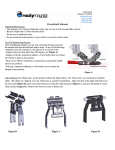
1. Why does the Metropolitan use a Gates Carbon Drive® belt drive? The Metropolitan is designed as an urban and commuting bike. The Gates Carbon Drive® belt has certain qualities which make it ideally suited for that purpose. 2. What are the advantages and disadvantages of Gates Carbon Drive® belt? Like any technical product, the Gates Carbon Drive® belt has some advantages and disadvantages. It is important for anyone considering what the personal preferences are. Advantages: No more dirty clothing due to chain oil or grease Dirt insensitive, even in rain, snow and dirt Belt itself does not need any maintenance Lower weight Increased durability Disadvantages: Sensitive in terms of bending, buckling and twisting “Abuse“ of the Gates Carbon Drive® belt is not necessarily visible from the outside No repair possibility of single “chain links” The belt line has to be more precise than a chain line 3. Will the Gates Carbon Drive® belt replace bicycle chains? No, at least not at tout terrain. However we think the belt drive is a valuable addition to existing transmissions to choose from. You can compare it to the Rohloff hub, which is also an addition to traditional derailleur systems. As mentioned in point 2 everybody needs to prioritize the bike’s intended application and opt for a system. 4. What is the tout terrain VBA System and how do I adjust the belt line? The tout terrain VBA (Variable-Belt-Adjustment) system easily allows the user to set the proper belt line and tension when readjusting the system. The VBA system is patent pending and in our view an outstanding advantage with various benefits for the user compared to other belt drive bike designs. The belt line can be simply adjusted by sliding the eccentric bottom bracket in the BB shell. 5. Does the Gates Carbon Drive® belt stretch over time? Technically speaking, the Gates Carbon Drive® belt does not stretch. In fact the belt tension can degrade over time due to wear on the sprockets. For the user this is perceived as a stretching or lengthening of the belt. By readjusting the belt tension this can be corrected. However, the sprockets and belt need to be replaced, if the systems wear limit is reached. 6. How do I adjust the correct belt tension? Ideally belt tensioning is done using a special belt adjustment gage provided by Gates. If not available, you can adjust the belt tension by pressing / lifting the belt. The Gates Carbon Drive® belt should be moved up/downwards in the center of the drive train using a force of around 20N-45N (2kg-4,5kg) and should be able to move around 10 mm in the each direction. Please also see the Gates Carbon Drive® belt owners manual for more detailed instructions. 7. What is the lifetime of a Gates Carbon Drive® belt? Unfortunately there is no general answer to this question, because this strongly depends on the conditions the belt is used in. Under laboratory conditions the lifetime reaches about 20,000km. In typical everyday usage this can be as much as 10,000-15,000km. In general the more extreme the conditions are, the greater the wear - very similar to the chain. However very likely a belt’s lifetime is more than a chain’s lifetime, also assuming the chain is very well maintained. 8. Does the Gates Carbon Drive® belt require special handling? Yes. Gates Carbon Drive® belts must neither be bent nor folded contrary to its actual form. For permanent use it is VERY IMPORTANT to follow the guidelines from the user manual. You can find the manual to download on our website and also on the belt manufacturer’s website. 9. Does the Gates Carbon Drive® belt require special maintenance? 12.03.2010 www.tout-terrain.de ©tout terrain 2010 Rev 2/3 1.2