1
HAWK-I Template Reference Guide
VLT-MAN-ESO-14800-4076
27
lowing the method outlined in Anderson et al. (2006, A&A 454, 1029) [see RD-2] . Now ,
a new pipeline recipe has been developed in house, and is part of the public HAWKI pipeline
(http://www.eso.org/sci/software/pipelines/hawki/hawki-pipe-recipes.html ).
In a second step, the absolute scale and flexures are determined (see below ??).
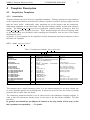
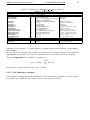
This template is used in combination with HAWKI img acq Preset (see Sect. ??). Any astrometric
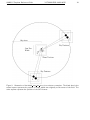
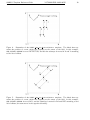
field can be used. The template performs 25 large (200 pix) offsets with 5 exposures of 60s in J
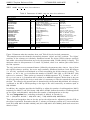
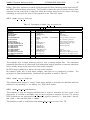
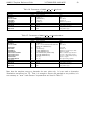
at each offset. Parameters are described in Table 20.
4.4.4
HAWKI img tec Flexure
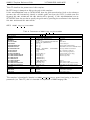
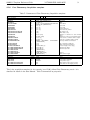
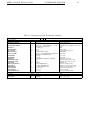
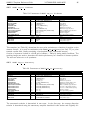
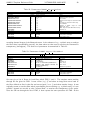
Table 21: Parameters of HAWKI img tec Flexure
HAWKI img tec Flexure.tsf
To be specified:
Parameter
DET.DIT
DET.NDIT
INS.FILT.NAME
SEQ.ANGLE.START
SEQ.ANGLE.STEP
SEQ.ANGLE.STOP
SEQ.FILEID
SEQ.NEXPO
SEQ.OBSTYPE.LIST
SEQ.RETURN
Fixed values:
Parameter
DPR.CATG
DPR.TECH
DPR.TYPE
Hidden
no
no
no
no
no
no
yes
no
no
no
Range (Default)
1.6762..3600 (NODEFAULT)
1..1000 (1)
(NODEFAULT)
-180..180 ()
1..100 ()
-240..240 ()
(Flexure)
1..1000 (1)
O S (O)
T F (T)
Label
DIT (secs)
NDIT
Filter Name
Hidden
yes
yes
yes
Value
TECHNICAL
IMAGE
ASTROMETRY,STD
Label
Data product category
Data product technique
Data product type
Filename id
Number of exposures
Observation type list, O/S
Return to origin?
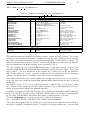
This template determines the absolute scale and flexure, as the second step of the astrometry
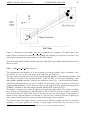
calibration. It is used in combination with HAWKI img acq Preset (see Sect. ??). It points
towards a standard astrometric field, configures the instrument, and acquires one (1) image per
position angle of the telescope adapter/rotator, as it scans the angles from SEQ.ANGLE.START to
SEQ.ANGLE.END in steps of SEQ.ANGLE.STEP. Typically, this is part of the earthquake procedures,
and it is described in Table 21.
4.4.5
HAWKI img tec DetTest
The characteristics of the detectors, such as read-out noise, dark current, bad pixels, linearity,
persistence, etc, are monitored periodically. This can be achieved with the calibration templates
listed above (in particular with HAWKI img cal Darks).
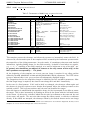
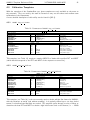
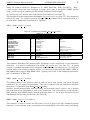
However, several characteristics, such as linearity and conversion factor, require a set of internal
flat-fields with various illumination in order to be determined. This is the purpose of this template.
Note, however, that HAWK-I has no internal calibration source, i.e. the images are acquired on the
dark Nasmyth screen using the Ks filter (see Table 22).
4.4.6
HAWKI img tec FilterWheel
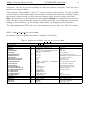
This template is used to exercise the filter wheel, and it is part of the daily instrument startup
sequence. It was originally meant to determine the reproducibility of the filter wheel positioning,