1
CommScope’s POL offers operators a highly efficient, point-to-multipoint network solution that
combines voice, data and video services onto a single passive network. Customers can choose
our EPON or GPON solutions with various deployment sizes to meet their budget and business
demands. Our EPON/GPON systems are U.S. Department of Defense (DoD) JITC-certified for
use in U.S. military and government applications. They are also CableLabs® DPoE™ certified,
which not only guarantees multivendor interoperability, but also supports “Turbo EPON” mode
that allows EPON to run at “2Gbps down/1Gbps up” data rates.
Configuring and installing the OLT
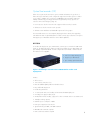
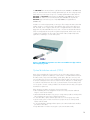
The first step to configure an OLT is to plug in the SCM, PSM, PIM or other modules into the
corresponding labeled slots of the chassis. Although all the modules are hot pluggable, ESD
precautions still need to be taken during the transportation and installation process.
If the PSM is dc powered, a -48Vx20A dc power supply is recommended for each PSM.
When connecting to the dc power supply, make sure the polarity is connected correctly
according to the label. The two dc power supplies on one OLT chassis are recommended to
be plugged into separate UPS power banks for power redundancy to prevent simultaneous
emergency power outage. When one power supply is down, a critical yellow light warning
will signal the operator to check the system.
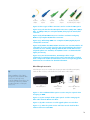
Customers are recommended to refer to the approved vendor list to purchase the uplink
transceivers they need for the LIMs, which include 1Gbps SFP, 10Gbps SFP+, or 10Gbps XFP.
Customers can add PIM cards as their organization grow. The PIM cards for C9016 and
C9264 are exchangeable. All PIM cards will come with corresponding GPON or EPON
transceivers.
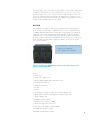
The OLT location should have good air ventilation to prevent the system from overheating. The
surrounding area should have adequate space for efficient fan ventilation. The C9016 has air
intakes/exhaust on the sides, so this area needs to remain clear. The C9264 and the C9500
utilize air intakes on the bottom front and air exhaust out the rear at the top, so 1U of space
should be reserved above and below the unit for proper airflow. The ground terminal should be
connected to ground before power on the system.
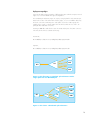
When powering on the system the first time, connect a console terminal (USB) to the com port
of the SCM with the provided cable and specify the IP address of the SCM. After setting up
the IP address, the console terminal can then talk to the system through the Ethernet port of the
SCM.
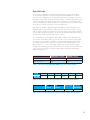
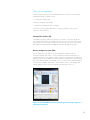
The following list shows a basic OLT configuration customers can start with without redundancy
capability.
• One C9016, C9264, or C9500 chassis
• One SCM card
• One LIM card, and corresponding SFP (1Gbps), SFP+ (10Gbps), XFP (10Gbps) line
transceivers
• One PIM card, and corresponding GPON/EPON transceivers
• The uplink transceivers and the GPON/EPON transceivers can be ordered minimum
quantity to start with and add gradually as you grow
Please refer to the reference documents OLT C9016 Hardware Installation Guide and OLT
C9500 Hardware Installation Guide for detailed OLT build-up and installation information.
9