1
Europump Guideline
Safety of Electrical Submersible Motors, 2000-08
NOTES
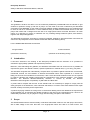
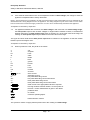
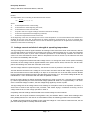
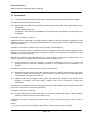
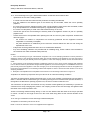
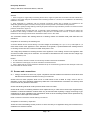
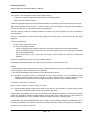
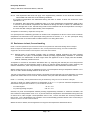
The temperature rise of a winding is calculated from the formula:
∆t =
R2 - R1
( k + t1) - (t2 - t1 )
R1
where
∆t
is the temperature rise of the winding;
R1
is the resistance at the beginning of the test;
R2
is the resistance at the end of the test;
k
is equal to 234.5 for copper windings and 225 for aluminium windings;
t1
is the room temperature at the beginning of the test;
t2
is the room temperature at the end of the test.
At the beginning of the test, the windings are to be at room temperature. It is recommended that the resistance of
windings at the end of the test be determined by taking resistance measurements as soon as possible after
switching off and then at short intervals so that a curve of resistance against time can be plotted for ascertaining the
resistance at the instant of switching off.
11 Leakage current and electric strength at operating temperature
The high-voltage test shall be applied between the windings under test and the frame of the machine, with the
core and the windings not under test connected to the frame. It shall be applied only to a new and completed
machine with all its parts in place under conditions equivalent to normal working conditions and shall be
carried out at the manufacturer's works. When a temperature-rise test is carried out, the dielectric test shall
be carried out immediately after this test.
In the case of polyphase machines with rated voltage above 1 kV having both ends of each phase individually
accessible, the test voltage shall be applied between each phase and the frame, with the core and the other
phases and windings not under test connected to the frame.
The test voltage shall be of power-frequency, and shall be as near as possible to sine wave form.
The test shall be commenced at a voltage of not more than one-half of the full test voltage. The voltage shall
then be increased to the full value steadily or in steps of not more than 5% of the full value, the time allowed
for the increase of the voltage from half to full value being not less than 10 s. The full test voltage shall then be
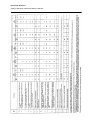
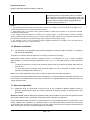
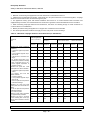
maintained for 1 min in accordance with the value as specified in Table V.
During the routine testing of quantity produced machines up to 5 kW (or kVA), the 1 min test may be replaced
by a test of approximately 5 s at the normal test voltage specified in Table V or of approximately 1 s at 120%
of the normal test voltage in Table V, the test voltage being applied by means of prods.
The high-voltage test at full voltage made on the windings on acceptance shall not be repeated. If, however, a
second test is made at the request of the purchaser, after further drying if considered necessary, the test
voltage shall be 80 % of the voltage specified in Table V.
Completely rewound windings shall be tested at the full test voltage for new machines.
When a user and a repair contractor have agreed to carry out dielectric tests in cases where windings have
been partially rewound or in the case of an overhauled machine, the following provisions are recommended:
a) partially rewound windings are tested at 75% of the test voltage for a new machine. Before the test, the old
part of the winding shall be carefully cleaned and dried;
Page - 17 -