1
a variety of sophisticated UI exploration tasks. Throughout, we draw attention to certain areas where a user of the
technique—nominally, an investigating programmer—must
make informed choices of how to apply it, though a full exploration of these issues is beyond the scope of this paper.
Our description is language-neutral, and suitable for retrospective integration with existing UI applications and development tools; as such, it is our hope that in the future, models of many UIs, implemented using various languages and
toolkits, will be produced using these techniques, and hence
contribute to a lifting of user interface implementation standards. In particular, integration into IDEs and development
workflows seems a promising area, and one where the requirements of the API (discussed below) are easily met; reverse engineering existing systems would also be valuable,
but harder to achieve in general because of the deep level of
integration required.
2.
USER INTERFACE MODEL DISCOVERY
In UI model discovery we systematically explore the state
space of an interactive system by simulating the actions of a
user, using standard search techniques [25] augmented with
domain-specific aspects such as discovery/actuation of UI
widgets. Discovery produces a directed graph whose nodes
represent (sets of) system states, and whose edges represent
user actions.
Our current scope is reactive devices with discrete interfaces
and finite state spaces, subject to a number of assumptions.
In particular: that the system responds (almost) immediately
to user actions, that the responses are manifested in the system’s state (possibly including the state of its UI), and that
any silent or external (non-user) actions which modify the
state may be modelled by (perhaps explicitly) adding them
to the set of explored actions—see section 2.2.2; e.g., tick
actions are used in the infusion pump model in [24] to represent passing time in certain modes. There are clearly many
non-trivial devices that satisfy these assumptions.
We take the view that such an interactive system consists
of an interface with which the user interacts, and (usually)
an underlying system implementing domain-specific logic.
This separation of concerns may be designed into the architecture (e.g., using the MVC pattern [15]), or may be less
well-defined. We call the state of the interactive part the GUI
state, in principle visible to the user, and we call the state of
the underlying system the inner state.
2.1
Motivating Example
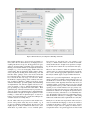
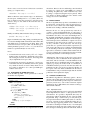
Figure 1 shows an example of UI model discovery in action.
The UI being discovered, and the discovery tool, were written in Haskell [13] using the wxWidgets [18] toolkit—see
section 4.1 for further discussion. The tool, its source code,
and a screencast showing its operation, may be found online.1 The tool displays a number of features typical of our
discovery approach.
The interface being discovered, or “System Under Discovery” (SUD), is at the top-left. By way of example, it is de1
http://www.cs.swan.ac.uk/∼csandy/research/discovery/aircon/
liberately trivial: a simulation of an air conditioning control unit with controls: on/off; heat/cool; fan speed (three
settings); target temperature (5–30°C). The Control panel is
used to control and monitor UI discovery. First, the SUD’s
controls are listed: sl On/Off, etc. The available controls
and associated actions have been discovered automatically
by the tool—and may vary between states of the SUD. A
textual representation of the SUD’s inner state is shown as
“State:”; here this system has a 1-1 correspondence between
GUI state and inner state, but this need not always be the
case—see section 2.2.1. Beneath this panel are a number
of counters indicating the discovery progress so far, and a
“health check” of the discovered model (in this case, it is
weakly connected, which is reasonable as discovery is still in
progress). Finally, there are buttons to start discovery (which
becomes “Pause Discovery” if it is running), to execute just
a single cycle of the discovery algorithm, and to reset to an
initial state. The State space panel to the right previews the
SUD’s state space graph as discovered so far. Below this
are buttons to redraw the preview (if the window is resized),
to view the state space in full using an external application
(rendering from PDF or GML, a graph language), or to save
it in various formats suitable for further processing.
In the illustration, discovery is only partially complete; 1012
discovery steps have occured; 184 states have been discovered, of which 170 have been fully explored, while the rest
are in a pool of 14 known but as yet unexplored states with
80 associated actions performable in those states. The SUD
is simple enough for us to see that upon completion, a total
of 2 × 2 × 3 × 26 = 312 states will have been explored.
2.2
Requirements for UI Model Discovery
The UI model discovery algorithm simulates the actions of
a user systematically performing all possible actions in all
possible states. The API is the formal interface between the
UI application and the discovery tool—a bridge which must
be implemented before discovery may take place on a given
platform. The API provides four key capabilities, which we
shall now consider in turn:
• ability to compute, store and compare inner states;
• ability to identify, for a given inner state, the actions which
may be performed in that state;
• ability to perform such actions;
• ability to backtrack, so all of a state’s actions can be explored.
2.2.1
Identifying and modelling inner state
A node in the discovered model represents an instance of
the SUD’s inner state; such a state consists of a collection
of state variables projected from the SUD. This notion is
deliberately left abstract and generic in order to support a
wide range of possible implementations: it is the task of the
interaction programmer modelling the SUD to choose and
implement an appropriate projection. However, this task is
critically important (e.g., see [4] for an in-depth examination of questions surrounding such projections) and so we
consider some key factors here.