1
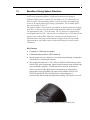
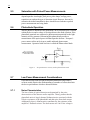
7 1.3 Benefits of Using Sphere Detectors Newport’s calibrated integrating sphere detectors consist of the 819C and 819D series integrating spheres, configured to measure diverging or collimated light sources, respectively, and either a Si, UV-enhanced or an InGaAs sensor. The integrating sphere is an ideal tool for measuring high power or diverging light sources using a photodiode. The available sphere sizes are between 2” and 5.3”. The spheres with a silicon detector are suitable for the measurements ranging from 400 – 1100 nm, while the models with an InGaAs detector are suitable for approximately 800 – 1650 nm range. The UV detector is optimized for wavelengths between 200 - 400 nm, but it is calibrated up to 1100 nm. All the spheres come with an SMA fiber optic connector on the North pole as a standard feature, allowing a small amount of light pickoff for wavelength measurement or any further analysis without affecting the overall system calibration. Key Features Competitive calibration uncertainty Calibrated and traceable to NIST standards Measurements are less sensitive to exact detector positioning, compared to a photodiode or a thermopile detector The models that end with –CAL2 utilize a 918D-SL-OD1 detector with a built-in OD1 optical attenuator, improving the dynamic range and the high power handling capability. The thermal sensor near the sensor head allows correction of the optical power measurement as a function of temperature when used with by the optical meter Models 1918-R, 1936R/2936-R, and 1830-R. The On/Off position of the attenuator is automatically detected and the temperature reading of the detector as well. Figure 1 Attenuator ‘ON/OFF’ Switch is on the photodiode head