1
LS27B Hardware User’s Manual
5.1.1.3
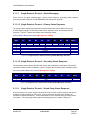
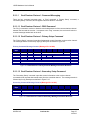
Single Receiver Protocol - Status Messaging
There are four (4) status message types: primary status response, secondary status response,
stored setup status response, and the EEPROM Page read status response.
5.1.1.3.1 Single Receiver Protocol - Primary Status Response
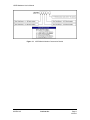
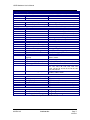
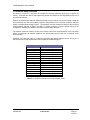
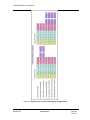
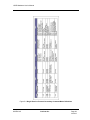
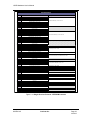
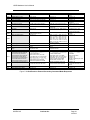
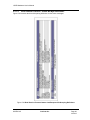
The primary status response provides the host with fundamental receiver status such as the
received signal strength, FM deviation measurement, AM index value, and the detected AM
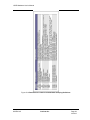
frequency. Figure 5-7 depicts the primary status message content.
Primary Status Response Content (Message ID = 0x2000)
Content
Byte
1
2
3
4
5
6
7
8
D7
D6
D5
D4
RSSI7
-
RSSII6
-
RSSI5
-
RSSI4
-
D3
RSSI3
-
D2
D1
MODID
RSSI2
RSSI1
RSSI9
D0
Notes:
RSSI0
RSSI8
DEV
AMI
AMFREQ1
AMFREQ2
SNUM
Figure 5-7 Single Receiver Protocol Primary Status Message Structure
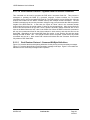
5.1.1.3.2 Single Receiver Protocol - Secondary Status Response
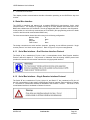
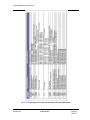
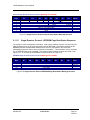
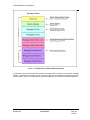
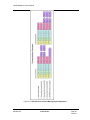
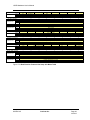
The secondary status response provides the receiver with configuration information and provides
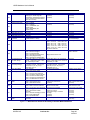
information relates to mode commands. Figure 5-8 depicts the secondary status message content.
Secondary Status Response Content (Message ID = 0x2001)
Content
Byte
D7
1
2
3
D6
D5
D4
D3
D2
D1
D0
Notes:
MODE
RTN1
RTN2
Figure 5-8 Single Receiver Protocol Secondary Status Message Structure
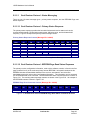
5.1.1.4
Single Receiver Protocol - Stored Setup Status Response
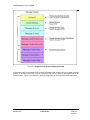
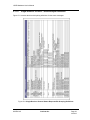
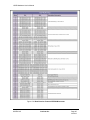
A total of sixteen (16) receiver setups can be stored in the receiver’s internal memory and then be
recalled by simply providing an index value. (Future provisions will allow these setups to be
activated via discrete interaction.) These configurations can be reviewed using secondary mode
commands. The stored setup status response message structure is shown in Figure 5-9.
U027B101C
Lumistar Inc.
Page 30
12/19/12