1
Product
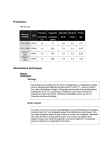
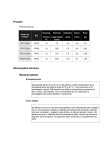
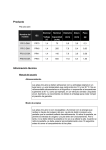
Zinc-air Battery
Model
Name
PR10D6A
PR13D6A
PR312D6A
PR675D6A
Nominal
Nominal
Voltage
(V)
Capacity
(mAh)
(mm)
(mm)
(g)
PR70
1,4
75
5,8
3,6
0,3
PR48
1,4
265
7,9
5,4
0,83
PR41
1,4
145
7,9
3,6
0,58
PR44
1,4
605
11,6
5,4
1,85
IEC
Diameter Height
Weight
Technical Information
User Manual
Storage
Please do not store zinc air batteries in the fridge! The best temperature for
storing batteries is between 10 and 30C - in a dry place in the original
packaging. Please do not expose the batteries to temperatures above 50C, for
example, in a closed car in the sun. Nor should you bend the packaging, in
case you damage the seal.
How to Use
Zinc air batteries are not rechargeable and are powered by oxygen from the air.
A tab keeps the button cell hermetically sealed. Once you remove the tab,
oxygen can enter and the cell is activated. Therefore, you should not remove
the tab until you have need of the battery. After removing the tab you should
wait ten seconds before closing the battery compartment.
Contact with skin or metal
Please avoid bringing an activated battery into contact with metallic objects, as
this could cause them to drain or short-circuit. Button cells are also sensitive to
the natural skin fat of the hands. If this gets onto the cell, it can hinder the
current flow. Hence we advise that you only grip the battery by the tab.
Recycling and disposal
A used hearing aid battery should never remain in the hearing aid longer than
necessary. Please support our efforts to protect the environment and do not
throw a used battery away with the household waste. Primary batteries may be
disposed of via the communal reuse arrangements, provided that no local rules
to the contrary exist. Like all batteries, hearing aid batteries must never be set
fire to or incinerated.
Information for Safety
Safety precautions during handling of batteries
Always insert batteries correctly with regard to the polarities (+ and –) marked
on the battery and the equipment
Do not short-circuit batteries.
Do not charge batteries.
Do not force discharge batteries.
Do not mix old and new batteries or batteries of different types or brands.
Exhausted batteries should be immediately removed from equipment and
properly disposed of.
Do not heat batteries.
Do not weld or solder directly to batteries.
Do not dismantle batteries.
Do not deform batteries.
Do not dispose of batteries in fire.
Keep batteries out of the reach of children.
Do not allow children to replace batteries without adult supervision.
Do not encapsulate and/or modify batteries.
Store unused batteries in their original packaging away from metal objects. If
already unpacked, do not mix or jumble batteries.
Remove batteries from equipment if it is not to be used for an extended period
of time unless it is for emergency purposes.
Packaging
The packaging shall be adequate to avoid mechanical damage during
transport, handling and stacking. The materials and packaging design shall be
chosen so as to prevent the development of unintentional electrical contact,
corrosion of the terminals and some protection from the environment.
Handling of battery cartons
Rough handling of battery cartons may result in battery damage and impaired
electrical performance and may result in leakage, explosion, or possibly fire.
Display and storage
Batteries shall be stored in well-ventilated, dry and cool conditions.
Battery cartons should not be piled up in several layers (or should not exceed a
specified height).
When batteries are stored in warehouses or displayed in retail stores, they
should not be exposed to direct sun rays for a long time or placed in areas
where they get wet by rain.
Do not mix unpacked batteries so as to avoid mechanical damage and/or shortcircuit among each other.
For normal storage, the temperature should be between +10 °C and +25 °C
and should never exceed +30 °C. Extremes of humidity (over 95 % RH and
below 40 % RH) for sustained periods should be avoided since they are
detrimental to both batteries and packing. Batteries should therefore not be
stored next to radiators or boilers nor in direct sunlight.
Although the storage life of batteries at room temperature is good, storage is
improved at lower temperatures provided special precautions are taken. The
batteries should be enclosed in special protective packing (such as sealed
plastic bags or variants) which should be retained to protect them from
condensation during the time they are warming to ambient temperature.
Accelerated warming is harmful.
Transportation
When loaded for transportation, battery packages should be so arranged to
minimise the risk of falling e.g. one from the top of another. They should not be
stacked so high that damage to the lower packages occurs. Protection from
inclement weather should be provided.
Disposal
Do not dismantle batteries.
Do not dispose of batteries in fire except under conditions of controlled
incineration.
Primary batteries may be disposed of via the communal reuse arrangements,
provided that no local rules to the contrary exist.
Where there is provision for the collection of used batteries, the following
should be considered:
▼Store collected batteries in a non-conductive container
▼Store collected batteries in a well-ventilated area. Since some used
batteries may still contain a residual charge, they could be short
circuited, charged or force discharged and thereby evolve hydrogen
gas. If collection containers and storage areas are not properly
ventilated, hydrogen gas can build up and explode in the presence of
an ignition source.
▼Do not mix collected batteries with other materials. Since some used
batteries may still contain a residual charge, they could be short
circuited, charged or force discharged. The subsequent possible heat
generation can ignite flammable wastes such as oily rags, paper or
wood and can cause a fire.
▼Consider protecting used battery terminals, particularly those batteries
with high voltage, to preclude short circuits, charging and force
discharging, for instance, by means of covering battery terminals with
insulating tape.
▼Failure to observe these recommendations may result in leakage, fire,
and/or explosion.
Instructions for use
Always select the correct size and grade of battery most suitable for the
intended use. Information provided with the equipment to assist correct battery
selection should be retained for reference.
Replace all batteries of a set at the same time.
Clean the battery contacts and also those of the equipment prior to battery
installation.
Ensure that the batteries are installed correctly with regard to polarity (+ and –).
Remove batteries from equipment which is not to be used for an extended
period of time.
Remove exhausted batteries promptly.
FAQ (Frequestly Asked Questions)
How should zinc air hearing batteries be stored?
The best environment to store zinc air batteries is between 10 and 30C
temperature and in a dry place in the original packaging. Please do not store
batteries in the refridgerator, and do not expose them to temperatures above
50C, for example, in a closed car under the sun. Please do not bend the
packaging which causes damage to the seal.
Why do batteries have a tab?
Zinc air batteries is powered by oxygen from the air. The tab seals the air hole
on the battery. In approximately ten seconds after tab is removed, zinc ari
battery is activated to be used.
Please do not remove the tab before the hearing aid battery is used.
Reattaching the tab will not prolong the service life of the battery.
How long is the service life of batteries?
The service life of the zinc air battery depends on the length of use per day and
the type of hearing aid used.
Why do hearing aid batteries leak?
In case the battery is deep drained, it can leak. Please do not remain used
battery in the hearing aid longer than necessary.
Why do hearing aid batteries swell?
A zinc air battery can expand in the case the discharged battery is left in the
hearing aid and deep drained. It can also expand under extremely high humid
environment.
What should I do if a battery is swallowed ?
In case of swallowing of a battery, please seek medical assistance as promptly
as possible.
How should I dispose of the batteries ?
Please do not remain used batteries in the hearing aid longer than necessary.
Please dispose batteries according to each local regulations. Same as all other
batteries, zinc air batteries must never be set on fire or incinerated.
Contact
Customer Service
Sony Energy Customer Service
BP80075, 68153 Ribeauville Cedx - France
Manufacturer Name & Address
Sony Corporation 1-7-1 Konan, Minato-ku, Tokyo, JAPAN