1
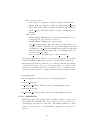
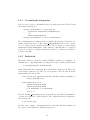
The operation op1 /> op2 returns the lowest integer that is greater than or equal
to the quotient of op1 / op2, and the operation op1 /< op2 returns the greatest
integer that is less than or equal to the quotient. The arithmetic operations must
be sound, in order to ensure that no solution is lost. For example, the minimum
times any positive integer remains the minimum.
Arc-consistency
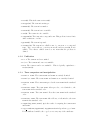
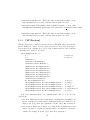
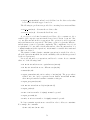
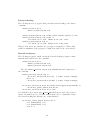
The following propagator, which extends the one shown above, maintains arcconsistency for the constraint.
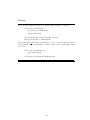
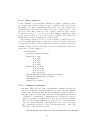
’aX=bY+c’(A,X,B,Y,C) =>
’aX=bY+c_reduce_domain’(A,X,B,Y,C),
’aX=bY+c_forward’(A,X,B,Y,C),
’aX=bY+c_interval’(A,X,B,Y,C),
’aX=bY+c_arc’(A,X,B,Y,C).
’aX=bY+c_arc’(A,X,B,Y,C) =>
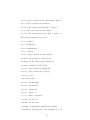
’aX in bY+c_arc’(A,X,B,Y,C), % reduce X when Y changes
MC is -C,
’aX in bY+c_arc’(B,Y,A,X,MC). % reduce Y when X changes
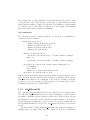
’aX in bY+c_arc’(A,X,B,Y,C),var(X),var(Y),{dom(Y,Ey)} =>
T is B*Ey+C,
Ex is T//A,
(A*Ex=:=T -> fd_set_false(X,Ex);true).
’aX in bY+c_arc’(A,X,B,Y,C) => true.
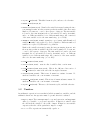
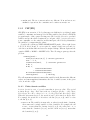
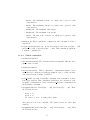
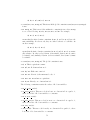
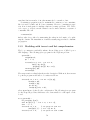
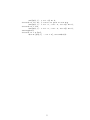
Whenever an element, Ey, is excluded from the domain of Y, the propagator ’aX in
bY+c arc’(A,X,B,Y,C) is activated. If both X and Y are variables, the propagator
will exclude Ex, which is the counterpart of Ey, from the domain of X. Again,
if either X or Y becomes an integer, the propagator does nothing. The forwardchecking rule will take care of that situation.
14.5
all different(L)
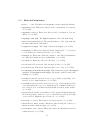
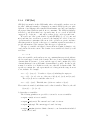
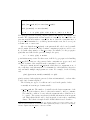
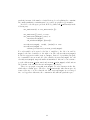
The constraint all different(L) holds if the variables in L are pair-wise different. One naive implementation method for this constraint is to generate binary
disequality constraints between all pairs of variables in L. This section provides an
implementation of the naive method which uses a linear number of propagators.
Stronger filtering algorithms have been proposed for the global constraint [14], and
the algorithm that has been adopted for all distinct in B-Prolog is presented
in [22].
The naive method, which splits all different into binary disequality constraints, has two problems: First, the space required to store the constraints is
81