1
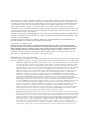
The Emission Likelihood and Transition Likelihood scores allow the algorithm to assign
scores to individual loci, rather than all pairs of loci.
For example, a given locus can be weakly phased but confidence in the phasing between
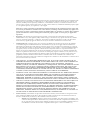
variants separated by that locus can remain high. This situation can arise if a locus has
low coverage and/or poor quality base calls, but the clouds spanning the variant connect
other variants with better coverage. In this case, you can have a low single-site confidence
(a low EL score) and a high confidence in phasing spanning these loci (a high TL score)
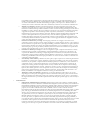
These scores can help answer the following questions.
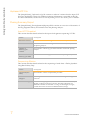
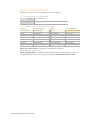
Table 3 Phase Scoring Questions and Answers
Question
Answer
How confident can we be in the
Calculate the combined probability (PQ1) of a switch
reported relative phasing of 2
error between the 2 (TL value of the second site) and a
adjacent sites? If 2 sites are on the
single-site error at either locus (EL values of both sites).
same chromosome and there are no Thus, for loci i and i+1, the relative phasing confidence
intervening loci for which phasing is can be estimated as follows:
reported, these 2 sites are 'adjacent'. P = TL * EL * EL
Q1
i+1
i
i+1
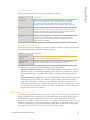
How confident can we be in the
reported relative phasing of 2 distal
sites?
FastTrack Phasing Analysis Services Guide
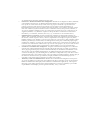
Calculate the combined probability (PQ2) of switch
errors anywhere between the 2 loci (TL value at the 2
loci and between) and no single-site error at either locus
(EL value at the 2 sites). Thus, for loci i and i+n, the
relative phasing confidence can be estimated as follows:
PQ2 = TLi * TLi+1 * TLi+2 *…* TLi+n * ELi * ELi+n
18
Intended Use of Phase Scoring
Intended Use of Phase Scoring