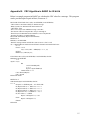
1
Appendix C: Surface arrival time, and total surface time
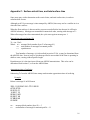
Some users may wish to determine surface arrival time, and total surface time, in order to
calculate drift vectors.
Although each 31-byte message is time-stamped by ARGOS, there may not be a satellite in view
when the float surfaces.
When the float surfaces (ie detects surface pressure recorded before last descent) it will begin
ARGOS telemetry. Messages are transmitted in numerical order, starting with message no. 1.
When all messages have been transmitted, the cycle starts again at message no. 1.
Elapsed time since surfacing (Te)
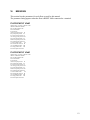
Te = (m-1)*n*r
Where: m = message block number (byte 03 of message 01)
n = total number of messages to transmit profile
r = repetition rate
Total number of messages (n) is described in section IV (b), or may be determined from
the ARGOS data. Note (n) may be less than specified in user manual if the float is operating in
shallow water, causing reduced profile length.
Repetition rate (r) is the time interval between ARGOS transmissions. This value can be
determined from section V, or from the ARGOS data.
Approximate time of surfacing
Subtracting Te from the ARGOS time stamp can determine approximate time of surfacing
Example
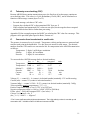
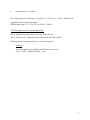
Below is message 01 in DS format
2001-11-02 22:47:54 1 CF 01 05 02
AF 02 2F 00
85 01 01 01
16 92 17 19
9E 94 01 AD
85 09 1F 48
97 9B 00 46
62 24 0E
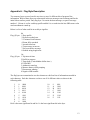
m=
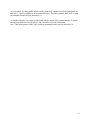
n=
message block number (byte 03) = 5
total number of messages to transmit profile = 11
16