1
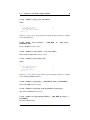
6.20
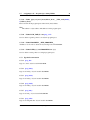
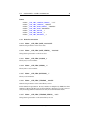
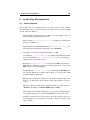
<stdlib.h>: General utilities
6.20.4.26
base)
102
unsigned long strtoul (const char ∗ __nptr, char ∗∗ __endptr, int __-
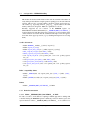
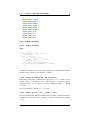
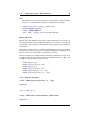
The strtoul() function converts the string in nptr to an unsigned long value. The conversion is done according to the given base, which must be between 2 and 36 inclusive,
or be the special value 0.
The string may begin with an arbitrary amount of white space (as determined by isspace()) followed by a single optional ’+’ or ’-’ sign. If base is zero or 16, the string
may then include a "0x" prefix, and the number will be read in base 16; otherwise, a
zero base is taken as 10 (decimal) unless the next character is ’0’, in which case it is
taken as 8 (octal).
The remainder of the string is converted to an unsigned long value in the obvious
manner, stopping at the first character which is not a valid digit in the given base.
(In bases above 10, the letter ’A’ in either upper or lower case represents 10, ’B’
represents 11, and so forth, with ’Z’ representing 35.)
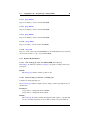
If endptr is not NULL, strtoul() stores the address of the first invalid character in
∗endptr. If there were no digits at all, however, strtoul() stores the original value of
nptr in endptr. (Thus, if ∗nptr is not ’\0’ but ∗∗endptr is ’\0’ on return, the
entire string was valid.)
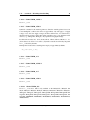
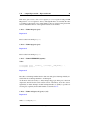
The strtoul() function return either the result of the conversion or, if there was a leading minus sign, the negation of the result of the conversion, unless the original (nonnegated) value would overflow; in the latter case, strtoul() returns ULONG_MAX, and
errno is set to ERANGE. If no conversion could be performed, 0 is returned.
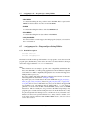
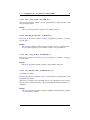
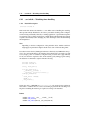
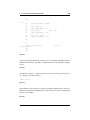
6.20.4.27
char∗ ultoa (unsigned long int __val, char ∗ __s, int __radix)
Convert an unsigned long integer to a string.
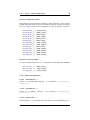
The function ultoa() converts the unsigned long integer value from val into an ASCII
representation that will be stored under s. The caller is responsible for providing sufficient storage in s.
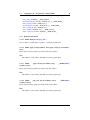
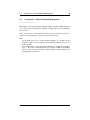
Note:
The minimal size of the buffer s depends on the choice of radix. For example, if
the radix is 2 (binary), you need to supply a buffer with a minimal length of 8 ∗
sizeof (unsigned long int) + 1 characters, i.e. one character for each bit plus one
for the string terminator. Using a larger radix will require a smaller minimal buffer
size.
Warning:
If the buffer is too small, you risk a buffer overflow.
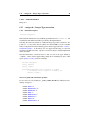
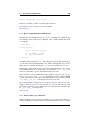
Conversion is done using the radix as base, which may be a number between 2
(binary conversion) and up to 36. If radix is greater than 10, the next digit after
’9’ will be the letter ’a’.
Generated on Mon Oct 9 22:30:53 2006 for avr-libc by Doxygen