1
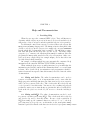
CHAPTER 17
Tactics and Tacticals
Modify tactics.tex
1. Overview
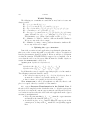
Ordinarily in Tps3, the user proceeds by performing a series of atomic
actions, each one specified directly. For example, in constructing a proof, she
may first apply the deduct rule, then the rule of cases, then the deduct rule
again, etc.. These actions are related temporally, but not necessarily in any
other way; the goal which is attacked by one action may result in several new
goals, yet there is no distinction between goals produced by one action and
those produced by another. In addition, this use of small steps prohibits the
user from outlining a general procedure to be followed. A complex strategy
cannot be expressed in these terms, and thus the user must resign herself
to proceeding by plodding along, using simple (often trivial and tedious)
applications of rules.
Tactics offer a way to encode strategies into new commands, using a
goal-oriented approach. With the use of tacticals, more complex tactics
(and hence strategies) may be built. Tactics and tacticals are, in essence,
a programming language in which one may specify techniques for solving
goals.
Tactics are called partial subgoaling methods by [GMW79]. What this
means is that a tactic is a function which, given a goal to be accomplished,
will return a list of new goals, along with a procedure by which the original
goal can be achieved given that the new goals are first achieved. Tactics also
may fail, that is, they may not be applicable to the goal with which they are
invoked.
Tacticals operate upon tactics in much the same way that functionals
operate upon functions. By the use of tacticals, one may create a tactic that
repeatedly carries out a single tactic, or composes two or more tactics. This
allows one to combine many small tactics into a large tactic which represents
a general strategy for solving goals.
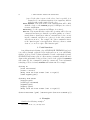
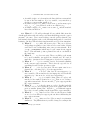
As implemented in Tps3, a tactic is a function which takes a goal as
an argument and returns four values: a list of new goals, a message which
tells what the tactic did (or didn’t do), a token indicating what the tactic
did, and a validation, which is a lambda expression which takes as many
arguments as the number of new goals, and which, given solutions for the
new goals, combines the solutions into a solution for the original goal. It is
193