1
lllllillllllllllllllllllllllllllllllllllllllllllllllllllllllllllllllllllllll
USOO5577185A
United States Patent [19]
[11]
Patent Number:
'Iimnell et a].
[45]
Date of Patent:
[54]
Nov. 19, 1996
CONIPUTERIZED PUZZLE GAMING
Even More Incredible Machine Sid & Al’s Incredible Toons,
METHOD AND APPARATUS
In Store Video, Dynarnix, 1993, video tape.
Foley et al., Computer Graphics: Principles and Practice,
Addison-Wesley Publishing Company, Inc., 1990, pp.
[75] Inventors: Je?'rey A. Tunnell; Christopher M.
Cole, both of Eugene, Oreg.
Goodwin, “Sherlock Holmes Whodunits and Rube Goldberg
[21] Appl. No.: 337,946
[22] Filed:
Contraptions”, PC World, v11, n7, p. 337(2), JuL, 1993.
Nov. 10, 1994
[51]
1111.016
[52]
U5. c1. ............................ .. 395/173; 395/806; 463/9;
.......................... .. G06T 13/00
463/33
Field of Search ................................... .. 395/152, 153,
395/154, 159; 273/153, 433, 434, 437,
438; 434/185
[56]
230-232.
Brenesal, “The Incredible Machine”, Computer Shopper,
v13, n8, p. 495(1), Aug, 1993.
[73] Assignee: Dynamix, Inc., Eugene, Oreg.
[58]
5,577,185
Primary Examiner-Heather R. Herndon
Assistant Examiner—Stephen Hong
Attorney, Agent, or Firm—Kolisch, Hartwell, Dickinson,
McCorrnack & Heuser
[57]
ABSTRACT
Computerized puzzle gaming method and apparatus are
References Cited
described. The method and apparatus provide for the com
puter-assisted creation, storage, recall, editing, solving and
U.S. PATENT DOCUMENTS
sharing of animated puzzles. Puzzles may be created for
4,884,972
5,261,820
5,287,446
12/1989 Gasper .................................. .. 434/185
11/1993 Slye et al. ....... ..
434/43
2/1994 Williams et a1. .
.. 395/152
5,377,997
1/1995 Wilden et al.
5,395,242
5,425,139
5,430,835
3/1995 Slye et al, ....... ..
434/43
6/1995 Williams et a1. .
.. 395/152
7/1995 Williams et a1. ..................... .. 395/154
.. 273/434
OTHER PUBLICATIONS
Incredible Toons, sales sheet, 1993.
Lemmings 2 The Tribes, The Manual, 1993.
Lemmings 2 The Tribes, A Visitors Guide to Lemming
Island, 1993.
The Incredible Machine, Log of Experiments, 1993.
The Even More Incredible Machine, game manual, 1994.
The Even More Incredible Machine, Journal Entries,
Jun-Aug. 1993.
3D Home Architect, User’s Manual, cover, title pages, table
of contents, and pp. 22-30, 46-49, 136-137 and 149-155,
1993.
posing and solution on a personal computer’s (PC’s) display
screen by user selection and placement of objects including
structural members, action devices and characters each of
which has a set of programmed physical and intellectual
attributes. Structural members and characters, for example,
have an arti?cial intelligence in that they seemingly are
aware of the existence, identity, proximity, orientation and
activity of objects around them and selectively act on those
objects or react to those objects in prede?ned ways to
enhance the animation. Objects are programmed to obey
physical laws such as the laws of gravity, motion, etc., and
natural laws such as hunger, a?inity, etc. Such objects are
selected by the user from menus displayed adjacent a
puzzle-building region of the display screen of a computer
terminal having a cursor control system, preferably includ
ing a mouse.
8 Claims, 3 Drawing Sheets
U.S. Patent
Nov. 19, 1996
(:31
O
1
Sheet 1 of 3
5,577,185
U.S. Pateht
40
Nov. 19, 1996
Sheet 2 of 3
5,577,185
US. Patent
Nov. 19, 1996
Sheet 3 of 3
5,577,185
mFiUE
5,577,185
1
2
COlVIPUTERIZED PUZZLE GAIVIING
IVIETHOD AND APPARATUS
natural laws such as hunger, affinity, etc. Such objects are
selected by the user from menus displayed adjacent a
puzzle-building region of the display screen of a computer
terminal having a cursor control system, preferably includ
TECHNICAL FIELD
ing a mouse.
This invention relates generally to computerized games.
More speci?cally, it concerns an interactive puzzle-building
BRIEF DESCRIPTION OF THE DRAWINGS
and -solving game by which a user selects and creates a
unique cartoon puzzle by selective placement of objects
including structural members, action devices and cartoon
characters each having pre-programmed attributes.
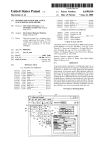
FIG. 1 is a display screen depiction of the invented
IO
method and apparatus showing characters and three-dimen
sional structural members as objects.
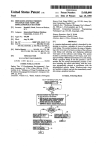
FIG. 2 is a system block diagram of the invented appa
ratus made in accordance with its preferred embodiment.
BACKGROUND ART
FIGS. 3A, 3B, 3C and 3D illustrate various smart end
con?gurations of walls, or structural members, as objects.
Previously, puzzle-building and -solving games have pro
vided building blocks such as structural members and action
devices that interact with one another, e. g., an action device
might act upon a ?rst structural member, thus causing a
second structural member connected to the ?rst to react in
conformity with physical laws to de?ect, to pivot, to com
press, etc. The object of such games is to challenge the user
to solve such visual puzzles (which may have an audio
DETAILED DESCRIPTION AND BEST MODE
FOR CARRYING OUT THE INVENTION
20
component as well), and some such previous puzzle games
also permitted the user to create puzzles using the members
and devices provided. The selection and placement of mem—
The invention will be'understood generally to involve
puzzle building and solution by the placement on a display
screen of objects stored under application program control in
memory. Generally, puzzle pieces, or objects, are selected by
the user from one or more menus displayed on a display
screen by clicking on them and dragging them into place
bers and devices typically has been done on a computer 25
within a background region to de?ne an animated scenario.
display screen by the use of menu selections made by a
Each object is pre-programmed to have certain attributes
pointer device such as a mouse-controlled cursor. One such
including physical and, optionally, intellectual attributes, the
former including, for example, shape, color, elasticity and
puzzle game is The Incredible MachineTM interactive puzzle,
and its progeny, from Sierra On-Line, Inc., which include
the latter including, for example, awareness of the object’s
surroundings such as the existence, identity, proximity,
orientation and activity of other objects in the user-de?ned
structural members such as walls, ropes, inclines, seesaws,
pulleys and balls, and which include action devices such as
gravity, cannons, motors and conveyors that may be con
nected thereto to create a dynamic action sequence.
scenario. Objects preferably include structural members,
action devices and characters to be described in substantially
more detail hereinafter. In accordance with the preferred
Such previous puzzle games represent structural members
as two-dimensional objects having ends that can be made to
abut corresponding ends of other objects to create a struc
tural cooperation, e.g., between a pulley and a rope extend
ing therearound or by a wall abutting another wall. Because
embodiment of the invention, a library of prede?ned puzzles
are available for solving, and user puzzles may be created,
stored, printed, recalled, tested, edited and shared with
others, e.g., via portable disc, modern and phone line or
the representations are two-dimensional, they are relatively
simple for the computer to draw and update, or refresh, to
simulate the movement of objects. Some such puzzle games
other communication means.
One feature of the invented method and apparatus is the
provision of ‘handles’ for the structural members. Handles
are preferably represented by an array of graphic icons
include a character that might act as a host or mascot, but
such character is a mere observer who does not in?uence the
action, the objects or the scenery. While the character might
respond to action between a member and a device, as by
shuddering at prede?ned times, it would have no impact on
the action. In other words, the objects are ‘unaware,’ in the
programmed conscious or arti?cial intelligence sense, of the
disposed generally rectangularly around an object, and they
45
appear when the object is placed by the user clicking the
mouse button. The handles are in the form of a pop-up menu
and provide pre-programmed actions that are desirable
selectively to perform in connection with structural mem
bers. In accordance with the preferred embodiment of the
invention, such handles may include the following and their
character’s existence, identity, proximity, orientation and
activity.
programmed action:
DISCLOSURE OF THE INVENTION
The invented computer-assisted method and apparatus
provide for creation, storage, recall, editing, solving and
55
sharing of animated puzzles. Puzzles may be created for
posing and solution on a personal computer’ s (PC’ s) display
screen by user selection and placement of objects including
structural members, action devices and characters each of
which has a set of programmed physical and intellectual
60
attributes. Structural members and characters, for example,
have an arti?cial intelligence in that they seemingly are
aware of the existence, identity, proximity, orientation and
activity of objects around them and selectively act on those
objects or react to those objects in prede?ned ways to
enhance the animation. Objects are programmed to obey
physical laws such as the laws of gravity, motion, etc., and
(turtle) ?ips part left to right or vice versa;
(dog) ?ips part from up to down or down to up;
(spring) stretches a part downward;
(?ower) stretches a part upward;
(accordion) stretches a part to the right;
(worm) stretches a part left;
(toilet) ?ushes a part off stages and back to the bin; and
(computer) permits adjustment of the function of pro
parts.
Also in accordance with the preferred embodiment of the
65
invention, pro-parts (which also are preferably represented
by graphic icons selectable from a menu) provide the
following functions:
count up or down from a set number;
5,577,185
3
4
count down and ?ing out an arm when done;
represent a whole or part of a banana;
choose up to six bullets in a gun;
choose the number of eggs a hen will lay;
choose a letter to be revealed inside a box; and
choose how many boulders a rat will hurl from his
“ratapult.”
out how to complete the puzzle, e.g., by selecting the
scissors from the tool bin and placing them in the correct
orientation beneath the incline and beside the stretch of rope.
(In this sense, the provision of scissors by the puzzle’s
creator is a clue to the puzzle’s solution. It will be appre
ciated that the puzzle’s creator may oifer less helpful, or
intentionally misleading, clues, or red henings, e.g., by
.
Further, in accordance with the preferred embodiment of
the invention, the following tricky parts (also represented by
10
graphic icons selectable from a menu) are provided: ropes,
belts, pulleys, tunnels, power supplies, trans-robo-matic (a
translational motion-to rotational motion converter) and a
skeleto-bobbin (a converter that does the opposite).
Also in accordance with the preferred embodiment of the
invention, the following critters, gadgets and thing-ama
15
bobs are provided, also in graphic icon form selectable from
a menu: Sid Mouse, Al E. Cat, Bik Dragon, Eunice Elephant,
providing walls, cannons or foodstuffs, for example, that are
not needed to complete the puzzle. All’s fair in love and
ToonsTM.) It will be appreciated that objects are character
ized as responding to a variety of physical laws governing
their static and dynamic behavior such as the law of attrac
tion (gravity), in compliance with which the beachball rolls
down an incline and Sid slides down an incline; the laws of
inertia, momentum and friction, in compliance with which
Sid slides down the incline more slowly than the initially
at-rest beachball rolls down the incline and with which Sid
slides to a stop when he reaches the horizontal wooden wall
section; the laws of conservation governing objects at rest,
in compliance with which the anchored rope until snipped
Hildegard Hen, a teapot, a ratapult, a balloon, an air mat
tress, a magnifying glass, a piano, an anvil, a hat pin, a
20
pencil, bubble gum, an egg, a ?sh, cheese, a peanut, a
remains taught and equilibriously suspends the anvil mid
banana, a rope, a teeter-totter, an eye-hook, scissors, a
air; or the laws of conservation and motion governing
pulley, a pistol, a lunch whistle, a trap door, a belt, a
equal-but-opposite action and reaction, in compliance with
conveyor belt, gears, Cliff Ant (who rotates his motor when
which the scissors close when their handle end is struck. It
smacked on the butt), a chow-man motor (which works only
will be appreciated that many objects also are characterized
25
when fed), an electric switch and outlet, a vacuum, a
as responding to a variety of what will be referred to herein
hair-dryer, a timer, an up/down counter (which when hit on
as natural laws such as the law of attraction or a?‘inity which
one end forces the other end out) and a thumpulator (which
attracts Sid to the cheese slice and the law of revulsion or
when its button is hit, bumps stu?“, or which simply counts).
aversion which makes Al recoil when struck on the head.
That is not all. The critters, gadgets and thing-a-ma-bobs
provided in accordance with a preferred embodiment of the
30
invention also include an electro-ramp (a selectively light
switchable, seesaw-like incline), a message machine (user
prograrnmable bulletin board), a trans-roto-matic, a skeleto
bobbin, a ball bomb, a World War II bombshell, a dust bunny
(unpredictably responds to something striking its head), a
rock, a ball-o-yam, Bob Baseball, a soccer ball, a beachball,
a marble (gravity-defying ball), a ball bearing, a striped
super ball, a dinky blue ball, a small super ball, a ladder, a
tunnel, a rug (gap-bridger across which Sid scampers but
through which Al plummets), a wall-o~steel, a wooden wall,
a rock wall, a log wall, a vertebrae wall, a dog bone wall, a
candy cane incline, a tile roof incline, a thatched straw
incline, a stone incline, a vertebrae incline and a cracked
bone incline.
From these lists, it may be seen that in the broad sense of
. outlines represent a future position of a corresponding
35
physical laws. Reference designators within display screen
6 identify Sid Mouse 8 standing on a vertebrae wall section
10, a candy cane incline 14 having a cheese slice 12 resting
thereon, a beachball 16 on a wooden wall section 18, a rock
incline 20, a pair of scissors 22, a ?rst end 24a of a rope 24
tied to an anchoring eyehook 25, a pulley 26 with rope 24
extending therearound, another end 24b of rope 24 having an
anvil 28 tied thereto and Al E. Cat 30 sitting on a dog bone
45
members, action devices and cartoon characters. In accor
dance with the invented method and apparatus, many such
an in?nite number of scenarios involving one‘ or more
50
exemplary puzzle/cartoon scenario, Sid Mouse while
responding to a nearby piece of cheese by pursuing it along
rotating from the weight of an anvil tied to the rope’s other
end and the anvil falling under the force of gravity onto Al
E. Cat’s head, causing poor Al, looking a bit squashed now
against a structure including wall-o-steel sections and a dog
55
created by the puzzle builder, for solution by a puzzle solver,
of which that in FIG. 1 is a relatively simple one.
Referring next to FIG. 2, the invented method and appa
ratus preferably are implemented as a software application
program executing in RAM 34 on a hardware platform such
as a workstation or personal computer (PC) 36, also referred
to herein as a processor operatively coupled with a display
controller, and one or more disc drives such as disc drive 38,
a preferably color, e.g., video graphics array (VGA)~com
patible color, video display terminal (VDT) 40, with an
60
associated display controller, and a cursor control system, or
cursor controller, 42 including, for example, an on-screen
cursor 42a (refer brie?y to FIG. 1) and an operatively
connected mouse 4211 having one or more pushbuttons such
bone section on which he is standing, to see stars and to
remonstrate rather animatedly.
wall section 32a and an endo-connected wall-o-steel section
32b extending horizontally from a vertical wall-o-steel sec
tion 32c. Those of skill in the art will appreciate that nearly
characters, structural members and action devices may be
static and dynamic nature of their environment. In an
a vertebrae wall section and down a candy cane incline,
bumps into a beachball resting on a wooden wall section,
causing the beachball to roll down a stone incline and off the
incline’s lower end, to arc downwardly to strike the handle
end of a pair of scissors, which scissors close to snip in two
a rope stretched up, over and around a pulley, the pulley
object, at a time when the object, for example, has advanced
in response to a start command and to the natural and
the word, ‘objects’ refers to a wide variety of structural
objects are rendered intelligent by programming them to act
and respond in certain seemingly intelligent ways to the
FIG. 1 illustrates the above-described scenario by its
depiction of a display screen showing characters Sid and Al
and the various three-dimensional structural members and
action devices in various action phases. Phantom or dashed
as pushbutton 42c (mouse 42b of FIG. 2 not to be confused
65
with Sid Mouse 8 of FIG. 1). It will be appreciated by those
The cartoon aspect of such a scenario is clear from the
of skill in the art that RAM 34 may be partitioned in any
description, and the puzzle aspect is that the user must ?gure
suitable way between display buffers, look-up tables, data
5,577,185
5
6
?les and program storage areas, as determined by a particu
lar software implementation of the invented method and
pointer) involves an a?inity of Sid for cheese that motivates
apparatus.
In accordance with the preferred method and apparatus,
result of this particular object interaction, which may be
identical to the interaction produced between other objects,
certain software routines preferably are executed within
each frame, and successive ?ames are repainted or refreshed
at a maximum rate, e.g., preferably between approximately
ten and twenty ?ames/second, that renders the animated
or which may instead be unique to Sid and cheese. Of
course, identical object interactions may call identical draw
subroutines since the result of such interaction would pro
duce the same result on the display screen.
display substantially consistent despite different PC proces
sor architectures and operating speeds. Preferably, the physi
cal law enforcement, collision-checking, collision-resolu
Referring again brie?y to FIG. 1, the invented apparatus,
in accordance with its preferred embodiment, may be
tion, intelligence, draw and refresh routines are executed in
divided into various regions including an initially blank
puzzle-building region 6a, a left control panel 6b and a right
control panel 6c. Preferably, left control panel 6b contains
go/stop tra?ic light icons near the top that may be selectively
him toward the cheese to consume it. Such would be the
described as follows. It may be seen that display screen 6 is
that order each frame period.
The physical law enforcement routine would, for
example, detect that Sid is on a candy cane incline and
would establish parameters and set a semaphore for the draw
routine to use in moving him incrementally, each frame, to
simulate sliding at a rate that is de?ned for the particular
clicked on and a menu of selectable objects (such as Al, Sid,
Bic, Eunice and Hildegard shown in FIG. 1) that may be
scrolled through by clicking on the depicted left and right
incline (it is noted that Sid would slide more slowly down
the stone incline, a physical attribute of which is a greater
coefficient of friction). The collision-checking routine
would, for example, detect the frame in which Sid runs into
the beachball and might set a semaphore for, or otherwise
signal, the collision-resolution routine. The collision-reso
lution routine would, by the same example and in the same
frame, respond to the semaphore and establish parameters
25
for quitting ToonsTM.
and set a semaphore for the draw routine to use in modifying
one or more of the objects involved in the collision (e.g., it
might make Sid’s nose swell or wiggle for a dozen con
secutive frames) to illustrate movement, expansion, depres
sion, collapse (as happens to the cheese to simulate its being
eaten by Sid), stretching or other prede?ned object meta
morphases. It will be appreciated that the physical law
Those skilled in the art will appreciate that these, other or
30
enforcement and collision-resolution routines are the soft
ware elements that, when executed, imbue objects with their
physical attributes.
arrow icons near the bottom of the panel. Preferably, right
control panel 60 contains a cube icon for switching between
user-created and pre-programmed ToonsTM, a piggy bank
icon for loading and saving ToonsTM, a clapper icon for
titling and goal-setting of Toons'l'M, a honker icon for adjust
ing music options and other sound effects, a nuke icon for
wiping out a ToonTM-in-process, a check list icon for view
ing a how-to-build-a-puzzle cheat sheet and a stop sign icon
35
additional functions may be provided in any desired form,
within the spirit and scope of the invention, and that those
which are illustrated and described are merely exemplary of
the limitless possibilities. Those of skill also will appreciate
that the selected functions may be implemented in a variety
of ways, as by conventional programming techniques
involving writing and reading pixel image data ?les from
disc, performing cursor control by reading the position of a
mouse and positioning a cursor on a screen based thereon,
The intelligence routine would, for example, detect that
reading the terminal’s keyboard and storing and displaying
Sid and a cheese slice are within a prede?ned proximity and
keys entered thereon, recognizing menu selections and
would establish parameters and set a semaphore for the draw
routine to use in moving Sid, who has an a?inity for cheese, 40 object selection, positioning and placement based upon
mouse movements and pushbutton commands, etc. Such
incrementally closer, each frame, thereto. The draw routine
standard operating system utilities, drivers and handlers, and
would respond to semaphores set by either or both of the
conventional applications programming techniques, need
physical law enforcement and intelligence routines and
would effect the incremental changes, e.g., to the pixel
image data bulfer(s) (two or more of which may be inter
not be described herein.
45
The invented method is for interacting with a puzzle
building pro grarnmed computer, and preferably includes: (1)
laced) in RAM, indicated thereby. (It will be appreciated that
the draw routine also may produce sound effects, in accor
displaying on a screen a blank region such as puzzle
dance with a desired audio effect such as programmed
building region 6a for puzzle building and a menu such as
animated speech.) Finally, the refresh routine would estab
lish pointers into the pixel image data buffer(s) for the
50
that shown within left control region 612 including objects
capable of selective placement, with the objects preferably
or refresh, the physical display pixels, e.g., via a raster scan.
including a structural member such as vertebrae wall section
candy cane incline 14 and an action device such as scissors
Skilled persons will appreciate that such routines may be
22, and with the objects further preferably including a
display controller that would command the latter to repaint,
cartoon character such as Sid 8; (2) placing one or more of
performed in a different order, that one or more of the
functions may be combined into a single routine or that other 55 the objects, e.g., cheese slice 12, chosen from such a group
changes may be made to the manner in which the software
within such blank region, e.g., puzzle-building region 6a;
proceeds, all within the spirit and scope of the invention.
The physical law enforcement, collision resolution and
intelligence routines may be understood by a conceptual
model that takes the form of an object interactivity matrix
(3) placing the character, e.g., Sid 8, within such a region
within a ?rst prede?ned proximity, as shown in FIG. 1,
relative to the placed one or more objects, e.g., cheese slice
12, chosen from such group; (4) determining whether such
?rst prede?ned proximity meets prede?ned proximity crite
having the various interactive objects arrayed identically
ria relative to the character’s and object’s placement relative
along both row and column. The cells within the matrix then
would represent an interaction that would occur between the
object within the given row and the object within the given
column to which the cell corresponds. For example, a cheese
slice is one of myriad objects with which Sid may interact,
and such interaction (thought of as an interaction subroutine
to one another; and if so then (5a) effecting a de?ned visible
reaction by the character to the object via modi?cation of the
65
display on the screen.
If instead the result of determining step (4) is that such
prede?ned proximity criteria are not met, then the method
5,577,185
7
8
alternatively includes (5b) continuing to display the object
(4) positioning a second selected building block for place
and character without modi?cation. By one such method, the
effecting step includes moving the character closer to the
ment in a desired location within such background region
with such ?rst and second ends of such second selected
object, as illustrated above wherein Sid is attracted toward
building block being located in a corresponding de?ned
the cheese slice. Alternatively, the effecting step might
second subregion within such region; and (5) determining by
include moving the character farther from the object, as Sid
Mouse might panic and run when he realizes Al E. Cat is
nearby, or as Eunice the Elephant might stampede when she
sees Sid Mouse. In accordance with the invented method,
the effecting step might include changing the facial expres
sion of the character, as occurs when Sid runs into the
beachball and as occurs when Al is hit on the head by the
scanning a pixel image memory corresponding with the
display including the second selected building block
whether either of the ?rst and second ends of the second
10
If the result of the determining step indicates such a
prede?ned proximity, then the method further includes (6a)
placing such second selected building block in such de?ned
second subregion while modifying such end of such second
building block as is within such prede?ned proximity and
while modifying such proximate region to affect the shape of
anvil.
The invented method contemplates that the changing step
include causing the character to move its mouth to animate
the character to speak one or more utterances. It also
contemplates that the effecting step further include produc
ing sound synchronized with animated speaking. Such may
be implemented for certain characters to respond vocally to
certain situations using a sound effects generator that may
form a part of PC 36, by known speech synthesis techniques.
In accordance with the invented method, the effecting step
alternatively or additionally may include changing the
at least such second end of the second building block,
thereby to more graphically represent its j oinder to such ?rst
building block. If instead such prede?ned proximity is not
20
disembodiment that occurs in response to his being hit on the
head by the anvil. Myriad other stance changes of course are
contemplated and are considered to be within the spirit and
the scope of the invention, whereby a character responds to
25
30
something else when it becomes aware of its existence,
It will be appreciated that the step may include ?rst
changing the facial expression of the character or the stance
of the character, or both, and second moving the character
either closer to or farther from the object. In other words, the
invention contemplates combinations and sequences of pro
blocks such as the structural members described and illus
trated herein may be connected to one another, whether to a
like or unlike other, renders the invented puzzle game
extremely varied in terms of the possible connections. Such
variety nevertheless is very simple to grasp, as the ends of
the structural members think for themselves.
another character, a structural member, an action device or
identity, proximity, orientation or activity.
indicated, then the method instead includes (6b) placing
such second selected building block in such de?ned second
subregion without modi?cation. Thus, the smart ends feature
of the invention, whereby any two of the plural building
stance of the character in response to its environment or
awareness of another object. Such is exempli?ed by Sid’s
changing from sitting to walking toward the cheese when the
go traffic light pushbutton is pushed to start the puzzle
illustrated in FIG. 1. It also is exempli?ed by Al’s squashed
selected building block is within a prede?ned proximity of
such ?rst selected building block.
35
Preferably, such modifying is also of such ?rst building
block, i.e., the modi?cation affects both the to-be-placed
structural member and the structural member to which the
to-be-placed structural member is to be connected. In accor
dance with the invention as described and illustrated herein,
modifying preferably is dependent upon the identity of the
?rst building block. In other words, the identity of the ?rst
building block at least partly determines the nature of the
modi?cation. Preferably, the modifying is dependent also
40
grammed responses by characters to other objects. For
example, the character might ?rst change its expression
upon the identity of the second building block.
The so-called smart-end feature of the invented method
and apparatus is illustrated in FIGS. 3A, 3B, 3C and 3D.
Typical vertical and horizontal wall sections are shown at 50
and/or stance, second move closer to or farther from the
and 52in FIG. 3A. Horizontal wall section 50 includes a left
object and third move its mouth to animate the character to
speak one or more utterances, wherein the e?cecting step 45 end 50l, a right end 50r, a top edge 50t, a bottom edge 50b
and a middle portion 50m. Likewise, vertical wall section 52
produces sound synchronized with animated speaking.
includes an upper end 5214, a bottom end 52b, a left edge 52l,
Thus, by a programmed succession of programmed indi
a right edge 52r and a middle portion 52m. Middle portions
vidual responses, a character may step through a series of
50m, 52m are incrementally adjustable in length by steps
responses that effectively animate the character as in a partly
scripted cartoon. Nevertheless, it is the user, or puzzle 50 substantially equal to the thickness of the sections.
builder, who chooses and places the character and de?nes
the object environment surrounding the character. This pro
vision of programmed character and object interaction and
puzzle-building tools yields quickly created but surprisingly
action-rich animated puzzles.
An alternative invented method is for connecting three
dimensional structures represented on a display screen in a
perspective view, the method preferably including the steps
of: (l) displaying within a region of a display screen a menu
containing three-dimensional structural building blocks rep
resented in a perspective view as having a ?rst and second
end and a stretchable middle therebetween; (2) displaying a
55
The placement of wall sections 50, 52 within the blank
puzzle building region 6a occurs on a uniform grid of cells
corresponding in resolution to the increment step length of
middle sections 50m, 52m. Wall sections therefore snap into
locations within the grid and occupy an integral number of
grid cells in a row or column. When an end of a wall section
is placed in a grid cell next to an edge of existing wall
section, the smart-end feature automatically creates a
graphical object joinder 54, which may, as shown in FIG.
60 3A, appear as a weld.
The nature of the graphical object joinder is dependent on
the character of the wall section, i.e., wall-o-steel versus
stone wall, as well as the nature of the joint. In particular,
each type of wall section has it’s own set of 12 different
background region for placement by a user of selected ones
of such building blocks on the screen; (3) placing a ?rst
selected building block in a desired location within such 65 graphical object joinders, one for each of 12 recognized joint
background region with such ?rst selected building block
con?gurations. Each of the 12 recognized joint con?gura
being located in a de?ned ?rst subregion within such region;
tions for stone wall is shown in FIG. 3B. For example,
5,577,185
10
graphical object joinder 70 results from placing the lower
INDUSTRIAL APPLICABILITY
end of a wall-o-steel vertical wall section at the left-most
The invented method and apparatus now may be under
stood to provide a fun and educational challenge to would
be puzzle creators and solvers in an interactive form wherein
position of the upper edge of a wall~o-steel horizontal wall
section. Three different graphical object joinders result from
placing the lower end over the left-most position 70, the
right-most position 66 and any middle position 68 of the
a PCS programmed intelligence manifests in smart objects
that may be cleverly manipulated for placement by the user
upper edge of a horizontal wall section. A diiferent set of
used for left and right ends of a horizontal wall section
as pieces of a puzzle. The puzzles take the form of an
animated cartoon-like representation on a display screen,
and the objects interact with one another and their environ
ment in accordance with the user’s puzzle creation as well
as in accordance with pre-programmed physical and intel—
lectual attributes of the objects themselves. Such created
placed at top 72, 62, bottom 78, 64 and middle 60, 76
positions along the edge of a vertical wall section.
puzzles may be titled and goal-set, stored on disc, recalled,
edited, printed and even shared with other users via portable
TABLE l
line. The objects include structural members, prizes, action
three graphical object j oinders are generated by placing the
upper end of a vertical wall section under the bottom edge
of a horizontal wall section at left 56, right 58, or middle 74
10
positions. Likewise different graphical object joinders are
disc or communication means such as a modem and phone
devices and characters selectable from a menu and placeable
Wall
Orientation
Wall End
Vertical Wall
in free form within a puzzle-building region of the display
Edge Position
Left
Middle
screen. Because the structural members and action devices
exhibit real world physical attributes and are subject to real
Right
world forces such as gravity, inertia and momentum, users
Bottom
70
68
66
Top
56
74
58
Top
Middle
Bottom
Horizontal Wall
Left
72
78
60
Right
62
64
76
FIG. 3C illustrates the 12 recognized joint con?gurations for
25
may learn about the way the world works while playing.
While the preferred embodiment and best mode of the
invention have been disclosed, variations and changes may
be made without departing from the spirit and scope of the
30
1. A computer implemented method for connecting three
dimensionally appearing structural members represented on
a display screen, the method comprising the steps of:
displaying within a region of a display screen a menu
containing one or more types of structural members
having a ?rst and second end and a middle therebe
a stone wall. It will be recognized that graphical object
joinders in FIG. 3C indicated by the primed numbers cor
respond to the graphical object j oinders marked by unprimed
number in FIG. 3B for the same joint con?guration. The
unprimed numbers shown in Table l are therefore equivalent
to the primed numbers shown in FIG. 3C.
35
location within such background region;
positioning a second selected structural member in a
desired location within such background region;
combination of wall types. In the preferred embodiment, the
graphical object joinder is chosen from the set associated
determining whether an end of the second selected struc
tural member is proximal to such ?rst selected struc~
tural member within a prede?ned proximity; and, if so,
45
then
applying a graphical object joinder on the background
region between such proximal end of the second
the edge of the wall of stone 80, graphical object joinder 74
from FIG. 3B is used. In contrast, where the lower end of the
stone wall abuts the middle section of the upper edge of the
selected structural member and such ?rst selected struc
tural member; and
wherein such background region is divided into a grid of
wall-o-steel 82, graphical object joinder 64' is used. Various
other joints are shown in FIG. 3D to illustrate some of the
other possible graphical object joinders.
cells and the structural members span a line of adjacent
cells.
In brief summary of the invention, then, it may be seen
that myriad puzzle-building capabilities are offered in terms
of the way in which a user interacts with the PC via an
icon-based, menu-driven interface to make selections indi 55
cated by a pushbutton that may be part of a keyboard or may
be a pushbutton on a mouse. Puzzle-building involves the
2. The method of claim 1, wherein the prede?ned prox
imity is an adjacent cell.
3. The method of claim 2, wherein the structural members
have stretchable middles.
4. The method of claim 3, wherein at least two graphical
object joinders are provided and the graphical object joinder
placement of objects that are pre-programmed predictably
and repeatably to produce animated visual and optionally
applied is dependent on whether the proximal end is the ?rst
end or the second end and whether the proximal end lies in
a cell adjacent the ?rst end, the second end or the middle of
the ?rst structural member.
5. The method of claim 1, wherein the ends of the
audio responses to various situations that involve their
environment, which the user has de?ned to include other
objects that form pieces of a puzzle to be solved. Puzzle
building and -solving are fun and educational too, since the
structural members and action devices represent real world
physical principles such as gravity, friction, inertia, momen
tum, etc., and challenge the user’s understanding of the
physical world.
tween;
displaying a background region for placement by a user of
selected ones of such structural members on the screen;
placing a ?rst selected structural member in a desired
Joints between wall sections of various types are shown in
FIG. 3D. In such a situation it is possible that the 12
graphical object joinders associated with one or the other
wall type could be used or a third set dependent on the
with the wall type which has an end abutting an edge of the
other wall type. Thus, in FIG. 3D it will be seen that where
the left end of the wall of steel abuts the middle section of
invention.
We claim:
structural members are each represented by bitmaps placed
65
in end cells at the ends of the line of adjacent cells.
6. The method of claim 5, wherein the structural members
have stretchable middles represented by bitmaps placed in
5,577,185
11
12
all of the cells between the end cells of the structural
member.
8. A computer implemented method for connecting three
dimensionally appearing structural members represented on
7. A computer implemented method for connecting three
dimensionally appearing structural members represented on
a display screen, the method comprising the steps of:
a display screen, the method comprising the steps of:
displaying within a region of a display screen a menu
containing one or more types of structural members
having a ?rst and second end and a middle therebe
displaying within a region of a display screen a menu
containing one or more types of structural members
having a ?rst and second end and a middle therebe
tween;
displaying a background region for placement by a user of
tween;
displaying a background region for placement by a user of
10
selected ones of such structural members on the screen;
placing a ?rst selected structural member in a desired
location within such background region;
positioning a second selected structural member in a
location within such background region;
desired location within such background region;
positioning a second selected structural member in a
determining whether an end of the second selected struc
desired location within such background region;
tural member is proximal to such ?rst selected struc
tural member within a prede?ned proximity; and, if so,
then
determining whether an end of the second selected struc
tural member is proximal to such ?rst selected struc
tural member within a prede?ned proximity; and, if so,
then
20
applying a graphical object joinder on the background
region between such proximal end of the second
one of the group consisting of a wall-o-steel, a wooden
wall, a rock wall, a log wall, a vertebrae wall and a dog
bone wall.
applying a graphical object joinder on the background
region between such proximal end of the second
selected structural member and such ?rst selected struc
tural member; and
wherein the graphical object joinder is taken from the
selected structural member and such ?rst selected struc
tural member; and
wherein the types of structural members include at least
selected ones of such structural members on the screen;
placing a ?rst selected structural member in a desired
25
group including a weld, a string, a bow, a pipe, a wire,
a spider web, a hinge, a plate, a hand, stairs, tree roots
and smoke.