1
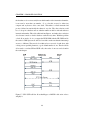
Multi-Protocol Correlation:
Data Record Analyses and Correlator Design
by
Ole-Martin Rodal & Erdem Özkan
Supervisors:
Frode Gorseth & Frank Li
This Masters Thesis is carried out as a part of the education at the University of
Agder and is therefore approved as a part of this education.
University of Agder
Faculty of Engineering and Science
Department of ICT
Abstract
This thesis has two main goals. The first one is to design a user configurable multiprotocol correlator and implement a prototype of said design. The second goal is
to identify and propose a method to match different data records from different
protocols.
In essence, this thesis is about correlation of records which contain information
about protocols or services that are generally used in telecommunication networks.
In order to reach the two main goals of this thesis, we need to combine our knowledge from the programming world with our knowledge from the networking world.
Correlation can be done on multiple levels; you can correlate protocol messages,
and you can correlate whole calls or transactions which allows you to perform
correlation across sections of a network. We approach this problem by gathering
protocol signaling data, specifications on how the protocols work, and log files with
examples. With this knowledge we were able to identify many of the problem areas
related to correlation of the main protocols to be used in this thesis. We designed
a configurable correlator that could be configured to overcome the problem areas
related to correlation provided enough data was given. The prototype correlator
was tested both on correctness and performance. Then, in order to validate the
correctness and preciseness of our developed prototype correlator, we compare the
correlation results obtained from our tool with the results obtained using Utel Systemś STINGA NGN Monitor. The comparison shows that the correlation results
from our prototype correlator are satisfactory.
Preface
This thesis is a document on the problem, method and result of the master thesis
course IKT 590 from the master program at the Faculty of Engineering and Science
at University of Agder in Grimstad.
This thesis, Multi-Protocol Correlation: Data Record Analyses and Correlator
Design, was initially proposed by Utel Systems, and tweaked into a master thesis
by Ole-Martin Rodal and Erdem Özkan with the approval of Frank Li and Frode
Gorseth. Utel Systems is a telecommunication company based in Grimstad that
specialized in telecommunication testing and monitoring. They create protocol analyzers and probes to monitor telecommunication traffic, as well as protocol simulators.
This thesis is done by two students working as a group. The external supervisor
from Utel Systemś Managing Director Frode Gorseth, the internal project supervisor from University in Agder is Professor Frank Li.
Ole-Martin Rodal
Erdem Özkan
Grimstad 25.05.2011
1
Contents
Contents
2
List of Figures
6
List of Tables
9
1
Introduction
10
1.1
History . . . . . . . . . . . . . . . . . . . . . . . . . . . . . . .
12
1.2
Background . . . . . . . . . . . . . . . . . . . . . . . . . . . . .
12
1.3
Thesis definition . . . . . . . . . . . . . . . . . . . . . . . . . . .
13
1.4
Literature Review . . . . . . . . . . . . . . . . . . . . . . . . . .
15
1.4.1
Related Work . . . . . . . . . . . . . . . . . . . . . . . .
16
1.4.2
Technical Literature . . . . . . . . . . . . . . . . . . . .
17
Problem Delimitation . . . . . . . . . . . . . . . . . . . . . . . .
18
1.5.1
Approach Limitations . . . . . . . . . . . . . . . . . . .
18
1.5.2
Design Limitations . . . . . . . . . . . . . . . . . . . . .
18
1.5.3
Protocol Limitations . . . . . . . . . . . . . . . . . . . .
18
1.5.4
Correlation Limitations . . . . . . . . . . . . . . . . . . .
19
1.6
Problem Solution . . . . . . . . . . . . . . . . . . . . . . . . . .
19
1.7
Report outline . . . . . . . . . . . . . . . . . . . . . . . . . . . .
20
1.5
2
Background
22
2.1
x Detail Record (xDR) . . . . . . . . . . . . . . . . . . . . . . .
22
2.1.1
CDR . . . . . . . . . . . . . . . . . . . . . . . . . . . .
23
Correlation . . . . . . . . . . . . . . . . . . . . . . . . . . . . .
24
2.2
2
CONTENTS
2.3
2.4
2.5
3
2.2.1
Concept of Correlation . . . . . . . . . . . . . . . . . . .
24
2.2.2
Data Topography . . . . . . . . . . . . . . . . . . . . . .
24
2.2.3
Message Correlation . . . . . . . . . . . . . . . . . . . .
25
2.2.4
xDR Correlation . . . . . . . . . . . . . . . . . . . . . .
26
Programming Architecture . . . . . . . . . . . . . . . . . . . . .
27
2.3.1
Performance . . . . . . . . . . . . . . . . . . . . . . . .
28
OSI Model . . . . . . . . . . . . . . . . . . . . . . . . . . . . .
29
2.4.1
Application Layer . . . . . . . . . . . . . . . . . . . . .
31
2.4.2
Transport Layer . . . . . . . . . . . . . . . . . . . . . . .
31
2.4.3
Network Layer . . . . . . . . . . . . . . . . . . . . . . .
31
Protocols . . . . . . . . . . . . . . . . . . . . . . . . . . . . . .
31
2.5.1
ISUP . . . . . . . . . . . . . . . . . . . . . . . . . . . .
32
2.5.2
SIP . . . . . . . . . . . . . . . . . . . . . . . . . . . . .
34
2.5.3
Megaco (H.248) . . . . . . . . . . . . . . . . . . . . . .
35
2.5.4
CAP . . . . . . . . . . . . . . . . . . . . . . . . . . . . .
38
2.5.5
Similarities . . . . . . . . . . . . . . . . . . . . . . . . .
39
Proposed Solution
41
3.1
Scenario Classification . . . . . . . . . . . . . . . . . . . . . . .
41
3.1.1
Basic Scenario . . . . . . . . . . . . . . . . . . . . . . .
42
3.1.2
Problem Scenarios . . . . . . . . . . . . . . . . . . . . .
42
3.2
Protocol Correlation . . . . . . . . . . . . . . . . . . . . . . . . .
43
3.3
Correlation of Basic Scenarios . . . . . . . . . . . . . . . . . . .
44
3.3.1
ISUP - ISUP Correlation . . . . . . . . . . . . . . . . . .
44
3.3.2
SIP - SIP Correlation . . . . . . . . . . . . . . . . . . . .
46
3.3.3
Megaco - Megaco Correlation . . . . . . . . . . . . . . .
47
3.3.4
CAP - CAP Correlation . . . . . . . . . . . . . . . . . .
47
3.3.5
ISUP - SIP Correlation . . . . . . . . . . . . . . . . . . .
48
3.3.6
ISUP - CAP Correlation . . . . . . . . . . . . . . . . . .
50
3.3.7
SIP - Megaco Correlation . . . . . . . . . . . . . . . . .
51
3.3.8
ISUP - Megaco Correlation . . . . . . . . . . . . . . . .
53
Correlation of Specific Problem Scenarios . . . . . . . . . . . . .
54
3.4.1
54
3.4
Number Portability . . . . . . . . . . . . . . . . . . . . .
3
CONTENTS
3.4.2
Special Numbers . . . . . . . . . . . . . . . . . . . . . .
55
3.4.3
International and National Numbers . . . . . . . . . . . .
56
3.4.4
Error Case . . . . . . . . . . . . . . . . . . . . . . . . .
56
3.4.5
Correlation on more than two protocols . . . . . . . . . .
57
Correlator Design . . . . . . . . . . . . . . . . . . . . . . . . . .
58
3.5.1
Engine Design . . . . . . . . . . . . . . . . . . . . . . .
59
3.5.2
Sliding Time Window . . . . . . . . . . . . . . . . . . .
63
3.6
Correlator Implementation . . . . . . . . . . . . . . . . . . . . .
64
3.7
User Interface . . . . . . . . . . . . . . . . . . . . . . . . . . . .
69
3.5
4
5
Validation and Testing
71
4.1
Usage of STINGA NGN Monitor . . . . . . . . . . . . . . . . . .
71
4.2
Time Performance Testing . . . . . . . . . . . . . . . . . . . . .
72
4.3
Scenario and Prototype Testing . . . . . . . . . . . . . . . . . . .
75
Discussions
77
5.1
Our Solution . . . . . . . . . . . . . . . . . . . . . . . . . . . . .
77
5.1.1
Hardcoded vs. Configurable . . . . . . . . . . . . . . . .
77
5.1.2
Alternatives to Sliding Time Window . . . . . . . . . . .
78
5.1.3
xDR Differences . . . . . . . . . . . . . . . . . . . . . .
79
Other Apporaches . . . . . . . . . . . . . . . . . . . . . . . . . .
80
5.2.1
80
5.2
6
Graph Theory . . . . . . . . . . . . . . . . . . . . . . . .
Conclusions and further work
81
6.1
Concluding Remarks . . . . . . . . . . . . . . . . . . . . . . . .
81
6.2
Main Contribution . . . . . . . . . . . . . . . . . . . . . . . . .
82
6.3
Further Work . . . . . . . . . . . . . . . . . . . . . . . . . . . .
82
6.3.1
Multi-Threading . . . . . . . . . . . . . . . . . . . . . .
83
6.3.2
Combining Groups . . . . . . . . . . . . . . . . . . . . .
84
6.3.3
Splitting Groups . . . . . . . . . . . . . . . . . . . . . .
85
Bibliography
86
Acronyms
88
4
CONTENTS
A User Manual
92
5
List of Figures
1.1
An illustration of how a system may look like. . . . . . . . . . . .
11
1.2
Utel Systems illustration of an example system . . . . . . . . . .
14
2.1
An ISUP CDR example . . . . . . . . . . . . . . . . . . . . . . .
23
2.2
A simple telecommunication network. . . . . . . . . . . . . . . .
25
2.3
ISUP message correltion scenario. . . . . . . . . . . . . . . . . .
26
2.4
ISDN User Part (ISUP) - Megaco gateway mapping . . . . . . . .
27
2.5
The OSI Model stack from seven to one in ascending order . . . .
30
2.6
Interaction between SSP and STP in an Signaling System no.7
(SS7) network . . . . . . . . . . . . . . . . . . . . . . . . . . . .
33
2.7
Basic representation of Megaco MGC communication . . . . . . .
35
2.8
Two Megaco network images illustrating context and termination.
36
2.9
Basic network interaction between ISUP, Mobile Application Part
(MAP) and CAMEL Application Part (CAP). [16, p. 60] . . . . .
39
2.10 Similarities between SIP and ISUP, they have the most similarities
since both protocols have overlapping roles. . . . . . . . . . . . .
40
3.1
Generic Correaltion Flowchart . . . . . . . . . . . . . . . . . . .
43
3.2
Visual representation of two ISUP CDRs which will be correlated
together. . . . . . . . . . . . . . . . . . . . . . . . . . . . . . . .
44
3.3
Basic ISUP call flow scenario. . . . . . . . . . . . . . . . . . . .
45
3.4
SIP - SIP call flow. . . . . . . . . . . . . . . . . . . . . . . . . .
46
3.5
A simple example Megaco - Megaco call flow. . . . . . . . . . . .
47
6
LIST OF FIGURES
3.6
CAP - CAP Correlation with Global Call Reference (GCR) [16,
Ch. 7.5] . . . . . . . . . . . . . . . . . . . . . . . . . . . . . . .
3.7
SIP - ISUP call flow. Note that Megaco or MGCP is left out in
order to simplify it. . . . . . . . . . . . . . . . . . . . . . . . . .
3.8
48
49
Call flow of setting up a call ISDN subscriber to a mobile subscriber where CAP is supported. . . . . . . . . . . . . . . . . . .
51
SIP - Megaco call flow. . . . . . . . . . . . . . . . . . . . . . . .
52
3.10 ISUP and Megaco call flow. . . . . . . . . . . . . . . . . . . . . .
53
3.11 A scenario where someone calls a special number. . . . . . . . . .
55
3.12 A scenario with and without national number prefix. . . . . . . . .
56
3.13 A scenario with an error . . . . . . . . . . . . . . . . . . . . . .
57
3.14 Highlevel representation of our correlator . . . . . . . . . . . . .
58
3.9
3.15 Our idea for the engine looks like. Loosely based on the UML 2.0
standard. . . . . . . . . . . . . . . . . . . . . . . . . . . . . . . .
62
3.16 The sliding time window. . . . . . . . . . . . . . . . . . . . . . .
63
3.17 The Linked List design. . . . . . . . . . . . . . . . . . . . . . . .
64
3.18 The prototype call hierarchy . . . . . . . . . . . . . . . . . . . .
65
3.19 Implementation of the Linked List Vertical . . . . . . . . . . . . .
66
3.20 Implementation of the Linked List Horizontal . . . . . . . . . . .
68
3.21 Graphical User Interface (GUI) of the prototype correlator . . . .
70
4.1
STINGA NGN Monitor. . . . . . . . . . . . . . . . . . . . . . .
72
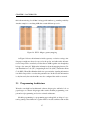
4.2
Correlation results comparisons chart. . . . . . . . . . . . . . . .
75
5.1
Sliding time window looking forwards and backwards. . . . . . .
78
6.1
Multiple Theads working on the same dataset . . . . . . . . . . .
83
6.2
Combining Groups with the linked list. . . . . . . . . . . . . . . .
84
6.3
Splitting a group with the linked list. . . . . . . . . . . . . . . . .
85
A.1 The Correlator GUI at the startup of the program. . . . . . . . . .
93
A.2 The Correlator GUI after a file has been loaded into the system. . .
94
A.3 The Parameter Select dialog with the correlator GUI in the background. . . . . . . . . . . . . . . . . . . . . . . . . . . . . . . .
7
95
LIST OF FIGURES
A.4 The Misc Options dialog with the correlator GUI in the background. 96
A.5 The Correlator GUI after a correaltion is performed. . . . . . . . .
8
97
List of Tables
2.1
Megaco commands . . . . . . . . . . . . . . . . . . . . . . . . .
37
2.2
A table of CAP Messages . . . . . . . . . . . . . . . . . . . . . .
39
3.1
A table of the basic correlation scenarios . . . . . . . . . . . . . .
42
3.2
A table of the problematic correlation scenarios . . . . . . . . . .
42
3.3
Table of Prototype correlator buttons . . . . . . . . . . . . . . . .
70
4.1
A dataset of SIP/Megaco correlation time performance, performed
on an Intel Core i5 2,26 Ghz processor running of a single thread
using the Windows 7 x64 operating system. . . . . . . . . . . . .
4.2
73
A dataset of ISUP Correlation Time performance on an Intel Core
i5 2,26 Ghz processor running on a single thread using the Windows 7 x64 operating system. . . . . . . . . . . . . . . . . . . . .
9
74
Chapter 1
Introduction
Since the creation of the Internet we have seen a steady increase in the number of
protocols and the amount of communication traffic, and this is in addition to the
traditional telephone networks. What we get from this is millions of devices connected together in small and large networks, which in turn will communicate with
each other. These networks have not just covered the earth like a spider web, but
also introduced various types of languages which they use to communicate with
each other. We call those languages protocols. The need for tools to monitor, analyze and detect chokepoints and anomalies across networks is growing as different
protocols and technologies begin to communicate with each other in an increasing
fashion. In this thesis the focus will be on how to achieve this; predominantly for
telecommunication protocols, but the base ideas in this thesis will also be valid for
other protocols and technologies.
There are two main parts of this thesis, modeling and implementation, and correlation theory. The first part can be divided into two major sections, the modeling
part and the implementation part. The modeling part is about modeling how it is
possible to gather data from the different protocols and put the relevant signaling
data together. The process of finding and putting relevant data together is a process we call correlation, and the program produced from this model is called a
correlator. The implementation part is about the implementation of a prototype
10
CHAPTER 1. INTRODUCTION
version of the model. This prototype correlator will be a simplified version of the
whole mode, but the core component, user configurable multi-protocol correlation
is implemented. Its goal is to prove or disprove our ideas on how to correlate. The
second part is the theory on how to correctly correlate a small subset of protocols
defined in this thesis problem statement.
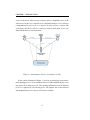
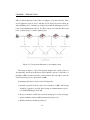
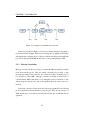
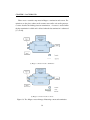
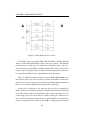
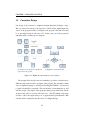
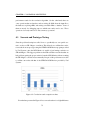
Figure 1.1: An illustration of how a system may look like.
In the scenario illustrated in Figure 1.1 we have an interaction between three
main signaling protocols. Session Initiation Protocol (SIP) and ISUP all play a very
important role in setting up a call. The signaling information from the different
protocols is gathered by a monitoring probe. All captured data is then analyzed
and manipulated based on some pre-selected user variables.
11
CHAPTER 1. INTRODUCTION
1.1
History
For the traditional telecommunication network such as SS7 there are a few protocols such as ISUP, MAP, CAP and Intelligent Network Application Part (INAP)
which define most of the services that an SS7 network provides.
Recently, we have witnessed the growth of Internet Protocol (IP) based telephony. In this IP based telephony the primary protocols which define most the
services available is H.323 and SIP with all the extensions to the original specification. In addition to this development of pure IP based telephony the classic
implementation of the SS7, whose protocols are traditionally carried over MTP 1,
2 and 3, we have seen an updated version of SS7. The new version called SS7 over
Signaling Transport (SIGTRAN) works in the same way as the old one, but the
MTP transport protocol have been switched out with IP.
Presently we are seeing that the two networks, IP and SS7 are converging with
services such as calling lane lines from computer programs such as Skype. This
converging of the networks has caused some challenges for the operators of the
telecom networks such as billing and call tracing. In order to address those challenges, the need to figure out how to easily correlate calls and services carried over
the different protocols has become more important and that is largely what this
thesis is all about.
1.2
Background
There are a myriad of different protocols in various types and layers in telecommunication. The protocols range from the physical layer to the application layer, and
they follow the standard Open Systems Interconnection (OSI) model. Although the
project theoretically aims to design a system that is independent of protocols, the
sheer size of such a project is too large and complex to be completed in this thesis.
As such this project will have its boundaries reduced to a few different protocols
across a few architectures.
12
CHAPTER 1. INTRODUCTION
Correlation in telecommunication is a very broad field with a lot of the groundwork already done. However, the complexity of the different protocols working
together, and the speed at which the different telecommunication networks and the
Internet are converging is often causing the established ways of correlating to fail.
This usually happens because they are to focused on one specific case. There are
two major types of correlation:
1. Message correlation, which is about finding and grouping messages belonging to the same calls and transactions.
2. xDR correlation, which is one step up from message correlation. xDRs are
the result of message correlation.
3. End-to-end correlation, which is correlation of signaling data from multiple
links of a network and even mulitple protocols. It is the most complex type
of correltion. Some scenarios are just not possible to correlate, and in other
cases the information is incomplete, and a critical message may be missing.
In telecommunication; business, service and network operators often store protocol messages captured by monitoring probes in a protocol message repository.
Protocol messages from the repository are correlated into records (call/transaction
records - in general xDRs). It is on these logs that this thesis will be performing
the correlation on.
End-to-end is the process of doing correlation over multiple sections of a network. An example is a monitoring probe that gathers information on both sides of
a switch, if this probe is all you know then end-to-end will be from one side of the
switch to the other.
1.3
Thesis definition
Utel Systems is the problem owner and the definition was written by them. This
thesis will focus mostly on the following telecommunication protocols: ISUP [10],
13
CHAPTER 1. INTRODUCTION
SIP [13], Media Gateway Control Protocol (Megaco) [11] and CAP [16]. They
are all application layer protocols, and they are all deeply involved in setting up
and terminating calls, or working as a bridge in between the different protocols in
today’s telecommunication network. It is these four protocols that this thesis will
focus on when trying to correlate signaling data.
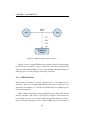
Figure 1.2: Utel Systems illustration of an example system
The image in Figure 1.2 how Utel Systems imagines the overall system for
data gathering. Our work in this thesis will be limited to the two lower halves of
the Figure, xDR correlation and end-to-end correlation. In both of those cases the
actual correlation process is performed on xDRs.
In summary; this thesis consists of the following tasks:
• Describe a general model for end-to-end correlation of xDRs. The design
should be as generic as possible, but focusing on a limited number of protocols; ISUP, SIP, Megaco and CAP.
• Propose a method to match data records from these protocols by investigating the similarities between different networks and protocols.
• Identify and discuss challenges related to:
14
CHAPTER 1. INTRODUCTION
– Call Detail Record (CDR) correlation involving intelligent network services.
– General and configurable correlator vs. hardcoded correlator.
– The need for timers within the correlator model.
• Implement a general and user configurable xDR correlator based on the proposed method.
• Validate and evaluate the implemented correlator by using end-to-end correlation of a specific case, preferably using ISUP-CAP and/or ISUP-SIP and/or
SIP-Megaco.
This thesis has two main goals. The first one is to design ’a user configurable
multi-protocol correlator and implement a prototype correlator based on the design.
The second one is to identify and propose a method to match different data records
from the different protocols i.e. propose a way to correlate between the different
protocols. Before we can start the modeling process, all possible interactions between the key protocols we will focus on needs to be found. To model a correlator,
we must identify firstly all detect all possible interactions between protocols. A
concrete example would be how the Media Gateway (MG) that separates SIP and
ISUP operates, and by figuring that out it is possible to identify which parameters
that needs to correspond with each other.
1.4
Literature Review
Correlation in general is a field that has been studied extensively. The roots can
be found in statistical mathematics, but we will for the most part focus on reading specifications and figuring out what kind of parameters that is important in
correlation. This project is divided into two major branches in which we can find
literature. The first one; correlation is a very math heavy subject. The second one;
is all the network and protocol specifications.
15
CHAPTER 1. INTRODUCTION
1.4.1
Related Work
Statistical Approach
We have found some work which is related to what this project is about. One solution for correlation of messages or xDRs which has already been done is called
Message Correlation and Business Protocol Discovery in Service Interaction Logs
[4]. This solution is interesting in the sense that it assumes that the parameters
required for correlation are missing, and as such they have used a graph theory
approach. The main issue with this approach is uncertainty. Since it is based on
probabilistic reasoning, it cannot guarantee correct correlation, but it can approximate it. Another issue is focused on message correlation not end-to-end. It should
however be possible to adapt it for end-to-end.
Deterministic Approach
Message Correlation and Web Service Protocol Mining from Inaccurate Logs [14]
which tries to solve correlation by using deterministic computing. This solution
is too far away from the telecommunication world to be of anything other than
superficial use.
A completely different solution that takes our attention is called Multi-protocol
call trace on General Packet Radio Service (GPRS) Gb-Gr [3]. It introduces a
method of performing a multi-protocol call trace on GPRS Gb-Gr interfaces of a
Global System for Mobile Communications (GSM) network. Transaction Detail
Records (TDRs) are the major data source for the correlation algorithms used in
this approach to look for and cover specific scenarios. This approach also focuses
on the slow decoding process on huge amounts of Protocol Data Units (PDUs)
and tries to bring a solution that needs less time. It desires a fast and easy way to
perform procedure trace on GPRS data without involving a lot of bandwidth while
allowing correlation of GPRS and GSM results. However, this solution belongs to
its proprietary owners and is limited to GPRS, so it is not that interesting for us in
this project.
16
CHAPTER 1. INTRODUCTION
Protocol Specific Approach
MEGACO correlation method [15] is one example of correlation, but this one is too
specific for the Megaco protocol. These are a few examples of what other people
have done in this research area. This solution is a little too focused on Megaco,
to be of use to us when we are supposed to design and implement a prototype of
a generic and configurable correlator. It might however be useful to look at when
trying to configure the correlator to work for Megaco.
Summary
The end-to-end correlation field varies from protocol to protocol, thus it is hard
to refer to previous research that may be of significant value to us. The above
approaches are all specialized either on protocols or on the method of solution. We
need an approach that can be specialized based on the users wishes, but at the same
time is generic enough to cover all protocols.
1.4.2
Technical Literature
Many papers and all the specifications related to the four protocols specified in the
problem statement (ISUP, SIP, Megaco and CAP) have been studied in order to
complete this thesis. Documents of importance to this thesis are the SIP specification RFC 3261 [13], as that one explains the basic case for how SIP is supposed
to be deployed and how it should work. In addition to the main specification for
SIP there are also other supplementary specifications on how SIP should work with
protocols and special services for SIP; such as RFC 3858 which updates the RFC
3261 to require Advanced Encryption Standard (AES) for Secure/Multipurpose Internet Mail Extensions (S/MIME) [12]. For ISUP the main specification is ITU-T
Q.763 [10], and like SIP there are also supplementary specifications which try to
cover special cases. Megaco has H.248.1 [11] as the main technical specification.
Finally, CAP has TS 29.078 [1] as the main technical specification and is by itself
an extension to the MAP specification [2].
17
CHAPTER 1. INTRODUCTION
For non-technical specifications our main research references are Signaling and
Switching for Packet Telephony [17, Ch.10], which has a very good and detailed
explanation on how Megaco works. Additionally, we have Signaling System No.
7 (SS7/C7) Protocol, Architecture and Services [6] which has a thorough explanation on how ISUP works, both in IP network, (SS7 over SIGTRAN) and in the
traditional circuit switched telecommunication network.
1.5
Problem Delimitation
Correlation is a huge field, so drawing the borders is crucial to have a good progress
on such a vast project such as this one. There are various reasons for drawing
boundaries on this project, the main reason for the limiting is time. Some of the
other reasons are because of our knowledge and interest.
1.5.1
Approach Limitations
One of the other approaches considered early on in the creation of the thesis definition was to use a statistical approach to problem of xDR correlation, however due
to the uncertainties of the results produced by this approach we decided not to use
it.
1.5.2
Design Limitations
GUI design is not specifically covered in this thesis, and as such the current GUI
implemented in the prototype is very basic. Additionally, the correlator implemented will only be a prototype because a full implementation will take to long.
1.5.3
Protocol Limitations
The four mainstream protocols SIP, ISUP, CAP and Megaco mentioned in section
1.3 will be the protocols focused on. Other protocols are not specifically focused
18
CHAPTER 1. INTRODUCTION
on, however thought has been given to make the prototype correlator as generic as
possible.
1.5.4
Correlation Limitations
Another excluded field is Message correlation, briefly explained in section 2.2.3
will not covered in this thesis as the subject of focus is xDR correlation.
1.6
Problem Solution
In short the problems that need to be solved in this thesis are which protocol parameters that are relevant for xDR and end-to-end correlation. The other major
part of this modeling a generic and configurable xDR correlator and implement a
prototype of this.
Most of the existing solutions available were of little use because either too
specific in their area of application or too generic and uncertain. For this thesis
the solution we used was, for the most part, already outlined by the problem description. As such we focused our attention on correlating the selected protocols
ISUP, SIP, Megaco and CAP. The correlator is designed in such a way that the
engine, which contains the actual correlation algorithm, is separated from the user
interface. In addition, the design of linked lists allows the correlator to operate on
real-time data or by reading data from a file. Our implementation of the prototype
correlator differs a little from the overall design. The reason for the deviation is
because we simplified some of the problems due to time constraints, but the overall
design idea is carried over from design to the implementation.
The last part of our solution is about how to perform correct correlation between the four protocols ISUP, SIP, Megaco and CAP for the most common scenarios and some of the more complex scenarios. Unfortunately, because of the
incredible complexity and amount of possible scenarios, we had to limit our solution to a subset of the infinitely large set.
19
CHAPTER 1. INTRODUCTION
1.7
Report outline
Chapter 2, Background, provides information on what xDRs are before moving on
to explaining more specific cases of xDRs such as CDRs. After that sub-chapter
we move over to other important terms, such as explaining what correlation in
general is. Once correlation is explained the chapter continues on to a more detailed
explanation on what message correlation and xDR correlation is. After that a brief
explanation of programming architecture and the OSI model is presented before
moving on to an in-depth explanation of the similarities between the four major
protocols in this thesis; ISUP, SIP, Megaco and CAP.
Chapter 3, Proposed Solution, provides information on our solution in various
sections that each covers a different topic/aspect. This chapter starts with introducing the Scenario Classification that provides how the correlation is handled for different correlation scenarios. That chapter is followed by Correlation Theory which
introduces the solution in a theoretical way. After that Correlator Design is introduced. This covers the high level model and design information about the protocol
correlation. The next chapter deals with the key details on our implementation of
the prototype protocol correlator. Finally the last section of Chapter 3 focuses on
the user interface of the correlator and introduces the interface components.
Chapter 4, Validation and Testing, starts with an introduction to validation and
testing, and is followed by a section about STINGA NGN Monitorś role for testing.
In the following section we mention the significant details about time performance
testing. The chapter is finalized by introducing the topics on test process of the
scenarios and the testing of implemented correlator prototype code.
Chapter 5, Discussions, focuses on discussions. In the first section we challenge our solution under major topics such as hardcoded vs. user configurable
implementation, alternatives to sliding time window and the differences of xDRs
and how they impact correlation. The last section in this chapter aims to convey
different approaches to the same thesis definition; the major example of this is
using graph theory.
Chapter 6, Conclusions and further work, will in brief terms explain our
20
CHAPTER 1. INTRODUCTION
solution and how well we completed the tasks given to us. After that section will
try to predict the impact that our solution has for Utel Systems and us. Finally it
will explain some of the further work that we did not implement because it was not
part of this thesis.
21
Chapter 2
Background
In this chapter the underlying technologies and some of the most interesting ideas
around correlation and programming architecture will be presented. It is broken
down into the concept of what correlation is, and the type of data which is to be
correlated. Finally, different types of programming architecture that can be used to
program a correlator will be presented.
2.1
xDR
Different Call/Transaction Detail Records all have a specific purpose and content.
xDR is a generic type of detail record where the x letter is to be replaced with
another letter depending on the type of detail record. The data structure and format
of xDRs are very loosely defined and configurable. A more specific detail record is
CDR which is the most common one in this thesis; it usually refers to protocols like
Integrated Services Digital Network (ISDN), ISUP, SIP and H.323 - i.e. call related
protocols. Another type of detail record is TDR, and this usually refers to protocols
like Transaction Capabilities Application Part (TCAP), MAP, CAP and Intelligent
Network Application Part (INAP). A third, and for us not very interesting, type
of xDR is IP Detail Record (IPDR) which usually refers to more general IP-based
protocols like Domain Name System (DNS).
22
CHAPTER 2. BACKGROUND
xDRs also come in another format called Enhanced xDR which is exactly the
same, but they also include the raw signaling information inside the xDR. This
signaling information is stored inside the xDR in plain-text as a set of hex bytes,
and by decoding information inside the hex bytes the raw signaling information
can also be presented.
2.1.1
CDR
CDRs contains information about one particular call.
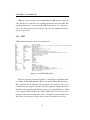
Figure 2.1: An ISUP CDR example
The most interesting parameters in Figure 2.1 are the Date, Called Party Number (CdPN), Calling Party Number (CPN), Cause and Hold Time (HT) parameters.
These make the date in which the call was placed, who called who, how it was
terminated and how long the call lasted. The Date parameter signifies the date in
which the call was initiated and the Date format is yyyy-mm-dd hh-mm-ss. CdPN
is the complete CdPN and CPN is the complete CPN. Cause is how the call was terminated; in the current example cause value is 16, which is normal clearing. Hold
Time, this is how long the resources on the system were allocated (in seconds).
23
CHAPTER 2. BACKGROUND
2.2
Correlation
Correlation is an important concept to understand in this thesis. There are many
different types of correlation possible in this area of telecommunication. The easiest one to understand is message correlation, and after that comes xDR correlation.
xDR correlation is difficult because it can be on both protocols and services. Finally, the highest level of correlation is end-to-end correlation.
2.2.1
Concept of Correlation
The concept of correlation is rooted in statistical mathematics. The basic concept
is to use statistical probably to say whether there is a connection between two or
more units. If the probability is above a certain threshold then we can say that they
belong together can connect them together.
2.2.2
Data Topography
The topography of the gathered data can help in many cases of correlation, either
by speeding up the correlation process or by previously uncorrelatable cases. This
is due to the addition information that a correlator will know about the system.
Unfortunately, in many cases topography is not known. Proposed solution in this
thesis will assume that topography is not know, this is done for two reasons. The
first reason is because the solution is to be constructed in such a way that it will
be generic and user configurable, and that make it difficult to map this solution
to any one network topography. Additionally making it configurable for network
topography is such a large task that it is a master thesis in itself and not part of this
thesis.
24
CHAPTER 2. BACKGROUND
Figure 2.2: A simple telecommunication network.
In the case presented in Figure 2.2 we can see that knowing the topography is
not essential for this example. However, by knowing the topography we can reduce
and simplify the correlation process. Since we will know which way the traffic will
pass and as such any ISUP xDR should create a corresponding Megaco xDR.
2.2.3
Message Correlation
Message correlation is the act of trying to correlate the different signals from taken
from one monitoring probe. They are usually correlated based on calls, so that
messages belonging to the same calls are correlated together. From this process
it is possible to create xDRs. Message correlation is usually an easier form of
correlation then xDR in that there is less ambiguity because correlation is done
always using the same protocol and on data gathered from the same section of a
network.
A message correlator collects the received messages captured by a monitoring
probe as input and correlates them by a given category. There are various types of
xDRs and the type of correlation performed decides the type of xDR that will be
generated.
25
CHAPTER 2. BACKGROUND
Figure 2.3: ISUP message correltion scenario.
Figure 2.3 shows a simple ISUP message correaltion scenario. From the figure
it looks like we are bound to one protocol. However, since the network link can
carry more then just the ISUP protocol it is important that signaling messages are
filtered by protocol before message correlation is performed.
2.2.4
xDR Correlation
xDR correlation is similar to message correlation, but it is on a higher level of
abstraction. Instead of correlating individual messages from one probe into one
single unit, the idea here is to correlate the individual units from multiple probes
into another single unit.
xDR correlation can easily be many magnitudes more complex than normal
message correlation. The reason for it being more complex is because there can
be more than one protocol to correlate together. Even with the same protocol there
may be information missing in order to correlate xDRs properly. An example of
26
CHAPTER 2. BACKGROUND
this is the monitoring of a call that is using special numbers e.g. number portability.
Another example is correlating xDRs that contain different protocols.
Figure 2.4: ISUP - Megaco gateway mapping
As Figure 2.4 shows the information inside a gateway or a device serving a similar purpose might not always be exposed to the probes, and without this information it is impossible to accurately correlate the two xDRs together even though they
belong to the same call. Without the information about the mapping between Circuit Identification Code (CIC), Originating Point Code (OPC), Destination Point
Code (DPC), IP and Port Number which is not present in the signaling information
it would be impossible to correlate this particular case. In this case this information
is only known by the switch and the ones who configured the switch or network.
2.3
Programming Architecture
We made some high level architectural software design topics and had a look on
popular types on software design approaches such as modular programming, component based programming, and service oriented architecture.
Modular programming is a programming approach applied on design of a system by putting related functions together inside a module such that each module
27
CHAPTER 2. BACKGROUND
has its own interface and implementation. This approach might be applicable for
big scaled and multi functional systems, but the system that is implemented for
this project, is aimed to be compact and limited in functionality. As such modular
programming is not practical to apply for the design of our protocol correlator.
Component Based Programming (CBP) is an application development model
which can be defined as one step higher level than object oriented programming.
While classes are built on objects in object oriented programming; component
based/oriented programming is built on the use of interfaces. In CBP, instead of
using objects, there are standard interfaces for configuration and execution. Each
component has special interfaces that specify semantics and roles. The main advantage of component is reusable and replaceable [8, Ch. 17].
Service Oriented Architecture (SOA) is a relatively new multi-layered approach
for software business whose components serve functions to services so it allows
scalability and re-usability. This makes components more independent. In this
type of architecture, services are supposed to be platform independent, and incompatibility has to be prevented to have success on interoperability. This approach
fits for big scaled business software models [8, Ch. 16].
In this project, the traditional Object Oriented Programming (OOP) approach
is used and many items are defined as objects; various reasons made us to make this
decision. First of all, we already have enough knowledge on OOP. It also offers
relatively fast implementation in a limited time. OOP makes it easy to write easyto-understand code, so it is a bonus when more people work on the same code.
Thus, if somebody wants to make extra coding on the protocol correlator it is easy
to start after a fast adaptation on the object oriented code [5, Ch. 2].
2.3.1
Performance
When it comes to design a system, performance becomes one of the key fields
which should be focused on. Performance is the term used when measuring how
well a given system can handle various degrees of workload. This workload can
be the process time of input data, scalability, reliability and resource usage. It is
28
CHAPTER 2. BACKGROUND
practically not possible to create a perfect system at all points of performance. It is
critical on decide on priorities, that is which aspects of performance are critical for
the system.
Like all systems, a protocol correlator such as the one defined in this project
has some prior performance criteria. First of all, such a correlator system needs
good correlation performance especially if it is expected to work on real time data.
In a large communication network it is possible to collect thousands of xDR every
single second if there are enough probes and or traffic; thus, a correlator system
needs to have a fast working algorithm to process and correlate input data to keep
the system stable. A slow algorithm can cause various problems such as program
termination, bottlenecks, instability and unreliable results. Another important performance criteria is memory usage. Working with a huge bunch of data needs a
cleanup process. Otherwise, sooner or later, the system will encounter memory
issues, regardless of how much memory the system has.
2.4
OSI Model
The OSI model is an International Organization for Standardization (ISO) standard
and a 7 layer model whose propose is to provide a standard which all protocols
should try and adhere to [9].
29
CHAPTER 2. BACKGROUND
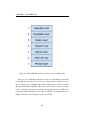
Figure 2.5: The OSI Model stack from seven to one in ascending order
The protocols specifically mentioned in Section 1.3 (SIP, Megaco and CAP)
are all application layer protocols. However, it is interesting to look at the protocols
they are carried on as well. ISUP and CAP for example can be carried over either
Message Transfer Part 3 (MTP3) or IP; it just needs a transport layer protocol that
works as a bridge between the network layer and the application layer. SIP can be
transported using Transmission Control Protocol (TCP), User Datagram Protocol
(UDP) or Stream Control Transmission Protocol (SCTP).
30
CHAPTER 2. BACKGROUND
2.4.1
Application Layer
The application layer is the highest laye. CAP, Megaco and SIP are all application
layer protocols. ISUP can be argued to belong here as well, however this protocol
breaks the Application layer a little by having network related information such as
CIC.
2.4.2
Transport Layer
Transport layer is the fourth level of the OSI model. On this layer we will find
protocols such as TCP/UDP which are primarily used by SIP and Megaco in this
thesis. Other protocols include SCTP which can be used by SIP, Megaco and other
application layer protocols in the SS7 suite provided it is SS7 over SIGTRAN
(including CAP and ISUP).
2.4.3
Network Layer
Network layer is the third level of the OSI model. The primary protocol in this
layer is IP, which can be used to carry all the application layer protocols in this
thesis, provided that the correct transport layer protocols and routing soft-switches
are present. On the Public Switched Telephone Network (PSTN) side of the core
network, MTP3 is the most common protocol to handle the network layer.
2.5
Protocols
The four major protocols that will be covered in this thesis are ISUP, SIP, Megaco
and CAP. They are all pillars of their respective branch of any telecommunication
network, and are all widely used in the world today both inside and outside the
telecommunication world.
31
CHAPTER 2. BACKGROUND
2.5.1
ISUP
ISUP is and application layer protocol designed by International Telecommunication Union (ITU) in 1984. It is part of the SS7 protocol suite. The protocol is used
to set up calls in a PSTN network. The signaling part of ISUP is separated from
the data stream. ISDN is the signaling protocol that exists at the end of the network
where the end users are, and ISUP is the signaling protocol that is used inside the
core telecommunication network proper. ISUP was designed to be carried over the
old PSTN network, but today there are solutions that allow it to be carried over IP
using another protocol called SCTP which works similar to TCP [6, Ch. 8].
ISUP has a few important parameters to note. OPC / DPC in addition to CIC
are the values that are used to uniquely identify one call on one link of an ISUP
network within a limited timeframe since CIC is reused [10].
There are two types of nodes that handle most of the network, Signaling Transfer Point (STP) and Service Switching Point (SSP). STP primarily handles routing,
but also other things such as packet conversion and firewall functions. STP has
their own point code, so messages captured on different sides of an STP will have
different OPC - DPC. SSP is primarily processing the data traffic, such as voice or
fax.
32
CHAPTER 2. BACKGROUND
Figure 2.6: Interaction between SSP and STP in an SS7 network
There are a few important message types for ISUP, and they are the following
[6, Ch. 8]:
• IAM (Initial Address Message)
– This message is used to initiate the call; it sets up the timeslot and
usually contains the number.
• SAM (Subsequent Address Message)
– This message is used to send CdPN digits. This message is used if the
IAM message does not contain a complete CdPN.
• ACM (Address Complete Message)
– This is an answer message that is received once the whole number is
received on the other end.
• ANM (Answer Message)
33
CHAPTER 2. BACKGROUND
– Once the phone is picked up at the other end this message is sent to the
caller.
• REL (Release)
– This message is used to end a call, as such timeslots will be released
and the call ended
• RLC (Release Complete)
– This message is used to acknowledge that timeslots have been released
at the other end as well.
2.5.2
SIP
SIP, works much in the same way as ISUP. It is an application layer protocol that
was initially designed by Internet Engineering Task Force (IETF) and accepted as a
3rd. Generation Partnership Project (3GPP) standard in the year 2000 to be used as
a protocol to set up media transmission over IP. It has since been adopted by ITU
as an ITU standard as well, and there are currently many extensions to the original
SIP design which allow it perform more complex and much needed services which
today exist for most telephone users.
SIP has only one important parameter to watch in order to uniquely identify
one specific SIP call. Call-id is the parameter responsible for identifying a SIP call
[13, Sec. 8.1].
There are a few important message types for SIP, and they are the following
[13]:
• Invite
– This message is used to initiate the session or call, it is the SIP equivalent of IAM.
• 180 Ringing
34
CHAPTER 2. BACKGROUND
– This message is used to signal that the phone is ringing on the other
side.
• 200 OK
– This is a generic response message; it is used to as a response to signal
that the recipient is ready to receive data.
• Bye
– This message is used to terminate a session.
2.5.3
Megaco (H.248)
Megaco is a signaling protocol that provides communication between Gateway
and Gateway controller. It is the newest call control protocol which addresses the
MG and Media Gateway Controller (MGC). Media Gateway converts the voice IP
packets received from circuit switching networks. Media Gateway Controller provides good management of this traffic. In other words it works like a Call Agent or
Softswitch. Megaco provides distant management of VoIP Gateway, Digital Subscriber Line Access Multiplexer (DSLAM) and Multi-Protocol Label Switching
(MPLS) routers. It is similar to Media Gateway Control Protocol (MGCP), but it
also unifies networks such as Asynchronous Transfer Mode (ATM).
Figure 2.7: Basic representation of Megaco MGC communication
35
CHAPTER 2. BACKGROUND
There are two essential components in Megaco: termination and context. Terminations are the places where media streams enter and/or exit media gateways.
Contexts describe the bindings between terminations. A context is created when
the first termination is added and is deleted when the last termination is subtracted
[17, Ch.10].
(a) Megaco connection models : Termination
(b) Megaco connection models : Contexts
Figure 2.8: Two Megaco network images illustrating context and termination.
36
CHAPTER 2. BACKGROUND
Megaco Commands: There are totally eight commands in Megaco. Notify
can be called by just MG and ServiceChance can be issued by both MGC and
MG. All the remaining commands can be called just by MGC, the Add, Modify,
Subtract, and Notify commands are the workhorses; for many call flows, this set of
four commands is sufficient [17, Ch.10].
Command
Add:
Modify:
Description
Adds a termination to a context.
Issued by MGC when it wants to modify the properties, events or signals of a termination.
Subtract:
Move:
AuditValue:
Removes a termination from its current context.
Moves a termination to a different context.
Returns the current state of termination. Called by
MGC when it requires information about properties,
events, signals or statistics about termination.
AuditCapabilities:
Called by MGC when it wants to check which termination properties are supported by an MG.
Notify:
Issued by the MG when it needs to inform the MGC
that event has occurred.
ServiceChange
Can be issued by MG or MGC to take termination
out of service or return termination to service.
Table 2.1: Megaco commands
Setting up the call
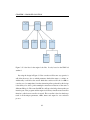
Lets assume that the user-1 calls user-2 with ISUP via an SS7 network. When Answer Message (ANM) message is received by signaling gateway, it sends a message
to MGC about the call setup from the SS7 network.
MGC sends two Add commands. The First one tells MG-A to create a context. The second one tells MG-A to place an Real-time Transport Protocol (RTP)
termination in that context and set its Mode as ReceiveOnly. MG-A replies and the
Reply message contains the address and port number that it selects. Then MGC
37
CHAPTER 2. BACKGROUND
contacts MG-B with two Add commands. First Add orders MG to create an ISDN
line and an RTP termination and also the context to keep these terminations. The
second Add is populated with the IP address and port number assigned by MG-A.
This is the reason of sending Add in SendReceive mode for the RTP termination.
MG-B replies with a Reply command and it includes the IP address and port number of the RTP termination that is created. Since then, MGC is ready to send a
Modify command to MG-A, which changes the mode to SendReceive.
Tearing down the call
When either of the parties ends the conversation, the related MG (here MG-A) receives two Subtract commands to remove both terminations from the related context. The second Subtract command removes the last termination in the context,
therefore also the context is removed with the last subtract. MGC also sends the
same Subtract commands for MG-B.
2.5.4
CAP
Its purpose is to provide services to mobile phone subscribers. CAP is also an
extension to MAP; the services provided by MAP are the basic mobile phone services such as Short Message Service (SMS) while CAP provides services such as
special numbers. The CAP protocol is defined using the Abstract Syntax Notation
No.1 (ASN.1) language, which gives it a rigid but flexible structure. This application layer protocol is used in the Intelligent Network architecture. It provides good
support for roaming services for subscribers outside the home Public Line Mobile
Network (PLMN). It also allows home networks to monitor and control calls made
by the subscriber [1].
Figure 2.9 illustrates a scenario of call forwarding using CAP. In this example
someone using a land-line phone is calling someone using a mobile device. The
CAP call forwading service overwrites the normal GSM routing [16, p. 60].
38
CHAPTER 2. BACKGROUND
Figure 2.9: Basic network interaction between ISUP, MAP and CAP. [16, p. 60]
CAP has many different messages, and the most prominent are listed in Table
2.2 [16, Ch. 3.5].
Messages
Description
Initial DP:
Used to request information about the called party.
Continue:
Generic message used to continue the call handling,
different meaning depending on what message it is
in response too
Connect:
Used as a response to Initial DP. It contains information important to connect to the called party
Release Call:
Used to release an ongoing call or one in the process
of being established.
Table 2.2: A table of CAP Messages
2.5.5
Similarities
SIP and ISUP are protocols that largely have overlapping roles; ISUP however
does incorporate parameters and ideas from the lower OSI layers as well. CAP,
MAP and INAP serve a similar role for mobile services to what ISUP does for
39
CHAPTER 2. BACKGROUND
the land-line SS7 network, with CAP handling many special cases such as special
numbers and pre-paid billing. Megaco is in a unique position because it serves as a
bridge between protocols such as SIP and ISUP, and similarities in this situation are
CIC, OPC and DPC in ISUP have a correlation with Terminating ID in Megaco,
but unfortunately there is no way to correlate directly without an operator held
mapping table.
Figure 2.10: Similarities between SIP and ISUP, they have the most similarities
since both protocols have overlapping roles.
Figure 2.10 illustrates the protocol stack for SIP and ISUP. ISUP is shown in
the figure over both TDM and IP. It is interesting to note that most of the important
parameters for calls are shared by both SIP and ISUP regardless of whether of
which network layer protocol is used.
40
Chapter 3
Proposed Solution
This chapter covers our proposed solutions for the two main parts of this thesis.
Section 3.1 contains how we classify the different scenarios. Section 3.3 and 3.4
contains how to correlate the scenarios. The second part is section 3.5 and section
3.6 which contains our solution for the design of the correlator and our implementation of it.
3.1
Scenario Classification
Performing correlation correctly for all possible scenarios is close to impossible
due to the many different implementations of any given protocol, for example
American National Standards Institute (ANSI) ISUP and ITU ISUP. In addition,
there are different network structuring which can cause additional complexity. In
an attempt to reduce the amount of ever growing complexity we have classified the
different scenarios. The first scenario is the most basic case of correlation within
one specific protocol. This thesis will for the most part focus on the basic scenarios,
with a few exceptions mentioned in sub-section 3.1.2.
41
CHAPTER 3. PROPOSED SOLUTION
3.1.1
Basic Scenario
The basic scenarios are the easiest to correlate scenarios for each protocol. They
can be extended into more complex scenarios, but most of the complex problem
scenarios are not covered in this thesis as the thesis defintion only requires a few to
be covered. Some of the more complicated problem scenarios are listed in subsection 3.1.2.
Protocol
Protocol
ISUP
ISUP
SIP
SIP
Megaco
Megaco
CAP
CAP
ISUP
SIP
ISUP
CAP
SIP
Megaco
ISUP
Megaco
Table 3.1: A table of the basic correlation scenarios
3.1.2
Problem Scenarios
The problem areas in xDR correlation is too many to be completely covered in this
chapter. A small subset of all the complex scenarios are presented in Table 3.2 and
will be covered in subsection 3.4.
Number Portability
Special Numbers
National-International Numbers
Error Case
Correlation on more than two protocols
Table 3.2: A table of the problematic correlation scenarios
42
CHAPTER 3. PROPOSED SOLUTION
3.2
Protocol Correlation
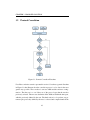
Figure 3.1: Generic Correaltion Flowchart
For all the correlation scenarios presented in section 3.3 we have a generic flowchart
in Figure 3.1 that illustrates how the correlation process is to be done in the most
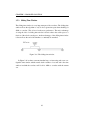
generic way possible. The correlator is sent two xDRs and the end-users configuration. The first test is to see if they are of the protocol type that the user has
previously selected. The next test determines if the xDRs are within the time span,
which is previously defined by the user. The final section is a loop where one parameter pair, previously defined by the user, is selected and compared until all the
43
CHAPTER 3. PROPOSED SOLUTION
pairs have been processed. If they are all a match, then the xDRs can be correlated
together.
3.3
3.3.1
1
Correlation of Basic Scenarios
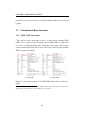
ISUP - ISUP Correlation
This section is about our thoughts on how to correlate between multiple ISUP
CDRs. We’ve found out that correlating between ISUP CDRs can range from
very easy to very hard depending on the complexity of the scenarios. The problem
scenarios mentioned in subsection 3.1.2 are some of the special cases that can make
ISUP correlation problematic.
(a) ISUP CDR 1
(b) ISUP CDR 2
Figure 3.2: Visual representation of two ISUP CDRs which will be correlated together.
1
The ideas on ISUP - ISUP correlation brought forth in this subsection are based on discussions
with engineers at Utel Systems, and as such there are no references.
44
CHAPTER 3. PROPOSED SOLUTION
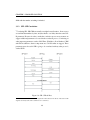
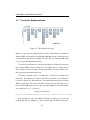
Figure 3.3: Basic ISUP call flow scenario.
From Figure 3.3 we can see that CdPNs, CPN, Date/Time, Call Time and Hold
Time is correlate ISUP with ISUP correctly for the basic scenarios. The different
parameters need to match, but some slack (from a few milliseconds to a few seconds) can be given for Date/Time, Call Time and Hold Time. The reason for this is
because of processing time inside the switches and monitoring probe synchronization can cause the CDRs to have a slight difference in the timestamp.
There are pitfalls that make correlation between ISUP CDRs difficult if not
impossible in some cases. One case where you monitor the traffic to and from the
gateway in and out of a country, you will typically get CDRs with the international
prefix on one side and without the international prefix on the other.
In that case it is important to also check the National Indicator parameter in
ISUP, and if the value indicates international number then check the numbering
plan to find out the country code. Depending on the country code the first one, two
or three digits need to be removed before correlation can begin. Another case is
the one previously mentioned where the use of special numbers is involved and in
order to accurately perform correlation such CDRs it is imperative that additional
45
CHAPTER 3. PROPOSED SOLUTION
xDRs with the number switching is included.
3.3.2
2
SIP - SIP Correlation
Correlating SIP - SIP CDRs are usually a straight forward business. In most cases
we can limit the numbers by time, and just check to see if they have the same CallId parameter. However in order to make the correlation process more accurate we
suggest additional parameters to be used in the correlation process. Correlating on
other important parameters such as Hold Time, IP Address, Port Number, CdPN
and CPN in addition to the most important one, Call-Id is what we suggest. These
parameters must be used if SIP is going to be correlated with any other protocol,
such as ISUP.
Figure 3.4: SIP - SIP call flow.
2
The ideas on SIP - SIP correlation brought forth in this subsection are based on discussions with
engineers at Utel Systems, and as such there are no references.
46
CHAPTER 3. PROPOSED SOLUTION
3.3.3
3
Megaco - Megaco Correlation
In Megaco - Megaco correlation there are a few important parameters in the proto-
col that needs to be paired with each other in order to perform a correct correlation.
Figure 3.5: A simple example Megaco - Megaco call flow.
In a more detailed and realistic network, there might be multiple MGCs and
even more MGs. In addition there are many other protocols, ISUP, and SIP that
comes onto the picture as well, because Megaco is a bridge protocol.
3.3.4
CAP - CAP Correlation
CAP - CAP can be Correlated on a parameter called Global Call Reference (GCR)
which is created at the Mobile Switching Service (MSC) where the call is initiated
3
The ideas on Megaco - Megaco correlation brought forth in this subsection are based on discussions with engineers at Utel Systems, and as such there are no references.
47
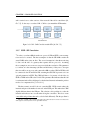
CHAPTER 3. PROPOSED SOLUTION
and is carried over to other sections of the network if the call is routed there [16,
Ch. 7.5]. So the way to correlate CAP - CAP is to just match the GCR number.
Figure 3.6: CAP - CAP Correlation with GCR [16, Ch. 7.5]
3.3.5
4
ISUP - SIP Correlation
In order to correlate xDRs from the two protocols SIP and ISUP, some assump-
tions need to be created. The first assumption is that the SIP xDR contains the
actual CdPN and not just an alias. The second assumption is that the monitoring
is done on both sides of a gateway that separates the two protocols. Assuming
those assumptions are correct we can proceed with the correlation. The parameter
to correlate on is the timestamp (call time and hold time), if they are too far apart
then it would be wrong to try and connect the xDRs together. CPN in ISUP should
be connected to the From field in SIP, assuming that the CPN is present as it is an
optional parameter in ISUP. The CdPN will have to be present on both sides, in
ISUP as CdPN and in SIP as the To field. The parameter that indicates that this call
is an international call should always be checked and international number prefixes
needs to be compensated for [7, Ch 8.2.1.1].
The first scenario we will look at is a standard SIP - ISUP scenario where the
international part of the number is removed on the ISUP part. This makes the CdPN
slightly different than in the SIP part. The solution to this problem is to take the
international indicator into account when doing the correlation. This does create
some additional problems that can be solved a little differently. The first problem is
4
The ideas on ISUP - SIP correlation brought forth in this subsection are based on discussions
with engineers at Utel Systems and one particular reference.
48
CHAPTER 3. PROPOSED SOLUTION
the fact that we do not necessarily know which number is the international number;
it can even be more than one number. So to solve this we need to either just
compare and say that we allow some slack. This makes it a little uncertain and
prone to failure, but statistically the chance is very low. The other solution would
be to look up in a database and see what the number would be with and without a
international number. This adds additional intelligence, and makes the correlation
slow because it needs to check a database each and every time. With that problem
solved, all we need to do is to compare the ISUP CdPN with the SIP CdPN and do
the same for CPN if present. It will also be useful to make sure that the timestamps
are not too different. They need to be within at least x seconds of each other, with
x being a user specified parameter, a good default number is one. That should be
all we need to correlate SIP and ISUP calls, the results of our test can be found in
the result chapter.
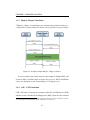
Figure 3.7: SIP - ISUP call flow. Note that Megaco or MGCP is left out in order to
simplify it.
49
CHAPTER 3. PROPOSED SOLUTION
In this case we have a call coming from the SIP side and going to someone/something on the SS7 side. The To field in the Invite message should be linked to
the CdPN in the Initial Address Message (IAM). Other parameters inside the IAM
that should be connected to the SIP invite are International Number Prefix Parameter. Address Complete Message (ACM) is connected to the Ringing message
in SIP but since there are not any special parameters in either to correlate on it can
be ignored. PRACK i.e. Provisional Acknowledge and the response can safely be
ignored as well. ANM message is connected to the generic SIP OK message; there
arent any specific parameters which are required to correlate on here. Once the
acknowledgement is received the data phase is up, RTP on the SIP side and a-law
or u-law raw data on the ISUP side. The ISUP side hangs up the phone first and
the Release Message (REL) is connected to the BYE message on the SIP side. The
final parameters needed for correlation are the Call Time/Conversation Time and
the Hold Time; they should be roughly the same on both sides. Within 5% of each
other is a good number. Slight time discrepancies are usually caused by processing
delay in switches.
3.3.6
5
ISUP - CAP Correlation
Correlating between ISUP and CAP is very similar to correlating between ISUP
and ISUP. In both cases the correlation process is done on matching CPN to CPN,
and CdPN to CdPN. Unfortunately, call time is not a parameter which we can
use to increase the accuracy of the correlation process because it will not or even
approximately the same in both xDRs.
5
The ideas on ISUP - CAP correlation brought forth in this subsection are based on discussions
with engineers at Utel Systems, and as such there are no references.
50
CHAPTER 3. PROPOSED SOLUTION
Figure 3.8: Call flow of setting up a call ISDN subscriber to a mobile subscriber
where CAP is supported.
The scenario illustrated in Figure 3.8 is a basic call flow where an ISDN subscriber calls a mobile subscriber of CAP where other protocols are included.
3.3.7
6
SIP - Megaco Correlation
Correlating between SIP and Megaco is in most cases possible. The most im-
portant parameters to look at when correlating between SIP and Megaco xDRs are
SIP RTP stream IP address and port number with Megaco Remote Medium. If the
parameters are the same then we can connect them together as long as the time
difference between the xDRs is short.
6
The ideas on SIP - Megaco correlation brought forth in this subsection are based on discussions
with engineers at Utel Systems, and as such there are no references.
51
CHAPTER 3. PROPOSED SOLUTION
Figure 3.9: SIP - Megaco call flow.
In Figure 3.9, the left side messages are correlated together into a SIP CDR primarily using the call-id parameter inside the SIP messages, and the Megaco messages are correlated together primarily using the transaction id inside the Megaco
messages. The two sides should then be correlated together based on the RTP IP
address and port number inside the SIP invite message and the corresponding RTP
IP address and port number inside the Megaco message.
52
CHAPTER 3. PROPOSED SOLUTION
3.3.8
7
ISUP - Megaco Correlation
Correlating ISUP and Megaco together is generally a difficult affair as it is impos-
sible to correctly correlate them based on the information present in the signaling
information. In order to correlate them, the Transaction Id inside the Megaco protocol needs to match with some information that only the operator of the network
has. The Transaction Id in Megaco is supposed to correspond to the CIC code in
ISUP, but without knowing the topography it will is impossible unless there is only
one E1/T1 interface. The topography of the network is something that the system
operator must input into the correlator in order to achieve successful correlation.
Figure 3.10: ISUP and Megaco call flow.
7
The ideas on ISUP - Megaco correlation brought forth in this subsection are based on discussions
with engineers at Utel Systems, and as such there are no references.
53
CHAPTER 3. PROPOSED SOLUTION
3.4
3.4.1
Correlation of Specific Problem Scenarios
Number Portability
Number portability is an intelligent network service that is particularly difficult
because of the different ways to implement that type of functionality. According
to Lee Dryburgh and Jeff Hewett [6, Ch. 8] there are four main ways to implement
number portability in ISUP. Because of the different ways in which they function,
its not possible to create on correlation method that can correctly correlate them
all. There is a similarity between some of these methods, specifically the first one
and the problem shown in subsubsection 3.4.2 special numbers.
In the first method it is necessary to monitor the transmission between the centrally administered database and the node sending the query. With the information
in that transmission it should be possible to correctly correlate the different xDRs.
The second method is similar to the first method in how to correlate, with the
exception that the database is switched out with a query to the network that owns
the number the CdPN. In this method the network in which the call initiated first
tries to route the CdPN number and will receive a error message back, at which
point it will query the CdPNs network for the new routing number.
The third method is almost the same as the second, but instead of querying
the CdPNs network for the new number, the new number is included in the error
message reply.
The fourth and final method has the CdPNs network just reroute the call from
their end. In this case additional correlation is impossible because it does not look
like a case of number portability from the network in which the call was initiated.
Correlating method one, two and three requires a two-stage correlation process. First the xDR of the first link one needs to be matched with the xDR from
which contains the CdPN conversion. Once process is done, the new xDR can be
correlated with the glsacro09 from link two.
54
CHAPTER 3. PROPOSED SOLUTION
3.4.2
Special Numbers
Special numbers can cause some problems when trying to correlate xDRs together.
A major part of correlation is trying to connect the xDRs based on the CdPN, however in the case where special numbers are in the picture this becomes a problem.
Figure 3.11: A scenario where someone calls a special number.
The scenario illustrated in Figure 3.11 is an example where a telephone subscriber calls a number that is part of the special number group, and in this case it is
the police in Norway (112). On one section of an SSP the monitor probe captures
this and records the number as 112 in a CDR. The problem arises when the SSP
does a number analysis of the special number 112 and converts it the normal eight
digit number of the nearest police station. In this example we have two CDRs that
belong to each other and should be correlated since they are the same call, but they
have two different CdPNs. 8 In this paticular case the only way to perform correct
correlation is to know the number conversion. This information can be input into
the correlator prior to correlation, or a third xDR containing the information about
the number conversion needs to be included in the correlation.
8
The ideas on correlation brought forth in this paragraph are based on discussions with engineers
at Utel Systems. As such, there are no references.
55
CHAPTER 3. PROPOSED SOLUTION
3.4.3
International and National Numbers
International and national numbers can cause some problems when correlating
CDR that belong to the same call. An example is where information from the
probe is gathered on both sides for a international gateway. That way you will
often end up with two CDRs, one with the International number pre-fix and one
without.
Figure 3.12: A scenario with and without national number prefix.
In the example illustrated in Figure 3.12, two CDRs will be created; they are
essentially one call and should be correlated into one call. Because the numbers
are not same on both sides, the correlating process is more difficult. Because some
countries also use area number pre-fixes the correlation process can be even more
difficult, but it should still be possible to perform a number match either based
number comparison from the right to left, and if the numbers are close enough for
the user specified breakpoint than we can correlated them. 9 The national indicator
in ISUP is used to indicate whether the call is national or international, so the
complex correlation case is only applicable if the CDRs to correlate have different
values in the national indicator parameter.
3.4.4
Error Case
Errors can occur, one example of this is an ISUP system where all the timeslots are
taken or an incomplete number; then the reply message will be in the form of an
error message. At this point it will be impossible to correlate further because the
9
The parameters to choose from and how to perform correlation brought forth in this paragraph
are based on discussions with engineers at Utel Systems. As such, there are no references.
56
CHAPTER 3. PROPOSED SOLUTION
call ends here.
Figure 3.13: A scenario with an error
In the example illustrated in Figure 3.13 one CDR will be created, and by
looking at the cause value for termination we can why the call was terminated. If
the termination cause was 28 (invalid number format), then we can stop correlation
of that xDR because we know that there will not be any more xDRs that will match
the current case.
3.4.5
Correlation on more than two protocols
For correlation of more than two protocols, we thought of two possible solutions.
The first was to allow correlation of more than two protocols at the same time, but
unfortunately this causes the potential correlation problems to be very complex.
An example of this case is correlation of ISUP, SIP and Megaco. This correlation case requires information about the mapping of ISUP to Megaco to be
manually added. It requires the Session Description Protocol (SDP) IP address
and port numbers in SIP and Megaco to be correlated, and it requires the CPN and
CdPN in SIP and ISUP to be correlated. The complex web of cross protocol parameter dependency is very difficult to program into a fast and generic correlator,
as such we have opted for the use of hierarchical correlation because reduces the
scenario complexity of correlation. Hierarchical correlation approach on the same
example mentioned earlier in the text is done by just performing correlation on two
protocols, and then correlate the result with the third protocol. The order of the
protocols should not make any difference in the final result. This is further touched
on in section 6.3 Further Work as our prototype correlator does not include this
possibility.
57
CHAPTER 3. PROPOSED SOLUTION
3.5
Correlator Design
Our design of the correlator is a highlevel diagram illustrated in Figure 3.14(a).
The core idea in this design is the seperation of GUI and the Input/Output (IO)
section of the program from the core/engine of the program. The main focus will
be on the engine design in subsection 3.5.1 as that is the part of the program in
which the acutal correaltion process happens.
(a) Our ideas for the separation of the different
components of the program.
(b) Highlevel Correlator Flow Chart
Figure 3.14: Highlevel representation of our correlator
The strength of this design is the ease in which it is possible to add and remove
different components from the core/engine of the program. This will make it much
easier to implement changes to reading and decoding the CDR files. You just need
to import another DLL component. The user interface is interchangeable as well
with this design. The engine of this program remains pretty much static and the
design for this will be covered in subsection 3.5.1. The GUI and IO components
are able to talk to the engine using a set of Application Program Interface (API)
calls that will be explained in the subsection 3.5.1 Engine Design.
58
CHAPTER 3. PROPOSED SOLUTION
3.5.1
Engine Design
The idea of the engine of the program is to make it as separate from the other
components and as generic as possible. It is for this reason that we have decided
to distance the engine from the rest of the program using a set of API calls. This
will allow the GUI and the IO components to be modified or redesigned without
recompiling the whole program. Another bonus of this design is the ease in which
it is possible to convert it to a different platform. If the core/engine is written in C,
C++ or Java it will be easy to make it cross platform, as long as no operation system
specific API calls is embedded into the engine. All that is needed is recompilation
on the new platform. In the case of Java this isn’t even needed, as it will just
be complied to Java bytecode and interprited by the Java virtual machine on the
system.
So far the set of API calls needed to operate the engine are as follows:
Listing 3.1: API
int createController ( ) ;
int hookToDataStream ( int controllerId , int portNumber ) ;
int readFromFile ( int controllerId , char ∗ FilePath ) ;
void setSlidingTimeWindowSize ( int controllerId , int seconds ) ;
int getSlidingTimeWindowSize ( int controllerId ) ;
void setSlackPercentage ( int controllerId , float percent ) ;
float getSlackPercentage ( int controllerId ) ;
void setProtocolsToCorrelate ( int controllerId , int [ ] ProtocolSet ) ;
void setProtocolParametersToCorrealte ( int controllerId , list<string> leftSideProtocols , list<s
int doCorrelation ( int controllerId ) ;
int writeResultToDatabase ( int controllerId ) ;
int writeResultToFile ( int controllerId char ∗ folderPath , char ∗ fileName ) ;
The createController API call is the first function to be called. It will create
a controller that will handle the whole correlation process. The return value will
be the controllerId. The whole point of using this system is to be able to create
and perform multiple concurrent correlations on the same or different xDR data
sources.
The hookToDataStream API call is used if correlation is to be done in real-time.
59
CHAPTER 3. PROPOSED SOLUTION
The program must be told which port to listen to and which correlation controller
that should be the one listening. TCP is the transport protocol of choice. It will
return -1 in the event of an error or 1 if successful.
The readFromFile API call is used if correlation is to be done on xDRs present
in a file. It should require an absolute Linux type file path and which controller that
should read. This will make it easier to write the code and it will prevent errors
like sometimes using absolute file path sometimes using relative, or a mismatch
between Windows style file paths or Linux style file paths. This function will
return -1 in the event of an error or 1 if successful.
The setSlidingTimeWindowSize API call is used to set the sliding time window
size. The sliding time window is the parameter that decides how far back the algorithm should look when trying to find xDRs to correlate with. The two parameters
it requires are the controllerId and the time window size, integer in seconds.
The getSlidingTimeWindowSize API call will return the currently set size of the
time window in seconds. It requires that the id of the controller in question is be
past to it.
The setSlackPercentage API call is used to set the amount of slack allowed
when performing correlation on parameters such as time. Having the slack as a
percentage rather than a fixed amount is the best choice because it is possible that
long calls may have some discrepancy in the call time parameter. If this discrepancy is a few seconds for an hour long call, then that isn’t more then:
(3sec ∗ 100)/3600sec = 0, 083%
We can generally allow a little more slack than that, but if the call lasted only 30
seconds it would look totally different.
(3sec ∗ 100)/30sec = 10%
If we had only allowed for fixed numbers then the short conversation, which shouldn’t
have been correlated would have been correlated.
60
CHAPTER 3. PROPOSED SOLUTION
The getSlackPercentage API call will return the Slack Percentage; this value is
a number between 0 and 1, where 1 is 100%.
The setProtocolsToCorrelate API call is used to fix the protocol that will be
correlated on. The correlator will then ignore protocols that are from a different
type then the ones specified. Each number represents a protocol,
−1 = nothing, 0 = ISU P, 1 = SIP, 2 = M egaco, 3 = CAP.
This can be expanded to include many other types of protocols.
The setProtocolParametersToCorrealte API call is used to fix the different protocol parameters together. This function takes two string lists as arguments and the
controllerId, The parameter names present in the string lists will be compared to
the parameters present in the xDRs that are to be compared.
The doCorrelation API call requires that the controllerId is pass to it and it
returns -1 if correlation is not performed. This is the case if no parameters or
protocols are set, there is not data or the controllerId doesn’t exist. 1 is returned if
correlation is performed successfully.
The writeResultToDatabase API call is used to write the correlated data to the
database. It must be provided the controllerId and connection string which should
contain the parameters necessary in order to connect to the database server. It will
return -1 if connection is refused or 1 if successful.
The writeResultToFile API call is used to write the correlated data to a file.
Filename, controllerId and the absolute file path are the required input parameters
for this function.
61
CHAPTER 3. PROPOSED SOLUTION
Figure 3.15: Our idea for the engine looks like. Loosely based on the UML 2.0
standard.
By using the design in Figure 3.15 the correlator will become very generic, it
will allow the user to choose which parameters that he/she wants to correlate on.
Additionally, it will allow the area in which the correlator will look for xDRs to
correlate on to be manipulated. Another interesting effect produced by this design
is the ability to be able to perform multiple concurrent correlations on the same or
different xDR pools. The controllerAPIClass will act as the bridge between the user
interface part of the program and the engine itself. Every time the createController
function is called a new controller is created. This controller is the class that keeps
track of all the unique parameters, xDRs, timers and output for one correlation
process.
62
CHAPTER 3. PROPOSED SOLUTION
3.5.2
Sliding Time Window
The sliding time window is a very important part of the correlator. The sliding time
window allows the algorithm to only look at a given time span when checking for
xDRs to correlate. This is based on the users preferences. The major advantage
of using the idea of a sliding time window is that it reduces the search space to a
fraction of the whole search space. Another advantage of the sliding time window
is that it allows the end of the timeline to continually be extended.
Figure 3.16: The sliding time window.
In Figure 3.16 we have a current time that keeps on increasing and a user configurable time window which extends back x number of seconds and is the time
window in which the correlator will look for xDRs to correlate with the current
one.
63
CHAPTER 3. PROPOSED SOLUTION
3.6
Correlator Implementation
Figure 3.17: The Linked List design.
Figure 3.17 shows how the linked list may look like. Horizontally we can find the
different xDRs, and vertically we can find the xDRs that belong to each other based
on the parameter that the user specified. 2.X series are one correlated xDR, while
2.1 are one specific xDR in that instance.
Correlator program runs the correlation algorithm on a linked list and inserts
the correlated xDRs in this list. Linked lists are flexible, fits for correlation logic
and works fine for both real time correlation and offline correlation which uses a
file logged from the network and stored.
Correlation algorithm works on a linked list of linked lists (2-dimensional
linked list). First dimension is called a horizontal list and the second dimension
is called a vertical list. Horizontal list is the main list that keeps the correlated
xDRs as single items. We can also call it the correlation stream. Vertical list stores
the correlated xDRs in the same list. Non correlated xDRs are stored individually
in a vertical list (e.g 1.1, 3.1 and 8.1).
Listing 3.2: Linked List
LinkedList<LinkedList<KeyValuePair<DateTime , XDRClass>>> correlatedXDRs ;
Here LinkedList is a two-way linked list which is possible to move back and
forth through the list. XDRClass is the class that keeps all xDR related values
64
CHAPTER 3. PROPOSED SOLUTION
inside an xDR provided by the logs. All xDRs received by the engine are stored in
this format in memory. Before each xDR is processed by the algorithm, all xDRs
are encapsulated with DateTime as a key value in KeyValuePair type. This is the
type for objects in the linked list.
Structure of the correlator code consists of various functions which are connected to each other and work together. Figure 3.18 shows the call relations of the
functions which have a role for the correlation part of the system.
Figure 3.18: The prototype call hierarchy
doCorrelation()
This function will itterate through the linked list and send xDRs to compare with
each other by calling backward(). The correlation process function is done when
the thread exists this function.
backward()
Each xDR received by the system is sent to the algorithm by the backward() function. backward() function looks for a match in the linked list in a pre-defined
number of seconds range backward direction. This function also receives the new
xDR packet as input and place it to the appropriate place in the correlation stream
65
CHAPTER 3. PROPOSED SOLUTION
(linked list). It scans the xDRs in X seconds (defaults to 1) range and calls isCorrelated() function to check if there is a match between the new xDR with the
existing xDRs. It scans each vertical list in the outer loop and scans each xDR in
the vertical list in the inner loop. If it finds a match with any of the xDRs in that
range, then it calls the insertXDRVertical(), and that function inserts the new xDR
by using its timestamp. If it fails to correlate the new xDR with any of the xDRs
in the current vertical list, then it moves back by one horizontally to scan the next
vertical list. If backward fails correlate the new xDR with any of the xDRs in the
x seconds range, then it calls insertXDRHorizontal() to create a new vertical list
branch and insert the new CDR to the brand new vertical list. In that case new xDR
becomes the first member of its own group.
insertXDRVertical()
This function is called when backward() finds a match in one of the existing correlated groups. That is because it needs the pointer for the vertical list which the new
xDR will be inserted in and also the new xDR.
Figure 3.19: Implementation of the Linked List Vertical
66
CHAPTER 3. PROPOSED SOLUTION
Figure 3.19 illustrates a vertical insertion. Here A, B, C and D are correlated
xDRs as a group and located under the same vertical list. Algorithm decides that
the new xDR E needs to be correlated with that group and is inserted in this vertical
list. The list is time ordered, so it is important where the xDR are inserted. During
the insertion of a new xDR, the algorithm starts to compare the timestamps of the
new xDR and the last xDR in the list. If the new xDRs timestamp is bigger than the
other one, new xDR is inserted to the end of the list, otherwise algorithm checks
the new xDRs timestamp with the previous one in the list and so on. If the new
xDRs timestamp is smaller than all xDRs in the list, then the new xDR is inserted in
the top of the list. Thus, the time order is ensured as the xDR that has the smallest
time stamp is in the top of the list and the one which has the biggest timestamp is
located in the bottom of the list and it is always updated for every new insertion.
In the figure above, the new xDR E is inserted between B and C. So the timestamp
of E is smaller than timestamp C and bigger than timestamp B.
insertXDRHorizontal()
The way the main algorithm works, all new xDRs needs to be inserted to the main
list. insertXDRHorizontal() is called when a new xDR does not have any match
with any of xDRs in the correlation range. Depending on the incoming xDRs, this
xDR might be a xDR which could not be correlated, or the first xDR of a group
in which the remaining xDRs has not been received or not been processed by the
algorithm yet.
This function basically creates a new xDR branch/vertical list for the new algorithm and inserts the new xDR into it. It scans the horizontal list within the range
and inserts the new list to the main list in where it belongs to in regards to its timestamp. There is no global time in real networks so there is no guarantee to receive
xDRs sequentially based on time. Additionally, normal network delay to and from
monitoring probes can also cause the ordering to be different. So it is important to
make the insertion by the timestamp value and keep the list ordered by time.
67
CHAPTER 3. PROPOSED SOLUTION
Figure 3.20: Implementation of the Linked List Horizontal
Figure 3.20 illustrates the horizontal insertion of a xDR. Here T is a new xDR
which needs to be inserted to the correlated xDR list. As it is mentioned before,
when the algorithm could not correlate a new item with any other items in the
correlation range, it still needs to be inserted. The reason for this is because it can
be the first xDR of a new group (based on the end-users whishes) received by the
system. It is important that each new item (in this case, it is T) will be inserted
in the correct position based on the timestamp in ascending order from the left. It
can be seen from the figure above that new item T is inserted between group Y and
group Z. The algorithm starts to check the timestamps from the right-end (timeline
is from left to the right) of the list. In this scenario, it seems timestamp of T is
smaller than Z3, then it checks the timestamp of Y2 and new item Ts timestamp
is bigger than Y2 (the one which has the biggest timestamp for group Y). The
algorithm uses the timestamp of the item in the bottom of each vertical list as the
timestamp of the vertical list.
isTogether()
The isTogether() function takes two parameters and tries to find out if they are
connected based on the preferences previously set by the end users, and it returns
a true or false value based on whether it managed to correlate them together. The
two input parameters are xDRs.
68
CHAPTER 3. PROPOSED SOLUTION
userProtocol()
userProtocol() function sets the protocol values which will be needed for the correlation by reading the protocol information of the xDRs. It also filters the xDRs
which will not be correlated by returning false.
classToDictionary()
This function is responsible to set the values that will be needed for correlation
gathered from the xDRs which will be attempted to correlate.
correlate()
This is exactly where the two xDRs are decided to be correlated or not. It works
dependent on the user selection.
3.7
User Interface
The program is designed around the idea that the engine is separated from the user
interface. Because of this design it is entirely possible to create either a console
type of user interface or a graphical user interface. Figure 3.21 illustates how the
prototype correlator looks like, and Table 3.3 explains the buttons available in the
prototype correlator.
69
CHAPTER 3. PROPOSED SOLUTION
File
Options
Start Correlation
Query
Explorer
Allows the user to select file, and the program will
attempt to open and decode the information inside
the file. The type of file it takes is special file format
that Utel System owns.
Allows the user to change the size of the time-span
and accuracy of the call time. In addition to this, the
user can choose which parameters and protocols that
the correlator should attempt to correlate on.
Make the correlator attempt to correlate based on
previously set parameters and it will return the result of its correlation.
Allows the user to store data to a database, the possibilities are storing all the xDRs and storing the correlated xDRs on an MSSQL database. Correlated
xDRs are stored as multiple records to avoid data
loss.
Allows the user to view the data stored in the
database.
Table 3.3: Table of Prototype correlator buttons
Figure 3.21: GUI of the prototype correlator
70
Chapter 4
Validation and Testing
Having two people involved in this project gives the opportunity for validation of
coding tasks written by the members internally. Tasks which need to be implemented are created together by the group members. A group member implements
a defined task, and when it is done, the other group member becomes responsible
for validation of that task.
4.1
Usage of STINGA NGN Monitor
The STINGA NGN Monitor is a program provided to the members of this thesis by
Utel Systems as a supplementary tool for testing and general idea gathering. The
STINGA NGN Monitor is a program that Utel Systems uses to receive signaling
data and present that data in a clear way. In addition, the NGN Monitor can be
used to read and decode the Utel Systems proprietary xDR file format. The NGN
Monitor is able to perform correlation on some cases, and SIP - Megaco is one
such case.
71
CHAPTER 4. VALIDATION AND TESTING
Figure 4.1: STINGA NGN Monitor.
In Figure 4.1 we can see that STINGA NGN Monitor has correlated a SIP and
a Megaco CDRs together
4.2
Time Performance Testing
We started by running the same correlation test 10 times on the same dataset and
gathered the result. Additionally, we tried the same thing on a different dataset.
The correlation process is based on the parameters mentioned in subsection 3.3.7,
which handles basic SIP - Megaco correlation.
72
CHAPTER 4. VALIDATION AND TESTING
Type of XDRs
Total xDRs in set
SIP xDRs
Megaco xDRs
% of set to compare
Processing Time
SIP/Megaco
11735
4317
5443
83,17%
38 ms
SIP/Megaco
11735
4317
5443
83,17%
49 ms
SIP/Megaco
11735
4317
5443
83,17%
51 ms
SIP/Megaco
11735
4317
5443
83,17%
63 ms
SIP/Megaco
11735
4317
5443
83,17%
64 ms
SIP/Megaco
11735
4317
5443
83,17%
52 ms
SIP/Megaco
11735
4317
5443
83,17%
52 ms
SIP/Megaco
11735
4317
5443
83,17%
62 ms
SIP/Megaco
11735
4317
5443
83,17%
65 ms
SIP/Megaco
11735
4317
5443
83,17%
35 ms
SIP/Megaco
32428
4446
5751
31,45%
68 ms
SIP/Megaco
32428
4446
5751
31,45%
64 ms
SIP/Megaco
32428
4446
5751
31,45%
78 ms
SIP/Megaco
32428
4446
5751
31,45%
68 ms
SIP/Megaco
32428
4446
5751
31,45%
58 ms
SIP/Megaco
32428
4446
5751
31,45%
67 ms
SIP/Megaco
32428
4446
5751
31,45%
71 ms
SIP/Megaco
32428
4446
5751
31,45%
73 ms
SIP/Megaco
32428
4446
5751
31,45%
68 ms
SIP/Megaco
32428
4446
5751
31,45%
73 ms
Table 4.1: A dataset of SIP/Megaco correlation time performance, performed on
an Intel Core i5 2,26 Ghz processor running of a single thread using the Windows
7 x64 operating system.
Table 4.1 shows that the average correlation time for the first set is completed
in 53 milliseconds on an Intel Core i5 2,26Ghz processor. The average correlation
time on the second set of data which is twice as large was only 68 milliseconds on
the same type of CPU. This data however does not show the whole picture because
all the xDRs in question are not SIP and Megaco; in this dataset there is a mix
of ISUP, IUP, SIP and Megaco. From this data we can say that the performance
of the correlator code has a satisfying speed considering the size of the dataset.
73
CHAPTER 4. VALIDATION AND TESTING
The reason for this correlation speed is largely because the correlator algorithm
performs correlation by working with just the data in the memory.
Type of CDR
ISUP CDRs
% of set to compare
Processing Time
ISUP/ISUP
82914
100%
1345 ms
ISUP/ISUP
82914
100%
1541 ms
ISUP/ISUP
82914
100%
1203 ms
ISUP/ISUP
82914
100%
1225 ms
ISUP/ISUP
82914
100%
1210 ms
ISUP/ISUP
82914
100%
1214 ms
ISUP/ISUP
82914
100%
1217 ms
ISUP/ISUP
82914
100%
1183 ms
ISUP/ISUP
82914
100%
1254 ms
ISUP/ISUP
82914
100%
1251 ms
Table 4.2: A dataset of ISUP Correlation Time performance on an Intel Core i5
2,26 Ghz processor running on a single thread using the Windows 7 x64 operating
system.
We also tried a different correlation process on a much larger sample with a
more complex correlation process. In the case illustrated in Table 4.2 the correlation time is drastically increased to 1264 milliseconds in average, but that is still
within acceptable limits considering correlation time. We believe that there are two
main reasons for the increased time. The first reason being that the correlation pool
is much larger, 82914 CDRs to correlate compared to the 10197 and 9760 from the
previous correlation pools in table 4.1. The second reason is the actual correlation
process itself; when correlating ISUP with ISUP we use a parameter called hold
time. Our correlator compares them by seeing if they are within the user specified
percentage. This process is much more CPU intensive because it requires division
of numbers. The type of correlation performed in Table 4.2 is based on the basic
ISUP - ISUP correlation case mentioned in subsection 3.3.1.
The design of the algorithm is optimized for the correlation operations and the
two dimensional linked list architecture used as the main data structure gives good
74
CHAPTER 4. VALIDATION AND TESTING
performance results for the correlation algorithm. On the other hand, there are
some operations that use database such as writing all xDRs from the input file to
the database, exploring xDRs, and writing correlated xDRs to database. Some of
them are mostly for debugging purposes which users rarely need to use. Those
operations obviously cannot be as fast as memory operations.
4.3
Scenario and Prototype Testing
Since the problem descriptions called for us to specifically test one specific scenario, we choose SIP - Megaco correlation. This allowed us to validate the correlation results from our prototype using the STINGA NGN Monitor program provided
by Utel Systems, since the NGN Monitor is capable of performing correlation on
SIP and Megaco. The biggest problem we had with validation was the fact that we
had problems getting the proper statistics from the NGN Monitor without counting
the SIP Megaco correlation cases manually. Despite of this problem we were able
to validate our results with that of the STINGA NGN Monitor provided by Utel
Systems.
Figure 4.2: Correlation results comparisons chart.
From the data presented in Figure 4.2 we can see that there is a slight difference
75
CHAPTER 4. VALIDATION AND TESTING
in the number of CDRs correlated by our prototype correlator and the Utel Systems
STINGA NGN Monitor. We believe that this number can be attributed to our
correlation process. The one big difference in our correlation process is that the
sliding time window timer is reset if a match is found, and this gives our correlator
the possibility to find more CDRs outside the specified target zone. The reason for
our decision to implement this feature is because we want the correlation process
to be as correct as possible if multiple hops is present. In hindsight we probably
should have implemented the ability to turn on and off that feature. Another huge
factor for the slight discrepancy of the results between our correlator and Utel
Systems STINGA NGN Monitor, is that we do not know exactly what type of
method they use in their correlation process.
Given that the Correlation numbers are so close we believe that our correlator
is performing as it should and the correlation process we completed correctly.
76
Chapter 5
Discussions
5.1
5.1.1
Our Solution
Hardcoded vs. Configurable
The solution we proposed in section 3.5 is a configurable protocol correlator, and
the problem description limited us to designing a configurable protocol correlator.
This approach is, we would argue, the best one. The reason for this is that it
reduces the amount of code needed to be written and makes it easier and faster to
create updates for the program. A configurable protocol correlator does not have
to include a lot of code covering every conceivable case and that is why the code
size for the main correlation algorithm will be reduced. With that said, all the
parameters have to come on somewhere and that will typically be ourside the main
algorithm. Aside from the benefits for the programmers there are also benefits
for the end users and field in which the program will work. The program will
no longer be limited to correlation of telecommunication protocols which is its
primarily objective. The end users will be able to choose on which parameters they
want to perform correlation, and this can be interpreted as something both good
and bad at the same time. It shifts the burden of figuring out which parameters to
correctly perform correlation on over to the end user, but in most cases this is a good
77
CHAPTER 5. DISCUSSIONS
thing, because there are a regional differences in which communication protocols
are used and how they are used. Configuring the correlator can also be performed
by Utel System, and it is faster and cheaper than coding in new functionality in
an existing product. An example of this is ITU-ISUP and ANSI-ISUP. The final
case we will argue as to why a configurable solution is better is that there are cases
where correlation is impossible because of missing information. As such, allowing
the end-user to input the missing information for a much more accurate correlation.
Using a hardcoded approach does have some benefits as it allows the initial
programming to go faster. It is also easier to create a prototype, but continued
development will be difficult.
5.1.2
Alternatives to Sliding Time Window
In the design and prototype parts of this thesis we decided to go for the approach
called Sliding Time Window. The reason for this is because it greatly narrows
down the search space which makes it possible to perform correlation in real-time
and on large amount of xDRs. Additionally, most xDRs are chronologically close
to each other, this means that similar xDRs are within a small timeframe. In our
implementation of the Sliding Time Window were only looking backwards x number of the seconds, where x is a value chosen by the end user. Another possibility
is to look both backwards and forwards x number of seconds; however the reason
we chose not to do this was because it created potential problems when performing
real-time correlation.
Figure 5.1: Sliding time window looking forwards and backwards.
In Figure 5.1 we can see that issues can arise if the future time part of the
78
CHAPTER 5. DISCUSSIONS
correlation window surpasses the end time.
There are different ways to search through the xDR list in order to find xDRs
that can be correlated. The easiest and arguably worst way to do this is to do an
exhaustive search; this will cause the currently selected xDRs to be compared to
every xDR in the whole list. The two major reasons for why we didn’t use this
option were that it is very slow; we can see that without even testing it.
5.1.3
xDR Differences
xDR is a generic term for a configurable format and this has presented us with some
challenges on correlation. Due to the generic nature of xDRs which creates the
possibility of many different types of xDRs that needs to be processed differently
we have tried to be as generic in our approach as possible. Unfortunately we cannot
be certain that we have thought of all possible scenarios and this is a potential
problem area in the future should the correlator be extended to include more types
of xDRs.
The main differences that we have found are what type of protocol or service
that an xDR is for. For protocols there should be few problems when extending
the correlator to incorporate the new xDR types. The main issue is when the xDRs
contain services and not protocols, and this can cause unforeseen problems that
we have not been able to consider when we designed the protocol correlator. The
reason for this is that it was not specifically specified in the thesis description, see
section 1.3.
Our ideas on a service based xDR are things like SMS xDRs which contain information from both CAP and MAP protocols; the actual text, CPN, CdPN, billing
information and stuff like that. The way we can achieve correlation on that example is through the use of hierarchical correlation which we touch on how to do in
section 6.3 further work.
79
CHAPTER 5. DISCUSSIONS
5.2
Other Apporaches
Our approach was for the most part already set from the start by the problem description and our discussions with Utel Systems. However, in addition to this we
have looked at other possible approaches to solve the problems in this thesis. Some
other ways to approach the problem in this thesis and the advantages and disadvantages of them will be presented below.
5.2.1
Graph Theory
The first promising alternative approach that we have looked at entrails the use of
graph theory to correlate the xDRs rather than use our current solution, in which
the user chooses the parameters to correlate on. Using graph theory for the correlation means creating an instance for the network topology based on a graph
structure(links and nodes) and optimizing it for the protocols which needs to be
supported and handling all correlation steps by processing the graph items nodes
and links.
To use graph theory the correlator should already know the topography of the
network which your probes are located, or the correlator can create the topology
itself by using the xDRs. In graph theory approach on xDR correlation, correlator
probably needs probes everywhere in the network. Otherwise having accurate results from graph algorithms might be hard. It may be possible to use graph theory
in the future of the xDRs themselves contain information about the network topography. However since they currently do not and not knowing the topography will
almost nullify any benefits of using graph theory due to low accuracy it is currently
not feasible.
80
Chapter 6
Conclusions and further work
6.1
Concluding Remarks
In this project the main goal was to create a generic protocol correlator model and
implementing a prototype that is capable of handling the xDR data. The specific
protocols focused on are ISUP, SIP, Megaco and CAP. Additionally the multiprotocol correlator should also allow the end-user to select which protocols and
which parameters inside the protocols to correlate on. Looking at the work outlined
for us in the problem statement we can say with confidence that the overall goal
of this thesis has been achieved. There have been problem areas and problem
statements which we have had to make slight adjustments to. An example of that
is in the early planning stages the idea was to include major statistical analysis.
Looking through the program specified in 1.3 this is what we have done.
1. A configurable correlator model has been designed.
2. A bridge has been implemented. It connects the xDR reader which reads the
Utel format xDRs to the Protocol correlator which is written for this project.
3. Correlator algorithm has been designed and implemented in C#.
4. User interface has been implemented.
81
CHAPTER 6. CONCLUSIONS AND FURTHER WORK
5. Correlator performance testing is acceptable.
6. Correlator correlation testing has been compared with Utel Systems STINGA
NGN Monitor and the result is acceptable.
6.2
Main Contribution
Our proposed solution on how to correlate between the different protocols ISUP,
SIP, Megaco and CAP have been discussed with engineers from Utel Systems; and
some of them have been verified by using the prototype protocol correlator and the
STINGA NGN Monitor from Utel System. SIP - Megaco Correlation is one such
combination. The multi-protocol correlator design and source code can be of use
to Utel Systems.
6.3
Further Work
Correlation algorithm is open for changes and/or improvements for different purposes and we have thought of a few improvements. The first major place for improvement is multi-threading, as that will allow the correlation process to both go
smoother and faster. It will also take advantage of todays multi-core processors.
The second place for improvement to the algorithm is including the functionality
for merging and splitting groups on the linked list, as that will allow the correlator
to perform additional correlation on the result of the first correlation process. This
hierarchical correlation process is advantageous because it allows us to break up
complex correlation processes into smaller and simpler tasks.
82
CHAPTER 6. CONCLUSIONS AND FURTHER WORK
6.3.1
Multi-Threading
Figure 6.1: Multiple Theads working on the same dataset
Figure 6.1 illustrates a workaround about how to implement extra criteria for correlation on the current architecture. It is seen that the main algorithm is running in
the end of the list and it keeps updating the list continuously. Thread 1 is running
behind the main algorithm and is followed by Thread 2. This allows the working
range off the threads and the main correlation process stay away from overlapping. It is possible to do that by using timestamp information. Also leaving safe
space (a range defined with certain amounts of seconds) will guarantee avoiding
any overlaps.
Main correlator algorithm focuses mostly on mandatory and multipurpose correlation criteria.
Implementing new correlation rules and criteria or doing temporary changes
on the main algorithm might be an unwelcome decision in some cases; especially
if the additions or changes are temporarily or rarely used, and doing the new implementation separately is usually better for development approach. Implementing
a new criteria, correlation support or extensions which serves extraordinary rules
for a new protocol might need different design approaches.
Main correlation algorithm leaves the correlated xDRs as groups in the link
lists. Assume that there is another thread implemented and activated behind the
83
CHAPTER 6. CONCLUSIONS AND FURTHER WORK
main algorithm which re-processes the xDR groups in the list. Also assume this
thread is able to combine and split the groups in the list depending on its decision.
There is one combining and one splitting example given below.
Working with double link lists has some advantages. It is flexible, fast and
quite suited for correlation logic.
6.3.2
Combining Groups
The basic idea of combining groups is that the main algorithm can change the
structure of an existing linked list based on the some new parameters and possibly
new data as well. Figure 6.2 shows the idea of combining groups in a pre existing
linked list created in a previous correlation process.
Figure 6.2: Combining Groups with the linked list.
84
CHAPTER 6. CONCLUSIONS AND FURTHER WORK
6.3.3
Splitting Groups
Having the correlation algorithm combining groups on a pre-existing linked list
gives the correlator program (as previously mentioned in section 6.3) many advantages. However, it is only useful if splitting of groups is also implemented.
Figure 6.3 shows the idea of splitting groups in a pre-existing linked list created in
a previous correlation process.
Figure 6.3: Splitting a group with the linked list.
85
Bibliography
[1] 3GPP. Customized Applications for Mobile network Enhanced Logic
(CAMEL) Phase X; CAMEL Application Part (CAP) specification, 2010.
http://www.3gpp.org/ftp/Specs/html-info/29078.htm.
[2] 3GPP. Mobile Application Part (MAP) specification, 2011. http://www.
3gpp.org/ftp/Specs/html-info/29002.htm.
[3] A. Biasutto A. Bovo and A. Nicchio.
Multi-protocol call trace
on GPRS Gb-Gr.
http://www.patentstorm.us/patents/
6915110/description.html, July 2005.
[4] H. Kheddouci B. Serrour, D. P. Gasparotto and B. Benatallah. Message Correlation and Business Protocol Discovery in Service Interaction Logs. In
Proceedings of the 20th international conference on Advanced Information
Systems Engineering, CAiSE ’08, pages 405–419, Berlin, Heidelberg, 2008.
Springer-Verlag.
[5] D. Kiong D. Poo and S. Ashok. Object-Oriented Programming and Java.
Springer, 2008.
[6] L. Dryburgh and J. Hewett. Signaling System No. 7 (SS7/C7) Protocol, Architecture and Services. Cisco Press, 2004.
[7] et al. G. Camarillo. Integrated Services Digital Network (ISDN) User Part
(ISUP) to Session Initiation Protocol (SIP) Mapping.
[8] H. Gomaa. Software Modeling and Design. Cambridge, 2011.
[9] ISO. Information technology – Open Systems Interconnection – Basic
Reference Model: The Basic Model, 1994. http://standards.iso.
org/ittf/PubliclyAvailableStandards/s020269_ISO_
IEC_7498-1_1994(E).zip.
86
BIBLIOGRAPHY
[10] ITU-T. Signalling System No. 7 - ISDN user part format and codes, 1999.
http://www.itu.int/rec/T-REC-Q.763/en.
[11] ITU-T. ITU-T, H.248.1, Gateway Control Protocol, 2005. http://www.
itu.int/rec/T-REC-H.248.1-200509-I/en.
[12] et al. J. Peterson. S/MIME Advanced Encryption Standard (AES), Requirement for the Session Initiation Protocol (SIP), 2004. http://tools.
ietf.org/html/rfc3853.
[13] et al. J. Rosenberg. SIP: Session Initation Protocol, 2002. http://tools.
ietf.org/html/rfc3261.
[14] F. Daniel M-S. Hacid F. Casati K. Musaraj, T. Yoshida and B. Benatallah. Message Correlation and Web Service Protocol Mining from Inaccurate
Logs. In Proceedings of the 2010 IEEE International Conference on Web
Services, ICWS ’10, pages 259–266, Washington, DC, USA, 2010. IEEE
Computer Society.
[15] M. Mangri and M. Nafornita. MEGACO correlation method. In Proceedings of the 14th WSEAS international conference on Communications, ICCOM’10, pages 252–258, Stevens Point, Wisconsin, USA, 2010. World Scientific and Engineering Academy and Society (WSEAS).
[16] R. Noldus. CAMEL: Intelligent Networks for the GSM, GPRS and UMTS
Network. Wiley, 2006.
[17] M. Stafford. Signaling And Switching For Packet Telephony (Artech House
Telecommunications Library). Artech House, 2004.
87
Acronyms
3GPP 3rd. Generation Partnership Project. 33
ACM Address Complete Message. 49
AES Advanced Encryption Standard. 16
ANM Answer Message. 36, 49
ANSI American National Standards Institute. 40, 77
API Application Program Interface. 57–60
ASN.1 Abstract Syntax Notation No.1. 37
ATM Asynchronous Transfer Mode. 34
CAP CAMEL Application Part. 5, 8, 11, 13, 14, 16–19, 21, 29, 30, 37–39, 46,
47, 49, 78, 80, 81
CBP Component Based Programming. 27
CdPN Called Party Number. 22, 32, 44, 45, 47–49, 53, 54, 56, 78
CDR Call Detail Record. 14, 19, 21, 22, 43–45, 51, 54–57, 65, 71
CIC Circuit Identification Code. 26, 30, 31, 39, 52
CPN Calling Party Number. 22, 44, 45, 47–49, 56, 78
88
Acronyms
DNS Domain Name System. 21
DPC Destination Point Code. 26, 31, 39
DSLAM Digital Subscriber Line Access Multiplexer. 34
GCR Global Call Reference. 6, 46, 47
GPRS General Packet Radio Service. 15
GSM Global System for Mobile Communications. 15
GUI Graphical User Interface. 6, 17, 57, 58, 69
HT Hold Time. 22
IAM Initial Address Message. 49
IETF Internet Engineering Task Force. 33
INAP Intelligent Network Application Part. 11, 38
INAP Intelligent Network Application Part. 21
IO Input/Output. 57, 58
IP Internet Protocol. 11, 17, 26, 29–31, 33, 34, 37, 45, 50, 51, 56
IPDR IP Detail Record. 21
ISDN Integrated Services Digital Network. 21, 31, 37
ISO International Organization for Standardization. 28
ISUP ISDN User Part. 5, 10–14, 16–19, 21, 24–26, 29–33, 36, 38–40, 43–49, 52,
53, 55, 56, 72, 73, 77, 80, 81
ITU International Telecommunication Union. 31, 33, 40, 77
MAP Mobile Application Part. 5, 11, 16, 21, 37, 38, 78
89
Acronyms
Megaco Media Gateway Control Protocol. 13, 14, 16–19, 24, 29, 30, 34–36, 39,
46, 50–52, 56, 70–72, 74, 80, 81
MG Media Gateway. 14, 34, 36, 37, 46
MGC Media Gateway Controller. 34, 36, 37, 46
MGCP Media Gateway Control Protocol. 34
MPLS Multi-Protocol Label Switching. 34
MSC Mobile Switching Service. 46
MTP3 Message Transfer Part 3. 29, 30
OOP Object Oriented Programming. 27
OPC Originating Point Code. 26, 31, 39
OSI Open Systems Interconnection. 11, 19, 28, 30, 38
PDU Protocol Data Unit. 15
PLMN Public Line Mobile Network. 37
PSTN Public Switched Telephone Network. 30, 31
REL Release Message. 49
RTP Real-time Transport Protocol. 36, 37, 49–51
S/MIME Secure/Multipurpose Internet Mail Extensions. 16
SCTP Stream Control Transmission Protocol. 29–31
SDP Session Description Protocol. 56
SIGTRAN Signaling Transport. 11, 17, 30
SIP Session Initiation Protocol. 10, 13, 14, 16–19, 21, 29, 30, 33, 38, 39, 45–51,
56, 70–72, 74, 80, 81
90
Acronyms
SMS Short Message Service. 37, 78
SOA Service Oriented Architecture. 27
SS7 Signaling System no.7. 5, 11, 17, 30–32, 36, 39, 49
SSP Service Switching Point. 31, 54
STP Signaling Transfer Point. 31
TCAP Transaction Capabilities Application Part. 21
TCP Transmission Control Protocol. 29–31, 59
TDR Transaction Detail Record. 15, 21
UDP User Datagram Protocol. 29, 30
xDR x Detail Record. 2–4, 12–15, 17–19, 21–26, 28, 41–43, 45, 47, 49, 50, 53,
54, 56, 58–70, 72, 74, 77–80, 82, 83
91
Appendix A
User Manual
This is a short introduction into using the prototype correlator. This correlator
is only a quick prototype, as such we do guarantee that it will run correctly or
smoothly on any system.
The following is a preliminary checklist of what is required in order to run the
program.
1. Make sure that you have Correlator GUI.exe.
2. Make sure that decoder dll.dll is in the same directory as Correlator GUI.exe.
3. Make sure that the .NET framework is installed.
92
APPENDIX A. USER MANUAL
Figure A.1: The Correlator GUI at the startup of the program.
Once the program is the started; a simple GUI will greet you, and Figure A.1
illustrates that. The first thing you need to do is click on File and choose a xDR file
containing xDRs.
93
APPENDIX A. USER MANUAL
Figure A.2: The Correlator GUI after a file has been loaded into the system.
Figure A.2 illustrates how the program GUI looks like once a file has been
loaded into the system. The next task is to choose the parameters which the correlator will preform its correlation on. In order to do that you will first need to press
Options and then Select Parameters; you will now be greeted by a new dialog.
94
APPENDIX A. USER MANUAL
Figure A.3: The Parameter Select dialog with the correlator GUI in the background.
Figure A.3 illustates an example of how the parameter select dialog may look
like. In This example SIP and Megaco are the protocols that the correlator will
attempt to correlate on, and SDP IP and Port number are the parameters. Click
OK to save the preferences. At this point you can either click Start Correlation to
perform the correaltion process or click on Options and then on Misc Options.
95
APPENDIX A. USER MANUAL
Figure A.4: The Misc Options dialog with the correlator GUI in the background.
Figure A.4 illustrates the Misc Options dialog. This dialog contains two correlator parameters that the user can manipulate. Time Span allows you to change
the size of the time window in which the correlator will look for similar xDRs.
Call Time Accuracy allows you to change the accuracy required in order for the
correlator to mach Time based parameters.
96
APPENDIX A. USER MANUAL
Figure A.5: The Correlator GUI after a correaltion is performed.
Figure A.5 illustrates how the correlator GUI looks like after a correaltion is
performed. At this point the only thing left is to same the xDRs and the correlated
xDRs to a database. In oder to do that you need to click on Query and then on log
file to db and finally on write correlated CDRs to database. This action has not
been tested to work on other computers due to the limited time available. Explorer
allows you to view the data present in the database.
97