1
Coltellerie Berti dal 1895
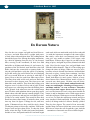
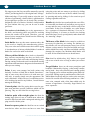
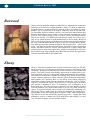
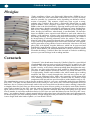
Boxwood
Always used to make the simplest country knives, although one sometimes
finds ones with carved or sculpted handles. Today, it is used in sophisticated production for people looking for a knife of their own which is poetic,
humble, yet very beautiful in its elegant simplicity, with an ancient look,
yet incredibly useful in modern contexts. An extra touch which makes this
material fascinating is how it changes colour naturally through time, going
from an early yellow-orange to an ever more intense and warmer hazel.
Due to the scarcity of available material and the small size of box trees,
only a very small amount of small-handled knives can be made. Boxwood
also comes in large boards, which however belong to species different from
the very beautiful Italian Buxus Sempervirens: for example Buxus Balearica which grows in the Spanish peninsula, but its appearance – colour and
grain – has little in common with our Buxus. Especially, boxwood growing
on the Apennines between Tuscany and Emilia have a yellow-orange hue
with hazel spots, knots and small cracks which are unequalled by any other
kind of Boxwood. Larger handles need Brazilian boxwood, the appearance
of which resembles that of the Italian kind.
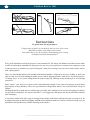
Ebony
Ebony is a hard and compact kind of wood which comes from over 250 different species of trees belonging to the Diospyros genus of the family of the
Ebenaceae. Diospyros are also much in favour as fruit trees, persimmon and
prunes. The kind of ebony most highly appreciated in cabinetwork is uniform and black, with a very fine grain, being both beautiful and with physical features which make it suitable for making many kinds of items: little
statues, cabinets, piano keys, flutes, clarinets, guitar fretboards and bridges,
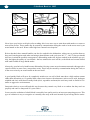
knife handles. At Coltellerie Berti, we use ebony from Gabon (Diospyros
Crassiflora) coming from African rainforests around the Gulf of Guinea:
Nigeria, Cameroon and Gabon. This kind of tree can grow up to 20 metres
tall, and has a diameter of 40 to 70 centimetres, free of branches, in its
lower third part. The only selection we make for our knife handles is taken
from the duramen (core of the trunk) which is grey to very dark, and has no
stripes. To get perfect black, ebony needs to be oxidised by submitting it to
slow aging. This is made easier by cutting the duramen into small pieces,
sealing their heads and keeping them in a place with a stable temperature.
This kind of wood has noteworthy physical properties - though hard and
difficult to work on, it stands up well to both blows and bending. It is also
very resistant to fungus, insects and the weather.