1
Introduction
Introduction
Introduction The human genome encodes approximately 35,000 genes. While some of these,
called housekeeping genes, are constitutively expressed, most are not. Non-housekeeping genes are expressed in a particular type of cell, under specific environmental
conditions, or at a certain stage of development. The expression of such genes must
be tightly regulated.
Gene expression is regulated by a group of proteins known as transcription factors
(TFs). An estimated 2,000 TFs are at work in any given human cell. By binding to specific DNA cis-elements, each TF contributes a different functional role in gene expression.
Just as TFs regulate gene expression, the TFs themselves are regulated in a number
of ways. Known as combinatorial regulation, these different levels of regulation allow
gene expression to be tightly controlled. TFs may be regulated by protein modification, such as phosphorylation; protein translocation; and/or protein interaction. In the
latter category, TFs may interact with upregulators or downregulators in the basal
transcription machinery, or with other transcription factors.
TF-TF A novel method for detecting TF-TF interactions
Traditionally, TF-TF interactions have been studied by co-immunoprecipitation and
super-gel shift. But because these methods are notoriously time consuming and inefficient, they are not conducive to mapping the network of TF-TF interactions.
TF-TF Interaction Arrays enable you to determine how a particular TF interacts with
multiple other TFs—all in one experiment.This technology is based on the non-covalent binding of DNA binding sequences to TF proteins. After precipitation with specific antibodies against a target TF, the co-precipitated TFs are determined by array
analysis of attached DNA sequences. The advantage of this technology is its capability of high-throughput analyzing interactions of native TF proteins in a given sample.
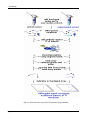
Figure 1 illustrates how this simple procedure works. First, incubate your nuclear
extract with the provided set of biotin-labeled double-stranded oligonucleotide
probes, which represent a known library of cis-elements. During the incubation step,
these probes bind to their corresponding TFs in your nuclear extract. The next step is
immunoprecipitation: using a specific antibody against your TF of interest, pull out
that TF and associated TFs, along with corresponding cis-elements. Next, wash
away free cis-an extracellular stimulus binds to a cell surface receptor. Binding triggers a signaling cascade, which migrates through the cytoplasm and into the
nucleus. Once transmitted to the nucleus, the signal regulates transcription factors,
which turn on and off genes that elements and nonspecific binding proteins. Finally,
elute the cis-elements and hybridize them to the Protein/DNA Array membrane.
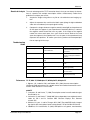
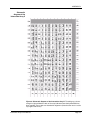
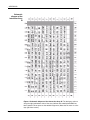
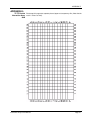
We currently offer three versions of the TF-TF Interaction Array. Version I is spotted
with 54 different consensus sequences; Version II is spotted with 96 different consensus sequences; and Version III is spotted with 94 different consensus sequences.
(Maps of Versions I, II and III are provided in Appendices B, C and D, respectively.) By
Interaction Arrays User Manual
Page 3