1
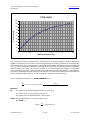
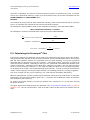
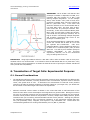
Lentiviral Packaging, Titering, and Transduction www.cellecta.com User Manual IMPORTANT: The % of RFP+ cells that are also puromycin-resistant is dependent on MOI, as it increases with the increase of % RFP+ cells bearing multiple integrations. In the example above, 24% of RFP+ cells (12% of total) were puromycin-resistant when cells were infected at MOI 0.7 (50% RFP+ cells). If the same cells would be infected at the recommended MOI of 0.5 (40% RFP+ cells), less than 24% of RFP+ cells would also be puromycin-resistant cells. Conversely, if cells were infected at MOI 2 (85% RFP+ cells), a much higher % than 24% of RFP+ cells would also be puromycin-resistant, due to high % of RFP+ cells bearing multiple integrants and therefore expressing high levels of the puromycin-resistance gene. In the case described above, a 27K library genetic screen was started with at least 46 × 106 cells per replicate and transduction. Cells were infected at MOI 0.7 (50% transduction efficiency) to obtain 23 × 106 infected (RFP+) cells, of which about 5.5 × 10⁶ will be puro-resistant (200 puro resistant cells/shRNA). In your screening experiment, however, we do not recommend using an MOI greater than 0.5. IMPORTANT: Using higher MOIs to achieve >40% RFP+ cells in order to obtain ~20% or more puroresistant cells is not recommended. It is advised to limit the RFP-based MOI to 0.5 (40% RFP+ cells) and use enough cells at transduction to obtain the desired amount of puromycin-resistant transduced cells (at least 200 cells/shRNA). G. Transduction of Target Cells: Experimental Purposes G.1. General Considerations The transduction efficiency of the lentiviral expression construct varies significantly for different cells and experimental conditions, including lentiviral vector concentration, exposure time to lentiviral vector, and growth area of cells. To determine the concentration of lentiviral vector particles required to provide the desired multiplicity of infection (MOI) for your target cells, you should titer the viral stock in the same target cells used in the experiment. Cellecta’s Lentiviral vectors contain a deletion in the 3’LTR that leads to self-inactivation of the lentiviral vector after reverse transcription and integration into genomic DNA. Although more than one copy of a lentiviral construct may be integrated into the genome of a single cell, the lentiviral construct cannot produce infectious viral particles. However, despite these safety features, please remember that you are working with transducible lentiviral vector particles. Although the particles are replication-incompetent, they are infection-competent, so the expression cassette that they carry can potentially infect, integrate, and express in any mammalian cell. Please follow the recommended guidelines for working with Biosafety Level 2 (BSL-2) materials. [email protected] 13 of 21 v9, 5/10/2015