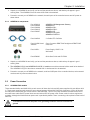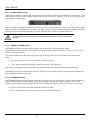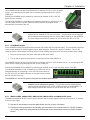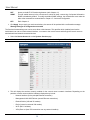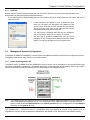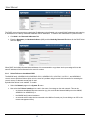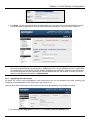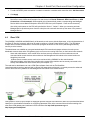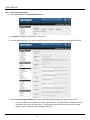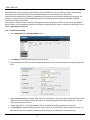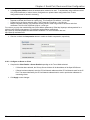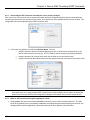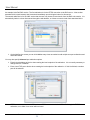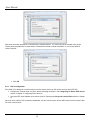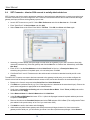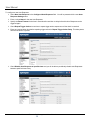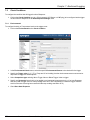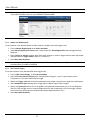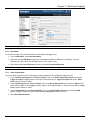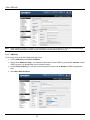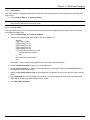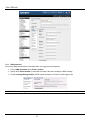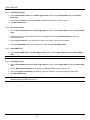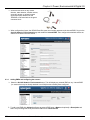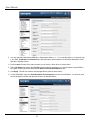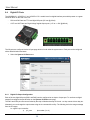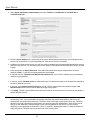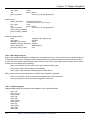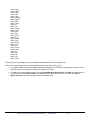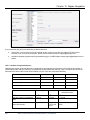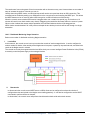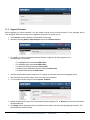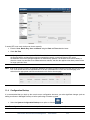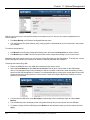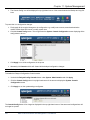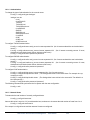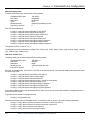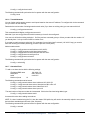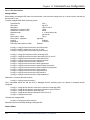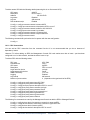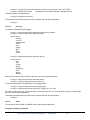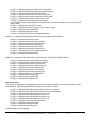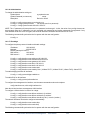
1
User Manual ACM5000 & ACM5500 Management Gateways IM4200 Infrastructure Managers CM4100 Console Servers SD4000 Secure Device Servers Rev: 4.8 April 9th 2013 Data Center and Remote Site Management - User Manual 1 Safety Please take care to follow the safety precautions below when installing and operating the console server: - Do not remove the metal covers. There are no operator serviceable components inside. Opening or removing the cover may expose you to dangerous voltage which may cause fire or electric shock. Refer all service to Opengear qualified personnel - To avoid electric shock the power cord protective grounding conductor must be connected through to ground. - Always pull on the plug, not the cable, when disconnecting the power cord from the socket. Do not connect or disconnect the console server during an electrical storm. Also it is recommended you use a surge suppressor or UPS to protect the equipment from transients. FCC Warning Statement This device complies with Part 15 of the FCC rules. Operation of this device is subject to the following conditions: (1) This device may not cause harmful interference, and (2) this device must accept any interference that may cause undesired operation. Proper back-up systems and necessary safety devices should be utilized to protect against injury, death or property damage due to system failure. Such protection is the responsibility of the user. This console server device is not approved for use as a life-support or medical system. Any changes or modifications made to this console server device without the explicit approval or consent of Opengear will void Opengear of any liability or responsibility of injury or loss caused by any malfunction. This equipment is for indoor use and all the communication wirings are limited to inside of the building. Publishing history Date Jan 2010 Mar 2010 June 2010 Aug 2010 Dec 2010 June 2011 Oct 2011 Nov 2011 Feb 2012 April 2012 July 2012 Dec 2012 April 2013 Revision Update details 3.8.4 3.8.5 3.9 3.9.1 4.0 4.1 4.2 4.3 4.4 4.5 4.6 4.7 4.8 SD4001 product ACM5004-G, fixed Failover details and added DDNS V3.1 (shadow password, deg F, SNMP, SMS gateway) and ACM5004-I V3.2 (OpenVPN, Zenoss, config commit, Call Home) V3.3 (Firewall router, Web Terminal, SNMP updates) V3.4 (GPS support, SNMP traffic monitoring and IPv6, 32 port models, SMS over cellular) V3.5 (Auto-Response) V3.5.2 (PPTP, GRE, Groups, FTP server, multiple dial-in, pmshell). Add IM4216-34 V3.5.2u3 (Kerberos, Cisco RJ in SD4000, Add ACM5500, Remove KCS) V3.5.2u14 (Cellular redial) V3.5.3 (SMS ARM, simple key, Services page) and SD4001 Rev-01, EoL CM4001/4008 V3.6 (Authenticated NTP), ACM5504-5-G-W-I release and EoL IM4004-5 V3.7 4G LTE support Copyright ©Opengear Inc. 2013. All Rights Reserved. Information in this document is subject to change without notice and does not represent a commitment on the part of Opengear. Opengear provides this document “as is,” without warranty of any kind, expressed or implied, including, but not limited to, the implied warranties of fitness or merchantability for a particular purpose. Opengear may make improvements and/or changes in this manual or in the product(s) and/or the program(s) described in this manual at any time. This product could include technical inaccuracies or typographical errors. Changes are periodically made to the information herein; these changes may be incorporated in new editions of the publication. Data Center and Remote Site Management - User Manual 3 Table of Contents TABLE OF CONTENTS THIS MANUAL INSTALLATION 2.1 Models 2.1.1 2.1.2 2.1.3 2.1.4 2.1.5 2.1.6 2.2 2.2.1 2.2.2 2.2.3 2.2.4 2.2.5 2.2.6 2.3 2.4 2.4.1 2.4.2 2.4.3 2.5 2.6 2.6.1 2.6.2 2.6.3 2.6.4 2.6.5 12 16 16 IM4208-2, IM4216-2, IM4232-2, IM4248-2 and IM4216-34 kit components CM4116, CM4132 and CM4148 kit components SD4002 kit components SD4001 kit components ACM5000 kit components ACM5500 kit components Power Connection All IM4200-DAC models All CM4100-SAC models SD4002 and SD4001 power All ACM5000 models All ACM5500 models IM4216-34-DDC, IM4208-2-DDC, IM4216-2-DDC, IM4232-2-DDC and IM4248-2-DDC power Network Connection Serial Port Connection Opengear Classic RJ45 pinout (option –X0) Cisco Rolled (Cyclades) RJ45 pinout (option -X1) Cisco RJ45 pinout (option -X2) 3.2 3.2.1 3.2.2 3.2.3 3.3 3.3.1 3.3.2 3.4 3.5 3.5.1 3.5.2 3.5.3 3.6 20 20 21 21 21 22 22 23 24 25 25 25 USB Port Connection Fitting Cellular SIM and Antennas 26 26 ACM5004-G models ACM5500-G models ACM5500-L models IM4200-G models External USB cellular modems 27 27 28 29 29 2.7 Digital I/O and Environmental Sensors SYSTEM CONFIGURATION 3.1 Management Console Connection 3.1.1 3.1.2 17 18 18 19 19 20 Connected computer set up Browser connection Administrator Set up Change default root System Password Set up a new Administrator Name the System Network Configuration IPv6 configuration Dynamic DNS (DDNS) configuration Services and Service Access Communications Software SDT Connector PuTTY SSHTerm 29 30 30 30 31 32 32 33 33 34 35 35 37 40 40 41 42 Management Network Configuration 42 Enable the Management LAN Configure the DHCP server Select Failover or broadband OOB Aggregating the network ports Wi-Fi Wireless LAN Static routes 42 44 45 46 47 50 SERIAL PORT, HOST, DEVICE & USER CONFIGURATION 52 3.6.1 3.6.2 3.6.3 3.6.4 3.6.5 3.6.7 4 Data Center and Remote Site Management - User Manual User Manual 4.1 Configure Serial Ports 4.1.1 4.1.2 4.1.3 4.1.4 4.1.5 4.1.6 4.1.7 4.1.8 4.1.9 4.2 64 64 Authentication Network Hosts Trusted Networks Serial Port Cascading 66 66 68 69 Automatically generate and upload SSH keys Manually generate and upload SSH keys Configure the slaves and their serial ports Managing the slaves Serial Port Redirection (PortShare) Managed Devices IPsec VPN 4.9.1 4.10 Enable the VPN gateway 4.12 77 78 Enable the OpenVPN Configure as Server or Client Windows OpenVPN Client and Server set up PPTP VPN 4.11.1 4.11.2 4.11.3 87 89 89 91 Set up Call Home candidate Accept Call Home candidate as Managed Console Server on CMS Calling Home to a generic central SSH server FIREWALL, FAILOVER & OOB ACCESS 5.1 Dialup Modem Connection 5.2 OOB Dial-In Access 5.2.1 5.2.2 5.2.3 5.2.4 5.2.5 5.3 5.3.1 5.3.2 5.4 5.5 5.6 5.6.1 5.6.2 5.6.3 5.6.4 79 80 83 87 Enable the PPTP VPN server Add a PPTP user Set up a remote PPTP client Call Home 4.12.1 4.12.2 4.12.3 69 71 72 73 73 74 76 OpenVPN 4.10.1 4.10.2 4.10.3 4.11 62 Set up new Group Set up new Users 4.6.1 4.6.2 4.6.3 4.6.4 4.7 4.8 4.9 53 54 58 58 59 59 60 60 61 Add/ Edit Users 4.2.1 4.2.2 4.3 4.4 4.5 4.6 52 Common Settings Console Server Mode SDT Mode Device (RPC, UPS, EMD) Mode Terminal Server Mode Serial Bridging Mode Syslog NMEA Streaming Cisco USB console connection 91 92 94 96 96 96 Configure Dial-In PPP Using SDT Connector client Set up Windows XP/ 2003/Vista/7 client Set up earlier Windows clients Set up Linux clients 96 99 99 99 100 Dial-Out Access 100 Always-on dial-out Failover dial-out 100 101 OOB Broadband Ethernet Access Broadband Ethernet Failover Cellular Modem Connection 103 104 105 Connecting to a GSM HSUPA/UMTS carrier network Connecting to a CDMA EV-DO carrier network Connecting to a 4G LTE carrier network Verifying the cellular connection Data Center and Remote Site Management - User Manual 5 106 107 109 110 Table of Contents 5.6.5 5.7 Cellular modem watchdog Cellular Operation 5.7.1 5.7.2 5.7.3 5.7.4 5.8 OOB access set up Cellular failover setup Cellular routing Cellular CSD dial-in setup Firewall & Forwarding 5.8.1 5.8.2 5.8.3 5.8.4 Configuring network forwarding and IP masquerading Configuring client devices Port / Protocol forwarding Firewall rules SSH TUNNELS & SDT CONNECTOR 6.1 Configuring for SSH Tunneling to Hosts 6.2 SDT Connector Client Configuration 6.2.1 6.2.2 6.2.3 6.2.4 6.2.5 6.2.6 6.2.7 6.2.8 6.3 6.4 6.5 6.6 6.7 6.8 7.3.1 7.3.2 7.3.3 7.3.4 7.3.5 6 124 125 125 134 135 136 137 138 138 Enable Remote Desktop on the target Windows computer to be accessed Configure the Remote Desktop Connection client SDT SSH Tunnel for VNC Install and configure the VNC Server on the computer to be accessed Install, configure and connect the VNC Viewer Using SDT to IP connect to hosts that are serially attached to the gateway Establish a PPP connection between the host COM port and console server Set up SDT Serial Ports on console server Set up SDT Connector to ssh port forward over the console server Serial Port 6.11 SSH Tunneling using other SSH clients (e.g. PuTTY) ALERTS, AUTO-RESPONSE AND LOGGING 7.1 Configure Auto-Response 7.2 Check Conditions 7.3 116 118 120 121 SDT Connector to Management Console SDT Connector - telnet or SSH connect to serially attached devices Using SDT Connector for out-of-band connection to the gateway Importing (and exporting) preferences SDT Connector Public Key Authentication Setting up SDT for Remote Desktop access 6.10.1 6.10.2 6.10.3 7.2.1 7.2.2 7.2.3 7.2.4 7.2.5 7.2.6 7.2.7 7.2.8 7.2.9 115 125 126 128 128 129 130 132 133 6.9.1 6.9.2 6.10 112 112 114 114 SDT Connector client installation Configuring a new gateway in the SDT Connector client Auto-configure SDT Connector client with the user’s access privileges Make an SDT connection through the gateway to a host Manually adding hosts to the SDT Connector gateway Manually adding new services to the new hosts Adding a client program to be started for the new service Dial in configuration 6.8.1 6.8.2 6.9 111 111 Environmental Alarms and Digital Inputs UPS / Power Supply UPS Status Serial Login/Logout ICMP Ping Cellular Data Custom Check SMS Command Trigger Actions Send Email Send SMS Perform RPC Action Run Custom Script Send SNMP Trap Data Center and Remote Site Management - User Manual 138 140 142 142 144 145 146 148 149 149 154 154 156 156 157 157 158 158 159 160 160 161 162 162 162 163 163 163 User Manual 7.3.6 7.4 7.5 Send Nagios Event 7.5.1 7.5.2 7.5.3 7.5.4 7.6 163 Resolve Actions Configure SMTP, SMS, SNMP and/or Nagios service for alert notifications Send Email alerts Send SMS alerts Send SNMP Trap alerts Send Nagios Event alerts 164 165 166 168 Logging 7.6.1 7.6.2 7.6.3 7.6.4 7.6.5 168 Log storage Serial port logging Network TCP and UDP port logging Auto-Response event logging Power device logging 168 169 170 170 171 POWER, ENVIRONMENT & DIGITAL I/O 8.1 Remote Power Control (RPC) 8.1.1 8.1.2 8.1.3 8.1.4 8.2 8.3 172 176 176 176 Uninterruptible Power Supply Control (UPS) Managed UPS connections Remote UPS management Controlling UPS powered computers UPS alerts UPS status Overview of Network UPS Tools (NUT) 187 Connecting the EMD and its sensors Connecting sensors to ACM5000 and ACM5500s Adding EMDs and configuring the sensors Environmental alerts Environmental status Digital I/O Ports 8.4.1 8.4.2 8.4.3 187 188 190 192 192 193 Digital I/O Output Configuration Digital I/O Input Configuration High Voltage Outputs 193 194 194 AUTHENTICATION 9.1 Authentication Configuration 9.1.1 9.1.2 9.1.3 9.1.4 9.1.5 9.1.6 9.1.7 9.1.8 9.1.9 9.1.10 9.1.11 9.1.12 178 178 181 183 183 183 185 Environmental Monitoring 8.3.1 8.3.2 8.3.3 8.3.4 8.3.5 8.4 172 172 RPC connection RPC access privileges and alerts User power management RPC status 8.2.1 8.2.2 8.2.3 8.2.4 8.2.5 8.2.6 164 164 196 196 Local authentication TACACS authentication RADIUS authentication LDAP authentication RADIUS/TACACS user configuration Group support with remote authentication Remote groups with RADIUS authentication Remote groups with LDAP authentication Remote groups with TACACS+ authentication Idle timeout Kerberos authentication Authentication testing 9.2 PAM (Pluggable Authentication Modules) 9.3 SSL Certificate NAGIOS INTEGRATION 10.1 Nagios Overview 10.2 Central management and setting up SDT for Nagios Data Center and Remote Site Management - User Manual 7 196 196 198 198 199 200 201 202 204 204 205 205 206 207 210 210 211 Table of Contents 10.2.1 10.2.2 10.2.3 10.2.4 10.3 Configuring Nagios distributed monitoring 10.3.1 10.3.2 10.3.3 10.3.4 10.3.5 10.3.6 10.4 Set up central Nagios server Set up distributed Opengear console servers Set up SDT for Nagios on the central Nagios server Set up the clients Enable Nagios on the console server Enable NRPE monitoring Enable NSCA monitoring Configure selected Serial Ports for Nagios monitoring Configure selected Network Hosts for Nagios monitoring Configure the upstream Nagios monitoring host Advanced Distributed Monitoring Configuration 10.4.1 10.4.2 10.4.3 10.4.4 10.4.5 Sample Nagios configuration Basic Nagios plug-ins Additional plug-ins Number of supported devices Distributed Monitoring Usage Scenarios SYSTEM MANAGEMENT 11.1 System Administration and Reset 11.2 Upgrade Firmware 11.3 Configure Date and Time 11.4 Configuration Backup 11.5 Delayed Configuration Commit 11.6 FIPS Mode STATUS REPORTS 12.1 Port Access and Active Users 12.2 Statistics 12.3 Support Reports 12.4 Syslog 12.5 Dashboard 12.5.1 12.5.2 Configuring the Dashboard Creating custom widgets for the Dashboard MANAGEMENT 13.1 Device Management 13.2 Port and Host Logs 13.3 Terminal Connection 13.3.1 13.3.2 Web Terminal SDT Connector access 13.4 Power Management CONFIGURATION FROM THE COMMAND LINE 14.1 Accessing config from the command line 14.1.1 Serial Port configuration 14.1.2 Adding and removing Users 14.1.3 Adding and removing user Groups 14.1.4 Authentication 14.1.5 Network Hosts 14.1.6 Trusted Networks 14.1.7 Cascaded Ports 14.1.8 UPS Connections 14.1.9 RPC Connections 14.1.10 Environmental 14.1.11 Managed Devices 14.11.12 Port Log 14.1.13 Alerts 14.1.14 SMTP & SMS 14.1.15 SNMP 8 Data Center and Remote Site Management - User Manual 212 212 214 215 216 217 218 218 219 220 221 221 221 224 224 226 227 230 230 231 232 233 235 237 238 238 238 239 240 240 241 242 244 244 244 244 245 246 247 248 248 250 253 254 255 255 257 257 258 259 260 260 261 261 264 264 User Manual 14.1.16 14.1.17 14.1.18 14.1.19 14.1.20 14.1.21 14.1.22 Administration IP settings Date & Time settings Dial-in settings DHCP server Services NAGIOS 265 265 266 266 267 268 268 ADVANCED CONFIGURATION 15.1 Custom Scripting 15.1.1 15.1.2 15.1.3 15.1.4 15.1.5 15.1.6 15.1.7 15.1.8 15.1.9 15.2 15.6 281 281 Secure Shell (SSH) Public Key Authentication 290 SSH Overview Generating Public Keys (Linux) Installing the SSH Public/Private Keys (Clustering) Installing SSH Public Key Authentication (Linux) Generating public/private keys for SSH (Windows) Fingerprinting SSH tunneled serial bridging SDT Connector Public Key Authentication Secure Sockets Layer (SSL) Support HTTPS 290 290 291 291 293 294 295 297 298 298 Generating an encryption key Generating a self-signed certificate with OpenSSL Installing the key and certificate Launching the HTTPS Server Power Strip Control 15.9.1 15.9.2 15.9.3 15.10 15.11 15.12 15.13 15.14 280 280 282 282 283 288 289 15.8.1 15.8.2 15.8.3 15.8.4 15.9 280 Access to serial ports Accessing the console/modem port Retrieving status information using SNMP Check firewall rules Enable SNMP Service /etc/config/snmpd.conf Adding multiple remote SNMP managers 15.6.1 15.6.2 15.6.3 15.6.4 15.6.5 15.6.6 15.6.7 15.6.8 15.7 15.8 278 279 IP- Filtering SNMP Status Reporting 15.5.1 15.5.2 15.5.3 15.5.4 15.5.5 270 270 271 272 272 274 276 276 277 278 Portmanager commands External Scripts and Alerts Raw Access to Serial Ports 15.3.1 15.3.2 15.4 15.5 Custom script to run when booting Running custom scripts when alerts are triggered Example script - Power cycling on pattern match Example script - Multiple email notifications on each alert Deleting configuration values from the CLI Power cycle any device upon a ping request failure Running custom scripts when a configurator is invoked Backing-up the configuration and restoring using a local USB stick Backing-up the configuration off-box Advanced Portmanager 15.2.1 15.2.2 15.3 270 270 298 298 299 299 299 The PowerMan tool The pmpower tool Adding new RPC devices 300 301 301 IPMItool Custom Development Kit (CDK) Scripts for Managing Slaves SMS Server Tools Multicast 302 305 305 306 306 Data Center and Remote Site Management - User Manual 9 Table of Contents APPENDIX A: APPENDIX B: APPENDIX C: APPENDIX D: APPENDIX E: APPENDIX F: APPENDIX G: 10 Linux Commands & Source Code Hardware Specification Safety & Certifications Connectivity, TCP Ports & Serial I/O TERMINOLOGY END USER LICENSE AGREEMENTS SERVICE & STANDARD WARRANTY Data Center and Remote Site Management - User Manual 308 314 316 318 328 332 338 Introduction THIS MANUAL This User Manual describes the features and capabilities of the following Opengear product lines, and provides you with instructions to best take advantage of them: - ACM5504-5-G/GV-W-I, ACM5504-5-G/GV-I, ACM5504-5-LA/LR/LV-I, ACM5504-2-P, ACM5508-2, and ACM5008-2-P Remote Management Gateways ACM5508-2-M - ACM5002, ACM5004, ACM5004-2, ACM5004-G, ACM5004-I, ACM5003-M & ACM5003-W Remote Site Managers (with -SDC, -E and -F options) and ACM5004-G/GV Remote Site Managers (with cellular support and with –SDC and -E options) - IM4216-34-DAC (or DDC) Infrastructure Management Gateway - IM4248-2-DAC (or DDC), IM4232-2-DAC (DDC), IM4216-2-DAC (DDC) & IM4208-2-DAC Data Center Infrastructure Management Gateways - CM4116-SAC, CM4116-SAC & CM4148-SAC DCIM Console Servers - SD4001 & SD4002 Secure Device Servers Each of these products is referred to generically in this manual as a console server. Where appropriate product groups may be referred to as DCIM console servers, gateways or by specific product line name or product group (e.g. IM4200 family, ACM5500). Who should read this guide? You should read this manual if you are responsible for evaluating, installing, operation, or managing an Opengear appliance. This manual assumes you are familiar with the internal network of your organization, and are familiar with the Internet and IP networks, HTTP, FTP and basic security operations. Manual Organization This manual contains the following chapters: 1. Introduction An overview of the features of the console server and information on this manual 2. Installation Physical installation of the console server and the interconnecting of managed devices 3. System Configuration Covers initial installation and configuration of the console server on the network and the services that will be supported 4. Serial & Network Covers configuring serial ports and connected network hosts, and setting up users 5. Firewall, Failover & OOB Describes setting up the firewall router functions and the high availability access features of the console server 6. Secure Tunneling Covers secure remote access using SSH and configuring for RDP, VNC, HTTP, HTTPS etc. access to network and serially connected devices 7. Auto-Response and Logs Explains the setting up of local and remote event/ data logs and configuring autoresponse actions to trigger events 8. Power & Environment Management of USB, serial and network attached power strips and UPS supplies. EMD environmental sensor configuration 9. Authentication All access to the console server requires usernames and passwords which are locally or externally authenticated 10. Nagios Integration Setting Nagios central management with SDT extensions and configuring the console server as a distributed Nagios server 11. System Management Covers access to and configuration of services to be run on the console server 12 Data Center and Remote Site Management - User Manual User Manual 12. Status Reports View a dashboard summary and detailed status and logs of serial and network connected devices (ports, hosts, power and environment) 13. Management Includes port controls and reports that can accessed by Users 14 Basic Configuration Command line installation and configuration using the config command 15. Advanced Config Advanced command line configuration activities using Linux commands The latest update of this manual can be found online at www.opengear.com/download.html Types of users The console server supports two classes of users: I. Firstly there are the administrative users who have unlimited configuration and management privileges over the console server; and all the connected devices. These administrative users will be set up as members of the admin user group and any user in this class is referred to generically in this manual as the Administrator. An Administrator can access and control the console server using the config utility, the Linux command line or the browser based Management Console. By default the Administrator has access to all services and ports to control all the serial connected devices and network connected devices (hosts). II. The second class of users embraces those who have been set up by the Administrator with specific limits of their access and control authority. These users are set up as members of the one of the pre-configured user groups (pptpd, dialin, ftp, pmshell or users) - or some other user groups the Administrator may have added. They are only authorized to perform specified controls on specific connected devices are referred to as Users. These Users (when authorized) can access serial or network connected devices; and control these devices using the specified services (e.g. Telnet, HHTPS, RDP, IPMI, Serial over LAN, Power Control). An authorized User also has a limited view the Management Console and can only access authorized configured devices and review port logs. In this manual, when the term user (lower case) is used, it is referring to both the above classes of users. This document also uses the term remote users to describe users who are not on the same LAN segment as the console server. These remote users may be Users, who are on the road connecting to managed devices over the public Internet, or it may be an Administrator in another office connecting to the console server itself over the enterprise VPN, or the remote user may be in the same room or the same office but connected on a separate VLAN to the console server. Management Console The features of your console server are configured and monitored using the Opengear Management Console. When you first browse to the Management Console, you can use the menu displayed on the left side to configure the console server. Once you have completed the initial configuration, you can continue to use the Management Console runs in a browser and provides a view of the console server and all the connected devices. Administrators can use the Management Console, either locally or from a remote location, to configure and manage the console server, users, ports, hosts, power devices and associated logs and alerts. Users can also use the Management Console, but have limited menu access to control select devices, review their logs and access them using the in-built Web terminal or control power to them. Data Center and Remote Site Management - User Manual 13 Introduction The console server runs an embedded Linux operating system, and experienced Linux and UNIX users may prefer to undertake configuration at the command line. You can command line access by cellular/ dial-in or directly connecting to the console server’s serial console/modem port; or by using ssh or Telnet to connect to the console server over the LAN (or connecting with PPTP, IPsec or OpenVPN) Interface icons Icons are used in the Management Console for navigation to pages, system status, backup and restore etc. The logout icon is on the top of every page. Clicking the icon logs you out and ends the current session. Clicking the backup icon initiates a configuration backup – as detailed in Section 11.4 The commit config icon enables you to commit queue configuration changes– as detailed in Section 11.4 Click the modify icon to change an associated item. You can click the delete icon associated with the item you want to delete. The cancel icon cancels the associated item. Manual Conventions This manual uses different fonts and typefaces to show specific actions: Note Text presented like this indicates issues to take note of Text presented like this highlights important issues and it is essential you read and take head of these warnings Text presented with an arrow head indent indicates an action you should take as part of the procedure Bold text indicates text that you type, or the name of a screen object (e.g. a menu or button) on the Management Console. Italic text is also used to indicate a text command to be entered at the command line level. 14 Data Center and Remote Site Management - User Manual User Manual Where to find additional information The following table contains related documentation and additional sources for information. Document Description Quick Start Guide Knowledgebase Leads you through your initial Opengear configuration The Opengear web site contains a knowledgebase with technical how to articles and tech tips Data Center and Remote Site Management - User Manual 15 Chapter 2: Installation INSTALLATION This chapter describes how to install the console server hardware, and connect it to controlled devices. 2.1 Models There are multiple families and models, each with a different number of network/ serial /USB ports or power supply and wireless configurations: Model ACM5002 ACM5004 ACM5004-2 ACM5003-M ACM5003-W ACM5004-G(V) ACM5004-G(V)-I ACM5004-2-I ACM5504-2-P ACM5504-5-G(V)-I ACM5504-5-G-W-I ACM5504-5-Lx-I ACM5508-2 ACM5508-2-I ACM5508-2-M IM4248-2-DAC IM4248-2-DDC IM4232-2-DAC IM4232-2-DDC IM4216-2-DAC IM4216-2-DDC IM4208-2-DAC IM4208-2-DDC IM4216-34-DAC IM4216-34-DDC CM4148-SAC CM4132-SAC CM4116-SAC SD4001 SD4002 Serial Ports 2 4 4 3 3 4 4* 4* 4 4* 4* 4* 8 8* 8 48 48 32 32 16 16 8 8 16 16 48 32 16 1* 2* USB Ports 1 1 2 1 1 1 1 2 2 2 2 2 2 2 2 3** 3** 3** 3** 3** 3** 3** 3** 3** 3** - Network Ports 1 1 2 1 1 1 1 2 2 5 5 5 2 2 2 2 2 2 2 2 2 2 2 34 34 1 1 1 1 1 Console Port 1 1 1 1 1 1 1 1 1 1 1 1 1 - Modem (V.92) Internal Internal Internal Internal Internal Internal Internal Internal Internal Internal Internal Internal - Wireless Cell & WiFi WiFi client 3G Cell 3G Cell 3G Cell WAP & 3G 4G LTE Cell *** *** *** *** *** *** *** *** *** *** - * RS4232/422/485. All other models have RS232 serial ** These models have 2x USB2.0 and 1xUSB1.1 port. All other models have USB2.0 ports *** Can support external USB cell, plus models are available with internal cellular modem 16 Data Center and Remote Site Management - User Manual Environment Sensors Temp/probes Temp/probes Temp/probes Temp/probes Temp/probes Temp/probes Temp & DI/O Temp & DI/O Temp & DI/O Temp & DI/O Temp & DI/O - RJ Pinout Power 02 02 02 02 02 02 02 02 02 02 02 02 02 02 02 00/01/02 00/01/02 00/01/02 00/01/02 00/01/02 00/01/02 00/01/02 00/01/02 02 02 00 00 00 DB9 DB9 Ext AC/DC Ext AC/DC Ext AC/DC Ext AC/DC Ext AC/DC Ext AC/DC Ext AC/DC Ext AC/DC PoE Ext AC/DC Ext AC/DC Ext AC/DC Ext AC/DC Ext AC/DC Ext AC/DC Dual AC/DC Dual DC Dual AC Dual DC Dual AC Dual DC Dual AC Dual DC Dual AC Dual DC Single AC Single AC Single AC Ext AC/DC Ext AC/DC User Manual The various product families support different software features: SOFTWARE FEATURES DHCP DDNS Mgt LAN Cell or WiFi ACM500x-x-x yes yes yes** if -W yes ACM550x-x-x yes yes yes** yes*** IM4216-34 yes yes yes IM42xx-2-Xx yes yes CM4xxx no SD400x no OOB AutoFailover Response Internal Flash FIPS FTP & TFTP IPsec, PPTP & OpenVPN yes 4GB* yes yes yes yes yes 4GB yes yes yes yes*** yes yes 16GB yes yes yes yes yes*** yes yes 16GB yes yes yes no no no no yes no no no no no no no no yes no no no no * Option for ACM5002. ACM5003-M and ACM5004 only ** ACM500x-2, ACM550x-2, ACM5504-5-G/GV(-W)-I & ACM5504-5-LA/R/V-I models only *** Selected models have cellular and/or Wi-Fi To avoid physical and electrical hazard please read Appendix C on Safety The sections below show the components shipped with each of these models. 2.1.1 IM4208-2, IM4216-2, IM4232-2, IM4248-2 and IM4216-34 kit components Part # 509006 Part # 509007 Part # 509008 Part # 509009 IM4216-2 Infrastructure Manager IM4248-2 Infrastructure Manager IM4208-2 Infrastructure Manager IM4216-34 Management Gateway Part # 440016 2 x Cable UTP Cat5 blue Part # 319000 and 319001 Connector DB9F-RJ45S straight and DB9F-RJ45S cross-over Part # 440001 Dual IEC AC power cord (DAC models only) Part # 539001 Quick Start Guide and CD-ROM Unpack your IM42xx (IM4208-2, IM4216-2, IM4232-2, IM4248-2 Infrastructure Manager or IM4216-34 Management Gateway) kit and verify you have all the parts shown above, and that they all appear in good working order If you are installing your IM42xx in a rack you will need to attach the rack mounting brackets supplied with the unit, and install the unit in the rack. Take care to head the Safety Precautions listed in Appendix C Data Center and Remote Site Management - User Manual 17 Chapter 2: Installation Proceed to connect your IM42xx to the network, to the serial ports of the controlled devices, and to power as outlined below Note The IM4216-2-DDC, IM4232-2-DDC, IM4248-2-DDC and IM4216-34-DDC products are DC powered and the kits do not include an IEC AC power cord 2.1.2 CM4116, CM4132 and CM4148 kit components Part # 509001 Part # 509002 CM4116 Console Manager CM4148 Console Server Part # 440016 2 x Cable UTP Cat5 blue Part # 319000 and 319001 Connector DB9F-RJ45S straight and DB9F-RJ45S cross-over Part # 440001 IEC AC power cord Part # 539001 Quick Start Guide and CD-ROM Unpack your CM4116 (or CM4132/CM4148) kit and verify you have all the parts shown above, and that they all appear in good working order If you are installing your CM4116 (or CM4132/CM4148) in a rack you will need to attach the rack mounting brackets supplied with the unit, and install the unit in the rack. Take care to head the Safety Precautions listed in Appendix C Proceed to connect your CM4116 (or CM4132/CM4148) to the network, to the serial ports of the controlled devices, and to power as outlined below 2.1.3 18 SD4002 kit components Part # 509005 SD4002 Device Server Part # 440016 2 x Cable UTP Cat5 blue Part # 319017 and 319018 Connector DB9F-RJ45S straight and DB9F-RJ45S crossover Part # 4500XX Power Supply 12VDC 1.0A Wall mount Part # 539000 Quick Start Guide and CD-ROM Data Center and Remote Site Management - User Manual User Manual Unpack your SD4002 and verify you have all the parts shown above, and that they all appear in good working order Proceed to connect your SD4002 to the network, to the serial port of the controlled device and to power as outlined below 2.1.4 SD4001 kit components Part # 509068 SD4001 Serial Device Server Part # 319018 Connector DB9F to RJ45 crossover Part # 450026 Universal Input 12 VDC Wall mount Power Supply Part # 539000 Quick Start Guide and CD-ROM Unpack your SD4001 and verify you have all the parts shown above, and that they all appear in good working order Proceed to connect your SD4001 to the network, to the serial port of the controlled device and to power as outlined below 2.1.5 ACM5000 kit components Part # 509054 Part # 509055 Part # 509056 Part # 509057 Part # 509058 Part # 509059 Part # 509000 Part # 509073 ACM5002 Advanced Console Server ACM5003-M ACM5003-W ACM5004 ACM5004-2 ACM5004-G ACM5004-G-I ACM5004-2-I Part # 440016 2 x Cable UTP Cat5 blue Part # 3190014 and 3190015 Cisco Connector DB9F-RJ45 straight and DB9F-RJ45 cross-over Part # 4500XX Power Supply 12VDC 1.0A Wall mount Part #539000 Quick Start Guide and CD-ROM Data Center and Remote Site Management - User Manual 19 Chapter 2: Installation Unpack your ACM5000 kit and verify you have all the parts shown above, and that they all appear in good working order. The ACM5004-G has an external 3G aerial to be attached. Proceed to connect your ACM5000 to the network, the serial ports of the controlled servers and AC power as shown below 2.1.6 ACM5500 kit components Part # 509110 Part # 509109 Part # 509108 Part # 509115 Part # 509107 ACM5508-2-M Management Gateway ACM5508-2-I ACM5504-5-G-I ACM5504-5-GV-I ACM5504-2-P ACM5004-5-G(V)-W-I ACM5504-5-LA/R/V-I Part # 440016 2 x Cable UTP Cat5 blue Part # 3190014 and 3190015 Cisco Connector DB9F-RJ45 straight and DB9F-RJ45 cross-over Part # 4500-- Power Supply 12VDC 1.0A Wall mount Part #539000 Quick Start Guide and CD-ROM Unpack your ACM5500 kit and verify you have all the parts shown above, and that they all appear in good working order The ACM5004-5-G(V)-I and ACM5504-5-LA/LR/LV-I models come with an external cellular aerial to be attached. The ACM5004-5-G(V)-W-I also has an external 802.11 wireless aerial to be attached Proceed to connect your ACM5500 to the network, serial and USB ports of the controlled devices, environmental monitors and AC power as shown below 2.2 Power Connection 2.2.1 All IM4200-DAC models These standard IM42xx and IM4216-34 console servers all have dual universal AC power supplies with auto failover built in. These power supplies each accept AC input voltage between 100 and 240 VAC with a frequency of 50 or 60 Hz and the total power consumption per console server is less than 30W. Two IEC AC power sockets are located at the rear of the metal case, and these IEC power inlets use conventional IEC AC power cords. Power cords for various regions are available, although the North American power cord is provided by default. There is a warning notice printed on the back of each unit. To avoid electrical shock the power cord grounding conductor must be connected to ground 20 Data Center and Remote Site Management - User Manual User Manual 2.2.2 All CM4100-SAC models These standard CM4116, CM4132 and CM4148 models have a built-in universal auto-switching AC power supply. This power supply accepts AC input voltage between 100 and 240 VAC with a frequency of 50 or 60 Hz and the power consumption is less than 20W. CM4116, CM4132 and CM4148 models have an IEC AC power socket located at the rear of the metal case. This IEC power inlet uses a conventional IEC AC power cord, and the power cords for various regions are available. (The North American power cord is provided by default). There is a warning notice printed on the back of each unit. To avoid electrical shock the power cord grounding conductor must be connected to ground 2.2.3 SD4002 and SD4001 power The SD4002 and SD4001 models are each supplied with an external DC wall mount power supply. A specific power supply models for each region will have been supplied (as specified by the –US, -EU, -UK –JP or –AU extension to the part number) The 12V DC connector from the power supply unit plugs into the DC power socket on the side of the console server casing Plug in the power supply AC power cable and the DC power cable Turn on the AC power and confirm the console server Power LED (PWR) is lit. Note: When you first apply power to the SD4002 you will observe the Local and Serial LEDs flashing alternately) The SD4002 can also be powered directly from any +9V DC to +48V DC power source by connecting the DC power lines to the IN-GND and IN-VIN+ screw jacks. 2.2.4 All ACM5000 models All the ACM5000 models are supplied with an external AC-12VDC wall mount power supply. This comes with a selection of wall socket adapters for each geographic region (North American, Europe, UK, Japan or Australia). The 12V DC connector from the power supply unit plugs into the 12VDC (PWR) power jack on the side of the console server casing Plug in the power supply AC power cable and the DC power cable Turn on the AC power and confirm the console server Power LED (PWR) is lit Data Center and Remote Site Management - User Manual 21 Chapter 2: Installation The ACM5000 models can also be powered from an external +9V DC to +30V DC power source - by connecting the DC power lines to a power plug that plugs into the 12VDC (PWR) jack. Similarly the ACM5000 can be powered by connecting an external 9V AC to 24V AC power source to this jack. The industrial ACM5004-2-I model also can be powered externally by connecting a +9 to +30V DC power source to the DC PWR and GND connectors on the green screw terminal block on the side of the unit. Note 2.2.5 All ACM5000 models can also be ordered with the -SDC option. These units are supplied with an external DC-DC power converter. This converter has an integrated power cable/connector that plugs into the 12VDC (PWR) connector on the ACM5000. The input voltage for the DC-DC converter is plus or minus 36V DC to 72V DC All ACM5500 models All the ACM5500 models are supplied with an external AC-12VDC wall mount power supply. This comes with a selection of wall socket adapters for each geographic region (North American, Europe, UK, Japan or Australia). The 12V DC connector from the power supply unit plugs into the 12VDC (PWR) power jack on the side of the console server casing Plug in the power supply AC power cable and the DC power cable Turn on the AC power and confirm the console server Power LED (PWR) is lit The ACM5500 models can also be powered from an external +9V DC to +30V DC power source - by connecting the DC power lines to a power plug that plugs into the 12VDC (PWR) jack. Similarly the ACM5500 can be powered by connecting an external 9V AC to 24V AC power source to this jack. The industrial ACM5508-2-I and ACM5504-5-G-I models also can be powered externally by connecting a +9 to +30V DC power source to the EXT 9-30V DC and GND connectors on the green screw terminal block on the side of the unit. The ACM5504-2-P can be PoE powered using 802.3af compliant power sources. Note 2.2.6 An external DC-DC power converter can be ordered as an accessory with any ACM5500 remote management gateway. This converter has an integrated power cable/connector that plugs into the 12VDC (PWR) connector on the ACM5500. The input voltage for the DC-DC converter is plus or minus 36V DC to 72V DC IM4216-34-DDC, IM4208-2-DDC, IM4216-2-DDC, IM4232-2-DDC and IM4248-2-DDC power The IM42xx and IM4216-34 DDC console servers all have dual DC power supplies with auto failover built in. To connect to the DC input supply: 22 Strip the DC wire insulation to expose approximately 0.4 inch (10 mm) of conductor Connect the safety ground wire to the ‘E’ safety ground terminal on the terminal block first. The DDC is floating (w.r.t. Earth), however the safety terminal on the three way screw terminal block connects to Earth or Chassis Ground Data Center and Remote Site Management - User Manual User Manual Connect the power wires to the appropriate terminals of the terminal block: The ‘+’ Terminal on the four way screw terminal block should always be connect to the more positive voltage (from 0V to +48 V) The ‘-‘ terminal on the four way screw terminal block should connect to the more negative voltage (from -48V to 0V) So the connections for -48 Volt DC input power are: The connections for -48 Volt DC input power are: Tighten the terminal screw to a torque of 8.0 ± 0.5 in-lb (0.93 ± 0.05 N-m) Repeat the connection steps above for the second power supply Turn on the DC power The safety covers are an integral part of the DDC product. Do not operate the unit without the safety cover installed. Any exposed wire lead from a DC-input power source can conduct harmful levels of electricity. So ensure that no exposed portion of the DC-input power source wire extends from the terminal block plug and safety cover 2.3 Network Connection The RJ45 LAN ports are located on the front panel of the rack-mount CM41xx and IM42xx console servers. The RJ45 LAN ports are located on the side of the smaller ACM5500, ACM5000 and SD4001/2 units. All physical connections are made using industry standard Cat5 cabling and connectors. Ensure you only connect the LAN port to an Ethernet network that supports 10Base-T/100Base-T. For the initial configuration of the console server you must connect a computer to the console server’s principal network port. This port is labeled NETWORK1 (on IM4200), LAN (on ACM5500, CM4000 and SD4000), and LAN USB1 (on ACM5000). Data Center and Remote Site Management - User Manual 23 Chapter 2: Installation 2.4 Serial Port Connection Console servers all come with one to forty eight serial ports, marked SERIAL or SERIAL PORTS. These ports connect to serially Managed Devices. Each console server also has either a dedicated Local Console (or modem) port marked LOCAL or CONSOLE, or one or its SERIAL ports can be software configured in Local Console mode. This Local Console port can be used for local command line access (or external serial modem out of band connection). - All console server models except the SD4001, ACM5000 and ACM5500 have a dedicated DB9 Local Console port. This DB9 connector is located on the front of the CM4000 and IM4200 models - The ACM5002 (and ACM5003/5004) model has two (or three or four) SERIAL PORTS presented as RJ45 ports 1-4. Similarly the ACM5504 and ACM5508 models have four or eight SERIAL PORTS presented as RJ45 ports 1-8. Port 1 on all these models by default is configured in Local Console mode - The SD4002 has two DB9 serial ports (Ports 1-2). By default Port 1 is configured in Local Console (modem) mode. Similarly the SD4001 has one DB9 serial port and by default it is configured in Local Console (modem) mode Conventional Cat5 cabling with RJ45 jacks is generally used for serial connections. Opengear supplies an extensive range of cables and adapters that may be required to connect to the more popular servers and network appliances. These are also overviewed in Appendix D - Connectivity and Serial I/O. More detailed information is available online at http://www.opengear.com/cabling.html Before connecting the console port of an external device to the console server serial port, confirm that the device does support the standard RS-232C (EIA-232). The console servers come with one to forty eight serial connectors for the RS232 serial ports: - The SD4001 and SD4002 models have DB9 serial port connectors. All other models have RJ45 serial port connectors - The RJ45 serial ports are located on the front face of the ACM5000 and ACM5500; and on the front panel of the rack mount IM4216-34, CM4000 and IM4200 - The ACM5000, ACM5500 and IM4216-34 models have Cisco serial pinouts on the RJ45 connectors (refer 2.4.3 below) - The CM4100 models have Opengear Classic RJ45 pinout (refer 2.4.1). - The IM4200 console servers are available with a selection of alternate RJ45 pinouts e.g. the IM4208-2, IM4216-2 and IM4248-2 console servers have three RJ45 pinout configurations available - Opengear Classic, Cisco Straight or Cyclades/Cisco Rolled (refer 2.4.1) These alternate pinouts need to be specified in the part number at the time of order e.g. to order an IM4248-2 dual power supply AC USA model, specify: IM4248-2-DAC-US-X0 for a unit equipped with standard Opengear Classic RJ pinouts IM4248-2-DAC-US-X1 for a unit equipped with Cyclades RJ pinouts (rolled cable connection) IM4248-2-DAC-US-X2 for a unit equipped with Cisco RJ pinouts (straight through cable) Some console server models support RS-422 and RS-485 as well as RS-232: 24 - The four RJ45 serial ports on the ACM5004-2-I and ACM5504-5-G-I are each RS-232/422/485 software selectable - as are the eight RJ45 serial ports on the ACM5508-2-I - The SD4002 has one DB9 RS-232 serial port (Port 1) and one DB9/connector block RS-232/422/485 software selectable serial port (Port 2) - Similarly the SD4001 has one DB9 RS-232 serial port which can be hardware selected to be RS-232 or RS422/485 - Refer Appendix D - Connectivity and Serial I/O for RS422/485 pinout and connection details Data Center and Remote Site Management - User Manual User Manual So in summary: Model Serial Port RS232 RS422/485 Dedicated Console/ Modem port X2 Cisco X2 Cisco X2 Cisco Y Y Y N Y N N* N* N* RJ X2 Cisco Y Y N* 8,16,32,48 RJ Y N Y 16 RJ X0 Classic or X1 Avocent or X2 Cisco X2 Cisco Y N Y 16,32,48 1 2 RJ DB9 DB9 X0 Classic DB9 DB9 Y Y Y N Y Y(1 port) Y N* N* # Connectors ACM500x ACM5004-I ACM550x 2,3,4 4 4,8 RJ RJ RJ ACM550x-I 4,8 IM42xx-2 IM4216-34 CM41xx SD4001 SD4002 Pinout *The first serial port can be reassigned to be a console/modem port 2.4.1 Opengear Classic RJ45 pinout (option –X0) The CM4000 models have the Opengear Classic RJ45 pinout shown below. The IM4200 console servers are also available with this RJ45 pinout as an option: PIN 1 2 3 4 5 6 7 8 2.4.2 SIGNAL RTS DSR DCD RXD TXD GND DTR CTS DEFINITION Request To Send Data Set Ready Data Carrier Detect Receive Data Transmit Data Signal Ground Data Terminal Ready Clear To Send DIRECTION Output Input Input Input Output NA Output Input Cisco Rolled (Cyclades) RJ45 pinout (option -X1) The IM4200 console servers are the only products which are available with this RJ45 pinout option. This makes it easy to replace Avocent Cyclades products, and is convenient for use with rolled RJ-45 cable: PIN 1 2 3 4 5 6 7 8 2.4.3 SIGNAL RTS DTR TXD GND CTS RXD DCD DSR DEFINITION Request To Send Data Terminal Ready Transmit Data Signal Ground Clear To Send Receive Data Data Carrier Detect Data Set Ready Cisco RJ45 pinout (option -X2) Data Center and Remote Site Management - User Manual 25 DIRECTION Output Output Output NA Input Input Input Input Chapter 2: Installation The ACM5000, ACM5500 and IM4216-34 models have Cisco serial pinouts on its RJ45 connectors. The IM4200 console servers are also available with this RJ45 pinout. This provides straight through RJ-45 cable to equipment such as Cisco, Juniper, SUN, and many more: PIN 1 2 3 4 5 6 7 8 2.5 SIGNAL CTS DSR RXD GND GND TXD DTR RTS DEFINITION Clear To Send Data Set Ready Receive Data Signal Ground Signal Ground Transmit Data Data Terminal Ready Request To Send DIRECTION Input Input Input NA NA Output Output Output USB Port Connection Most console server models have external USB ports and these ports are mostly USB2.0. They can be used for: connecting to UPS or PDU managed devices (e.g. for managing UPS supplies) connecting an external USB memory stick attaching external USB V.90 modem or supported Sierra Wireless cellular modem connecting to Cisco USB consoles Some console server models also have a USB1.1 port and this is best reserved for use with an external USB memory stick dedicated to recovery firmware boot images/ extended log file storage etc. All the IM42xx-X models with internal cellular have one USB1.1 port on the front face and one USB 2.0 port at the rear face. This USB2.0 port uses a micro-AB USB connector so an adapter cable is also included. These models also have 16GB flash installed internally via a USB 2.0 flash drive for improved logging All the other models in the IM42xx-X family (IM42xx-2-DxC-Xx models such as IM4208-2-DAC-X0, IM4248-2-DDC-X2 and IM4216-34-DAC-X2) have one USB1.1 port on the front face and two additional USB 2.0 ports at the rear face (adjacent to modem jack). These IM42xx-X models also have an internal 16GB flash drive Some console server models also internal USB connections to cellular modem and/or flash memory. The ACM5500 models all have an internal 4GB USB flash drive as well as two unallocated external USB2.0 ports The ACM5000 models have two USB2.0 ports. However one or both of these may be pre-allocated internally. For example the ACM5004-W has one internal USB committed for the 802.11 adapter, so there is only one external USB port free. Similarly with ACM5004-F model an internal USB flash is fitted, using up one of the two USB2.0 ports 2.6 Fitting Cellular SIM and Antennas The ACM5504-5-G-W-I, ACM5504-5-G-I, ACM5004-G and ACM5004-G-I each has an internal 3G cellular modem that requires at least one (or more) SIM cards to be installed and at least one external cellular antenna to be 26 Data Center and Remote Site Management - User Manual User Manual attached. The ACM5000-GV and ACM5500-GV models also have an internal cellular modem requiring external antenna connection. However the Verizon 3G network does not require a SIM card. The ACM5504-5-LA-I, ACM5504-5-LR-I and ACM5504-5-LV-I each has an internal 4G LTE cellular modem that requires at least one SIM card to be installed and at least one external cellular antenna to be attached. The IM42xx-2-DAC-X2-G and IM4216-34-DAC-X2-G models have an internal 3G cellular modem that requires a SIM card and external antenna. The IM42xx-2-DAC-X2-GV and IM4216-34-DAC-X2-GV models also have an internal cellular modem requiring external antenna connection however the Verizon network does not require a SIM card. The ACM5504-5-G-W-I also has an internal 802.11 wireless modem that requires at least one external WiFi antenna to be attached. 2.6.1 ACM5004-G models The ACM5004-G/G-I models work with GSM carriers globally. Your carrier will provide you with a SIM card for activating you data plan. You must install the SIM card before powering on the device. For the ACM5004-G/G-I unscrew the cover plate on the side of the insert the SIM into the SIM garage then screw the cover plate back on. Take care to inset with contacts facing upwards as shown. Screw the provided antenna on to the MAIN SMA antenna connector on the rear of the ACM5004-G/GI. Then place the unit and/or aerial in a location that will ensure the best signal. The ACM5004-G-I and the ACM5004-G/GV come with dual SMA antenna connectors. The AUX connector can be used for receive diversity. This requires an external antenna (accessory Part# 569006) and cable (Part# 449041). With the ACM5004-G-I models, the AUX connector can also be used for GPS. An external GPS passive antenna with magnetic base, SMA connector and 2 meter cable is available (Part # 569008). Note The ACM5004-G/G-I/GV has two cellular status LEDs. The SIM LED on top of unit should go on solid when the ACM5004-G/G-I has been powered and a SIM card has been inserted and detected. The WWAN LED on top of unit should go on at a fast blink once a radio connection has been established with your cellular carrier (i.e. after an APN has been properly configured). WWAN LED Status: Off: In reset mode or not powered. Slow blink: Searching for service. Solid Green: Active service with no traffic detected. Fast Blink: Active service with traffic (blink rate is proportional to traffic detected) 2.6.2 ACM5500-G models The ACM5504-5-G-I and ACM5504-5-G-W-I models work with GSM carriers globally. Data Center and Remote Site Management - User Manual 27 Chapter 2: Installation Your carrier will provide you with a SIM card for activating you data plan. You must install the SIM card before powering on the device. The ACM5504-5-G(-W)-I can hold two SIM cards from alternate carriers, however only requires one SIM to operate. Unscrew the SIM card access panel and insert the first carrier SIM card in the bottom SIM slot. A second carrier SIM can also be installed in the slot above the first. Screw the cover plate back on. Take care to insert the SIM cards with contacts facing downward and the notch to RHS. Screw the provided cellular antenna on to the main Cell (M) connector on the rear of the ACM5504-G-I. Then place the unit and/or aerial in a location that will ensure the best signal. The ACM5504-5-G-I has a second SMA antenna connector. This Cell (A) connector can be used for receive diversity. This requires an external antenna (accessory Part# 569006) and cable (Part# 449041). The ACM5504-5-G-I has a second SMA antenna connector. This Cell (A) connector can be used for receive diversity. This requires an external antenna (accessory Part# 569006) and cable (Part# 449041). Alternately, the Cell (A) connector can be used for GPS. An external GPS passive antenna with magnetic base, SMA connector and 2 meter cable is available (Part # 569008). The ACM5504-5-G(V)-W-I models have an internal 802.11 WiFi adapter and come with and external WiFi antenna. Screw wireless antenna on to the main WIFI (M) connector. The ACM5504-5-G(V)-W-I has a second WiFi antenna connector. This WIFI (A) connector can be used for diversity and requires an external antenna. 2.6.3 ACM5500-L models The ACM5504-5-LA-I, ACM5504-5-LR-I and ACM5504-5-LV-I models work with 4G LTE carriers globally. Your carrier will provide you with a SIM card for activating you data plan. These models can hold two SIM cards from alternate carriers. However only one SIM is required. You must install the SIM card before powering on the device. 28 Data Center and Remote Site Management - User Manual User Manual Unscrew the SIM card access panel and insert the first carrier SIM card in the bottom SIM slot. A second carrier SIM can also be installed in the slot above the first. Double check you inserted the SIM card in the bottom SIM slot with contacts facing downward and the notch to RHS. Then replace the SIM card access panel. 2.6.4 IM4200-G models The IM42xx-2-DAC-X2/X0-G and IM4216-34-DAC-X2-G models have an internal 3G-GSM HSUPA/UMTS cellular modem (and an internal 16GB flash memory and an additional USB port at the rear). They are also supplied with an external antenna with extension cable, and a USB adapter cable. Before powering on the console server: Your carrier will provide you with a SIM card. Insert the SIM card (1). It will lock into place Take care to insert SIM with contacts facing downward Screw the external antenna coax cable onto the MAIN screw mount SMA connector on the rear of the console server (2) The AUX connector can be used either for receive diversity (requires external antenna Part# 569006 and cable Part# 449041) or for GPS (requires external GPS passive antenna with cable Part# 569008). 2.6.5 External USB cellular modems All the IM4200 models support external 3G and 4G LTE cellular modems from a selection of vendors (refer online FAQ for current supported models). The USB modem attaches to one of the rear USB 2.0 ports on the IM4200DAC-X2 via the modem’s USB adapter cable. Similarly external USB 3G and 4G LTE cellular modem can be attached to the USB ports on any ACM5000 or ACM5500 unit. External modems have their own internal antennas however they generally benefit from an external antenna. 2.7 Digital I/O and Environmental Sensors Any ACM5000 or ACM5500 model with an –I in the model number, or any ACM5000 with the –E option all ship with an external green connector block for attaching environmental sensors and digital I/O devices. Plug in this block and screw in any external devices. On the ACM5508-2-I, ACM5504-5-G-I, ACM5504-5-LA/LR/LV-I, ACM5004-2-I and ACM5004-G-I models this block can also be used for connecting the external DC power source. Refer Chapter 8 for further details. Data Center and Remote Site Management - User Manual 29 Chapter 3: Initial System Configuration SYSTEM CONFIGURATION This chapter provides step-by-step instructions for the initial configuration of your console server, and connecting it to the Management or Operational LAN. This involves the Administrator: activating the Management Console changing the Administrator password setting the IP address console server’s principal LAN port selecting the services to be enabled and access privileges This chapter also discusses the communications software tools that the Administrator may use in accessing the console server, and the configuration of the additional LAN ports. 3.1 Management Console Connection Your console server comes configured with a default IP Address 192.168.0.1 Subnet Mask 255.255.255.0 Directly connect a Computer to the console server Note 3.1.1 For initial configuration it is recommended that the console server be connected directly to a single Computer. However, if you choose to connect your LAN before completing the initial setup steps, it is important that: you ensure there are no other devices on the LAN with an address of 192.168.0.1 the console server and the computer are on the same LAN segment, with no interposed router appliances Connected computer set up To configure the console server with a browser, the connected PC/workstation should have an IP address in the same range as the console server (for example, 192.168.0.100): To configure the IP Address of your Linux or Unix computer simply run ifconfig For Windows PCs (Win9x/Me/2000/XP/Vista/7/NT): Click Start -> (Settings ->) Control Panel and double click Network Connections (for 95/98/Me, double click Network). Right click on Local Area Connection and select Properties. Select Internet Protocol (TCP/IP) and click Properties. Select Use the following IP address and enter the following details: o IP address: 192.168.0.100 o Subnet mask: 255.255.255.0 If you want to retain your existing IP settings for this network connection, click Advanced and Add the above as a secondary IP connection. If it is not convenient to change your computer network address, you can use the ARP-Ping command to reset the console server IP address. To do this from a Windows PC: 30 Click Start -> Run (or select All Programs then Accessories then Run). Type cmd and click OK to bring up the command line. Type arp –d to flush the ARP cache. Type arp –a to view the current ARP cache (this should be empty). Data Center and Remote Site Management - User Manual User Manual Now add a static entry to the ARP table and ping the console server to assign the IP address to the console server. In the example below, a console server has a MAC Address 00:13:C6:00:02:0F (designated on the label on the bottom of the unit) and we are setting its IP address to 192.168.100.23. Also the computer issuing the arp command must be on the same network segment as the console server (that is, have an IP address of 192.168.100.xxx) 3.1.2 Type arp -s 192.168.100.23 00-13-C6-00-02-0F (Note for UNIX the syntax is: arp -s 192.168.100.23 00:13:C6:00:02:0F). Type ping -t 192.18.100.23 to start a continuous ping to the new IP Address. Turn on the console server and wait for it to configure itself with the new IP address. It will start replying to the ping at this point. Type arp –d to flush the ARP cache again. Browser connection Activate your preferred browser on the connected PC/ workstation and enter https://192.168.0.1 The Management Console supports all current versions of the popular browsers (Internet Explorer, Mozilla Firefox, Google Chrome, Apple Safari and more) You will be prompted to log in. Enter the default administration username and administration password (Username: root Password: default) Note Console servers are factory configured with HTTPS access enabled and HTTP access disabled. Data Center and Remote Site Management - User Manual 31 Chapter 3: Initial System Configuration A Welcome screen, which lists initial installation configuration steps, will be displayed. These steps are: Change default administration password (Users page. Refer Chapter 3.2) Configure the local network settings (System/IP page. Refer Chapter 3.3) To configure console server features: Configure serial ports settings (Serial & Network/Serial Port page. Refer Chapter 4) Configure user port access (Serial & Network/Users page. Refer Chapter 4) If your system has a cellular modem you will also be given the steps to configure the cellular router features: Configure the cellular modem connection (System/Dial page. Refer Chapter 5) Allow forwarding to the cellular destination network (System/Firewall page. Refer Chapter 5) Enable IP masquerading for cellular connection (System/Firewall page. Refer Chapter 5) After completing each of the above steps, you can return to the configuration list by clicking the Opengear logo in the top left corner of the screen. Note If you are not able to connect to the Management Console at 192.168.0.1 or if the default Username / Password were not accepted then reset your console server (refer Chapter 10) 3.2 Administrator Set up 3.2.1 Change default root System Password For security reasons, only the administration user named root can initially log into your console server. So only those people who know the root password can access and reconfigure the console server itself. The corollary is that anyone who correctly guesses the root password could gain access (and the default root password is default). So it is essential that you enter and confirm a new password before giving the console server any access to, or control of, your computers and network appliances. Select Change default administration password from the Welcome page will take you to Serial & Network: Users & Groups where you can add a new confirmed Password for the user root Note 32 There are no restrictions on the characters that can be used in the user Password (which each can contain up to 254 characters). However only the first eight Password characters are used to make the password hash. Data Center and Remote Site Management - User Manual User Manual Note If the console server has flash memory (such as ACM5500 and IM4200) you will be given the option to Save Password across firmware erases. Checking this will save the password hash in the non-volatile configuration partition, which does not get erased on firmware reset. However take care as if this password is lost, the device will need to be firmware recovered Click Apply. As you have changed the password you will be prompted to log in again. This time use the new password Note If you are not confident your console server has been supplied with the current release of firmware, you can upgrade. Refer Upgrade Firmware - Chapter 11 3.2.2 Set up a new Administrator It is also recommended that you set up a new Administrator user as soon as convenient and log-in as this new user for all ongoing administration functions (rather than root). This Administrator can be configured in the admin group with full access privileges by selecting Add a New User in the Serial & Network: Users & Groups menu (refer Chapter 4.2 for details) 3.2.3 Name the System Select System: Administration Enter a System Name and System Description for the console server to give it a unique ID and make it simple to identify Data Center and Remote Site Management - User Manual 33 Chapter 3: Initial System Configuration Note The System Name can contain from 1 to 64 alphanumeric characters (however you can also use the special characters "-" "_" and ".”). There are no restrictions on the characters that can be used in the System Description (which can contain up to 254 characters). The MOTD Banner can be used to display a “message of the day” text to users Click Apply Note If you are not confident your console server has been supplied with the current release of firmware, you can upgrade. Refer Upgrade Firmware - Chapter 11 3.3 Network Configuration The next step is to enter an IP address for the principal Ethernet (LAN/Network/Network1) port on the console server; or enable its DHCP client so that it automatically obtains an IP address from a DHCP server on the network it is to be connected to. On the System: IP menu select the Network Interface page then check DHCP or Static for the Configuration Method If you selected Static you must manually enter the new IP Address, Subnet Mask, Gateway and DNS server details. This selection automatically disables the DHCP client By default the console server LAN port auto detects the Ethernet connection speed. However you can use the Media menu to lock the Ethernet to 10 Mb/s or 100Mb/s and to Full Duplex (FD) or Half Duplex (HD) 34 Data Center and Remote Site Management - User Manual User Manual Note If you encounter packet loss or poor network performance with the default auto-negotiation setting, try manually setting the Ethernet Media settings on the Opengear, and the device it is connected to. In most cases, select 100baseTx-FD (100 megabits, full duplex). Make sure both sides are set identically. If you selected DHCP the console server will look for configuration details from a DHCP server. This selection automatically disables any static address. The console server MAC address can be found on a label on the base plate Note In its factory default state (with no Configuration Method selected) the console server has its DHCP client enabled, so it automatically accepts any network IP address assigned by a DHCP server on your network. In this initial state, the console server will then respond to both its Static address (192.168.0.1) and its newly assigned DHCP address You may also enter a secondary address or comma-separated list of addresses in CIDR notation, e.g. 192.168.1.1/24 as an IP Alias Note If you have changed the console server IP address, you may need to reconfigure your computer so it has an IP address that is in the same network range as this new address (as detailed in an earlier note in this chapter) Click Apply You will need to reconnect the browser on the computer that is connected to the console server by entering http://new IP address 3.3.1 IPv6 configuration By default, the console server Ethernet interfaces support IPv4; however, they can also be configured for IPv6 operation: On the System: IP menu select General Settings page and check Enable IPv6 You will then need to configure the IPv6 parameters on each interface page 3.3.2 Dynamic DNS (DDNS) configuration With Dynamic DNS (DDNS) an advanced console server whose IP address is dynamically assigned (and that may change from time to time) can be located using a fixed host or domain name. The ACM5500, ACM5000 and IM4200 Data Center and Remote Site Management - User Manual 35 Chapter 3: Initial System Configuration family of advanced console servers (with Firmware 3.0.2 and later) support DDNS. The first step in enabling DDNS is to create an account with the supported DDNS service provider of your choice. Supported DDNS providers include: - DyNS www.dyns.cx - dyndns.org www.dyndns.org - GNUDip gnudip.cheapnet.net - ODS www.ods.org - TZO www.tzo.com - 3322.org (Chinese provider) www.3322.org Upon registering with the DDNS service provider, you will select a username and password, as well as a hostname that you will use as the DNS name (to allow external access to your machine using a URL). The Dynamic DNS service providers allow the user to choose a hostname URL and set an initial IP address to correspond to that hostname URL. Many Dynamic DNS providers offer a selection of URL hostnames available for free use with their service. However, with a paid plan, any URL hostname (including your own registered domain name) can be used. You can now enable and configure DDNS on any of the Ethernet or cellular network connections on the console server (by default DDNS is disabled on all ports): Select the DDNS service provider from the drop down Dynamic DNS list on the System:IP or System:Dial menu In DDNS Hostname enter the fully qualified DNS hostname for your console server e.g. yourhostname.dyndns.org Enter the DDNS Username and DDNS Password for the DDNS service provider account Specify the Maximum interval between updates - in days. A DDNS update will be sent even if the address has not changed Specify the Minimum interval between checks for changed addresses - in seconds. Updates will still only be sent if the address has changed Specify the Maximum attempts per update i.e. the number of times to attempt an update before giving up (defaults to 3) 36 Data Center and Remote Site Management - User Manual User Manual 3.4 Services and Service Access The Administrator can access the console server, and connected serial ports and managed devices, using a range of access protocols/services. For each such access: the particular service must first be configured and enabled to run on the console server then access through the firewall must be enabled for each network connection To enable and configure a service: Select the Service Settings tab on the System: Services page Note With firmware releases pre 3.5.3 services are enabled and configured using the Service Access tab on the System: Firewall page Enable and configure basic services: HTTP By default the HTTP service is running and it cannot be fully disabled. However by default HTTP access is disabled on all interfaces and it is recommended this access remains disabled, if the console server is to be remotely accessed over the Internet. Alternate HTTP also enables you to configure an alternate HTTP port to listen on. However the HTTP service will continue internally listening on TCP port 80 (for CMS and sdt-connector communications) but will be inaccessible through the firewall. Data Center and Remote Site Management - User Manual 37 Chapter 3: Initial System Configuration HTTPS By default the HTTPS service is running and this service is enabled on all network interfaces. It is recommended that only HTTPS access be used if the console server is to be managed over any public network (e.g. the Internet). This ensures the Administrator has secure browser access to all the menus on the console server. It also allows appropriately configured Users secure browser access to selected Manage menus. For information on certificate and user client software configuration refer Chapter 9 - Authentication. The HTTPS service can be completely disabled (or re-enabled) by checking HTTPS Web Management and an alternate port specified (default port is 443). Telnet By default the Telnet service is running. However by default the service is disabled on all network interfaces. Telnet can be used to give the Administrator access to the system command line shell. While this may be suitable for a local direct connection over a management LAN, it is recommended this service be disabled if the console server is to be remotely administered. This service may also be useful for local Administrator and the User access to selected serial consoles. The Enable telnet command shell checkbox will completely enable or disable the telnet service. An alternate telnet port to listen on can be specified in Alternate Telnet Port (default port is 23). SSH This service provides secure SSH access to the console server and attached devices – and by default the SSH service is running and enabled on all interfaces. It is recommended you choose SSH as the protocol where the Administrator connects to the console server over the Internet or any other public network. This will provide authenticated communications between the SSH client program on the remote computer and the SSH sever in the console server. For more information on SSH configuration refer Chapter 9 - Authentication. The Enable SSH command shell checkbox will completely enable or disable this service. An alternate SSH port to listen on can be specified in SSH command shell port (default port is 22). Enable and configure other services: TFTP/FTP If a USB flash card or internal flash is detected on an advanced console server (ACM5000, ACM5500 or IM4200) then checking Enable TFTP (FTP) service will enable this service and set up default tftp and ftp server on the USB flash. These servers are used to store config files, maintain access and transaction logs etc. Files transferred using tftp and ftp will be stored under /var/tmp/usbdisk/tftpboot. Unchecking Enable TFTP (FTP) service will completely disable the TFTP (FTP) service. DNS Relay Checking Enable DNS Server/Relay will enable the DNS relay feature so clients can be configured with the console server's IP for their DNS server setting, and the console server will forward the DNS queries to the real DNS server. Web Terminal Checking Enable Web Terminal will allow web browser access to the system command line shell via Manage -> Terminal. Specify alternate port numbers for Raw TCP, direct Telnet/SSH and unauthenticated Telnet services. The console server uses specific default ranges for the TCP/IP ports for the various access services that Users and Administrators can use to access devices attached to serial ports (as covered in Chapter 4 – Configuring Serial Ports). The Administrator can also set alternate ranges for these services, and these secondary ports will then be used in addition to the defaults. The default TCP/IP base port address for telnet access is 2000, and the range for telnet is IP Address: Port (2000 + serial port #) i.e. 2001 – 2048. So if the Administrator were to set 8000 as a secondary base for telnet then serial port #2 on the console server can be telnet accessed at IP Address:2002 and at IP Address:8002. The default base for SSH is 3000; for Raw TCP is 4000; and for RFC2217 it is 5000 A number of other services can be enabled and configured indirectly from this menu by selecting Click here to configure: Nagios 38 Access to the Nagios NRPE monitoring daemons (refer Chapter 8) Data Center and Remote Site Management - User Manual User Manual NUT Access to the NUT UPS monitoring daemon (refer Chapter 10) SNMP This will enable netsnmp in the console server, which will keep a remote log of all posted information. SNMP is disabled by default. To modify the default SNMP settings, the Administrator must make the edits at the command line as described in Chapter 15 – Advanced Configuration NTP Refer Chapter 11 Click Apply. As you apply your services selections, the screen will be updated with a confirmation message: Message Changes to configuration succeeded The Services Access settings can now be set to allow or block access. This specifies which (enabled) services the Administrator can use over each network interface - to connect to the console server and through the console server to attached serial and network connected devices. Select the Service Access tab on the System: Services page. Note With firmware releases pre 3.5.3 the Service Access tab is found on the System: Firewall page This will display the services currently enabled for the console server’s network interfaces. Depending on the particular console server model the interfaces displayed may include : Network interface (for the principal Ethernet connection) Management LAN/ OOB Failover (second Ethernet connections) Dialout/Cellular (V90 and 3G modem) Dial-in (internal or external V90 modem) Wi-Fi (802.11 wireless) VPN (IPsec or Open VPN connection over any network interface) Data Center and Remote Site Management - User Manual 39 Chapter 3: Initial System Configuration Check/uncheck for each network which service access is to be enabled /disabled In the example shown below local administrators on local Management LAN have Telnet access direct to the console server (and attached serial ports) while remote administrators using Dial In or Cellular have no such Telnet access (unless they set up a VPN). The Respond to ICMP echos (i.e. ping) service access options that can be configured at this stage. This allows the console server to respond to incoming ICMP echo requests. Ping is enabled by default, however for security reasons this service should generally be disabled post initial configuration You can also configure to allow serial port devices to be accessed from nominated network interfaces using Raw TCP, direct Telnet/SSH, unauthenticated Telnet services etc Click Apply to apply your services access selections 3.5 Communications Software You have configured access protocols for the Administrator client to use when connecting to the console server. User clients (who you may set up later) will also use these protocols when accessing console server serial attached devices and network attached hosts. So you will need to have appropriate communications software tools set up on the Administrator (and User) client’s computer. Opengear provides the SDT Connector as the recommended client software tool, however other generic tools such as PuTTY and SSHTerm may be used, and these are all described below. 3.5.1 SDT Connector Opengear recommends using the SDT Connector communications software tool for all communications with Console servers, to ensure these communications are secure. Each console server is supplied with an unlimited number of SDT Connector licenses to use with that console server. 40 Data Center and Remote Site Management - User Manual User Manual SDT Connector is a light weight tool that enables Users and Administrators to securely access the Console server, and the various computers, network devices and appliances that may be serially or network connected to the console server. SDT Connector is a Java client program that couples the trusted SSH tunneling protocol with popular access tools such as Telnet, SSH, HTTP, HTTPS, VNC, RDP to provide point-and-click secure remote management access to all the systems and devices being managed. Information on using SDT Connector for browser access to the console server’s Management Console, Telnet/SSH access to the console server command line, and TCP/UDP connecting to hosts that are network connected to the console server can be found in Chapter 6 - Secure Tunneling SDT Connector can be installed on Windows 2000, XP, 2003, 7, Vista PCs and on most Linux, UNIX and Solaris. 3.5.2 PuTTY Communications packages like PuTTY can be also used to connect to the Console server command line (and to connect serially attached devices as covered in Chapter 4). PuTTY is a freeware implementation of Telnet and SSH for Win32 and UNIX platforms. It runs as an executable application without needing to be installed onto your system. PuTTY (the Telnet and SSH client itself) can be downloaded at http://www.tucows.com/preview/195286.html To use PuTTY for an SSH terminal session from a Windows client, you enter the console server’s IP address as the ‘Host Name (or IP address)’ To access the console server command line you select ‘SSH’ as the protocol, and use the default IP Port 22 Click ‘Open’ and you will be presented with the console server login prompt. (You may also receive a ‘Security Alert’ that the host’s key is not cached, you will need to choose ‘yes’ to continue.) Using the Telnet protocol is similarly simple - but you use the default port 23 Data Center and Remote Site Management - User Manual 41 Chapter 3: Initial System Configuration 3.5.3 SSHTerm Another common communications package that may be useful is SSHTerm, an open source package that can be downloaded from http://sourceforge.net/projects/sshtools: To use SSHTerm for an SSH terminal session from a Windows Client you simply Select the ‘File’ option and click on ‘New Connection’ 3.6 A new dialog box will appear for your ‘Connection Profile’ where you can type in the host name or IP address (for the console server unit) and the TCP port that the SSH session will use (port 22). Then type in your username and choose password authentication and click connect. You may receive a message about the host key fingerprint, and you will need to select ‘yes’ or ‘always’ to continue. The next step is password authentication and you will be prompted for your username and password from the remote system. You will then be logged on to the console server Management Network Configuration The IM4200, ACM5500 and ACM5004-2 console servers have additional network ports that can be configured to provide management LAN access and/or failover or out-of-band access. 3.6.1 Enable the Management LAN The IM4200 family, ACM5508-2-I/M and ACM5004-2 console servers can be configured so the second Ethernet port provides a management LAN gateway. The gateway has firewall, router and DHCP server features. However you need to connect an external LAN switch to Network/LAN 2 to attach hosts to this management LAN: Note The second Ethernet port (Network/LAN2) on the IM4200, ACM5508-2-I/M and ACM5004-2 can be configured as either a Management LAN gateway port or it can be configured as an OOB/Failover port. It cannot be both. So ensure you did not allocate Network/LAN 2 as the Failover Interface when you configured the principal Network connection on the System: IP menu. The ACM5504-5-G-I, ACM5504-5-LA/LR/LV-I, ACM5504-5-G-W-I and IM4216-34 console server models have an integrated four or thirty-two port management LAN switches (with firewall, router, DHCP server and switch functions). 42 Data Center and Remote Site Management - User Manual User Manual The IM4216-34 is normally configured to have an active 32 port Management LAN (Ethernet 1-32) switch plus have Network 2 configured for OOB or Failover The ACM5504-5-G-W-I and AM5504-5-G-I similarly is normally be configured with an active Management LAN. This can be a 4 port (ETH1-4) Management LAN switch, or a 3 port (ETH2-4) switch with ETH 1 configured for OOB/Failover The above Management LAN features are all disabled by default. To configure the Management LAN gateway: Select the Management LAN Interface page on the System: IP menu and uncheck Disable Configure the IP Address and Subnet Mask for the Management LAN (but leave the DNS fields blank) Click Apply The management gateway function is now enabled with default firewall and router rules. By default these rules are configured so the Management LAN can only be accessible by SSH port forwarding. This ensures the remote and local Data Center and Remote Site Management - User Manual 43 Chapter 3: Initial System Configuration connections to Managed Devices on the Management LAN are secure. The LAN ports can also be configured in bridged or bonded mode (as described later in this chapter) or they can be manually configured from the command line. 3.6.2 Configure the DHCP server All IM and ACM family devices host a DHCP server, however by default it is disabled. The DHCP server enables the automatic distribution of IP addresses to devices on the Management LAN that are running DHCP clients. To enable the DHCP server: On the System: IP menu select the Management LAN page and click the Disabled label in the DHCP Server field (or go directly to the System: DHCP Server menu) Check Enable DHCP Server Enter the Gateway address that is to be issued to the DHCP clients. If this field is left blank, the console server’s IP address will be used Enter the Primary DNS and Secondary DNS address to issue the DHCP clients. Again if this field is left blank, console server’s IP address is used, so leave this field blank for automatic DNS server assignment Optionally enter a Domain Name suffix to issue DHCP clients Enter the Default Lease time and Maximum Lease time in seconds. The lease time is the time that a dynamically assigned IP address is valid before the client must request it again Click Apply The DHCP server will sequentially issue IP addresses from a specified address pool(s): Click Add in the Dynamic Address Allocation Pools field Enter the DHCP Pool Start Address and End Address and click Apply 44 Data Center and Remote Site Management - User Manual User Manual The DHCP server also supports pre-assigning IP addresses to be allocated only to specific MAC addresses and reserving IP addresses to be used by connected hosts with fixed IP addresses. To reserve an IP addresses for a particular host: Click Add in the Reserved Addresses field Enter the Hostname, the Hardware Address (MAC) and the Statically Reserved IP address for the DHCP client and click Apply When DHCP has initially allocated hosts addresses it is recommended to copy these into the pre-assigned list so the same IP address will be reallocated in the event of a reboot. 3.6.3 Select Failover or broadband OOB The IM4200 family, ACM5508-2-I/M, ACM5504-5-G-W-I, ACM5504-5-G-I, ACM5504-5-LA/LR/LV-I, and ACM5004-2 console servers provide a failover option so in the event of a problem using the main LAN connection for accessing the console server; an alternate access path is used. By default the failover is not enabled. To enable: Select the Network page on the System: IP menu Now select the Failover Interface to be used in the event of an outage on the main network. This can be: o an alternate broadband Ethernet connection (e.g. this could be the Network/LAN2 port on the IM4200, ACM5004-2 or ACM5504-5) or o the IM4200 family internal modem or o an external serial modem device connected to the IM42xx Console port (for out-dialing to an ISP or the remote management office) Data Center and Remote Site Management - User Manual 45 Chapter 3: Initial System Configuration Click Apply. You have selected the failover method however it is not active until you have specified the external sites to be probed to trigger failover, and set up the failover ports themselves. This is covered in Chapter 5. Note The ACM5504-5-G(-W)-I and IM4216-34 can be configured with an active Management LAN/gateway and with one of the switched Ethernet ports configured for OOB/Failover (ETH 1 on the ACM5504-5-G(-W)-I or NETOWRK 2 on the IM4216-34). However with the other IM4200, ACM5508-2 and ACM5004-2 models, the second Ethernet port can be configured as either a gateway port or as an OOB/Failover port, but not both. So ensure you did not enable the Management LAN function on Network/LAN 2 3.6.4 Aggregating the network ports By default the console server's Management LAN network ports can only be accessed using SSH tunneling /port forwarding or by establishing an IPsec VPN tunnel to the console server. However all the wired network ports on the console servers can be aggregated by being bridged or bonded. By default Interface Aggregation is Disabled on the System: IP General Settings menu 46 Data Center and Remote Site Management - User Manual User Manual Select Bridge Interfaces or Bond Interfaces o When bridging is enabled, network traffic is forwarded across all Ethernet ports with no firewall restrictions. All the Ethernet ports are all transparently connected at the data link layer (layer 2) so they do retain their unique MAC addresses o With bonding he network traffic is carried between the ports but they present with one MAC address o Both modes remove all the Management LAN Interface and Out-of-Band/Failover Interface functions and disable the DHCP Server In aggregation mode all the Ethernet ports are configured collectively using the Network Interface menu 3.6.5 Wi-Fi Wireless LAN The ACM5504-5-G-W-I has an internal 802.11 adapter that can be configured as a Wi-Fi Wireless Access Point (WAP) or as a Wi-Fi client. The ACM5003-W has an internal wireless client adapter. To configure the Wireless Access Point functionality, navigate to the System: IP page and then click the Wireless Network Interface tab Data Center and Remote Site Management - User Manual 47 Chapter 3: Initial System Configuration Un-tick the Disable box WAP configuration: Configure the IP Settings for the Wireless Network. Generally, if the device is being used as a Wireless AP, a static address is set here in the IP Settings. In this example, 192.168.10.1 is used. Set the IP address, and the netmask (in this case, 255.255.255.0 to give 254 unique network addresses in subnet), but do not fill in the Gateway, Primary DNS and Secondary DNS. These settings are used if the interface is to be the primary network link to the outside world, or if it will be used for failover. Select Wireless AP, which will make the Wireless AP Settings section visible: Country: Select the correct country from the list. If the country does not appear, select the World Regulatory Domain SSID: Select an SSID for the network. It should be unique. Broadcast SSID: Tick this to broadcast the SSID. This should generally done, disabling broadcast is not a security measure Network Channel: Select the network channel. 6 is most commonly used, so it is best to do a site survey and pick another channel if the unit is being deployed into an office environment Hardware Mode: The unit supports 802.11b,g and single band 802.11n. In most cases, selection 802.11b/g/n will provide for the best interoperability with other hardware. Supported Authentication Methods: Select the authentication method for the AP. If the client equipment supports it, it is always best to selecte WPA/WPA2 and AES encryption. WEP and WPA with TKIP have been proven vulnerable to cryptanalysis. If WEP is selected: WEP Mode: Select Open System or Shared System. Open System is more secure than Shared, due to the way encryption keys are used. WEP Key Length: Select the WEP key length. 128 bit keys offer more security, but are not supported on all devices. WEP Keys must be entered in Hexidecimal. WEP Key 1-4: Up to 4 WEP keys can be used on a single network. Default Transmit Key: This selects the default transmit key for the network If WPA/WPA2 is selected: WPA/WPA2 Encryption Methods: Select one or both of TKIP or AES for encrypting WPA/WPA2 connections. AES is more secure, and is required for the AP to advertise itself as 802.11n if that hardware mode is selected WPA Password: The password that clients will use to connect to the AP. Once the Wireless AP Settings have been filled out, click Apply, then wait for the page to refresh. 48 Data Center and Remote Site Management - User Manual User Manual The next step is to set up a DHCP server for the wireless clients. Click the link next to DHCP Server in the IP settings section, or go to System: DHCP Server page. More information on configuring DHCP can be found in Chapter 3.6.2 Note The Wireless screen on the Status: Statistics page shows the list of clients that are connected to the WAP Wireless Client configuration: Select Wireless Client in the Wireless Settings section - which will make the Wireless Client Settings section visible Select DHCP or Static for the Configuration Method o If you selected Static then manually enter the new IP Address, Subnet Mask, Gateway and DNS server details. This selection automatically disables the DHCP client o If you selected DHCP the device will look for configuration details from a DHCP server on your management LAN. This selection automatically disables any static address. The device MAC address can be found on a label on the base plate The wireless LAN when enabled in client mode will operate as the main network connection to the device so failover is available (though it not enabled by default). Use Failover Interface to select the device to failover to in case of wireless outage and specify Probe Addresses of the peers to probed for connectivity detection Configure the Wireless Client to select the local wireless network which will serve as the main network connection to the console server. o Select the Country the device is to operate in o Enter the appropriate SSID (Set Service Identifier) of the wireless access point to connect to o Select the Wireless Network Type where Infrastructure is used to connect to an access point and Adhoc to connect directly to a computer o Select the Wireless Security mode of the wireless network (WEP, WPA etc.) and enter the required Key/ Authentication/ Encryption settings Data Center and Remote Site Management - User Manual 49 Chapter 3: Initial System Configuration Note: The Wireless screen in Status: Statistics will display all the locally accessible wireless LANs (with SSID and Encryption/Authentication settings). You can also use this screen to confirm you have successfully connected to the selected access point - refer Chapter 12 3.6.7 Static routes Firmware 3.4 and later support static routes which provide a very quick way to route data from one subnet to different subnet. So you can hard code a path that specifies to the console server/router to get to a certain subnet by using a certain path. This may be useful for remotely accessing various subnets at a remote site when being accessed using the cellular OOB connection. 50 Data Center and Remote Site Management - User Manual User Manual To add to the static route to the route table of the system: Select the Route Settings tab on the System: IP General Settings menu Enter a meaningful Route Name for the route In the Destination Network/Host field enter the IP address of the destination network/host that the route provides access to Enter a value in the Destination netmask field that identifies the destination network or host. Any number between 0 and 32. A subnet mask of 32 identifies a host route. Enter Route Gateway with the IP address of a router that will route packets to the destination network Enter a value in the Metric field that represents the metric of this connection. This generally only has to be set if two or more routes conflict or have overlapping targets. Any number equal to or greater than 0 Click Apply Data Center and Remote Site Management - User Manual 51 Chapter 4: Serial Port, Device and User Configuration SERIAL PORT, HOST, DEVICE & USER CONFIGURATION The console server enables access and control of serially-attached devices and network-attached devices (hosts). The Administrator must configure access privileges for each of these devices, and specify the services that can be used to control the devices. The Administrator can also set up new users and specify each user’s individual access and control privileges. This chapter covers each of the steps in configuring network connected and serially attached devices: Serial Ports – setting up protocols used serially connected devices Users & Groups – setting up users and defining the access permissions for each of these users Authentication – this is covered in more detail in Chapter 9 Network Hosts – configuring access to local network connected computers or appliances (hosts) Configuring Trusted Networks - nominate specific IP addresses that trusted users access from Cascading and Redirection of Serial Console Ports Connecting to Power (UPS PDU and IPMI) and Environmental Monitoring (EMD) devices Serial Port Redirection – using the PortShare windows and Linux clients Managed Devices - presents a consolidated view of all the connections IPSec – enabling VPN connection OpenVPN PPTP 4.1 Configure Serial Ports The first step in configuring a serial port is to set the Common Settings such as the protocols and the RS232 parameters that are to be used for the data connection to that port (e.g. baud rate). Then you select what mode the port is to operate in. Each port can be set to support one of five operating modes: i. Console Server mode is the default and this enables general access to serial console port on the serially attached devices ii. Device mode sets the serial port up to communicate with an intelligent serial controlled PDU, UPS or Environmental Monitor Devices (EMD) iii. SDT mode enables graphical console access (with RDP, VNC, HTTPS etc.) to hosts that are serially connected iv. Terminal Server mode sets the serial port to await an incoming terminal login session 52 Data Center and Remote Site Management - User Manual User Manual v. Serial Bridge mode enables the transparent interconnection of two serial port devices over a network Select Serial & Network: Serial Port and you will see details of the serial ports that are currently set up By default each serial port is set in Console Server mode. For the port to be reconfigured click Edit When you have reconfigured the common settings (Chapter 4.1.1) and the mode (Chapters 4.1.2 - 4.1.6) for each port, you set up any remote syslog (Chapter 4.1.7), then click Apply Note If you wish to set the same protocol options for multiple serial ports at once click Edit Multiple Ports and select which ports you wish to configure as a group If the console server has been configured with distributed Nagios monitoring enabled then you will also be presented with Nagios Settings options to enable nominated services on the Host to be monitored (refer Chapter 10 – Nagios Integration) 4.1.1 Common Settings There are a number of common settings that can be set for each serial port. These are independent of the mode in which the port is being used. These serial port parameters must be set so they match the serial port parameters on the device you attach to that port: Specify a label for the port Select the appropriate Baud Rate, Parity, Data Bits, Stop Bits and Flow Control for each port Data Center and Remote Site Management - User Manual 53 Chapter 4: Serial Port, Device and User Configuration Note The Signaling Protocol menu item only presents in ports with RS422/485 options (i.e. Port 1 on SD4002 and SD4001, and all ports on ACM5004-2-I, ACM5508-2-I, ACM5504-5-LA/LR/LV-I and ACM5504-5-G-I). The options available are RS232, RS422, RS485 and RS485 Echo mode Before proceeding with further serial port configuration, you should connect the ports to the serial devices they will be controlling, and ensure they have matching settings Note The serial ports are all set at the factory to RS-232 9600 baud, no parity, 8 data bits, 1 stop bit and Console Server Mode. The baud rate can be changed to 2400 – 230400 baud using the management console. Lower baud rates (50, 75, 110, 134, 150, 200, 300, 600, 1200, 1800 baud) can be configured from the command line. Refer Chapter 14 – Basic Configuration (Linux Commands) 4.1.2 Console Server Mode Select Console Server Mode to enable remote management access to the serial console that is attached to this serial port: Logging Level This specifies the level of information to be logged and monitored (refer Chapter 7 - Alerts and Logging) Telnet When the Telnet service is enabled on the console server, a Telnet client on a User’s or Administrator’s computer can connect to a serial device attached to this serial port on the console server. The Telnet communications are unencrypted so this protocol is generally recommended only for local or VPN tunneled connections. With Win2000/XP/NT you can run telnet from the command prompt (cmd.exe). Windows 7 and Vista come with a Telnet client but it is not enabled by default. You can install it by following the simple steps below. 54 o Click the Start button , click Control Panel, click Programs, and then click Turn Windows features on If you are prompted for an administrator password or confirmation, type the password or or off. provide confirmation. o In the Windows Features dialog box, select the Telnet Client check box. o Click OK. The installation might take several minutes. Data Center and Remote Site Management - User Manual User Manual If the remote communications are being tunneled with SDT Connector, then Telnet can be used for securely accessing these attached devices (refer Note below). Note In Console Server mode, Users and Administrators can use SDT Connector to set up secure Telnet connections that are SSH tunneled from their client computers to the serial port on the console server. SDT Connector can be installed on Windows 7, 2000, XP, 2003, Vista PCs and on most Linux platforms and it enables secure Telnet connections to be selected with a simple point-and-click. To use SDT Connector to access consoles on the console server serial ports, you configure SDT Connector with the console server as a gateway, then as a host, and you enable Telnet service on Port (2000 + serial port #) i.e. 2001–2048. Refer Chapter 6 for more details on using SDT Connector for Telnet and SSH access to devices that are attached to the console server serial ports. You can also use standard communications packages like PuTTY to set a direct Telnet (or SSH) connection to the serial ports (refer Note below): Note PuTTY also supports Telnet (and SSH) and the procedure to set up a Telnet session is simple. Enter the console server’s IP address as the ‘Host Name (or IP address)’. Select ‘Telnet’ as the protocol and set the ‘TCP port’ to 2000 plus the physical serial port number (i.e. 2001 to 2048). Click the ‘Open’ button. You may then receive a ‘Security Alert’ that the host’s key is not cached, you will need to choose ‘yes’ to continue. You will then be presented with the login prompt of the remote system connected to the serial port chosen on the console server. You can login as normal and use the host serial console screen. Data Center and Remote Site Management - User Manual 55 Chapter 4: Serial Port, Device and User Configuration PuTTY can be downloaded at http://www.tucows.com/preview/195286.html Note In Console Server mode, when you connect through to a serial port you connect via pmshell. To will generate a BREAK on the serial port you need to type the character sequence '~b' (and if you're doing this over SSH you'll need to type "~~b") SSH It is recommended that you use SSH as the protocol where the User or Administrator connects to the console server (or connects through the console server to the attached serial consoles) over the Internet or any other public network. This will provide authenticated SSH communications between the SSH client program on the remote user’s computer and the console server, so the user’s communication with the serial device attached to the console server is secure For SSH access to the consoles on devices attached to the console server serial ports, you can use SDT Connector. You configure SDT Connector with the console server as a gateway, then as a host, and you enable SSH service on Port (3000 + serial port #) i.e. 3001-3048. Chapter 6 - Secure Tunneling has more information on using SDT Connector for SSH access to devices that are attached to the console server serial ports. Also you can use common communications packages, like PuTTY or SSHTerm to SSH connect directly to port address IP Address _ Port (3000 + serial port #) i.e. 3001–3048 Alternately SSH connections can be configured using the standard SSH port 22. The serial port being accessed is then identified by appending a descriptor to the username. This syntax supports any of: <username>:<portXX> <username>:<port label> <username>:<ttySX> <username>:<serial> So for a User named 'fred' to access serial port 2, when setting up the SSHTerm or the PuTTY SSH client, instead of typing username = fred and ssh port = 3002, the alternate is to type username = fred:port02 (or username = fred:ttyS1) and ssh port = 22. Or, by typing username=fred:serial and ssh port = 22, the User is presented with a port selection option: 56 Data Center and Remote Site Management - User Manual User Manual This syntax enables Users to set up SSH tunnels to all serial ports with only a single IP port 22 having to be opened in their firewall/gateway Note In Console Server mode, when you connect through to a serial port you connect via pmshell. To will generate a BREAK on the serial port if you're connected over SSH, you'll need to type the character sequence "~~b" TCP RAW TCP allows connections directly to a TCP socket. However while communications programs like PuTTY also supports RAW TCP, this protocol would usually be used by a custom application For RAW TCP, the default port address is IP Address _ Port (4000 + serial port #) i.e. 4001 – 4048 RAW TCP also enables the serial port to be tunneled to a remote console server, so two serial port devices can be transparently interconnect over a network (see Chapter 4.1.6 – Serial Bridging) RFC2217 Selecting RFC2217 enables serial port redirection on that port. For RFC2217, the default port address is IP Address _ Port (5000 + serial port #) i.e. 5001 – 5048 Special client software is available for Windows UNIX and Linux that supports RFC2217 virtual com ports, so a remote host can monitor and manage remote serially attached devices, as though they were connected to the local serial port (see Chapter 4.6 – Serial Port Redirection for details) RFC2217 also enables the serial port to be tunneled to a remote console server, so two serial port devices can be transparently interconnect over a network (see Chapter 4.1.6 – Serial Bridging) Unauthenticated Telnet Selecting Unauthenticated Telnet enables telnet access to the serial port without requiring the user to provide credentials. When a user accesses the console server to telnet to a serial port they normally are given a login prompt. However with unauthenticated telnet they connect directly through to port with any console server login at all. This mode is mainly used when you have an external system (such as conserver) managing user authentication and access privileges at the serial device level. For Unauthenticated Telnet the default port address is IP Address _ Port (6000 + serial port #) i.e. 6001 – 6048 Web Terminal Selecting Web Terminal enables web browser access to the serial port via Manage: Devices: Serial using the Management Console's built in AJAX terminal. Web Terminal connects as the currently authenticated Management Console user and does not re-authenticate. See section 13.3 for more details. Authenticate Enable for secure serial communications using Portshare and add password Accumulation Period By default once a connection has been established for a particular serial port (such as a RFC2217 redirection or Telnet connection to a remote computer) then any incoming characters on that port are forwarded over the network on a character by character basis. The accumulation period changes this by specifying a period of time that incoming characters will be collected before then being sent as a packet over the network Escape Character This enables you to change the character used for sending escape characters. The default is ~. Power Menu This setting enables the shell power command so a user can control the power connection to a Managed Device from command line when they are telnet or ssh connected to the device. To operate the Managed Data Center and Remote Site Management - User Manual 57 Chapter 4: Serial Port, Device and User Configuration Device must be set up with both its Serial port connection and Power connection configured. The command to bring up the power menu is ~p Single Connection This setting limits the port to a single connection so if multiple users have access privileges for a particular port only one user at a time can be accessing that port (i.e. port “snooping” is not permitted) 4.1.3 SDT Mode This Secure Tunneling setting allows port forwarding of RDP, VNC, HTPP, HTTPS, SSH, Telnet and other LAN protocols through to computers which are locally connected to the console server by their serial COM port. However such port forwarding requires a PPP link to be set up over this serial port. For configuration details refer to Chapter 6.6 - Using SDT Connector to Telnet or SSH connect to devices that are serially attached to the console server 4.1.4 Device (RPC, UPS, EMD) Mode This mode configures the selected serial port to communicate with a serial controlled Uninterruptable Power Supply (UPS), Remote Power Controller/ Power Distribution Units (RPC) or Environmental Monitoring Device (EMD) Select the desired Device Type (UPS, RPC or EMD) Proceed to the appropriate device configuration page (Serial & Network: UPS Connections, RPC Connection or Environmental) as detailed in Chapter 8 - Power & Environmental Management 58 Data Center and Remote Site Management - User Manual User Manual 4.1.5 Terminal Server Mode Select Terminal Server Mode and the Terminal Type (vt220, vt102, vt100, Linux or ANSI) to enable a getty on the selected serial port The getty will then configure the port and wait for a connection to be made. An active connection on a serial device is usually indicated by the Data Carrier Detect (DCD) pin on the serial device being raised. When a connection is detected, the getty program issues a login: prompt, and then invokes the login program to handle the actual system login. Note Selecting Terminal Server mode will disable Port Manager for that serial port, so data is no longer logged for alerts etc. 4.1.6 Serial Bridging Mode With serial bridging, the serial data on a nominated serial port on one console server is encapsulated into network packets and then transported over a network to a second console server where is then represented as serial data. So the two console servers effectively act as a virtual serial cable over an IP network. One console server is configured to be the Server. The Server serial port to be bridged is set in Console Server mode with either RFC2217 or RAW enabled (as described in Chapter 4.1.2 – Console Server Mode). For the Client console server, the serial port to be bridged must be set in Bridging Mode: Select Serial Bridging Mode and specify the IP address of the Server console server and the TCP port address of the remote serial port (for RFC2217 bridging this will be 5001-5048) By default the bridging client will use RAW TCP so you must select RFC2217 if this is the console Server mode you have specified on the server console server Data Center and Remote Site Management - User Manual 59 Chapter 4: Serial Port, Device and User Configuration You may secure the communications over the local Ethernet by enabling SSH however you will need to generate and upload keys (refer Chapter 14 – Advanced Configuration) 4.1.7 Syslog In addition to inbuilt logging and monitoring (which can be applied to serial-attached and network-attached management accesses, as covered in Chapter 7 - Alerts and Logging) the console server can also be configured to support the remote syslog protocol on a per serial port basis: Select the Syslog Facility/Priority fields to enable logging of traffic on the selected serial port to a syslog server; and to appropriately sort and action those logged messages (i.e. redirect them/ send alert email etc.) For example if the computer attached to serial port 3 should never send anything out on its serial console port, the Administrator can set the Facility for that port to local0 (local0 .. local7 are meant for site local values), and the Priority to critical. At this priority, if the console server syslog server does receive a message, it will automatically raise an alert. Refer to Chapter 7 - Alerts & Logging 4.1.8 NMEA Streaming The ACM5004-G-I, ACM5504-5-G(-W)-I, ACM5504-5-LA/LR/LV-I and IM4200-G can provide GPS NMEA data streaming from the internal GPS /cellular modem. This data stream presents as a serial data steam on port 5 on the ACM models. For the IM4200-G with an internal cellular modem, the NMEA data stream presents on ports 9/17/33/49 for the IM4208/16/32/48 models. The Common Settings (baud rate etc.) are ignored when configuring the NMEA “serial port”. However you can specify the Fix Frequency (i.e. this GPS fix rate determines how often GPS fixes are obtained). You can also apply all the Console Server Mode, Syslog and Serial Bridging settings to this port. 60 Data Center and Remote Site Management - User Manual User Manual Note: The NMEA Streaming menu item should display on the Serial & Network: Serial Port menu. However for earlier revision ACM5004-G-I units you may need to update the setfset settings from the command line: setfset -r lists all of the current feature set variables. You look for the factory_opts variable, and then add 3g-gps to it. For example, factory_opts=rs485,3g,ind. To update it to 3g-gps, you do the following: setfset -u factory_opts=rs485,3g-gps,ind. Then run setfset -r again, and make sure you can see the update You can use pmshell, webshell, SSH, RFC2217 or RawTCP to get at the stream: For example using the Web Terminal: Note: This GPS support is also available for IM4200-G with an internal cellular modem. The NMEA data stream presents on ports 9/17/33/49 for the IM4208/16/32/48 models. However GPS support is not available for devices with an externally attached cellular modem. 4.1.9 Cisco USB console connection The ACM5000, ACM5500 and IM4200 family console servers support direct USB2.0 connection to one or two Cisco USB console ports (in addition to the traditional RS-232 serial console port connections). With such a USB console connection users can send IOS commands through the USB console port remotely (using a browser and the console server’s built-in AJAX terminal) or monitor messages from the Cisco USB console ports and take rule book actions (using the console server’s built-in Auto-Response capabilities). Data Center and Remote Site Management - User Manual 61 Chapter 4: Serial Port, Device and User Configuration For configuration and control these USB consoles are presented as new “serial ports”. So for an ACM5504-5-G with cellular GPS configured on Port 5 (as shown above) any Cisco USB console ports would present as Port 6 and 7. For the IM4200 (without any internal GPS modem functions) any configured Cisco USB console ports would presents on ports 9&10/17&18/33&34/49&50 for the IM4208/16/32/48 models. The Common Settings (baud rate etc.) are ignored when configuring the Cisco USB “serial port”. However you can apply all the Console Server Mode, Syslog and Serial Bridging settings to this port. Note: The Cisco USB console must be manually configured on initial connection. However any USB console disconnection is auto-detected. USB console re-connection on the same physical USB port will also be autodetected, but only if the console server has been power cycled. 4.2 Add/ Edit Users The Administrator uses this menu selection to set up, edit and delete users and to define the access permissions for each of these users. 62 Data Center and Remote Site Management - User Manual User Manual Users can be authorized to access specified services, serial ports, power devices and specified network-attached hosts. These users can also be given full Administrator status (with full configuration and management and access privileges). To simplify user set up, they can be configured as members of Groups. With firmware V3.5.2 and later there are six Groups set up by default (where earlier versions only had admin and user by default): admin Provides users with unlimited configuration and management privileges pptpd Group to allow access to the PPTP VPN server. Users in this group will have their password stored in clear text. dialin Group to allow dialin access via modems. Users in this group will have their password stored in clear text. ftp Group to allow ftp access and file access to storage devices pmshell Group to set default shell to pmshell users Provides users with basic management privileges Note: 1. Membership of the admin group provides the user with full Administrator privileges. The admin user (Administrator) can access the console server using any of the services which have been enabled in System: Services e.g. if only HTTPS has been enabled then the Administrator can only access the console server using HTTPS. However once logged in they can reconfigure the console server settings (e.g. to enabled HTTP/Telnet for future access). They can also access any of the connected Hosts or serial port devices using any of the services that have been enabled for these connections. But again the Administrator can reconfigure the access services for any Host or serial port. So only trusted users should have Administrator access 2. Membership of the user group provides the user with limited access to the console server and connected Hosts and serial devices. These Users can access only the Management section of the Management Console menu and they have no command line access to the console server. They also can only access those Hosts and serial devices that have been checked for them, using services that have been enabled 3. If a user is set up with pptd, dialin, ftp or pmshell group membership they will have restricted user shell access to the nominated managed devices but they will not have any direct access to the console server itself. To add this the users must also be a member of the "users" or "admin" groups Data Center and Remote Site Management - User Manual 63 Chapter 4: Serial Port, Device and User Configuration 4. The Administrator can also set up additional Groups with specific power device, serial port and host access permissions. However users in these additional groups don’t have any access to the Management Console menu nor do they have any command line access to the console server itself. 5. The Administrator can also set up users with specific power device, serial port and host access permissions, who are not a member of any Groups. Similarly these users don’t have any access to the Management Console menu nor do they have any command line access to the console server itself. 6. For convenience the SDT Connector “Retrieve Hosts” function retrieves and auto-configures checked serial ports and checked hosts only, even for admin group users 4.2.1 Set up new Group To set up new Groups and new users, and to classify users as members of particular Groups: Select Serial & Network: Users & Groups to display the configured Groups and Users Click Add Group to add a new Group Add a Group name and Description for each new Group, then nominate the Accessible Hosts, Accessible Ports and Accessible RPC Outlet(s) that you wish any users in this new Group to be able to access Click Apply The Administrator can Edit or Delete any added group 4.2.2 Set up new Users To set up new users, and to classify users as members of particular Groups: Select Serial & Network: Users & Groups to display the configured Groups and User 64 Data Center and Remote Site Management - User Manual User Manual Click Add User to add a new user Add a Username for each new user. You may also include information related to the user (e.g. contact details) in the Description field Note The User Name can contain from 1 to 127 alphanumeric characters (however you can also use the special characters "-" "_" and "." ) Specify which Group (or Groups) you wish the user to be a member of Add a confirmed Password for each new user Note There are no restrictions on the characters that can be used in the user Password (which each can contain up to 254 characters). However only the first eight Password characters are used to make the password hash. SSH pass-key authentication can be used. This is more secure than password based authentication. Paste the public keys of authorized public/private keypairs for this user in the Authorized SSH Keys field Data Center and Remote Site Management - User Manual 65 Chapter 4: Serial Port, Device and User Configuration Check Disable Password Authentication if you wish to only allow public key authentication for this user when using SSH Check Enable Dial-Back in the Dial-in Options menu to allow an out-going dial-back connection to be triggered by logging into this port. Enter the Dial-Back Phone Number with the phone number to call-back when user logs in Check specific Accessible Hosts and/or Accessible Ports to nominate the serial ports and network connected hosts you wish the user to have access privileges to If there are configured RPCs you can check Accessible RPC Outlets to specify which outlets the user is able to control (i.e. Power On/Off) Click Apply. The new user will now be able to access the Network Devices, Ports and RPC Outlets you nominated as accessible plus, if the user is a Group member they can also access any other device/port/outlet that was set up as accessible to the Group Note There are no specific limits on the number of users you can set up; nor on the number of users per serial port or host. So multiple users (Users and Administrators) can control /monitor the one port or host. Similarly there are no specific limits on the number of Groups and each user can be a member of a number of Groups (in which case they take on the cumulative access privileges of each of those Groups). A user does not have to be a member of any Groups (but if the User is not even a member of the default user group then they will not be able to use the Management Console to manage ports). Note that while there are no specific limits the time to re-configure does increase as the number and complexity increases so we recommend the aggregate number if users and groups be kept under 250 The Administrator can also edit the access settings for any existing users: Select Serial & Network: Users & Groups and click Edit to modify the User access privileges Alternately click Delete to remove the User or click Disable to temporarily block any access privileges Note For more information on enabling the SDT Connector so each user has secure tunneled remote RPD/VNC/Telnet/HHTP/HTTPS/SoL access to the network connected hosts refer Chapter 6. 4.3 Authentication Refer to Chapter 9.1 - Remote Authentication Configuration for authentication configuration details 4.4 Network Hosts To monitor and remotely access a locally networked computer or device (referred to as a Host) you must identify the Host and specify the TCP or UDP ports/services that will be used to control that Host: 66 Data Center and Remote Site Management - User Manual User Manual Selecting Serial & Network: Network Hosts presents all the network connected Hosts that have been enabled for access, and the related access TCP ports/services Click Add Host to enable access to a new Host (or select Edit to update the settings for existing Host) Enter the IP Address or DNS Name and a Host Name (up to 254 alphanumeric characters) for the new network connected Host (and optionally enter a Description -up to characters) Add or edit the Permitted Services (or TCP/UDP port numbers) that are authorized to be used in controlling this host. Only these permitted services will be forwarded through by SDT to the Host. All other services (TCP/UDP ports) will be blocked. The Logging Level specifies the level of information to be logged and monitored for each Host access (refer Chapter 7 - Alerts and Logging) If the Host is a PDU or UPS power device or a server with IPMI power control, then specify RPC (for IPMI and PDU) or UPS and the Device Type. The Administrator can then configure these devices and enable which users have permissions to remotely cycle power etc. (refer Chapter 8). Otherwise leave the Device Type set to None Data Center and Remote Site Management - User Manual 67 Chapter 4: Serial Port, Device and User Configuration If the console server has been configured with distributed Nagios monitoring enabled then you will also be presented with Nagios Settings options to enable nominated services on the Host to be monitored (refer Chapter 10 – Nagios Integration) Click Apply. This will create the new Host and also create a new Managed Device (with the same name) 4.5 Trusted Networks The Trusted Networks facility gives you an option to nominate specific IP addresses that users (Administrators and Users) must be located at, to have access to console server serial ports: Select Serial & Network: Trusted Networks To add a new trusted network, select Add Rule Select the Accessible Port(s) that the new rule is to be applied to Then enter the Network Address of the subnet to be permitted access Then specify the range of addresses that are to be permitted by entering a Network Mask for that permitted IP range e.g. 68 To permit all the users located with a particular Class C network (204.15.5.0 say) connection to the nominated port then you would add the following Trusted Network New Rule: Data Center and Remote Site Management - User Manual User Manual Network IP Address 204.15.5.0 Subnet Mask 255.255.255.0 If you want to permit only the one users who is located at a specific IP address (204.15.5.13 say) to connect: Network IP Address 204.15.5.0 Subnet Mask 255.255.255.255 If however you want to allow all the users operating from within a specific range of IP addresses (say any of the thirty addresses from 204.15.5.129 to 204.15.5.158) to be permitted connection to the nominated port: Host /Subnet Address 204.15.5.128 Subnet Mask 255.255.255.224 Click Apply Note The above Trusted Networks will limit access by Users and Administrators to the console serial ports. However they do not restrict access by the Administrator to the console server itself or to attached hosts. To change the default settings for this access, you will to need to edit the IPtables rules as described in the Chapter 14 Advanced. 4.6 Serial Port Cascading Cascaded Ports enables you to cluster distributed console servers so a large number of serial ports (up to 1000) can be configured and accessed through one IP address and managed through the one Management Console. One console server, the Master, controls other console servers as Slave units and all the serial ports on the Slave units appear as if they are part of the Master. Opengear’s clustering connects each Slave to the Master with an SSH connection. This is done using public key authentication so the Master can access each Slave using the SSH key pair (rather than using passwords). This ensures secure authenticated communications between Master and Slaves enabling the Slave console server units to be distributed locally on a LAN or remotely around the world. 4.6.1 Automatically generate and upload SSH keys To set up public key authentication you must first generate an RSA or DSA key pair and upload them into the Master and Slave console servers. This can all be done automatically from the Master: Data Center and Remote Site Management - User Manual 69 Chapter 4: Serial Port, Device and User Configuration Select System: Administration on Master’s Management Console Check Generate SSH keys automatically and click Apply Next you must select whether to generate keys using RSA and/or DSA (if unsure, select only RSA). Generating each set of keys will require approximately two minutes and the new keys will destroy any old keys of that type that may previously been uploaded. Also while the new generation is underway on the master functions relying on SSH keys (e.g. cascading) may stop functioning until they are updated with the new set of keys. To generate keys: Select RSA Keys and/or DSA Keys Click Apply Once the new keys have been successfully generated simply Click here to return and the keys will automatically be uploaded to the Master and connected Slaves 70 Data Center and Remote Site Management - User Manual User Manual 4.6.2 Manually generate and upload SSH keys Alternately if you have a RSA or DSA key pair you can manually upload them to the Master and Slave console servers. Note If you do not already have RSA or DSA key pair and you do not wish to use you will need to create a key pair using ssh-keygen, PuTTYgen or a similar tool as detailed in Chapter 15.6 To manually upload the key public and private key pair to the Master console server: Select System: Administration on Master’s Management Console Browse to the location you have stored RSA (or DSA) Public Key and upload it to SSH RSA (DSA) Public Key Browse to the stored RSA (or DSA) Private Key and upload it to SSH RSA (DSA) Private Key Click Apply Next, you must register the Public Key as an Authorized Key on the Slave. In the simple case with only one Master with multiple Slaves, you need only upload the one RSA or DSA public key for each Slave. Note The use of key pairs can be confusing as in many cases one file (Public Key) fulfills two roles – Public Key and Authorized Key. For a more detailed explanation refer the Authorized Keys section of Chapter 15.6. Also refer to this chapter if you need to use more than one set of Authorized Keys in the Slave Select System: Administration on the Slave’s Management Console Browse again to the stored RSA (or DSA) Public Key and upload it to Slave’s SSH Authorized Key Click Apply The next step is to Fingerprint each new Slave-Master connection. This once-off step will validate that you are establishing an SSH session to who you think you are. On the first connection the Slave will receive a fingerprint from the Master which will be used on all future connections: To establish the fingerprint first log in the Master server as root and establish an SSH connection to the Slave remote host: # ssh remhost Once the SSH connection has been established you will be asked to accept the key. Answer yes and the fingerprint will be added to the list of known hosts. For more details on Fingerprinting refer Chapter 15.6 Data Center and Remote Site Management - User Manual 71 Chapter 4: Serial Port, Device and User Configuration If you are asked to supply a password, then there has been a problem with uploading keys. The keys should remove any need to supply a password 4.6.3 Configure the slaves and their serial ports You can now begin setting up the Slaves and configuring Slave serial ports from the Master console server: Select Serial & Network: Cascaded Ports on the Master’s Management Console: To add clustering support select Add Slave Note You will be prevented from adding any Slaves until you have automatically or manually generated SSH keys: To define and configure a Slave: Enter the remote IP Address (or DNS Name) for the Slave console server Enter a brief Description and a short Label for the Slave (use a convention here that enables effective management of large networks of clustered console servers and the connected devices) Enter the full number of serial ports on the Slave unit in Number of Ports Click Apply. This will establish the SSH tunnel between the Master and the new Slave The Serial & Network: Cascaded Ports menu displays all the Slaves and the port numbers that have been allocated on the Master. If the Master console server has 16 ports of its own then ports 1-16 are pre- allocated to the Master, so the first Slave added will be assigned port number 17 onwards. Once you have added all the Slave console servers, the Slave serial ports and the connected devices are configurable and accessible from the Master’s Management Console menu; and accessible through the Master’s IP address e.g. 72 Data Center and Remote Site Management - User Manual User Manual Select the appropriate Serial & Network: Serial Port and Edit to configure the serial ports on the Slave Select the appropriate Serial & Network: Users & Groups to add new users with access privileges to the Slave serial ports (or to extend existing users access privileges) Select the appropriate Serial & Network: Trusted Networks to specify network addresses that can access nominated Slave serial ports Select the appropriate Alerts & Logging: Alerts to configure Slave port Connection, State Change or Pattern Match alerts The configuration changes made on the Master are propagated out to all the Slaves when you click Apply. 4.6.4 Managing the slaves The Master is in control of the Slave serial ports. So for example if change a User access privileges or edit any serial port setting on the Master, the updated configuration files will be sent out to each Slave in parallel. Each Slave will then automatically make changes to their local configurations (and only make those changes that relate to its particular serial ports). You can still use the local Slave Management Console to change the settings on any Slave serial port (such as alter the baud rates). However these changes will be overwritten next time the Master sends out a configuration file update. Also while the Master is in control of all Slave serial port related functions, it is not master over the Slave network host connections or over the Slave console server system itself. So Slave functions such as IP, SMTP & SNMP Settings, Date &Time, DHCP server must be managed by accessing each Slave directly and these functions are not over written when configuration changes are propagated from the Master. Similarly the Slaves Network Host and IPMI settings have to be configured at each Slave. Also the Master’s Management Console provides a consolidated view of the settings for its own and the entire Slave’s serial ports, however the Master does not provide a fully consolidated view. For example if you want to find out who's logged in to cascaded serial ports from the master, you’ll see that Status: Active Users only displays those users active on the Master’s ports, so you may need to write custom scripts to provide this view. This is covered in Chapter 11. 4.7 Serial Port Redirection (PortShare) Opengear’s Port Share software delivers the virtual serial port technology your Windows and Linux applications need to open remote serial ports and read the data from serial devices that are connected to your console server. Data Center and Remote Site Management - User Manual 73 Chapter 4: Serial Port, Device and User Configuration PortShare is supplied free with each console server and you are licensed to install PortShare on one or more computers for accessing any serial device connected to a console server port. PortShare for Windows The portshare_setup.exe program is included on the CD supplied with your console server. A copy can be freely downloaded from the ftp site. Refer to the PortShare User Manual and Quick Start for details on installation and operation PortShare for Linux The PortShare driver for Linux maps the console server serial port to a host try port. Opengear has released the portshare-serial-client as an open source utility for Linux, AIX, HPUX, SCO, Solaris and UnixWare. This utility can be freely downloaded from the ftp site. This PortShare serial port redirector allows you to use a serial device connected to the remote console server as if it were connected to your local serial port. The portshare-serial-client creates a pseudo tty port, connects the serial application to the pseudo tty port, receives data from the pseudo tty port, transmits it to the console server through network and receives data from the console server through network and transmits it to the pseudo-tty port. The .tar file can be freely downloaded from the ftp site. Refer to the PortShare User Manual and Quick Start for details on installation and operation. 4.8 Managed Devices Managed Devices presents a consolidated view of all the connections to a device that can be accessed and monitored through the console server. To view the connections to the devices: Select Serial&Network: Managed Devices This screen displays all the Managed Device with their Description/Notes and lists of all the configured Connections: Serial Port # (if serially connected) or - USB (if USB connected) - IP Address (if network connected) - Power PDU/outlet details (if applicable) and any UPS connections Devices such as servers will commonly have more than one power connections (e.g. dual power supplied) and more than one network connection (e.g. for BMC/service processor). All users can view (but not edit) these Managed Device connections by selecting Manage: Devices. Whereas the Administrator can edit and add/delete these Managed Devices and their connections. To edit an existing device and add a new connection: Select Edit on the Serial&Network: Managed Devices and click Add Connection 74 Data Center and Remote Site Management - User Manual User Manual Select the connection type for the new connection (Serial, Network Host, UPS or RPC) and then select the specific connection from the presented list of configured unallocated hosts/ports/outlets To add a new network connected Managed Device: The Administrator adds a new network connected Managed Device using Add Host on the Serial&Network: Network Host menu. This automatically creates a corresponding new Managed Device (as covered in Section 4.4 - Network Hosts) When adding a new network connected RPC or UPS power device, you set up a Network Host, designate it as RPC or UPS, then go to RPC Connections (or UPS Connections) to configure the relevant connection. Again corresponding new Managed Device (with the same Name /Description as the RPC/UPS Host) is not created until this connection step is completed (refer Chapter8 - Power and Environment) Note The outlet names on this newly created PDU will by default be “Outlet 1” “Outlet 2”. When you connect an particular Managed Device (that draws power from the outlet) they the outlet will then take up the name of the powered Managed Device To add a new serially connected Managed Device: Configure the serial port using the Serial&Network: Serial Port menu (refer Section 4.1 -Configure Serial Port ) Select Serial&Network: Managed Devices and click Add Device Enter a Device Name and Description for the Managed Device Click Add Connection and select Serial and the Port that connects to the Managed Device Data Center and Remote Site Management - User Manual 75 Chapter 4: Serial Port, Device and User Configuration To add a UPS/RPC power connection or network connection or another serial connection click Add Connection Click Apply Note To set up a new serially connected RPC UPS or EMD device, you configure the serial port, designate it as a Device then enter a Name and Description for that device in the Serial & Network: RPC Connections (or UPS Connections or Environmental). When applied, this will automatically create a corresponding new Managed Device with the same Name /Description as the RPC/UPS Host (refer Chapter8 - Power and Environment) Also all the outlet names on the PDU will by default be “Outlet 1” “Outlet 2”. When you connect a particular Managed Device (that draws power from the outlet) then the outlet will then take up the name of the powered Managed Device 4.9 IPsec VPN The ACM5500, ACM5000 and IM4200 family of advanced console servers include Openswan, a Linux implementation of the IPsec (IP Security) protocols, which can be used to configure a Virtual Private Network (VPN). The VPN allows multiple sites or remote administrators to access the Opengear advanced console server (and Managed Devices) securely over the Internet. The administrator can establish an encrypted authenticated VPN connections between advanced console serves distributed at remote sites and a VPN gateway (such as Cisco router running IOS IPsec) on their central office network: Users and administrators at the central office can then securely access the remote console servers and connected serial console devices and machines on the Management LAN subnet at the remote location as though they were local All these remote console servers can then be monitored with a CMS6000 on the central network With serial bridging, serial data from controller at the central office machine can be securely connected to the serially controlled devices at the remote sites (refer Chapter 4.1) The road warrior administrator can use a VPN IPsec software client such as TheGreenBow (www.thegreenbow.com/vpn_gateway.html) or Shrew Soft (www.shrew.net/support ) to remotely access the advanced console server and every machine on the Management LAN subnet at the remote location Configuration of IPsec is quite complex so Opengear provides a simple GUI interface for basic set up as described below. However for more detailed information on configuring Openswan IPsec at the command line and interconnecting with other IPsec VPN gateways and road warrior IPsec software refer http://wiki.openswan.org and http://opengear.com/faq.html 76 Data Center and Remote Site Management - User Manual User Manual 4.9.1 Enable the VPN gateway Select IPsec VPN on the Serial & Networks menu Click Add and complete the Add IPsec Tunnel screen Enter any descriptive name you wish to identify the IPsec Tunnel you are adding such as WestStOutlet-VPN Select the Authentication Method to be used, either RSA digital signatures or a Shared secret (PSK) o If you select RSA you will asked to click here to generate keys. This will generate an RSA public key for the console server (the Left Public Key). You will need to find out the key to be used on the remote gateway, then cut and paste it into the Right Public Key Data Center and Remote Site Management - User Manual 77 Chapter 4: Serial Port, Device and User Configuration o If you select Shared secret you will need to enter a Pre-shared secret (PSK). The PSK must match the PSK configured at the other end of the tunnel In Authentication Protocol select the authentication protocol to be used. Either authenticate as part of ESP (Encapsulating Security Payload) encryption or separately using the AH (Authentication Header) protocol. Enter a Left ID and Right ID. This is the identifier that the Local host/gateway and remote host/gateway use for IPsec negotiation and authentication. Each ID must include an ‘@’ and can include a fully qualified domain name preceded by ‘@’ ( e.g. [email protected] ) Enter the public IP or DNS address of this Opengear VPN gateway (or if not an ACM5004-G or ACM5504-5-G-I enter the address of the gateway device connecting it to the Internet) as the Left Address. You can leave this blank to use the interface of the default route In Right Address enter the public IP or DNS address of the remote end of the tunnel (only if the remote end has a static or dyndns address). Otherwise leave this blank If the Opengear VPN gateway is serving as a VPN gateway to a local subnet (e.g. the console server has a Management LAN configured) enter the private subnet details in Left Subnet. Use the CIDR notation (where the IP address number is followed by a slash and the number of ‘one’ bits in the binary notation of the netmask). For example 192.168.0.0/24 indicates an IP address where the first 24 bits are used as the network address. This is the same as 255.255.255.0. If the VPN access is only to the console server itself and to its attached serial console devices then leave Left Subnet blank If there is a VPN gateway at the remote end, enter the private subnet details in Right Subnet. Again use the CIDR notation and leave blank if there is only a remote host Select Initiate Tunnel if the tunnel connection is to be initiated from the Left console server end. This can only be initiated from the VPN gateway (Left) if the remote end was configured with a static (or dyndns) IP address Click Apply to save changes Note It is essential the configuration details set up on the advanced console server (referred to as the Left or Local host) exactly matches the set up entered when configuring the Remote (Right) host/gateway or software client. Refer to the http://www.opengear.com/faq.html for details on configuring these remote ends 4.10 OpenVPN The ACM5500, ACM5000 and IM4200 family of advanced console servers with Firmware V3.2 and later, include OpenVPN which is based on TSL (Transport Layer Security) and SSL (Secure Socket Layer). With OpenVPN, it is easy to build cross-platform, point-to-point VPNs using x509 PKI (Public Key Infrastructure) or custom configuration files. 78 Data Center and Remote Site Management - User Manual User Manual OpenVPN allows secure tunneling of data through a single TCP/UDP port over an unsecured network, thus providing secure access to multiple sites and secure remote administration to a console server over the Internet. OpenVPN also allows the use of Dynamic IP addresses by both the server and client thus providing client mobility. For example, an OpenVPN tunnel may be established between a roaming windows client and an Opengear advanced console server within a data center. Configuration of OpenVPN can be complex so Opengear provides a simple GUI interface for basic set up as described below. However for more detailed information on configuring OpenVPN Access server or client refer to the HOW TO and FAQs at http://www.openvpn.net 4.10.1 Enable the OpenVPN Select OpenVPN on the Serial & Networks menu Click Add and complete the Add OpenVPN Tunnel screen Enter any descriptive name you wish to identify the OpenVPN Tunnel you are adding, for example NorthStOutletVPN Select the Device Driver to be used, either Tun-IP or Tap-Ethernet. The TUN (network tunnel) and TAP (network tap) drivers are virtual network drivers that support IP tunneling and Ethernet tunneling, respectively. TUN and TAP are part of the Linux kernel. Select either UDP or TCP as the Protocol. UDP is the default and preferred protocol for OpenVPN. In Tunnel Mode, nominate whether this is the Client or Server end of the tunnel. When running as a server, the advanced console server supports multiple clients connecting to the VPN server over the same port. Data Center and Remote Site Management - User Manual 79 Chapter 4: Serial Port, Device and User Configuration In Configuration Method, select the authentication method to be used. To authenticate using certificates select PKI (X.509 Certificates) or select Custom Configuration to upload custom configuration files. Custom configurations must be stored in /etc/config. Note: If you select PKI (public key infrastructure) you will need to establish: Separate certificate (also known as a public key). This Certificate File will be a *.crt file type Private Key for the server and each client. This Private Key File will be a *.key file type Master Certificate Authority (CA) certificate and key which is used to sign each of the server and client certificates. This Root CA Certificate will be a *.crt file type For a server you may also need dh1024.pem (Diffie Hellman parameters). Refer http://openvpn.net/easyrsa.html for a guide to basic RSA key management. For alternative authentication methods see http://openvpn.net/index.php/documentation/howto.html#auth. For more information also see http://openvpn.net/howto.html Check or uncheck the Compression button to enable or disable compression, respectively 4.10.2 Configure as Server or Client Complete the Client Details or Server Details depending on the Tunnel Mode selected. o If Client has been selected, the Primary Server Address will be the address of the OpenVPN Server. o If Server has been selected, enter the IP Pool Network address and the IP Pool Network mask for the IP Pool. The network defined by the IP Pool Network address/mask is used to provide the addresses for connecting clients. Click Apply to save changes 80 Data Center and Remote Site Management - User Manual User Manual To enter authentication certificates and files, Edit the OpenVPN tunnel. Select the Manage OpenVPN Files tab. Upload or browse to relevant authentication certificates and files. Apply to save changes. Saved files will be displayed in red on the right-hand side of the Upload button. Data Center and Remote Site Management - User Manual 81 Chapter 4: Serial Port, Device and User Configuration To enable OpenVPN, Edit the OpenVPN tunnel Check the Enabled button. Apply to save changes Note: Please make sure that the console server system time is correct when working with OpenVPN. Otherwise authentication issues may arise Select Statistics on the Status menu to verify that the tunnel is operational. 82 Data Center and Remote Site Management - User Manual User Manual 4.10.3 Windows OpenVPN Client and Server set up Windows does not come standard with any OpenVPN server or client. This section outlines the installation and configuration of a Windows OpenVPN client or a Windows OpenVPN server and setting up a VPN connection to a console server. Console servers with firmware V3.5.2 and later will generate Windows client config automatically from the GUI – for Preshared Secret (Static Key File) configurations. Alternately OpenVPN GUI for Windows software (which includes the standard OpenVPN package plus a Windows GUI) can be downloaded from http://openvpn.se/download.html. Data Center and Remote Site Management - User Manual 83 Chapter 4: Serial Port, Device and User Configuration Once installed on the Windows machine, an OpenVPN icon will have been created in the Notification Area located in the right side of the taskbar. Right click on this icon to start (and stop) VPN connections, and to edit configurations and view logs When the OpenVPN software is started, the C:\Program Files\OpenVPN\config folder will be scanned for “.opvn” files. This folder will be rechecked for new configuration files whenever the OpenVPN GUI icon is right-clicked. So once OpenVPN is installed, a configuration file will need to be created: Using a text editor, create an xxxx.ovpn file and save in C:\Program Files\OpenVPN\config. For example, C:\Program Files\OpenVPN\config\client.ovpn An example of an OpenVPN Windows client configuration file is shown below: # description: IM4216_client client proto udp verb 3 dev tun remote 192.168.250.152 port 1194 ca c:\\openvpnkeys\\ca.crt cert c:\\openvpnkeys\\client.crt key c:\\openvpnkeys\\client.key nobind persist-key persist-tun comp-lzo An example of an OpenVPN Windows Server configuration file is shown below: server 10.100.10.0 255.255.255.0 port 1194 keepalive 10 120 proto udp mssfix 1400 persist-key persist-tun dev tun ca c:\\openvpnkeys\\ca.crt cert c:\\openvpnkeys\\server.crt key c:\\openvpnkeys\\server.key dh c:\\openvpnkeys\\dh.pem comp-lzo verb 1 syslog IM4216_OpenVPN_Server 84 Data Center and Remote Site Management - User Manual User Manual The Windows client/server configuration file options are: Options #description: Client server proto udp proto tcp mssfix <max. size> verb <level> dev tun dev tap remote <host> Port Keepalive http-proxy <proxy server> <proxy port #> ca <file name> cert <file name> key <file name> dh <file name> Nobind persist-key persist-tun cipher BF-CBC Blowfish (default) cipher AES-128-CBC AES cipher DES-EDE3-CBC Triple-DES comp-lzo syslog Description This is a comment describing the configuration. Comment lines start with‘#’ and are ignored by OpenVPN. Specify whether this will be a client or server configuration file. In the server configuration file, define the IP address pool and netmask. For example, server 10.100.10.0 255.255.255.0 Set the protocol to UDP or TCP. The client and server must use the same settings. Mssfix sets the maximum size of the packet. This is only useful for UDP if problems occur. Set log file verbosity level. Log verbosity level can be set from 0 (minimum) to 15 (maximum). For example, 0 = silent except for fatal errors 3 = medium output, good for general usage 5 = helps with debugging connection problems 9 = extremely verbose, excellent for troubleshooting Select ‘dev tun’ to create a routed IP tunnel or ‘dev tap’ to create an Ethernet tunnel. The client and server must use the same settings. The hostname/IP of OpenVPN server when operating as a client. Enter either the DNS hostname or the static IP address of the server. The UDP/TCP port of the server. Keepalive uses ping to keep the OpenVPN session alive. 'Keepalive 10 120' pings every 10 seconds and assumes the remote peer is down if no ping has been received over a 120 second time period. If a proxy is required to access the server, enter the proxy server DNS name or IP and port number. Enter the CA certificate file name and location. The same CA certificate file can be used by the server and all clients. Note: Ensure each ‘\’ in the directory path is replaced with ‘ \\’. For example, c:\openvpnkeys\ca.crt will become c:\\openvpnkeys\\ca.crt Enter the client’s or server’s certificate file name and location. Each client should have its own certificate and key files. Note: Ensure each ‘\’ in the directory path is replaced with ‘ \\’. Enter the file name and location of the client’s or server’s key. Each client should have its own certificate and key files. Note: Ensure each ‘\’ in the directory path is replaced with ‘ \\’. This is used by the server only. Enter the path to the key with the Diffie-Hellman parameters. ‘Nobind’ is used when clients do not need to bind to a local address or specific local port number. This is the case in most client configurations. This option prevents the reloading of keys across restarts. This option prevents the close and reopen of TUN/TAP devices across restarts. Select a cryptographic cipher. The client and server must use the same settings. Enable compression on the OpenVPN link. This must be enabled on both the client and the server. By default, logs are located in syslog or, if running as a service on Window, in \Program Files\OpenVPN\log directory. To initiate the OpenVPN tunnel following the creation of the client/server configuration files: Right click on the OpenVPN icon in the Notification Area Select the newly created client or server configuration. For example, IM4216_client Click ‘Connect’ as shown below Data Center and Remote Site Management - User Manual 85 Chapter 4: Serial Port, Device and User Configuration The log file will be displayed as the connection is established Once established, the OpenVPN icon will display a message notifying of the successful connection and assigned IP. This information, as well as the time the connection was established, is available anytime by scrolling over the OpenVPN icon. Note: 86 An alternate OpenVPN Windows client can be downloaded from http://www.openvpn.net/index.php/openvpnclient/downloads.html. Refer to http://www.openvpn.net/index.php/openvpn-client/howto-openvpn-client.html for help Data Center and Remote Site Management - User Manual User Manual 4.11 PPTP VPN The ACM5500, ACM5000 and IM4200 family of IM42xx advanced console servers with Firmware V3.5.2 and later, include a PPTP (Point-to-Point Tunneling Protocol) server. PPTP is typically used for communications over a physical or virtual serial link. The PPP endpoints define a virtual IP address to themselves. Routes to networks can then be defined with these IP addresses as the gateway, which results in traffic being sent across the tunnel. PPTP establishes a tunnel between the physical PPP endpoints and securely transports data across the tunnel. The strength of PPTP is its ease of configuration and integration into existing Microsoft infrastructure. It is generally used for connecting single remote Windows clients. If you take your portable computer on a business trip, you can dial a local number to connect to your Internet access service provider (ISP) and then create a second connection (tunnel) into your office network across the Internet and have the same access to your corporate network as if you were connected directly from your office. Similarly, telecommuters can also set up a VPN tunnel over their cable modem or DSL links to their local ISP. To set up a PPTP connection from a remote Windows client to your Opengear appliance and local network: 1. Enable and configure the PPTP VPN server on your Opengear appliance 2. Set up VPN user accounts on the Opengear appliance and enable the appropriate authentication 3. Configure the VPN clients at the remote sites. The client does not require special software as the PPTP Server supports the standard PPTP client software included with Windows XP/ NT/ 2000/ 7 and Vista 4. Connect to the remote VPN 4.11.1 Enable the PPTP VPN server Select PPTP VPN on the Serial & Networks menu Data Center and Remote Site Management - User Manual 87 Chapter 4: Serial Port, Device and User Configuration Select the Enable check box to enable the PPTP Server Select the Minimum Authentication Required. Access is denied to remote users attempting to connect using an authentication scheme weaker than the selected scheme. The schemes are described below, from strongest to weakest. Encrypted Authentication (MS-CHAP v2): The strongest type of authentication to use; this is the recommended option Weakly Encrypted Authentication (CHAP): This is the weakest type of encrypted password authentication to use. It is not recommended that clients connect using this as it provides very little password protection. Also note that clients connecting using CHAP are unable to encrypt traffic Unencrypted Authentication (PAP): This is plain text password authentication. When using this type of authentication, the client password is transmitted unencrypted. None Select the Required Encryption Level. Access is denied to remote users attempting to connect not using this encryption level. Strong 40 bit or 128 bit encryption is recommended In Local Address enter IP address to assign to the server's end of the VPN connection In Remote Addresses enter the pool of IP addresses to assign to the incoming client's VPN connections (e.g. 192.168.1.10-20). This must be a free IP address (or a range of free IP addresses), from the network (typically the LAN) that remote users are assigned while connected to the Opengear appliance Enter the desired value of the Maximum Transmission Unit (MTU) for the PPTP interfaces into the MTU field (defaults to 1400) In the DNS Server field, enter the IP address of the DNS server that assigns IP addresses to connecting PPTP clients In the WINS Server field, enter the IP address of the WINS server that assigns IP addresses to connecting PPTP client Enable Verbose Logging to assist in debugging connection problems Click Apply Settings 88 Data Center and Remote Site Management - User Manual User Manual 4.11.2 Add a PPTP user Select Users & Groups on the Serial & Networks menu and complete the fields as covered in section 4.2. Ensure the pptpd Group has been checked, to allow access to the PPTP VPN server. Note - users in this group will have their password stored in clear text. Keep note of the username and password for when you need to connect to the VPN connection Click Apply 4.11.3 Set up a remote PPTP client Ensure the remote VPN client PC has Internet connectivity. To create a VPN connection across the Internet, you must set up two networking connections. One connection is for the ISP, and the other connection is for the VPN tunnel to the Opengear appliance. Note: This procedure sets up a PPTP client in the Windows 7 Professional operating system. The steps may vary slightly depending on your network access or if you are using an alternate version of Windows. More detailed instructions are available from the Microsoft web site. Login to your Windows client with administrator privileges From the Network & Sharing Center on the Control Panel select Network Connections and create a new connection Data Center and Remote Site Management - User Manual 89 Chapter 4: Serial Port, Device and User Configuration Select Use My Internet Connection (VPN) and enter the IP Address of the Opengear appliance Note: 90 To connect remote VPN clients to the local network, you need to know the user name and password for the PPTP account you added, as well as the Internet IP address of the Opengear appliance. If your ISP has not allocated you a static IP address, consider using a dynamic DNS service. Otherwise you must modify the PPTP client configuration each time your Internet IP address changes. Data Center and Remote Site Management - User Manual User Manual 4.12 Call Home All console servers with Firmware V3.2 and later, include the Call Home feature which initiates the setup of a secure SSH tunnel from the console server to a centralized Lighthouse VM, Lighthouse Standard, Lighthouse Enterprise, CMS6100 or VCMS server (referred to herein as CMS). The console server then registers as a “candidate” on the CMS - and once accepted there it becomes a Managed Console Server. The CMS will then monitor the Managed Console Server, and administrators can access the remote Managed Console Server, through the CMS. This access is available even when the remote console server is behind a third party firewall or has a private non-routable IP addresses (which is often the case when the console server is connected via a cellular modem connection). Note CMS maintains public key authenticated SSH connections to each of its Managed Console Servers. These connections are used for monitoring, commanding and accessing the Managed Console Servers and the Managed Devices connected to the Managed Console Server. To manage Local Console Servers, or console servers that are reachable from the CMS, the SSH connections are initiated by CMS. To manage Remote Console Servers, or console servers that are firewalled, not routable, or otherwise unreachable from the CMS, the SSH connections are initiated by the Managed Console Server via an initial Call Home connection. This ensures secure, authenticated communications and enables Managed Console Servers units to be distributed locally on a LAN, or remotely around the world. 4.12.1 Set up Call Home candidate To set up the console server as a Call Home management candidate on the CMS: Select Call Home on the Serial & Network menu If you have not already generated or uploaded an SSH key pair for this console server, you will need to do so before proceeding (refer Chapter 3) Click Add Data Center and Remote Site Management - User Manual 91 Chapter 4: Serial Port, Device and User Configuration Enter the IP address or DNS name (e.g. the dynamic DNS address) of the CMS Enter the Password that you configured on the CMS as the Call Home Password Click Apply These steps initiate the Call Home connection from the console server to the CMS. This creates an SSH listening port on the CMS, and sets the console server up as a candidate. Once the candidate has been accepted on the CMS (as outlined in the next section) an SSH tunnel to the console server is then redirected back across the Call Home connection. The console server has now become a Managed Console Server and the CMS can connect to and monitor it through this tunnel. 4.12.2 Accept Call Home candidate as Managed Console Server on CMS This section gives an overview on configuring the CMS to monitor console servers that are connected via Call Home. For more details refer to the Lighthouse CMS User Manual: 1. You first must enter a new Call Home Password on the CMS. This password is used solely for accepting Call Home connections from candidate console servers 2. So the CMS can be contacted by the console server it must either have a static IP address or, if using DHCP, be configured to use a dynamic DNS service 3. The Configure: Managed Console Servers screen on the CMS shows the status of local and remote Managed Console Servers and candidates. 92 Data Center and Remote Site Management - User Manual User Manual The Managed Console Server section shows the console servers currently being monitored by the CMS. The Detected Console Servers section: o The Local Console Servers drop down list in lists all the console servers which are on the same subnet as the CMS, and are not currently being monitored o The Remote Console Servers drop down list in the Detected Console Servers section lists all the console servers that have established a Call Home connection, and are not currently being monitored (i.e. candidates). You can click Refresh to update 4. To add a console server candidate to the Managed Console Server list: o Select it from the Remote Console Servers drop down list, and click Add o Enter IP Address and SSH Port (if these fields have not been auto-completed) and enter a Description and unique Name for the Managed Console Server you are adding o Enter the Remote Root Password (i.e. System Password that has been set on this Managed Console Server). This password is used by the CMS to propagate auto generated SSH keys and then forgotten. It will not be stored o Click Apply. The CMS will now set up secure SSH connections to and from the Managed Console Server and will retrieve its Managed Devices, user account details and configured alerts Data Center and Remote Site Management - User Manual 93 Chapter 4: Serial Port, Device and User Configuration 4.12.3 Calling Home to a generic central SSH server If you are connecting to a generic SSH server (not a Lighthouse CMS) you may configure Advanced settings: Enter the SSH Server Port and SSH User to authenticate as Enter the details for the SSH port forward(s) to create By selecting Listening Server, you may create a Remote port forward from the Server to this unit, or a Local port forward from this unit to the Server: Specify a Listening Port to forward from, leave this field blank to allocate an unused port Enter the Target Server and Target Port that will be the recipient of forwarded connections 94 Data Center and Remote Site Management - User Manual Chapter 5: Firewall, Failover and Out of Band FIREWALL, FAILOVER & OOB ACCESS The console server has a number of out-of-band access capabilities and transparent fail-over features, to ensure high availability. So if there’s difficulty in accessing the console server through the main network path, all console server models provide out-of-band (OOB) access and the Administrator can still access it (and its Managed Devices) from a remote location. All console server models support serially attaching an external dial-up modem and configuring dial-in OOB access. Some models with USB ports support attaching an external USB modem. Some models also come standard with an internal modem. These modems can also be configured for dial-in OOB access All console server models with an internal or externally attached modem (and V3.4 firmware or later) can be configured for out-dial to be permanently connected The advanced console server models can also be configured for transparent out-dial failover. So in the event of a disruption in the principal management network, an external dial-up ppp connection is automatically established These advanced console server models can also be accessed out-of-band using an alternate broadband link and also offer transparent broadband failover Models with an internal or external cellular modem can be configured for OOB cellular access or for cellular transparent failover or can be configured as a cellular router 5.1 Dialup Modem Connection To enable dial-in or dial-out you must first ensure there is a modem attached to the console server. - All IM4200 models, ACM5508-2-M and ACM5003-M come with an internal modem which can provide for OOB dial-in access. These models will display an Internal Modem Port tab under System -> Dial (as well as the Serial DB9 Port tab) - The other ACM5500 and ACM5000 models also support external USB modems. The USB modem will be autodetected and an External USB Modem Port tab will come up under System -> Dial (in addition to the Serial DB9 Port tab). All console server models supports an external modem (any brand) attached via a serial cable to the console/modem port for OOB dial-in access. The CM4100 and SD4000 console servers need to have an external modem attached via a serial cable to their DB9 port. This port is marked Local and is located on the back of the SD4002 units, and on the front of the CM4116/4132/4148 units. The serial ports on the ACM5500, ACM5000 and SD4001 are by default all configured as RJ serial Console Server ports. However Port 1 can be configured to be the Local Console/Modem port 5.2 OOB Dial-In Access Once a modem has been attached to the console server you can configure the console server for dial-in PPP access. The console server will then await an incoming connection from a dial-in at remote site. Next the remote client dial-in software needs to be configured to establish the connection between the Administrator’s client modem to the dial in modem on the console server. 5.2.1 Configure Dial-In PPP Enable PPP access on the internal or externally attached modem: Select the System: Dial menu option and the port to be configured (Serial DB9 Port or Internal Modem Port or External USB Port) Select the Baud Rate and Flow Control that will communicate with the modem Note 96 By default the modem port on all Opengear console servers is set with software flow control and the baud rate is set at: Data Center and Remote Site Management - User Manual User Manual - 115200 baud for external modems connected to the “Serial DB9 Port” on CM4100 and IM4200 console servers - 9600 baud for the internal modem or external USB modem and for external modems connected to the Console serial ports which have been reassigned for dial-in access (on SD4001, SD4002, ACM5000 and ACM5500) When enabling OOB dial-in it is recommended that the Serial Setting be changed to 38400 baud with Hardware Flow Control Note You can further configure the console/modem port (e.g. to include modem init strings) by editing /etc/mgetty.config files as described in the Chapter 14 - Advanced. Check the Enable Dial-In Access box In the Remote Address field, enter the IP address to be assigned to the dial-in client. You can select any address for the Remote IP Address. However it must be in the same network range as the Local IP Address (e.g. 200.100.1.12 and 200.100.1.67) In the Local Address field enter the IP address for the Dial-In PPP Server. This is the IP address that will be used by the remote client to access console server once the modem connection is established. Again you can select any address for the Local IP Address but it must both be in the same network range as the Remote IP Address The Default Route option enables the dialed PPP connection to become the default route for the console server The Custom Modem Initialization option allows a custom AT string modem initialization string to be entered (e.g. AT&C1&D3&K3) Data Center and Remote Site Management - User Manual 97 Chapter 5: Firewall, Failover and Out of Band 98 Data Center and Remote Site Management - User Manual User Manual Select the Authentication Type required. Access is denied to remote users attempting to connect using an authentication scheme weaker than the selected scheme. The schemes are described below, from strongest to weakest. Encrypted Authentication (MS-CHAP v2): The strongest type of authentication to use; this is the recommended option Weakly Encrypted Authentication (CHAP): This is the weakest type of encrypted password authentication to use. It is not recommended that clients connect using this as it provides very little password protection. Also note that clients connecting using CHAP are unable to encrypt traffic Unencrypted Authentication (PAP): This is plain text password authentication. When using this type of authentication, the client password is transmitted unencrypted. None Select the Required Encryption Level. Access is denied to remote users attempting to connect not using this encryption level. Strong 40 bit or 128 bit encryption is recommended Note: Firmware V3.5.2 and beyond support multiple dial-in users, who are setup with dialin Group membership. The User name and Password to be used for the dial-in PPP link, and any dial-back phone numbers are configured when the User is set up. Earlier firmware only supported one PPP dial-in account Note Chapter 13 (Advanced Configurations) has examples of Linux commands that can be used to control the modem port operation at the command line level 5.2.2 Using SDT Connector client Administrators can use their SDT Connector client to set up secure OOB dial-in access to remote console servers. The SDT Connector Java client software provides point-and-click secure remote access. OOB access uses an alternate path for connecting to the console server to that used for regular data traffic. Starting an OOB connection in SDT Connector may be achieved by initiating a dial up connection, or adding an alternate route to the console server. SDT Connector allows for maximum flexibility is this regard, by allowing you to provide your own scripts or commands for starting and stopping the OOB connection. Refer Chapter 6.5 5.2.3 Set up Windows XP/ 2003/Vista/7 client Open Network Connections in Control Panel and click the New Connection Wizard Select Connect to the Internet and click Next On the Getting Ready screen select Set up my connection manually and click Next On the Internet Connection screen select Connect using a dial-up modem and click Next Enter a Connection Name (any name you choose) and the dial-up Phone number that will connect thru to the console server modem Enter the PPP User name and Password for have set up for the console server 5.2.4 Set up earlier Windows clients For Windows 2000, the PPP client set up procedure is the same as above, except you get to the Dial-Up Networking Folder by clicking the Start button and selecting Settings. Then click Network and Dial-up Connections and click Make New Connection Similarly for Windows 98 you double click My Computer on the Desktop, then open Dial-Up Networking and double click Make New Connection and proceed as above Data Center and Remote Site Management - User Manual 99 Chapter 5: Firewall, Failover and Out of Band 5.2.5 Set up Linux clients The online tutorial http://www.yolinux.com/TUTORIALS/LinuxTutorialPPP.html presents a selection of methods for establishing a dial up PPP connection: - Command line PPP and manual configuration (which works with any Linux distribution) Using the Linuxconf configuration tool (for Red Hat compatible distributions). This configures the scripts ifup/ifdown to start and stop a PPP connection Using the Gnome control panel configuration tool WVDIAL and the Redhat "Dialup configuration tool" GUI dial program X-isp. Download/Installation/Configuration Note For all PPP clients: Set the PPP link up with TCP/IP as the only protocol enabled Specify that the Server will assign IP address and do DNS Do not set up the console server PPP link as the default for Internet connection 5.3 Dial-Out Access The internal or externally attached modem on the console server can be set up either - in Failover mode where a dial-out connection is only established in event of a ping failure, or - with the dial-out connection always on In both of the above cases in the event of a disruption in the dial-out connection, the console server will endeavor to reestablish the connection. 5.3.1 Always-on dial-out With V3.4 firmware (and later) the console server modem can be configured for out-dial to be always on, with a permanent external dial-up ppp connection. Select the System: Dial menu option and check Enable Dial-Out to allow outgoing modem communications Select the Baud Rate and Flow Control that will communicate with the modem In the Dial-Out Settings - Always On Out-of-Band field enter the access details for the remote PPP server to be called Override DNS is available for PPP Devices such as modems. Override DNS allows the use of alternate DNS servers from those provided by your ISP. For example, an alternative DNS may be required for OpenDNS used for content filtering. To enable Override DNS, check the Override returned DNS Servers box. Enter the IP of the DNS servers into the spaces provided. 100 Data Center and Remote Site Management - User Manual User Manual 5.3.2 Failover dial-out The ACM5500, ACM5000 and IM4200 family of advanced console servers can be configured so a dial-out PPP connection is automatically set up in the event of a disruption in the principal management network. Note: Only SSH access is enabled on the failover connection. However in firmware versions later than 3.0.2 HTTPS access is also enabled. So the administrator can then SSH (or HTTPS) connect to the console server and fix the problem When configuring the principal network connection in System: IP specify the Failover Interface that will be used when a fault has been detected with Network / Network1 (eth0). This can be either Internal Modem or the Dial Serial DB9 (if you are using an external modem on the Console port) or USB Modem (if you are using a plug-on USB modem on an ACM5500 or ACM5000) Data Center and Remote Site Management - User Manual 101 Chapter 5: Firewall, Failover and Out of Band Specify the Probe Addresses of two sites (the Primary and Secondary) that the IM console server is to ping to determine if Network / Network1 is still operational Select the System: Dial menu option and the port to be configured (Serial DB9 Port or PC Card or Internal Modem Port) Select the Baud Rate and Flow Control that will communicate with the modem Note You can further configure the console/modem port (e.g. to include modem init strings) by editing /etc/mgetty.config files as described in the Chapter 13 - Advanced. Check the Enable Dial-Out Access box and enter the access details for the remote PPP server to be called Override DNS is available for PPP Devices such as modems. Override DNS allows the use of alternate DNS servers from those provided by your ISP. For example, an alternative DNS may be required for OpenDNS used for content filtering. To enable Override DNS, check the Override returned DNS Servers box. Enter the IP of the DNS servers into the spaces provided. 102 Data Center and Remote Site Management - User Manual User Manual Note: By default, the advanced console server supports automatic failure-recovery back to the original state prior to failover (V3.1.0 firmware and later). The advanced console server continually pings probe addresses whilst in original and failover states. The original state will automatically be set as a priority and reestablished following three successful pings of the probe addresses during failover. The failover state will be removed once the original state has been re-established. 5.4 OOB Broadband Ethernet Access The ACM5500, ACM5000 and IM4200 family of advanced console servers have a second Ethernet port (LAN2 on the ACM5004-2, ACM5508-2-I/M and ACM5504-3-P, Network 2 on the IM4200-2 or ETH-1 on the IM4216-34 and ACM55045-G(-W)-I) that can be configured for alternate and OOB (out-of-band) broadband access. With two active broadband access paths to these advanced console servers, in the event you are unable to access through the primary management network (LAN1, Network or Network1) you can still access it through the alternate broadband path Data Center and Remote Site Management - User Manual 103 Chapter 5: Firewall, Failover and Out of Band On the System: IP menu select Network 2 (ACM5004-2 and IM42xx) and configure the IP Address, Subnet Mask, Gateway and DNS with the access settings that relate to the alternate link Ensure when configuring the principal Network 1 Settings (eth0) connection, the Failover Interface is set to None 5.5 Broadband Ethernet Failover The second Ethernet port on the ACM5500, ACM5000 and IM4200 family of advanced console servers can also be configured for failover to ensure transparent high availability. 104 When configuring the principal network connection, specify Management LAN/ Network 2 (eth1) as the Failover Interface to be used when a fault has been detected with Network 1 (eth0) Specify the Probe Addresses of two sites (the Primary and Secondary) that the advanced console server is to ping to determine if Network 1 (eth0) is still operational Then on the Management LAN Interface - Network 2 (IM42xx or ACM5004-2) configure the IP Address/ Subnet Mask/ Gateway the same as you used for Network Interface (Network 1) Data Center and Remote Site Management - User Manual User Manual In this mode, Network 2 (eth1) is available as the transparent back-up port to Network 1 (eth0) for accessing the management network. Network 2 will automatically and transparently take over the work of Network 1, in the event Network 1 becomes unavailable for any reason. Note: Only SSH access is enabled on the failover connection. However in firmware versions later than 3.0.2 HTTPS access is also enabled. So the administrator can then SSH (or HTTPS) connect to the console server and fix the problem By default, the advanced console server supports automatic failure-recovery back to the original state prior to failover (V3.1.0 firmware and later). The advanced console server continually pings probe addresses whilst in original and failover states. The original state will automatically be set as a priority and reestablished following three successful pings of the probe addresses during failover. The failover state will be removed once the original state has been re-established. Note: For firmware pre V3.1.0 the advanced console server does not support automatic failure-recovery back to the original state prior to the failover. So to restore networking to a recovered state the following command then needs to be run: rm -f /var/run/*-failed-over && config -r ipconfig If required, you can run a custom bash script when the device fails over. It is possible to use this script to implement automatic failure recovery, depending on your network setup. The script to create is: /etc/config/scripts/interface-failover-alert 5.6 Cellular Modem Connection The ACM5500, ACM5000 and IM4200 family of advanced console servers support internal and/or external cellular modems. These modems first need to be installed (as described below in 5.6.1, 5.6.2 or 5.6.3) and then set up to validate they can connect to the carrier network (as described below in 5.6.4 and 5.6.5). They then can be configured for operation in Always- on cellular router or OOB mode, or in Failover mode (as detailed in next section 5.7). Data Center and Remote Site Management - User Manual 105 Chapter 5: Firewall, Failover and Out of Band 5.6.1 Connecting to a GSM HSUPA/UMTS carrier network The ACM5004-G(-I), ACM5504-5-G(-W)-I models and IM4200-G families have an internal GSM modem that will connect to any major GSM carrier globally. The ACM5500, ACM5000 and IM4200 family of advanced console servers also support attaching an external USB GSM/HSPA cellular modem to one of its USB 2.0 ports. Before powering on the ACM5004-G(-I), ACM55044-5-G-I or IM4200-X2-G you must install the SIM card provided by your cellular carrier, and attach the external aerial Note: The ACM5004-G(-I) and ACM55044-5-G-I each has two cellular status LEDs. The SIM LED on top of the unit should go on solid when a SIM card has been inserted and detected. Select Internal Cellular Modem panel on the System: Dial menu Check Enable Dial-Out Settings Note: Your 3G carrier may have provided you with details for configuring the connection including APN (Access Point Name), Pin Code (optional PIN code which may be required to unlock the SIM card), Phone Number (the sequence to dial to establish the connection, defaults to *99***1#), Username/ Password (optional) and Dial string (optional AT commands). However you generally will only need to enter your provider’s APN and leave the other fields blank 106 Data Center and Remote Site Management - User Manual User Manual Enter the carrier’s APN e.g. for AT&T (USA) simply enter i2gold, for T-Mobile (USA) enter epc.tmobile.com, for InterNode (Aust) enter internode and for Telstra (Aust) enter telstra.internet If the SIM Card is configured with a PIN Code, you will be required to unlock the Card by entering the PIN Code. If the PIN Code is entered incorrectly three times, then the PUK Code will be required to unlock the Card. You may also need to set Override DNS to use alternate DNS servers from those provided by your carrier. To enable Override DNS, check the Override returned DNS Servers box. Enter the IP of the DNS servers into the spaces provided. Check Apply and a radio connection will be established with your cellular carrier 5.6.2 Connecting to a CDMA EV-DO carrier network The ACM5004-GV, ACM5504-5-GV-I and IM4200-DAC-X2-GV models have an internal CDMA modem. The IM4200DAC-X2, ACM5000 and ACM5500 models also support attaching an external USB CDMA cellular modem to one of its USB 2.0 ports. Both will connect to the Verizon network in North America. After creating an account with the CDMA carrier some carriers require an additional step to provision the Internal Cellular Modem, referred to as Provisioning. The ACM5004-GV (and IM4200-DAC-X2) supports: - Over-the-Air Service Provisioning (OTASP) where modem specific parameters can be retrieved via a voice call to a special phone number, and - a manual process where the phone number and other parameters can be entered manually Data Center and Remote Site Management - User Manual 107 Chapter 5: Firewall, Failover and Out of Band OTASP Activation: Before this can be achieved you need both a working account and an activated device in that the Opengear's ESN (Electronic Serial Number) needs to be registered with an appropriate plan on your Carriers account Select Internal Cellular Modem panel on the System: Dial menu A particular phone number will need to be dialed to complete OTASP e.g. Verizon uses *22899, Telus uses *22886 Click Activate to initiate the OTASP call. The process is successful if no errors are displayed and you no longer see the CDMA Modem Activation form. ( If OTASP is unsuccessful you can consult the System Logs for clues to what went wrong at Status: Syslog) When OTASP has completed successfully you can proceed to enabling the Internal Cellular Modem by entering the carriers phone number (which defaults to #777) and clicking Apply The Cellular statistics page on Status: Statistics will display the current state of the modem OTASP success will result in a valid phone number being placed in the NAM Profile Account MDN field Manual Activation: Some carriers may not support OTASP in which case it may be necessary to manually provision the modem. Select Internal Cellular Modem panel on the System: Dial menu 108 Data Center and Remote Site Management - User Manual User Manual Enter the MSL, MDN and MSID values. These values are specific to your carrier and for manual activation you will have to investigate what values your carrier uses in each field. For example Verizon have been known to use an MSL of 000000 and the phone number assigned to the Opengear device as both the MDN and MSID with no spaces or hyphens e.g. “5551231234” for “555-123-1234” Click Activate. If no errors occur you will see the new values entered into the NAM Profile at the Cellular page on Status: Statistics Navigate to the Internal Cellular Modem tab on System: Dial. To connect to your carriers 3G network enter the appropriate phone number (usually #777) and a Username and Password if directed to by your account/plan documentation Select Enable and then click Apply to initiate the Always On Out-of-Band connection 5.6.3 Connecting to a 4G LTE carrier network The ACM5504-5-LA-I, ACM5504-5-LR-I and ACM5504-5-LV-I models each has an internal modem that will connect to any major 4G LTE carrier globally. The ACM5500, ACM5000 and IM4200 family of advanced console servers also support attaching an external USB 4G LTE cellular modem to one of their USB 2.0 ports. Before powering on the ACM5504-5-LA/R/V-I, you must install the SIM card provided by your cellular carrier, and attach the external aerial Note: The ACM5504-5-LA/R/V-I each has two cellular status LEDs. The SIM LED on top of the unit should go on solid when a SIM card has been inserted and detected. Select Internal Cellular Modem panel on the System: Dial menu Check Enable Dial-Out Settings Note: Your 4G LTE carrier may have provided you with details for configuring the connection including APN (Access Point Name), Pin Code (optional PIN code which may be required to unlock the SIM card), Username/ Password etc. However you generally will only need to enter your provider’s APN and the other fields can remain blank. Enter the carrier’s APN If the SIM Card is configured with a PIN Code, you will be required to unlock the Card by entering the PIN Code. You may also need to set Override DNS to use alternate DNS servers from those provided by your carrier. Data Center and Remote Site Management - User Manual 109 Chapter 5: Firewall, Failover and Out of Band To enable Override DNS, check the Override returned DNS Servers box. Enter the IP of the DNS servers into the spaces provided. Check Apply and a radio connection will be established with your cellular carrier 5.6.4 Verifying the cellular connection Out-of-band access is enabled by default so the cellular modem connection should now be on. You can verify the connection status from the Status: Statistics o Select the Cellular tab and in Service Availability verify Mode is set to Online o Select Failover& Out-of-Band and the Connection Status reads Connected o You can check your allocated IP address You can measure the received signal strength from the Cellular Statistics page on the Status: Statistics screen. This will display the current state of the cellular modem including the Received Signal Strength Indicator (RSSI) Note: Received Signal Strength Indicator (RSSI) is a measurement of the Radio Frequency (RF) power present in a received radio signal at the mobile device. It is generally expressed in dBm and the best throughput comes from placing the device in an area with the highest RSSI. -100 dbm or less = Unacceptable coverage -99 dbm to –90 dbm = Weak Coverage -89 dbm to – 70 dbm = Medium to High Coverage -69 dbm or greater = Strong Coverage 110 Data Center and Remote Site Management - User Manual User Manual With the cellular modem connection on you can also see the connection status from the LEDs on top of unit Note: The ACM5004-G(-I), ACM5504-5-G(-W)-I and ACM5504-5-LA/R/V-I each has two cellular status LEDs. The WWAN LED is OFF when in reset mode or not powered. When powered it will go ON and while searching for service it will flash off briefly every 5sec. Once a radio connection has been established with your cellular carrier (i.e. after an APN has been properly configured) the WWAN LED will blink at a rate proportional to traffic signal strength detected i.e. OFF =Low, (lower than -100 dBm), Blinking Slow = Low to Medium (-99 to -90 dBm), Blinking Fast = Medium to High (-89 to -70 dBm) and ON= High (-69 dBm or higher) 5.6.5 Cellular modem watchdog When you select Enable Dial-Out on the System: Dial menu you will be given the option to configure a cellar modem watchdog service (with firmware V3.5.2u13 and later). This service will periodically ping a configurable IP address. If a threshold number of consecutive attempts fail, the service will cause the unit to reboot. This can be used to force a clean restart of the modem and its services to work around any carrier issues. 5.7 Cellular Operation When set up as a console server the 3G cellular modem can be set up to connect to the carrier in either: - Cellular router mode. In this case the dial-out connection to the carrier cellular network is always on, and IP traffic is routed between the cellular connected network and the console server’s local network ports. This is the default mode of operation for ACM5000-G and ACM5500-L and ACM5500-G models. - OOB mode. As above in this mode the dial-out connection to the carrier cellular network is always on - awaiting any incoming access (from a remote site wanting to access to the console server or attached serial consoles/network hosts) Data Center and Remote Site Management - User Manual 111 Chapter 5: Firewall, Failover and Out of Band - Failover mode. In this case a dial-out cellular connection is only established in event of a ping failure - Circuit Switched Data (CSD) mode. In this dial-in mode the cellular modem can receive incoming calls from remote modems who dial a special Data Terminating number. This is a 3G mode only. 5.7.1 OOB access set up In this mode the dial-out connection to the carrier cellular network is always on, awaiting any incoming traffic. By default the only traffic enabled are incoming SSH access to the console server and its serial ports, and incoming HTTPS access to the console server. There is a low level of keep alive and management traffic going over the cellular network, however generally the status reports and alerts etc from the site can be carried over the main network. This mode is used typically for out of band access to remote sites, and as above to be directly accessed the appliance needs to have a Public IP address (and it must not have SSH access firewalled). This OOB mode is the default for IM4200 appliances with internal cellular modems. Out-of-band access is enabled by default and the cellular modem connection is always on. To be directly accessed the console server needs to have a Public IP address and it must not have SSH access firewalled. Almost all carriers offer corporate mobile data service/plans with a Public (static or dynamic) IP address. These plans often have a service fee attached. If you have such a static Public IP address plan you can also now try accessing the console server using the Public IP Address provided by the carrier. However by default only HTTPS and SSH access is enabled on the OOB connection. So you can browse to the console server, but you cannot ping it If you have a dynamic Public IP address plan then a DDNS service will need to be configured to enable the remote administrator to initiate incoming access. Once this is done you can then also try accessing the console server using the allocated domain name By default most providers offer a consumer grade service which provides dynamic Private IP address assignments to 3G devices. This IP address is not visible across the Internet but generally it is adequate for home and general business use. With such a plan the Failover& Out-of-Band tab on the Status: Statistics shows will identify that your carrier has allocated you a Private IP Address (i.e. in the range 10.0.0.0 – 10.255.255.255, 172.16.0.0 – 172.31.255.255 or 192.168.0.0 – 192.168.255.255) For inbound OOB connection with such a plan you will need to use Call Home with a Lighthouse/VCMS/CMS6110 or set up a VPN In out of band access mode the internal cellular modem will continually stay connected. The alternative is to set up Failover mode on the console server as detailed in the next section. 5.7.2 Cellular failover setup In this mode a dial-out cellular connection is only established in event of disruption to the main network. The cellular connection normally remains idle - in a low power state - and is only activated in event of a ping failure. This standby mode can suit remote sites with expensive power or very high cellular traffic costs. 112 Data Center and Remote Site Management - User Manual User Manual In this mode, the appliance continually pings nominated probe addresses over the main network connection and in the event of ping failure it dials out and sets up a dial-out ppp over the cellular modem and access is switched transparently to this network connection. Then when the main network connection is restored, access is switched back. Once you have configured carrier connection, the cellular modem can be configured for failover. This will tell the cellular connection to remain idle in a low power state. If the primary and secondary probe addresses are not available it will bring up the cellular connection and connect back to the cellular carrier. Navigate back to the Network Interface on the System:IP menu specify Internal Cellular modem (cell modem 01) as the Failover Interface to be used when a fault has been detected Specify the Probe Addresses of two sites (the Primary and Secondary) that the console server is to ping to determine if the principal network is still operational In event of a failure of the principal network the 3G network connection is activated as the access path to the console server (and its Managed Devices). Only HTTPS and SSH access is enabled on the failover connection (which should enable the administrator to connect and fix the problem) Note: By default, the advanced console server supports automatic failure-recovery back to the original state prior to failover (V3.1.0 firmware and later). The advanced console server continually pings probe addresses whilst in original and failover states. The original state will automatically be set as a priority and reestablished following three successful pings of the probe addresses during failover. The failover state will be removed once the original state has been re-established. For earlier firmware that does not support automatic failure-recovery, to restore networking to a recovered state the following command then needs to be run: rm -f /var/run/*-failed-over && config -r ipconfig If required, you can run a custom bash script when the device fails over. It is possible to use this script to implement automatic failure recovery, depending on your network setup. The script to create is: /etc/config/scripts/interface-failover-alert You can check the connection status by selecting the Cellular panel on the Status: Statistics menu o The Operational Status will change as the cellular modem finds a channel and connects to the network Data Center and Remote Site Management - User Manual 113 Chapter 5: Firewall, Failover and Out of Band o 5.7.3 The Failover & Out-of-Band screen will display information relating to a configured Failover/OOB interface and the status of that connection. The IP Address of the Failover/ OOB interface will be presented in the Failover & Out-of-Band screen once the Failover/OOB interface has been triggered Cellular routing Once you have configured carrier connection, the cellular modem can be configured to route traffic through the console server. This requires setting up forwarding and masquerading - as detailed in Chapter 5.8. 5.7.4 Cellular CSD dial-in setup Once you have configured carrier connection, the cellular modem can be configured to receive Circuit Switched Data (CSD) calls. Note: CSD is a legacy form of data transmission developed for the TDMA based mobile phone systems like GSM. CSD uses a single radio time slot to deliver 9.6kb/s data transmission to the GSM Network and Switching Subsystem where it could be connected through the equivalent of a normal modem to the Public Switched Telephone Network (PSTN) allowing direct calls to any dial-up service. CSD is provided selectively by carriers and it is important you receive a Data Terminating number as part of the mobile service your carrier provides. This is the number which external modems will call to access the console server Select the Cellular Modem panel on the System: Dial menu 114 Check Enable Dial-In and configure the Dial-In Settings Data Center and Remote Site Management - User Manual User Manual 5.8 Firewall & Forwarding Opengear console servers with Version 3.3 firmware (and beyond) have basic routing, NAT (Network Address Translation), packet filtering and port forwarding support on all network interfaces. Data Center and Remote Site Management - User Manual 115 Chapter 5: Firewall, Failover and Out of Band This enables the console server to function as an Internet or external network gateway , via cellular connections (e.g. ACM5004G remote site managers and ACM5504-5-G/L-I management gateways, or other IM4200, ACM5500 or ACM5000 models with external USB cellular modems) or via other Ethernet networks on two Ethernet port models (IM42xx-2 and ACM500x2 console servers): Network Forwarding allows the network packets on one network interface (i.e. LAN1/ eth0) to be forwarded to another network interface (i.e. LAN2/eth1 or dial-out/cellular). So locally networked devices can IP connect through the console server to devices on remote networks. IP Masquerading is used to allow all the devices on your local private network to hide behind and share the one public IP address when connecting to a public network. This type of translation is only used for connections originating within the private network destined for the outside public network, and each outbound connection is maintained by using a different source IP port number. When using IP Masquerading, devices on the external network cannot initiate connections to devices on the internal network. Port Forwards allows external users to connect to a specific port on the external interface of the console server and be redirected to a specified internal address for a device on the internal network. With Firewall Rules, packet filtering inspects each packet passing through the firewall and accepts or rejects it based on user-defined rules. Then Service Access Rules can be set for connecting to the console server/router itself 5.8.1 Configuring network forwarding and IP masquerading To use a console server as an Internet or external network gateway requires establishing an external network connection (e.g. for the ACM5004-G setting up the 3G cellular link as detailed in Chapter 5) and then setting up forwarding and masquerading. 116 Data Center and Remote Site Management - User Manual User Manual Note: Network forwarding allows the network packets on one network interface (i.e. LAN1/ eth0) to be forwarded to another network interface (i.e. LAN2/eth1 or dial-out/cellular). So locally networked devices can IP connect through the console server to devices on remote networks. IP masquerading is used to allow all the devices on your local private network to hide behind and share the one public IP address when connecting to a public network. This type of translation is only used for connections originating within the private network destined for the outside public network, and each outbound connection is maintained by using a different source IP port number. By default, all console server models are configured so that they will not route traffic between networks. To use the console server as an Internet or external network gateway, forwarding must be enabled so that traffic can be routed from the internal network to the Internet/external network: Navigate to the System: Firewall page, and then click on the Forwarding &Masquerading tab Find the Source Network to be routed, and then tick the relevant Destination Network to enable Forwarding For example to configure a single Ethernet device such as an ACM5004-G as a cellular router: The Source Network would the Network Interface and the Destination Network would be Dialout/Cellular ) IP Masquerading is generally required if the console server will be routing to the Internet, or if the external network being routed to does not have routing information about the internal network behind the console server. IP Masquerading performs Source Network Address Translation (SNAT) on outgoing packets, to make them appear like they've come from the console server (rather than devices on the internal network). When response packets come back devices on the external network, the console server will translate the packet address back to the internal IP, so that it is routed correctly. This allows the console server to provide full outgoing connectivity for internal devices using a single IP Address on the external network. By default IP Masquerading is disabled for all networks. To enable masquerading: Select Forwarding & Masquerading panel on the System: Firewall menu Check Enable IP Masquerading (SNAT) on the network interfaces where masquerading is be enabled Generally this masquerading would be applied to any interface that is connecting with a public network such as the Internet (e.g. for the ACM5004-G the IP masquerading would be enabled on Dialout/Cellular) Data Center and Remote Site Management - User Manual 117 Chapter 5: Firewall, Failover and Out of Band 5.8.2 Configuring client devices Client devices on the local network must be configured with Gateway and DNS settings. This can be done statically on each device, or using DHCP (on IM and ACM models). Manual Configuration: Manually set a static gateway address (being the address of the console server) and set the DNS server address to be the same as used on the external network i.e. if the console server is acting as an internet gateway or a cellular router, then use the ISP provided DNS server address. DHCP Configuration (IM/ACM families only): Navigate to the System:IP page Click the tab of the interface connected to the internal network. To use DHCP, a static address must be set; check that the static IP and subnet mask fields are set. 118 Data Center and Remote Site Management - User Manual User Manual Click on the Disabled link next to DHCP Server which will bring up the System: DHCP Server page Check Enable DHCP Server To configure the DHCP server, tick the Use interface address as gateway check box Set the DNS server address(es) to be the same as used on the external network i.e. if the console server is acting as an internet gateway or a cellular router, then use the ISP provided DNS server address Enter the Default Lease time and Maximum Lease time in seconds. The lease time is the time that a dynamically assigned IP address is valid before the client must request it again Click Apply The DHCP server will sequentially issue IP addresses from a specified address pool(s): Click Add in the Dynamic Address Allocation Pools field Enter the DHCP Pool Start Address and End Address and click Apply Data Center and Remote Site Management - User Manual 119 Chapter 5: Firewall, Failover and Out of Band The DHCP server also supports pre-assigning IP addresses to be allocated only to specific MAC addresses and reserving IP addresses to be used by connected hosts with fixed IP addresses. To reserve an IP addresses for a particular host. Once applied, devices on the internal network will be able to access resources on the external network. 5.8.3 Port / Protocol forwarding When using IP Masquerading, devices on the external network cannot initiate connections to devices on the internal network. To work around this, Port Forwards can be set up to allow external users to connect to a specific port, or range of ports on the external interface of the console server/cellular router , and have the console server/cellular router redirect the data to a specified internal address and port range. To setup a port/protocol forward: Navigate to the System: Firewall page, and click on the Port Forwarding tab Click Add New Port Forward Fill in the following fields: Name: Name for the port forward. This should describe the target and the service that the port forward is used to access Input Interface: This allows the user to only forward the port from a specific interface. In most cases, this should be left as "Any" Source Address/Address Range: This allows the user to restrict access to a port forward to a specific source IP address or IP address range of the data. This may be left blank. IP address ranges use the format ip/netmask (where netmask is in bits 1-32) Destination Address/Address Range: The destination IP address/address range to match. This may be left blank IP address ranges use the format ip/netmask (where netmask is in bits 1-32) Input Port Range: The range of ports to forward to the destination IP. These will be the port(s) specified when accessing the port forward. These ports need not be the same as the output port range. Protocol: The protocol of the data being forwarded. The options are TCP or UDP or “TCP and UDP” or ICMP or ESP or GRE or Any Output Address: The target of the port forward. This is an address on the internal network where packets sent to the Input Interface on the input port range are sent. 120 Data Center and Remote Site Management - User Manual User Manual Output Port Range: The port or range of ports that the packets will be redirected to on the Output Address. Ranges use the format start-finish. Only valid for TCP and UDP protocols For example, to forward port 8443 to an internal HTTPS server on 192.168.10.2, the following settings would be used: Input Interface: Any Input Port Range: 8443 Protocol: TCP Output Address: 192.168.10.2 Output Port Range: 443 5.8.4 Firewall rules Firewall rules can be used to block or allow traffic through an interface based on port number, the source and/or destination IP address (range), the direction (ingress or egress) and the protocol. This can be used to allow custom onbox services, or block traffic based on policy. To setup a firewall rule: Navigate to the System: Firewall page, and click on the Firewall Rules tab Data Center and Remote Site Management - User Manual 121 Chapter 5: Firewall, Failover and Out of Band Note Prior to firmware V3.4 this tab was labeled Port Rules and fewer firewall rules could be configured Click New Firewall Rule Fill in the following fields: Name: Name the rule. This name should describe the policy the firewall rule is being used to implement (e.g. block ftp, Allow Tony) Interface: Select the interface that the firewall rule will be applied to (i.e. Any, Dialout/Cellular, VPN, Network Interface, Dial-in etc) Port Range: Specify the Port or range of Ports (e.g. 1000 – 1500) that the rule will apply to. This may be left blank for Any Source MAC address Specify the source MAC address to be matched. This may be left blank for any. MAC addresses use the format XX:XX:XX:XX:XX:XX, where XX are hex digits Source Address Range: Specify the source IP address (or address range) to match. IP address ranges use the format ip/netmask (where netmask is in bits 1-32). This may be left blank for Any Destination Range: Specify the destination IP address/address range to match. IP address ranges use the format ip/netmask (where netmask is in bits 1-32). This may be left blank. Protocol: Select if the firewall rule will apply to TCP or UDP or “TCP and UDP” or ICMP or ESP or GRE or Any Direction: Select the traffic direction that the firewall rule will apply to (Ingress = incoming or Egress) Action: Select the action (Accept or Block) that will be applied to the packets detected that match the Interface+ Port Range+ Source/destination Address Range+ Protocol+ Direction For example, to block all SSH traffic from leaving Dialout Interface, the following settings can be used: Interface: Dialout/Cellular Port Range: 22 Protocol: TCP Direction: Egress Action: Block 122 Data Center and Remote Site Management - User Manual User Manual The firewall rules are processed in a set order- from top to bottom. So rule placement is important. For example with the following rules, all traffic coming in over the Network Interface is blocked except when it comes from two nominated IP addresses (SysAdmin and Tony): To allow all incoming traffic on all interfaces from the SysAdmin: To allow all incoming traffic from Tony: To block all incoming traffic from the Network Interface: Interface Any Any Network Interface Port Range Any Any Any Source MAC Any Any Any IP address of SysAdmin IP address of Tony Any Destination IP Any Any Any Protocol TCP TCP TCP Direction Ingress Ingress Ingress Action Accept Accept Block Source IP However if the Rule Order above was to be changed so the “Block Everyone Else” rule was second on the list then the traffic coming in over the Network Interface from Tony would be blocked. Data Center and Remote Site Management - User Manual 123 Chapter 6: Secure SSH Tunneling & SDT Connector SSH TUNNELS & SDT CONNECTOR Each Opengear console server has an embedded SSH server and uses SSH tunneling so remote users can securely connect through the console server to Managed Devices - using text-based console tools (such as SSH, telnet, SoL) or graphical tools (such VNC, RDP, HTTPS, HTTP, X11, VMware, DRAC, iLO). The Managed Devices being accessed can be located on the same local network as the console server or they can be attached to the console server via a serial port. The remote User/Administrator connects to the console server thru an SSH tunnel via dial-up, wireless or ISDN modem; a broadband Internet connection; the enterprise VPN network or the local network: To set up the secure SSH tunnel from the Client PC to the console server, you must install and launch SSH client software on the User/Administrator’s PC. Opengear recommends you use the SDT Connector client software that is supplied with the console server for this. SDT Connector is simple to install and auto-configure and it will provides all your users with point-and-click access to all the systems and devices in the secure network. With one click SDT Connector sets up a secure SSH tunnel from the client to the selected console server, then establishes a port forward connection to the target network connected host or serial connected device, then executes the client application that will be used in communicating with the host. This chapter details the basic SDT Connector operations: Configuring the console server for SSH tunneled access to network attached hosts and setting up permitted Services and user access (Section 6.1) Setting up the SDT Connector client with gateway, host, service and client application details and making connections between the Client PC and hosts connected to the console server (Section 6.2) Using SDT Connector to browser access the Management Console (Section 6.3) Using SDT Connector to Telnet or SSH connect to devices that are serially attached to the console server (Section 6.4) The chapter then covers more advanced SDT Connector and SSH tunneling topics: 124 Using SDT Connector for out of band access(Section 6.5) Automatic importing and exporting of configurations (Section 6.6) Configuring Public Key Authentication (Section 6.7) Setting up a SDT Secure Tunnel for Remote Desktop (Section 6.8) Setting up a SDT Secure Tunnel for VNC (Section 6.9) Using SDT to IP connect to hosts that are serially attached to the console server (Section 6.10) Data Center and Remote Site Management - User Manual User Manual 6.1 Configuring for SSH Tunneling to Hosts To set up the console server for SSH tunneled access a network attached host: Add the new host and the permitted services using the Serial & Network: Network Hosts menu as detailed in Network Hosts (Chapter 4.4). Only these permitted services will be forwarded through by SSH to the host. All other services (TCP/UDP ports) will be blocked. Note Following are some of the TCP Ports used by SDT in the console server: 22 23 80 3389 5900 73XX 79XX SSH (All SDT Tunneled connections) Telnet on local LAN (forwarded inside tunnel) HTTP on local LAN (forwarded inside tunnel) RDP on local LAN (forwarded inside tunnel) VNC on local LAN (forwarded inside tunnel) RDP over serial from local LAN – where XX is the serial port number (i.e. 7301to 7348 on a 48 port console server) VNC over serial from local LAN – where XX is the serial port number Add the new Users using Serial & Network: Users & Groups menu as detailed in Network Hosts (Chapter 4.4). Users can be authorized to access the console server ports and specified network-attached hosts. To simplify configuration, the Administrator can first set up Groups with group access permissions, then Users can be classified as members of particular Groups. 6.2 SDT Connector Client Configuration The SDT Connector client works with all Opengear console servers. Each of these remote console servers have an embedded OpenSSH based server which can be configured to port forward connections from the SDT Connector client to hosts on their local network as detailed in the previous chapter. The SDT Connector can also be pre-configured with the access tools and applications that will be available to be run when access to a particular host has been established. SDT Connector can connect to the console server using an alternate OOB access. It can also access the console server itself and access devices connected to serial ports on the console server. 6.2.1 SDT Connector client installation The SDT Connector set up program (SDTConnector Setup-1.n.exe or sdtcon-1.n.tar.gz) is included on the CD supplied with your Opengear console server product (or a copy can be freely download from Opengear’s website) Run the set-up program: Data Center and Remote Site Management - User Manual 125 Chapter 6: Secure SSH Tunneling & SDT Connector Note For Windows clients, the SDTConnectorSetup-1.n.exe application will install the SDT Connector 1.n.exe and the config file defaults.xml. If there is already a config file on the Windows PC then it will not be overwritten. To remove earlier config file run the regedit command and search for “SDT Connector” then remove the directory with this name. For Linux and other Unix clients, SDTConnector.tar.gz application will install the sdtcon-1.n.jar and the config file defaults.xml Once the installer completes you will have a working SDT Connector client installed on your machine and an icon on your desktop: Click the SDT Connector icon on your desktop to start the client Note SDT Connector is a Java application so it must have a Java Runtime Environment (JRE) installed. This can be freely downloaded from http://java.sun.com/j2se/ It will install on Windows 2000, XP, 2003, Vista PCs and on most Linux platforms. Solaris platforms are also supported however they must have Firefox installed. SDT Connector can run on any system with Java 1.4.2 and above installed, but it assumes the web browser is Firefox, and that xterm -e telnet opens a telnet window To operate SDT Connector, you first need to add new gateways to the client software by entering the access details for each console server (refer Section 6.2.2) then let the client auto-configure with all host and serial port connections from each console server (refer Section 6.2.3) then point-and-click to connect to the Hosts and serial devices(refer Section 6.2.4) Alternately you can manually add network connected hosts (refer Section 6.2.5) and manually configure new services to be used in accessing the console server and the hosts (refer Section 6.2.6) then manually configuring clients to run on the PC that will use the service to connect to the hosts and serial port devices (refer Section 6.2.7 and 6.2.9). SDT Connector can also be set up to make an out-of-band connection to the console server (refer Section 6.2.9) 6.2.2 Configuring a new gateway in the SDT Connector client To create a secure SSH tunnel to a new console server: Click the New Gateway 126 icon or select the File: New Gateway menu option Data Center and Remote Site Management - User Manual User Manual Enter the IP or DNS Address of the console server and the SSH port that will be used (typically 22) Note If SDT Connector is connecting to a remote console server through the public Internet or routed network you will need to: Determine the public IP address of the console server (or of the router/ firewall that connects the console server to the Internet) as assigned by the ISP. One way to find the public IP address is to access http://checkip.dyndns.org/ or http://www.whatismyip.com/ from a computer on the same network as the console server and note the reported IP address Set port forwarding for TCP port 22 through any firewall/NAT/router that is located between SDT Connector and the console server so it points to the console server. http://www.portforward.com has port forwarding instructions for a range of routers. Also you can use the Open Port Check tool from http://www.canyouseeme.org to check if port forwarding through local firewall/NAT/router devices has been properly configured Enter the Username and Password of a user on the gateway that has been enabled to connect via SSH and/or create SSH port redirections Optionally, enter a Descriptive Name to display instead of the IP or DNS address, and any Notes or a Description of this gateway (such as its firmware version, site location or anything special about its network configuration). Click OK and an icon for the new gateway will now appear in the SDT Connector home page Note For an SDT Connector user to access a console server (and then access specific hosts or serial devices connected to that console server), that user must first be setup on the console server, and must be authorized to access the specific ports / hosts (refer Chapter 5) and only these permitted services will be forwarded through by SSH to the Host. All other services (TCP/UDP ports) will be blocked. Data Center and Remote Site Management - User Manual 127 Chapter 6: Secure SSH Tunneling & SDT Connector 6.2.3 Auto-configure SDT Connector client with the user’s access privileges Each user on the console server has an access profile which has been configured with those specific connected hosts and serial port devices the user has authority to access, and a specific set of the enabled services for each of these. This configuration can be auto-uploaded into the SDT Connector client: Click on the new gateway icon and select Retrieve Hosts. This will: Note 6.2.4 configure access to network connected Hosts that the user is authorized to access and set up (for each of these Hosts) the services (e.g. HTTPS, IPMI2.0) and the related IP ports being redirected configure access to the console server itself (this is shown as a Local Services host) configure access with the enabled services for the serial port devices connected to the console server The Retrieve Hosts function will auto-configure all classes of user (i.e. they can be members of user or admin or some other group or no group) however SDT Connector will not auto-configure the root (and it recommended that this account is only used for initial config and for adding an initial admin account to the console server) Make an SDT connection through the gateway to a host Simply point at the host to be accessed and click on the service to be used in accessing that host. The SSH tunnel to the gateway is then automatically established, the appropriate ports redirected through to the host, and the appropriate local client application is launched pointing at the local endpoint of the redirection: 128 Data Center and Remote Site Management - User Manual User Manual Note The SDT Connector client can be configured with unlimited number of Gateways. Each Gateway can be configured to port forward to an unlimited number of locally networked Hosts. Similarly there is no limit on the number of SDT Connector clients who can be configured to access the one Gateway. Nor are there limits on the number of Host connections that an SDT Connector client can concurrently have open through the one Gateway tunnel. However there is a limit on the number of SDT Connector SSH tunnels that can be open at the one time on a particular Gateway. SD4001/4002 devices support at least 10 simultaneous client tunnels; ACM5000, ACM5500, IM4216/4248 and CM4116/4132/4148 each support at least 50 such concurrent connections. So for a site with a CM4116 gateway you can have, at any time up to 50 users securely controlling an unlimited number of network attached computers and appliances (servers, routers etc) at that site. 6.2.5 Manually adding hosts to the SDT Connector gateway For each gateway, you can manually specify the network connected hosts that will be accessed through that console server; and for each host, specify the services that will used in communicating with the host Select the newly added gateway and click the Host icon gateway. (Alternatively select File: New Host) to create a host that will be accessible via this Data Center and Remote Site Management - User Manual 129 Chapter 6: Secure SSH Tunneling & SDT Connector Enter the IP or DNS Host Address of the host (if this is a DNS address, it must be resolvable by the gateway) Select which Services are to be used in accessing the new host. A range of service options are pre-configured in the default SDT Connector client (RDP, VNC, HTTP, HTTPS, Dell RAC, VMware etc). However if you wish to add new services the range then proceed to the next section (Adding a new service) then return here Optionally, enter a Descriptive Name for the host, to display instead of the IP or DNS address, and any Notes or a Description of this host (such as its operating system/release, or anything special about its configuration) Click OK 6.2.6 Manually adding new services to the new hosts To extend the range of services that can be used when accessing hosts with SDT Connector: Select Edit: Preferences and click the Services tab. Click Add Enter a Service Name and click Add Under the General tab, enter the TCP Port that this service runs on (e.g. 80 for HTTP). Optionally, select the client to use to access the local endpoint of the redirection Select which Client application is associated with the new service. A range of client application options are preconfigured in the default SDT Connector (RDP client, VNC client, HTTP browser, HTTPS browser, Telnet client etc). However if you wish to add new client applications to this range then proceed to the next section (Adding a new client) then return here Click OK, then Close A service typically consists of a single SSH port redirection and a local client to access it. However it may consist of several redirections; some or all of which may have clients associated with them. 130 Data Center and Remote Site Management - User Manual User Manual An example is the Dell RAC service. The first redirection is for the HTTPS connection to the RAC server - it has a client associated with it (web browser) that is launched immediately upon clicking the button for this service. The second redirection is for the VNC service that the user may choose to later launch from the RAC web console. It is automatically loads in a Java client served through the web browser, so it does not need a local client associated with it. On the Add Service screen you can click Add as many times as needed to add multiple new port redirections and associated clients You may also specify Advanced port redirection options: Enter the local address to bind to when creating the local endpoint of the redirection. It is not usually necessary to change this from "localhost". Enter a local TCP port to bind to when creating the local endpoint of the redirection. If this is left blank, a random port will be selected. Note SDT Connector can also tunnel UDP services. SDT Connector tunnels the UDP traffic through the TCP SSH redirection, so in effect it is a tunnel within a tunnel. Data Center and Remote Site Management - User Manual 131 Chapter 6: Secure SSH Tunneling & SDT Connector Enter the UDP port on which the service is running on the host. This will also be the local UDP port that SDT Connector binds as the local endpoint of the tunnel. Note that for UDP services, you still need to specify a TCP port under General. This will be an arbitrary TCP port that is not in use on the gateway. An example of this is the SOL Proxy service. It redirects local UDP port 623 to remote UDP port 623 over the arbitrary TCP port 6667 6.2.7 Adding a client program to be started for the new service Clients are local applications that may be launched when a related service is clicked. To add to the pool of client programs: Select Edit: Preferences and click the Client tab. Click Add Enter a Name for the client. Enter the Path to the executable file for the client (or click Browse to locate the executable) Enter a Command Line associated with launching the client application. SDT Connector typically launches a client using command line arguments to point it at the local endpoint of the redirection. There are three special keywords for specifying the command line format. When launching the client, SDT Connector substitutes these keywords with the appropriate values: %path% is path to the executable file, i.e. the previous field. %host% is the local address to which the local endpoint of the redirection is bound, i.e. the Local Address field for the Service redirection Advanced options. %port% is the local port to which the local endpoint of the redirection is bound, i.e. the Local TCP Port field for the Service redirection Advanced options. If this port is unspecified (i.e. "Any"), the appropriate randomly selected port will be substituted. For example SDT Connector is preconfigured for Windows installations with a HTTP service client that will connect with whichever local browser the local Windows user has configured as the default. Otherwise the default browser used is Firefox: 132 Data Center and Remote Site Management - User Manual User Manual Also some clients are launched in a command line or terminal window. The Telnet client is an example of this so the “Path to client executable file” is telnet and the “Command line format for client executable” is cmd /c start %path% %host% %port% : Click OK 6.2.8 Dial in configuration If the client PC is dialing into Local/Console port on the console server you will need to set up a dial-in PPP link: Configure the console server for dial-in access (following the steps in the Configuring for Dial-In PPP Access section in Chapter 5, Configuring Dial In Access) Set up the PPP client software at the remote User PC (following the Set up the remote Client section in Chapter 5) Once you have a dial-in PPP connection established, you then can set up the secure SSH tunnel from the remote Client PC to the console server. Data Center and Remote Site Management - User Manual 133 Chapter 6: Secure SSH Tunneling & SDT Connector 6.3 SDT Connector to Management Console SDT Connector can also be configured for browser access the gateway’s Management Console – and for Telnet or SSH access to the gateway command line. For these connections to the gateway itself, you must configure SDT Connector to access the gateway (itself) by setting the Console server up as a host, and then configuring the appropriate services: Launch SDT Connector on your PC. Assuming you have already set up the console server as a Gateway in your SDT Connector client (with username/ password etc) select this newly added Gateway and click the Host icon to create a host. Alternatively, select File: New Host Enter 127.0.0.1 as the Host Address and give some details in Descriptive Name/Notes. Click OK Click the HTTP or HTTPS Services icon to access the gateway's Management Console, and/or click SSH or Telnet to access the gateway command line console Note: To enable SDT access to the gateway console, you must configure the console server to allow port forwarded network access to itself. With V3.3 firmware and later, this can be done using the console server Management Console. Simply browse to the console server and select the Service Access tab on the System: Firewall menu. Ensure SSH Command Shell is enabled on the Network interface and any out of band interfaces. With earlier firmware: Browse to the console server and select Network Hosts from Serial & Network, click Add Host and in the IP Address/DNS Name field enter 127.0.0.1 (this is the Opengear's network loopback address) and enter Loopback in Description Remove all entries under Permitted Services except for those that will be used in accessing the Management Console (80/http or 443/https) or the command line (22/ssh or 23/telnet) then scroll to the bottom and click Apply Administrators by default have gateway access privileges, however for Users to access the gateway Management Console you will need to give those Users the required access privileges. Select Users & Groups from Serial & Network. Click Add User. Enter a Username, Description and Password/Confirm. Select 127.0.0.1 from Accessible Host(s) and click Apply \ 134 Data Center and Remote Site Management - User Manual User Manual 6.4 SDT Connector - telnet or SSH connect to serially attached devices SDT Connector can also be used to access text consoles on devices that are attached to the console server serial ports. For these connections, you must configure the SDT Connector client software with a Service that will access the target gateway serial port, and then set the gateway up as a host: Launch SDT Connector on your PC. Select Edit: Preferences and click the Services tab. Click Add Enter "Serial Port 2" in Service Name and click Add Select Telnet client as the Client. Enter 2002 in TCP Port. Click OK, then Close and Close again Assuming you have already set up the target console server as a gateway in your SDT Connector client (with username/ password etc), select this gateway and click the Host icon to create a host. Alternatively, select File: New Host. Enter 127.0.0.1 as the Host Address and select Serial Port 2 for Service. In Descriptive Name, enter something along the lines of Loopback ports, or Local serial ports. Click OK. Click Serial Port 2 icon for Telnet access to the serial console on the device attached to serial port #2 on the gateway To enable SDT Connector to access to devices connected to the gateway’s serial ports, you must also configure the Console server itself to allow port forwarded network access to itself, and enable access to the nominated serial port: Browse to the Console server and select Serial Port from Serial & Network Click Edit next to selected Port # (e.g. Port 2 if the target device is attached to the second serial port). Ensure the port's serial configuration is appropriate for the attached device Scroll down to Console Server Setting and select Console Server Mode. Check Telnet (or SSH) and scroll to the bottom and click Apply Select Network Hosts from Serial & Network and click Add Host In the IP Address/DNS Name field enter 127.0.0.1 (this is the Opengear's network loopback address) and enter Loopback in Description Remove all entries under Permitted Services and select TCP and enter 200n in Port. (This configures the Telnet port enabled in the previous step, so for Port 2 you would enter 2002) Click Add then scroll to the bottom and click Apply Administrators by default have gateway and serial port access privileges; however for Users to access the gateway and the serial port, you will need to give those Users the required access privileges. Select Users & Data Center and Remote Site Management - User Manual 135 Chapter 6: Secure SSH Tunneling & SDT Connector Groups from Serial & Network. Click Add User. Enter a Username, Description and Password/Confirm. Select 127.0.0.1 from Accessible Host(s) and select Port 2 from Accessible Port(s). Click Apply. 6.5 Using SDT Connector for out-of-band connection to the gateway SDT Connector can also be set up to connect to the console server (gateway) out-of-band (OOB). OOB access uses an alternate path for connecting to the gateway to that used for regular data traffic. OOB access is useful for when the primary link into the gateway is unavailable or unreliable. Typically a gateway's primary link is a broadband Internet connection or Internet connection via a LAN or VPN, and the secondary out-of-band connectivity is provided by a dial-up or wireless modem directly attached to the gateway. So outof-band access enables you to access the hosts and serial devices on the network, diagnose any connectivity issues, and restore the gateway's primary link. In SDT Connector, OOB access is configured by providing the secondary IP address of the gateway, and telling SDT Connector how to start and stop the OOB connection. Starting an OOB connection may be achieved by initiating a dial up connection, or adding an alternate route to the gateway. SDT Connector allows for maximum flexibility is this regard, by allowing you to provide your own scripts or commands for starting and stopping the OOB connection. To configure SDT Connector for OOB access: When adding a new gateway or editing an existing gateway select the Out Of Band tab Enter the secondary, OOB IP address of the gateway (e.g. the IP address it is accessible using when dialed in directly). You also may modify the gateway's SSH port if it's not using the default of 22 Enter the command or path to a script to start the OOB connection in Start Command To initiate a pre-configured dial-up connection under Windows, use the following Start Command: cmd /c start "Starting Out of Band Connection" /wait /min rasdial network_connection login password where network_connection is the name of the network connection as displayed in Control Panel -> Network Connections, login is the dial-in username, and password is the dial-in password for the connection. To initiate a pre-configured dial-up connection under Linux, use the following Start Command: pon network_connection where network_connection is the name of the connection. Enter the command or path to a script to stop the OOB connection in Stop Command 136 To stop a pre-configured dial-up connection under Windows, use the following Stop Command: Data Center and Remote Site Management - User Manual User Manual cmd /c start "Stopping Out of Band Connection" /wait /min rasdial network_connection /disconnect where network connection is the name of the network connection as displayed in Control Panel -> Network Connections. To stop a pre-configured dial-up connection under Linux, use the following Stop Command: poff network_connection To make the OOB connection using SDT Connector: Select the gateway and click Out Of Band. The status bar will change color to indicate this gateway is now being access using the OOB link rather than the primary link When you connect to a service on a host behind the gateway, or to the console server gateway itself, SDT Connector will initiate the OOB connection using the provided Start Command. The OOB connection isn't stopped (using the provided Stop Command) until Out Of Band under Gateway Actions is clicked off, at which point the status bar will return to its normal color. 6.6 Importing (and exporting) preferences To enable the distribution of pre-configured client config files, SDT Connector has an Export/Import facility: To save a configuration .xml file (for backup or for importing into other SDT Connector clients) select File: Export Preferences and select the location to save the configuration file To import a configuration select File: Import Preferences and select the .xml configuration file to be installed Data Center and Remote Site Management - User Manual 137 Chapter 6: Secure SSH Tunneling & SDT Connector 6.7 SDT Connector Public Key Authentication SDT Connector can authenticate against an SSH gateway using your SSH key pair rather than requiring your to enter your password. This is known as public key authentication. To use public key authentication with SDT Connector, first you must add the public part of your SSH key pair to your SSH gateway: Ensure the SSH gateway allows public key authentication, this is typically the default behavior If you do not already have a public/private key pair for your client PC (the one running SDT Connector on) generate them now using ssh-keygen, PuTTYgen or a similar tool. You may use RSA or DSA, however it is important that you leave the passphrase field blank: - PuTTYgen: http://www.chiark.greenend.org.uk/~sgtatham/putty/download.html - OpenSSH: http://www.openssh.org/ - OpenSSH (Windows): http://sshwindows.sourceforge.net/download/ Upload the public part of your SSH key pair (this file is typically named id_rsa.pub or id_dsa.pub) to the SSH gateway, or otherwise add to .ssh/authorized keys in your home directory on the SSH gateway Next, add the private part of your SSH key pair (this file is typically named id_rsa or id_dsa) to SDT Connector. Click Edit: Preferences: Private Keys: Add, locate the private key file and click OK You do not have to add the public part of your SSH key pair, it is calculated using the private key. SDT Connector will now use public key authentication when connecting through the SSH gateway (console server). You may have to restart SDT Connector to shut down any existing tunnels that were established using password authentication. Also if you have a host behind the console server that you connect to by clicking the SSH button in SDT Connector you may also wish to configure access to it for public key authentication as well. This configuration is entirely independent of SDT Connector and the SSH gateway. You must configure the SSH client that SDT Connector launches (e.g. Putty, OpenSSH) and the host's SSH server for public key authentication. Essentially what you are using is SSH over SSH, and the two SSH connections are entirely separate. 6.8 Setting up SDT for Remote Desktop access Microsoft’s Remote Desktop Protocol (RDP) enables the system manager to securely access and manages remote Windows computers – to reconfigure applications and user profiles, upgrade the server’s operating system, reboot the machine etc. Opengear’s Secure Tunneling uses SSH tunneling, so this RDP traffic is securely transferred through an authenticated and encrypted tunnel. SDT with RDP also allows remote Users to connect to Windows XP, Vista, Server2003, Server 2008 computers and to Windows 2000 Terminal Servers; and to have access to all of the applications, files, and network resources (with full graphical interface just as though they were in front of the computer screen at work). To set up a secure Remote Desktop connection you must enable Remote Desktop on the target Windows computer that is to be accessed and configure the RPD client software on the client PC. 6.8.1 Enable Remote Desktop on the target Windows computer to be accessed To enable Remote Desktop on the Windows computer being accessed: Open System in the Control Panel and click the Remote tab 138 Data Center and Remote Site Management - User Manual User Manual Check Allow users to connect remotely to this computer Click Select Remote Users To set the user(s) who can remotely access the system with RDP click Add on the Remote Desktop Users dialog box Note If you need to set up new users for Remote Desktop access, open User Accounts in the Control Panel and proceed through the steps to nominate the new user’s name, password and account type (Administrator or Limited) Note With Windows XP Professional and Vista, you have only one Remote Desktop session and it connects directly to the Windows root console. With Windows Server 2008 you can have multiple sessions (and with Server 2003 you have three sessions - the console session and two other general sessions). So more than one user can have active sessions on a single computer. Data Center and Remote Site Management - User Manual 139 Chapter 6: Secure SSH Tunneling & SDT Connector When the remote user connects to the accessed computer on the console session, Remote Desktop automatically locks that computer (so no other user can access the applications and files). When you come back to your computer at work, you can unlock it by typing CTRL+ALT+DEL. 6.8.2 Configure the Remote Desktop Connection client Now you have the Client PC securely connected to the console server (either locally, or remotely - thru the enterprise VPN, or a secure SSH internet tunnel or a dial-in SSH tunnel) you can establish the Remote Desktop connection from the Client. To do this you simply enable the Remote Desktop Connection on the remote client PC then point it to the SDT Secure Tunnel port in the console server: A. On a Windows client PC Click Start. Point to Programs, then to Accessories, then Communications, and click Remote Desktop Connection In Computer, enter the appropriate IP Address and Port Number: Where there is a direct local or enterprise VPN connection, enter the IP Address of the console server, and the Port Number of the SDT Secure Tunnel for the console server serial port that is attached to the Windows computer to be controlled e.g. if the Windows computer is connected to serial Port 3 on a console server located at 192.168.0.50 then you would enter 192.168.0.50:7303 Where there is an SSH tunnel (over a dial up PPP connection or over a public internet connection or private network connection ) simply enter the localhost as the IP address i.e. 127.0.0.1 For Port Number, enter the source port you created when setting SSH tunneling /port forwarding (in Section 6.1.6) e.g. :1234 Click Option. In the Display section specify an appropriate color depth (e.g. for a modem connection it is recommended you not use over 256 colors). In Local Resources specify the peripherals on the remote Windows computer that are to be controlled (printer, serial port etc) 140 Data Center and Remote Site Management - User Manual User Manual Click Connect Note The Remote Desktop Connection software is pre-installed with Windows XP, Vista and Server 2003/2008, however for earlier Windows PCs you will need to download the RDP client: Go to the Microsoft Download Center site http://www.microsoft.com/downloads/details.aspx?familyid=80111F21D48D-426E-96C2-08AA2BD23A49&displaylang=en and click the Download button This software package will install the client portion of Remote Desktop on Windows 95, Windows 98 and 98 Second Edition, Windows Me, Windows NT 4.0 and Windows 2000. When run, this software allows these older Windows platforms to remotely connect to a computer running current Windows. B. On a Linux or UNIX client PC: Launch the open source rdesktop client: rdesktop -u windows-user-id -p windows-password -g 1200x950 ms-windows-terminal-server-hostname option description -a Color depth: 8, 16, 24 -r Device redirection. i.e. Redirect sound on remote machine to local device i.e. -0 -r sound (MS/Windows 2003) -g Geometry: widthxheight or 70% screen percentage. -p Use -p - to receive password prompt. You can use GUI front end tools like the GNOME Terminal Services Client tsclient to configure and launch the rdesktop client. (Using tsclient also enables you to store multiple configurations of rdesktop for connection to many servers) Data Center and Remote Site Management - User Manual 141 Chapter 6: Secure SSH Tunneling & SDT Connector Note The rdesktop client is supplied with Red Hat 9.0: rpm -ivh rdesktop-1.2.0-1.i386.rpm For Red Hat 8.0 or other distributions of Linux; download source, untar, configure, make, make then install. rdesktop currently runs on most UNIX based platforms with the X Window System and can be downloaded from http://www.rdesktop.org/ C. On a Macintosh client: Download Microsoft's free Remote Desktop Connection client for Mac OS X http://www.microsoft.com/mac/otherproducts/otherproducts.aspx?pid=remotedesktopclient 6.9 SDT SSH Tunnel for VNC Alternately, with SDT and Virtual Network Computing (VNC), Users and Administrators can securely access and control Windows, Linux, Macintosh, Solaris and UNIX computers. There’s a range of popular VNC software available (UltraVNC, RealVNC, TightVNC) - freely and commercially. To set up a secure VNC connection you must install and configure the VNC Server software on the computer to be accessed, then install and configure the VNC Viewer software on the Viewer PC. 6.9.1 Install and configure the VNC Server on the computer to be accessed Virtual Network Computing (VNC) software enables users to remotely access computers running Linux, Macintosh, Solaris, UNIX, all versions of Windows and most other operating systems. A. For Microsoft Windows servers (and clients): Windows does not include VNC software, so you will need to download, install and activate a third party VNC Server software package: 142 Data Center and Remote Site Management - User Manual User Manual RealVNC http://www.realvnc.com is fully cross-platform, so a desktop running on a Linux machine may be displayed on a Windows PC, on a Solaris machine, or on any number of other architectures. There is a Windows server, allowing you to view the desktop of a remote Windows machine on any of these platforms using exactly the same viewer. RealVNC was founded by members of the AT&T team who originally developed VNC. TightVNC http://www.tightvnc.com is an enhanced version of VNC. It has added features such as file transfer, performance improvements, and readonly password support. They have just recently included a video drive much like UltraVNC. TightVNC is still free, cross-platform (Windows Unix and Linux) and compatible with the standard (Real) VNC. UltraVNC http://ultravnc.com is easy to use, fast and free VNC software that has pioneered and perfected features that the other flavors have consistently refused or been very slow to implement for cross platform and minimalist reasons. UltraVNC runs under Windows operating systems (95, 98, Me, NT4, 2000, XP, 2003) Download UltraVNC from Sourceforge's UltraVNC file list B. For Linux servers (and clients): Most Linux distributions now include VNC Servers and Viewers and they are generally can be launched from the (Gnome/KDE etc) front end e.g. with Red Hat Enterprise Linux 4 there’s VNC Server software and a choice of Viewer client software, and to launch: Select the Remote Desktop entry in the Main Menu: Preferences menu Click the Allow other users… checkbox to allow remote users to view and control your desktop To set up a persistent VNC server on Red Hat Enterprise Linux 4: o Set a password using vncpasswd o Edit /etc/sysconfig/vncservers o Enable the service with chkconfig vncserver on o Start the service with service vncserver start o Edit /home/username/.vnc/xstartup if you want a more advanced session than just twm and an xterm C. For Macintosh servers (and clients): OSXvnc http://www.redstonesoftware.com/vnc.html is a robust, full-featured VNC server for Mac OS X that allows any VNC client to remotely view and/or control the Mac OS X machine. OSXvnc is supported by Redstone Software Data Center and Remote Site Management - User Manual 143 Chapter 6: Secure SSH Tunneling & SDT Connector D. Most other operating systems (Solaris, HPUX, PalmOS etc) either come with VNC bundled, or have third party VNC software that you can download 6.9.2 Install, configure and connect the VNC Viewer VNC is truly platform-independent so a VNC Viewer on any operating system can connect to a VNC Server on any other operating system. There are Viewers (and Servers) from a wide selection of sources (e.g. UltraVNC TightVNC or RealVNC) for most operating systems. There are also a wealth of Java viewers available so that any desktop can be viewed with any Java-capable browser (http://en.wikipedia.org/wiki/VNC lists many of the VNC Viewers sources). Install the VNC Viewer software and set it up for the appropriate speed connection Note To make VNC faster, when you set up the Viewer: Set encoding to ZRLE (if you have a fast enough CPU) Decrease color level (e.g. 64 bit) Disable the background transmission on the Server or use a plain wallpaper (Refer to http://doc.uvnc.com for detailed configuration instructions) To establish the VNC connection, first configure the VNC Viewer, entering the VNC Server IP address A. When the Viewer PC is connected to the console server thru a SSH tunnel (over the public Internet, or a dial-in connection, or private network connection), enter localhost (or 127.0.0.1) as the IP VNC Server IP address; and the source port you entered when setting SSH tunneling /port forwarding (in Section 6.2.6) e.g. :1234 B. When the Viewer PC is connected directly to the console server (i.e. locally or remotely through a VPN or dial in connection); and the VNC Host computer is serially connected to the console server; enter the IP address of the console server unit with the TCP port that the SDT tunnel will use. The TCP port will be 7900 plus the physical serial port number (i.e. 7901 to 7948, so all traffic directed to port 79xx on the console server is tunneled thru to port 5900 on the PPP connection on serial Port xx) e.g. for a Windows Viewer PC using UltraVNC connecting to a VNC Server which is attached to Port 1 on a console server located 192.168.0.1 144 Data Center and Remote Site Management - User Manual User Manual You can then establish the VNC connection by simply activating the VNC Viewer software on the Viewer PC and entering the password Note For general background reading on Remote Desktop and VNC access we recommend the following: The Microsoft Remote Desktop How-To http://www.microsoft.com/windowsxp/using/mobility/getstarted/remoteintro.mspx The Illustrated Network Remote Desktop help page http://theillustratednetwork.mvps.org/RemoteDesktop/RemoteDesktopSetupandTroubleshooting.html What is Remote Desktop in Windows XP and Windows Server 2003? by Daniel Petri http://www.petri.co.il/what's_remote_desktop.htm Frequently Asked Questions about Remote Desktop http://www.microsoft.com/windowsxp/using/mobility/rdfaq.mspx Secure remote access of a home network using SSH, Remote Desktop and VNC for the home user http://theillustratednetwork.mvps.org/RemoteDesktop/SSH-RDP-VNC/RemoteDesktopVNCandSSH.html Taking your desktop virtual with VNC, Red Hat magazine http://www.redhat.com/magazine/006apr05/features/vnc/ and http://www.redhat.com/magazine/007may05/features/vnc/ Wikipedia general background on VNC http://en.wikipedia.org/wiki/VNC 6.10 Using SDT to IP connect to hosts that are serially attached to the gateway Network (IP) protocols like RDP, VNC and HTTP can also be used for connecting to host devices that are serially connected through their COM port to the console server. To do this you must: ● establish a PPP connection (Section 6.7.1) between the host and the gateway, then ● set up Secure Tunneling - Ports on the console server (Section 6.7.2), then ● configure SDT Connector to use the appropriate network protocol to access IP consoles on the host devices that are attached to the Console server serial ports (Section 6.7.3) Data Center and Remote Site Management - User Manual 145 Chapter 6: Secure SSH Tunneling & SDT Connector 6.10.1 Establish a PPP connection between the host COM port and console server (This step is only necessary for serially connected computers) Firstly, physically connect the COM port on the host computer that is to be accessed, to the serial port on the console server then: A. For non-Windows (Linux, UNIX, Solaris etc) computers establish a PPP connection over the serial port. The online tutorial http://www.yolinux.com/TUTORIALS/LinuxTutorialPPP.html presents a selection of methods for establishing a PPP connection for Linux B. For Windows XP and 2003 computers follow the steps below to set up an advanced network connection between the Windows computer, through its COM port to the console server. Both Windows 2003 and Windows XP Professional allow you to create a simple dial in service which can be used for the Remote Desktop/VNC/HTTP/X connection to the console server: Open Network Connections in Control Panel and click the New Connection Wizard Select Set up an advanced connection and click Next On the Advanced Connection Options screen select Accept Incoming Connections and click Next Select the Connection Device (i.e. the serial COM port on the Windows computer that you cabled through to the console server). By default select COM1. The COM port on the Windows computer should be configured to its maximum baud rate. Click Next On the Incoming VPN Connection Options screen select Do not allow virtual private connections and click Next 146 Data Center and Remote Site Management - User Manual User Manual Specify which Users will be allowed to use this connection. This should be the same Users who were given Remote Desktop access privileges in the earlier step. Click Next On the Network Connection screen select TCP/IP and click Properties Select Specify TCP/IP addresses on the Incoming TCP/IP Properties screen select TCP/IP. Nominate a From: and a To: TCP/IP address and click Next Note You can choose any TCP/IP addresses so long as they are addresses which are not used anywhere else on your network. The From: address will be assigned to the Windows XP/2003 computer and the To: address will be used by the console server. For simplicity use the IP address as shown in the illustration above: From: 169.134.13.1 To: 169.134.13.2 Alternately you can set the advanced connection and access on the Windows computer to use the console server defaults: Specify 10.233.111.254 as the From: address Select Allow calling computer to specify its own address Data Center and Remote Site Management - User Manual 147 Chapter 6: Secure SSH Tunneling & SDT Connector Also you could use the console server default username and password when you set up the new Remote Desktop User and gave this User permission to use the advance connection to access the Windows computer: The console server default Username is portXX where XX is the serial port number on the console server. The default Password is portXX So to use the defaults for a RDP connection to the serial port 2 on the console server, you would have set up a Windows user named port02 When the PPP connection has been set up, a network icon will appear in the Windows task bar Note The above notes describe setting up an incoming connection for Windows XP. The steps are similar for Vista/7 and Windows Server 2003/2008 however the set up screens present slightly differently: You need to put a check in the box for Always allow directly connected devices such as palmtop….. Also the option for to Set up an advanced connection is not available in Windows 2003 if RRAS is configured. If RRAS has been configured it is a simply task to enable the null modem connection for the dial-in configuration. C. For earlier version Windows computers again follow the steps in Section B. above, however to get to the Make New Connection button: For Windows 2000, click Start and select Settings then at the Dial-Up Networking Folder click Network and Dial-up Connections and click Make New Connection. Note you may need to first set up connection over the COM port using Connect directly to another computer before proceeding to Set up an advanced connection For Windows 98 you double click My Computer on the Desktop, then open Dial-Up Networking and double click 6.10.2 Set up SDT Serial Ports on console server To set up RDP (and VNC) forwarding on the console server Serial Port that is connected to the Windows computer COM port: Select the Serial & Network: Serial Port menu option and click Edit (for the particular Serial Port that is connected to the Windows computer COM port) 148 Data Center and Remote Site Management - User Manual User Manual On the SDT Settings menu select SDT Mode (which will enable port forwarding and SSH tunneling) and enter a Username and User Password. Note When you enable SDT, this will override all other Configuration protocols on that port Note If you leave the Username and User Password fields blank, they default to portXX and portXX where XX is the serial port number. So the default username and password for Secure RDP over Port 2 is port02 Ensure the console server Common Settings (Baud Rate, Flow Control) are the same as were set up on the Windows computer COM port and click Apply RDP and VNC forwarding over serial ports is enabled on a Port basis. You can add Users who can have access to these ports (or reconfigure User profiles) by selecting Serial & Network :User & Groups menu tag - as described earlier in Chapter 4 Configuring Serial Ports 6.10.3 Set up SDT Connector to ssh port forward over the console server Serial Port In the SDT Connector software running on your remote computer specify the gateway IP address of your console server and a username/password for a user you have setup on the console server that has access to the desired port. Next you need to add a New SDT Host. In the Host address you need to put portxx where xx = the port you are connecting to. Example for port 3 you would have a Host Address of: port03 and then select the RDP Service check box. 6.11 SSH Tunneling using other SSH clients (e.g. PuTTY) As covered in the previous sections of this chapter we recommend you use the SDT Connector client software that is supplied with the console server. However there’s also a wide selection of commercial and free SSH client programs that can also provide the secure SSH connections to the console servers and secure tunnels to connected devices: - PuTTY is a complete (though not very user friendly:) freeware implementation of SSH for Win32 and UNIX platforms - SSHTerm is a useful open source SSH communications package - SSH Tectia is leading end-to-end commercial communications security solution for the enterprise - Reflection for Secure IT (formerly F-Secure SSH) is another good commercial SSH-based security solution By way of example the steps below show the establishment of an SSH tunneled connection to a network connected device using the PuTTY client software. Data Center and Remote Site Management - User Manual 149 Chapter 6: Secure SSH Tunneling & SDT Connector In the Session menu enter the IP address of the console server in the Host Name or IP address field For dial-in connections, this IP address will be the Local Address that you assigned to the console server when you set it up as the Dial-In PPP Server For Internet (or local/VPN connections) connections this will be the public IP address of the console server Select the SSH Protocol, and the Port will be set as 22 Go to the SSH: Tunnels menu and in Add new forwarded port enter any high unused port number for the Source port e.g. 54321 Set the Destination: IP details If your destination device is network connected to the console server and you are connecting using RDP, set the Destination as <Managed Device IP address/DNS Name>:3389 e.g. if when setting up the Managed Device as Network Host on the console server you specified its IP address to be 192.168.253.1 (or its DNS Name was accounts.myco.intranet.com) then specify the Destination as 192.168.523.1:3389 (or accounts.myco.intranet.com:3389 ). Only devices which have been configured as networked Hosts can be accessed using SSH tunneling (except by the “root” user who can tunnel to any IP address the console server can route to. 150 Data Center and Remote Site Management - User Manual User Manual If your destination computer is serially connected to the console server, set the Destination as <port label>:3389 e.g. if the Label you specified on the serial port on the console server is win2k3, then specify the remote host as win2k3:3389 . Alternative you can set the Destination as portXX:3389 where XX is the SDT enabled serial port number e.g. if port 4 is on the console server is to carry the RDP traffic then specify port04:3389 Note http://www.jfitz.com/tips/putty_config.html has useful examples on configuring PuTTY for SSH tunneling Select Local and click the Add button Click Open to SSH connect the Client PC to the console server. You will now be prompted for the Username/Password for the console server user If you are connecting as a User in the “users” group then you can only SSH tunnel to Hosts and Serial Ports where you have specific access permissions If you are connecting as an Administrator (in the “admin” group) then you can connect to any configured Host or Serial Ports (which has SDT enabled) To set up the secure SSH tunnel for a HTTP browser connection to the Managed Device specify port 80 (rather than port 3389 as was used for RDP) in the Destination IP address. Data Center and Remote Site Management - User Manual 151 Chapter 6: Secure SSH Tunneling & SDT Connector To set up the secure SSH tunnel from the Client (Viewer) PC to the console server for VNC follow the steps above, however when configuring the VNC port redirection specify port 5900 in the Destination IP address. Note How secure is VNC? VNC access generally allows access to your whole computer, so security is very important. VNC uses a random challenge-response system to provide the basic authentication that allows you to connect to a VNC server. This is reasonably secure and the password is not sent over the network. However, once connected, all subsequent VNC traffic is unencrypted. So a malicious user could snoop your VNC session. Also there are VNC scanning programs available, which will scan a subnet looking for PCs which are listening on one of the ports which VNC uses. Tunneling VNC over a SSH connection ensures all traffic is strongly encrypted. Also no VNC port is ever open to the internet, so anyone scanning for open VNC ports will not be able to find your computers. When tunneling VNC over a SSH connection, the only port which you're opening on your console server the SDT port 22. So sometimes it may be prudent to tunnel VNC through SSH even when the Viewer PC and the console server are both on the same local network. 152 Data Center and Remote Site Management - User Manual Chapter 7: Alerts and Logging ALERTS, AUTO-RESPONSE AND LOGGING This chapter describes the automated response, alert generation and logging features of the console server. The new Auto-Response facility (in firmware V3.5.1 and later) extends on the basic Alert facility available in earlier firmware revisions. With the new facility the console server monitors selected serial ports, logins, the power status and environmental monitors and probes for Check Condition triggers. The console server will then initiate a sequence of actions in response to the triggers. To configure you: set general parameters (Section 7.1), then select and configure the Check Conditions i.e. the conditions that will trigger the response (Section 7.2) , then specify the Trigger Actions i.e. sequence of actions initiated in the event of the trigger condition (Section 7.3), then specify the Resolve Actions i.e. actions performed when trigger conditions have been resolved (Section 7.4) All console server models can maintain log records of all access and communications with the console server and with the attached serial devices. A log of all system activity is also maintained as is a history of the status of any attached environmental monitors. Some models also log access and communications with network attached hosts and maintain a history of the UPS and PDU power status. 7.1 If port logs are to be maintained on a remote server, then the access path to this location need to be configured Then you need to activate and set the desired levels of logging for each serial and/or network port (Section 7.6) and/or power and environment UPS (refer Chapter 8) Configure Auto-Response With the Auto-Response facility, a sequence of Trigger Actions is initiated in the event of a specified trigger condition (Check Condition). Subsequent Resolve Actions can also be performed when the trigger condition has been resolved. To configure, first set the general parameters that will be applied to all Auto-Responses: Check Log Events on Alerts & Logging: Auto-Response to enable logging all Auto-Response activities Check Delay after Boot to set any general delay to be applied after console server system boot, before processing events 154 Data Center and Remote Site Management - User Manual User Manual To configure a new Auto-Response: Select New Auto-Response in the Configured Auto-Response field. You will be presented with a new AutoResponse Settings menu Enter a unique Name for the new Auto-Response Specify the Reset Timeout for the time in seconds after resolution to delay before this Auto-Response can be triggered again Check Repeat Trigger Actions to continue to repeat trigger action sequences until the check is resolved Enter any required delay time before repeating trigger actions in Repeat Trigger Action Delay. This delay starts after the last action is queued Check Disable Auto-Response at specific times and you will be able to periodically disable auto-Responses between specified times of day Data Center and Remote Site Management - User Manual 155 Chapter 7: Alerts and Logging 7.2 Check Conditions To configure the condition that will trigger the Auto-Response: Click on the Check Condition type (e.g. Environmental, UPS Status or ICMP ping) to be configured as the trigger for this new Auto-Response in the Auto-Response Settings menu 7.2.1 Environmental To configure Humidity or Temperature levels as the trigger event: Click on the Environmental as the Check Condition In the Environmental Check menu, select the specific Environmental Sensor to be checked for the trigger Specify the Trigger value (in °C / °F for Temp and % for Humidity) that the check measurement must exceed or drop below to trigger the AutoResponse Select Comparison type as being Above Trigger Value or Below Trigger Value to trigger Specify any Hysteresis factor that is to be applied to environmental measurements (e.g. if an Auto-Response was set up with a trigger event of a temp reading above 49°C with a Hysteresis of 4 then the trigger condition would not be seen as having been resolved till the temp reading was below 45°C) Check Save Auto-Response 156 Data Center and Remote Site Management - User Manual User Manual Note: Before configuring Environmental Checks as the trigger in Auto-Response you will need first to configure the Temp and/or Humidity sensors on your ACM5000 or attached EMD 7.2.2 Alarms and Digital Inputs To set the status of any attached Smoke or Water sensors or digital inputs as the trigger event: Click on Alarms/ Digital Inputs as the Check Condition In the Alarms/ Digital Inputs Check menu, select the specific Alarm/Digital IO Pin that will trigger the AutoResponse Select Trigger on Change to trigger when alarm signal changes, or select to trigger when the alarm signal state changes to either a Trigger Value of Open (0) or Closed (1) Check Save Auto-Response Note: Before configuring Alarms/ Digital Inputs checks in Auto-Response you first must configure the sensor/DIO that is to be attached to your EMD or ACM5000 7.2.3 UPS / Power Supply To use the properties of any attached UPS as the trigger event: Click on UPS / Power Supply as the Check Condition Select UPS Power Device Property (Input Voltage, Battery Charge %, Load %, Input Frequency Hz or Temperature in °C) that will checked for the trigger Specify the Trigger value that the check measurement must exceed or drop below to trigger the AutoResponse Select Comparison type as being Above Trigger Value or Below Trigger Value to trigger Specify any Hysteresis factor that is to be applied to environmental measurements (e.g. if an Auto-Response was set up with a trigger event of a battery charge below 20% with a Hysteresis of 5 then the trigger condition would not be seen as having been resolved till the battery charge was above 25%) Check Save Auto-Response Data Center and Remote Site Management - User Manual 157 Chapter 7: Alerts and Logging Note: Before configuring UPS checks in Auto-Response you first must configure the attached UPS 7.2.4 UPS Status To use the alert state of any attached UPS as the Auto-Response trigger event: Click on UPS Status as the Check Condition Select the reported UPS State to trigger the Auto-Response (either On Battery or Low Battery). The AutoResponse will resolve when the UPS state returns to the "Online" state Select which connected UPS Device to monitor and check Save Auto-Response Note: Before configuring UPS state checks in Auto-Response you first must configure the attached UPS 7.2.5 Serial Login/Logout To monitor serial ports and check for login/logout or pattern matches for Auto-Response triggers events: Click on Serial Login/Logout as the Check Condition. Then in the Serial Login/Logout Check menu select Trigger on Login (to trigger when any user logs into the serial port) or Trigger on Logout and specify Serial Port to perform check on, and/or Click on Serial Signal as the Check Condition. Then in the Serial Signal Check menu select the Signal (CTS, DCD, DSR) to trigger on, the Trigger condition (either on serial signal change, or check level) and specify Serial Port to perform check on, and/or Click on Serial Pattern as the Check Condition. Then in the Serial Pattern Check menu select the PCRE pattern to trigger on and the serial line (TX or RX) and Serial Port to pattern check on Check Save Auto-Response 158 Data Center and Remote Site Management - User Manual User Manual Note: Before configuring serial port checks in Auto-Response you first must configure the serial port in Console server mode. Also most serial port checks are not resolvable so resolve actions will not be run 7.2.6 ICMP Ping To use a ping result as the Auto-Response trigger event: Click on ICMP Ping as the Check Condition Specify which Address to Ping (i.e. IP address or DNS name to send ICMP Ping to) and which Interface to send ICMP Ping from (e.g. Management LAN or Wireless network) Set the Check Frequency (i.e. the time in seconds between checks) and the Number of ICMP Ping packets to send Check Save Auto-Response Data Center and Remote Site Management - User Manual 159 Chapter 7: Alerts and Logging 7.2.7 Cellular Data This check monitors the aggregate data traffic inbound and outbound through the cellular modem as an Auto-Response trigger event. Click on Cellular Data as the Check Condition Note: Before configuring cellular data checks in Auto-Response the internal or external USB cellular modem must be configured and detected by the console server 7.2.8 Custom Check This check allows users to run a nominated custom script with nominated arguments whose return value is used as an Auto-Response trigger event: Click on Custom Check as the Check Condition Create an executable trigger check script file e.g. /etc/config/test.sh #!/bin/sh logger "A test script" logger Argument1 = $1 logger Argument2 = $2 logger Argument3 = $3 logger Argument4 = $4 if [ -f /etc/config/customscript.0 ]; then rm /etc/config/customscript.0 exit 7 fi touch /etc/config/customscript.0 exit 1 Refer online FAQ for a sample web page html check and other script file templates Enter the Script Executable file name (e.g. /etc/config/test.sh) Set the Check Frequency (i.e. the time in seconds between re-running the script) and the Script Timeout (i.e. the maximum run-time for the script) Specify the Successful Return Code. An Auto-Response is triggered if the return code from the script is not this value Enter Arguments that are to be passed to the script (e.g. with a web page html check script, these Arguments might specify the web page address/DNS and user logins) Check Save Auto-Response 160 Data Center and Remote Site Management - User Manual User Manual 7.2.9 SMS Command An incoming SMS command from a nominated caller can trigger an Auto-Response: Click on SMS Command as the Check Condition Specify which Phone Number (in international format) of the phone sending the SMS message Set the Incoming Message Pattern (PCRE regular expression) to match to create trigger event Note: The SMS command trigger condition can only be set if there is an internal or external USB cellular modem detected Data Center and Remote Site Management - User Manual 161 Chapter 7: Alerts and Logging 7.3 Trigger Actions To configure the sequence of actions that is to be taken in the event of the trigger condition: For a nominated Auto-Response - with a defined Check Condition - click on Add Trigger Action (e.g. Send Email or Run Custom Script) to select the action type to be taken. Then configure the selected action (as detailed in the following sections) Each action is configured with a nominated Action Delay Time which specifies how long (in seconds) after the Auto-Response trigger event to wait before performing the action. So you can add follow-on actions to create a sequence of actions that will be taken in the event of the one trigger condition To edit (or delete) an existing action, click the Modify (or Delete) icon in the Scheduled Trigger Action table Note: A message text can be sent with Email, SMS and Nagios actions. This configurable message can include selected values: $AR_TRIGGER_VAL = the trigger value for the check e.g. for UPS Status, it could be onbatt or battlow $AR_VAL = the value returned by the check e.g. for ups status, it could be online/onbatt/battlow $AR_CHECK_DEV = the device name of the device being checked e.g. for Alarm, the alarm name $TIMESTAMP = the current timestamp $HOSTNAME = the hostname of the console server The default message text is: $TIMESTAMP: This action was run - Check details: value $AR_VAL vs trigger value $AR_TRIGGER_VAL 7.3.1 Send Email Click on Send Email as the Add Trigger Action. Enter a unique Action Name and set the Action Delay Time Specify the Recipient Email Address to send this email to and the Subject of the email. For multiple recipients you can enter comma separated addresses Edit the Email Text message to send and click Save New Action Note An SMS alert can also be sent via an SMTP (email) gateway. You will need to specify the Recipient Email Address in the format specified by the gateway provider (e.g. for T-Mobile it is phonenumber @tmomail.net) 7.3.2 Send SMS Click on Send SMS as the Add Trigger Action. Enter a unique Action Name and set the Action Delay Time Specify the Phone number that the SMS will be sent to in international format (without the +) Edit the Message Text to send and click Save New Action Note: 162 The SMS alert can only be sent if there is an internal or external USB cellular modem attached. However an SMS alert can also be sent via a SMTP SMS gateway as described above. Data Center and Remote Site Management - User Manual User Manual 7.3.3 Perform RPC Action Click on Perform RPC Action as the Add Trigger Action. Enter a unique Action Name and set the Action Delay Time Select a power Outlet and specify the Action to be performed (power On, OFF or Cycle) Click Save New Action 7.3.4 Run Custom Script Click on Run Custom Script as the Add Trigger Action. Enter a unique Action Name and set the Action Delay Time Create a script file to execute when this action is triggered and enter the Script Executable file name e.g. /etc/config/action.sh Set the Script Timeout (i.e. the maximum run-time for the script). Leave as 0 for unlimited. Enter any Arguments that are to be passed to the script and click Save New Action 7.3.5 Send SNMP Trap Click on Send SNMP Trap as the Add Trigger Action. Enter a unique Action Name and set the Action Delay Time Note: The SNMP Trap actions are valid for Serial, Environmental, UPS and Cellular data triggers only 7.3.6 Send Nagios Event Click on Send Nagios Event as the Add Trigger Action. Enter a unique Action Name and set the Action Delay Time Edit the Nagios Event Message text to display on the Nagios status screen for the service Specify the Nagios Event State (OK, Warning, Critical or Unknown) to return to Nagios for this service Click Save New Action Note: To notify the central Nagios server of Alerts, NSCA must be enabled under System: Nagios and Nagios must be enabled for each applicable host or port Data Center and Remote Site Management - User Manual 163 Chapter 7: Alerts and Logging 7.4 Resolve Actions Actions can also be scheduled to be taken a trigger condition has been resolved: For a nominated Auto-Response - with a defined trigger Check Condition - click on Add Resolve Action (e.g. Send Email or Run Custom Script) to select the action type to be taken Note: Resolve Actions are configured exactly the same as Trigger Actions except the designated Resolve Actions are all executed on resolution of the trigger condition and there are no Action Delay Times set 7.5 Configure SMTP, SMS, SNMP and/or Nagios service for alert notifications The Auto-Response facility enables remote alerts to be sent as Trigger and Resolve Actions. Before such alert notifications can be sent, you must configure the nominated alert service. 7.5.1 Send Email alerts The console server uses SMTP (Simple Mail Transfer Protocol) for sending the email alert notifications. To use SMTP, the Administrator must configure a valid SMTP server for sending the email: Select Alerts & Logging: SMTP &SMS In the SMTP Server field enter the IP address of the outgoing mail Server If this mail server uses a Secure Connection, specify its type. You may also specify the IP port to use for SMTP. The default SMTP Port is 25. 164 Data Center and Remote Site Management - User Manual User Manual You may enter a Sender email address which will appear as the “from” address in all email notifications sent from this console server. Many SMTP servers check the sender’s email address with the host domain name to verify the address as authentic. So it may be useful to assign an email address for the console server such as [email protected] You may also enter a Username and Password if the SMTP server requires authentication Similarly can specify the specific Subject Line that will be sent with the email Click Apply to activate SMTP 7.5.2 Send SMS alerts With any model console server you can use email-to-SMS services to send SMS alert notifications to mobile devices. Almost all mobile phone carriers provide an SMS gateway service that forwards email to mobile phones on their networks. There’s also a wide selection of SMS gateway aggregators who provide email to SMS forwarding to phones on any carriers. Alternately if your console server has an embedded or externally attached cellular modem you will be given the option to send the SMS directly over the carrier connection. SMS via Email Gateway To use SMTP SMS the Administrator must configure a valid SMTP server for sending the email: In the SMTP Settings field in the Alerts & Logging: SMTP &SMS menu select SMS Gateway. An SMS via Email Gateway field will appear Enter the IP address of the outgoing mail Server SMS gateway Select a Secure Connection (if applicable) and specify the SMTP port to be used (if other than the default port 25) You may also enter a Sender email address which will appear as the “from” address in all email notifications sent from this console server. Some SMS gateway service providers only forward email to SMS when the email has been received from authorized senders. So you may need to assign a specific authorized email address for the console server Data Center and Remote Site Management - User Manual 165 Chapter 7: Alerts and Logging You may also enter a Username and Password as some SMS gateway service providers use SMTP servers which require authentication Similarly you can specify the specific Subject Line that will be sent with the email. Generally the email subject will contain a truncated version of the alert notification message (which is contained in full in the body of the email). However some SMS gateway service providers require blank subjects or require specific authentication headers to be included in the subject line Click Apply Settings to activate SMS-SMTP connection. SMS via Cellular Modem To use an attached or internal cellular modem for SMS the Administrator must enable SMS: Select Cellular Modem In the SMS Settings field Check Receive Messages to enable incoming SMS messages to be received. A custom script will be called on receipt of incoming SMS messages You may need to enter the phone number of the carrier’s SMS Message Centre (only if advised by your carrier or Support) Click Apply Settings to activate SMS-SMTP connection Note The option to directly send SMS alerts via the cellular modem was included in the Management GUI in V3.4. Advanced console servers have had the gateway software (SMS Server Tools 3) embedded since V3.1 however you this could only be accessed from the command line to send SMS messages (refer online FAQ). 7.5.3 Send SNMP Trap alerts The Administrator can configure the Simple Network Management Protocol (SNMP) agent that resides on the console server to send SNMP trap alerts to an NMS management application: Select Alerts & Logging: SNMP Select Primary SNMP Manager tab. The Primary and Secondary SNMP Manager tabs are used to configure where and how outgoing SNMP alerts and notifications are sent. If you require your console server to send alerts via SNMP then, at a minimum, a Primary SNMP Manager must be configured. Optionally, a second SNMP Network Manager with its own SNMP settings can be specified on the Secondary SNMP Manager tab Note: 166 All console servers can also be configured to provide status information on demand using snmpd. This SNMP agent is configured using the SNMP Service Detail on Alerts & Logging: SNMP - as described in Chapter 15 Data Center and Remote Site Management - User Manual User Manual Select the Manager Protocol. SNMP is generally a UDP-based protocol though infrequently it uses TCP instead. Enter the host address of the SNMP Network Manager into the Manager Address field. Enter the TCP/IP port number into the Manager Trap Port field (default =162). Select the Version to be used. The console server SNMP agent supports SNMP v1, v2 and v3 Enter the Community name for SNMP v1 or SNMP v2c. At a minimum, a community needs to be set for either SNMP v1 or v2c traps to work. An SNMP community is the group to which devices and management stations running SNMP belong. It helps define where information is sent. SNMP default communities are private for Write and public for Read. Configure SNMP v3 if required. For SNMP v3 messages, the user’s details and security level must match what the receiving SNMP Network Manager is expecting. SNMP v3 mandates that the message will be rejected unless the SNMPv3 user sending the trap already exists in the user database on the SNMP Manager. The user database in a SNMP v3 application is actually referenced by a combination of the Username and the Engine ID for the given SNMP application you are talking to. o Enter the Engine ID for the user sending messages as a hex number e.g. 0x8000000001020304. o Specify the Security Level. The level of security has to be compatible with the settings of the remote SNMP Network Manager. Data Center and Remote Site Management - User Manual 167 Chapter 7: Alerts and Logging noAuthNoPriv No authentication or encryption. authNoPriv Authentication only. An authentication protocol (SHA or MD5) and password will be required. authPriv Uses both authentication and encryption. This is the highest level of security and requires an encryption protocol (DES or AES) and password in addition to the authentication protocol and password. o Complete the Username. This is the Security Name of the SNMPv3 user sending the message. This field is mandatory and must be completed when configuring the console server for SNMPv3. o An Authentication Protocol (SHA or MD5) and Authentication Password must be given for a Security Level of either authNoPriv or authPriv. The password must contain at least 8 characters to be valid. o A Privacy Protocol (DES or AES) must be specified for the authPriv level of security to be used as the encryption algorithm. AES is recommended for stronger security. A password of at least 8 characters must be provided for encryption to work. Click Apply Note Console servers with V3.0 firmware (and later) also embed the net-snmpd daemon which can accept SNMP requests from remote SNMP management servers and provides information on serial port and device status (refer Chapter 15.5 for more details). Console servers with firmware earlier than V3.3 could only configure a Primary SNMP server from the Management Console. Refer Chapter 15.5 for details on configuring the snmptrap daemon to send traps/notifications to multiple remote SNMP servers. 7.5.4 Send Nagios Event alerts To notify the central Nagios server of Alerts, NSCA must be enabled under System: Nagios and Nagios must be enabled for each applicable host or port under Serial & Network: Network Hosts or Serial & Network: Serial Ports (refer Chapter 10). Note: In a Lighthouse CMS centrally managed environment you can check the Nagios alert option. On the trigger condition (for matched patterns, logins, power events and signal changes) an NSCA check "warning" result will be sent to the central Nagios server. This condition is displayed on the Nagios status screen and triggers a notification, which can then cause the Nagios central server itself to send out an email or an SMS, page, etc. 7.6 Logging The console server can maintain log records of auto-response events and log records of all access and communications events (with the console server and with the attached serial, network and power devices). A log of all system activity is also maintained by default, as is a history of the status of any attached environmental monitors. 7.6.1 Log storage Before activating any Event, Serial, Network or UPS logging, you must specify where those logs are to be saved. These records are stored off-server or in the ACM/IM gateway USB flash memory. Select the Alerts & Logging: Port Log menu option and specify the Server Type to be used, and the details to enable log server access 168 Data Center and Remote Site Management - User Manual User Manual From the Manage: Devices menu the Administrator will can view serial, network and power device logs stored in the console reserve memory (or flash USB). The User will only see logs for the Managed Devices they (or their Group) have been given access privileges for (Refer Chapter 13). Event logs on the USB can be viewed using the web terminal or by ssh/telnet connecting to the console server. 7.6.2 Serial port logging In Console Server mode, activity logs can be maintained of all serial port activity. To specify which serial ports are to have activities recorded and to what level data is to be logged: Select Serial & Network: Serial Port and Edit the port to be logged Specify the Logging Level of for each port as: Level 0 Level 1 Level 2 Level 3 Level 4 Turns off logging for the selected port Logs all User connection events to the port Logs all data transferred to and from the port and all changes in hardware flow control status and all User connection events Logs all data transferred from the port and all changes in hardware flow control status and all User connection events Logs all data transferred to the port and all changes in hardware flow control status and all User connection events Click Apply Data Center and Remote Site Management - User Manual 169 Chapter 7: Alerts and Logging Note A cache of the most recent 8K of logged data per serial port is maintained locally (in addition to the Logs which are transmitted for remote/USB flash storage). To view the local cache of logged serial port data select Manage: Port Logs 7.6.3 Network TCP and UDP port logging The console server support optional logging of access to and communications with network attached Hosts. For each Host, when you set up the Permitted Services which are authorized to be used, you also must set up the level of logging that is to be maintained for each service Specify the logging level that is to be maintained for that particular TDC/UDP port/service, on that particular Host: Level 0 Level 1 Level 2 7.6.4 Turns off logging for the selected TDC/UDP port to the selected Host Logs all connection events to the port Logs all data transferred to and from the port Click Add then click Apply Auto-Response event logging Check Log Events on Alerts & Logging: Auto-Response to enable logging all Auto-Response activities 170 Data Center and Remote Site Management - User Manual User Manual 7.6.5 Power device logging The console server also logs access and communications with network attached hosts and maintain a history of the UPS and PDU power status. To activate and set the desired levels of logging for each serial (Section 7.4) and/or network port (Section 7.5) and/or power and environment UPS (refer Chapter 8) Data Center and Remote Site Management - User Manual 171 Chapter 8: Power, Environmental & Digital I/O POWER, ENVIRONMENT & DIGITAL I/O Opengear console servers manage Remote Power Control devices (RPCs including PDUs and IPMI devices) and Uninterruptible Power Supplies (UPSes). They also monitor remote operating environments using Environmental Monitoring Devices (EMDs) and sensors, and can provide digital I/O control. 8.1 Remote Power Control (RPC) The console server Management Console monitors and controls Remote Power Control (RPC) devices using the embedded PowerMan and Network UPS Tools open source management tools and Opengear’s power management software. RPCs include power distribution units (PDUs) and IPMI power devices. Serial PDUs invariably can be controlled using their command line console, so you could manage the PDU through the console server using a remote Telnet client. Also you could use proprietary software tools no doubt supplied by the vendor. This generally runs on a remote Windows PC and you could configure the console server serial port to operate with a serial COM port redirector in the PC (as detailed in Chapter 4). Similarly network-attached PDUs can be controlled with a browser (e.g. with SDT as detailed in Chapter 6.3) or an SNMP management package or using the vendor supplied control software. Also servers and network-attached appliances with embedded IPMI service processors or BMCs invariably are supplied with their own management tools (like SoL) that will provide secure management when connected using with SDT Connector. However for simplicity all these devices can now all be controlled through the one window using the Management Console’s RPC remote power control tools. 8.1.1 RPC connection Serial and network connected RPCs must first be connected to, and configured to communicate with the console server: For serial RPCs connect the PDU to the selected serial port on the console server and from the Serial and Network: Serial Port menu configure the Common Settings of that port with the RS232 properties etc required by the PDU (refer Chapter 4.1.1 Common Settings). Then select RPC as the Device Type Similarly for each network connected RPC go to Serial & Network: Network Hosts menu and configure the RPC as a connected Host by specifying it as Device Type: RPC and clicking Apply (refer Chapter 4.4 Network Hosts) Select the Serial & Network: RPC Connections menu. This will display all the RPC connections that have already been configured 172 Data Center and Remote Site Management - User Manual User Manual Click Add RPC Connected Via presents a list of serial ports and network Host connections that you have set up with device type RPC (but have yet to connect to a specific RPC device): - When you select Connect Via for a Network RPC connection then the corresponding Host Name/Description that you set up for that connection will be entered as the Name and Description for the power device - Alternately if you select to Connect Via a Serial connection then you will need to enter a Name and Description for the power device Select the appropriate RPC Type for the PDU (or IPMI) being connected: - If you are connecting to the RPC via the network you will be presented with the IPMI protocol options and the SNMP RPC Types currently supported by the embedded Network UPS Tools Data Center and Remote Site Management - User Manual 173 Chapter 8: Power, Environmental & Digital I/O - If you are connecting to the RPC by a serial port you will be presented with all the serial RPC types currently supported by the embedded PowerMan and Opengear’s power manager: Enter the Username and Password used to login into the RPC (Note that these login credentials are not related the Users and access privileges you will have configured in Serial & Networks: Users & Groups) If you selected SNMP protocol you will need to enter the SNMP v1 or v2c Community for Read/Write access (by default this would be “private”) 174 Data Center and Remote Site Management - User Manual User Manual Check Log Status and specify the Log Rate (minutes between samples) if you wish the status from this RPC to be logged. These logs can be views from the Status: RPC Status screen Click Apply For SNMP PDUs the console server will now probe the configured RPC to confirm the RPC Type matches and will report the number of outlets it finds that can be controlled. If unsuccessful it will report Unable to probe outlets and you’ll need to check the RPC settings or network/serial connection For serially connected RPC devices, a new Managed Device (with the same name as given to the RPC) will be created. The console server will then configure the RPC with the number of outlets specified in the selected RPC Type or will query the RPC itself for this information Note Opengear’s console servers support the majority of the popular network and serial PDUs. If your PDU is not on the default list then support can be added directly (as covered in Chapter 14 - Advanced Configurations) or by having the PDU supported added to either the Network UPS Tools or PowerMan open source projects. IPMI service processors and BMCs can be configured so all authorized users can use the Management Console to remotely cycle power and reboot computers, even when their operating system is unresponsive. To set up IPMI power control, the Administrator first enters the IP address/domain name of the BMC or service processor (e.g. a Dell DRAC) in Serial & Network: Network Hosts, then in Serial & Network: RPC Connections specifies the RPC Type to be IPMI1.5 or 2.0 Data Center and Remote Site Management - User Manual 175 Chapter 8: Power, Environmental & Digital I/O 8.1.2 RPC access privileges and alerts You can now set PDU and IPMI alerts using Alerts & Logging: Alerts (refer Chapter 7). You can also assign which user can access and control which particular outlet on each RPC using Serial &Network: User &Groups (refer Chapter 4) 8.1.3 User power management The Power Manager enables both Users and Administrators to access and control the configured serial and network attached PDU power strips, and servers with embedded IPMI service processors or BMCs: Select the Manage: Power and the particular Target power device to be controlled (and the Outlet to be controlled if the RPC supports outlet level control) The outlet status is displayed and you can initiate the desired Action to be taken by selecting the appropriate icon: Turn ON Turn OFF Cycle Status You will only be presented with icons for those operations that are supported by the Target you have selected. 8.1.4 RPC status You can monitor the current status of your network and serially connected PDUs and IPMI RPCs Select the Status: RPC Status menu and a table with the summary status of all connected RPC hardware will be displayed 176 Data Center and Remote Site Management - User Manual User Manual Click on View Log or select the RPCLogs menu and you will be presented with a table of the history and detailed graphical information on the selected RPC Click Manage to query or control the individual power outlet. This will take you to the Manage: Power screen Data Center and Remote Site Management - User Manual 177 Chapter 8: Power, Environmental & Digital I/O 8.2 Uninterruptible Power Supply Control (UPS) All Opengear console servers can be configured to manage locally and remotely connected UPS hardware using Network UPS Tools. Network UPS Tools (NUT) is a group of open source programs that provide a common interface for monitoring and administering UPS hardware; and ensuring safe shutdowns of the systems which are connected. NUT is built on a networked model with a layered scheme of drivers, server and clients (covered in some detail in Chapter 8.2.6) 8.2.1 Managed UPS connections A Managed UPS is a UPS that is directly connected as a Managed Device to the console server. It can be connected by serial or USB cable or by the network. The console server becomes the master of this UPS, and runs a upsd server to allow other computers that are drawing power through the UPS (slaves) to monitor the UPS status and take appropriate action such as shutdown in event of low UPS battery. The console server may or may not be drawing power itself through the Managed UPS. When the UPS's battery power reaches critical, the console server signals and waits for slaves to shut down, then powers off the UPS. Serial and network connected UPSes must first be connected to, and configured to communicate with the console server: 178 Data Center and Remote Site Management - User Manual User Manual For serial UPSes attach the UPS to the selected serial port on the console server. From the Serial and Network: Serial Port menu, configure the Common Settings of that port with the RS232 properties etc required by the UPS (refer Chapter 4.1.1 Common Settings). Then select UPS as the Device Type Similarly for each network connected UPS go to Serial & Network: Network Hosts menu and configure the UPS as a connected Host by specifying it as Device Type: UPS and clicking Apply No such configuration is required for USB connected UPS hardware Select the Serial & Network: UPS Connections menu. The Managed UPSes section will display all the UPS connections that have already been configured. Click Add Managed UPS Data Center and Remote Site Management - User Manual 179 Chapter 8: Power, Environmental & Digital I/O Select if the UPS will be Connected Via USB or over pre-configured serial port or via SNMP/HTTP/HTTPS over the preconfigured network Host connection When you select a network UPS connection then the corresponding Host Name/Description that you set up for that connection will be entered as the Name and Description for the power device. Alternately if you selected to Connect Via a USB or serial connection then you will need to enter a Name and Description for the power device (and these details will also be used to create a new Managed Device entry for the serial/USB connected UPS devices) Enter the login details. This Username and Password is used by slaves of this UPS (i.e. other computers that are drawing power through this UPS) to connect to the console server to monitor the UPS status so they can shut themselves down when battery power is low. Monitoring will typically be performed using the upsmon client running on the slave server (refer section 8.2.3) Note: These login credentials are not related the Users and access privileges you will have configured in Serial & Networks: Users & Groups Select the action to take when UPS battery power becomes critical i.e. Shut down the UPS (or Shut down all Managed UPSes) or simply Run until failure Note: The shutdown script /etc/scripts/ups-shutdown can be customized so, in the event of a critical power failure (when the UPS battery runs out) you can perform program the console server to perform "last gasp" actions using before power is lost! Refer online FAQ for details. However it generally is much simpler to perform such "last gasp" actions by triggering Auto-Response on the UPS hitting batt or lowbatt. Refer Chapter 7 If you have multiple UPSes and require them to be shut down in a specific order, specify the Shutdown Order for this UPS. This is a whole positive number, or -1. 0s are shut down first, then 1s, 2s, etc. -1s are not shut down at all. Defaults to 0 Select the Driver that will be used to communicate with the UPS. Most console servers are preconfigured so the drop down menu presents full selection of drivers from the latest Network UPS Tools (NUT version 2.4) 180 Data Center and Remote Site Management - User Manual User Manual However for the SD4001/4002 models you will need to upload the driver you need from www.opengear.com/download Click New Options in Driver Options if you need to set driver-specific options for your selected NUT driver and hardware combination (more details at http://www.networkupstools.org/doc) Check Log Status and specify the Log Rate (minutes between samples) if you wish the status from this UPS to be logged. These logs can then be viewed from the Status: UPS Status screen If you have enabled Nagios services then you will presented with an option for Nagios monitoring. Check Enable Nagios to enable this UPS to be monitored using Nagios central management Check Enable Shutdown Script if this is the UPS providing power to the console server itself and in the event of a critical power failure you can perform any "last gasp" actions on the console server before power is lost. This is achieved by placing a custom script in /etc/config/scripts/ups-shutdown (you may use the provided /etc/scripts/ups-shutdown as a template). This script is only run when then UPS reaches critical battery status Click Apply Note: You can also customize the upsmon, upsd and upsc settings for this UPS hardware directly from the command line 8.2.2 Remote UPS management A Remote UPS is a UPS that is connected as a Managed Device to some remote console server which is being monitored (but not managed) by your console server. The upsc and upslog clients in the Opengear console server can configured to monitor remote servers that are running Network UPS Tools managing their locally connected UPSes. These remote servers might be other Opengear console servers or generic Linux servers running NUT. So all these distributed UPSes (which may be spread in a row in a data Data Center and Remote Site Management - User Manual 181 Chapter 8: Power, Environmental & Digital I/O center, or around a campus property or across the country) can be centrally monitored through the one central console server window. To add a Remote UPS: Select the Serial & Network: UPS Connections menu. The Remote UPSes section will display all the remote UPS devices being monitored Click Add Remote UPS Enter the Name of the particular remote UPS to be remotely monitored. This name must be the name that the remote UPS was configured with on the remote console server (as the remote console server may itself have multiple UPSes attached that it is managing locally with NUT). Optionally enter a Description Enter the IP Address or DNS name of the remote console server* that is managing the remote UPS. (*This may be another Opengear console server or it may be a generic Linux server running Network UPS Tools) Note An example where centrally monitor remotely distributed UPSes is useful is a campus or large business site where there’s a multitude of computer and other equipment sites spread afar, each with their own UPS supply … and many of these (particularly the smaller sites) will be USB or serially connected. Having a SD4001/2, ACM5000 or ACM5500 at these remote sites would enable the system manager to centrally monitor the status of the power supplies at all sites, and centralize alarms. So he/she can be warned to initiate a call-out or take shut down actions Check Log Status and specify the Log Rate (minutes between samples) if you wish the status from this UPS to be logged. These logs can then be viewed from the Status: UPS Status screen 182 Data Center and Remote Site Management - User Manual User Manual Check Enable Shutdown Script if this remote UPS is the UPS providing power to the console server itself. In the event the UPS reaches critical battery status the custom script in /etc/config/scripts/ups-shutdown is run enabling you to perform any "last gasp" actions Click Apply Note: The Remote UPS feature is supported on all console servers with V2.8 firmware and later. Earlier versions supported a single remote “Monitored UPS” which could be set to trigger the console server shutdown script 8.2.3 Controlling UPS powered computers One of the advantages of having a Managed UPS is that you can configure computers that draw power through that UPS to be shut down gracefully in the event of UPS problems. For Linux computers this can be done by setting up upsmon on each computer and directing them to monitor the console server that is managing their UPS. This will set the specific conditions that will be used to initiate a power down of the computer. Non-critical servers may be powered down some second after the UPS starts running on battery. Whereas more critical servers may not be shut down till a low battery warning is received). Refer to the online NUT documentation for details on how this is done: http://eu1.networkupstools.org/doc/2.2.0/INSTALL.html http://linux.die.net/man/5/upsmon.conf http://linux.die.net/man/8/upsmon An example upsmon.conf entry might look like: MONITOR [email protected] 1 username password slave - managedups is the UPS Name of the Managed UPS - 192.168.0.1 is the IP address of the Opengear console server - 1 indicates the server has a single power supply attached to this UPS - username is the Username of the Managed UPS - password is the Password of the Manager UPS There are NUT monitoring clients available for Windows computers (WinNUT). If you have an RPC (PDU) it is also possible to shut down UPS powered computers and other equipment without them have a client running (e.g. communications and surveillance gear). Set up a UPS alert and using this to trigger a script which control a PDU to shut off the power (refer Chapter 15). 8.2.4 UPS alerts You can set UPS alerts using Alerts & Logging: Alerts (refer Chapter 7- Alerts & Logging) 8.2.5 UPS status You can monitor the current status of your network, serially or USB connected Managed UPSes and any configured Remote UPSes Select the Status: UPS Status menu and a table with the summary status of all connected UPS hardware will be displayed Data Center and Remote Site Management - User Manual 183 Chapter 8: Power, Environmental & Digital I/O Click on any particular UPS System name in the table and you will be presented with a more detailed graphical information on the select UPS System Click on any particular All Data for any UPS System in the table for more status and configuration information on the select UPS System 184 Data Center and Remote Site Management - User Manual User Manual Select UPS Logs and you will be presented with the log table of the load, battery charge level, temperature and other status information from all the Managed and Monitored UPS systems. This information will be logged for all UPSes which were configured with Log Status checked. The information is also presented graphically 8.2.6 Overview of Network UPS Tools (NUT) NUT is built on a networked model with a layered scheme of drivers, server and clients. NUT can be configured using the Management Console as described above, or you can configure the tools and manage the UPSes directly from the command line. This section provides an overview of NUT however you can find full documentation at http://www.networkupstools.org/doc. NUT is built on a networked model with a layered scheme of drivers, server and clients: The driver programs talk directly to the UPS equipment and run on the same host as the NUT network server (upsd). Drivers are provided for a wide assortment of equipment from most of the popular UPS vendors and understand the specific language of each UPS. They communicate to serial, USB and SNMP network connected UPS hardware and map the communications back to a compatibility layer. This means both an expensive "smart" protocol UPS and a simple "power strip" model can be handled transparently Data Center and Remote Site Management - User Manual 185 Chapter 8: Power, Environmental & Digital I/O The NUT network server program upsd is responsible for passing status data from the drivers to the client programs via the network. upsd can cache the status from multiple UPSes and then serve this status data to many clients. upsd also contains access control features to limit the abilities of the clients (e.g. so only authorized hosts may monitor or control the UPS hardware) There are a number of NUT clients that connect to upsd to check on the status of the UPS hardware and do things based on the status. These clients can run on the same host as the NUT server or they can communicate with the NUT server over the network (enabling them to monitor any UPS anywhere): The upsc client provides a quick way to poll the status of a UPS server. It can be used inside shell scripts and other programs that need UPS data but don't want to include the full interface The upsmon client enables servers that draw power through the UPS to shutdown gracefully when the battery power reaches critical There are also logging clients (upslog) and third party interface clients (Big Sister, Cacti, Nagios, Windows and more. Refer www.networkupstools.org/client-projects.) The latest release of NUT (2.4) also controls PDU systems. It can do this either natively using SNMP or through a binding to Powerman (open source software from Livermore Labs that also is embedded in Opengear console servers) These NUT clients and servers all are embedded in each Opengear console server (with a Management Console presentation layer added) … and they also are run remotely on distributed console servers and other remote NUT monitoring systems. This layered distributed NUT architecture enables: Multiple manufacturer support: NUT can monitor UPS models from 79 different manufacturers - and PDUs from a growing number of vendors - with a unified interface Multiple architecture support: NUT can manage serial and USB connected UPS models with the same common interface. Network connected USB and PDU equipment can also be monitored using SNMP Multiple clients monitoring the one UPS: Multiple systems may monitor a single UPS using only their network connections and there's a wide selection of client programs which support monitoring UPS hardware via NUT (Big Sister, Cacti, Nagios and more) Central management of multiple NUT servers: A central NUT client can monitor multiple NUT servers that may be distributed throughout the data center, across a campus or around the world NUT supports the more complex power architectures found in data centers, communications centers and distributed office environments where many UPSes from many vendors power many systems with many clients - and each of the larger UPSes power multiple devices - and many of these devices are in turn dual powered 186 Data Center and Remote Site Management - User Manual User Manual 8.3 Environmental Monitoring All Opengear console servers can be configured to monitor their operating environment. External Environmental Monitor Devices (EMDs) can be connected to any Opengear console server serial port. Each console server can support multiple EMDs. Each EMD device has an internal temperature and humidity sensor plus one or two general purpose status sensor ports which can be connected to smoke detectors, water detectors, vibration sensors or open-door sensors. The ACM5000 and ACM5500 advanced console server models also each have internal temperature sensor and can optionally be configured to have up to four general purpose status sensor ports (which can be connected smoke or water detector and vibration or open-door sensors) directly connected. Using the Management Console, Administrators can view the ambient temperature (in °C or °F) and humidity (percentage) and configure alerts to monitor the status and sensors to automatically send alarms progressively from warning levels to critical. 8.3.1 Connecting the EMD and its sensors The Environmental Monitor Device (EMD) connects to any serial port on the console server via a special EMD Adapter and standard CAT5 cable. The sensors then screw into the EMD: The EMD is powered over the serial port connection and communicates using a custom handshake protocol. It is not an RS232 device and should not be connected without the adapter EMD Data Center and Remote Site Management - User Manual 187 Chapter 8: Power, Environmental & Digital I/O EMD Adapter Plug the male RJ plug on the EMD Adapter into the EMD. Then connect the Adapter to the console server serial port using the provided UTP cable. If the 6 foot (2 meter) UTP cable provided with the EMD is not long enough it can be replaced with a standard Cat5 UTP cable up to 33 feet (10meters) in length Screw the bare wires on any smoke detector, water detector, vibration sensor, open-door sensor or general purpose open/close status sensors into the terminals on the EMD EMD sensor Note: You can attach two sensors onto the terminals on EMDs that are connected to console servers with Opengear Classic pinouts. However console servers with -01 and -02 pinouts only support attaching a single sensor to each EMD The EMD can be used only with an Opengear console server and cannot be connected to standard RS232 serial ports on other appliances. Select Environmental as the Device Type in the Serial & Network: Serial Port menu for the port to which the EMD is to be attached. No particular Common Settings are required. Click Apply 8.3.2 Connecting sensors to ACM5000 and ACM5500s You can connect EMDs (and their attached environmental sensors) to the serial ports on your ACM5000, as detailed in the previous section. However the ACM5000 can also support direct connection of environmental sensors. All the ACM5000 models (except ACM5004-2I) can be configured with the environmental option –E. Models with this option have a green connector block on the side (marked SENSORS 1 -4) and up to four environmental sensors can be directly attached to this block. 188 Data Center and Remote Site Management - User Manual User Manual The ACM5004-2-I model is supplied with a green connector block on the side by default. The first two connectors on this block (marked DIO1 and DIO2) can be configured to have external environmental sensors attached. The industrial ACM5508-2-I and ACM5504-5-G-I models are also supplied with a green connector block on the side by default. The first two connectors on this block (marked DIO1 and DIO2) can be configured to have external environmental sensors attached. Note: The ACM5000-E Sensor ‘inputs’ are four ‘dry contact’ inputs which are normally open (NO). When open these are sensed as a TTL high or digital ‘1’. When activated the external devices (door close, vibration, water, smoke) present a short circuit and the contact ‘closes to ground’ which is read as a TTL low or a digital ‘0’. For custom applications a user can sense the state (closed or open) of non-Opengear dry contact sensors through the UI or command line. It is also possible to control the sensor pins as ‘outputs’. The user can set the pins as TTL high (1) or low (0) as required for their low voltage/low current application. The ACM5004-2-I, ACM5508-2-I and ACM5504-5-G-I models have specific dedicated I/O (DIO1 & DIO2) and output only pins (OUT1 & OUT2), the later having inverting outputs with higher voltage/current transistor By default on the ACM5000 and ACM500 each SENSOR and DIO port is configured as an Input, so they are available to be used with external environmental sensors attached To confirm the direction and state configurations for these ports you can select the System: I/O Ports menu and a table with the summary status of the four digital I/O ports will be displayed. I/O Port1 = DIO1 or SENSOR1, I/O Port2 = DIO2 or SENSOR2, I/O Port3 = SENSOR3 and I/O Port4 = SENSOR 4) Data Center and Remote Site Management - User Manual 189 Chapter 8: Power, Environmental & Digital I/O Screw the bare wires on any smoke detector, water detector, vibration sensor, open-door sensor or general purpose open/close status sensors into the SENSOR or DIO terminals on the green connector block When configured as Inputs, the SENSOR and DIO ports are notionally attached to the internal EMD. So go to the Serial & Network: Environmental page and enable the Internal EMD. Then configure the attached sensors as alarms as covered in the next section 8.3.3 Adding EMDs and configuring the sensors Select the Serial & Network: Environmental menu. This will display any external EMDs or any “internal EMD” (i.e. sensors that may be directly attached to an ACM) that have already been configured To add a new EMD click Add and configure an external EMD enter a Name and optionally a Description and select the pre-configured serial port that the EMD will be Connected Via 190 Data Center and Remote Site Management - User Manual User Manual You may optionally calibrate the EMD with a Temperature Offset (+ or - °C) or Humidity Offset (+ or percent). Also if you check Temperature in Fahrenheit then the temperature will be reported in Fahrenheit. Otherwise it will be reported in degrees Celsius Provide Labels for each of the alarm sensors you will used e.g. Door Open or Smoke Alarm. Check Log Status and specify the Log Rate (minutes between samples) if you wish the status from this EMD to be logged. These logs can be views from the Status: Environmental Status screen Click Apply. This will also create a new Managed Device (with the same name) For the ACM5000-E select the Serial & Network: Environmental menu and check Enabled. You will then need set any temperature offsets and label the sensors as described above Data Center and Remote Site Management - User Manual 191 Chapter 8: Power, Environmental & Digital I/O 8.3.4 Environmental alerts You can now set temperature, humidity and probe status alerts using Alerts & Logging: Alerts (refer Chapter 7) 8.3.5 Environmental status You can monitor the current status of all any configured external EMDs and their sensors, and any internal or directly attached sensors Select the Status: Environmental Status menu and a table with the summary status of all connected EMD hardware will be displayed Click on View Log or select the Environmental Logs menu and you will be presented with a table and graphical plot of the log history of the select EMD 192 Data Center and Remote Site Management - User Manual User Manual 8.4 Digital I/O Ports The ACM5004-2-I, ACM5508-2-I and ACM5504-5-G-I models have four digital interface ports which present on a green connector block on the side of the unit: DIO1 and DIO2 are two TTL level digital I/O ports (5V max @ 20mA) OUT1 and OUT2 are two "High-Voltage" digital Output ports (>5V to <= 30V @100mA) The I/O ports are configured via the I/O port page which is found under the system menu. Each port can be configured with a default direction and state. Select the System: I/O Ports menu 8.4.1 Digital I/O Output Configuration Each of the two digital I/O ports (DIO1 and DIO2) can be configured as an Input or Output port. To use them as digital outputs first configure the port direction on the System: I/O Ports menu page. The DIO1 and DIO2 pins are current limited by the chip to 20mA and accept 5V levels – so they cannot drive a relay etc. Alternately you can change the output states using the ioc command line utility. The following text is the usage message from the ioc usage: ioc: digital io-port controller: -p pin_num pin number (1 to 4) Data Center and Remote Site Management - User Manual 193 Chapter 8: Power, Environmental & Digital I/O -d -v -r -g -l pin_dir pin_val pin direction (0 = output 1 = input) pin electrical value in output mode (0 = low 1 = high) reset pins to all inputs and low displays the pin directions and current values load pin configuration from configlity For example, to set pin 1 to a low output, type: ioc -p 1 -d 0 -v 0 To pulse one of these outputs, use a script like the following: ioc -p 1 -d 0 -v 1 sleep 1 ioc -p 1 -d 0 -v 0 This will set the output high for 1 second, then return it to low (assuming the initial state is low) 8.4.2 Digital I/O Input Configuration When either of the two digital I/O (DIO1 & DIO2) outlets is configured as an Input on the System: I/O Ports, it can be used to monitor the current status of any attached sensor. When configured as inputs (and this is the factory default) these first two ports are notionally attached to an internal EMD. So to configure them as alarms, go to the Environmental page and edit and enable the Internal EMD. Also the low voltage circuits in DIO1 and DIO2 should not be wired to voltages greater than 5V DC. Alternately these input ports can be monitored using the ioc command line utility (as detailed in the previous section 8.4.3 High Voltage Outputs OUT1 and OUT2 (internally DIO3 & DIO4) outlets are wired as high voltage outputs. The way these outputs are expected to be used is to pull a power connected line to ground (i.e. the OUT1 and OUT2 transistors are open collector). The I/O port header includes a 12v reference line (VIN) which can be used to detect the line state change. For example, to light a 12v LED using the high voltage outputs, connect the positive leg of the LED to the 12v reference, and the negative leg to output pin 4. Due to the way that the I/O port is connected internally, the output has to be set "high" to pull the output to ground. The following command will switch on the led: ioc -p 4 -d 0 -v 1 OUT1 and OUT2 transistors can operate with a supply of >5V to <= 30V @100mA. This means to drive a relay circuit you must guarantee it doesn't provide more than 100mA when set to 1. 194 Data Center and Remote Site Management - User Manual Chapter 9: Authentication AUTHENTICATION The console server platform is a dedicated Linux computer, and it embodies a myriad of popular and proven Linux software modules for networking, secure access (OpenSSH) and communications (OpenSSL) and sophisticated user authentication (PAM, RADIUS, TACACS+, Kerberos and LDAP). This chapter details how the Administrator can use the Management Console to establish remote AAA authentication for all connections to the console server and attached serial and network host devices This chapter also covers establishing a secure link to the Management Console using HTTPS and using OpenSSL and OpenSSH for establishing secure Administration connection to the console server More details on RSA SecurID and working with Windows IAS can be found on the online FAQs. 9.1 Authentication Configuration Authentication can be performed locally, or remotely using an LDAP, Radius, Kerberos or TACACS+ authentication server. The default authentication method for the console server is Local. Any authentication method that is configured will be used for authentication of any user who attempts to log in through Telnet, SSH or the Web Manager to the console server and any connected serial port or network host devices. The console server can be configured to the default (Local) or an alternate authentication method (TACACS, RADIUS, LDAP or Kerberos) with the option of a selected order in which local and remote authentication is to be used: Local TACACS /RADIUS/LDAP/Kerberos: Tries local authentication first, falling back to remote if local fails TACACS /RADIUS/LDAP/Kerberos Local: Tries remote authentication first, falling back to local if remote fails TACACS /RADIUS/LDAP/Kerberos Down Local: Tries remote authentication first, falling back to local if the remote authentication returns an error condition (e.g. the remote authentication server is down or inaccessible) 9.1.1 Local authentication Select Serial and Network: Authentication and check Local Click Apply 9.1.2 TACACS authentication Perform the following procedure to configure the TACACS+ authentication method to be used whenever the console server or any of its serial ports or hosts is accessed: 196 Data Center and Remote Site Management - User Manual User Manual Select Serial and Network: Authentication and check TACAS or LocalTACACS or TACACSLocal or TACACSDownLocal Enter the Server Address (IP or host name) of the remote Authentication/Authorization server. Multiple remote servers may be specified in a comma separated list. Each server is tried in succession. In addition to multiple remote servers you can also enter for separate lists of Authentication/Authorization servers and Accounting servers. If no Accounting servers are specified, the Authentication/Authorization servers are used instead. Enter and confirm the Server Password. Then select the method to be used to authenticate to the server (defaults to PAP). To use DES encrypted passwords, select Login If required enter the TACACS Group Membership Attribute that is to be used to indicate group memberships (defaults to groupname#n) If required, specify TACACS Service to authenticate with. This determines which set of attributes are returned by the server (defaults to raccess ) If required, check Default Admin Privileges to give all TACAS+ authenticated users admin privileges. Use Remote Groups must also be ticked for these privileges to be granted Click Apply. TACAS+ remote authentication will now be used for all user access to console server and serially or network attached devices TACACS+ The Terminal Access Controller Access Control System (TACACS+) security protocol is a recent protocol developed by Cisco. It provides detailed accounting information and flexible administrative control over the authentication and authorization processes. TACACS+ allows for a single access control server (the TACACS+ daemon) to provide authentication, authorization, and accounting services independently. Each service can be tied into its own database to take advantage of other services available on that server or on the network, depending on the capabilities of the daemon. There is a draft RFC detailing this protocol. Further information on configuring remote TACACS+ servers can be found at the following sites: Data Center and Remote Site Management - User Manual 197 Chapter 9: Authentication http://www.cisco.com/en/US/tech/tk59/technologies_tech_note09186a0080094e99.shtml http://www.cisco.com/en/US/products/sw/secursw/ps4911/products_user_guide_chapter09186a00800eb6d6.html http://cio.cisco.com/univercd/cc/td/doc/product/software/ios113ed/113ed_cr/secur_c/scprt2/sctplus.htm 9.1.3 RADIUS authentication Perform the following procedure to configure the RADIUS authentication method to be used whenever the console server or any of its serial ports or hosts is accessed: Select Serial and Network: Authentication and check RADIUS or LocalRADIUS or RADIUSLocal or RADIUSDownLocal Enter the Server Address (IP or host name) of the remote Authentication/ Authorization server. Multiple remote servers may be specified in a comma separated list. Each server is tried in succession In addition to multiple remote servers you can also enter for separate lists of Authentication/Authorization servers and Accounting servers. If no Accounting servers are specified, the Authentication/Authorization servers are used instead Enter the Server Password Click Apply. RADIUS remote authentication will now be used for all user access to console server and serially or network attached devices RADIUS The Remote Authentication Dial-In User Service (RADIUS) protocol was developed by Livingston Enterprises as an access server authentication and accounting protocol. The RADIUS server can support a variety of methods to authenticate a user. When it is provided with the username and original password given by the user, it can support PPP, PAP or CHAP, UNIX login, and other authentication mechanisms. Further information on configuring remote RADIUS servers can be found at the following sites: http://www.microsoft.com/technet/prodtechnol/windowsserver2003/library/DepKit/d4fe8248-eecd-49e4-88f69e304f97fefc.mspx http://www.cisco.com/en/US/tech/tk59/technologies_tech_note09186a00800945cc.shtml http://www.freeradius.org/ 9.1.4 LDAP authentication Perform the following procedure to configure the LDAP authentication method to be used whenever the console server or any of its serial ports or hosts is accessed: Select Serial and Network: Authentication and check LDAP or LocalLDAP or LDAPLocal or LDAPDownLocal 198 Data Center and Remote Site Management - User Manual User Manual Enter the Server Address (IP or host name) of the remote Authentication server. Multiple remote servers may be specified in a comma separated list. Each server is tried in succession. Enter the Server Password Note To interact with LDAP requires that the user account exist on our console server to work with the remote server i.e. you can't just create the user on your LDAP server and not tell the console server about it. You need to add the user account. Click Apply. LDAP remote authentication will now be used for all user access to console server and serially or network attached devices LDAP The Lightweight Directory Access Protocol (LDAP) is based on the X.500 standard, but significantly simpler and more readily adapted to meet custom needs. The core LDAP specifications are all defined in RFCs. LDAP is a protocol used to access information stored in an LDAP server. Further information on configuring remote RADIUS servers can be found at the following sites: http://www.ldapman.org/articles/intro_to_ldap.html http://www.ldapman.org/servers.html http://www.linuxplanet.com/linuxplanet/tutorials/5050/1/ http://www.linuxplanet.com/linuxplanet/tutorials/5074/4/ 9.1.5 RADIUS/TACACS user configuration Users may be added to the local console server appliance. If they are not added and they log in via remote AAA, a user will be added for them. This user will not show up in the Opengear configurators unless they are specifically added, at which point they are transformed into a completely local user. The newly added user must authenticate off of the remote AAA server, and will have no access if it is down. Data Center and Remote Site Management - User Manual 199 Chapter 9: Authentication If a local user logs in, they may be authenticated/ authorized from the remote AAA server, depending on the chosen priority of the remote AAA. A local user's authorization is the union of local and remote privileges. Example 1: User Tim is locally added, and has access to ports 1 and 2. He is also defined on a remote TACACS server, which says he has access to ports 3 and 4. Tim may log in with either his local or TACACS password, and will have access to ports 1 through 4. If TACACS is down, he will need to use his local password, and will only be able to access ports 1 and 2. Example 2: User Ben is only defined on the TACACS server, which says he has access to ports 5 and 6. When he attempts to log in a new user will be created for him, and he will be able to access ports 5 and 6. If the TACACS server is down he will have no access. Example 3: User Paul is defined on a RADIUS server only. He has access to all serial ports and network hosts. Example 4: User Don is locally defined on an appliance using RADIUS for AAA. Even if Don is also defined on the RADIUS server he will only have access to those serial ports and network hosts he has been authorized to use on the appliance. If a “no local AAA” option is selected, then root will still be authenticated locally. Remote users may be added to the admin group via either RADIUS or TACACS. Users may have a set of authorizations set on the remote TACACS server. Users automatically added by RADIUS will have authorization for all resources, whereas those added locally will still need their authorizations specified. LDAP has not been modified, and will still need locally defined users. Note To interact with RADIUS, TACACS+ and LDAP with console server firmware pre 2.4.2 you must also set up the user accounts on the local console server. All resource authorizations must be added to the local appliance. With this release if remote AAA is selected, it is used for password checking only. Root is always authenticated locally. Any changes to PAM configurations will be destroyed next time the authentication configurator is run 9.1.6 Group support with remote authentication All console servers allow remote authentication via RADIUS, LDAP and TACACS+. With Firmware V3.2 and later, RADIUS and LDAP can provide additional restrictions on user access based on group information or membership. For example, with remote group support, users can belong to a local group that has been setup to have restricted access to serial ports, network hosts and managed devices. Remote authentication with group support works by matching a local group name with a remote group name provided by the authentication service. If the list of remote group names returned by the authentication service matches any local group names, the user is given permissions as configured in the local groups. To enable group support to be used by remote authentication services: Select Serial & Network: Authentication Select the relevant Authentication Method Check the Use Remote Groups button 200 Data Center and Remote Site Management - User Manual User Manual 9.1.7 Remote groups with RADIUS authentication Enter the RADIUS Authentication and Authorization Server Address and Server Password Click Apply. Edit the Radius user’s file to include group information and restart the Radius server When using RADIUS authentication, group names are provided to the console server using the Framed-Filter-Id attribute. This is a standard RADIUS attribute, and may be used by other devices that authenticate via RADIUS. To interoperate with other devices using this field, the group names can be added to the end of any existing content in the attribute, in the following format: :group_name=testgroup1,users: The above example sets the remote user as a member of testgroup1 and users if groups with those names exist on the console server. Any groups which do not exist on the console server are ignored. When setting the Framed-Filter-Id, the system may also remove the leading colon for an empty field. To work around this, add some dummy text to the start of the string. For example: dummy:group_name=testgroup1,users: If no group is specified for a user, for example AmandaJones, then the user will have no User Interface and serial port access but limited console access Default groups available on the console server include ‘admin’ for administrator access and ‘users’ for general user access Data Center and Remote Site Management - User Manual 201 Chapter 9: Authentication TomFraser Cleartext-Password := ”FraTom70” Framed-Filter-Id=”:group_name=admin:” AmandaJones Cleartext-Password := ”JonAma83” FredWhite Cleartext-Password := ”WhiFre62” Framed-Filter-Id=”:group_name=testgroup1,users:” JanetLong Cleartext-Password := ”LonJan57” Framed-Filter-Id=”:group_name=admin:” Additional local groups such as testgroup1 can be added via Users & Groups: Serial & Network 9.1.8 Remote groups with LDAP authentication Unlike RADIUS, LDAP has built in support for group provisioning, which makes setting up remote groups easier. The console server will retrieve a list of all the remote groups that the user is a direct member of, and compare their names with local groups on the console server. Note: Any spaces in the group name will be converted to underscores. For example, in an existing Active Directory setup, a group of users may be part of the “UPS Admin” and “Router Admin” groups. On the console server, these users will be required to have access to a group “Router_Admin”, with access to port 1 (connected to the router), and another group “UPS_Admin”, with access to port 2 (connected to the UPS). Once LDAP is setup, users that are members of each group will have the appropriate permissions to access the router and UPS. 202 Data Center and Remote Site Management - User Manual User Manual Currently, the only LDAP directory service that supports group provisioning is Microsoft Active Directory. Support is planned for OpenLDAP at a later time. To enable group information to be used with an LDAP server: Complete the fields for standard LDAP authentication including LDAP Server Address, Server Password, LDAP Base DN, LDAP Bind DN and LDAP User Name Attribute Enter memberOf for LDAP Group Membership Attribute as group membership is currently only supported on Active Directory servers If required, enter the group information for LDAP Console Server Group DN and/or LDAP Administration Group DN A user must be a member of the LDAP Console Server Group DN group in order to gain access to the console and user interface. For example, the user must be a member of ‘MyGroup’ on the Active Server to gain access to the console server. Additionally, a user must be a member of the LDAP Administration Group DN in order to gain administrator access to the console server. For example, the user must be a member of ‘AdminGroup’ on the Active Server to receive administration privileges on the console server. Click Apply. Ensure the LDAP service is operational and group names are correct within the Active Directory Data Center and Remote Site Management - User Manual 203 Chapter 9: Authentication 9.1.9 Remote groups with TACACS+ authentication When using TACACS+ authentication, there are two ways to grant a remotely authenticated user privileges. The first is to set the priv-lvl and port attributes of the raccess service to 12, this is discussed further in section 9.2 of this document. Additionally or alternatively, group names can be provided to the console server using the groupname custom attribute of the raccess service. An example Linux tac-plus config snippet might look like: user = myuser { service = raccess { groupname="users" groupname1="routers" groupname2="dracs" } } You may also specify multiple groups in one comma-delimited, e.g. groupname="users,routers,dracs" but be aware that the maximum length of the attribute value string is 255 characters. To use an attribute name other than "groupname", set Authentication -> TACACS+ -> TACACS Group Membership Attribute. 9.1.10 Idle timeout You can specify amount of time in minutes the console server waits before it terminates an idle ssh, pmshell or web connection. 204 Data Center and Remote Site Management - User Manual User Manual Select Serial and Network: Authentication Web Management Session Timeout specifies the browser console session idle timeout in minutes. The default setting is 20 minutes CLI Management Session Timeout specifies the ssh console session idle timeout in minutes. The default setting is to never expire Console Server Session Timeout specifies the pmshell serial console server session idle timeout in minutes. The default setting is to never expire 9.1.11 Kerberos authentication The Kerberos authentication can be used with UNIX and Windows (Active Directory) Kerberos servers. This form of authentication does not provide group information, so a local user with the same username must be created, and permissions set. Note: Kerberos is very sensitive to time differences between the Key Distribution Center (KDC) authentication server and the client device. Please make sure that NTP is enabled, and the time zone is set correctly on the console server. When authenticating against Active Directory, the Kerberos Realm will be the domain name, and the Master KDC will be the address of the primary domain controller. 9.1.12 Authentication testing The Authentication Testing tab (firmware V3.5.2u3 and later) enables the connection to the remote authentication server to be tested. Data Center and Remote Site Management - User Manual 205 Chapter 9: Authentication 9.2 PAM (Pluggable Authentication Modules) The console server supports RADIUS, TACACS+ and LDAP for two-factor authentication via PAM (Pluggable Authentication Modules). PAM is a flexible mechanism for authenticating users. Nowadays a number of new ways of authenticating users have become popular. The challenge is that each time a new authentication scheme is developed; it requires all the necessary programs (login, ftpd etc.) to be rewritten to support it. PAM provides a way to develop programs that are independent of authentication scheme. These programs need "authentication modules" to be attached to them at run-time in order to work. Which authentication module is to be attached is dependent upon the local system setup and is at the discretion of the local Administrator. The console server family supports PAM to which we have added the following modules for remote authentication: RADIUS - pam_radius_auth (http://www.freeradius.org/pam_radius_auth/) TACACS+ - pam_tacplus (http://echelon.pl/pubs/pam_tacplus.html) LDAP - pam_ldap (http://www.padl.com/OSS/pam_ldap.html) Further modules can be added as required. Changes may be made to files in /etc/config/pam.d/ which will persist, even if the authentication configurator is run. Users added on demand: When a user attempts to log in, but does not already have an account on the console server, a new user account will be created. This account will have no rights, and no password set. They will not appear in the Opengear configuration tools. Automatically added accounts will not be able to log in if the remote servers are unavailable. RADIUS users are currently assumed to have access to all resources, so will only be authorized to log in to the console server. RADIUS users will be authorized each time they access a new resource. Admin rights granted over AAA: Users may be granted Administrator rights via networked AAA. For TACACS a priv-lvl of 12 of above indicates an administrator. For RADIUS, administrators are indicated via the Framed Filter ID. (See the example configuration files below for example) Authorization via TACACS, LDAP or RADIUS for using remote groups: See section 9.1.6 of this document Authorization via TACACS for both serial ports and host access: Permission to access resources may be granted via TACACS by indicating an Opengear Appliance and a port or networked host the user may access. (See the example configuration files below for example.) TACACS Example: user = tim { service = raccess { 206 Data Center and Remote Site Management - User Manual User Manual priv-lvl = 11 port1 = sd4001/port02 port2 = 192.168.254.145/port05 } global = cleartext mit } RADIUS Example: paul Cleartext-Password := "luap" Service-Type = Framed-User, Fall-Through = No, Framed-Filter-Id=":group_name=admin:" The list of groups may include any number of entries separated by a comma. If the admin group is included, the user will be made an Administrator. If there is already a Framed-Filter-Id simply add the list of group_names after the existing entries, including the separating colon ":". 9.3 SSL Certificate The console server uses the Secure Socket Layer (SSL) protocol for encrypted network traffic between itself and a connected user. During the connection establishment the console server has to expose its identity to the user’s browser using a cryptographic certificate. The default certificate that comes with the console server device upon delivery is for testing purpose only and should not be relied on for secured global access. The System Administrator should not rely on the default certificate as the secured global access mechanism for use through Internet Activate your preferred browser and enter https:// IP address. Your browser may respond with a message that verifies the security certificate is valid but notes that it is not necessarily verified by a certifying authority. To proceed you need to click yes if you are using Internet Explorer or select accept this certificate permanently (or temporarily) if you are using Mozilla Firefox. You will then be prompted for the Administrator account and password as normal. Data Center and Remote Site Management - User Manual 207 Chapter 9: Authentication However it is recommended you generate and install a new base64 X.509 certificate that is unique for a particular console server. To do this the console server must be enabled to generate a new cryptographic key and the associated Certificate Signing Request (CSR) that needs to be certified by a Certification Authority (CA). A certification authority verifies that you are the person who you claim you are, and signs and issues a SSL certificate to you. To create and install a SSL certificate for the console server: Select System: SSL Certificate and fill out the fields as explained below: Common name This is the network name of the console server once it is installed in the network (usually the fully qualified domain name). It is identical to the name that is used to access the console server with a web browser (without the “http://” prefix). In case the name given here and the actual network name differ, the browser will pop up a security warning when the console server is accessed using HTTPS Organizational Unit This field is used for specifying to which department within an organization the console server belongs Organization The name of the organization to which the console server belongs Locality/City The city where the organization is located State/Province The state or province where the organization is located Country The country where the organization is located. This is the two-letter ISO code, e.g. DE for Germany, or US for the USA. (Note: the country code has to be entered in CAPITAL LETTERS) Email The email address of a contact person that is responsible for the console server and its security Challenge Password Some certification authorities require a challenge password to authorize later changes on the certificate (e.g. revocation of the certificate). The minimal length of this password is 4 characters Confirm Challenge Password Confirmation of the Challenge Password Key length This is the length of the generated key in bits. 1024 Bits are supposed to be sufficient for most cases. Longer keys may result in slower response time of the console server during connection establishment 208 Data Center and Remote Site Management - User Manual User Manual Once this is done, click on the button Generate CSR which will initiate the Certificate Signing Request generation. The CSR can be downloaded to your administration machine with the Download button Send the saved CSR string to a Certification Authority (CA). for certification. You will get the new certificate from the CA after a more or less complicated traditional authentication process (depending on the CA) Upload the certificate to the console server using the Upload button as shown below After completing these steps the console server has its own certificate that is used for identifying the console server to its users. Note Information on issuing certificates and configuring HTTPS from the command line can be found in Chapter 15 Advanced Data Center and Remote Site Management - User Manual 209 Chapter 10: Nagios Integration NAGIOS INTEGRATION Nagios is a powerful, highly extensible open source tool for monitoring network hosts and services. The core Nagios software package will typically be installed on a server or virtual server, the central Nagios server. Console servers operate in conjunction with a central/upstream Nagios server to provide distributing monitoring of attached network hosts and serial devices. They embed the NSCA (Nagios Service Checks Acceptor) and NRPE (Nagios Remote Plug-in Executor) add-ons – this allows them to communicate with the central Nagios server, eliminating the need for a dedicated slave Nagios server at remote sites. The console server products all support basic distributed monitoring. Additionally, IM4xxx families support extensive customizable distributed monitoring. Even if distributed monitoring is not required, the Console servers can be deployed locally alongside the Nagios monitoring host server, to provide additional diagnostics and points of access to managed devices. Opengear’s SDT for Nagios extends the capabilities of the central Nagios server beyond monitoring, enabling it to be used for central management tasks. It incorporates the Opengear SDT Connector client, enabling point-and-click access and control of distributed networks of Console servers and their attached network and serial hosts, from a central location. Note If you have an existing Nagios deployment, you may wish to use the console server gateways in a distributed monitoring server capacity only. If this case and you are already familiar with Nagios, skip ahead to section 10.3. 10.1 Nagios Overview Nagios provides central monitoring of the hosts and services in your distributed network. Nagios is freely downloadable, open source software. This section offers a quick background of Nagios and its capabilities. A complete overview, FAQ and comprehensive documentation are available at: http://www.nagios.org Nagios forms the core of many leading commercial system management solutions such as GroundWork: http://www.groundworkopensource.com Nagios does take some time to install and configure – solutions such as GroundWork and Opengear SDT Nagios are aimed at simplifying this process. Once Nagios is up and running however, it provides an outstanding network monitoring system. With Nagios you can: 210 Display tables showing the status of each monitored server and network service in real time Use a wide range of freely available plug-ins to make detailed checks of specific services – e.g. don't just check a database is accepting network connections, check that it can actually validate requests and return real data Display warnings and send warning e-mails, pager or SMS alerts when a service failure or degradation is detected Assign contact groups who are responsible for specific services in specific time frames Data Center and Remote Site Management - User Manual User Manual 10.2 Central management and setting up SDT for Nagios The Opengear Nagios solution has three parts: the Central Nagios server, Distributed Opengear console servers and the SDT for Nagios software. Central Nagios server A vanilla Nagios 2.x or 3.x installation (typically on a Linux server) generally running on a blade, PC, virtual machine, etc. at a central location Runs a web server that displays the Nagios GUI Imports configuration from distributed Opengear servers using the SDT for Nagios Configuration Wizard Distributed Opengear console servers Opengear console server running firmware 2.4.1 or later Serial and network hosts are attached to each console server Each runs Nagios plug-ins, NRPE and NSCA add-ons, but not a full Nagios server Clients Typically a client PC, laptop, etc. running Windows, Linux or Mac OS X Runs SDT Connector client software 1.5.0 or later Possibly remote to the central Nagios server or distributed console servers (i.e. a road warrior) May receive alert emails from the central Nagios server or distributed console servers Connects to the central Nagios server web UI to view status of monitored hosts and serial devices Uses SDT Connector to connect through the console servers to manage monitored hosts and serial devices SDT Nagios setup involves the following steps: i. Install Nagios and the NSCA and NRPE add-ons on the central Nagios server (Section 10.2.1 - Set up central Nagios server) ii. Configure each Opengear distributed console server for Nagios monitoring, alerting, and SDT Nagios integration (Section 10.2.2 - Set up distributed Opengear servers) Data Center and Remote Site Management - User Manual 211 Chapter 10: Nagios Integration iii. Run the SDT for Nagios Configuration Wizard on the central Nagios server (Section 10.2.3 - Set up SDT Nagios on central Nagios server) and perform any additional configuration tasks iv. Install SDT Connector on each client (Section 10.2.4 - Set up clients) 10.2.1 Set up central Nagios server SDT for Nagios requires a central Nagios server running Nagios 2.x or 3.x. Nagios 1.x is not supported. The Nagios server software is available for most major distributions of Linux using the standard package management tools. Your distribution will have documentation available on how to install Nagios. This is usually the quickest and simplest way to get up and running. Note that you will need the core Nagios server package, and at least one of the NRPE or NSCA add-ons. NSCA is required to utilize the alerting features of the Opengear distributed hosts, installing both NRPE and NSCA is recommended. You will also require a web server such as Apache to display the Nagios web UI (and this may be installed automatically as a dependency of the Nagios packages). Alternatively, you may wish to download the Nagios source code directly from the Nagios website, and build and install the software from scratch. The Nagios website (http://www.nagios.org) has several Quick Start Guides that walk through this process. Once you are able to browse to your Nagios server and see its web UI and the local services it monitors by default, you are ready to continue. 10.2.2 Set up distributed Opengear console servers Each distributed console server must be running firmware 2.4.1 or later. Refer to Chapter 11 for details on upgrading Opengear firmware. This section provides a brief walkthrough on configuring a single Opengear console server to monitor the status one attached network host (a Windows IIS server running HTTP and HTTPS services) and one serially attached device (the console port of a network router), and to send alerts back to the Nagios server when an Administrator connects to the router or IIS server. This walkthrough provides an example, however details of the configuration options are described in the next section. This walkthrough also assumes the network host and serial devices are already physically connected to the console server. First step is to set up the Nagios features on the console server: 212 Data Center and Remote Site Management - User Manual Browse the Opengear console server and select System: Nagios on the console server Management Console. Check Nagios service Enabled Enter the Host Name and the Nagios Host Address (i.e. IP address) that the central Nagios server will use to contact the distributed Opengear console server Enter the IP address that the distributed Opengear console server will use to contact the central Nagios server in Nagios Server Address Enter the IP address that the clients running SDT Connector will use to connect through the distributed Opengear servers in SDT Gateway address Check Prefer NRPE, NRPE Enabled and NRPE Command Arguments Check NSCA Enabled, choose an NSCA Encryption Method and enter and confirm an NSCA Secret. Remember these details as you will need them later on. For NSCA Interval, enter: 5 Click Apply. Next you must configure the attached Window network host and specify the services you will be checking with Nagios (HTTP and HTTPS): Select Network Hosts from the Serial & Network menu and click Add Host. Enter the IP Address/DNS Name of the network server, e.g.: 192.168.1.10 and enter a Description, e.g.: Windows 2003 IIS Server Remove all Permitted Services. This server will be accessible using Terminal Services, so check TCP, Port 3389 and log level 1 and click Add. It is important to remove and re-add the service to enable logging Scroll down to Nagios Settings and check Enable Nagios Click New Check and select Check Ping. Click check-host-alive Click New Check and select Check Permitted TCP. Select Port 3389 Click New Check and select Check TCP. Select Port 80 Click New Check and select Check TCP. Select Port 443 Click Apply Similarly you now must configure the serial port to the router to be monitored by Nagios: Select Serial Port from the Serial & Network menu Locate the serial port that has the router console port attached and click Edit Ensure the serial port settings under Common Settings are correct and match the attached router’s console port Click Console server Mode, and select Logging Level 1 Check Telnet (SSH access is not required, as SDT Connector is used to secure the otherwise insecure Telnet connection) Scroll down to Nagios Settings and check Enable Nagios Check Port Log and Serial Status Data Center and Remote Site Management - User Manual 213 Chapter 10: Nagios Integration Click Apply Now you can set the console server to send alerts to the Nagios server Select Alerts from the Alerts & Logging menu and click Add Alert In Description enter: Administrator connection Check Nagios (NSCA) In Applicable Ports check the serial port that has the router console port attached. In Applicable Hosts check the IP address/DNS name of the IIS server Click Connection Alert Click Apply Lastly you need to add a User for the client running SDT Connector: Select Users & Groups from the Serial & Network menu Click Add User In Username, enter: sdtnagiosuser, then enter and confirm a Password In Accessible Hosts click the IP address/DNS name of the IIS server, and in Accessible Ports click the serial port that has the router console port attached Click Apply 10.2.3 Set up SDT for Nagios on the central Nagios server Once the Nagios service, network host and serial port have been configured on the console server you are ready to run the SDT for Nagios Configuration Wizard on the central Nagios server. The primary function of the wizard is to connect to each distributed Opengear console server and import configuration into the central Nagios server. This effectively adds the hosts and service checks you set up on the distributed Opengear console servers into your central Nagios server. The wizard is a Linux command line script, and can be downloaded from http://www.opengear.com/download.html Copy or download the wizard to the central Nagios server and open a command line terminal: Download the wizard to a location on the central Nagios server Open a command line terminal and change directory to the location of the wizard Ensure the wizard script is executable by executing chmod +x sdtnagios-config Ensure you are running as a user with write permissions to Nagios configuration and web UI files and directories Execute the wizard script, e.g. ./sdtnagios-config The wizard will prompt you for the location of some Nagios configuration files (with the option to search), and the IP addresses and login credentials of the distributed Opengear console servers. After the distributed configuration has been imported, the wizard will ask if you want to apply the Opengear SDT Nagios UI theme. This is not required, and simply changes the look and feel of the Nagios UI to that pictured below. 214 Data Center and Remote Site Management - User Manual Once the wizard has completed successfully, verify the Nagios configuration is valid as instructed, and restart Nagios. If you chose to apply the SDT for Nagios theme, you may need to flush your browser’s cache for it to display correctly. Login to the SDT for Nagios web UI on the central Nagios server and select Service Detail from the Monitoring menu to see the imported hosts and service checks. Note: The wizard keeps a backup copy of each file it modifies and it displays the name of each of these backup files as it runs. If you wish to roll back the changes made by the wizard, simply move these files to their original names. Otherwise once you are satisfied with the new configuration, you may remove the backup files. 10.2.4 Set up the clients The final step is to set up SDT Connector on each of the client PCs. The client PCs use a web browser to view the Nagios web UI running on the central Nagios server. This web UI links to SDT Connector to enable point and click access through the distributed Opengear console servers to attached hosts and serial ports, and the Opengear unit itself. Detailed setup and configuration instructions for SDT Connector are contained elsewhere in this manual, but here are the basic steps you need to follow. Download SDT Connector 1.5.0 or later from: http://www.opengear.com/download.html Follow the usual SDT Connector setup procedure for your operating system (i.e. for Windows clients, run the setup executable, for other clients, decompress the distribution archive) Close any running web browsers Launch SDT Connector SDT Connector will prompt you to Enable sdt:// links? Click Yes Select File the New Gateway Enter the SDT Nagios Address (from section 10.2.2) in Gateway Address Data Center and Remote Site Management - User Manual 215 Chapter 10: Nagios Integration Enter the Username and Password (from10.2.2) in Gateway Username and Password – in this example we used sdtnagiosuser Close SDT Connector (it’s not necessary to add any SDT Connector hosts) Now you can open your web browser and login to the SDT Nagios web UI on the central Nagios server: Select Service Detail from the Monitoring menu Locate the row with the Windows IIS Server host then the service check beginning with check_tcp_3339, and click the link to Connect via SDT SDT Connector launches and starts up a Terminal Services session to the IIS Server, securely tunneled through the distributed Opengear server. Likewise, locate the row for the router’s serial console port, and the service check beginning with check_serial, and click the link to Connect via SDT Note that these actions will also trigger the alert_login alerts that you added 10.3 Configuring Nagios distributed monitoring To activate the console server Nagios distributed monitoring: Nagios integration must be enabled and a path established to the central/upstream Nagios server If the console server is to periodically report on Nagios monitored services, then the NSCA client embedded in the console server must be configured – the NSCA program enables scheduled check-ins with the remote Nagios server and is used to send passive check results across the network to the remote server If the Nagios server is to actively request status updates from the console server, then the NRPE server embedded in the console server must be configured – the NRPE server is the Nagios daemon for executing plug-ins on remote hosts 216 Data Center and Remote Site Management - User Manual Each of the Serial Ports and each of the Hosts connected to the console server which are to be monitored must have Nagios enabled and any specific Nagios checks configured Lastly the central/upstream Nagios monitoring host must be configured 10.3.1 Enable Nagios on the console server Select System: Nagios on the console server Management Console and tick the Nagios service Enabled Enter the Nagios Host Name that the Console server will be referred to in the Nagios central server – this will be generated from local System Name (entered in System: Administration) if unspecified In Nagios Host Address enter the IP address or DNS name that the upstream Nagios server will use to reach the console server – if unspecified this will default to the first network port’s IP (Network (1) as entered in System: IP) In Nagios Server Address enter the IP address or DNS name that the console server will use to reach the upstream Nagios monitoring server Check the Disable SDT Nagios Extensions option if you wish to disable the SDT Connector integration with your Nagios server at the head end – this would only be checked if you want to run a vanilla Nagios monitoring If not, enter the IP address or DNS name the SDT Nagios clients will use to reach the console server in SDT Gateway Address When NRPE and NSCA are both enabled, NSCA is preferred method for communicating with the upstream Nagios server – check Prefer NRPE to use NRPE whenever possible (i.e. for all communication except for alerts) Data Center and Remote Site Management - User Manual 217 Chapter 10: Nagios Integration 10.3.2 Enable NRPE monitoring Enabling NRPE allows you to execute plug-ins (such as check_tcp and check_ping) on the remote Console server to monitor serial or network attached remote servers. This will offload CPU load from the upstream Nagios monitoring machine which is especially valuable if you are monitoring hundreds or thousands of hosts. To enable NRPE: Select System: Nagios and check NRPE Enabled Enter the details the user connection to the upstream Nagios monitoring server and again refer the sample Nagios configuration example below for details of configuring specific NRPE checks By default the console server will accept a connection between the upstream Nagios monitoring server and the NRPE server with SSL encryption, without SSL, or tunneled through SSH. The security for the connection is configured at the Nagios server. 10.3.3 Enable NSCA monitoring NSCA is the mechanism that allows you to send passive check results from the remote console server to the Nagios daemon running on the monitoring server. To enable NSCA: 218 Data Center and Remote Site Management - User Manual Select System: Nagios and check NSCA Enabled Select the Encryption to be used from the drop down menu, then enter a Secret password and specify a check Interval Refer the sample Nagios configuration section below for some examples of configuring specific NSCA checks 10.3.4 Configure selected Serial Ports for Nagios monitoring The individual Serial Ports connected to the console server to be monitored must be configured for Nagios checks. Refer Chapter 4.4 – Network Host Configuration for details on enabling Nagios monitoring for Hosts that are network connected to the console server. To enable Nagios to monitor on a device connected to the console server serial port: Select Serial&Network: Serial Port and click Edit on the serial Port # to be monitored Select Enable Nagios, specify the name of the device on the upstream server and determine the check to be run on this port. Serial Status monitors the handshaking lines on the serial port and Check Port monitors the data logged for the serial port Data Center and Remote Site Management - User Manual 219 Chapter 10: Nagios Integration 10.3.5 Configure selected Network Hosts for Nagios monitoring The individual Network Hosts connected to the console server to be monitored must also be configured for Nagios checks: Select Serial&Network: Network Port and click Edit on the Network Host to be monitored Select Enable Nagios, specify the name of the device as it will appear on the upstream Nagios server Click New Check to add a specific check which will be run on this host Select Check Permitted TCP/UDP to monitor a service that you have previously added as a Permitted Service Select Check TCP/UDP to specify a service port that you wish to monitor, but do not wish to allow external (SDT Connector) access to Select Check TCP to monitor The Nagios Check nominated as the check-host-alive check is the check used to determine whether the network host itself is up or down Typically this will be Check Ping – although in some cases the host will be configured not to respond to pings If no check-host-alive check is selected, the host will always be assumed to be up You may deselect check-host-alive by clicking Clear check-host-alive If required, customize the selected Nagios Checks to use custom arguments Click Apply 220 Data Center and Remote Site Management - User Manual 10.3.6 Configure the upstream Nagios monitoring host Refer to the Nagios documentation (http://www.nagios.org/docs/) for configuring the upstream server: The section entitled Distributed Monitoring steps through what you need to do to configure NSCA on the upstream server (under Central Server Configuration) NRPE Documentation has recently been added which steps through configuring NRPE on the upstream server http://nagios.sourceforge.net/docs/nrpe/NRPE.pdf At this stage, Nagios at the upstream monitoring server has been configured, and individual serial port and network host connections on the console server configured for Nagios monitoring. If NSCA is enabled, each selected check will be executed once over the period of the check interval. If NRPE is enabled, then the upstream server will be able to request status updates under its own scheduling. 10.4 Advanced Distributed Monitoring Configuration 10.4.1 Sample Nagios configuration An example configuration for Nagios is listed below. It shows how to set up a remote Console server to monitor a single host, with both network and serial connections. For each check it has two configurations, one each for NRPE and NSCA. In practice, these would be combined into a single check which used NSCA as a primary method, falling back to NRPE if a check was late – for details see the Nagios documentation (http://www.nagios.org/docs/) on Service and Host Freshness Checks ; Host definitions ; ; Opengear Console server define host{ use generic-host host_name opengear alias Console server address 192.168.254.147 } ; Managed Host define host{ use host_name alias address } generic-host server server 192.168.254.227 Data Center and Remote Site Management - User Manual 221 Chapter 10: Nagios Integration ; NRPE daemon on gateway define command { command_name check_nrpe_daemon command_line $USER1$/check_nrpe -H 192.168.254.147 -p 5666 } define service { service_description host_name use check_command } NRPE Daemon opengear generic-service check_nrpe_daemon ; Serial Status define command { command_name check_serial_status command_line $USER1$/check_nrpe -H 192.168.254.147 -p 5666 -c check_serial_$HOSTNAME$ } define service { service_description host_name use check_command } Serial Status server generic-service check_serial_status define service { service_description serial-signals-server host_name server use generic-service check_command check_serial_status active_checks_enabled 0 passive_checks_enabled 1 } define servicedependency{ name host_name dependent_host_name dependent_service_description service_description execution_failure_criteria } opengear_nrpe_daemon_dep opengear server Serial Status NRPE Daemon w,u,c ; Port Log define command{ command_name check_port_log command_line $USER1$/check_nrpe -H 192.168.254.147 -p 5666 -c port_log_$HOSTNAME$ } define service { service_description host_name use check_command } 222 Port Log server generic-service check_port_log Data Center and Remote Site Management - User Manual define service { service_description port-log-server host_name server use generic-service check_command check_port_log active_checks_enabled 0 passive_checks_enabled 1 } define servicedependency{ name host_name dependent_host_name dependent_service_description service_description execution_failure_criteria } opengear_nrpe_daemon_dep opengear server Port Log NRPE Daemon w,u,c ; Ping define command{ command_name check_ping_via_opengear command_line $USER1$/check_nrpe -H 192.168.254.147 -p 5666 -c host_ping_$HOSTNAME$ } define service { service_description host_name use check_command } Host Ping server generic-service check_ping_via_opengear define service { service_description host-ping-server host_name server use generic-service check_command check_ping_via_opengear active_checks_enabled 0 passive_checks_enabled 1 } define servicedependency{ name host_name dependent_host_name dependent_service_description service_description execution_failure_criteria } opengear_nrpe_daemon_dep opengear server Host Ping NRPE Daemon w,u,c ; SSH Port define command{ command_name check_conn_via_opengear command_line $USER1$/check_nrpe -H 192.168.254.147 -p 5666 -c host_$HOSTNAME$_$ARG1$_$ARG2$ } define service { service_description SSH Port Data Center and Remote Site Management - User Manual 223 Chapter 10: Nagios Integration host_name use check_command } server generic-service check_conn_via_opengear!tcp!22 define service { service_description host-port-tcp-22-server ; host-port-<protocol>-<port>-<host> host_name server use generic-service check_command check_conn_via_opengear!tcp!22 active_checks_enabled 0 passive_checks_enabled 1 } define servicedependency{ name host_name dependent_host_name dependent_service_description service_description execution_failure_criteria } opengear_nrpe_daemon_dep opengear server SSH Port NRPE Daemon w,u,c 10.4.2 Basic Nagios plug-ins Plug-ins are compiled executables or scripts that can be scheduled to be run on the console server to check the status of a connected host or service. This status is then communicated to the upstream Nagios server which uses the results to monitor the current status of the distributed network. Each console server is preconfigured with a selection of the checks that are part of the Nagios plug-ins package: check_tcp and check_udp are used to check open ports on network hosts check_ping is used to check network host availability check_nrpe is used to execute arbitrary plug-ins in other devices Each console server is preconfigured with two checks that are specific to Opengear: check_serial_signals is used to monitor the handshaking lines on the serial ports check_port_log is used to monitor the data logged for a serial port. 10.4.3 Additional plug-ins Additional Nagios plug-ins (listed below) are available for all the IM4200 products: check_apt check_by_ssh check_clamd check_dig check_dns check_dummy check_fping check_ftp check_game check_hpjd check_http 224 Data Center and Remote Site Management - User Manual check_imap check_jabber check_ldap check_load check_mrtg check_mrtgtraf check_nagios check_nntp check_nntps check_nt check_ntp check_nwstat check_overcr check_ping check_pop check_procs check_real check_simap check_smtp check_snmp check_spop check_ssh check_ssmtp check_swap check_tcp check_time check_udp check_ups check_users These plug-ins from the Nagios plug-ins package can be downloaded from ftp.opengear.com. There also are bash scripts which can be downloaded and run (primarily check_log.sh). To configure additional checks the downloaded plug-in program must be saved in the tftp addins directory on the USB flash and the downloaded text plug-in file saved in /etc/config To enable these new additional checks you select Serial&Network: Network Port, then Edit the Network Host to be monitored, and select New Checks. The additional check option will have been included in the updated Nagios Checks list, and you can again customize the arguments Data Center and Remote Site Management - User Manual 225 Chapter 10: Nagios Integration If you need other plug-ins to be loaded into the IM42xx firmware: If the plug-in in a Perl script, it must be rewritten as the console server does not support Perl at this point. However, if you do require Perl support, please make a feature request to [email protected] Individual compiled programs may be generated using gcc for ARM. Again contact [email protected] for details 10.4.4 Number of supported devices Ultimately the number of devices that can be supported by any particular console server is a function of the number of checks being made, and how often they are performed. Access method will also play a part. The table below shows the performance of three of the console server models (1/2 port, 8 port and 16/48 port) tabulating: Time No encryption SSH tunnel NSCA for single check ~ ½ second ~ ½ second ~ ½ second NSCA for 100 sequential checks 100 seconds 100 seconds 100 seconds NSCA for 10 sequential checks, batched upload 1 ½ seconds 2 seconds 1 second NSCA for 100 sequential checks, batched upload 7 seconds 11 seconds 6 seconds No encryption 226 3DES SSL no encryption - tunneled over existing SSH session NRPE time to service 1 check 1/10th second 1/3rd second 1/8th second NRPE time to service 10 simultaneous checks 1 second 3 seconds 1 ¼ seconds Maximum number of simultaneous checks before timeouts 30 20 (1,2 and 8) or 25 (16 and 48 port) 25 (1,2 and 8 port), 35 (16 and 48 port) Data Center and Remote Site Management - User Manual The results were from running tests 5 times in succession with no timeouts on any runs. However there are a number of ways to increase the number of checks you can do: Usually when using NRPE checks, an individual request will need to set up and tear down an SSL connection. This overhead can be avoided by setting up an SSH session to the console server and tunneling the NRPE port. This allows the NRPE daemon to be run securely without SSL encryption, as SSH will take care of the security. When the console server submits NSCA results it staggers them over a certain time period (e.g. 20 checks over 10 minutes will result in two check results every minute). Staggering the results like this means that in the event of a power failure or other incident that causes multiple problems, the individual freshness checks will be staggered too. NSCA checks are also batched. So in the previous example the two checks per minute will be sent through in a single transaction. 10.4.5 Distributed Monitoring Usage Scenarios Below are a number of distributed monitoring Nagios scenarios: I. Local office In this scenario, the console server is set up to monitor the console of each managed device. It can be configured to make a number of checks, either actively at the Nagios server's request, or passively at preset intervals, and submit the results to the Nagios server in a batch. The console server may be augmented at the local office site by one or more Intelligent Power Distribution Units (IPDUs) to remotely control the power supply to the managed devices. II. Remote site In this scenario the console server NRPE server or NSCA client can be configured to make active checks of configured services and upload to the Nagios server waiting passively. It can also be configured to service NRPE commands to perform checks on demand. In this situation, the console server will perform checks based on both serial and network access. Data Center and Remote Site Management - User Manual 227 Chapter 10: Nagios Integration Remote site with restrictive firewall In this scenario the role of the console server will vary. One aspect may be to upload check results through NSCA. Another may be to provide an SSH tunnel to allow the Nagios server to run NRPE commands. Remote site with no network access In this scenario the console server allows dial-in access for the Nagios server. Periodically, the Nagios server will establish a connection to the console server and execute any NRPE commands, before dropping the connection 228 Data Center and Remote Site Management - User Manual Chapter 11: System Management SYSTEM MANAGEMENT This chapter describes how the Administrator can perform a range of general console server system administration and configuration tasks such as: Applying Soft and Hard Resets to the gateway Re-flashing the Firmware Configuring the Date, Time and NTP Setting up Backup of the configuration files Delayed configuration commits Configuring the console server in FIPS mode System administration and configuration tasks that are covered elsewhere include: 11.1 Resetting System Password and entering new System Name/ Description for the console server (Chapter 3.2) Setting the console server’s System IP Address (Chapter 3. 3) Setting the permitted Services by which to access the console server (Chapter 3.4) Setting up OOB Dial-in (Chapter 5) Configuring the Dashboard (Chapter 12) System Administration and Reset The Administrator can reboot or reset the gateway to default settings. A soft reset is affected by: Selecting Reboot in the System: Administration menu and clicking Apply The console server reboots with all settings (e.g. the assigned network IP address) preserved. However this soft reset does disconnect all users and ends any SSH sessions that had been established. A soft reset will also be affected when you switch OFF power from the console server, and then switch the power back ON. However if you cycle the power and the unit is writing to flash you could corrupt or lose data, so the software reboot is the safer option. A hard erase (hard reset) is effected by: Pushing the Erase button on the rear panel twice. A ball point pen or bent paper clip is a suitable tool for performing this procedure. Do not use a graphite pencil. Depress the button gently twice (within a couple of second period) while the unit is powered ON. This will reset the console server back to its factory default settings and clear the console server’s stored configuration information (i.e. the IP address will be reset to 192.168.0.1). You will be prompted to log in and must enter the default administration username and administration password (Username: root Password: default). 230 Data Center and Remote Site Management - User Manual 11.2 Upgrade Firmware Before upgrading you should ascertain if you are already running the most current firmware in your Opengear device. Your Opengear device will not allow you to upgrade to the same or an earlier version. The Firmware version is displayed in the header of each page Alternately selecting Status: Support Report reports the Firmware Version To upgrade, you first must download the latest firmware image from ftp://ftp.opengear.com or http://opengear.com/firmware/: For ACM5000 family download acm500x.flash For ACM5500 family download acm500x.flash For CM4116/4132/4148 download cm41xx.flash For IM4216-34 and IM4208/16/32/48-2 download im42xx.flash For SD4001/4002 download sd4002.flash Save this downloaded firmware image file on to a system on the same subnet as the Opengear device Also download and read the release_notes.txt for the latest information To up-load the firmware image file, select System: Firmware Specify the address and name of the downloaded Firmware Upgrade File, or Browse the local subnet and locate the downloaded file Click Apply and the Opengear device will undertake a soft reboot and commence upgrading the firmware. This process will take several minutes Data Center and Remote Site Management - User Manual 231 Chapter 11: System Management After the firmware upgrade has completed, click here to return to the Management Console. Your Opengear device will have retained all its pre-upgrade configuration information 11.3 Configure Date and Time It is important to set the local Date and Time in your Opengear appliance as soon as it is configured. Features such as Syslog and NFS logging use the system time for time-stamping log entries, while certificate generation depends on a correct Timestamp to check the validity period of the certificate. Your Opengear appliance can synchronize its system time with a remote Network Time Protocol (NTP) server. NTP uses Coordinated Universal Time (UCT) for all time synchronizations so it is not affected by different time zones. However you do need to specify your local time zone so the system clock shows correct local time: Set your appropriate region/locality in the Time Zone selection box and click Set Timezone Note: With Version 3.2.0 firmware the Time Zone can also be set to UCT which replaced Greenwich Mean Time as the World standard for time in 1986. Configuring NTP ensures the Opengear appliance clock is kept extremely accurate (once Internet connection has been established). Select the Enable NTP checkbox in the Network Time Protocol section of the System: Date & Time page Enter the IP address of the remote NTP Server If your external NTP server requires authentication, you need to specify the NTP Authentication Key and the Key Index to use when authenticating with the NTP server Click Apply NTP Settings 232 Data Center and Remote Site Management - User Manual If remote NTP is not used, the time can be set manually: Enter the Year, Month, Day, Hour and Minute using the Date and Time selection boxes Check Set Time Note: All Opengear appliances, except the SD4001/2 models, have an internal battery-backed hardware clock. When the time and date is set manually through the management console, or retrieved from an NTP server, the hardware clock of the Opengear appliance is automatically updated. The hardware clock uses a battery to allow the current time and date to be maintained across reboots, and after the appliance has been powered down for longer periods of time. Note: With the NTP peering model, the Opengear appliance can share its time information with other devices connected to it, so all devices can be time synchronized. To do this, tick Enable NTP on the Time and Date page, and ensure that the appropriate networks are selected on the Service Access page. 11.4 Configuration Backup It is recommended that you back up the console server configuration whenever you make significant changes (such as adding new Users or Managed Devices) or before performing a firmware upgrade. Select the System: Configuration Backup menu option or click the icon Note The configuration files can also be backed up from the command line (refer Chapter 14) Data Center and Remote Site Management - User Manual 233 Chapter 11: System Management With all console servers you can save the backup file remotely on your PC and you can restore configurations from remote locations: Click Save Backup in the Remote Configuration Backup menu The config backup file (System Name_date_config.opg) will be downloaded to your PC and saved in the location you nominate To restore a remote backup: Click Browse in the Remote Configuration Backup menu and select the Backup File you wish to restore Click Restore and click OK. This will overwrite all the current configuration settings in your console server Alternately with some console servers you can save the backup file locally onto the USB storage. To do this your console server must support USB and you must have an internal or external USB flash drive installed. To backup and restore using USB: Ensure the USB flash is the only USB device attached to the console server Select the Local Backup tab and click here to proceed. This will set a Volume Label on the USB storage device. This preparation step is only necessary the first time, and will not affect any other information you have saved onto the USB storage device. However it is recommended that you back up any critical data from the USB storage device before using it with your console server. If there are multiple USB devices installed you will be warned to remove them To back up to the USB enter a brief Description of the backup in the Local Backup menu and select Save Backup The Local Backup menu will display all the configuration backup files you have stored onto the USB flash To restore a backup from the USB simply select Restore on the particular backup you wish to restore and click Apply 234 Data Center and Remote Site Management - User Manual After saving a local configuration backup, you may choose to use it as the alternate default configuration. When the console server is reset to factory defaults, it will then load your alternate default configuration instead of its factory settings: To set an alternate default configuration, check Load On Erase and click Apply Note: Before selecting Load On Erase please ensure you have tested your alternate default configuration by clicking Restore If for some reason your alternate default configuration causes the console server to become unbootable recover your unit to factory settings using the following steps: If the configuration is stored on an external USB storage device, unplug the storage device and reset to factory defaults as per section 11.1 of the user manual If the configuration is stored on an internal USB storage device reset to factory defaults using a specially prepared USB storage device: o The USB storage device must be formatted with a Windows FAT32/VFAT file system on the first partition or the entire disk, most USB thumb drives are already formatted this way o The file system must have the volume label: OPG_DEFAULT o Insert this USB storage device into an external USB port on the console server and reset to factory defaults as per section 11.1 After recovering your console server, ensure the problematic configuration is no longer selected for Load On Erase 11.5 Delayed Configuration Commit The Delayed Config Commit mode is available on all ACM5500, ACM5000 and IM4200 family of advanced console servers with Firmware V3.2 and later. This mode allows the grouping or queuing of configuration changes and the simultaneous application of these changes to a specific device. For example, changes to authentication methods or user accounts may be grouped and run once to minimize system downtime. To enable: Check the Delayed Config Commits button under System: Administration Click Apply Data Center and Remote Site Management - User Manual 235 Chapter 11: System Management The Commit Config icon will be displayed in top right-hand corner of the screen between the Backup and Log Out icons To queue then run configuration changes: Firstly apply all the required changes to the configuration e.g. modify user accounts, amend authentication method, enable OpenVPN tunnel or modify system time Click the Commit Config button. This will generate the System: Commit Configuration screen displaying all the configurators to be run Click Apply to run all the configurators in the queue Alternately click Cancel and this will discard all the delayed configuration changes Note All the queued configuration changes will be lost if Cancel is selected To disable the Delayed Configuration Commits mode: Uncheck the Delayed Config Commits button under System: Administration and click Apply Click the Commit Config button in top right-hand corner of the screen to display the System: Commit Configuration screen Click Apply to run the systemsettings configurator The Commit Config button will no longer be displayed in the top right-hand corner of the screen and configurations will no longer be queued. 236 Data Center and Remote Site Management - User Manual 11.6 FIPS Mode The ACM5500, ACM5000 and IM4200 family of advanced console server families all use an embedded cryptographic module that has been validated to meet the FIPS 140-2 standards. Note The US National Institute of Standards and Technology (NIST) publishes the FIPS (Federal Information Processing Standard) series of standards. FIPS 140-1 and FIPS 140-2 are both technical standards and worldwide de-facto standards for the implementation of cryptographic modules. These standards and guidelines are issued by NIST for use government-wide. NIST develops FIPS when there are compelling Federal government requirements such as for security and interoperability and there are no acceptable industry standards or solutions. Opengear advance console servers use an embedded OpenSSL cryptographic module that has been validated to meet the FIPS 140-2 standards and has received Certificate #1051 When configured in FIPs mode all SSH, HTTPS and SDT Connector access to all services on the advanced console servers will use the embedded FIPS compliant cryptographic module. To connect you must also be using cryptographic algorithms that are FIPs approved in your browser or client or the connection will fail. Select the System: Administration menu option Check FIPS Mode to enable FIPS mode on boot, and check Reboot to safely reboot the console server Click Apply and the console server will now reboot. It will take several minutes to reconnect as secure communications with your browser are validated, and when reconnected it will display “FIPs mode: Enabled” in the banner Note: To enable FIPS mode from the command line, login and run these commands: config -s config.system.fips=on touch /etc/config/FIPS chmod 444 /etc/config/FIPS flatfsd -b The final command saves to flash and reboots the unit. The unit will take a few minutes to boot into FIPS mode. To disable FIPS mode: config -d config.system.fips rm /etc/config/FIPS flatfsd –b Data Center and Remote Site Management - User Manual 237 Chapter 12: Status Reports STATUS REPORTS This chapter describes the dashboard feature and the status reports that are available: Port Access and Active Users Statistics Support Reports Syslog Dashboard Other status reports that are covered elsewhere include: 12.1 UPS Status (Chapter 8.2) RPC Status (Chapter 8.1) Environmental Status (Chapter 8.3) Port Access and Active Users The Administrator can see which Users have access privileges with which serial ports: Select the Status: Port Access The Administrator can also see the current status as to Users who have active sessions on those ports: Select the Status: Active Users 12.2 Statistics The Statistics report provides a snapshot of the status, current traffic and other activities and operations of your console server: Select the Status: Statistics 238 Data Center and Remote Site Management - User Manual Detailed statistics reports can be found by selecting the various submenus. For example if you have an ACM5504-5-G-W-I configured with a wireless LAN connection the Wireless screen will display all the locally accessible wireless LANs. So you can see the SSID and the Encryption/ Authentication settings to use for the particular access point you wish to connect to. Also when you have successfully connected the SSID of this access point will then be shown in the Wireless ESSID filed of ra0 (shows below as “” which is not connected) 12.3 Support Reports The Support Report provides useful status information that will assist the Opengear technical support team to solve any problems you may experience with your console server. If you do experience a problem and have to contact support, ensure you include the Support Report with your email support request. The Support Report should be generated when the issue is occurring, and attached in plain text format. Data Center and Remote Site Management - User Manual 239 Chapter 12: Status Reports Select Status: Support Report and you will be presented with a status snapshot Save the file as a text file and attach it to your support email 12.4 Syslog The Linux System Logger in the console server maintains a record of all system messages and errors: Select Status: Syslog The syslog record can be redirected to a remote Syslog Server: Enter the remote Syslog Server Address and Syslog Server Port details and click Apply The console maintains a local Syslog. To view the local Syslog file: Select Status: Syslog To make it easier to find information in the local Syslog file, a pattern matching filter tool is provided. Specify the Match Pattern that is to be searched for (e.g. the search for mount is shown below) and click Apply. The Syslog will then be represented with only those entries that actually include the specified pattern 12.5 Dashboard The Dashboard provides the administrator with a summary of the status of the console server and its Managed Devices. Custom dashboards can be configured for each user groups. 240 Data Center and Remote Site Management - User Manual 12.5.1 Configuring the Dashboard Only users who are members of the admin group (and the root user) can configure and access the dashboard. To configure a custom dashboard: Select System: Configure Dashboard and select the user (or group) you are configuring this custom dashboard layout for Note: You can configure a custom dashboard for any admin user or for the admin group or you can reconfigure the default dashboard The Status:Dashboard screen is the first screen displayed when admin users (other than root) log into the console manager. If you log in as "John", and John is member of the admin group and there is a dashboard layout configured for John, then you will see the dashboard for John (on log-in and each time you click on the Status:Dashboard menu item. If there is no dashboard layout configured for John but there is an admin group dashboard configured then you will see the admin group dashboard instead. If there is no user dashboard or admin group dashboard configured, then you will see the default dashboard. The root user does not have its own dashboard. The above configuration options are intended to enable admin users to setup their own custom dashboards The Dashboard displays six widgets . These widgets include each of the Status screens (alerts, devices, ports ups, rpc and environmental status) and a custom script screen. The admin user can configure which of these widgets is to be displayed where: Go to the Dashboard layout panel and select which widget is to be displayed in each of the six display locations (widget1 …6) Data Center and Remote Site Management - User Manual 241 Chapter 12: Status Reports Click Apply Note: The Alerts widget is a new screen that shows the current alerts status. When an alert gets triggered, a corresponding .XML file is created in /var/run/alerts/. The dashboard scans all these files and displays a summary status in the alerts widget. When an alert is deleted the corresponding .XML files that belong to that alert are also deleted. To configure what is to be displayed by each widget: Go to the Configure widgets panel and configure each selected widget (e.g. specify which UPS status is to be displayed on the ups widget or the maximum number of Managed Devices to be displayed in the devices widget Click Apply Note: Dashboard configuration is stored in the /etc/config/config.xml file. Each configured dashboard will increase the config file. If this file gets too big, you can run out of memory space on the console server. 12.5.2 Creating custom widgets for the Dashboard To run a custom script inside a dashboard widget: 242 Data Center and Remote Site Management - User Manual Create a file called "widget-<name>.sh" in the folder /etc/config/scripts/ where <name> can be anything. You can have as many custom dashboard files as you want. Inside this file you can put any code you wish. When configuring the dashboard, choose "widget-<name>.sh" in the dropdown list. The dashboard will run the script and display the output of the script commands directly on the screen, inside the specific widget. The best way to format the output would be to send HTML commands back to the browser by adding echo commands in the script: echo '<table>' You can of course run any command and its output will be displayed in the widget window directly. Below is an example script which writes the current date to a file, and then echo's HTML code back to the browser. The HTML code gets an image from a specific URL and displays it in the widget. #!/bin/sh date >> /tmp/test echo '<table>' echo '<tr><td> This is my custom script running </td></tr>' echo '<tr><td>' echo '<img src="http://www.vinras.com/images/linux-online-inc.jpg">' echo '</td></tr>' echo '</table>' exit 0 Data Center and Remote Site Management - User Manual 243 Chapter 13: Management MANAGEMENT The console server has a small number of Manage reports and tools that are available to both Administrators and Users: Access and control authorized devices View serial port logs and host logs for those devices Use SDT Connector or the Web Terminal to access serially attached consoles Control of power devices (where authorized) All other Management Console menu items are available to Administrators only 13.1 Device Management To display the Managed Devices and their associated serial, network and power connections: Select Manage: Devices. The Administrator will be presented with a list of all configured Managed Devices whereas the User will only see the Managed Devices they (or their Group) has been given access privileges for Select Serial, Network or Power for a view of the specific connections. The user can then take a range of actions using these serial, network or power connections by selecting the Action icon or the related Manage menu item 13.2 Port and Host Logs Administrators and Users can view logs of data transfers to connected devices. Select Manage: Port Logs and the serial Port # to be displayed To display Host logs select Manage: Host Logs and the Host to be displayed This will display logs stored locally on the console server memory or USB flash. 13.3 Terminal Connection There are two methods available for accessing the console server command line and devices attached to the console server serial ports, directly from a web browser: 244 Data Center and Remote Site Management - User Manual The Web Terminal service uses AJAX to enable the web browser to connect to the console server using HTTP or HTTPS, as a terminal - without the need for additional client installation on the user's PC The SDT Connector service launches a pre-installed SDT Connector client on the user's PC to establish secure SSH access, then uses pre-installed client software on the client PC to connect to the console server Web browser access is available to users who are a member of the admin or users groups. 13.3.1 Web Terminal The AJAX based Web Terminal service may be used to access the console server command line or attached serial devices. Note: Any communication using the Web Terminal service using HTTP is unencrypted and not secure. The Web Terminal connects to the command line or serial device using the same protocol that is being used to browse to the Opengear Management Console, i.e. if you are browsing using an https:// URL (this is the default), the Web Terminal connects using HTTPS. 13.3.1.1 Web Terminal to Command Line To enable the Web Terminal service for the console server Select System: Firewall Check Enable Web Terminal and click Apply Administrators can now communicate directly with the console server command line from their browser: Select Manage: Terminal to display the Web Terminal from which you can log in to the console server command line 13.3.1.2 Web Terminal to Serial Device To enable the Web Terminal service for each serial port you want to access: Select Serial & Network: Serial Port and click Edit. Ensure the serial port is in Console Server Mode Check Web Terminal and click Apply Data Center and Remote Site Management - User Manual 245 Chapter 13: Management Administrator and Users can communicate directly with serial port attached devices from their browser: Select the Serial tab on the Manage: Devices menu Under the Action column, click the Web Terminal icon to display the Web Terminal, connected directly to the attached serial device Note The Web Terminal feature was introduced in firmware V3.3. Earlier releases had an open source jcterm java terminal applet which could be downloaded into your browser to connect to the console server and attached serial port devices. However jcterm had some JRE compatibility issues and is no longer supported 13.3.2 SDT Connector access Administrator and Users can communicate directly with the console server command line and with devices attached to the console server serial ports using SDT Connector and their local tenet client, or using a Web terminal and their browser Select Manage: Terminal Click Connect to SDT Connector. This will to activate the SDT Connector client on the computer you are browsing and load your local telnet client to connect to the command line or serial port using SSH 246 Data Center and Remote Site Management - User Manual Note SDT Connector must be installed on the computer you are browsing from and the console server must be added as a gateway - as detailed in Chapter 6 13.4 Power Management Administrators and Users can access and manage the connected power devices. Select Manage: Power. This enables the user to power Off/On/Cycle any power outlet on any PDU the user has been given access privileges to (refer Chapter 8 for details) Data Center and Remote Site Management - User Manual 247 Chapter 14: Command Line Configuration CONFIGURATION FROM THE COMMAND LINE For those who prefer to configure their console server at the Linux command line level (rather than use a browser and the Management Console), this chapter describes using command line access and the config tool to manage the console server and configure the ports etc. This config documentation in this chapter walks thru command line configuration to deliver the functions provided otherwise using the Management Console GUI. For advanced and custom configurations and for details using other tools and commands refer to the next chapter When displaying a command, the convention used in the rest of this chapter is to use single quotes ('') for user defined values (e.g. descriptions and names). Element values without single quotes must be typed exactly as shown. After the initial section on accessing the config command the menu items in this document follow the same structure as the menu items in the web GUI. 14.1 Accessing config from the command line The console server runs a standard Linux kernel and embeds a suite of open source applications. So if you do not want to use a browser and the Management Console tools, you are free to configure the console server and to manage connected devices from the command line using standard Linux and Busybox commands and applications such as ifconfig, gettyd, stty, powerman, nut etc. However without care these configurations may not withstand a power-cyclereset or reconfigure. So Opengear provides a number of custom command line utilities and scripts to make it simple to configure the console server and ensure the changes are stored in the console server's flash memory etc. In particular the config utility allows manipulation of the system configuration from the command line. With config a new configuration can be activated by running the relevant configurator, which performs the action necessary to make the configuration changes live. To access config from the command line: Power up the console server and connect the “terminal” device: o If you are connecting using the serial line, plug a serial cable between the console server local DB-9 console port and terminal device. Configure the serial connection of the terminal device you are using to 115200bps, 8 data bits, no parity and one stop bit o If you are connecting over the LAN then you will need to interconnect the Ethernet ports and direct your terminal emulator program to the IP address of the console server (192.168.0.1 by default) Log on to the console server by pressing ‘return’ a few times. The console server will request a username and password. Enter the username root and the password default. You should now see the command line prompt which is a hash (#) This chapter is not intended to teach you Linux. We assume you already have a certain level of understanding before you execute Linux kernel level commands. The config tool Syntax config [ -ahv ] [ -d id ] [ -g id ] [ -p path ] [ -r configurator ] [ -s id=value ] [ -P id ] Description 248 Data Center and Remote Site Management - User Manual The config tool is designed to perform multiple actions from one command if need be, so if necessary options can be chained together. The config tool allows manipulation and querying of the system configuration from the command line. Using config the new configuration can be activated by running the relevant configurator which performs the action necessary to make the configuration changes live. The custom user configuration is saved in the /etc/config/config.xml file. This file is transparently accessed and edited when configuring the device using the Management Console browser GUI. Only the user 'root' can configure from the shell. By default, the config elements are separated by a '.' character. The root of the config tree is called <config>. To address a specific element place a '.' between each node/branch e.g. to access and display the description of user1 type: # config -g config.users.user1.description The root node of the config tree is <config>. To display the entire config tree, type: # config -g config To display the help text for the config command, type: # config -h The config application resides in the /bin directory. The environmental variable called PATH contains a route to the /bin directory. This allows a user to simply type config at the command prompt instead of the full path /bin/config. Options -a –run-all Run all registered configurators. This performs every configuration synchronization action pushing all changes to the live system -h –help Display a brief usage message -v –verbose Log extra debug information -d –del=id Remove the given configuration element specified by a '.' separated identifier -g –get=id Display the value of a configuration element -p –path=file Specify an alternate configuration file to use. The default file is located at /etc/config/config.xml -r –run=configurator Run the specified registered configurator. Registered configurators are listed below. -s --set=id=value Change the value of configuration element specified by a '.' separated identifier -e --export=file Save active configuration to file -i --import=file Load configuration from file -t --test-import=file Pretend to load configuration from file -S --separator=char The pattern to separate fields with, default is '.' -P --password=id Prompt user for a value. Hash the value, then save it in id The registered configurators are: Data Center and Remote Site Management - User Manual 249 Chapter 14: Command Line Configuration alerts auth cascade console dhcp dialin eventlog hosts ipaccess ipconfig nagios power serialconfig services slave systemsettings time ups users There are three ways to delete a config element value. The simplest way is use the delete-node script detailed later in Chapter 15. You can also assign the config element to "", or delete the entire config node using -d: # /bin/config -d 'element name' All passwords are saved in plaintext except the user passwords and the system passwords, which are encrypted. Note: The config command does not verify whether the nodes edited/added by the user are valid. This means that any node may be added to the tree. If a user were to run the following command: # /bin/config -s config.fruit.apple=sweet The configurator will not complain, but this command is clearly useless. When the configurators are run (to turn the config.xml file into live config) they will simply ignore this <fruit> node. Administrators must make sure of the spelling when typing config commands. Incorrect spelling for a node will not be flagged. Most configurations made to the XML file will be immediately active. To make sure that all configuration changes are active, especially when editing user passwords, run all the configurators: # /bin/config -a For information on backing up and restoring the configuration file refer Chapter 15 Advanced Configuration. 14.1.1 Serial Port configuration The first set of configurations that needs to be made to any serial port are the RS232 common settings. For example to setup serial port 5 to use the following properties: Baud Rate Parity Data Bits Stop Bits label log level protocol flow control 9600 None 8 1 Myport 0 RS232 None To do this use the following commands: # config -s config.ports.port5.speed=9600 # config -s config.ports.port5.parity=None # config -s config.ports.port5.charsize=8 # config -s config.ports.port5.stop=1 # config -s config.ports.port5.label=myport # config -s config.ports.port5.loglevel=0 250 Data Center and Remote Site Management - User Manual # config -s config.ports.port5.protocol=RS232 # config -s config.ports.port5.flowcontrol=None The following command will synchronize the live system with the new configuration: # config -r serialconfig Note: Supported serial port baud-rates are ‘50’, ‘75’, ‘110’, ‘134’, ‘150’, ‘200’, ‘300’, ‘600’, ‘1200’, ‘1800’, ‘2400’, ‘4800’, ‘9600’, '19200', '38400', '57600', '115200', and '230400'. Supported parity values are 'None', 'Odd', 'Even', 'Mark' and 'Space'. Supported data-bits values are '8', '7', '6' and '5'. Supported stop-bits values are '1', '1.5' and '2'. Supported flow-control values are 'Hardware', 'Software' and 'None'. Additionally, before any port can function properly, the mode of the port needs to be set. Any port can be set to run in one of the five possible modes (refer Chapter 4 for details): [Console Server mode | Device mode | SDT mode | Terminal server mode | Serial bridge mode]. All these modes are mutually exclusive. Console Server mode The command to set the port in portmanager mode: # config -s config.ports.port5.mode=portmanager To set the following optional config elements for this mode: Data accumulation period 100 ms Escape character % (default is ~) log level 2 (default is 0) Shell power command menu Enabled RFC2217 access Enabled Limit pot to 1 connection Enabled SSH access Enabled TCP access Enabled telnet access Disabled Unauthorized telnet access Disabled # config -s config.ports.port5.delay=100 # config -s config.ports.port5.escapechar=% # config -s config.ports.port5.loglevel=2 # config -s config.ports.port5.powermenu=on # config -s config.ports.port5.rfc2217=on # config -s config.ports.port5.singleconn=on # config -s config.ports.port5.ssh=on # config -s config.ports.port5.tcp=on # config -d config.ports.port5.telnet # config -d config.ports.port5.unauthtel Device Mode For a device mode port, set the port type to either ups, rpc, or enviro: # config -s config.ports.port5.device.type=[ups | rpc | enviro] For port 5 as a UPS port: # config -s config.ports.port5.mode=reserved For port 5 as an RPC port: # config -s config.ports.port5.mode=powerman For port 5 as an Environmental port: # config -s config.ports.port5.mode=reserved Data Center and Remote Site Management - User Manual 251 Chapter 14: Command Line Configuration SDT mode To enable access over SSH to a host connected to serial port 5: # config -s config.ports.port5.mode=sdt # config -s config.ports.port5.sdt.ssh=on To configure a username and password when accessing this port with Username = user1 and Password = secret: # config -s config.ports.port#.sdt.username=user1 # config -s config.ports.port#.sdt.password=secret Terminal server mode Enable a TTY login for a local terminal attached to serial port 5: # config -s config.ports.port5.mode=terminal # config -s config.ports.port5.terminal=[vt220 | vt102 | vt100 | linux | ansi] The default terminal is vt220 Serial bridge mode Create a network connection to a remote serial port via RFC-2217 on port 5: # config -s config.ports.port5.mode=bridge Optional configurations for the network address of RFC-2217 server of 192.168.3.3 and TCP port used by the RFC-2217 service = 2500: # config -s config.ports.port5.bridge.address=192.168.3.3 # config -s config.ports.port5.bridge.port=2500 To enable RFC-2217 access: # config -s config.ports.port5.bridge.rfc2217=on To redirect the serial bridge over an SSH tunnel to the server: # config -s config.ports.port5.bridge.ssh.enabled=on Syslog settings Additionally, the global system log settings can be set for any specific port, in any mode: # config -s config.ports.port#.syslog.facility='facility' 'facility' can be: Default local 0-7 auth authpriv cron daemon ftp kern lpr mail news user uucp # config -s config.ports.port#.syslog.priority='priority' 'priority' can be: Default warning notice Info error 252 Data Center and Remote Site Management - User Manual emergency debug critical alert 14.1.2 Adding and removing Users Firstly, determine the total number of existing Users (if you have no existing Users you can assume this is 0): # config -g config.users.total This command should display config.users.total 1. Note that if you see config.users.total this means you have 0 Users configured. Your new User will be the existing total plus 1. So if the previous command gave you 0 then you start with user number 1, if you already have 1 user your new user will be number 2 etc. To add a user (with Username=John, Password=secret and Description =mySecondUser) issue the commands: # config -s config.users.total=2 (assuming we already have 1 user configured) # config -s config.users.user2.username=John # config -s config.users.user2.description=mySecondUser # config -P config.users.user2.password NOTE: The -P parameter will prompt the user for a password, and encrypt it. In fact, the value of any config element can be encrypted using the -P parameter, but only encrypted user passwords and system passwords are supported. If any other element value were to be encrypted, the value will become inaccessible and will have to be re-set. To add this user to specific groups (admin/users): # config -s config.users.user2.groups.group1='groupname' # config -s config.users.user2.groups.group2='groupname2' etc... To give this user access to a specific port: # config -s config.users.user2.port1=on # config -s config.users.user2.port2=on # config -s config.users.user2.port5=on etc... To remove port access: # config -s config.users.user2.port1='' (the value is left blank) or simply: # config -d config.users.user2.port1 The port number can be anything from 1 to 48, depending on the available ports on the specific console server. For example assume we have an RPC device connected to port 1 on the console server and the RPC is configured. To give this user access to RPC outlet number 3 on the RPC device, run the 2 commands below: # config -s config.ports.port1.power.outlet3.users.user2=John # config -s config.ports.port1.power.outlet3.users.total=2 (total number of users that have access to this outlet) If more users are given access to this power outlet, then increment the 'config.ports.port1.power.outlet3.users.total' element accordingly. To give this user access to network host 5 (assuming the host is configured): # config -s config.sdt.hosts.host5.users.user1=John # config -s config.sdt.hosts.host5.users.total=1 (total number of users having access to host) To give another user called 'Peter' access to the same host: # config -s config.sdt.hosts.host5.users.user2=Peter Data Center and Remote Site Management - User Manual 253 Chapter 14: Command Line Configuration # config -s config.sdt.hosts.host5.users.total=2 (total number of users having access to host) To edit any of the user element values, use the same approach as when adding user elements i.e. use the '-s' parameter. If any of the config elements do not exist, they will automatically be created. To delete the user called John, use the delete-node script: # ./delete-node config.users.user2 The following command will synchronize the live system with the new configuration: # config -r users 14.1.3 Adding and removing user Groups The console server is configured with a few default user groups (even though only two of these groups are visible in the Management Console GUI). To find out how many groups are already present: # config -g config.groups.total Assume this value is six. Make sure to number any new groups you create from seven onwards. To add a custom group to the configuration with Group name=Group7, Group description=MyGroup and Port access= 1,5 you’d issue the commands: # config -s config.groups.group7.name=Group7 # config -s config.groups.group7.description=MyGroup # config -s config.groups.total=7 # config -s config.groups.group7.port1=on # config -s config.groups.group7.port5=on Assume we have an RPC device connected to port 1 on the console manager, and the RPC is configured. To give this group access to RPC outlet number 3 on the RPC device, run the two commands below: # config -s config.ports.port1.power.outlet3.groups.group1=Group7 # config -s config.ports.port1.power.outlet3.groups.total=1 (total number of groups that have access to this outlet) If more groups are given access to this power outlet, then increment the 'config.ports.port1.power.outlet3.groups.total' element accordingly. To give this group access to network host 5: # config -s config.sdt.hosts.host5.groups.group1=Group7 # config -s config.sdt.hosts.host5.groups.total=1 (total number of groups having access to host) To give another group called 'Group8' access to the same host: # config -s config.sdt.hosts.host5.groups.group2=Group8 # config -s config.sdt.hosts.host5.groups.total=2 (total number of users having access to host) To delete the group called Group7, use the following command: # rmuser Group7 Attention: The rmuser script is a generic script to remove any config element from config.xml correctly. However, any dependencies or references to this group will not be affected. Only the group details are deleted. The administrator is responsible for going through config.xml and removing group dependencies and references manually, specifically if the group had access to a host or RPC device. The following command will synchronize the live system with the new configuration: # config -a 254 Data Center and Remote Site Management - User Manual 14.1.4 Authentication To change the type of authentication for the console server: # config -s config.auth.type='authtype' 'authtype' can be: Local LocalTACACS TACACS TACACSLocal TACACSDownLocal LocalRADIUS RADIUS RADIUSLocal RADIUSDownLocal LocalLDAP LDAP LDAPLocal LDAPDownLocal To configure TACACS authentication: # config -s config.auth.tacacs.auth_server='comma separated list' (list of remote authentiction and authorization servers.) # config -s config.auth.tacacs.acct_server='comma separated list' (list of remote accounting servers. If unset, Authentication and Authorization Server Address will be used.) # config -s config.auth.tacacs.password='password' To configure RADIUS authentication: # config -s config.auth.radius.auth_server='comma separated list' (list of remote authentiction and authorization servers.) # config -s config.auth.radius.acct_server='comma separated list' (list of remote accounting servers. If unset, Authentication and Authorization Server Address will be used.) # config -s config.auth.radius.password='password' To configure LDAP authentication: # config -s config.auth.ldap.server='comma separated list' (list of remote servers.) # config -s config.auth.ldap.basedn='name' (The distinguished name of the search base. For example: dc=mycompany,dc=com) # config -s config.auth.ldap.binddn='name' (The distinguished name to bind to the server with. The default is to bind anonymously.) # config -s config.auth.radius.password='password' The following command will synchronize the live system with the new configuration: # config -r auth 14.1.5 Network Hosts To determine the total number of currently configured hosts: # config -g config.sdt.hosts.total Assume this value is equal to 3. If you add another host, make sure to increment the total number of hosts from 3 to 4: # config -s config.sdt.hosts.total=4 If the output is config.sdt.hosts.total then assume 0 hosts are configured. Data Center and Remote Site Management - User Manual 255 Chapter 14: Command Line Configuration Add power device host To add a UPS/RPC network host with the following details: IP address/ DNS name Host name Description Type Allowed services Log level for services 192.168.2.5 remoteUPS UPSroom3 UPS ssh port 22 and https port 443 0 Issue the commands below: # config -s config.sdt.hosts.host4.address=192.168.2.5 # config -s config.sdt.hosts.host4.name=remoteUPS # config -s config.sdt.hosts.host4.description=UPSroom3 # config -s config.sdt.hosts.host4.device.type=ups # config -s config.sdt.hosts.host4.tcpports.tcpport1=22 # config -s config.sdt.hosts.host4.tcpports.tcpport1.loglevel=0 # config -s config.sdt.hosts.host4.udpports.udpport2=443 # config -s config.sdt.hosts.host4.udpports.udpport2.loglevel=0 The loglevel can have a value of 0 or 1. The default services that should be configured are: 22/tcp (ssh), 23/tcp (telnet), 80/tcp (http), 443/tcp (https), 1494/tcp (ica), 3389/tcp (rdp), 5900/tcp (vnc) Add other network host To add any other type of network host with the following details: IP address/ DNS name Host name Description Allowed sevices log level for services 192.168.3.10 OfficePC MyPC ssh port 22,https port 443 1 Issue the commands below. If the Host is not a PDU or UPS power device or a server with IPMI power control then leave the device type blank: # config -s config.sdt.hosts.host4.address=192.168.3.10 # config -s config.sdt.hosts.host4.description=MyPC # config -s config.sdt.hosts.host4.name=OfficePC # config -s config.sdt.hosts.host4.device.type='' (leave this value blank) # config -s config.sdt.hosts.host4.tcpports.tcpport1=22 # config -s config.sdt.hosts.host4.tcpports.tcpport1.loglevel=1 # config -s config.sdt.hosts.host4.udpports.tcppport2=443 # config -s config.sdt.hosts.host4.udpports.tcpport2.loglevel=1 If you want to add the new host as a managed device, make sure to use the current total number of managed devices + 1, for the new device number. To get the current number of managed devices: # config -g config.devices.total Assuming we already have one managed device, our new device will be device 2. Issue the following commands: # config -s config. devices.device2.connections.connection1.name=192.168.3.10 # config -s config. devices.device2.connections.connection1.type=Host # config -s config. devices.device2.name=OfficePC # config -s config. devices.device2.description=MyPC 256 Data Center and Remote Site Management - User Manual # config -s config.devices.total=2 The following command will synchronize the live system with the new configuration: # config -hosts 14.1.6 Trusted Networks You can further restrict remote access to serial ports based on the source IP address. To configure this via the command line you need to do the following: Determine the total number of existing trusted network rules (if you have no existing rules) you can assume this is 0 # config -g config.portaccess.total This command should display config.portaccess.total 1 Note that if you see config.portaccess.total this means you have 0 rules configured. Your new rule will be the existing total plus 1. So if the previous command gave you 0 then you start with rule number 1. If you already have 1 rule your new rule will be number 2 etc. If you want to restrict access to serial port 5 to computers from a single class C network (192.168.5.0 say) you need to issue the following commands (assuming you have a previous rule in place). Add a trusted network: # config -s config.portaccess.rule2.address=192.168.5.0 # config -s "config.portaccess.rule2.description=foo bar" # config -s config.portaccess.rule2.netmask=255.255.255.0 # config -s config.portaccess.rule2.port5=on # config -s config.portaccess.total=2 The following command will synchronize the live system with the new configuration: # config -r serialconfig 14.1.7 Cascaded Ports To add a new slave device with the following settings: IP address/DNS name Description Label Number of ports 16 192.168.0.153 CM in office 42 cm4116-5 The following commands must be issued: # config -s config.cascade.slaves.slave1.address=192.168.0.153 # config -s "config.cascade.slaves.slave1.description=CM in office 42" # config -s config.cascade.slaves.slave1.label=cm4116-5 # config -s config.cascade.slaves.slave1.ports=16 The total number of slaves must also be incremented. If this is the first slave being added, type: # config -s config.cascade.slaves.total=1 Increment this value when adding more slaves. NOTE: If a slave is added using the CLI, then the master SSH public key will need to be manually copied to every slave device before cascaded ports will work (refer Chapter 4) The following command will synchronize the live system with the new configuration: # config -r cascade Data Center and Remote Site Management - User Manual 257 Chapter 14: Command Line Configuration 14.1.8 UPS Connections Managed UPSes Before adding a managed UPS, make sure that at least 1 port has been configured to run in 'device mode', and that the device is set to 'ups'. To add a managed UPS with the following values: Connected via UPS name Description Username to connect to UPS Password to connect to UPS shutdown order Driver Driver option - option Driver option - argument Logging Log interval Run script when power is critical Port 1 My UPS UPS in room 5 User2 secret 2 (0 shuts down first) genericups option argument Enabled 2 minutes Enabled # config -s config.ups.monitors.monitor1.port=/dev/port01 If the port number is higher than 9, eg port 13, enter: # config -s config.ups.monitors.monitor1.port=/dev/port13 # config -s "config.ups.monitors.monitor1.name=My UPS" # config -s "config.ups.monitors.monitor1.description=UPS in room 5" # config -s config.ups.monitors.monitor1.username=User2 # config -s config.ups.monitors.monitor1.password=secret # config -s config.ups.monitors.monitor1.sdorder=2 # config -s config.ups.monitors.monitor1.driver=genericups # config -s config.ups.monitors.monitor1.options.option1.opt=option # config -s config.ups.monitors.monitor1.options.option1.arg=argument # config -s config.ups.monitors.monitor1.options.total=1 # config -s config.ups.monitors.monitor1.log.enabled=on # config -s config.ups.monitors.monitor1.log.interval=2 # config -s config.ups.monitors.monitor1.script.enabled=on Make sure to increment the total monitors: # config -s config.ups.monitors.total=1 The 5 commands below will add the UPS to 'Managed devices. Assuming there are already 2 managed devices configured: # config -s "config.devices.device3.connections.connection1.name=My UPS" # config -s "config.devices.device3.connections.connection1.type=UPS Unit" # config -s "config.devices.device3.name=My UPS" # config -s "config.devices.device3.description=UPS in toom 5" # config -s config.devices.total=3 To delete this managed UPS: # config -d config.ups.monitors.monitor1 Decrement monitors.total when deleting a managed UPS Remote UPSes 258 Data Center and Remote Site Management - User Manual To add a remote UPS with the following details (assuming this is our first remote UPS): UPS name Description Address Log status Log rate Run shutdown script oldUPS UPS in room 2 192.168.50.50 Disabled 240 seconds Enabled # config -s config.ups.remotes.remote1.name=oldUPS # config -s "config.ups.remotes.remote1.description=UPS in room 2" # config -s config.ups.remotes.remote1.address=192.168.50.50 # config -d config.ups.remotes.remote1.log.enabled # config -s config.ups.remotes.remote1.log.interval=240 # config -s config.ups.remotes.remote1.script.enabled=on # config -s config.ups.remotes.total=1 The following command will synchronize the live system with the new configuration: # config -a 14.1.9 RPC Connections You can add an RPC connection from the command line but it is not recommended that you do so because of dependency issues. However FYI before adding an RPC the Management Console GUI code makes sure that at least 1 port has been configured to run in 'device mode', and that the device is set to 'rpc'. To add an RPC with the following values: RPC type Connected via UPS name Description Login name for device Login password for device SNMP community Logging Log interval Number of power outlets APC 7900 Port 2 MyRPC RPC in room 5 rpclogin secret v1 or v2c Enabled 600 second 4 (depends on the type/model of the RPC) # config -s config.ports.port2.power.type=APC 7900 # config -s config.ports.port2.power.name=MyRPC # config -s "config.ports.port2.power.description=RPC in room 5" # config -s config.ports.port2.power.username=rpclogin # config -s config.ports.port2.power.password=secret # config -s config.ports.port2.power.snmp.community=v1 # config -s config.ports.port2.power.log.enabled=on # config -s config.ports.port2.power.log.interval=600 # config -s config.ports.port2.power.outlets=4 The following five commands are used by the Management Console to add the RPC to 'Managed Devices': # config -s config.devices.device3.connections.connection1.name=myRPC # config -s "config.devices.device3.connections.connection1.type=RPC Unit" # config -s config.devices.device3.name=myRPC # config -s "config.devices.device3.description=RPC in room 5" Data Center and Remote Site Management - User Manual 259 Chapter 14: Command Line Configuration # config -s config.devices.total=3 The following command will synchronize the live system with the new configuration: # config -a 14.1.10 Environmental To configure an environmental monitor with the following details: Monitor name Monitor Description Temperature offset Humidity offset Enable alarm 1 ? Alarm 1 label Enable alarm 2 ? Alarm 2 label Logging enabled ? Log interval Envi4 Monitor in room 5 2 5 yes door alarm yes window alarm yes 120 seconds # config -s config.ports.port3.enviro.name=Envi4 # config -s "config.ports.port3.enviro.description=Monitor in room 5" # config -s config.ports.port3.enviro.offsets.temp=2 # config -s config.ports.port3.enviro.offsets.humid=5 # config -s config.ports.port3.enviro.alarms.alarm1.alarmstate=on # config -s config.ports.port3.enviro.alarms.alarm1.label=door alarm # config -s config.ports.port3.enviro.alarms.alarm2.alarmstate=on # config -s config.ports.port3.enviro.alarms.alarm2.label=window alarm # config -s config.ports.port3.enviro.alarms.total=2 # config -s config.ports.port3.enviro.log.enabled=on # config -s config.ports.port3.enviro.log.interval=120 It is important to assign alarms.total=2 even if they are off. The following 5 commands will add the environmental monitor to 'Managed devices': To get the total number of managed devices: # config -g config.devices.total Make sure to use the total + 1 for the new device below: # config -s config. devices.device5.connections.connection1.name=Envi4 # config -s "config. devices.device5.connections.connection1.type=EMD Unit" # config -s config. devices.device5.name=Envi4 # config -s "config. devices.device5.description=Monitor in room 5" # config -s config.devices.total=5 The following command will synchronize the live system with the new configuration: # config -a 14.1.11 Managed Devices To add a managed device: (also see UPS, RPC connections and Environmental) # config -s "config.devices.device8.name=my device" # config -s "config.devices.device8.description=The eighth device" # config -s "config.devices.device8.connections.connection1.name=my device" 260 Data Center and Remote Site Management - User Manual # config -s config.devices.device8.connections.connection1.type=[serial | Host | UPS | RPC] # config -s config.devices.total=8 (decrement this value when deleting a managed device) To delete the above managed device: # config -d config.devices.device8 The following command will synchronize the live system with the new configuration: # config -a 14.11.12 Port Log To configure serial/network port logging: # config -s config.eventlog.server.address='remote server ip address' # config -s config.eventlog.server.logfacility='facility' 'facility' can be: Daemon Local 0-7 Authentication Kernel User Syslog Mail News UUCP # config -s config.eventlog.server.logpriority='priority' 'priority' can be: Info Alert Critical Debug Emergency Error Notice Warning Assume the remote log server needs a username 'name1' and password 'secret': # config -s config.eventlog.server.username=name1 # config -s config.eventlog.server.password=secret To set the remote path as '/opengear/logs' to save logged data: # config -s config.eventlog.server.path=/opengear/logs # config -s config.eventlog.server.type=[none | syslog | nfs | cifs | usb] If the server type is set to usb, none of the other values need to be set. The mount point for storing on a remote USB device is /var/run/portmanager/logdir The following command will synchronize the live system with the new configuration: # config -a 14.1.13 Alerts You can add an email, SNMP or NAGIOS alert by following the steps below. The general settings for all alerts Data Center and Remote Site Management - User Manual 261 Chapter 14: Command Line Configuration Assume this is our second alert, and we want to send alert emails to [email protected] and sms's to [email protected]: # config -s config.alerts.alert2.description=MySecondAlert # config -s [email protected] # config -s [email protected] To use NAGIOS to notify of this alert # config -s config.alerts.alert2.nsca.enabled=on To use SNMP to notify of this alert # config -s config.alerts.alert2.snmp.enabled=on Increment the total alerts: # config -s config.alerts.total=2 Below are the specific settings depending on the type of alert required: Connection Alert To trigger an alert when a user connects to serial port 5 or network host 3: # config -s config.alerts.alert2.host3='host name' # config -s config.alerts.alert2.port5=on # config -s config.alerts.alert2.sensor=temp # config -s config.alerts.alert2.signal=DSR # config -s config.alerts.alert2.type=login Signal Alert To trigger an alert when a signal changes state on port 1: # config -s config.alerts.alert2.port1=on # config -s config.alerts.alert2.sensor=temp # config -s config.alerts.alert2.signal=[ DSR | DCD | CTS ] # config -s config.alerts.alert2.type=signal Pattern Match Alert To trigger an alert if the regular expression '.*0.0% id' is found in serial port 10's character stream. # config -s "config.alerts.alert2.pattern=.*0.0% id" # config -s config.alerts.alert2.port10=on # config -s config.alerts.alert2.sensor=temp # config -s config.alerts.alert2.signal=DSR # config -s config.alerts.alert2.type=pattern UPS Power Status Alert To trigger an alert when myUPS (on localhost) or thatUPS (on remote host 192.168.0.50) power status changes between on line, on battery and low battery. # config -s config.alerts.alert2.sensor=temp # config -s config.alerts.alert2.signal=DSR # config -s config.alerts.alert2.type=ups # config -s config.alerts.alert2.ups1=myUPS@localhost # config -s [email protected] Environmental and Power Sensor Alert 262 Data Center and Remote Site Management - User Manual # config -s config.alerts.alert2.enviro.high.critical='critical value' # config -s config.alerts.alert2.enviro.high.warning='warning value' # config -s config.alerts.alert2.enviro.hysteresis='value' # config -s config.alerts.alert2.enviro.low.critical='critical value' # config -s config.alerts.alert2.enviro.low.warning='warning value' # config -s config.alerts.alert2.enviro1='Enviro sensor name' # config -s config.alerts.alert2.outlet#='RPCname'.outlet# 'alert2.outlet#' increments sequentially with each added outlet. The second 'outlet#' refers to the specific RPC power outlets. # config -s config.alerts.alert2.rpc#='RPC name' # config -s config.alerts.alert2.sensor=[ temp | humid | load | charge] # config -s config.alerts.alert2.signal=DSR # config -s config.alerts.alert2.type=enviro # config -s config.alerts.alert2.ups1='UPSname@hostname' Example1: To configure a temperature sensor alert for a sensor called 'SensorInRoom42': # config -s config.alerts.alert2.sensor=temp # config -s config.alerts.alert2.enviro.high.critical=60 # config -s config.alerts.alert2.enviro.high.warning=50 # config -s config.alerts.alert2.enviro.hysteresis=2 # config -s config.alerts.alert2.enviro.low.critical=5 # config -s config.alerts.alert2.enviro.low.warning=10 # config -s config.alerts.alert2.enviro1=SensorInRoom42 # config -s config.alerts.alert2.signal=DSR # config -s config.alerts.alert2.type=enviro Example2: To configure a load sensor alert for outlets 2 and 4 for an RPC called 'RPCInRoom20': # config -s config.alerts.alert2.outlet1='RPCname'.outlet2 # config -s config.alerts.alert2.outlet2='RPCname'.outlet4 # config -s config.alerts.alert2.enviro.high.critical=300 # config -s config.alerts.alert2.enviro.high.warning=280 # config -s config.alerts.alert2.enviro.hysteresis=20 # config -s config.alerts.alert2.enviro.low.critical=50 # config -s config.alerts.alert2.enviro.low.warning=70 # config -s config.alerts.alert2.rpc1=RPCInRoom20 # config -s config.alerts.alert2.sensor=load # config -s config.alerts.alert2.signal=DSR # config -s config.alerts.alert2.type=enviro Alarm Sensor Alert To set an alert for 'doorAlarm' and 'windowAlarm' which are two alarms connected to an environmental sensor called 'SensorInRoom3'. Both alarms are disabled on Mondays from 8:15am to 2:30pm: # config -s config.alerts.alert2.alarm1=SensorInRoom3.alarm1 (doorAlarm) # config -s config.alerts.alert2.alarm1=SensorInRoom3.alarm2 (windowAlarm) # config -s config.alerts.alert2.alarmrange.mon.from.hour=8 # config -s config.alerts.alert2.alarmrange.mon.from.min=15 # config -s config.alerts.alert2.alarmrange.mon.until.hour=14 # config -s config.alerts.alert2.alarmrange.mon.until.min=30 # config -s config.alerts.alert2.description='description' # config -s config.alerts.alert2.sensor=temp # config -s config.alerts.alert2.signal=DSR # config -s config.alerts.alert2.type=alarm To enable an alarm for the entire day: Data Center and Remote Site Management - User Manual 263 Chapter 14: Command Line Configuration # config -s config.alerts.alert2.alarmrange.mon.from.hour=0 # config -s config.alerts.alert2.alarmrange.mon.from.min=0 # config -s config.alerts.alert2.alarmrange.mon.until.hour=0 # config -s config.alerts.alert2.alarmrange.mon.until.min=0 The following command will synchronize the live system with the new configuration: # config -r alerts 14.1.14 SMTP & SMS To set-up an SMTP mail or SMS server with the following details: Outgoing server address Secure connection type Sender Server username Server password Subject line mail.opengear.com SSL [email protected] john secret SMTP alerts # config -s config.system.smtp.server=mail.opengear.com # config -s config.system.smtp.encryption=SSL (can also be TLS or None ) # config -s [email protected] # config -s config.system.smtp.username=john # config -s config.system.smtp.password=secret # config -s config.system.smtp.subject=SMTP alerts To set-up an SMTP SMS server with the same details as above: # config -s config.system.smtp.server2=mail.opengear.com # config -s config.system.smtp.encryption2=SSL (can also be TLS or None ) # config -s [email protected] # config -s config.system.smtp.username2=john # config -s config.system.smtp.password2=secret # config -s config.system.smtp.subject2=SMTP alerts The following command will synchronize the live system with the new configuration: # config -a 14.1.15 SNMP To set-up the SNMP agent on the device: # config -s config.system.snmp.protocol=[ UDP | TCP ] # config -s config.system.snmp.trapport='port number' (default is 162) # config -s config.system.snmp.address='NMS IP network address' # config -s config.system.snmp.commnity='community name' (v1 and v2c only) # config -s config.system.snmp.engineid='ID' (v3 only) # config -s config.system.snmp.username='username' (v3 only) # config -s config.system.snmp.password='password' (v3 only) # config -s config.system.snmp.version=[ 1 | 2c | 3 ] The following command will synchronize the live system with the new configuration: # config -a 264 Data Center and Remote Site Management - User Manual 14.1.16 Administration To change the administration settings to: System Name System Password (root account) Description og.mydomain.com secret Device in office 2 # config -s config.system.name=og.mydomain.com # config -P config.system.password (will prompt user for a password) # config -s "config.system.location=Device in office 2" NOTE: The -P parameter will prompt the user for a password, and encrypt it. In fact, the value of any config element can be encrypted using the -P parameter, but only encrypted user passwords and system passwords are supported. If any other element value were to be encrypted, the value will become inaccessible and will have to be re-set. The following command will synchronize the live system with the new configuration: # config –a 14.1.17 IP settings To configure the primary network interface with static settings: IP address 192.168.0.23 Netmask 255.255.255.0 Default gateway 192.168.0.1 DNS server 1 192.168.0.1 DNS server 2 192.168.0.2 # config -s config.interfaces.wan.address=192.168.0.23 # config -s config.interfaces.wan.netmask=255.255.255.0 # config -s config.interfaces.wan.gateway=192.168.0.1 # config -s config.interfaces.wan.dns1=192.168.0.1 # config -s config.interfaces.wan.dns2=192.168.0.2 # config -s config.interfaces.wan.mode=static # config -s config.interfaces.wan.media=[ Auto | 100baseTx-FD | 100baseTx-HD | 10baseT-HD ] 10baseT-FD To enable bridging between all interfaces: # config -s config.system.bridge.enabled=on To enable IPv6 for all interfaces # config -s config.system.ipv6.enabled=on To configure the management lan interface, use the same commands as above but replace: config.interfaces.wan, with config.interfaces.lan Note: Not all devices have a management LAN interface. To configure a failover device in case of an outage: # config -s config.interfaces.wan.failover.address1='ip address' # config -s config.interfaces.wan.failover.address2='ip address' # config -s config.interfaces.wan.failover.interface=[ eth1 | console | modem ] The network interfaces can also be configured automatically: # config -s config.interfaces.wan.mode=dhcp # config -s config.interfaces.lan.mode=dhcp The following command will synchronize the live system with the new configuration: Data Center and Remote Site Management - User Manual 265 Chapter 14: Command Line Configuration # /bin/config –-run=ipconfig The following command will synchronize the live system with the new configuration: # config -r ipconfig 14.1.18 Date & Time settings To enable NTP using a server at pool.ntp.org issue the following commands: # config -s config.ntp.enabled=on # config -s config.ntp.server=pool.ntp.org Alternatively, you can manually change the clock settings: To change running system time: # date 092216452005.05 Format is MMDDhhmm[[CC]YY][.ss] Then the following command will save this new system time to the hardware clock: # /bin/hwclock --systohc Alternatively, to change the hardware clock: # /bin/hwclock --set --date=092216452005.05 Format is MMDDhhmm[[CC]YY][.ss] Then the following command will save this new hardware clock time as the system time: # /bin/hwclock --hctosys To change the timezone: # config -s config.system.timezone=US/Eastern The following command will synchronize the live system with the new configuration: # config -r time 14.1.19 Dial-in settings To enable dial-in access on the DB9 serial port from the command line with the following attributes: Local IP Address Remote IP Address Authentication Type: Serial Port Baud Rate: Serial Port Flow Control: Custom Modem Initialization: Callback phone User to dial as Password for user 172.24.1.1 172.24.1.2 MSCHAPv2 115200 Hardware ATQ0V1H0 0800223665 user1 secret Run the following commands: # config -s config.console.ppp.localip=172.24.1.1 # config -s config.console.ppp.remoteip=172.24.1.2 # config -s config.console.ppp.auth=MSCHAPv2 # config -s config.console.speed=115200 # config -s config.console.flow=Hardware # config -s config.console.initstring=ATQ0V1H0 # config -s config.console.ppp.enabled=on # config -s config.console.ppp.callback.enabled=on 266 Data Center and Remote Site Management - User Manual # config -s config.console.ppp.callback.phone1=0800223665 # config -s config.console.ppp.username=user1 # config -s config.console.ppp.password=secret To make the dialed connection the default route: # config -s config.console.ppp.defaultroute=on Please note that supported authentication types are 'None', 'PAP', 'CHAP' and 'MSCHAPv2'. Supported serial port baud-rates are '9600', '19200', '38400', '57600', '115200', and '230400'. Supported parity values are 'None', 'Odd', 'Even', 'Mark' and 'Space'. Supported data-bits values are '8', '7', '6' and '5'. Supported stop-bits values are '1', '1.5' and '2'. Supported flow-control values are 'Hardware', 'Software' and 'None'. If you do not wish to use out-of-band dial-in access please note that the procedure for enabling start-up messages on the console port is covered in Chapter 15 - Accessing the Console Port. The following command will synchronize the live system with the new configuration: # config –a 14.1.20 DHCP server To enable the DHCP server on the console management LAN, with settings: Default lease time Maximum lease time DNS server1 DNS server2 Domain name Default gateway IP pool 1 start address IP pool 1 end address Reserved IP address MAC to reserve IP for Name to identify this host 200000 seconds 300000 seconds 192.168.2.3 192.168.2.4 company.com 192.168.0.1 192.168.0.20 192.168.0.100 192.168.0.50 00:1e:67:82:72:d9 John-PC Issue the commands: # config -s config.interfaces.lan.dhcpd.enabled=on # config -s config.interfaces.lan.dhcpd.defaultlease=200000 # config -s config.interfaces.lan.dhcpd.maxlease=300000 # config -s config.interfaces.lan.dhcpd.dns1=192.168.2.3 # config -s config.interfaces.lan.dhcpd.dns2=192.168.2.4 # config -s config.interfaces.lan.dhcpd.domain=company.com # config -s config.interfaces.lan.dhcpd.gateway=192.168.0.1 # config -s config.interfaces.lan.dhcpd.pools.pool1.start=192.168.0.20 # config -s config.interfaces.lan.dhcpd.pools.pool1.end=192.168.0.100 # config -s config.interfaces.lan.dhcpd.pools.total=1 # config -s config.interfaces.lan.dhcpd.staticips.staticip1.ip=192.168.0.50 # config -s config.interfaces.lan.dhcpd.staticips.staticip1.mac=00:1e:67:82:72:d9 # config -s config.interfaces.lan.dhcpd.staticips.staticip1.host=John-PC # config -s config.interfaces.lan.dhcpd.staticips.total=1 The following command will synchronize the live system with the new configuration: # config –a Data Center and Remote Site Management - User Manual 267 Chapter 14: Command Line Configuration 14.1.21 Services You can manually enable or disable network servers from the command line. For example if you wanted to guarantee the following server configuration: HTTP Server HTTPS Server Telnet Server SSH Server SNMP Server Ping Replies (Respond to ICMP echo requests) TFTP server Enabled Disabled Disabled Enabled Disabled Disabled Enabled # config -s config.services.http.enabled=on # config -d config.services.https.enabled # config -d config.services.telnet.enabled # config -s config.services.ssh.enabled=on # config -d config.services.snmp.enabled # config -d config.services.pingreply.enabled # config -s config.services.tftp.enabled=on To set secondary port ranges for any service # config -s config.services.telnet.portbase='port base number' Default: 2000 # config -s config.services.ssh.portbase='port base number' Default: 3000 # config -s config.services.tcp.portbase='port base number' Default: 4000 # config -s config.services.rfc2217.portbase='port base number' Default: 5000 # config -s config.services.unauthtel.portbase='port base number Default: 6000 The following command will synchronize the live system with the new configuration: # config -a 14.1.22 NAGIOS To configure NAGIOS with the following settings: NAGIOS host name NAGIOS host address NAGIOS server address Enable SDT for NAGIOS ext. SDT gateway address Prefer NRPE over NSCA cm4116 (Name of this system) 192.168.0.1 (IP to find this device at) 192.168.0.10 (upstream NAGIOS server) Enabled 192.168.0.1 (defaults to host address) Disabled (defaults to Disabled) # config -s config.system.nagios.enabled=on # config -s config.system.nagios.name=cm4116 # config -s config.system.nagios.address=192.168.0.1 # config -s config.system.nagios.server.address=192.168.0.10 # config -s config.system.nagios.sdt.disabled=on (disables SDT for nagios extensions) # config -s config.system.nagios.sdt.address=192.168.0.1 # config -s config.system.nagios.nrpe.prefer='' To configure NRPE with following settings: NRPE port NRPE user NRPE group Allow command arguments 268 5600 (port to listen on for nrpe. Defaults to 5666) user1 (User to run as. Defaults to nrpe) group1 (Group to run as. Defaults to nobody) Enabled Data Center and Remote Site Management - User Manual # config -s config.system.nagios.nrpe.enabled=on # config -s config.system.nagios.nrpe.port=5600 # config -s config.system.nagios.user=user1 # config -s config.system.nagios.nrpe.group=group1 # config -s config.system.nagios.nrpe.cmdargs=on To configure NSCA with the following settings: NSCA encryption BLOWFISH (can be: [ None | XOR | DES | TRPLEDES | CAST-256 | BLOWFISH | TWOFISH | RIJNDAEL-256 | SERPENT | GOST ] NSCA password secret NSCA check-in interval 5 minutes NSCA port 5650 (defaults to 5667) user to run as User1 (defaults to nsca) group to run as Group1 (defaults to nobody) # config -s config.system.nagios.nsca.enabled=on # config -s config.system.nagios.nsca.encryption=BLOWFISH # config -s config.system.nagios.nsca.secret=secret # config -s config.system.nagios.nsca.interval=2 # config -s config.system.nagios.nsca.port=5650 # config -s config.system.nagios.nsca.user=User1 # config -s config.system.nagios.nsca.group=Group1 The following command will synchronize the live system with the new configuration: # config –a Data Center and Remote Site Management - User Manual 269 Chapter 16: KCS Client Configuration ADVANCED CONFIGURATION Opengear console servers run the embedded Linux operating system. So Administrator class users can configure the console server and monitor and manage attached serial console and host devices from the command line using Linux commands and the config utility (as described in Chapter 14). The Linux kernel in the console server also supports GNU bash shell script enabling the Administrator to run custom scripts. This chapter presents a number of useful scripts and scripting tools including - delete-node which is a general script for deleting users, groups, hosts, UPS's etc - ping-detect which will run specified commands when a specific host stops responding to ping requests This chapter then details how to perform advanced and custom management tasks using Opengear commands, Linux commands and the open source tools embedded in the console server: - portmanager serial port management - raw data access to the ports and modems - iptables modifications and updating IP filtering rules - retrieving status information using SNMP and modifying SNMP with net-snmpd - public key authenticated SSH communications - SSL, configuring HTTPS and issuing certificates - using pmpower for NUT and PowerMan power device management - using IPMItools - CDK custom development kit - sms server tools - disable multicasting 15.1 Custom Scripting The console server supports GNU bash shell commands (refer Appendix A) enabling the Administrator to run custom scripts. 15.1.1 Custom script to run when booting The /etc/config/rc.local script runs whenever the system boots. By default this script file is empty. You can add any commands to this file if you want them to be run at boot time e.g. if you wanted to display hello world: #!/bin/sh echo "Hello World!" If this script has been copied from a Windows machine you may need to run the following command on the script before bash can run it successfully: # dos2unix /etc/config/rc.local Another scenario would be to call another custom script from the /etc/config/rc.local file, ensuring that your custom script will run whenever the system is booted. 15.1.2 Running custom scripts when alerts are triggered Whenever an alert gets triggered, specific scripts get called. These scripts all reside in /etc/scripts/. Below is a list of the default scripts that get run for each applicable alert: 270 Data Center and Remote Site Management - User Manual - For a connection alert (when a user connects or disconnects from a port or network host): /etc/scripts/portmanageruser-alert (for port connections) or /etc/scripts/sdt-user-alert (for host connections) - For a signal alert (when a signal on a port changes state): /etc/scripts/portmanager-signal-alert - For a pattern match alert (when a specific regular expression is found in the serial ports character stream): /etc/scripts/portmanager-pattern-alert - For a UPS status alert (when the UPS power status changes between on line, on battery, and low battery): /etc/scripts/ups-status-alert - For an environmental, power and alarm sensor alerts(temperature, humidity, power load and battery charge alerts): /etc/scripts/environmental-alert - For an interface failover alert: /etc/scripts/interface-failover-alert All of these scripts do a check to see whether you have created a custom script to run instead. The code that does this check is shown below (an extract from the file /etc/scripts/portmanager-pattern-alert): # If there's a user-configured script, run it instead scripts[0]="/etc/config/scripts/pattern-alert.${ALERT_PORTNAME}" scripts[1]="/etc/config/scripts/portmanager-pattern-alert" for (( i=0 ; i < ${#scripts[@]} ; i++ )); do if [ -f "${scripts[$i]}" ]; then exec /bin/sh "${scripts[$i]}" fi done This code shows that there are two alternative scripts that can be run instead of the default one. This code first checks whether a file "/etc/config/scripts/pattern-alert.${ALERT_PORTNAME}" exists. The variable ${ALERT_PORTNAME} must be replaced with "port01" or "port13" or whichever port the alert should run for. If this file cannot be found, the script checks whether the file "/etc/config/scripts/portmanager-pattern-alert" exists. If either of these files exists the script calls the exec command on the first file that it finds and runs that custom file/script instead. As an example, you can copy the /etc/scripts/portmanager-pattern-alert script file to /etc/config/scripts/portmanagerpattern-alert: # cd / # mkdir /etc/config/scripts (if the directory does not already exist) # cp /etc/scripts/portmanager-pattern-alert /etc/config/scripts/portmanager-pattern-alert The next step will be to edit the new script file. Firstly, open the file /etc/config/scripts/portmanager-pattern-alert using vi (or any other editor), and remove the lines that check for a custom script (the code from above) - this will prevent the new custom script from repeatedly calling itself. After these lines have been removed, edit the file, or add any additional scripting to the file. 15.1.3 Example script - Power cycling on pattern match If for example we had an RPC (PDU) connected to port 1 on a console server and also have some telecommunications device connected to port 2 and which is powered by the RPC outlet 3. Now assume the telecom device transmits a character stream "EMERGENCY" out on its serial console port every time that it encounters some specific error, and the only way to fix this error is to power cycle the telecom device. The first step is to setup a pattern-match alert on port 2 to check for the pattern "EMERGENCY". Next we need to create a custom script to deal with this alert: # cd / # mkdir /etc/config/scripts (if the directory does not already exist) # cp /etc/scripts/portmanager-pattern-alert /etc/config/scripts/portmanager-pattern-alert Note: Make sure to remove the if statement (which checks for a custom script) from the new script, in order to prevent an infinite loop. The pmpower utility is used to send power commands to RPC device in order to power cycle our telecom device: Data Center and Remote Site Management - User Manual 271 Chapter 16: KCS Client Configuration # pmpower -l port01 -o 3 cycle (The RPC is on serial port 1. The telecom device is powered by RPC outlet 3) We can now append this command to our custom script. This will guarantee that our telecom device will be power cycled every time the console reads the "EMERGENCY" character stream on port 2. 15.1.4 Example script - Multiple email notifications on each alert If you desire to send more than one email when an alert triggers, you have to create a replacement script using the method described above and add the appropriate lines to your new script. Currently, there is a script /etc/scripts/alert-email which gets run from within all the alert scripts (e.g. portmanager-useralert or environmental-alert). The alert-email script is responsible for sending the email. The line which invokes the email script looks as follows: /bin/sh /etc/scripts/alert-email $suffix & If you wish to send another email to a single address or the same email to many recipients, edit the custom script appropriately. You can follow the examples in any of the seven alert scripts listed above. In particular let’s consider the portmanager-user-alert script. If you need to send the same alert email to more than one email address, find the lines in the script responsible for invoking the alert-email script, then add the following lines below the existing lines: export TOADDR="[email protected]" /bin/sh /etc/scripts/alert-email $suffix & These two lines assign a new email address to TOADDR and invoke the alert-email script in the background. 15.1.5 Deleting configuration values from the CLI The delete-node script is provided to help with deleting nodes from the command line. The "delete-node" script takes one argument, the node name you want to delete (e.g. "config.users.user1" or "config.sdt.hosts.host1"). So delete-node is a general script for deleting any node you desire (users, groups, hosts, UPS's etc) from the command line. The script deletes the specified node and shuffles the remainder of the node values. For example if we have five users configured and we use the script to delete user 3, then user 4 will become user 3, and user 5 will become user 4. This creates an obvious complication as this script does NOT check for any other dependencies that the node being deleted may have had. So you are responsible for making sure that any references and dependencies connected to the deleted node are removed or corrected in the config.xml file. The script treats all nodes the same. The syntax to run the script is # ./delete-node {node name} so to remove user 3: # ./delete-node config.users.user3 The delete-node script #!/bin/bash #User must provide the node to be removed. e.g. "config.users.user1" # Usage: delete-node {full node path} if [ $# != 1 ] then echo "Wrong number of arguments" echo "Usage: delnode {full '.' delimited node path}" exit 2 fi # test for spaces TEMP=`echo "$1" | sed 's/.* .*/N/'` if [ "$TEMP" = "N" ] then 272 Data Center and Remote Site Management - User Manual echo "Wrong input format" echo "Usage: delnode {full '.' delimited node path}" exit 2 fi # testing if node exists TEMP=`config -g config | grep "$1"` if [ -z "$TEMP" ] then echo "Node $1 not found" exit 0 fi # LASTFIELD is the last field in the node path e.g. "user1" # ROOTNODE is the upper level of the node e.g. "config.users" # NUMBER is the integer value extracted from LASTFIELD e.g. "1" # TOTALNODE is the node name for the total e.g. "config.users.total" # TOTAL is the value of the total number of items before deleting e.g. "3" # NEWTOTAL is the modified total i.e. TOTAL-1 # CHECKTOTAL checks if TOTAL is the actual total items in .xml LASTFIELD=${1##*.} ROOTNODE=${1%.*} NUMBER=`echo $LASTFIELD | sed 's/^[a-zA-Z]*//g'` TOTALNODE=`echo ${1%.*} | sed 's/\(.*\)/\1.total/'` TOTAL=`config -g $TOTALNODE | sed 's/.* //'` NEWTOTAL=$[ $TOTAL -1 ] # Make backup copy of config file cp /etc/config/config.xml /etc/config/config.bak echo "backup of /etc/config/config.xml saved in /etc/config/config.bak" if [ -z $NUMBER ] # test whether a singular node is being \ #deleted e.g. config.sdt.hosts then echo "deleting $1" config -d "$1" echo Done exit 0 elif [ $NUMBER = $TOTAL ] # Test if only one item exists then echo "only one item exists" # Deleting node echo "Deleting $1" config -d "$1" # Modifying item total. config -s "$TOTALNODE=0" echo Done exit 0 Data Center and Remote Site Management - User Manual 273 Chapter 16: KCS Client Configuration elif [ $NUMBER -lt $TOTAL ] # more than one item exists then # Modify the users list so user numbers are sequential # by shifting the users into the gap one at a time... echo "Deleting $1" LASTFIELDTEXT=`echo $LASTFIELD | sed 's/[0-9]//g'` CHECKTOTAL=`config -g $ROOTNODE.$LASTFIELDTEXT$TOTAL` if [ -z "$CHECKTOTAL" ] then echo "WARNING: "$TOTALNODE" greater than number of items" fi COUNTER=1 while [ $COUNTER != $((TOTAL-NUMBER+1)) ] do config -g $ROOTNODE.$LASTFIELDTEXT$((NUMBER+COUNTER)) \ | while read LINE do config -s \ "`echo "$LINE" | sed -e "s/$LASTFIELDTEXT$((NUMBER+ \ COUNTER))/$LASTFIELDTEXT$((NUMBER+COUNTER-1))/" \ -e 's/ /=/'`" done let COUNTER++ done # deleting last user config -d $ROOTNODE.$LASTFIELDTEXT$TOTAL # Modifying item total. config -s "$TOTALNODE=$NEWTOTAL" echo Done exit 0 else echo "error: item being deleted has an index greater than total items. Increase the total count variable." exit 0 fi 15.1.6 Power cycle any device upon a ping request failure The ping-detect script is designed to run specified commands when a monitored host stops responding to ping requests. The first parameter taken by the ping-detect script is the hostname/ IP address of the device to ping. Any other parameters are then regarded as a command to run whenever the ping to the host fails. ping-detect can run any number of commands. 274 Data Center and Remote Site Management - User Manual Below is an example using ping-detect to power cycle an RPC (PDU) outlet whenever a specific host fails to respond to a ping request. The ping-detect is run from /etc/config/rc.local to make sure that the monitoring starts whenever the system boots. So if we assume we have a serially controlled RPC connected to port01 on a console server and have a router powered by outlet 3 on the RPC (and the router has an internal IP address of 192.168.22.2). The following instructions will show you how to continuously ping the router and when the router fails to respond to a series of pings, the console server will send a command to RPC outlet 3 to power cycle the router, and write the current date/time to a file: - Copy the ping-detect script to /etc/config/scripts/ on the console server - Open /etc/config/rc.local using vi - Add the following line to rc.local: /etc/config/scripts/ping-detect 192.168.22.2 /bin/bash -c "pmpower -l port01 -o 3 cycle && date" > /tmp/output.log & The above command will cause the ping-detect script to continuously ping the host at 192.168.22.2 which is the router. If the router crashes it will no longer respond to ping requests. If this happens, the two commands pmpower and date will run. The output from these commands is sent to the file /tmp/output.log so that we have some kind of record. The pingdetect is also run in the background using the "&". Remember the rc.local script is only run by default when the system boots. You can manually run the rc.local script or the ping-detect script if desired. The ping-detect script The above is just one example of using the ping-detect script. The idea of the script is to run any number of commands when a specific host stops responding to ping requests. Here are details of the ping-detect script itself: #!/bin/sh # Usage: ping-detect HOST [COMMANDS...] # This script takes 2 types of arguments: hostname/IPaddress to ping, and the commands to # run if the ping fails 5 times in a row. This script can only take one host/IPaddress per # instance. Multiple independent commands can be sent to the script. The commands will be # run one after the other. # # PINGREP is the entire reply from the ping command # LOSS is the percentage loss from the ping command # $1 must be the hostname/IPaddress of device to ping # $2... must be the commands to run when the pings fail. COUNTER=0 TARGET="$1" shift # loop indefinitely: while true do # ping the device 10 times PINGREP=`ping -c 10 -i 1 "$TARGET" ` #get the packet loss percentage LOSS=`echo "$PINGREP" | grep "%" | sed -e 's/.* \([0-9]*\)% .*/\1/'` if [ "$LOSS" -eq "100" ] then COUNTER=`expr $COUNTER + 1` else COUNTER=0 sleep 30s fi if [ "$COUNTER" -eq 5 ] then COUNTER=0 Data Center and Remote Site Management - User Manual 275 Chapter 16: KCS Client Configuration "$@" sleep 2s fi done 15.1.7 Running custom scripts when a configurator is invoked A configurator is responsible for reading the values in /etc/config/config.xml and making the appropriate changes live. Some changes made by the configurators are part of the Linux configuration itself such as user passwords or ipconfig. Currently there are nineteen configurators each one responsible for a specific group of config e.g. the "users" configurator makes the user configurations in the config.xml file live. To see all the available configurators type the following from a command line prompt: # config When a change is made using the Management Console web GUI the appropriate configurator is automatically run. This can be problematic as if another user/administrator makes a change using the Management Console the configurator could possibly overwrite any custom CLI/linux configurations you may have set. The solution is to create a custom script that runs after each configurator has run. So after each configurator runs it will check whether that appropriate custom script exists. You can then add any commands to the custom script and they will be invoked after the configurator runs. The custom scripts must be in the correct location: /etc/config/scripts/config-postTo create an alerts custom script: # cd /etc/config/scripts # touch config-post-alerts # vi config-post-alerts This script could be used to recover a specific backup config or overwrite a config or make copies of config files etc. 15.1.8 Backing-up the configuration and restoring using a local USB stick The /etc/scripts/backup-usb script been written to save and load custom configuration using a USB flash disk. Before saving configuration locally, you must prepare the USB storage device for use. To do this, disconnect all USB storage devices except for the storage device you wish to use. Usage: /etc/scripts/backup-usb COMMAND [FILE] COMMAND: check-magic -- check volume label set-magic -- set volume label save [FILE] -- save configuration to USB delete [FILE] -- delete a configuration tarbal from USB list -- list available config backups on USB load [FILE] -- load a specific config from USB load-default -- load the default configuration set-default [FILE] -- set which file becomes the default The first thing to do is to check if the USB disk has a label: # /etc/scripts/backup-usb check-magic If this command returns "Magic volume not found", then run the following command: # /etc/scripts/backup-usb set-magic To save the configuration: 276 Data Center and Remote Site Management - User Manual # /etc/scripts/backup-usb save config-20May To check if the backup was saved correctly: # /etc/scripts/backup-usb list If this command does not display "* config-20May" then there was an error saving the configuration. The set-default command takes an input file as an argument and renames it to "default.opg". This default configuration remains stored on the USB disk. The next time you want to load the default config, it will be sourced from the new default.opg file. To set a config file as the default: # /etc/scripts/backup-usb set-default config-20May To load this default: # /etc/scripts/backup-usb load-default To load any other config file: # /etc/scripts/backup-usb load {filename} The /etc/scripts/backup-usb script can be executed directly with various COMMANDS or called from other custom scripts you may create. However it is recommended that you do not customize the /etc/scripts/backup-usb script itself at all. 15.1.9 Backing-up the configuration off-box If you do not have a USB on your console server you can back up the configuration to an off-box file. Before backing up you need to arrange a way to transfer the backup off-box. This could be via an NFS share, a Samba (Windows) share to USB storage or copied off-box via the network. If backing up directly to off-box storage, make sure it is mounted. /tmp is not a good location for the backup except as a temporary location before transferring it off-box. The /tmp directory will not survive a reboot. The /etc/config directory is not a good place either, as it will not survive a restore. Backup and restore should be done by the root user to ensure correct file permissions are set. The config command is used to create a backup tarball: config -e <Output File> The tarball will be saved to the indicated location. It will contain the contents of the /etc/config/ directory in an uncompressed and unencrypted form. Example nfs storage: # mount -t nfs 192.168.0.2:/backups /mnt # config -e /mnt/cm4008.config # umount/mnt/ Example transfer off-box via scp: # config -e /tmp/cm4008.config # scp /tmp/cm4008.config 192.168.0.2:/backups The config command is also used to restore a backup: config -i <Input File> This will extract the contents of the previously created backup to /tmp, and then synchronize the /etc/config directory with the copy in /tmp. One problem that can crop up here is that there is not enough room in /tmp to extract files to. The following command will temporarily increase the size of /tmp: mount -t tmpfs -o remount,size=2048k tmpfs /var If restoring to either a new unit or one that has been factory defaulted, it is important to make sure that the process generating SSH keys is either stopped or completed before restoring configuration. If this is not done, then a mix of old and new keys may be put in place. As SSH uses these keys to avoid man-in-the-middle attacks, logging in may be disrupted. Data Center and Remote Site Management - User Manual 277 Chapter 16: KCS Client Configuration 15.2 Advanced Portmanager Opengear’s portmanger program manages the console server serial ports. It routes network connection to serial ports, checks permissions, and monitors and logs all the data flowing to/from the ports. 15.2.1 Portmanager commands pmshell The pmshell command acts similar to the standard tip or cu commands, but all serial port access is directed via the portmanager. Example: To connect to port 8 via the portmanager: # pmshell -l port08 pmshell Commands: Once connected, the pmshell command supports a subset of the '~' escape commands that tip/cu support. For SSH you must prefix the escape with an additional ‘~’ command (i.e. use the ‘~~’ escape) Send Break: Typing the character sequence '~b' will generate a BREAK on the serial port (if you're doing this over ssh, you'll need to type "~~b") History: Typing the character sequence '~h' will generate a history on the serial port. Quit pmshell: Typing the character sequence '~.' will exit from pmshell. Set RTS to 1 run the command: pmshell --rts=1 Show all signals: # pmshell –signals DSR=1 DTR=1 CTS=1 RTS=1 DCD=0 Read a line of text from the serial port: # pmshell –getline Note: V3.5.2 and later firmware has includes pmshell chooser escape command so you can now hit ~m from connected serial port to drop back to pmshell pmchat The pmchat command acts similar to the standard chat command, but all serial port access is directed via the portmanager. Example: To run a chat script via the portmanager: # pmchat -v -f /etc/config/scripts/port08.chat < /dev/port08 For more information on using chat (and pmchat) you should consult the UNIX man pages: http://techpubs.sgi.com/library/tpl/cgibin/getdoc.cgi?coll=linux&db=man&fname=/usr/share/catman/man8/chat.8.html pmusers The pmusers command is used to query the portmanager for active user sessions. Example: To detect which users are currently active on which serial ports: # pmusers This command will output nothing if there are no active users currently connected to any ports, otherwise it will respond with a sorted list of usernames per active port: Port 1: user1 278 Data Center and Remote Site Management - User Manual user2 Port 2: user1 Port 8: user2 The above output indicates that a user named “user1” is actively connected to ports 1 and 2, while “user2” is connected to both ports 1 and 8 portmanager daemon There is normally no need to stop and restart the daemon. To restart the daemon normally, just run the command: # portmanager Supported command line options are: Force portmanager to run in the foreground: Set the level of debug logging: --nodaemon --loglevel={debug,info,warn,error,alert} Change which configuration file it uses: -c /etc/config/portmanager.conf Signals Sending a SIGHUP signal to the portmanager will cause it to re-read its configuration file 15.2.2 External Scripts and Alerts The portmanager has the ability to execute external scripts on certain events. When a port is opened by the portmanager: - When the portmanager opens a port, it attempts to execute /etc/config/scripts/portXX.init (where XX is the number of the port, e.g. 08). The script is run with STDIN and STDOUT both connected to the serial port. - If the script cannot be executed, then portmanager will execute /etc/config/scripts/portXX.chat via the chat command on the serial port. When an alert occurs on a port: - When an alert occurs on a port, the portmanager will attempt to execute /etc/config/scripts/portXX.alert (where XX is the port number, e.g. 08) - The script is run with STDIN containing the data which triggered the alert, and STDOUT redirected to /dev/null, NOT to the serial port. If you wish to communicate with the port, use pmshell or pmchat from within the script. - If the script cannot be executed, then the alert will be mailed to the address configured in the system administration section. When a user connects to any port: - If a file called /etc/config/pmshell-start.sh exists it is run when a user connects to a port. It is provided 2 arguments, the "Port number" and the "Username". Here is a simple example: </etc/config/pmshell-start.sh > #!/bin/sh PORT="$1" USER="$2" echo "Welcome to port $PORT $USER" < /etc/config/pmshell-start.sh> - The return value from the script controls whether the user is accepted or not, if 0 is returned (or nothing is done on exit as in the above script) the user is permitted, otherwise the user is denied access. Data Center and Remote Site Management - User Manual 279 Chapter 16: KCS Client Configuration - Here is a more complex script which reads from configuration to display the port label if available and denies access to the root user: </etc/config/pmshell-start.sh> #!/bin/sh PORT="$1" USER="$2" LABEL=$(config -g config.ports.port$PORT.label | cut -f2- -d' ') if [ "$USER" == "root" ]; then echo "Permission denied for Super User" exit 1 fi if [ -z "$LABEL" ]; then echo "Welcome $USER, you are connected to Port $PORT" else echo "Welcome $USER, you are connected to Port $PORT ($LABEL)" fi </etc/config/pmshell-start.sh> 15.3 Raw Access to Serial Ports 15.3.1 Access to serial ports You can use tip and stty to completely bypass the portmanager and have raw access to the serial ports. When you run tip on a portmanager controlled port, portmanager closes that port, and stops monitoring it until tip releases control of it. With stty, the changes made to the port only "stick" until that port is closed and opened again. So it is doubtful that people will want to use stty for more than initial debugging of the serial connection. If you want to use stty to configure the port, you can put stty commands in /etc/config/scripts/portXX.init which gets run whenever portmanager opens the port. Otherwise, any setup you do with stty will get lost when the portmanager opens the port. (the reason that portmanager sets things back to its config rather than using whatever is on the port, is so the port is in a known good state, and will work, no matter what things are done to the serial port outside of portmanager). 15.3.2 Accessing the console/modem port The console dial-in is handled by mgetty, with automatic PPP login extensions. mgetty is a smart getty replacement, designed to be used with Hayes compatible data and data/fax modems. mgetty knows about modem initialization, manual modem answering (so your modem doesn’t answer if the machine isn’t ready), UUCP locking (so you can use the same device for dial-in and dial-out). mgetty provides very extensive logging facilities. All standard mgetty options are supported. Modem initialization strings: - To override the standard modem initialization string either use the Management Console (refer Chapter 5) or the command line config tool (refer Dial-In Configuration Chapter 14). Enabling Boot Messages on the Console: - If you are not using a modem on the DB9 console port and instead wish to connect to it directly via a Null Modem cable you may want to enable verbose mode allowing you to see the standard linux start-up messages. This can be achieved with the following commands: # /bin/config --set=config.console.debug=on # /bin/config --run=console # reboot 280 Data Center and Remote Site Management - User Manual - If at some point in the future you chose to connect a modem for dial-in out-of-band access the procedure can be reversed with the following commands. # /bin/config --del=config.console.debug # /bin/config --run=console # reboot 15.4 IP- Filtering The console server uses the iptables utility to provide a stateful firewall of LAN traffic. By default rules are automatically inserted to allow access to enabled services, and serial port access via enabled protocols. The commands which add these rules are contained in configuration files: /etc/config/ipfilter This is an executable shell script which is run whenever the LAN interface is brought up and whenever modifications are made to the iptables configuration as a result of CGI actions or the config command line tool. The basic steps performed are as follows: - The current iptables configuration is erased - If a customized IP-Filter script exists it is executed and no other actions are performed - Standard policies are inserted which will drop all traffic not explicitly allowed to and through the system - Rules are added which explicitly allow network traffic to access enabled services e.g. HTTP, SNMP etc - Rules are added which explicitly allow traffic network traffic access to serial ports over enabled protocols e.g. Telnet, SSH and raw TCP If the standard system firewall configuration is not adequate for your needs it can be bypassed safely by creating a file at /etc/config/filter-custom containing commands to build a specialized firewall. This firewall script will be run whenever the LAN interface is brought up (including initially) and will override any automated system firewall settings. Below is a simple example of a custom script which creates a firewall using the iptables command. Only incoming connections from computers on a C-class network 192.168.10.0 will be accepted when this script is installed at /etc/config/filter-custom. Note that when this script is called any preexisting chains and rules have been flushed from iptables: #/bin/sh # Set default policies to drop any incoming or routable traffic # and blindly accept anything from the 192.168.10.0 network. iptables –-policy FORWARD DROP iptables –-policy INPUT DROP iptables –-policy OUTPUT ACCEPT # Allow responses to outbound connections back in. iptables –-append INPUT \ –-match state –-state ESTABLISHED,RELATED –-jump ACCEPT # Explicitly accept any connections from computers on # 192.168.10.0/24 iptables –-append INPUT –-source 192.168.10.0/24 –-jump ACCEPT There’s good documentation about using the iptables command at the Linux netfilter website http://netfilter.org/documentation/index.html.There are also many high-quality tutorials and HOWTOs available via the netfilter website, in particular peruse the tutorials listed on the netfilter HOWTO page. 15.5 SNMP Status Reporting All console servers contain an SNMP Service (snmpd) as well which can provide status information on demand. snmpd is an SNMP agent which binds to a port and awaits requests from SNMP management software. Upon receiving a request, it processes the request(s), collects the requested information and/or performs the requested operation(s) and returns the information to the sender. Data Center and Remote Site Management - User Manual 281 Chapter 16: KCS Client Configuration Note: Initially only advanced console server models were equipped with an SNMP Service. With V3.0 (and later) firmware this support was extended to all console servers. Also the MIBS were extended (and renamed for compliance) with this firmware release. All console servers can also be configured to send SNMP traps/messages to multiple remote SNMP Network Managers on defined trigger events. Refer Chapter 7 for configuration details 15.5.1 Retrieving status information using SNMP Console servers can provide serial and device status information through SNMP. This includes Serial port status Active users Remote Power Control (RPC) and Power Distribution Unit (PDU) status Environmental Monitoring Device (EMD) status Signal alert status Environmental alert status and UPS alert status The MIBs in your console server are located in /etc/snmp/mibs. You also can view the current MIBs online at http://opengear.com/download/snmp/and they include: OG-STATUS-MIB This new MIB contains serial and connected device status information (for snmpstatusd & snmpalertd) OG-SMI-MIB Enterprise structure of management information OGTRAP-MIB SMIv1 traps from old MIBS (as smilint will not let SMIv1 structures coexist with SMIv2) 15.5.2 Check firewall rules Select System: Firewall and ensure the SNMP daemon box has been checked for the interface required. This will allow SNMP requests through the firewall for the specified interface. 282 Data Center and Remote Site Management - User Manual 15.5.3 Enable SNMP Service The console server supports different versions of SNMP including SNMPv1, SNMPv2c and SNMPv3. SNMP, although an industry standard, brings with it a variety of security concerns. For example, SNMPv1 and SNMPv2c offer no inherent privacy, while SNMPv3 is susceptible to man-in-the-middle attacks. Recent IETF developments suggests tunnelling SNMP over widely accepted technologies such as SSH (Secure Shell) or TLS (Transport Layer Security) rather than relying on a less mature security systems such as SNMPv3's USM (User-based Security Model). Additional information regarding SNMP security issues and SNMPv3 can be found at: http://net-snmp.sourceforge.net/wiki/index.php/TUT:Security http://www.ietf.org/html.charters/snmpv3-charter.html. Select Alerts & Logging: SNMP Data Center and Remote Site Management - User Manual 283 Chapter 16: KCS Client Configuration The SNMP Service Details tab is shown by default. The SNMP Service Details tab controls aspects of the SNMP Service including Security Level. It manages requests from external agents for Opengear status information. Check the Enable the SNMP Service box to start the SNMP Service. The Service is disabled by default. Select either UDP or TCP for the TCP/IP Protocol. UDP is the recommended protocol and is selected by default. TCP should only be used in special cases such as when Port Forwarding SNMP requests/responses to or from the Opengear device is required. Complete the Location and Contact fields. The Location field should describe the physical location of the Opengear and will be used in response to requests for the SNMPv2-MIB::sysLocation.0 of the device. The Contact field refers to the person responsible for the Opengear such as the System Administrator and will be used in response to requests as follows: SNMPv2-MIB::sysContact.0. Enter the Read-Only Community and Read-Write Community. This is required for SNMP v1 & v2c only. The Read-Only Community field is used to specify the SNMPv1 or SNMPv2c community that will be allowed read-only (GET and GETNEXT) access. This must be specified in order for both versions to become enabled. The ReadWrite Community field is used to specify the SNMPv1 or SNMPv2c community that will be allowed read-write (GET, GETNEXT and SET) access. Configure SNMP v3, if required. SNMP v3 provides secure SNMP operations through the use of USM (Userbased Security Model). It offers various levels of security including user-based authentication and basic encryption. o The Engine ID is used to localize the SNMPv3 user. It will be automatically generated from a Network Interface (eth0) hardware address, if left blank, or must be entered as a hex value e.g. 0x01020304. o Specify the Security Level: noauth No authentication or encryption is required. This is the minimum level of security. auth Authentication will be required but encryption is not enforced. An authentication protocol (SHA or MD5) and password will be required. priv Enforces the use of encryption. This is the highest level of security and requires an encryption protocol (DES or AES) and password in addition to the authentication protocol and password. o Complete the Read Only Username. Enter the read only security name. This field is mandatory and must be completed when configuring the console server for SNMPv3. o For a Security Level of auth, select the Auth. Protocol (SHA or MD5) and the Auth. Password. A password of at least 8 characters is required. o For a Security Level of priv, select the Privacy Protocol (DES or AES) and the Privacy Password. AES is recommended as it provides stronger privacy but requires more intense calculations. A password of at least 8 characters is required. Click Apply 284 Data Center and Remote Site Management - User Manual Setup serial ports and devices as per operational requirements such as UPS, RPC/PDU and EMD Copy the mibs from /etc/snmp/mibs on the Opengear product to a local directory using scp or Winscp. For example: scp root@im4004:/etc/snmp/mibs/* Using the snmpwalk and snmpget commands, the status information can be retrieved from any console server. For example: snmpwalk -Oa -v1 -M .:/usr/share/snmp/mibs -c public im4004 OG-STATUS-MIB::ogStatus Data Center and Remote Site Management - User Manual 285 Chapter 16: KCS Client Configuration snmpget -Oa -v1 -M .:/usr/share/snmp/mibs -c public im4004 OG-STATUSMIB:: ogSerialPortStatusSpeed.2 noauth snmpwalk -Oa –v3 –l noAuthNoPriv –u readonlyusername -M .:/usr/share/snmp/mibs im4004 OG-STATUSMIB::ogStatus auth snmpwalk -Oa –v3 –l authNoPriv –u readonlyusername –a SHA –A “authpassword” -M .:/usr/share/snmp/mibs im4004 OG-STATUS-MIB::ogStatus priv snmpwalk -Oa –v3 –l authNoPriv –u readonlyusername –a SHA –A “authpassword” –x DES –X “privpassword” -M .:/usr/share/snmp/mibs im4004 OG-STATUS-MIB::ogStatus 286 Data Center and Remote Site Management - User Manual -l -u -a -A -x -X Security Level Security Name or Read Only Username Authentication Protocol – SHA or MD5 Authentication Password Privacy Protocol – DES or AES Privacy Password A mib browser may be used to explore the Opengear enterprise MIB structure. For example, the ogStatus tree is shown below: Data Center and Remote Site Management - User Manual 287 Chapter 16: KCS Client Configuration 15.5.4 /etc/config/snmpd.conf The net-snmpd is an extensible SNMP which includes built-in support for a wide range of MIB information modules, and can be extended using dynamically loaded modules, external scripts and commands. snmpd when enabled should run with a default configuration. Its behavior can be customized via the options in /etc/config/snmpd.conf. Note that if the SNMP Service is enabled through the Web Based Management Console this configuration file will be overridden and you will lose any customization. Changing standard system information such as system contact, name and location can be achieved by editing /etc/config/snmpd.conf file and locating the following lines: sysdescr syscontact sysname syslocation "opengear" root <root@localhost>(configure /etc/default/snmpd.conf) Not defined (edit /etc/default/snmpd.conf) Not defined (edit /etc/default/snmpd.conf) Simply change the values of sysdescr, syscontact, sysname and syslocation to the desired settings and restart snmpd. The snmpd.conf provides is extremely powerful and too flexible to completely cover here. The configuration file itself is commented extensively and good documentation is available at the net-snmp website http://www.net-snmp.org, specifically: Man Page: http://www.net-snmp.org/docs/man/snmpd.conf.html FAQ: http://www.net-snmp.org/docs/FAQ.html Net-SNMPD Tutorial: http://www.net-snmp.org/tutorial/tutorial-5/demon/snmpd.html 288 Data Center and Remote Site Management - User Manual 15.5.5 Adding multiple remote SNMP managers You can add multiple SNMP servers for alert traps add the first and second SNMP servers using the Management Console (refer Chapter 7) or the command line config tool. Further SNMP servers must be added manually using config. Log in to the console server’s command line shell as root or an admin user. Refer back to the Management Console UI or user documentation for descriptions of each field. To set the SNMP Manager Address field: config –set="config.system.snmp.address3=w.x.y.z" .. replacing w.x.y.z with the IP address or DNS name. To set the Manager Trap Port field config --set=”config.system.snmp.trapport3=162” .. replacing 162 with the TCP/UDP port number To set the SNMP Manager Protocol field: config --set="config.system.snmp.protocol3=UDP" or config --set="config.system.snmp.protocol3=TCP" To set the SNMP Manager Version field: config --set="config.system.snmp.version3=3" To set the SNMP Manager v1 & v2c community field: config --set="config.system.snmp.community3=public" To set the SNMP Manager v3 Engine ID field: config –set="config.system.snmp.engineid3=0x8000000001020304" .. replacing 0x8000000001020304 with the hex Engine-ID To set the SNMP Manager v3 Security Level field: config --set="config.system.snmp.seclevel3=noAuthNoPriv" or config --set="config.system.snmp.seclevel3=authNoPriv" or config --set="config.system.snmp.seclevel3=authPriv" To set the SNMP Manager v3 Username field: config --set="config.system.snmp.username3=username" To set the SNMP Manager v3 Auth. Protocol and password fields: config –set="config.system.snmp.authprotocol3=SHA" or config --set="config.system.snmp.authprotocol3=MD5" config --set="config.system.snmp.authpassword3=password 1" To set the SNMP Manager v3 Privacy Protocol and password fields: config –set="config.system.snmp.privprotocol3=AES" or config –set="config.system.snmp.privprotocol3=DES" config --set="config.system.snmp.privpassword3=password 2" Once the fields are set, apply the configuration with the following command: config --run snmp You can add a third or more SNMP servers by incrementing the "2" in the above commands, e.g. config.system.snmp.protocol3, config.system.snmp.address3, etc Data Center and Remote Site Management - User Manual 289 Chapter 16: KCS Client Configuration 15.6 Secure Shell (SSH) Public Key Authentication This section covers the generation of public and private keys in a Linux and Windows environment and configuring SSH for public key authentication. The steps to use in a Clustering environment are: - Generate a new public and private key pair - Upload the keys to the Master and to each Slave console server - Fingerprint each connection to validate 15.6.1 SSH Overview Popular TCP/IP applications such as telnet, rlogin, ftp, and others transmit their passwords unencrypted. Doing this across pubic networks like the Internet can have catastrophic consequences. It leaves the door open for eavesdropping, connection hijacking, and other network-level attacks. Secure Shell (SSH) is a program to log into another computer over a network, to execute commands in a remote machine, and to move files from one machine to another. It provides strong authentication and secure communications over insecure channels. OpenSSH, the de facto open source SSH application, encrypts all traffic (including passwords) to effectively eliminate these risks. Additionally, OpenSSH provides a myriad of secure tunneling capabilities, as well as a variety of authentication methods. OpenSSH is the port of OpenBSD's excellent OpenSSH[0] to Linux and other versions of Unix. OpenSSH is based on the last free version of Tatu Ylonen's sample implementation with all patent-encumbered algorithms removed (to external libraries), all known security bugs fixed, new features reintroduced and many other clean-ups. http://www.openssh.com/ The only changes in the Opengear SSH implementation are: - PAM support - EGD[1]/PRNGD[2] support and replacements for OpenBSD library functions that are absent from other versions of UNIX - The config files are now in /etc/config. e.g. /etc/config/sshd_config instead of /etc/sshd_config /etc/config/ssh_config instead of /etc/ssh_config /etc/config/users/<username>/.ssh/ instead of /home/<username>/.ssh/ 15.6.2 Generating Public Keys (Linux) To generate new SSH key pairs use the Linux ssh-keygen command. This will produce an RSA or DSA public/private key pair and you will be prompted for a path to store the two key files e.g. id_dsa.pub (the public key) and id_dsa (the private key). For example: $ ssh-keygen -t [rsa|dsa] Generating public/private [rsa|dsa] key pair. Enter file in which to save the key (/home/user/.ssh/id_[rsa|dsa]): Enter passphrase (empty for no passphrase): Enter same passphrase again: Your identification has been saved in /home/user/.ssh/id_[rsa|dsa]. Your public key has been saved in /home/user/.ssh/id_[rsa|dsa].pub. The key fingerprint is: 28:aa:29:38:ba:40:f4:11:5e:3f:d4:fa:e5:36:14:d6 user@server $ It is advisable to create a new directory to store your generated keys. It is also possible to name the files after the device they will be used for. For example: $ mkdir keys $ ssh-keygen -t rsa Generating public/private rsa key pair. 290 Data Center and Remote Site Management - User Manual Enter file in which to save the key (/home/user/.ssh/id_rsa): /home/user/keys/control_room Enter passphrase (empty for no passphrase): Enter same passphrase again: Your identification has been saved in /home/user/keys/control_room Your public key has been saved in /home/user/keys/control_room.pub. The key fingerprint is: 28:aa:29:38:ba:40:f4:11:5e:3f:d4:fa:e5:36:14:d6 user@server $ You must ensure there is no password associated with the keys. If there is a password, then the Opengear devices will have no way to supply it as runtime. Full documentation for the ssh-keygen command can be found at http://www.openbsd.org/cgi-bin/man.cgi?query=sshkeygen 15.6.3 Installing the SSH Public/Private Keys (Clustering) For Opengear console servers the keys can be simply uploaded through the web interface, on the System: Administration page. This enables you to upload stored RSA or DSA Public Key pairs to the Master and apply the Authorized key to the slave and is described in Chapter 4. Once complete you then proceed to Fingerprinting as described below. 15.6.4 Installing SSH Public Key Authentication (Linux) Alternately the public key can be installed on the unit remotely from the linux host with the scp utility as follows. Assuming the user on the Management Console is called "fred"; the IP address of the console server is 192.168.0.1 (default); and the public key is on the linux/unix computer in ~/.ssh/id_dsa.pub. Execute the following command on the linux/unix computer: scp ~/.ssh/id_dsa.pub \ [email protected]:/etc/config/users/fred/.ssh/authorized_keys The authorized_keys file on the console server needs to be owned by "fred", so login to the Management Console as root and type: chown fred /etc/config/users/fred/.ssh/authorized_keys Data Center and Remote Site Management - User Manual 291 Chapter 16: KCS Client Configuration Master Slave Slave authorized_key authorized_key ssh-rsa AAAAB3NzaC1yc2Efg4+t GHlAAA==name@client1 ssh-rsa AAAAB3NzaC1yc2Efg4+t GHlAAA==name@client1 id_rsa -----BEGIN RSA PRIVATE KEY----MIIEogIBAAKCAQEA yIPGsNf5+a0LnPUMc nujXXPGiQGyD3b79 KZg3UZ4MjZI525sCy opv4TJTvTK6e8QIYt GYTByUdI id_rsa.pub ssh-rsa AAAAB3NzaC1yc2Efg4+tGHlAAA== name@client1 If the Opengear device selected to be the server will only have one client device, then the authorized_keys file is simply a copy of the public key for that device. If one or more devices will be clients of the server, then the authorized_keys file will contain a copy of all of the public keys. RSA and DSA keys may be freely mixed in the authorized_keys file. For example, assume we already have one server, called bridge_server, and two sets of keys, for the control_room and the plant_entrance: $ ls /home/user/keys control_room control_room.pub plant_entrance plant_entrance.pub $ cat /home/user/keys/control_room.pub /home/user/keys/plant_entrance.pub > /home/user/keys/authorized_keys_bridge_server 292 Data Center and Remote Site Management - User Manual Master Master Slave authorized_keys ssh-rsa AAAAB3NzaC1yc2Efg4+tGHl AAA== name@client1 ssh-dss AAAAB3NzaZr+OV01C8gdgz XDg== name@client2 id_dsa -----BEGIN DSA PRIVATE KEY----MIIBugIBAAKBgQCR kixjJ0SKuiREXTM x0PFp9HqBvEg7Ww9 oynY4QNiXj1YU7T 87ITLQiAhn3yp7ZWy 7Z5C3sLF8o46Go id_rsa -----BEGIN RSA PRIVATE KEY----MIIEogIBAAKCAQEA yIPGsNf5+a0LnPUMc nujXXPGiQGyD3b79 KZg3UZ4MjZI525sCy opv4TJTvTK6e8QIYt GYTByUdI ssh-dss AAAAB3NzaZr+OV01C8gdgz XDg== name@client2 ssh-rsa AAAAB3NzaC1yc2Efg4+tG HlAAA== name@client1 id_dsa.pub id_rsa.pub More documentation on OpenSSH can be found at: http://openssh.org/portable.html http://www.openbsd.org/cgi-bin/man.cgi?query=ssh&sektion=1 http://www openbsd.org/cgi-bin/man.cgi?query=sshd. 15.6.5 Generating public/private keys for SSH (Windows) This section describes how to generate and configure SSH keys using Windows. First create a new user from the Opengear Management (the following example uses a user called "testuser") making sure it is a member of the "users" group. If you do not already have a public/private key pair you can generate them now using ssh-keygen, PuTTYgen or a similar tool: PuTTYgen: http://www.chiark.greenend.org.uk/~sgtatham/putty/download.html OpenSSH: http://www.openssh.org/ OpenSSH (Windows): http://sshwindows.sourceforge.net/download/ For example using PuTTYgen, make sure you have a recent version of the puttygen.exe (available from http://www.chiark.greenend.org.uk/~sgtatham/putty/download.html) Make sure you have a recent version of WinSCP (available from http://winscp.net/eng/download.php ) To generate a SSH key using PuTTY http://sourceforge.net/docs/F02/#clients: - Execute the PUTTYGEN.EXE program - Select the desired key type SSH2 DSA (you may use RSA or DSA) within the Parameters section - It is important that you leave the passphrase field blank - Click on the Generate button Data Center and Remote Site Management - User Manual 293 Chapter 16: KCS Client Configuration - Follow the instruction to move the mouse over the blank area of the program in order to create random data used by PUTTYGEN to generate secure keys. Key generation will occur once PUTTYGEN has collected sufficient random data - Create a new file " authorized_keys " (with notepad) and copy your public key data from the "Public key for pasting into OpenSSH authorized_keys file" section of the PuTTY Key Generator, and paste the key data to the "authorized_keys" file. Make sure there is only one line of text in this file - Use WinSCP to copy this "authorized_keys" file into the user’s home directory: eg. /etc/config/users/testuser/.ssh/authorized_keys of the Opengear gateway which will be the SSH server. You will need to make sure this file is in the correct format with the correct permissions with the following commands: # dos2unix \ /etc/config/users/testuser/.ssh/authorized_keys && chown testuser \ /etc/config/users/testuser/.ssh/authorized_keys - Using WinSCP copy the attached sshd_config over /etc/config/sshd_config on the server (Makes sure public key authentication is enabled) - Test the Public Key by logging in as "testuser" Test the Public Key by logging in as "testuser" to the client Opengear device and typing (you should not need to enter anything): # ssh -o StrictHostKeyChecking=no <server-ip> To automate connection of the SSH tunnel from the client on every power-up you need to make the clients /etc/config/rc.local look like the following: #!/bin/sh ssh -L9001:127.0.0.1:4001 -N -o StrictHostKeyChecking=no testuser@<server-ip> & This will run the tunnel redirecting local port 9001 to the server port 4001. 15.6.6 Fingerprinting Fingerprints are used to ensure you are establishing an SSH session to who you think you are. On the first connection to a remote server you will receive a fingerprint which you can use on future connections. 294 Data Center and Remote Site Management - User Manual This fingerprint is related to the host key of the remote server. Fingerprints are stored in ~/.ssh/known_hosts. To receive the fingerprint from the remote server, log in to the client as the required user (usually root) and establish a connection to the remote host: # ssh remhost The authenticity of host 'remhost (192.168.0.1)' can't be established. RSA key fingerprint is 8d:11:e0:7e:8a:6f:ad:f1:94:0f:93:fc:7c:e6:ef:56. Are you sure you want to continue connecting (yes/no)? At this stage, answer yes to accept the key. You should get the following message: Warning: Permanently added 'remhost,192.168.0.1' (RSA) to the list of known hosts. You may be prompted for a password, but there is no need to log in - you have received the fingerprint and can Ctrl-C to cancel the connection.If the host key changes you will receive the following warning, and not be allowed to connect to the remote host: @@@@@@@@@@@@@@@@@@@@@@@@@@@@@@@@ @ WARNING: REMOTE HOST IDENTIFICATION HAS CHANGED! @ @ IT IS POSSIBLE THAT SOMEONE IS DOING SOMETHING NASTY! @ @@@@@@@@@@@@@@@@@@@@@@@@@@@@@@@@ Someone could be eavesdropping on you right now (man-in-the-middle attack)! It is also possible that the RSA host key has just been changed. The fingerprint for the RSA key sent by the remote host is ab:7e:33:bd:85:50:5a:43:0b:e0:bd:43:3f:1c:a5:f8. Please contact your system administrator. Add correct host key in /.ssh/known_hosts to get rid of this message. Offending key in /.ssh/known_hosts:1 RSA host key for remhost has changed and you have requested strict checking. Host key verification failed. If the host key has been legitimately changed, it can be removed from the ~/.ssh/known_hosts file and the new fingerprint added. If it has not changed, this indicates a serious problem that should be investigated immediately. 15.6.7 SSH tunneled serial bridging You have the option to apply SSH tunneling when two Black Box console servers are configured for serial bridging. As detailed in Chapter 4, the Server console server is setup in Console Server mode with either RAW or RFC2217 enabled and the Client console server is set up in Serial Bridging Mode with the Server Address, and Server TCP Port (4000 + port for RAW or 5000 + port # for RFC2217) specified: Data Center and Remote Site Management - User Manual 295 Chapter 16: KCS Client Configuration Select SSH Tunnel when configuring the Serial Bridging Setting Next you will need to set up SSH keys for each end of the tunnel and upload these keys to the Server and Client console servers. Client Keys: The first step in setting up ssh tunnels is to generate keys. Ideally, you will use a separate, secure, machine to generate and store all keys to be used on the console servers. However, if this is not ideal to your situation, keys may be generated on the console servers themselves. It is possible to generate only one set of keys, and reuse them for every SSH session. While this is not recommended, each organization will need to balance the security of separate keys against the additional administration they bring. Generated keys may be one of two types - RSA or DSA (and it is beyond the scope of this document to recommend one over the other). RSA keys will go into the files id_rsa and id_rsa.pub. DSA keys will be stored in the files id_dsa and id_dsa.pub. For simplicity going forward the term private key will be used to refer to either id_rsa or id_dsa and public key to refer to either id_rsa.pub or id_dsa.pub. To generate the keys using OpenBSD's OpenSSH suite, we use the ssh-keygen program: $ ssh-keygen -t [rsa|dsa] Generating public/private [rsa|dsa] key pair. Enter file in which to save the key (/home/user/.ssh/id_[rsa|dsa]): Enter passphrase (empty for no passphrase): 296 Data Center and Remote Site Management - User Manual Enter same passphrase again: Your identification has been saved in /home/user/.ssh/id_[rsa|dsa]. Your public key has been saved in /home/user/.ssh/id_[rsa|dsa].pub. The key fingerprint is: 28:aa:29:38:ba:40:f4:11:5e:3f:d4:fa:e5:36:14:d6 user@server $ It is advisable to create a new directory to store your generated keys. It is also possible to name the files after the device they will be used for. For example: $ mkdir keys $ ssh-keygen -t rsa Generating public/private rsa key pair. Enter file in which to save the key (/home/user/.ssh/id_rsa): /home/user/keys/control_room Enter passphrase (empty for no passphrase): Enter same passphrase again: Your identification has been saved in /home/user/keys/control_room Your public key has been saved in /home/user/keys/control_room.pub. The key fingerprint is: 28:aa:29:38:ba:40:f4:11:5e:3f:d4:fa:e5:36:14:d6 user@server $ You should ensure there is no password associated with the keys. If there is a password, then the console servers will have no way to supply it as runtime. Authorized Keys: If the console server selected to be the server will only have one client device, then the authorized_keys file is simply a copy of the public key for that device. If one or more devices will be clients of the server, then the authorized_keys file will contain a copy of all of the public keys. RSA and DSA keys may be freely mixed in the authorized_keys file. For example, assume we already have one server, called bridge_server, and two sets of keys, for the control_room and the plant_entrance: $ ls /home/user/keys control_room control_room.pub plant_entrance plant_entrance.pub $ cat /home/user/keys/control_room.pub /home/user/keys/plant_entrance.pub > /home/user/keys/authorized_keys_bridge_server Uploading Keys: The keys for the server can be uploaded through the web interface, on the System: Administration page as detailed earlier. If only one client will be connecting, then simply upload the appropriate public key as the authorized keys file. Otherwise, upload the authorized keys file constructed in the previous step. Each client will then need its own set of keys uploaded through the same page. Take care to ensure that the correct type of keys (DSA or RSA) goes in the correct spots, and that the public and private keys are in the correct spot. 15.6.8 SDT Connector Public Key Authentication SDT Connector can authenticate against a console server using your SSH key pair rather than requiring your to enter your password (i.e. public key authentication). To use public key authentication with SDT Connector, first you must first create an RSA or DSA key pair (using sshkeygen, PuTTYgen or a similar tool) and add the public part of your SSH key pair to the console server – as described in the earlier section. Data Center and Remote Site Management - User Manual 297 Chapter 16: KCS Client Configuration Next, add the private part of your SSH key pair (this file is typically named id_rsa or id_dsa) to SDT Connector client. Click Edit: Preferences: Private Keys: Add, locate the private key file and click OK. You do not have to add the public part of your SSH key pair, it is calculated using the private key. SDT Connector will now use public key authentication when SSH connecting through the console server. You may have to restart SDT Connector to shut down any existing tunnels that were established using password authentication. If you have a host behind the console server that you connect to by clicking the SSH button in SDT Connector, you can also configure it for public key authentication. Essentially what you are using is SSH over SSH, and the two SSH connections are entirely separate, and the host configuration is entirely independent of SDT Connector and the console server. You must configure the SSH client that SDT Connector launches (e.g. Putty, OpenSSH) and the host's SSH server for public key authentication. 15.7 Secure Sockets Layer (SSL) Support Secure Sockets Layer (SSL) is a protocol developed by Netscape for transmitting private documents via the Internet. SSL works by using a private key to encrypt data that's transferred over the SSL connection. The console server includes OpenSSL. The OpenSSL Project is a collaborative effort to develop a robust, commercialgrade, full-featured, and Open Source toolkit implementing the Secure Sockets Layer (SSL v2/v3) and Transport Layer Security (TLS v1) protocols as well as a full-strength general purpose cryptography library. The project is managed by a worldwide community of volunteers that use the Internet to communicate, plan, and develop the OpenSSL toolkit and its related documentation. OpenSSL is based on the excellent Slay library developed by Eric A. Young and Tim J. Hudson. The OpenSSL toolkit is licensed under an Apache-style license, which basically means that you are free to get and use it for commercial and noncommercial purposes subject to some simple license conditions. In the console server OpenSSL is used primarily in conjunction with ‘http’ in order to have secure browser access to the GUI management console across insecure networks. More documentation on OpenSSL is available from: http://www.openssl.org/docs/apps/openssl.html http://www.openssl.org/docs/HOWTO/certificates.txt 15.8 HTTPS The Management Console can be served using HTTPS by running the webserver via stunnel. The server can be launched on request using inetd. The HTTP server is a lighttpd server (early versions used fnord-httpd). The SSL implementation is provided by stunnel (early versions used sslwrap compiled with OpenSSL support). If your default network address is changed or the unit is to be accessed via a known Domain Name you can use the following steps to replace the default SSL Certificate and Private Key with ones tailored for your new address. 15.8.1 Generating an encryption key To create a 1024 bit RSA key with a password issue the following command on the command line of a linux host with the openssl utility installed: openssl genrsa -des3 -out ssl_key.pem 1024 15.8.2 Generating a self-signed certificate with OpenSSL This example shows how to use OpenSSL to create a self-signed certificate. OpenSSL is available for most Linux distributions via the default package management mechanism. (Windows users can check http://www.openssl.org/related/binaries.html) 298 Data Center and Remote Site Management - User Manual To create a 1024 bit RSA key and a self-signed certificate issue the following openssl command from the host you have openssl installed on: openssl req -x509 -nodes -days 1000 \ -newkey rsa:1024 -keyout ssl_key.pem -out ssl_cert.pem You will be prompted to enter a lot of information. Most of it doesn't matter, but the "Common Name" should be the domain name of your computer (e.g. test.opengear.com). When you have entered everything, the certificate will be created in a file called ssl_cert.pem. 15.8.3 Installing the key and certificate The recommended method for copying files securely to the console server unit is with an SCP (Secure Copying Protocol) client. The scp utility is distributed with OpenSSH for most Unix distributions while Windows users can use something like the PSCP command line utility available with PuTTY. The files created in the steps above can be installed remotely with the scp utility as follows: scp ssl_key.pem root@<address of unit>:/etc/config/ scp ssl_cert.pem root@<address of unit>:/etc/config/ or using PSCP: pscp -scp ssl_key.pem root@<address of unit>:/etc/config/ pscp -scp ssl_cert.pem root@<address of unit>:/etc/config/ PuTTY and the PSCP utility can be downloaded from: http://www.chiark.greenend.org.uk/~sgtatham/putty/download.html More detailed documentation on the PSCP can be found: http://the.earth.li/~sgtatham/putty/0.58/htmldoc/Chapter5.html#pscp 15.8.4 Launching the HTTPS Server Note that the easiest way to enable the HTTPS server is from the web Management Console. Simply click the appropriate checkbox in Network: Services: HTTPS Server and the HTTPS server will be activated (assuming the ssl_key.pem & ssl_cert.pem files exist in the /etc/config directory). Alternatively inetd can be configured to launch the secure fnord server from the command line of the unit as follows. Edit the inetd configuration file. From the unit command line: vi /etc/config/inetd.conf Append a line: 443 stream tcp nowait root sslwrap -cert /etc/config/ssl_cert.pem -key /etc/config/ssl_key.pem -exec /bin/httpd /home/httpd" Save the file and signal inetd of the configuration change. kill -HUP `cat /var/run/inetd.pid` The HTTPS server should be accessible from a web client at a URL similar to this: https://<common name of unit> More detailed documentation about the openssl utility can be found at the website: http://www.openssl.org/ 15.9 Power Strip Control The console server supports a growing list of remote power-control devices (RPCs) which can be configured using the Management Console as described in Chapter 8. These RPCs are controlled using the open source PowerMan and Network UPS Tools and with Opengear’s pmpower utility. Data Center and Remote Site Management - User Manual 299 Chapter 16: KCS Client Configuration 15.9.1 The PowerMan tool PowerMan provides power management in a data center or compute cluster environment. It performs operations such as power on, power off, and power cycle via remote power controller (RPC) devices. Synopsis powerman [-option] [targets] pm [-option] [targets] Options -1, --on Power ON targets. -0, --off Power OFF targets. -c, --cycle Power cycle targets. -r, --reset Assert hardware reset for targets (if implemented by RPC). -f, --flash Turn beacon ON for targets (if implemented by RPC). -u, --unflash Turn beacon OFF for targets (if implemented by RPC). -l, --list List available targets. If possible, output will be compressed into a host range (see TARGET SPECIFICATION below). -q, --query Query plug status of targets. If none specified, query all targets. Status is not cached; each time this option is used, powerman queries the appropriate RPC's. Targets connected to RPC's that could not be contacted (e.g. due to network failure) are reported as status "unknown". If possible, output will be compressed into host ranges. -n, --node Query node power status of targets (if implemented by RPC). If no targets specified, query all targets. In this context, a node in the OFF state could be ON at the plug but operating in standby power mode. -b, --beacon Query beacon status (if implemented by RPC). If no targets are specified, query all targets. -t, --temp Query node temperature (if implemented by RPC). If no targets are specified, query all targets. Temperature information is not interpreted by powerman and is reported as received from the RPC on one line per target, prefixed by target name. -h, --help Display option summary. -L, --license Show powerman license information. -d, --destination host[:port] Connect to a powerman daemon on non-default host and optionally port. -V, --version Display the powerman version number and exit. -D, --device Displays RPC status information. If targets are specified, only RPC's matching the target list is displayed. -T, --telemetry Causes RPC telemetry information to be displayed as commands are processed. Useful for debugging device scripts. -x, --exprange Expand host ranges in query responses. For more details refer http://linux.die.net/man/1/powerman Also refer powermand (http://linux.die.net/man/1/powermand) documentation and powerman.conf (http://linux.die.net/man/5/powerman.conf) Target Specification powerman target hostnames may be specified as comma separated or space separated hostnames or host ranges. Host ranges are of the general form: prefix[n-m,l-k,...], where n < m and l < k, etc., This form should not be confused with regular expression character classes (also denoted by ''[]''). For example, foo[19] does not represent foo1 or foo9, but rather represents a degenerate range: foo19. This range syntax is meant only as a convenience on clusters with a prefix NN naming convention and specification of ranges should not be considered necessary -- the list foo1,foo9 could be specified as such, or by the range foo[1,9]. Some examples of powerman targets follow. Power on hosts bar,baz,foo01,foo02,...,foo05: powerman --on bar baz foo[01-05] Power on hosts bar,foo7,foo9,foo10: powerman --on bar,foo[7,9-10] Power on foo0,foo4,foo5: powerman --on foo[0,4-5] 300 Data Center and Remote Site Management - User Manual As a reminder to the reader, some shells will interpret brackets ([ and ]) for pattern matching. Depending on your shell, it may be necessary to enclose ranged lists within quotes. For example, in tcsh, the last example above should be executed as: powerman --on "foo[0,4-5]" 15.9.2 The pmpower tool The pmpower utility is a high level tool for manipulating remote preconfigured power devices connected to the console server either via a serial or network connection. The PDU UPS and IPMI power devices are variously controlled using the open source PowerMan, IPMItool or Network UPS Tools and Opengear’s pmpower utility arches over these tools so the devices can be controlled through the one command line: pmpower [-?h] [-l device | -r host] [-o outlet] [-u username] [-p password] action -?/-h This help message. -l The serial port to use. -o The outlet on the power target to apply to -r The remote host address for the power target -u Override the configured username -p Override the configured password on This action switches the specified device or outlet(s) on off This action switches the specified device or outlet(s) off cycle This action switches the specified device or outlet(s) off and on again status This action retrieves the current status of the device or outlet Examples: To turn outlet 4 of the power device connected to serial port 2 on: # pmpower -l port02 -o 4 on To turn an IPMI device off located at IP address 192.168.1.100 (where username is 'root' and password is 'calvin': # pmpower -r 192.168.1.100 -u root -p calvin off Default system Power Device actions are specified in /etc/powerstrips.xml. Custom Power Devices can be added in /etc/config/powerstrips.xml. If an action is attempted which has not been configured for a specific Power Device pmpower will exit with an error. 15.9.3 Adding new RPC devices There are a number of simple paths to adding support for new RPC devices. The first is to have scripts to support the particular RPC included in either the open source PowerMan project (http://sourceforge.net/projects/powerman) or the open source NUT UPS Tools project. The PowerMan device specifications are rather weird and it is suggested that you leave the actual writing of these scripts to the PowerMan authors. However documentation on how they work can be found at http://linux.die.net/man/5/powerman.dev. The Network UPS Tools(NUT) project has recently moved on from its UPS management origins to also cover SNMP PDUs (and embrace PowerMan). Opengear progressively includes the updated PowerMan and NUT build into the console server firmware releases. The second path is to directly add support for the new RPC devices (or to customize the existing RPC device support) on your particular console server. The Manage: Power page uses information contained in /etc/powerstrips.xml to configure and control devices attached to a serial port. The configuration also looks for (and loads) /etc/config/powerstrips.xml if it exists. The user can add their own support for more devices by putting definitions for them into /etc/config/powerstrips.xml. This file can be created on a host system and copied to the Management Console device using scp. Alternatively, login to the Management Console and use ftp or wget to transfer files. Here is a brief description of the elements of the XML entries in /etc/config/powerstrips.xml. <powerstrip> Data Center and Remote Site Management - User Manual 301 Chapter 16: KCS Client Configuration <id>Name or ID of the device support</id> <outlet port="port-id-1">Display Port 1 in menu</outlet> <outlet port="port-id-2">Display Port 2 in menu</outlet> ... <on>script to turn power on</on> <off>script to power off</off> <cycle>script to cycle power</cycle> <status>script to write power status to /var/run/power-status</status> <speed>baud rate</speed> <charsize>character size</charsize> <stop>stop bits</stop> <parity>parity setting</parity> </powerstrip> The id appears on the web page in the list of available devices types to configure. The outlets describe targets that the scripts can control. For example a power control board may control several different outlets. The port-id is the native name for identifying the outlet. This value will be passed to the scripts in the environment variable outlet, allowing the script to address the correct outlet. There are four possible scripts: on, off, cycle and status. When a script is run, it's standard input and output is redirected to the appropriate serial port. The script receives the outlet and port in the outlet and port environment variables respectively. The script can be anything that can be executed within the shell. All of the existing scripts in /etc/powerstrips.xml use the pmchat utility. pmchat works just like the standard unix "chat" program, only it ensures interoperation with the port manager. The final options, speed, charsize, stop and parity define the recommended or default settings for the attached device. 15.10 IPMItool The console server includes the ipmitool utility for managing and configuring devices that support the Intelligent Platform Management Interface (IPMI) version 1.5 and version 2.0 specifications. IPMI is an open standard for monitoring, logging, recovery, inventory, and control of hardware that is implemented independent of the main CPU, BIOS, and OS. The service processor (or Baseboard Management Controller, BMC) is the brain behind platform management and its primary purpose is to handle the autonomous sensor monitoring and event logging features. The ipmitool program provides a simple command-line interface to this BMC. It features the ability to read the sensor data repository (SDR) and print sensor values, display the contents of the System Event Log (SEL), print Field Replaceable Unit (FRU) inventory information, read and set LAN configuration parameters, and perform remote chassis power control. SYNOPSIS ipmitool [-c|-h|-v|-V] -I open <command> ipmitool [-c|-h|-v|-V] -I lan -H <hostname> [-p <port>] [-U <username>] [-A <authtype>] [-L <privlvl>] [-a|-E|-P|-f <password>] [-o <oemtype>] <command> ipmitool [-c|-h|-v|-V] -I lanplus -H <hostname> [-p <port>] 302 Data Center and Remote Site Management - User Manual [-U <username>] [-L <privlvl>] [-a|-E|-P|-f <password>] [-o <oemtype>] [-C <ciphersuite>] <command> DESCRIPTION This program lets you manage Intelligent Platform Management Interface (IPMI) functions of either the local system, via a kernel device driver, or a remote system, using IPMI V1.5 and IPMI v2.0. These functions include printing FRU information, LAN configuration, sensor readings, and remote chassis power control. IPMI management of a local system interface requires a compatible IPMI kernel driver to be installed and configured. On Linux this driver is called OpenIPMI and it is included in standard distributions. On Solaris this driver is called BMC and is included in Solaris 10. Management of a remote station requires the IPMI-over-LAN interface to be enabled and configured. Depending on the particular requirements of each system it may be possible to enable the LAN interface using ipmitool over the system interface. OPTIONS -a Prompt for the remote server password. -A <authtype> Specify an authentication type to use during IPMIv1.5 lan session activation. Supported types are NONE, PASSWORD, MD5, or OEM. -c Present output in CSV (comma separated variable) format. This is not available with all commands. -C <ciphersuite> The remote server authentication, integrity, and encryption algorithms to use for IPMIv2 lanplus connections. See table 22-19 in the IPMIv2 specification. The default is 3 which specifies RAKP-HMAC-SHA1 authentication, HMAC-SHA1-96 integrity, and AES-CBC-128 encryption algorithms. -E The remote server password is specified by the environment variable IPMI_PASSWORD. -f <password_file> Specifies a file containing the remote server password. If this option is absent, or if password_file is empty, the password will default to NULL. -h Get basic usage help from the command line. -H <address> Remote server address, can be IP address or hostname. This option is required for lan and lanplus interfaces. -I <interface> Selects IPMI interface to use. Supported interfaces that are compiled in are visible in the usage help output. -L <privlvl> Force session privilege level. Can be CALLBACK, USER, OPERATOR, and ADMIN. Default is ADMIN. -m <local_address> Set the local IPMB address. The default is 0x20 and there should be no need to change it for normal operation. -o <oemtype> Select OEM type to support. This usually involves minor hacks in place in the code to work around quirks in various BMCs from various manufacturers. Use -o list to see a list of current supported OEM types. -p <port> Remote server UDP port to connect to. Default is 623. -P <password> Remote server password is specified on the command line. If supported it will be obscured in the process list. Note! Specifying the password as a command line option is not recommended. -t <target_address> Bridge IPMI requests to the remote target address. -U <username> Remote server username, default is NULL user. -v Increase verbose output level. This option may be specified multiple times to increase the level of debug output. If given three times you will get hexdumps of all incoming and outgoing packets. -V Display version information. Data Center and Remote Site Management - User Manual 303 Chapter 16: KCS Client Configuration If no password method is specified then ipmitool will prompt the user for a password. If no password is entered at the prompt, the remote server password will default to NULL. SECURITY The ipmitool documentation highlights that there are several security issues to be considered before enabling the IPMI LAN interface. A remote station has the ability to control a system's power state as well as being able to gather certain platform information. To reduce vulnerability it is strongly advised that the IPMI LAN interface only be enabled in 'trusted' environments where system security is not an issue or where there is a dedicated secure 'management network' or access has been provided through an console server. Further it is strongly advised that you should not enable IPMI for remote access without setting a password, and that that password should not be the same as any other password on that system. When an IPMI password is changed on a remote machine with the IPMIv1.5 lan interface the new password is sent across the network as clear text. This could be observed and then used to attack the remote system. It is thus recommended that IPMI password management only be done over IPMIv2.0 lanplus interface or the system interface on the local station. For IPMI v1.5, the maximum password length is 16 characters. Passwords longer than 16 characters will be truncated. For IPMI v2.0, the maximum password length is 20 characters; longer passwords are truncated. COMMANDS help This can be used to get command-line help on ipmitool commands. It may also be placed at the end of commands to get option usage help. ipmitool help Commands: raw Send a RAW IPMI request and print response lan Configure LAN Channels chassis Get chassis status and set power state event Send pre-defined events to MC mc Management Controller status and global enables sdr Print Sensor Data Repository entries and readings sensor Print detailed sensor information fru Print built-in FRU and scan SDR for FRU locators sel Print System Event Log (SEL) pef Configure Platform Event Filtering (PEF) sol Configure IPMIv2.0 Serial-over-LAN isol Configure IPMIv1.5 Serial-over-LAN user Configure Management Controller users channel Configure Management Controller channels session Print session information exec Run list of commands from file set Set runtime variable for shell and exec 304 Data Center and Remote Site Management - User Manual ipmitool chassis help Chassis Commands: status, power, identify, policy, restart_cause, poh, bootdev ipmitool chassis power help chassis power Commands: status, on, off, cycle, reset, diag, soft You will find more details on ipmitools at http://ipmitool.sourceforge.net/manpage.html. 15.11 Custom Development Kit (CDK) As detailed in this manual customers can copy scripts, binaries and configuration files directly to the console server. Opengear also freely provides a development kit which allows changes to be made to the software in console server firmware image. The customer can use the CDK to: generate a firmware image without certain programs, such as telnet, which may be banned by company policy generate an image with new programs, such as custom Nagios plug-in binaries or company specific binary utilities generate an image with custom defaults e.g. it may be required that the console server be configured to have a specific default serial port profile which is reverted to even in event of a factory reset place configuration files into the firmware image, which cannot then be modified e.g. # /bin/config –-set= tools update the configuration files in /etc/config which are read/write, whereas the files in /etc are read only and cannot be modified The CDK essentially provides a snapshot of the Opengear build process (taken after the programs have been compiled and copied to a temporary directory romfs) just before the compressed file systems are generated. You can obtain a copy of the Opengear CDK for the particular appliance you are working with from ftp://ftp.opengear.com/cdk and find further information online at http://www.opengear.com/faq284.html Note The CDK is free, however Opengear does not provide free technical support for systems modified using the CDK and any changes are the responsibility of the user. 15.12 Scripts for Managing Slaves When the console servers are cascaded the Master is in control of the serial ports on the Slaves, and the Master’s Management Console provides a consolidated view of the settings for its own and all the Slave’s serial ports. However the Master does not provide a fully consolidated view e.g. Status: Active Users only displays those users active on the Master’s ports and you will need to write a custom bash script that parses the port logs if you want to find out who's logged in to cascaded serial ports from the master. You will probably also want to enable remote or USB logging, as local logs only buffer 8K of data and don't persist between reboots. This script would e.g. parse each port log file line by line, each time it sees 'LOGIN: username', it adds username to the list of connected users for that port, each time it sees 'LOGOUT: username' it removes it from the list. The list can then be nicely formatted and displayed. It's also possible to run this as a CGI script on the remote log server. To enable log storage and connection logging: - Select Alerts & Logging: Port Log - Configure log storage - Select Serial & Network: Serial Port, Edit the serial port(s) - Under Console server, select Logging Level 1 and click Apply There’s a useful tutorial on creating a bash script CGI at http://www.yolinux.com/TUTORIALS/LinuxTutorialCgiShellScript.html Similarly the Master does maintain a view of the status of the slaves: - Select Status: Support Report Data Center and Remote Site Management - User Manual 305 Chapter 16: KCS Client Configuration - Scroll down to Processes - Look for: /bin/ssh -MN -o ControlPath=/var/run/cascade/%h slavename - These are the slaves that are connected - Note the end of the Slaves' names will be truncated, so the first 5 characters must be unique Alternatively, you can write a custom CGI script as described above. The currently connected Slaves can be determined by running: ls /var/run/cascade and the configured slaves can be displayed by running: config -g config.cascade.slaves 15.13 SMS Server Tools Firmware releases V3.1 and later include the SMS Server Tools software which provides an SMS Gateway which can send and receive short messages through GSM modems and mobile phones. You can send short messages by simply storing text files into a special spool directory. The program monitors this directory and sends new files automatically. It also stores received short messages into another directory as text files. Binary messages (including Unicode text) are also supported, for example ring tone messages. It's also possible to send a WAP Push message to the WAP / MMS capable mobile phone. The program can be run as a SMS daemon which can be started automatically when the operating system starts. High availability can be ensured by using multiple GSM devices (currently up to 64, this limit is easily changeable). The program can run other external programs or scripts after events like reception of a new message, successful sending and also when the program detects a problem. These programs can inspect the related text files and perform automatic actions The SMS Server Tools software needs a GSM modem (or mobile phone) with SMS command set according to the European specifications GSM 07.05 (=ETSI TS 300 585) and GSM 03.38 (=ETSI TS 100 900). AT command set is supported. Devices can be connected with serial port, infrared or USB. For more information refer http://smstools3.kekekasvi.com or the online Opengear faq.html 15.14 Multicast By default, all Opengear console servers come with Multicasting enabled. Multicasting provides Opengear products with the ability to simultaneously transmit information from a single device to a select group of hosts. Multicasting can be disabled and re-enabled from the command line (Firmware releases V3.1 and later). To disable multicasting type: ifconfig eth0 –multicast To re-enable multicasting from the command line type: ifconfig eth0 multicast IPv6 may need to be restarted when toggling between multicast states. 306 Data Center and Remote Site Management - User Manual Linux Commands & Source Code APPENDIX A: Linux Commands & Source Code The console server platform is a dedicated Linux computer, optimized to provide monitoring and secure access to serial and network consoles of critical server systems and their supporting power and networking infrastructure. Opengear console servers are built on the 2.6 uCLinux kernel as developed by the uCLinux project (except for SD4001/4002 which have less flash and use 2.4 uCLinux kernel). This is GPL code and source can be found at http://cvs.uclinux.org. Some uCLinux commands have config files that can be altered (e.g. portmanager, inetd, init, ssh/sshd/scp/sshkeygen, ucd-snmpd, samba, fnord, sslwrap). Other commands you can run and do neat stuff with (e.g. loopback, bash (shell), ftp, hwclock, iproute, iptables, netcat, ifconfig, mii-tool, netstat, route, ping, portmap, pppd, routed, setserial, smtpclient, stty, stunel, tcpdump, tftp, tip, traceroute) Below are most of the standard uCLinux and Busybox commands (and some custom Opengear commands) that are in the default build tree. The Administrator can use these to configure the console server, and monitor and manage attached serial console and host devices: addgroup * adduser * agetty arp arping bash busybox cat * chat chgrp * chmod * chown * config cp * date * dd * deluser * df * dhcpd discard dmesg * echo * erase eraseall false * find flashw flatfsd ftp gen-keys 308 Add a group or add an user to a group Add an user alternative Linux getty Manipulate the system ARP cache Send ARP requests/replies GNU Bourne-Again Shell Swiss army knife of embedded Linux commands Concatenate FILE(s) and print them to stdout Useful for interacting with a modem connected to stdin/stdout Change file access permissions Change file access permissions Change file owner and group Opengear tool to manipulate and query the system configuration from the command line Copy files and directories Print or set the system date and time Convert and copy a file Delete USER from the system Report file system disk space usage Dynamic Host Configuration Protocol server Network utility that listens on the discard port Print or control the kernel ring buffer Print the specified ARGs to stdout Tool for erasing MTD partitions Tool for erasing entire MTD partitions Do nothing, unsuccessful Search for files Write data to individual flash devices Daemon to save RAM file systems back to FLASH Internet file transfer program SSH key generation program Data Center and Remote Site Management - User Manual getopt * gettyd grep * gunzip * gzip * hd hostname * httpd hwclock inetd inetd-echo init ip ipmitool iptables ip6tables iptablesrestore iptables-save kill * ln * login loopback loopback1 loopback2 loopback8 loopback16 loopback48 ls * mail mkdir * mkfs.jffs2 mknod * more * mount * msmtp mv * nc netflash netstat ntpd pgrep pidof ping ping6 pkill pmchat pmdeny pminetd Parses command options Getty daemon Print lines matching a pattern Compress or expand files Compress or expand files ASCII, decimal, hexadecimal, octal dump Get or set hostname or DNS domain name Listen for incoming HTTP requests Query and set hardware clock (RTC) Network super-server daemon Network echo utility Process control initialization Show or manipulate routing, devices, policy routing and tunnels Linux IPMI manager Administration tool for IPv4 packet filtering and NAT Administration tool for IPv6 packet filtering Restore IP Tables Save IP Tables Send a signal to a process to end gracefully Make links between files Begin session on the system Opengear loopback diagnostic command Opengear loopback diagnostic command Opengear loopback diagnostic command Opengear loopback diagnostic command Opengear loopback diagnostic command Opengear loopback diagnostic command List directory contents Send and receive mail Make directories Create an MS-DOS file system under Linux Make block or character special files File perusal filter for crt viewing Mount a file system SMTP mail client Move (rename) files TCP/IP Swiss army knife Upgrade firmware on ucLinux platforms using the blkmem interface Print network connections, routing tables, interface statistics etc Network Time Protocol (NTP) daemon Display process(es) selected by regex pattern Find the process ID of a running program Send ICMP ECHO_REQUEST packets to network hosts IPv6 ping Sends a signal to process(es) selected by regex pattern Opengear command similar to the standard chat command (via portmanager) Data Center and Remote Site Management - User Manual 309 Linux Commands & Source Code pmloggerd pmshell pmusers portmanager portmap pppd ps * pwd * reboot * rm * rmdir * routed routed routef routel rtacct rtmon scp sed * setmac setserial sh showmac sleep * smbmnt smbmount smbumount snmpd snmptrap sredird ssh ssh-keygen sshd sslwrap stty stunnel sync * sysctl syslogd tar * tc tcpdump telnetd tftp tftpd tip top touch * 310 Opengear command similar to the standard tip or cu but all serial port access is directed via the portmanager. Opengear command to query portmanager for active user sessions Opengear command that handles all serial port access DARPA port to RPC program number mapper Point-to-Point protocol daemon Report a snapshot of the current processes Print name of current/working directory Soft reboot Remove files or directories Remove empty directories Show or manipulate the IP routing table Show or manipulate the IP routing table IP Route tool to flush IPv4 routes IP Route tool to list routes Applet printing /proc/net/rt_acct RTnetlink listener Secure copy (remote file copy program) Text stream editor Sets the MAC address Sets and reports serial port configuration Shell Shows MAC address Delay for a specified amount of time Helper utility for mounting SMB file systems Mount an SMBFS file system SMBFS umount for normal users SNMP daemon Sends an SNMP notification to a manager RFC 2217 compliant serial port redirector OpenSSH SSH client (remote login program) Authentication key generation, management, and conversion OpenSSH SSH daemon Program that allows plain services to be accessed via SSL Change and print terminal line settings Universal SSL tunnel Flush file system buffers Configure kernel parameters at runtime System logging utility The tar archiving utility Show traffic control settings Dump traffic on a network Telnet protocol server Client to transfer a file from/to tftp server Trivial file Transfer Protocol (tftp) server Simple terminal emulator/cu program for connecting to modems and serial devices Provide a view of process activity in real time Change file timestamps Data Center and Remote Site Management - User Manual traceroute traceroute6 true * umount * uname * usleep * vconfig * vi * w zcat * Print the route packets take to network host Traceroute for IPv6 Returns an exit code of TRUE (0) Unmounts file systems Print system information Delay for a specified amount of time Create and remove virtual Ethernet devices Busybox clone of the VI text editor Show who is logged on and what they are doing Identical to gunzip -c Commands above which are appended with '*' come from Busybox (the Swiss Army Knife of embedded Linux) http://www.busybox.net/downloads/BusyBox.html. Others are generic Linux commands and most commands the -h or --help argument to provide a terse runtime description of their behavior. More details on the generic Linux commands can found online at http://en.tldp.org/HOWTO/HOWTOINDEX/howtos.html and http://www.faqs.org/docs/Linux-HOWTO/Remote-Serial-Console-HOWTO.html An updated list of the commands in the latest console server build can be found at http://www.opengear.com/faq233.html. However it may be worth using ls command to view all the commands actually available in the /bin directory in your console server. There were a number of Opengear tools listed above that make it simple to configure the console server and ensure the changes are stored in the console server's flash memory etc. These commands are covered in the previous chapters and include: config which allows manipulation and querying of the system configuration from the command line. With config a new configuration can be activated by running the relevant configurator, which performs the action necessary to make the configuration changes live portmanager which provides a buffered interface to each serial port. It is supported by the pmchat and pmshell commands which ensure all serial port access is directed via the portmanager pmpower is a configurable tool for manipulating remote power devices that are serially or network connected to the console server SDT Connector is a java client applet that provides point-and-click SSH tunneled connections to the console server and Managed Devices There are also a number of other CLI commands related to other open source tools embedded in the console server including: PowerMan provides power management for many preconfigured remote power controller (RPC) devices. For CLI details refer http://linux.die.net/man/1/powerman Network UPS Tools (NUT) provides reliable monitoring of UPS and PDU hardware and ensure safe shutdowns of the systems which are connected - with a goal to monitor every kind of UPS and PDU. For CLI details refer http://www.networkupstools.org Nagios is a popular enterprise-class management tool that provides central monitoring of the hosts and services in distributed networks. For CLI details refer http://www.nagios.org Many components of the console server software are licensed under the GNU General Public License (version 2), which Opengear supports. You may obtain a copy of the GNU General Public License at http://www.fsf.org/copyleft/gpl.html. Opengear will provide source code for any of the components of the software licensed under the GNU General Public License upon request. Data Center and Remote Site Management - User Manual 311 Linux Commands & Source Code Note: The software included in each Opengear console server contains copyrighted software that is licensed under the GPL (refer Appendix F for a copy of the GPL license). You may obtain the latest snapshot source code package on a CD by sending a money order or check for $5 to: Opengear Support 630 West 9560 South, Suite A Sandy, UT 84070, USA Alternately the complete source code corresponding to each released version is available from us for a period of three years after its last shipment. If you would like the source code for an earlier release than the latest current release please write “source for firmware Version x.xx ” in the memo line of your payment. This offer is valid to anyone in receipt of this information. The console server also embodies the okvm console management software. This is GPL code and the full source is available from http://okvm.sourceforge.net. The console server BIOS (boot loader code) is a port of uboot which is also a GPL package with source openly available. The console server CGIs (the html code, xml code and web config tools for the Management Console) are proprietary to Opengear, however the code will be provided to customers, under NDA. Also inbuilt in the console server is a Port Manager application and Configuration tools as described in Chapters 14 and 15. These both are proprietary to Opengear, but open to customers (as above). The console server also supports GNU bash shell script enabling the Administrator to run custom scripts. GNU bash, version 2.05.0(1)-release (arm-OpenGear-linux-gnu) offers the following shell commands: alias [-p] [name[=value] ... ] bg [job_spec] bind [-lpvsPVS] [-m keymap] [-f fi break [n] builtin [shell-builtin [arg ...]] case WORD in [PATTERN [| PATTERN] cd [-PL] [dir] command [-pVv] command [arg ...] compgen [-abcdefjkvu] [-o option] complete [-abcdefjkvu] [-pr] [-o o] continue [n] declare [-afFrxi] [-p] name[=value] dirs [-clpv] [+N] [-N] disown [-h] [-ar] [jobspec ...] echo [-neE] [arg ...] enable [-pnds] [-a] [-f filename] eval [arg ...] exec [-cl] [-a name] file [redirec] exit [n] export [-nf] [name ...] or export false fc [-e ename] [-nlr] [first] [last] fg [job_spec] for NAME [in WORDS ... ;] do COMMA 312 local name[=value] ... logout popd [+N | -N] [-n] printf format [arguments] pushd [dir | +N | -N] [-n] pwd [-PL] read [-ers] [-t timeout] [-p promp] readonly [-anf] [name ...] or read return [n] select NAME [in WORDS ... ;] do COMMANDS set [--abefhkmnptuvxBCHP] [-o opti] shift [n] shopt [-pqsu] [-o long-option] opt source filename suspend [-f] test [expr] time [-p] PIPELINE times trap [arg] [signal_spec ...] true type [-apt] name [name ...] typeset [-afFrxi] [-p] name[=value ulimit [-SHacdflmnpstuv] [limit] umask [-p] [-S] [mode] unalias [-a] [name ...] Data Center and Remote Site Management - User Manual function NAME { COMMANDS ; } or NA getopts optstring name [arg] hash [-r] [-p pathname] [name ...] help [-s] [pattern ...] history [-c] [-d offset] [n] or hi if COMMANDS; then COMMANDS; [ elif jobs [-lnprs] [jobspec ...] or job kill [-s sigspec | -n signum | -si let arg [arg ...] unset [-f] [-v] [name ...] until COMMANDS; do COMMANDS; done variables - Some variable names an wait [n] while COMMANDS; do COMMANDS; done { COMMANDS ; } Data Center and Remote Site Management - User Manual 313 Hardware Specification APPENDIX B: Hardware Specification FEATURE Dimensions Weight Ambient operating temperature Non-operating storage temp Humidity Power Power Consumption CPU Memory USB ports Serial Connectors Serial Baud Rates 314 VALUE ACM5002/3/4(-2) (-M/W/G): 4.1x3.4x1.1 in (10.3 x 8.7 x 2.8 cm) ACM5504/8-2/5(-M/G/W/I): 6.5 x 4 x 1.4 in (16.6 x 10.2 x 2.8 cm) IM4208/16/32/48: 17 x 12 x 1.75 in (43.2 x 31.3. x 4.5 cm) IM4216-34: 17 x 12 x 1.75 in (43.2 x 31.3. x 4.5 cm) CM4116/32/48: 17 x 8.5 x 1.75 in (43.2 x 21. x 4.5 cm) SD4002: 3.9 x 2.8 x 1.0 in (10 x 7.2 x 2.5 cm) SD4001: 4 x 1.75 x 1.0 in (10.2 x 4.4 x 2.5 cm) ACM5002/3/4(M/W/G)(-2): 1.0 kg (2.2 lbs) ACM5504/8-2/5(-M/G/W/I): 1.8 kg (4 lbs) IM4208/16/32/48: 5.4 kg (11.8 lbs) IM4216-34: 5.4 kg (11.8 lbs) CM4116/32/48: 3.9 kg (8.5 lbs) SD4002: 1.1 kg (2.5 lbs) 5°C to 50°C (41°F to 122°F) Higher for –I models -30°C to +60°C (-20°F to +140°F) 5% to 90% Refer Chapter 2 for various models All less than 30W ACM5000 /5500: Micrel KSZ8692 ARM9 Others: Micrel KS8695P controller ACM5002/3/4(M/W/G)(-2): 32MB SDRAM 16MB Flash ACM5504/8-2/5(-M/G/W/I): 64MB SDRAM 16MB + 4GB USB Flash IM4208/16/32/48: 64MB SDRAM 16MB + 16GB USB Flash IM4216-34: 64MB SDRAM 16MB Flash 16GB USB Flash CM4116/32/48: 64MB SDRAM 16MB Flash SD4001/2: 16MB SDRAM 8MB Flash ACM5002/3/4(M/W/G)(-2): 2 internal/external ACM5504/8-2/5(-M/G/W/I): 2 external IM4208/16/32/48 & IM4216-34: 3 external ACM5002: 2 RJ-45 RS-232 serial ports ACM5003-M/W: 3 RJ-45 RS-232 serial ports ACM5004(G)(-2): 4 RJ-45 RS-232 serial ports ACM5004-2(G)-I: 4 RJ-45 selectable RS-232/422/485 serial ports ACM5504-(2/5)-G(-W)-I(-P): 4 RJ-45 RS-232 serial ports ACM5508-2-I/M: 8 RJ-45 selectable RS-232/422/485 serial ports IM4208-2: 8 RJ-45 RS-232 serial ports * IM4216-2 & IM4216-34: 16 RJ-45 RS-232 serial ports * IM4232-2: 32 RJ-45 RS-232 serial ports * IM4248-2: 48 RJ-45 RS-232 serial ports * CM4116: 16 RJ-45 RS-232 serial ports * CM4132: 32 RJ-45 RS-232 serial ports * CM4148: 48 RJ-45 RS-232 serial ports * SD4002: 2 DB-9 RS-232 serial port (one selectable RS-232/422/485) SD4001: 1 DB-9 selectable RS-232/422/485 serial port * models also have 1 DB-9 RS-232 console/ modem serial port RJ45 ports - 50 to 230,400bps DB9 port - 2400 to 115,200 bps Data Center and Remote Site Management - User Manual Ethernet Connectors ACM5002/3/4(M/W/G): One RJ-45 10/100Base-T Ethernet ports ACM5004-2, ACM5504-2 and ACM5508-2: Two RJ-45 10/100Base-T Ethernet ports IM4208/16/32/48-2: Two RJ-45 10/100Base-T Ethernet ports IM4216-34: Two RJ-45 10/100Base-T Ethernet ports and 32x RJ-45 10/100Base-T management LAN switched ports ACM5504-5-G-W-I & ACM5004-5-G-I: One RJ-45 10/100Base-T primary Ethernet port and 4x RJ-45 10/100Base-T management LAN switched ports CM4116/32/48 & SD4001/2: One RJ-45 10/100Base-T Ethernet port Data Center and Remote Site Management - User Manual 315 Connectivity, TCP Ports & Serial I/O APPENDIX C: Safety & Certifications Please take care to follow the safety precautions below when installing and operating the console server: - Do not remove the metal covers. There are no operator serviceable components inside. Opening or removing the cover may expose you to dangerous voltage which may cause fire or electric shock. Refer all service to Opengear qualified personnel - To avoid electric shock the power cord protective grounding conductor must be connected through to ground. - Always pull on the plug, not the cable, when disconnecting the power cord from the socket. Do not connect or disconnect the console server during an electrical storm. Also it is recommended you use a surge suppressor or UPS to protect the equipment from transients. FCC Warning Statement This device complies with Part 15 of the FCC rules. Operation of this device is subject to the following conditions: (1) This device may not cause harmful interference, and (2) this device must accept any interference that may cause undesired operation. 316 Data Center and Remote Site Management - User Manual Connectivity, TCP Ports & Serial I/O APPENDIX D: Connectivity, TCP Ports & Serial I/O Pin-out standards exist for both DB9 and DB25 connectors; however there are not pin-out standards for serial connectivity using RJ45 connectors. Most console servers and serially managed servers/ router/ switches/ power devices have adopted their own unique pin-out; so custom connectors and cables may be required to interconnect your console server. Serial Port Pinout Opengear's console servers come with one to forty eight serial connectors (notated SERIAL or SERIAL PORTS) for the RS232 serial ports: - The SD4001 and SD4002 models have DB9 serial port connectors. All other models have RJ45 serial port connectors - The RJ45 serial ports are located on the front face of the ACM5000 and ACM5500; and on the front panel of the rack mount CM4000 and IM4200 - The ACM5000 and ACM5500 models and the IM4216-34 have Cisco serial pinouts on its RJ45 connectors - The other IM4200 console servers are available with a selection of alternate RJ45 pinouts (which must be specified in the part number at the time of order). The IM4208-2 IM4216-2 IM42032-2 and IM4248-2 console servers have three RJ45 pinout configurations available - Opengear Classic (default), Cisco or Cyclades The CM4000 models have Opengear Classic RJ45 pinout Cisco RJ45 pinout (option -02) Straight through RJ-45 cable to equipment such as Cisco, Juniper, SUN, and more... PIN 1 2 3 4 5 6 7 8 318 SIGNAL CTS DSR RXD GND GND TXD DTR RTS DEFINITION Clear To Send Data Set Ready Receive Data Signal Ground Signal Ground Transmit Data Data Terminal Ready Request To Send Data Center and Remote Site Management - User Manual DIRECTION Input Input Input NA NA Output Output Output Opengear Classic RJ45 pinout This is the same RJ45 pinout as the Avocent /Equinox brand console server: PIN 1 2 3 4 5 6 7 8 SIGNAL RTS DSR DCD RXD TXD GND DTR CTS DEFINITION Request To Send Data Set Ready Data Carrier Detect Receive Data Transmit DataCTS Signal Ground Data Terminal Ready Clear To Send DIRECTION Output Input Input Input Output NA Output Input Cyclades RJ45 pinout (option -01) Easy to replace Avocent/Cyclades products, for use with rolled RJ-45 cable: PIN 1 2 3 4 5 6 7 8 SIGNAL RTS DTR TXD GND CTS RXD DCD DSR DEFINITION Request To Send Data Terminal Ready Transmit Data Signal Ground Clear To Send Receive Data Data Carrier Detect Data Set Ready DIRECTION Output Output Output NA Input Input Input Input Local Console Port Console servers with a dedicated LOCAL console/modem port use a standard DB9 connector for this port. To connect to the LOCAL modem/console port on the console servers using a computer or terminal device use the 319001 or 319003 adaptors with standard UTP Cat 5 cable. To connect the LOCAL console ports to modems (for out of band access) use the 319004 adaptor with standard UTP Cat 5 cable. Each Opengear console server is supplied with UTP Cat 5 cables. Data Center and Remote Site Management - User Manual 319 Connectivity, TCP Ports & Serial I/O RS232 Standard Pinouts The RS232 pinout standards for the DB9 (and DB25) connectors are tabled below: DB25 SIGNAL DB9 1 DEFINITION Protective Ground 2 TXD 3 Transmitted Data 3 RXD 2 Received Data 4 RTS 7 Request To Send 5 CTS 8 Clear To Send 6 DSR 6 Data Set Ready 7 GND 5 Signal Ground 8 CD 1 Received Line Signal Detector 9 Reserved for data set testing 10 Reserved for data set testing 11 Unassigned 12 SCF Secondary Rcvd Line Signal Detector 13 SCB Secondary Clear to Send 14 SBA Secondary Transmitted Data 15 DB Transmission Signal Timing 16 SBB Secondary Received Data 17 DD Receiver Signal Element Timing 18 Unassigned 19 SCA 20 DTR 21 CG 22 Secondary Request to Send 4 Data Terminal Ready Signal Quality Detector 9 Ring Indicator 23 CH/CI Data Signal Rate Selector 24 DA Transmit Signal Element Timing 25 Unassigned FEMALE MALE 25 pin DB25 9 pin DB9 8 pin RJ45 320 Data Center and Remote Site Management - User Manual Connectors included in console server The ACM5000 and ACM5500 families and the IM4208/16/32/48-02 and IM4216-34-02 have the Cisco pinout and ship with “cross-over”/ “straight” RJ45-DB9 connectors: Part # 319014 Part # 319015 DB9F-RJ45S straight connector DB9F-RJ45S crossover connector The CM4116/4132/4148 and IM4208/16/32/48(Classic) all have the Opengear Classic pinout and ship with a “cross-over” and a “straight” RJ45-DB9 connector for connecting to other vendor’s products: E Part # 319000 DB9F-RJ45S straight connector Data Center and Remote Site Management - User Manual 321 Connectivity, TCP Ports & Serial I/O Part # 319001 DB9F-RJ45S crossover connector Other available connectors and adapters Opengear also supplies a range of cables and adapters that will enable you to easily connect to the more popular servers and network appliances. More detailed information can be found online at http://www.opengear.com/cabling.html For Local/Console connection: These adapters connect the console server LOCAL/Console port (via standard UTP Cat 5 cable) to modem devices (for out-of-band access): 319000 DB9F to RJ45 straight console server LOCAL Console Port to Modem 319002 DB25M to RJ45 straight console server LOCAL Console Port to Modem For console server Serial Port connection: The Opengear connectors and adapters tabulated below are specified to work with standard UTP Cat 5 cable. For console servers with Opengear classic pinouts: 322 319000 319001 319002 319003 319004 DB9F to RJ45 straight DB9F to RJ45 crossover DB25M to RJ45 straight DB25M to RJ45 crossover DB9M to RJ45 straight 319005 440016 449016 DB25F to RJ45 crossover 5ft Cat5 RJ-45 to RJ-45 cables RJ-45 plug to RJ-45 jack 449017 RJ-45 plug to RJ-45 jack Console server with Opengear classic pinout to IP Power and other serial device DCE Adapter - Console server with Opengear classic pinout to X86 and other DTE Adapter for console server with Opengear classic pinout DCE Adapter - Console server with Opengear classic pinout to Sun and other DTE Adapter - Console server with Opengear classic pinout to Netscreen and Dell; and OOB modem connection DCE Adapter - Console server with Opengear classic pinout to Cisco 7200 AUX Extension cables Adapter for console server with Opengear classic pinout to Cisco console (and to Netscreen with reversing cable) Adapter for console server with Opengear classic pinout to Rackable Systems console Data Center and Remote Site Management - User Manual For console servers with Cisco pinouts: 319014 319015 319016 319004 DB9F to RJ45 straight DB9F to RJ45 crossover DB9M to RJ45 straight DB9M to RJ45 straight Console server with Cisco pinout to IP Power and other serial device DCE Adapter - Console server with Cisco pinout to X86 and other DTE Adapter - Console server with Cisco pinout to Netscreen and Dell DTE Adapter - Console server OOB modem connection TCP/UDP Port Numbers Port numbers are divided into three ranges: Well Known Ports, Registered Ports and Dynamic and/or Private Ports. Well Known Ports are those from 0 through 1023. Registered Ports are those from 1024 through 49151. Dynamic and/or Private Ports are those from 49152 through 65535. Well Known Ports are assigned by IANA, and on most systems, can only be used by system processes or by programs executed by privileged users. Table below shows some of the well-known port numbers. For more details, please visit the IANA website: http://www.iana.org/assignments/port-numbers Port Number 21 22 23 25 37 39 49 53 67 68 v69 70 79 80 110 119 161/162 443 Protocol FTP (File Transfer Protocol) SSH (Secure Shell) Telnet SMTP (Simple Mail Transfer Protocol) Time RLP (Resource Location Protocol) TACACS, TACACS+ DNS BOOTP server BOOTP client TFTP Gopher Finger HTTP POP3 NNTP (Network News Transfer Protocol) SNMP HTTPS Data Center and Remote Site Management - User Manual TCP/UDP TCP TCP TCP TCP TCP, UCP UDP UDP UDP UDP UDP UDP TCP TCP TCP TCP TCP UDP TCP 323 Connectivity, TCP Ports & Serial I/O Serial Port Pinouts –ACM5004-2-I, ACM5504-5-G-I and ACM5508-2-I Each serial RJ-45 ports on these models can be software selected to be RS-232, RS-422 or RS-485. For RS232 they have the Cisco pinout For RS-422 mode it’s 4-wire full duplex transmit on TX+/TX- pair, receive on RX+/RX- pair with the following pinout Pin 1 2 3 4 5 6 7 8 Signal RX+ N/C RXGND GND TX+ N/C TX- Direction Input RS422 Signal Description Receive Data Receive Data Input Output Transmit Data Output Transmit Data For RS-485 it’s 2-wire half duplex For the RS-485 option, to provide half duplex ‘party-line’ communications over a 2-wire bus (D+/D-), two short cable loops are required between the RX+/TX+ pins (pins 1 and 6) and RX-/TX- pins (pins 3 and 8) on the serial RJ-45 cable connector. This is because the -I model uses universal differential transceivers that support 4-wire (RS-422) and 2-wire (RS-485) operation. In RS-485 mode, the -I model listens on the 2-wire bus for receive data until it is required to send data. In RS-485 send mode it stops receiving, enables its transmitters when there is data to be sent, transmits the data and returns to receive mode. This eliminates the possibility of collisions with other devices which share the RS-485 bus and avoids receiving bogus stale echoed data. Serial Port Pinouts –SD4002 The SD4002 supports (by default) two RS232 ports on Port 1 and Port 2 DB9 connectors. Port 2 on the SD4002 can also be software selected to be an RS485 or RS422 port connected through the screw terminal block (shown below): 1 2 3 4 5 6 7 8 324 +V DC IN GND RX+ RXTX+ TX+3.3V DC OUT GND RS-422 uses a full duplex transmit on TX+/TX- pair, receive on RX+/RX- pair RS-485 uses half duplex over single pair. The SD4002 supports half duplex ‘party-line’ communications over a 2wire RS-485 bus (D+/D-). This is enabled by choosing the RS-485 option (instead of RS-232 or RS-422) for “Signaling Protocol” from the “Serial Port: Configuration” link on the Web management console. In addition two short cable loops are required between the RX+/TX+ pins and RX-/TX- pins. This is because the SD4002 uses universal differential transceivers that support 4-wire (RS-422) and 2-wire (RS-485) operation. In RS-485 mode, Port2 on the SD4002 listens on the 2-wire bus for receive data until it is required to send data. In RS-485 send mode it stops receiving, enables its transmitters when there is data to be sent, transmits the data and returns to receive mode. This eliminates the possibility of collisions with other devices which share the RS-485 bus and avoids receiving stale echoed data. Data Center and Remote Site Management - User Manual Serial Port Pinouts –SD4001 The SD4001 has one DB9 serial port that can selected to be an RS232, RS485 or RS422 port. By default the SD4001 is configured in RS232 mode (with a vertical jumper in place on the left hand SEL pins). To set the port in RS422 or RS485 mode you must remove the SEL jumper and then configure the Signaling Protocol using the Management Console. The DB9 pin-out is: Pin: 1 2 3 4 5 6 7 8 9 RS232 RS422 DCD DCD+ RXD RX TXD TX + DTR DTR+ GND GND DSR RX + RTS TX CTS DCDDTR- RS485 D+ GND D- Data Center and Remote Site Management - User Manual 325 Connectivity, TCP Ports & Serial I/O RS-422 uses a full duplex transmit on TX+ (Transmit Data +) / TX- (Transmit Data -) pair, receive on RX+ (Receive Data +) / RX- (Receive Data –) pair. RS-485 uses half duplex over single pair. For RS-485 which is a 2-wire bus that drives D+ and D- from a native 4-wire interface you need to loop 3-6 and 2-7 on the DB-9. 326 Data Center and Remote Site Management - User Manual Terminology APPENDIX E: TERMINOLOGY TERM MEANING 3G Third-generation cellular technology. The standards that determine 3G call for greater bandwidth and higher speeds for cellular networks AES The Advanced Encryption Standard (AES) is a new block cipher standard to replace DES, developed by NIST, the US National Institute of Standards and Technology. AES ciphers use a 128-bit block and 128-, 192-, or 256-bit keys. The larger block size helps resist birthday attacks while the large key size prevents brute force attacks. APN Access Point Name (APN) is used by carriers to identify an IP packet data network that a mobile data user wants to communicate with and the type of wireless service Authentication Authentication is the technique by which a process verifies that its communication partner is who it is supposed to be and not an imposter. Authentication confirms that data is sent to the intended recipient and assures the recipient that the data originated from the expected sender and has not been altered on route BIOS Basic Input/Output System is the built-in software in a computer that are executed on startup (boot) and that determine what the computer can do without accessing programs from a disk. On PCs, the BIOS contains all the code required to control the keyboard, display screen, disk drives, serial communications, and a number of miscellaneous functions Bonding Ethernet Bonding or Failover is the ability to detect communication failure transparently, and switch from one LAN connection to another. BOOTP Bootstrap Protocol. A protocol that allows a network user to automatically receive an IP address and have an operating system boot without user interaction. BOOTP is the basis for the more advanced DHCP Certificates A digitally signed statement that contains information about an entity and the entity's public key, thus binding these two pieces of information together. A certificate is issued by a trusted organization (or entity) called a Certification Authority (CA) after the CA has verified that the entity is who it says it is. Certificate A Certificate Authority is a trusted third party, which certifies public key's to truly belong to their claimed owners. It is a key part of any Public Key Infrastructure, since it allows users to trust that a given public key is the one they wish to use, either to send a private message to its owner or to verify the signature on a message sent by that owner. Authority Certificate Revocation List A list of certificates that have been revoked by the CA before they expired. This may be necessary if the private key certificate has been compromised or if the holder of the certificate is to be denied the ability to establish a connection to the console server. CHAP Challenge-Handshake Authentication Protocol (CHAP) is used to verify a user's name and password for PPP Internet connections. It is more secure than PAP, the other main authentication protocol. DES The Data Encryption Standard is a block cipher with 64-bit blocks and a 56-bit key. DHCP Dynamic Host Configuration Protocol. A communications protocol that assigns IP addresses to computers when they are connected to the network. DNS Domain Name System that allocates Internet domain names and translates them into IP addresses. A domain name is a meaningful and easy to remember name for an IP address. DUN Dial Up Networking 328 Data Center and Remote Site Management - User Manual Encryption The technique for converting a readable message (plaintext) into apparently random material (ciphertext) which cannot be read if intercepted. The proper decryption key is required to read the message. Ethernet A physical layer protocol based upon IEEE standards Firewall A network gateway device that protects a private network from users on other networks. A firewall is usually installed to allow users on an intranet access to the public Internet without allowing public Internet users access to the intranet. Gateway A machine that provides a route (or pathway) to the outside world. Hub A network device that allows more than one computer to be connected as a LAN, usually using UTP cabling. Internet A worldwide system of computer networks - a public, cooperative, and self-sustaining network of networks accessible to hundreds of millions of people worldwide. The Internet is technically distinguished because it uses the TCP/IP set of protocols. Intranet A private TCP/IP network within an enterprise. IPMI Intelligent Platform Management Interface (IPMI) is a set of common interfaces to a computer system which system administrators can use to monitor system health and manage the system. The IPMI standard defines the protocols for interfacing with a service processor embedded into a server platform. Key lifetimes The length of time before keys are renegotiated LAN Local Area Network LDAP The Lightweight Directory Access Protocol (LDAP) is based on the X.500 standard, but significantly simpler and more readily adapted to meet custom needs. The core LDAP specifications are all defined in RFCs. LDAP is a protocol used to access information stored in an LDAP server. LED Light-Emitting Diode MAC address Every piece of Ethernet hardware has a unique number assigned to it called its MAC address. Ethernet is used locally to connect the console server to the Internet, and it may share the local network with many other appliances. The MAC address is used by the local Internet router in order to direct console server traffic to it rather than somebody else in the local area. It is a 48-bit number usually written as a series of 6 hexadecimal octets, e.g. 00:d0:cf:00:5b:da. A console server has a MAC address listed on a label underneath the device. MSCHAP Microsoft Challenge Handshake Authentication Protocol (MSCHAP) is authentication for PPP connections between a computer using a Microsoft Windows operating system and a network access server. It is more secure than PAP or CHAP, and is the only option that also supports data encryption. NAT Network Address Translation. The translation of an IP address used on one network to an IP address on another network. Masquerading is one particular form of NAT. Net mask The way that computers know which part of a TCP/IP address refers to the network, and which part refers to the host range. NFS Network File System is a protocol that allows file sharing across a network. Users can view, store, and update files on a remote computer. NTP Network Time Protocol (NTP) used to synchronize clock times in a network of computers OUT OF BAND Out-of-Band (OOB) management is any management done over channels and interfaces that are separate from those used for user/customer data. Examples would include a serial console interface or a network interface connected to a Data Center and Remote Site Management - User Manual 329 Terminology dedicated management network that is not used to carry customer traffic, or to a BMC/service processor. Any management done over the same channels and interfaces used for user/customer data is In Band. PAP Password Authentication Protocol (PAP) is the usual method of user authentication used on the internet: sending a username and password to a server where they are compared with a table of authorized users. Whilst most common, PAP is the least secure of the authentication options. PPP Point-to-Point Protocol. A networking protocol for establishing simple links between two peers. RADIUS The Remote Authentication Dial-In User Service (RADIUS) protocol was developed by Livingston Enterprises as an access server authentication and accounting protocol. The RADIUS server can support a variety of methods to authenticate a user. When it is provided with the username and original password given by the user, it can support PPP, PAP or CHAP, UNIX login, and other authentication mechanisms. Router A network device that moves packets of data. A router differs from hubs and switches because it is "intelligent" and can route packets to their final destination. SIM Subscriber Identity Module (SIM) card stores unique serial numbers and security authentication used to identify a subscriber on mobile telephony devices SMASH Systems Management Architecture for Server Hardware is a standards-based protocols aimed at increasing productivity of the management of a data center. The SMASH Command Line Protocol (SMASH CLP) specification provides an intuitive interface to heterogeneous servers independent of machine state, operating system or OS state, system topology or access method. It is a standard method for local and remote management of server hardware using out-of-band communication SMTP Simple Mail Transfer Protocol. console server includes, SMTPclient, a minimal SMTP client that takes an email message body and passes it on to a SMTP server (default is the MTA on the local host). SOL Serial Over LAN (SOL) enables servers to transparently redirect the serial character stream from the baseboard universal asynchronous receiver/transmitter (UART) to and from the remote-client system over a LAN. With SOL support and BIOS redirection (to serial) remote managers can view the BIOS/POST output during power on, and reconfigured. SSH Secure Shell is secure transport protocol based on public-key cryptography. SSL Secure Sockets Layer is a protocol that provides authentication and encryption services between a web server and a web browser. TACACS+ The Terminal Access Controller Access Control System (TACACS+) security protocol is a more recent protocol developed by Cisco. It provides detailed accounting information and flexible administrative control over the authentication and authorization processes. TACACS+ allows for a single access control server (the TACACS+ daemon) to provide authentication, authorization, and accounting services independently. Each service can be tied into its own database to take advantage of other services available on that server or on the network, depending on the capabilities of the daemon. There is a draft RFC detailing this protocol. TCP/IP Transmission Control Protocol/Internet Protocol. The basic protocol for Internet communication. TCP/IP address Fundamental Internet addressing method that uses the form nnn.nnn.nnn.nnn. Telnet Telnet is a terminal protocol that provides an easy-to-use method of creating terminal connections to a network. UDP User Datagram Protocol 330 Data Center and Remote Site Management - User Manual UTC Coordinated Universal Time. UTP Unshielded Twisted Pair cabling. A type of Ethernet cable that can operate up to 100Mb/s. Also known as Category 5 or CAT 5. VNC Virtual Network Computing (VNC) is a desktop protocol to remotely control another computer. It transmits the keyboard presses and mouse clicks from one computer to another relaying the screen updates back in the other direction, over a network. VPN Virtual Private Network (VPN) a network that uses a public telecommunication infrastructure and Internet, to provide remote offices or individual users with secure access to their organization's network WAN Wide Area Network WINS Windows Internet Naming Service (WINS) that manages the association of workstation names and locations with IP addresses Data Center and Remote Site Management - User Manual 331 License Agreement APPENDIX F: END USER LICENSE AGREEMENTS READ BEFORE USING THE ACCOMPANYING SOFTWARE YOU SHOULD CAREFULLY READ THE FOLLOWING TERMS AND CONDITIONS BEFORE USING THE ACCOMPANYING SOFTWARE, THE USE OF WHICH IS LICENSED FOR USE ONLY AS SET FORTH BELOW. IF YOU DO NOT AGREE TO THE TERMS AND CONDITIONS OF THIS AGREEMENT, DO NOT USE THE SOFTWARE. IF YOU USE ANY PART OF THE SOFTWARE, SUCH USE WILL INDICATE THAT YOU ACCEPT THESE TERMS. You have acquired a product that includes Opengear (“Opengear”) proprietary software and/or proprietary software licensed to Opengear. This Opengear End User License Agreement (“EULA”) is a legal agreement between you (either an individual or a single entity) and Opengear for the installed software product of Opengear origin, as well as associated media, printed materials, and “online” or electronic documentation (“Software”). By installing, copying, downloading, accessing, or otherwise using the Software, you agree to be bound by the terms of this EULA. If you do not agree to the terms of this EULA, Opengear is not willing to license the Software to you. In such event, do not use or install the Software. If you have purchased the Software, promptly return the Software and all accompanying materials with proof of purchase for a refund. Products with separate end user license agreements that may be provided along with the Software are licensed to you under the terms of those separate end user license agreements. LICENSE GRANT. Subject to the terms and conditions of this EULA, Opengear grants you a nonexclusive right and license to install and use the Software on a single CPU, provided that, (1) you may not rent, lease, sell, sublicense or lend the Software; (2) you may not reverse engineer, decompile, disassemble or modify the Software, except and only to the extent that such activity is expressly permitted by applicable law notwithstanding this limitation; and (3) you may not transfer rights under this EULA unless such transfer is part of a permanent sale or transfer of the Product, you transfer at the same time all copies of the Software to the same party or destroy such materials not transferred, and the recipient agrees to this EULA. No license is granted in any of the Software’s proprietary source code. This license does not grant you any rights to patents, copyright, trade secrets, trademarks or any other rights with respect to the Software. You may make a reasonable number of copies of the electronic documentation accompanying the Software for each Software license you acquire, provided that, you must reproduce and include all copyright notices and any other proprietary rights notices appearing on the electronic documentation. Opengear reserves all rights not expressly granted herein. INTELLECTUAL PROPERTY RIGHTS. The Software is protected by copyright laws, international copyright treaties, and other intellectual property laws and treaties. Opengear and its suppliers retain all ownership of, and intellectual property rights in (including copyright), the Software components and all copies thereof, provided however, that (1) certain components of the Software, including SDT Connector, are components licensed under the GNU General Public License Version 2, which Opengear supports, and (2) the SDT Connector includes code from JSch, a pure Java implementation of SSH2 which is licensed under BSD style license. Copies of these licenses are detailed below and Opengear will provide source code for any of the components of the Software licensed under the GNU General Public License upon request. EXPORT RESTRICTIONS. You agree that you will not export or re-export the Software, any part thereof, or any process or service that is the direct product of the Software in violation of any applicable laws or regulations of the United States or the country in which you obtained them. U.S. GOVERNMENT RESTRICTED RIGHTS. The Software and related documentation are provided with Restricted Rights. Use, duplication, or disclosure by the Government is subject to restrictions set forth in subparagraph (c) (1) (ii) of the Rights in Technical Data and Computer Software clause at DFARS 252.227-7013 or subparagraphs (c) (1) and (2) of the Commercial Computer Software – Restricted Rights at 48 C.F.R. 52.227-19, as applicable, or any successor regulations. TERM AND TERMINATION. This EULA is effective until terminated. The EULA terminates immediately if you fail to comply with any term or condition. In such an event, you must destroy all copies of the Software. You may also terminate this EULA at any time by destroying the Software. GOVERNING LAW AND ATTORNEY’S FEES. This EULA is governed by the laws of the State of Utah, USA, excluding its conflict of law rules. You agree that the United Nations Convention on Contracts for the International Sale of Goods is hereby excluded in its entirety and does not apply to this EULA. If you acquired this Software in a country outside of the United States, that country’s laws may apply. In any action or suit to enforce any right or remedy under this EULA or to interpret any provision of this EULA, the prevailing party will be entitled to recover its costs, including reasonable attorneys’ fees. ENTIRE AGREEMENT. This EULA constitutes the entire agreement between you and Opengear with respect to the Software, and supersedes all other agreements or representations, whether written or oral. The terms of this EULA can only be modified by express written consent of both parties. If any part of this EULA is held to be unenforceable as written, it will be enforced to the maximum extent allowed by applicable law, and will not affect the enforceability of any other part. Should you have any questions concerning this EULA, or if you desire to contact Opengear for any reason, please contact the Opengear representative serving your company. 332 Data Center and Remote Site Management - User Manual THE FOLLOWING DISCLAIMER OF WARRANTY AND LIMITATION OF LIABILITY IS INCORPORATED INTO THIS EULA BY REFERENCE. THE SOFTWARE IS NOT FAULT TOLERANT. YOU HAVE INDEPENDENTLY DETERMINED HOW TO USE THE SOFTWARE IN THE DEVICE, AND OPENGEAR HAS RELIED UPON YOU TO CONDUCT SUFFICIENT TESTING TO DETERMINE THAT THE SOFTWARE IS SUITABLE FOR SUCH USE. LIMITED WARRANTY Opengear warrants the media containing the Software for a period of ninety (90) days from the date of original purchase from Opengear or its authorized retailer. Proof of date of purchase will be required. Any updates to the Software provided by Opengear (which may be provided by Opengear at its sole discretion) shall be governed by the terms of this EULA. In the event the product fails to perform as warranted, Opengear’s sole obligation shall be, at Opengear’s discretion, to refund the purchase price paid by you for the Software on the defective media, or to replace the Software on new media. Opengear makes no warranty or representation that its Software will meet your requirements, will work in combination with any hardware or application software products provided by third parties, that the operation of the software products will be uninterrupted or error free, or that all defects in the Software will be corrected. OPENGEAR DISCLAIMS ANY AND ALL OTHER WARRANTIES, WHETHER EXPRESS OR IMPLIED, INCLUDING WITHOUT LIMITATION, ANY IMPLIED WARRANTIES OF MERCHANTABILITY OR FITNESS FOR A PARTICULAR PURPOSE. OTHER THAN AS STATED HEREIN, THE ENTIRE RISK AS TO SATISFACTORY QUALITY, PERFORMANCE, ACCURACY, AND EFFORT IS WITH YOU. ALSO, THERE IS NO WARRANTY AGAINST INTERFERENCE WITH YOUR ENJOYMENT OF THE SOFTWARE OR AGAINST INFRINGEMENT. IF YOU HAVE RECEIVED ANY WARRANTIES REGARDING THE DEVICE OR THE SOFTWARE, THOSE WARRANTIES DO NOT ORIGINATE FROM, AND ARE NOT BINDING ON, OPENGEAR. NO LIABILITY FOR CERTAIN DAMAGES. EXCEPT AS PROHIBITED BY LAW, OPENGEAR SHALL HAVE NO LIABILITY FOR COSTS, LOSS, DAMAGES OR LOST OPPORTUNITY OF ANY TYPE WHATSOEVER, INCLUDING BUT NOT LIMITED TO, LOST OR ANTICIPATED PROFITS, LOSS OF USE, LOSS OF DATA, OR ANY INCIDENTAL, EXEMPLARY SPECIAL OR CONSEQUENTIAL DAMAGES, WHETHER UNDER CONTRACT, TORT, WARRANTY OR OTHERWISE ARISING FROM OR IN CONNECTION WITH THIS EULA OR THE USE OR PERFORMANCE OF THE SOFTWARE. IN NO EVENT SHALL OPENGEAR BE LIABLE FOR ANY AMOUNT IN EXCESS OF THE LICENSE FEE PAID TO OPENGEAR UNDER THIS EULA. SOME STATES AND COUNTRIES DO NOT ALLOW THE LIMITATION OR EXCLUSION OF LIABILITY FOR INCIDENTAL OR CONSEQUENTIAL DAMAGES, SO THIS LIMITATION MAY NOT APPLY TO YOU. JSch License SDT Connector includes code from JSch, a pure Java implementation of SSH2. JSch is licensed under BSD style license and it is: Copyright (c) 2002, 2003, 2004 Atsuhiko Yamanaka, JCraft,Inc. All rights reserved. Redistribution and use in source and binary forms, with or without modification, are permitted provided that the following conditions are met: 1. Redistributions of source code must retain the above copyright notice, this list of conditions and the following disclaimer. 2. Redistributions in binary form must reproduce the above copyright notice, this list of conditions and the following disclaimer in the documentation and/or other materials provided with the distribution. 3. The names of the authors may not be used to endorse or promote products derived from this software without specific prior written permission. THIS SOFTWARE IS PROVIDED ``AS IS'' AND ANY EXPRESSED OR IMPLIED WARRANTIES, INCLUDING, BUT NOT LIMITED TO, THE IMPLIED WARRANTIES OF MERCHANTABILITY AND FITNESS FOR A PARTICULAR PURPOSE ARE DISCLAIMED. IN NO EVENT SHALL JCRAFT, INC. OR ANY CONTRIBUTORS TO THIS SOFTWARE BE LIABLE FOR ANY DIRECT, INDIRECT, INCIDENTAL, SPECIAL, EXEMPLARY, OR CONSEQUENTIAL DAMAGES (INCLUDING, BUT NOT LIMITED TO, PROCUREMENT OF SUBSTITUTE GOODS OR SERVICES; LOSS OF USE, DATA, OR PROFITS; OR BUSINESS INTERRUPTION) HOWEVER CAUSED AND ON ANY THEORY OF LIABILITY, WHETHER IN CONTRACT, STRICT LIABILITY, OR TORT (INCLUDING NEGLIGENCE OR OTHERWISE) ARISING IN ANY WAY OUT OF THE USE OF THIS SOFTWARE, EVEN IF ADVISED OF THE POSSIBILITY OF SUCH DAMAGE. Data Center and Remote Site Management - User Manual 333 License Agreement GNU GENERAL PUBLIC LICENSE Version 2, June 1991 Copyright (C) 1989, 1991 Free Software Foundation, Inc. 51 Franklin Street, Fifth Floor, Boston, MA 02110-1301, USA Everyone is permitted to copy and distribute verbatim copies of this license document, but changing it is not allowed. GNU GENERAL PUBLIC LICENSE TERMS AND CONDITIONS FOR COPYING, DISTRIBUTION AND MODIFICATION 0. This License applies to any program or other work which contains a notice placed by the copyright holder saying it may be distributed under the terms of this General Public License. The "Program", below, refers to any such program or work, and a "work based on the Program" means either the Program or any derivative work under copyright law: that is to say, a work containing the Program or a portion of it, either verbatim or with modifications and/or translated into another language. (Hereinafter, translation is included without limitation in the term "modification".) Each licensee is addressed as "you". Activities other than copying, distribution and modification are not covered by this License; they are outside its scope. The act of running the Program is not restricted, and the output from the Program is covered only if its contents constitute a work based on the Program (independent of having been made by running the Program). Whether that is true depends on what the Program does. 1. You may copy and distribute verbatim copies of the Program's source code as you receive it, in any medium, provided that you conspicuously and appropriately publish on each copy an appropriate copyright notice and disclaimer of warranty; keep intact all the notices that refer to this License and to the absence of any warranty; and give any other recipients of the Program a copy of this License along with the Program. You may charge a fee for the physical act of transferring a copy, and you may at your option offer warranty protection in exchange for a fee. 2. You may modify your copy or copies of the Program or any portion of it, thus forming a work based on the Program, and copy and distribute such modifications or work under the terms of Section 1 above, provided that you also meet all of these conditions: a) You must cause the modified files to carry prominent notices stating that you changed the files and the date of any change. b) You must cause any work that you distribute or publish, that in whole or in part contains or is derived from the Program or any part thereof, to be licensed as a whole at no charge to all third parties under the terms of this License. c) If the modified program normally reads commands interactively when run, you must cause it, when started running for such interactive use in the most ordinary way, to print or display an announcement including an appropriate copyright notice and a notice that there is no warranty (or else, saying that you provide a warranty) and that users may redistribute the program under these conditions, and telling the user how to view a copy of this License. (Exception: if the Program itself is interactive but does not normally print such an announcement, your work based on the Program is not required to print an announcement.) These requirements apply to the modified work as a whole. If identifiable sections of that work are not derived from the Program, and can be reasonably considered independent and separate works in themselves, then this License, and its terms, do not apply to those sections when you distribute them as separate works. But when you distribute the same sections as part of a whole which is a work based on the Program, the distribution of the whole must be on the terms of this License, whose permissions for other licensees extend to the entire whole, and thus to each and every part regardless of who wrote it. Thus, it is not the intent of this section to claim rights or contest your rights to work written entirely by you; rather, the intent is to exercise the right to control the distribution of derivative or collective works based on the Program. In addition, mere aggregation of another work not based on the Program with the Program (or with a work based on the Program) on a volume of a storage or distribution medium does not bring the other work under the scope of this License. 3. You may copy and distribute the Program (or a work based on it, under Section 2) in object code or executable form under the terms of Sections 1 and 2 above provided that you also do one of the following: 334 Data Center and Remote Site Management - User Manual a) Accompany it with the complete corresponding machine-readable source code, which must be distributed under the terms of Sections 1 and 2 above on a medium customarily used for software interchange; or, b) Accompany it with a written offer, valid for at least three years, to give any third party, for a charge no more than your cost of physically performing source distribution, a complete machine-readable copy of the corresponding source code, to be distributed under the terms of Sections 1 and 2 above on a medium customarily used for software interchange; or, c) Accompany it with the information you received as to the offer to distribute corresponding source code. (This alternative is allowed only for noncommercial distribution and only if you received the program in object code or executable form with such an offer, in accord with Subsection b above.) The source code for a work means the preferred form of the work for making modifications to it. For an executable work, complete source code means all the source code for all modules it contains, plus any associated interface definition files, plus the scripts used to control compilation and installation of the executable. However, as a special exception, the source code distributed need not include anything that is normally distributed (in either source or binary form) with the major components (compiler, kernel, and so on) of the operating system on which the executable runs, unless that component itself accompanies the executable. If distribution of executable or object code is made by offering access to copy from a designated place, then offering equivalent access to copy the source code from the same place counts as distribution of the source code, even though third parties are not compelled to copy the source along with the object code. 4. You may not copy, modify, sublicense, or distribute the Program except as expressly provided under this License. Any attempt otherwise to copy, modify, sublicense or distribute the Program is void, and will automatically terminate your rights under this License. However, parties who have received copies, or rights, from you under this License will not have their licenses terminated so long as such parties remain in full compliance. 5. You are not required to accept this License, since you have not signed it. However, nothing else grants you permission to modify or distribute the Program or its derivative works. These actions are prohibited by law if you do not accept this License. Therefore, by modifying or distributing the Program (or any work based on the Program), you indicate your acceptance of this License to do so, and all its terms and conditions for copying, distributing or modifying the Program or works based on it. 6. Each time you redistribute the Program (or any work based on the Program), the recipient automatically receives a license from the original licensor to copy, distribute or modify the Program subject to these terms and conditions. You may not impose any further restrictions on the recipients' exercise of the rights granted herein. You are not responsible for enforcing compliance by third parties to this License. 7. If, as a consequence of a court judgment or allegation of patent infringement or for any other reason (not limited to patent issues), conditions are imposed on you (whether by court order, agreement or otherwise) that contradict the conditions of this License, they do not excuse you from the conditions of this License. If you cannot distribute so as to satisfy simultaneously your obligations under this License and any other pertinent obligations, then as a consequence you may not distribute the Program at all. For example, if a patent license would not permit royalty-free redistribution of the Program by all those who receive copies directly or indirectly through you, then the only way you could satisfy both it and this License would be to refrain entirely from distribution of the Program. If any portion of this section is held invalid or unenforceable under any particular circumstance, the balance of the section is intended to apply and the section as a whole is intended to apply in other circumstances. It is not the purpose of this section to induce you to infringe any patents or other property right claims or to contest validity of any such claims; this section has the sole purpose of protecting the integrity of the free software distribution system, which is implemented by public license practices. Many people have made generous contributions to the wide range of software distributed through that system in reliance on consistent application of that system; it is up to the author/donor to decide if he or she is willing to distribute software through any other system and a licensee cannot impose that choice. This section is intended to make thoroughly clear what is believed to be a consequence of the rest of this License. 8. If the distribution and/or use of the Program is restricted in certain countries either by patents or by copyrighted interfaces, the original copyright holder who places the Program under this License may add an explicit geographical distribution limitation excluding those countries, so that distribution is permitted only in or among countries not thus excluded. In such case, this License incorporates the limitation as if written in the body of this License. 9. The Free Software Foundation may publish revised and/or new versions of the General Public License from time to time. Such new versions will be similar in spirit to the present version, but may differ in detail to address new problems or concerns. Each version is given a distinguishing version number. If the Program specifies a version number of this License which applies to it and "any later version", you have the option of following the terms and conditions either of that version or of any later version published by Data Center and Remote Site Management - User Manual 335 License Agreement the Free Software Foundation. If the Program does not specify a version number of this License, you may choose any version ever published by the Free Software Foundation. 10. If you wish to incorporate parts of the Program into other free programs whose distribution conditions are different, write to the author to ask for permission. For software which is copyrighted by the Free Software Foundation, write to the Free Software Foundation; we sometimes make exceptions for this. Our decision will be guided by the two goals of preserving the free status of all derivatives of our free software and of promoting the sharing and reuse of software generally. NO WARRANTY 11. BECAUSE THE PROGRAM IS LICENSED FREE OF CHARGE, THERE IS NO WARRANTY FOR THE PROGRAM, TO THE EXTENT PERMITTED BY APPLICABLE LAW. EXCEPT WHEN OTHERWISE STATED IN WRITING THE COPYRIGHT HOLDERS AND/OR OTHER PARTIES PROVIDE THE PROGRAM "AS IS" WITHOUT WARRANTY OF ANY KIND, EITHER EXPRESSED OR IMPLIED, INCLUDING, BUT NOT LIMITED TO, THE IMPLIED WARRANTIES OF MERCHANTABILITY AND FITNESS FOR A PARTICULAR PURPOSE. THE ENTIRE RISK AS TO THE QUALITY AND PERFORMANCE OF THE PROGRAM IS WITH YOU. SHOULD THE PROGRAM PROVE DEFECTIVE, YOU ASSUME THE COST OF ALL NECESSARY SERVICING, REPAIR OR CORRECTION. 12. IN NO EVENT UNLESS REQUIRED BY APPLICABLE LAW OR AGREED TO IN WRITING WILL ANY COPYRIGHT HOLDER, OR ANY OTHER PARTY WHO MAY MODIFY AND/OR REDISTRIBUTE THE PROGRAM AS PERMITTED ABOVE, BE LIABLE TO YOU FOR DAMAGES, INCLUDING ANY GENERAL, SPECIAL, INCIDENTAL OR CONSEQUENTIAL DAMAGES ARISING OUT OF THE USE OR INABILITY TO USE THE PROGRAM (INCLUDING BUT NOT LIMITED TO LOSS OF DATA OR DATA BEING RENDERED INACCURATE OR LOSSES SUSTAINED BY YOU OR THIRD PARTIES OR A FAILURE OF THE PROGRAM TO OPERATE WITH ANY OTHER PROGRAMS), EVEN IF SUCH HOLDER OR OTHER PARTY HAS BEEN ADVISED OF THE POSSIBILITY OF SUCH DAMAGES. END OF TERMS AND CONDITIONS Wireless Driver License The Opengear firmware includes 802.11 driver code which is used in various console server models. This code is: Copyright (c) 2007, Ralink Technology Corporation All rights reserved. Redistribution and use in binary form, without modification, are permitted provided that the following conditions are met: - Redistributions must reproduce the above copyright notice and the following disclaimer in the documentation and/or other materials provided with the distribution Neither the name of Ralink Technology Corporation nor the names of its suppliers may be used to endorse or promote products derived from this software without specific prior written permission No reverse engineering, decompilation, or disassembly of this software is permitted Ralink Technology Corporation grants a world-wide, royalty-free, non-exclusive license under patents it now or hereafter owns or controls to make, have made, use, import, offer to sell and sell ("Utilize") this software, but solely to the extent that any such patent is necessary to Utilize the software alone, or in combination with an operating system licensed under an approved Open Source license as listed by the Open Source Initiative at http://opensource.org/licenses. The patent license shall not apply to any other combinations which include this software. No hardware per se is licensed hereunder. DISCLAIMER. THIS SOFTWARE IS PROVIDED BY THE COPYRIGHT HOLDERS AND CONTRIBUTORS "AS IS" AND ANY EXPRESS OR IMPLIED WARRANTIES, INCLUDING, BUT NOT LIMITED TO, THE IMPLIED WARRANTIES OF MERCHANTABILITY 336 Data Center and Remote Site Management - User Manual AND FITNESS FOR A PARTICULAR PURPOSE ARE DISCLAIMED. IN NO EVENT SHALL THE COPYRIGHT OWNER OR CONTRIBUTORS BE LIABLE FOR ANY DIRECT, INDIRECT, INCIDENTAL, SPECIAL, EXEMPLARY, OR CONSEQUENTIAL DAMAGES (INCLUDING, BUT NOT LIMITED TO, PROCUREMENT OF SUBSTITUTE GOODS OR SERVICES; LOSS OF USE, DATA, OR PROFITS; OR BUSINESS INTERRUPTION) HOWEVER CAUSED AND ON ANY THEORY OF LIABILITY, WHETHER IN CONTRACT, STRICT LIABILITY, OR TORT (INCLUDING NEGLIGENCE OR OTHERWISE) ARISING IN ANY WAY OUT OF THE USE OF THIS SOFTWARE, EVEN IF ADVISED OF THE POSSIBILITY OF SUCH Data Center and Remote Site Management - User Manual 337 Service & Warranty APPENDIX G: SERVICE & STANDARD WARRANTY STANDARD WARRANTY Opengear, Inc., its parent, affiliates and subsidiaries, (collectively, "Opengear") warrant your Opengear product to be in good working order and to be free from defects in workmanship and material (except in those cases where the materials are supplied by the Purchaser) under normal and proper use and service for the period of four (4) years from the date of original purchase from an Authorized Opengear reseller. In the event that this product fails to meet this warranty within the applicable warranty period, and provided that Opengear confirms the specified defects, Purchaser's sole remedy is to have Opengear, in Opengear's sole discretion, repair or replace such product at the place of manufacture, at no additional charge other than the cost of freight of the defective product to and from the Purchaser. Repair parts and replacement products will be provided on an exchange basis and will be either new or reconditioned. Opengear will retain, as its property, all replaced parts and products. Notwithstanding the foregoing, this hardware warranty does not include service to replace or repair damage to the product resulting from accident, disaster, abuse, misuse, electrical stress, negligence, any non- Opengear modification of the product except as provided or explicitly recommended by Opengear, or other cause not arising out of defects in material or workmanship. This hardware warranty also does not include service to replace or repair damage to the product if the serial number or seal or any part thereof has been altered, defaced or removed. If Opengear does not find the product to be defective, the Purchaser will be invoiced for said inspection and testing at Opengear's then current rates, regardless of whether the product is under warranty. RMA RETURN PROCEDURE If this product requires service during the applicable warranty period, a Return Materials Authorization (RMA) number must first be obtained from Opengear. Product that is returned to Opengear for service or repair without an RMA number will be returned to the sender unexamined. Product should be returned, freight prepaid, in its original or equivalent packaging, to: Opengear Service Center Suite A, 630 West 9560 South Sandy, Utah 84070 Proof of purchase date must accompany the returned product and the Purchaser shall agree to insure the product or assume the risk of loss of damage in transit. Contact Opengear by emailing [email protected] for further information. TECHNICAL SUPPORT Purchaser is entitled to thirty (30) days free telephone support and twelve (12) months free e-mail support (worldwide) from date of purchase provided that the Purchaser first register their product(s) with Opengear by filling in the on-line form http://www.opengear.com/registration.html. Direct telephone, help-desk and e-mail support is available from 9:00 AM to 5:00 PM, Mountain Time. http://www.opengear.com/support.htm.l Opengear's standard warranty includes free access to Opengear's Knowledge Base as well as any application notes, white papers and other on-line resources that may become available from time to time. Opengear reserves the right to discontinue all support for products that are no longer covered by warranty. 338 Data Center and Remote Site Management - User Manual LIMITATION OF LIABILITY No action, regardless of form, arising from this warranty may be brought by either party more than two (2) years after the cause of action has occurred. Purchaser expressly agrees that Opengear's liability, if any, shall be limited solely to the replacement or repair of the product in accordance with the warranties specifically and expressly set forth herein. The remedies of the Purchaser are the exclusive and sole remedies available, and, in the event of a breach or repudiation of any provision of this agreement by Opengear, the Purchaser shall not be entitled to receive any incidental damages as that term is defined in Section 2-715 of the Uniform Commercial Code. Opengear waives the benefit of any rule that disclaimer of warranty shall be construed against Opengear and agrees that such disclaimers herein shall be construed liberally in favor of Opengear. THE FOREGOING WARRANTIES ARE THE SOLE ANDEXCLUSIVE WARRANTIES GIVEN IN CONNECTION WITH THE PRODUCT AND THE HARDWARE. OPENGEAR DISCLAIMS ALL OTHER WARRANTIES, EXPRESS OR IMPLIED, INCLUDING WITHOUT LIMITATION, ANY WARRANTIES AS TO THE SUITABILITY OR MERCHANTABILITY OR FITNESS FOR ANY PARTICULAR PURPOSE AND NONINFRINGEMENT OF THIRD PARTY RIGHTS. OPENGEAR DOES NOT PROMISE THAT THE PRODUCT IS ERROR-FREE OR WILL OPERATE WITHOUT INTERRUPTION. IN NO EVENT SHALL OPENGEAR BE LIABLE FOR ANY LOST OR ANTICIPATED PROFITS, OR ANY INCIDENTAL, EXEMPLARY, SPECIAL OR CONSEQUENTIAL DAMAGES, REGARDLESS OF WHETHER OPENGEAR WAS ADVISED OF THE POSSIBILITY OF SUCH DAMAGES. Data Center and Remote Site Management - User Manual 339