1
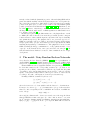
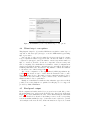
Figure 1: Example NRBN and attractors landscape. In left, the NRBN
Boolean nodes represent genes (either active or inactive) and the edges regulatory pathways. A specific Boolean function (not shown here) is associated to
each node. In right, each node represent a state of the system, i.e. the vector of
the activation values of the genes, and the edges display the transitions between
the states according to the deterministic dynamics.
already visited state σ(z), entering a limit cycle. We term attractor of the RBN
the loop starting from σ(z) and the sequence of steps from σ(0) to σ(z) the
transient of the attractor. The set of initial condition that end up in a specific
attractor σ(z) is its basin of attraction.
The Noisy Random Boolean Networks (NRBNs, [30]) was developed because
noise plays a major role in numerous cellular phenomena [22, 29, 3, 24, 21, 5]
and is supposed to drive the differentiation process [20, 13, 10].
Classical RBN are fully deterministic and, hence, they do not properly account for noise. However, NRBN are built on top of RBN by introducing noise
as unexpected jumps between network states. Jumps are determined by flipping genes state (i.e. from active to inactive, and viceversa), possibly in an
exhaustive way (i.e. flipping each node in each state of each attractor), and by
detecting all the noise-induced transitions between attractors. This allows to
draw the so-called Attractor Transition Network (ATN). In this sense, the ATN
resembles a stability matrix of the system where its entries determine the probability of switching from one attract to another. NRBNs rely on the assumption
that the level of noise is sufficiently low to allow the system to reach its (new
or old) attractor before another flip occurs.
Noise-resistance, a concept which determines the differentiation level of a
cell driven by a NRBN, is implemented by introducing the notion of thresholddependent ATNs. A threshold is used to remove from the ATN those transitions
that are considered too rare to occur, i.e. some “jumps” are too rare to happen
with a significant probability within the lifetime of the cell. Accordingly, a
Threshold Ergodic Set (TES in brief or TESδ when δ ∈ [0, 1] is the threshold) is
a set of attractors in which the dynamics of the system continue to transit, in the
3