1
International Journal of Combined Research & Development (IJCRD)
225X;pISSN:2321-2241 Volume: 4; Issue: 4; April -2015
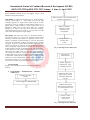
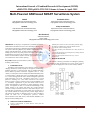
Fig :1 - Block diagram of the entire system
Arduino is the heart of the system. It controls the entire function of
the system. PIR sensors, GSM modem, power controls and RaspberryPI are connected to Arduino. LCD display is connected in order to
display various information like power levels and the source with which
it is working. Camera is mounted on stepper motor and connected with
Raspberry-PI through a motor driver.
The block diagram of the entire system is as shown in fig, it
consists of Arduino, Raspberry-PI, GSM modem, and other hardwar
that instant. for example, intruder detected, sms sent, calling, battery
voltages, and buzzer on, buzzer off.
After providing the alert the system waits for a alert to activate the
buzzer or to be reset, on encountering any of these two conditions it
stops the live video streaming.
5.
4.
DESIGN IMPLEMENTATION
Most of the security systems make use of a light bulb with light
dependent resistor (LDR) Infrared LED or ordinary phototransistor as
the sensor. These security systems work satisfactorily in darkness and
cannot be used outdoors because of the chances of false triggering due
to light sensed from other light sources like tube lights , CFL lamps ,
Sun light, etc., These systems are often offline , consume lot of power
and use Hard disk as a video storage medium, and does not inform
about any intrusion.
In this project, the complete system is activated by sending a code
through SMS by authorized person. Once the system is activated the
PIR sensor is active, whenever there is a human intrusion it detects and
immediately gives an alert to authorized person by making a call and
sending an SMS. Simultaneously, the Raspberry-PI is triggered such
that the camera starts capturing the video of that area and uploads it
online. Such that the authorized person at the other end could monitor
that particular scene from his place and he can also rotate the camera
o
through the front face provided to almost 270 thus enabling faster
solution. On missing this we are also storing the snaps of that area for
every 5secs in .JPEG format. The user may then take the necessary
action so as to activate the buzzer or any other solution.
This system is multi powered that it is provided with four different
power sources such as solar, wind, battery and AC supply. The priority
is first given to solar first then to wind then battery and finally to AC
supply. Using an auto change over system the power source is selected
and the system works on it. The system also gives an alert to the user
when there is no power source to work.
A LCD display is used in order to display the present working
condition of system. It is also used to display the various power levels
of different power sources and displays on which power it is working at
temperature pattern. Thermal signals far below one microwatt are
sufficient to trigger a sufficient output voltage change.
GSM SIM900: the sim900 is a complete quad-band GSM/GPRS solution
in a SMT module which can be embedded in the customer applications.
Featuring an industry-standard interface, the sim900 delivers GSM/GPRS
850/900/1800/1900mhz performance for voice, SMS, data, and fax in a
small form factor and with low power consumption. With a tiny
configuration of 24mm x 24mm x 3mm, sim900 can fit almost all the space
www.ijcrd.com
eISSN:2321-
HARDWARE AND SOFTWARE TOOLS
REQUIRED
5.1. HARDWARE:
Raspberry-PI: the raspberry-pi is a credit-card-sized single-board
computer developed in the UK by the raspberry pi foundation with the
intention of promoting the teaching of basic computer science in
schools. it is manufactured in two board configurations through
licensed manufacturing deals with network
element14 (premier
farnell), RS components and ego man. these companies sell the
Raspberry PI online. ego man produces a version for distribution solely
in china and Taiwan, which can be distinguished from other pi’s by
their red colouring and lack of FOC/CE marks. the hardware is the
sameacrossallmanufacturers.
the
raspberry pi
has
a Broadcom BCM2835 system on a
chip (soc), which includes
an arm1176jzf-s 700 MHZ processor, video core iv GPU and was
originally shipped with 256 megabytes of ram, later upgraded to
512 MB. It does not include a built-in hard disk or solid-state drive,
but uses an SD card for booting and persistent storage.
Arduino 2560: the Arduino mega 2560 is a microcontroller board
based on the atmega2560 (datasheet). it has 54 digital input/output pins
(of which 15 can be used as PWM outputs), 16 analog inputs, 4 UARTs
(hardware serial ports), a 16 MHZ crystal oscillator, a USB connection,
a power jack, an ICSP header, and a reset button. it contains everything
needed to support the microcontroller; simply connect it to a computer
with a USB cable or power it with an ac-to-dc adapter or battery to get
started. The mega is compatible with most shields designed for the
Arduino duemilanove or diecimila. The mega 2560 is an update to the
Arduino mega, which it replaces.
PIR sensor: Pyro-electric passive infrared sensor (PIR) is designed to
pick up heat radiation of wave lengths in a band around 10 microns. It
contains two active elements configured as balanced differential series
opposed type. this results in good compensation of environmental
temperature and excellent sensitivity for small changes of a spatial
requirements in your m2m application,
especially for slim and compact demand of
design. ”sim900 is designed with a very
powerful single-chip processor integrating
amr926ej-s core”. quad - band GSM/GPRS
module with a size of
24mmx24mmx3mm ”SMT type suit
for
customer
application
”an
embedded powerful TCP/IP protocol
stack ”based upon mature and field-
Page 581