1
SNMP Application for the MINT Router
1 Introduction
Mobile Communication is an area which has been growing steadily over the last few years. While
Mobile Telephony has already reached a high level of penetration and has been realized in large international systems, Mobile Data Networks are just developing. As computers become smaller, less
expensive, and more powerful, the user’s demand for mobility increases. People will no longer be willing to use their computers only from a fixed location(s).
Standards for Digital Mobile Telephony already exist in Europe (GSM, DECT), in the United States
(e.g., Qualcomm System) and in Japan (e.g., PHP). However, Mobile Data Communication will bring
additional requirements to these systems. In order to allow hosts to migrate without losing the benefit
of their full processing power, the bandwidth of today’s communication systems must be increased.
Furthermore, the network should be strongly interconnected with the existing (fixed) computer networks. Unfortunately, many of those have properties which inhibit mobility. They were developed at a
time, when the assumption was that all the hosts are fixed. New frameworks of mobile computers will
have to cope with these properties. These are just some of the many problems which must be resolved
to create this new generation of wireless systems. Besides supporting host migration they will allow for
data services which combine voice and video (Multimedia), the remote access to a data base via a wireless link, applications using Data Multicast, etc.
Management is without any doubt a crucially important component of such a mobile communication
system. Network Management is a broad field. An operator of a communication system may want to
monitor the system’s behaviour under any conditions. He may want to detect faults and taking measures in order to isolate and repair them. These are just a few examples of NM functions. To provide
them, an NM application needs to control all kind of objects in a communication network. Examples of
such objects are hardware components or subsystems of network devices, programs and their interaction with the environment, whole clusters of machines forming subnetworks, etc. The support for
Mobility can make the management task particularly complex. The existence of radio links brings up a
new set of specific variables which must be controlled. Furthermore, mobility implies that the system
must in some way keep track on its users, in order to provide services for them, wherever they are.
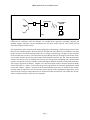
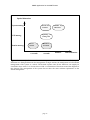
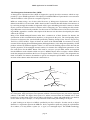
The purpose of the Walkstation II project [8] is to create a testbed for a wireless Local Area Network
(LAN) with access to the Internet (Figure 1). To the user, the system should be transparent, i.e., he or
she should be able to work on a mobile computer exactly in the same way as on any other host in the
Internet. The network services should be available in a continuous and seamless fashion, even if the
user changes location during a session.
page 4