1
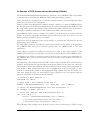
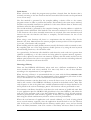
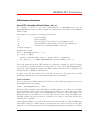
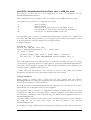
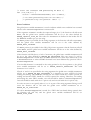
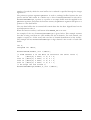
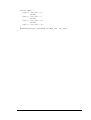
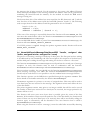
int
HeronHsbSendMessageData(HeronHSB *handle,
*buffer, unsigned int size)
unsigned
char
The process of sending a message is made up of three parts. The first part involves setting
up the address byte and generating the start condition on the serial bus. The second part is
the transmission of all the data bytes, and the third part is ending the message and returning
the bus to a free state.
The function HeronHsbSendMessageData will perform the second part of message
transmission. As such, this function must be used in combination with the functions
HeronHsbStartSendMessage and HeronHsbEndOfSendMessage.
Please note where possible, the user should use the function HeronHsbSendMessage when
sending a message over HSB. The function HeronHsbSendMessageData should only be
used where it is not possible to use the standard send message function.
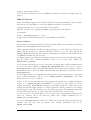
This function operates on the HSB device specified through the argument handle. This
device handle is the handle returned by the function HeronHsbOpen.
The buffer argument is a pointer to an array of unsigned chars. This array must contain
the data bytes to be transmitted. The argument size defines the number of data bytes to
be transmitted. This number must not exceed the buffer size.
When using this function to send a message, it must be called after successfully starting a
message through the function HeronHsbStartSendMessage. Once the message has
been started this function can be called repeatedly until all message data has been
transferred.
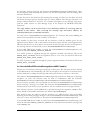
For the first call to this function after starting the message, the first two data bytes supplied
must be the message type byte and the reply (or source) address. The message type byte is
an integer number between 0 and 255. For a further description of the message type please
read the earlier section on ‘The Message Type’ in the chapter on ‘HERON Serial Bus
Functions’.
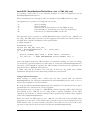
The reply address is generated by combining the board ID and slot number for the module
on which the HSB send message is being run. The bottom three bits of the address byte
must be set to the slot ID (between 0 and 7) and the next four bits of the address must be
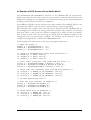
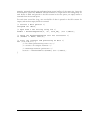
set to the board ID (between 0 and 15). The following code excerpt shows how the address
would be generated for slot 2 of board 0:
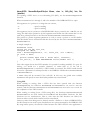
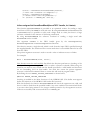
board = 0; slot = 2;
address = slot;
address = address | (board << 3);
After sending the message type and source address, all remaining data bytes are optional
data bytes.
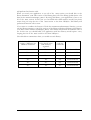
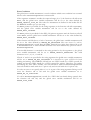
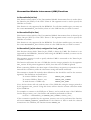
For each call to HeronHsbSendMessageData the function will return HERON_OK when
it has successfully transmitted the number of data bytes given by the argument size.
If an invalid HSB device handle is passed into HeronHsbSendMessageData, the
function will return HERON_INVALID_HANDLE.
If a NULL pointer is supplied through the argument buffer the function will return
HERON_NULL_POINTER, and if the argument size is set to zero, the function will return
HERON_HSB_ZERO_BYTE_COUNT.
55
HUNT ENGINEERING HERON-API USER MANUAL