1
Digital Phosphor Oscilloscopes
Tektronix 4000 Family • DPO4000 Series • MSO4000 Series
Serial Triggering and Analysis
Serial Triggering – Trigger on packet
content such as start of packet,
specific addresses, specific data
content, unique identifiers, etc., on
popular low-speed serial interfaces
such as I2C, SPI, RS-232/422/485/UART,
CAN, LIN and FlexRay.
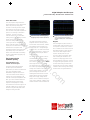
Bus Decoding – Tired of having to
visually inspect the waveform to count
clocks, determine if each bit is a 1 or a
0, combine bits into bytes and determine the hex value? Let the oscilloscope do it for you! Once you’ve set up
a bus, the oscilloscope will decode
each packet on the bus and display the
value in either hex, binary, decimal (LIN
and FlexRay only) or ASCII (RS232/422/485/UART only) in the bus
waveform.
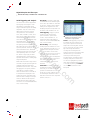
Event Table – In addition to seeing
decoded packet data on the bus waveform itself, you can view all captured
packets in a tabular view much like you
would see on a logic analyzer. Packets
are timestamped and listed consecutively with columns for each component
(Address, Data, etc.).
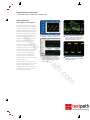
Packet decode table showing decoded
Identifier, DLC, Data and CRC for every
CAN packet in a long acquisition.
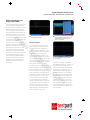
Search – Serial triggering is very useful
for isolating the event of interest, but
once you’ve captured it and need to
analyze the surrounding data, what do
you do? In the past, you had to manually scroll through the waveform,
counting and converting bits and
looking for what caused the event. With
the 4000 Series, you can have the
oscilloscope search through the
acquired data for user-defined criteria
including serial packet content. Each
occurrence is highlighted by a search
mark. Rapid navigation between marks
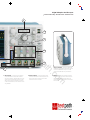
is as simple as pressing the Previous
(<
—) and Next (—
>) buttons on the
front panel.
om
.c
th
4
pa
While serial buses have a large number
of benefits, they also present significant
challenges that their predecessors
(parallel buses) did not face. They make
debugging bus and system problems
more difficult, it’s harder to isolate
events of interest and it’s more difficult
to interpret what is displayed on the
oscilloscope screen. The 4000 Series
addresses these challenges and represents the ultimate tool for engineers
working with low-speed serial buses
such as I2C, SPI, RS-232/422/485/UART,
CAN, LIN and FlexRay.
st
.te
w
w
w
One of the most common applications
requiring long record length is serial
data analysis in embedded system
design. Embedded systems are literally
everywhere. They can contain many
different types of devices including
microprocessors, microcontrollers,
DSPs, RAM, EPROMs, FPGAs, ADCs,
DACs and I/O. These various devices
have traditionally communicated with
each other and the outside world using
wide parallel buses. Today, however,
more and more embedded systems
are replacing these wide parallel buses
with serial buses due to lower board
space requirements, fewer pins, lower
power, embedded clocks, differential
signaling for better noise immunity and
most importantly, lower cost. In addition, there’s a large supply of off-theshelf building block components from
reputable manufacturers, enabling rapid
design development.
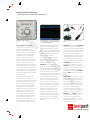
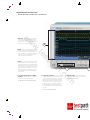
Bus Display – Provides a higher level,
combined view of the individual signals
(clock, data, chip enable etc.) that make
up your bus, making it easy to identify
where packets begin and end and
identifying sub-packet components such
as address, data, identifier, CRC, etc.