1
46
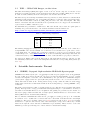
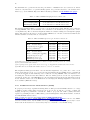
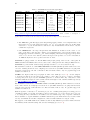
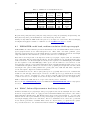
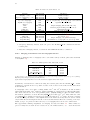
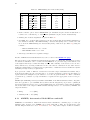
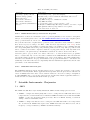
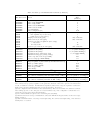
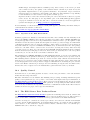
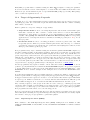
Table 18: VISTA performance
pixel scale
best image quality achieved
estimated image quality
image distortion
photometric calibration
photometric calibration
sky concentration/illumination
detector
6.14.4
0.3400 /pixel
0.600 including seeing, optics and sampling
Paranal seeing convolved with the instrument PSF of 0.5100
< 15% in the corners
±2% RMS in respect to 2MASS in J, H, Ks
±2% RMS internally
< 5% absolute, can be corrected down to < 2%
16 Raytheon VIRGO HgCdTe arrays, sensitive over 0.84 to 2.5µm,
high quantum efficiency, large number of hot pixels,
some dead areas on detector 1
VISTA Public Surveys and Call for Proposals
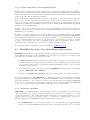
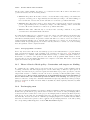
VISTA will be dedicated for its first five years of operation primarily to the execution of six public
surveys. For details please refer to the the VISTA Public Survey web page. Regular public
survey operations start as of Period 85.
One year after the start of regular survey operation, science time will be made available to Chilean
Host State Proposals according to the ESO – Chile host state agreement (cf. Sect. 11.9). At the
same time up to 15% of the available observing time will become available to the community through
the corresponding ESO Call for Proposal (currently planned for Period 87). The proposals received
will be considered in scientific competition with the ongoing public surveys, with any unallocated
time returned to the public surveys. All VISTA observations are carried out in Service Mode.
Users who plan to propose their own ”visitor” filter set to be used in their science programme
have to consider that only one free slot will be available in the VIRCAM filter wheel and that the
selected filter will be mounted for a minimum of two years corresponding to the planned maintenance
intervals of the instrument. At proposal submission, the proposal PI will have to demonstrate the
availability of the visitor filter set, its compatibility with the instrument requirements, and the basic
performance of the individual filters.
6.14.5
VIRCAM calibration plan
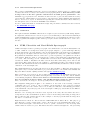
The VIRCAM calibration plan is currently under review, to include the experience of the Science
Verification and Dry Runs. Future applicants should presume that the photometric calibration is
based on 2MASS stars in the field of view, with an extinction correction according to Hodgkins et
al. 2009 (MNRAS 394, p. 675) in the extrapolated Y and Z bands. Future applicants will have to
include the time for additional standards in their proposals.
7
Scientific Instruments: Chajnantor
7.1
SHFI
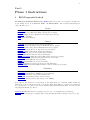
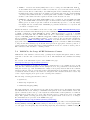
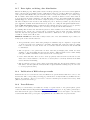
The APEX Swedish Heterodyne Facility Instrument SHFI contains 4 single pixel receivers:
• APEX-1: a Single Side Band (SSB) SIS receiver covering 211–275 GHz with SSB receiver
temperature Trec around 130 K between 210 and 260 GHz and 180 K between 260 and 270 GHz.
APEX-1 covers lower frequencies than previously offered at APEX, allowing observations
during conditions with PWV>2 mm.
• APEX-2: a Single Side Band receiver covering 275–370 GHz with SSB receiver temperature
Trec around 135 K. APEX-2 has replaced the APEX-2A Double Side Band receiver, whose
frequency coverage is assured by APEX-2 at similar sensitivity.