1
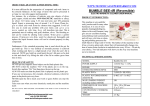
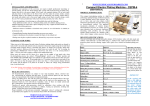
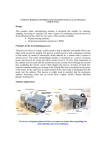
OBJECT SIZE, QUANTITY & PROCESSING TIME: It is more efficient for the proportion of compound and work items to be correctly balanced. As the range of items that can be processed is so large we can only suggest starting points: For instance, for a selection of intricate coin size objects of silver, gold, copper, nickel and other NON-MAGNETIC materials or alloys, try about 3-10 items using 5-10 mm steel pins and 10%-ammonia liquid. Expect a processing time of around 1 to 12 hours. Please begin t o check your work from the shortest time suggested. It will allow you to avoid any problem with your items a n d g i v e y o u m o r e control, as, with time, t h e y will transform into dust. This is particularly true of working with gold, rhodium, silver. The finishing result can be varied by altering water content. Water gives a gentler process. If items are very dirty, wash t h e plastic pot thoroughly and replace the liquid because items will not be cleaned properly in dirty compounds. Furthermore, if the extended processing time is used check the pot for gas build up. This is very unlikely as normally pressure is achieved when working and there is a slight inrush of air when the pot’s lid is removed. NOTE: gas build up could push the pot’s lid open so be alert to this and check it by lifting the side of the lid to reduce gases from time to time. HEALTH AND SAFETY: NEVER put or leave any magnetic metal objects on the plastic top. DO NOT switch the machine “On” if the plastic pot is on the top. Switch this machine “On” first. ALWAYS make sure that the plastic lid sits properly on the plastic pot. If you use wet processes, (for example, chemical solutions,) check for gases in the plastic pot every hour. NEVER open the lid to check your work or gases before you stop the machine. Take extra care when you store chemicals, metal pins and the machine itself. DO NOT LEAVE IT UNATTENDED AND KEEP IT OUT OF REACH OF CHILDREN! [email protected] +44 (0) 208 555 9607 www.technicalsupermarket.com WWW.TECHNICALSUPERMARKET.COM BUMBLE BEE-4 ELECTROMAGNETIC CLEANER USER MANUAL PRODUCT INTRODUCTION: This machine is especially designed for jewelers, restorers, model makers etc to work in small businesses and workshops. It is one of the most popular cleaning/polishing machine in the world because it will give you an excellent cleaning and polishing result when used correctly. TECHNICAL SPECIFICATIONS: MODEL Bumble Bee 4 POWER SUPPLY 230 Vac +/-10% POWER 50 Watt SPEED (RPM) 2000 PLASTIC POT x 1 PLASTIC POT DIMENSIONS (MM) d=65 / h=35 MAX LOADING WEIGHT 150 gram DIMENSIONS OF MACHINE 180(d) x 120(W) x 90(H) mm CONTINUOUSLY WORKING TIME WEIGHT 8 hours 1.4 Kg DELIVERY SPECIFICATION: INSTRUCTIONS: The cleaner/polisher “Bumble Bee 4”; One plastic pot with pack of SS pins (50 grams); An instruction manual; One year manufacturer warranty. Installation and operation of this machine does not need deep professional knowledge or specific training: ELECTROMAGNETIC CLEANING AND POLISHING: Within this machine there is a metal disc with two large neodymium magnets that are run by a motor (up to 2000 RPM). There are also rotating magnetic SS pins in a plastic pot, which move around the pot in order to clean and polish all NON-MAGNETIC objects placed within it. APPLICATION: This machine will clean and polish any NON-MAGNETIC materials such as gold, silver, nickel, copper, rhodium, aluminum, bronze, nickel, zinc etc. It is widely used by restorers, craft, jewelers, model makers, in small workshops, garages and by other professionals who required to clean or to polish his work. ITEMS WITH HOLES, THREADS & ASSEMBLIES: Many of the items you will be cleaning/polishing will have holes and crevices in them that the compounds will explore when going through the process. If t h e y work their way in, they may be very difficult to remove compounds, (steel pins are especially prone to this.) Insert a plug into the hole t o p r e v e n t t h i s . If the item is threaded, it is possible that the thread may be altered very slightly and if the work has any surfaces that are hidden, for example it is assembled with another item in the pot, when dismantled it is a guarantee that that surface will not be clean or polished. Therefore, try to disassemble as many items as possible before you begin as well as make sure there are not too many items within one pot in order for all surfaces to be processed. IF YOUR PLASTIC POT SHAKES: Check if you placed it in the correct position – on the middle of plastic top. The pot is empty or has not enough weight of polishing objects, steel pins or liquids. Add them to the pot. The machine has a high level of vibration – fix it to a working bench using the four holes that it has on its metal base. 1. Insert your items to be cleaned or polished into a plastic pot provided and then add a required quantity of metal pins, balls or/and liquid. Make sure that full weight loaded into this pot is no more than 150 G in total. 2. Place a lid on this plastic pot and tighten it. 3. Switch this machine “On”. 4. Place the plastic pot on the circle on the top of machine. When your work is done switch this machine “Off” and WAIT f o r a few seconds to stop the motor before take the plastic pot out. Do not however place the machine inside any box. It is essential that air can flow around it as the motor is hot when it works for more than 1 hour. You can also to fix the machine to any working bench top to avoid a vibration, this is however not compulsory. MAINTENANCE: The machine’s motor is oiled by a manufacturer and can be used immediately. However sometimes it will need additional lubrication after use. For every three months apply one drop of oil to the motor shaft where it protrudes. This will run into the motor bearings. Use only motor car grade oil for oiling this motor, lighter grades are not suitable. This machine also has a plastic top but still try to keep it clean from dust and chemicals that are used for polishing or cleaning purposes. CLEANING & POLISHING: The items to be processed are rotated in a plastic pot in mixture to give the desired results. A selection of the best compounds is to some extent aided by practical tests and the following notes are intended as an initial guide only. We mostly use: For cleaning purpose – 10% ammonia based liquid with 5-10 mm SS pins For polishing (course) purpose – same liquid + some soap with 3-5 mm SS pins continuously For polishing (fine) purpose – same liquid with 2-3 mm SS pins continuously You can also find and use many other types of chemicals and compounds