1
Integrated components:
ESET NOD32 Antivirus
ESET NOD32 Antispyware
ESET Personal Firewall
ESET Antispam
New generation
of NOD32 technology
User Guide
we protect your digital worlds
contents
1. ESET Smart Security.................................4
1.1
1.2
What’s new.................................................................... 4
System requirements...................................................... 4
2. Installation.............................................5
2.1
2.2
2.3
2.4
2.5
Typical installation......................................................... 5
Custom installation........................................................ 6
Using original settings.................................................... 8
Entering User name and password................................... 8
On‑demand computer scan............................................. 8
3. Beginner’s guide......................................9
3.1
3.2
3.3
3.4
3.5
Introducing user interface design – modes........................ 9
3.1.1
Checking operation of the system............................9
3.1.2
What to do if the program doesn’t work properly.... 10
Update setup................................................................10
Trusted zone setup........................................................10
Proxy server setup..........................................................11
Settings protection.........................................................11
4. Work with ESET Smart Security...............12
4.1
Copyright © 2007 by ESET, spol. s r. o.
ESET Smart Security was developed by ESET, spol. s r.o.
For more information visit www.eset.com.
All rights reserved. No part of this documentation may be
reproduced, stored in a retrieval system or transmitted in any
form or by any means, electronic, mechanical, photocopying,
recording, scanning, or otherwise without a permission in
writing from the author.
ESET, spol. s r.o. reserves the right to change any of the
described application software without prior notice.
Customer Care Worldwide: www.eset.com/support
Customer Care for Europe: www.eset.eu/support
REV.20071129-003
Antivirus protection...................................................... 12
4.1.1
Real‑time file system protection.............................12
4.1.1.1
Control setup........................................................12
4.1.1.1.1
Media to scan .......................................................12
4.1.1.1.2 Scan on (Event‑triggered scanning).........................12
4.1.1.1.3 Additional ThreatSense parameters for newly created files.......................................................................12
4.1.1.1.4 Advanced setup.....................................................12
4.1.1.2
Cleaning levels.......................................................12
4.1.1.3
When to modify the real‑time protection
configuration ........................................................13
4.1.1.4
Checking real‑time protection ................................13
4.1.1.5
What to do if the real‑time protection does
not work...............................................................13
4.1.2
Email protection....................................................13
4.1.2.1
POP3 checking.......................................................13
4.1.2.1.1 Compatibility........................................................13
4.1.2.2
Integration with Microsoft Outlook, Outlook Express,
and Windows Mail.................................................14
4.1.2.2.1 Appending tag messages to email body...................14
4.1.2.3
Removing infiltrations...........................................14
4.1.3
Web access protection...........................................14
4.1.3.1
HTTP.....................................................................14
4.1.3.1.1 Blocked / excluded addresses..................................15
4.1.3.1.2 Web browsers........................................................15
4.1.4
Computer scan......................................................15
4.1.4.1
Type of scan...........................................................16
4.1.4.1.1 Standard scan........................................................16
4.1.4.1.2 Custom scan.........................................................16
4.1.4.2
Scan targets..........................................................16
4.1.4.3
Scan profiles..........................................................16
4.1.5
ThreatSense engine parameters setup....................16
4.1.5.1
Objects setup........................................................ 17
4.1.5.2
Options................................................................. 17
4.1.5.3
Cleaning................................................................18
4.1.5.4
Extensions.............................................................18
4.1.6
An infiltration is detected.......................................18
4.2 Personal firewall........................................................... 19
4.2.1
Filtering modes .....................................................19
4.2.2
Block all traffic: disconnect network.......................19
4.2.3
Disable filtering: allow all traffic.............................19
4.2.4
Configuring and using rules....................................19
4.2.4.1
Creating new rules................................................ 20
4.2.4.2 Editing rules......................................................... 20
4.2.5
Configuring zones................................................. 20
4.2.6
Establishing connection – detection...................... 20
4.2.7
Logging................................................................. 21
4.3 Antispam protection...................................................... 21
4.3.1
Self‑learning Antispam.......................................... 22
4.3.1.1
Adding addresses to whitelist................................ 22
4.3.1.2
Marking messages as spam................................... 22
4.4 Updating the program...................................................22
4.4.1
Update setup........................................................ 22
4.4.1.1
Update profiles..................................................... 23
4.4.1.2
Advanced update setup......................................... 23
4.4.1.2.1 Update mode....................................................... 23
4.4.1.2.2 Proxy server.......................................................... 24
4.4.1.2.3 Connecting to LAN................................................ 24
4.4.1.2.4 Creating update copies – Mirror............................. 24
4.4.1.2.4.1 Updating from the Mirror...................................... 25
4.4.1.2.4.2Troubleshooting Mirror update problems............... 26
4.4.2
How to create update tasks................................... 26
4.5 Scheduler.................................................................... 26
4.5.1
Purpose of scheduling tasks................................... 26
4.5.2
Creating new tasks............................................... 27
4.6 Quarantine................................................................... 27
4.6.1
Quarantining files................................................. 27
4.6.2
Restoring from Quarantine................................... 27
4.6.3
Submitting file from Quarantine............................ 27
4.7 Log files....................................................................... 28
4.7.1
Log maintenance.................................................. 28
4.8 User interface.............................................................. 28
4.8.1
Alerts and notifications......................................... 29
4.9 ThreatSense.Net.......................................................... 29
4.9.1
Suspicious files.....................................................30
4.9.2
Statistics..............................................................30
4.9.3
Submission............................................................31
4.10 Remote administration................................................. 31
4.11 License........................................................................32
5. Advanced user...................................... 33
5.1 Proxy server setup.........................................................33
5.2 Export / import settings.................................................33
5.2.1
Export settings..................................................... 33
5.2.2
Import settings..................................................... 33
5.3 Command Line..............................................................33
6. Glossary............................................... 35
6.1
Types of infiltrations......................................................35
6.1.1
Viruses................................................................. 35
6.1.2
Worms................................................................. 35
6.1.3
Trojan horses........................................................ 35
6.1.4
Rootkits............................................................... 35
6.1.5
Adware................................................................ 35
6.1.6
Spyware............................................................... 36
6.1.7
Potentially unsafe applications.............................. 36
6.1.8
Potentially unwanted applications........................ 36
6.2 Types of remote attacks.................................................36
6.2.1
DoS attacks.......................................................... 36
6.2.2
DNS Poisoning...................................................... 36
6.2.3
Worm attacks....................................................... 36
6.2.4
Port scanning....................................................... 36
6.2.5
TCP desynchronization.......................................... 36
6.2.6
SMB Relay............................................................ 37
6.2.7
ICMP attacks........................................................ 37
6.3 E‑mail.......................................................................... 37
6.3.1
Advertisements.................................................... 37
6.3.2
Hoaxes................................................................. 37
6.3.3
Phishing............................................................... 37
6.3.4
Recognizing spam scams...................................... 38
6.3.4.1
Rules.................................................................... 38
6.3.4.1
Bayesian filter....................................................... 38
6.3.4.2 Whitelist.............................................................. 38
6.3.4.3 Blacklist............................................................... 38
6.3.4.5 The server‑side control.......................................... 38
1. ESET Smart Security
ESET Smart Security is the first representative of the new approach to
truly integrated computer security. It utilizes the speed and precision
of ESET NOD32 Antivirus, which is guaranteed by the most recent
version of the ThreatSense® scanning engine, combined with the
tailor‑made Personal firewall and Antispam modules. The result is
an intelligent system which is constantly on alert for attacks and
malicious software endangering your computer.
File scanning
integrated with
HTTP and POP3
Intrusion Detection
System
ESET Smart Security is not a clumsy conglomerate of various products
in one package, as offered by other vendors. It is the result of a
long‑term effort to combine maximum protection with minimum
system footprint. The advanced technologies based on artificial
intelligence are capable of proactively eliminating the penetration
of viruses, spyware, trojan horses, worms, adware, rootkits, and
other Internet‑borne attacks without hindering system performance
or disrupting your computer.
Interactive,
Automatic or
Policy‑based mode
support
1.1
Supersedes
Integrated Windows
Firewall
What’s new
The long‑time development experience of our experts is demonstrated
by the entirely new architecture of the ESET Smart Security program,
which guarantees maximum detection with minimum system
requirements. The complex security solution contains modules with
several advanced options. The following list offers you a brief overview
of these modules.
▪ Antivirus & antispyware
This module is built upon the ThreatSense® scanning core, which was
used for the first time in the award‑winning NOD 32 Antivirus system.
The ThreatSense® core is optimized and improved with the new ESET
Smart Security architecture.
Feature
Improved Cleaning
Background
Scanning Mode
Smaller Update Files
Popular EMail Client
Protection
Description
The antivirus system now intelligently cleans
and deletes most of the detected infiltrations
without requiring user intervention.
Computer scanning can be launched in
the background without slowing down
performance.
Core optimization processes keep the size of
update files smaller than in version 2.7. Also,
the protection of update files against damage
has been improved.
It is now possible to scan incoming mail
not only in MS Outlook but also in Outlook
Express and Windows Mail.
– Direct access to file systems for high speed
and throughput.
Variety of Other
– Blocking access to infected files
Minor Improvements
– Optimization for the Windows Security
Center, including Vista.
▪ Antispam
ESET Antispam filters unsolicited email and therefore increases the
security and comfort of electronic communication.
Feature
Incoming Mail
Scoring
Feature
Low layer network
communication
scanning
IPv6 support
Executable file
monitoring
4
Description
Network communication scanning on the
Data Link Layer enables ESET Personal firewall
to overcome a variety of attacks that would
otherwise be undetectable.
ESET Personal firewall displays IPv6 addresses
and allows users to create rules for them.
Monitoring changes in executable files in
order to overcome infection. It is possible to
allow file modification of signed applications.
Description
All Incoming mail is assigned a rating
ranging from 0 (a message is not spam) to
100 (a message is spam), and transferred
accordingly into the Junk Mail folder or into
a custom folder created by the user. Parallel
scanning of incoming emails is possible.
– Bayes analysis
Supports a variety of
– Rule‑based scanning
scanning techniques
– Global fingerprint database check
Antispam protection is available to users
Full integration with
of Microsoft Outlook, Outlook Express and
email clients
Windows Mail clients.
Manual spam
There is an option to manually check /
selection is available uncheck email as spam.
1.2 System requirements
For seamless operation of ESET Smart Security and ESET Smart
Security Business Edition, the system should meet the following
hardware and software requirements:
ESET Smart Security:
Windows 2000, XP
▪ Personal firewall
The Personal firewall monitors all traffic between a protected
computer and other computers in the network. ESET Personal firewall
contains advanced functions as listed below.
Integrated file scanning into the HTTP
and POP3 application protocols. Users are
protected when browsing the Internet or
downloading emails.
Ability to recognize the character of network
communication and various types of network
attacks and an option to automatically ban
such communication.
Users can select whether the firewall actions
will be executed automatically, or if they want
to set rules interactively. Communication in
policy‑based mode is handled according to
rules predefined by the user or the network
administrator.
Supersedes the Integrated Windows Firewall,
it also interacts with the Windows Security
Center so the user is always informed about
his security status. ESET Smart Security
installation turns off the windows firewall by
default
Windows Vista
400 MHz 32-bit / 64-bit (x86 / x64)
128 MB RAM of system memory
35 MB available space
Super VGA (800 × 600)
1 GHz 32-bit / 64-bit (x86 / x64)
512 MB RAM of system memory
35 MB available space
Super VGA (800 × 600)
ESET Smart Security Business Edition:
Windows 2000,
400 MHz 32-bit / 64-bit (x86 / x64)
2000 Server, XP, 2003 128 MB RAM of system memory
Server
35 MB available space
Super VGA (800 × 600)
Windows Vista
1 GHz 32-bit / 64-bit (x86 / x64)
512 MB RAM of system memory
35 MB available space
Super VGA (800 × 600)
2. Installation
After purchase, the ESET Smart Security installer can be downloaded
from ESET’s web site. It comes as an ess_nt**_***.msi (ESET Smart
Security) or essbe_nt**_***.msi (ESET Smart Security Business Edition)
package. Launch the installer and the installation wizard will guide
you through the basic setup. There are two types of installation
available with different levels of setup details:
The next step in the installation is configuration of the ThreatSense.
Net Early Warning System. The ThreatSense.Net Early Warning
System helps to ensure that ESET is immediately and continuously
informed about new infiltrations in order to quickly protect its
customers. The system allows for submission of new threats to ESET‘s
virus laboratory, where they are analyzed, processed and added to the
virus signature databases.
1. Typical installation
2. Custom installation
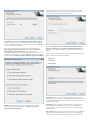
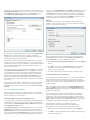
By default, the Enable ThreatSense.Net Early Warning System
check box is selected, which will activate this feature. Click Advanced
setup... to modify detailed settings for the submission of suspicious
files.
2.1
Typical installation
The Typical installation is recommended for users who want to install
ESET Smart Security with the default settings. The default settings
of the program provide the maximum level of protection, a fact
appreciated by those users who do not want to configure detailed
settings.
The first (very important) step is to enter the user name and password
for automatic updating of the program. This plays a significant role in
providing constant protection of the system.
Enter your User name and Password, i.e. the authentication data
you received after the purchase or registration of the product, into the
corresponding fields. If you do not currently have your User name and
Password available, select the Set update parameters later option.
Authentication data can be inserted at any time later on, directly
from the program.
The next step in the installation process is to configure the Detection
of potentially unwanted applications. Potentially unwanted
applications are not necessarily intended to be malicious, but can
often negatively affect the behavior of the operating system.
These applications are often bundled with other programs and may
be difficult to notice during the installation process. Although these
applications usually display a notification during installation, they
can easily be installed without your consent.
Select the Enable detection of potentially unwanted applications
option to allow ESET Smart Security to detect this type of threat
(recommended).
5
The last step in the Typical installation mode is confirmation of the
installation by clicking the Install button.
2.2 Custom installation
The Custom installation is designed for users who have experience
with fine‑tuning programs and who wish to modify advanced settings
during installation.
If you use a proxy server, it must be correctly configured in order for
virus signature updates to work properly. If you don’t know whether
you use a proxy server to connect to the Internet, leave the default
setting I am unsure if my Internet connection uses a proxy server.
Use the same settings as Internet Explorer and click Next. If you do
not use a proxy server, select the corresponding option.
The first step is to select the destination location for the install. By
default, the program installs into C:\Program Files\ESET\ESET Smart
Security\. Click Browse… to change this location (not recommended).
Next, Enter your User name and Password. This step is the same as
in the Typical installation (see page 5).
After entering your User name and Password, click Next to Configure
your Internet connection.
6
To configure your proxy server settings, select I use a proxy server
and click Next. Enter the IP address or URL of your proxy server in the
Address field. In the Port field, specify the port where the proxy server
accepts connections (3128 by default). In the event that the proxy
server requires authentication, a valid user name and password must
be entered, granting access to the proxy server. Proxy server settings
can also be copied from Internet Explorer if desired. To do this, click
Apply and confirm the selection.
The next step in the installation is to Enter a password to protect
program parameters. Choose a password you wish to protect the
program with. Retype the password to confirm.
Click Next to proceed to the Configure automatic update settings
window. This step allows you to designate how automatic program
component updates are to be handled on your system. Click Change...
to access the advanced settings.
If you do not want program components to be updated, select
Never update program components. Enabling the Ask before
downloading program components option will display a
confirmation window before downloading program components. To
enable automatic program component upgrades without prompting,
select the option Perform program component upgrade if available.
The steps Configuration of the ThreatSense.Net Early Warning
System and Detection of potentially unwanted applications are
the same as for a Typical installation, and are not shown here (see
page 5).
The last step in Custom mode is to select the ESET Personal firewall
filtering mode. Three modes are available:
▪ Automatic
▪ Interactive
▪ Policy-based
Automatic mode is recommended for the majority of users. All
standard outgoing connections are enabled (automatically analyzed
using predefined settings) and unsolicited incoming connections are
automatically blocked.
NOTE: After a program component upgrade, a reboot is usually
required. The recommended setting is: If necessary, restart
computer without notifying.
Interactive mode is suitable for advanced users. Communications
are handled by user‑defined rules. If there is no rule defined for
a communication, the program asks the user to allow or deny the
communication.
Policy-based mode evaluates communications based on predefined
rules created by the administrator. If there is no rule available, the
connection is automatically blocked and the user sees no warning
7
message. We recommend that you only select the policy-based
mode if you are an administrator who intends to configure network
communication.
The last step shows a window requiring your consent to install.
2.3 Using original settings
If you reinstall ESET Smart Security, the Use current settings option
is displayed. Select this option to transfer setup parameters from
the original installation to the new one.
2.4 Entering User name and password
For optimal functionality, it is important that the program is
automatically updated. This is only possible if the correct user name
and password are entered in the update setup.
If you did not enter your user name and password during the
installation, you can do so now. In the main program window, click
Update and then click User name and Password Setup... Enter the
data you received with your product license into the License details
window.
8
2.5 On‑demand computer scan
After installation of ESET Smart Security, a computer scan for the
presence of malicious code should be performed. To quickly launch
a scan, select Computer scan from the main menu and then select
Standard scan in the main program window. For more information
about the Computer scan feature, see the chapter “Computer scan”.
3. Beginner’s guide
This chapter provides an initial overview of ESET Smart Security and
its basic settings.
3.1
The Standard mode provides access to features required for common
operations. It does not display any advanced options.
Introducing user interface design – modes
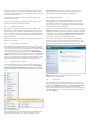
The main window of ESET Smart Security is divided into two main
sections. The left column provides access to the user‑friendly main
menu. The main program window on the right predominantly serves
to display information corresponding to the option selected in the
main menu.
The following is a description of buttons within the main menu:
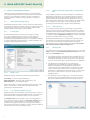
Protection status – In a user‑friendly form, it provides information
about the protection status of ESET Smart Security. If the Advanced
mode is activated, the status of all protection modules is displayed.
Click on a module to view its current status.
Computer scan – This option allows the user to configure and launch
the On‑demand computer scan.
Update – Select this option to access the update module that
manages updates to the virus signature database.
Setup – Select this option to adjust your computer’s security level.
If the Advanced mode is activated, the submenus Antivirus and
antispyware protection, Personal firewall, and Antispam module will
appear.
Tools – This option is available only in Advanced mode. Provides
access to Log files, Quarantine and the Scheduler.
Help and support – Select this option to access help files, the ESET
Knowledgebase, ESET’s web site and access a Customer Care support
request.
The ESET Smart Security user interface allows users to toggle
Standard and Advanced modes. To toggle between modes, see the
Display link located in the bottom left corner of the main ESET Smart
Security window. Click this button to select the desired display mode.
Toggling to Advanced mode adds the Tools option to the main menu.
The Tools option allows the user to access Scheduler, Quarantine, or
view ESET Smart Security Log files.
NOTE: All remaining instructions in this guide will take place in
Advanced mode.
3.1.1
Checking operation of the system
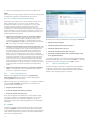
To view the Protection status, click this option at the top of the main
menu. A status summary about the operation of ESET Smart Security
will be displayed on the right side of the window, and a submenu with
three items appears: Antivirus and antispyware, Personal firewall,
and Antispam module. Select any of these to view more detailed
information about a given protection module.
If the modules enabled are working properly, they are assigned
a green check. If not, a red exclamation point or orange notification
icon is displayed, and additional information about the module is
shown in the upper part of the window. A suggested solution for
fixing the module is also displayed. To change the status of individual
modules, click Setup in the main menu and click on the desired
module.
9
3.1.2
What to do if the program doesn’t work properly
If ESET Smart Security detects a problem in any of its protection
modules, it is reported in the Protection status window. A potential
solution to the problem is also offered here.
The Advanced Setup window (to access, press F5) contains other
detailed update options. The Update server: drop-down menu should
be set to Choose automatically. To configure advanced update
options such as the update mode, proxy server access, accessing
updates on a local server and creating virus signature copies (ESET
Smart Security Business Edition), click the Setup... button.
3.3 Trusted zone setup
If it is not possible to solve a problem using the displayed list of known
problems and solutions, click Help and support to access the help
files or search the Knowledgebase. If a solution still cannot be found,
you can submit a support request to ESET Customer Care. Based on
this feedback, our specialists can quickly respond to your questions
and effectively advise you on the problem.
3.2
Update setup
Configuration of a Trusted zone is an important step in protecting
your computer in a network environment. You can allow other users
to access your computer by configuring the Trusted zone to allow
sharing. Click Setup > Personal firewall > Change the protection
mode of your computer in the network... A window will be
displayed, allowing you to configure the settings of your computer
protection mode in the actual network/zone.
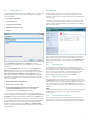
Updating the virus signature database and updating program
components are an important part of providing complete protection
against malicious code. Please pay special attention to their
configuration and operation. From the main menu, select Update
and then click Update virus signature database in the main program
window to instantly check for availability of a newer database update.
User name and Password setup... displays a dialog box where the
User name and Password received at the time of purchase should be
entered.
If the User name and Password were entered during the installation of
ESET Smart Security you will not be prompted for them at this point.
Trusted Zone detection is performed after installation of ESET Smart
Security and whenever the computer is connected to a new network.
Therefore, there is no need to define the Trusted zone in most cases.
By default, there is a dialog window displayed upon detection of a new
zone which allows you to set the protection level for that zone.
10
3.5 Settings protection
ESET Smart Security Settings can be very important from the
perspective of your organization’s security policy. Unauthorized
modifications can potentially endanger the stability and protection
of your system. To password protect the setup parameters, start
from the main menu and click Setup > Enter entire advanced setup
tree... > User interface > Settings protection and click the Enter
password... button.
Enter a password, confirm it by typing it again, and click OK. This
password will be required for any future modifications to ESET Smart
Security settings.
Warning! An incorrect trusted zone configuration may pose a security
risk to your computer.
NOTE: By default, workstations from a Trusted zone are granted
access to shared files and printers, incoming RPC communication is
enabled, and remote desktop sharing is also available.
3.4 Proxy server setup
If you use a proxy server to mediate connection to the Internet on
a system using ESET Smart Security, it must be specified in Advanced
Setup (F5). To access the Proxy server configuration window, click
Miscellaneous > Proxy server from the Advanced Setup tree. Select
the Use proxy server check box, and enter the IP address and port of
the proxy server, along with its authentication data.
If this information is not available, you can attempt to automatically
detect proxy server settings for ESET Smart Security by clicking the
Detect proxy server button.
NOTE: Proxy server options for various update profiles may differ. If
this is the case, configure the proxy server in the advanced update
setup.
11
4. Work with ESET Smart Security
4.1 Antivirus and antispyware protection
Antivirus protection guards against malicious system attacks by
controlling file, email and Internet communication. If a threat with
malicious code is detected, the Antivirus module can eliminate
it by first blocking it, and then cleaning, deleting or moving it to
quarantine.
4.1.1
Real‑time file system protection
Real‑time file system protection controls all antivirus‑related events
in the system. All files are scanned for malicious code at the moment
they are opened, created or run on the computer. Real‑time file
system protection is launched at system startup.
4.1.1.1
Control setup
The real‑time file system protection checks all types of media,
and control is triggered by various events. Control utilizes the
ThreatSense technology detection methods (as described in
ThreatSense engine parameter setup). The control behavior may vary
for newly created files and existing files. For newly created files, it is
possible to apply a deeper level of control.
4.1.1.1.3
Additional ThreatSense parameters for newly created
files
The probability of infection in newly‑created files is comparatively
higher than in existing files. This is why the program checks these
files with additional scanning parameters. Along with common
signature‑based scanning methods, advanced heuristics are used,
which greatly improves detection rates. In addition to newly‑created
files, scanning is also performed on self‑extracting files (SFX)
and runtime packers (internally compressed executable files).
4.1.1.1.4
Advanced setup
To provide the minimum system footprint when using real‑time
protection, files which have already been scanned are not scanned
repeatedly (unless they have been modified). Files are scanned again
immediately after each virus signature database update. This behavior
is configured using the Optimized scanning option. If this is disabled,
all files are scanned each time they are accessed.
By default, Real‑time protection is launched at operating system
startup time and provides uninterrupted scanning. In special cases
(e.g., if there is a conflict with another real‑time scanner), the
real‑time protection can be terminated by disabling the Automatic
real‑time file system protection startup option.
4.1.1.2
Cleaning levels
The real‑time protection has three cleaning levels (to access, click the
Setup... button in the Real-time file system protection section and
then click the Cleaning branch).
▪ The first level displays an alert window with available options for
each infiltration found. The user must choose an action for each
infiltration individually. This level is designed for more advanced
users who know which steps to take in the event of an infiltration.
4.1.1.1.1
Media to scan
By default, all types of media are scanned for potential threats.
Local drives – Controls all system hard drives
Removable media – Diskettes, USB storage devices, etc.
Network drives – Scans all mapped drives
We recommend that you keep the default settings and only modify
them in specific cases, such as when scanning certain media
significantly slows data transfers.
4.1.1.1.2
Scan on (Event‑triggered scanning)
By default, all files are scanned upon opening, execution or creation.
We recommend that you keep the default settings, as these provide
the maximum level of real‑time protection for your computer.
The Diskette access option provides control of the diskette boot
sector when this drive is accessed. The Computer shutdown option
provides control of the hard disk boot sectors during computer
shutdown. Although boot viruses are rare today, we recommend
that you leave these options enabled, as there is still the possibility of
infection by a boot virus from alternate sources.
12
▪ The default level automatically chooses and performs
a predefined action (depending on the type of infiltration).
Detection and deletion of an infected file is signaled by an
information message located in the bottom right corner of the
screen. However, an automatic action is not performed if the
infiltration is located within an archive which also contains clean
files, and it is not performed on objects for which there is no
predefined action.
▪ The third level is the most “aggressive” – all infected objects are
cleaned. As this level could potentially result in the loss of valid
files, we recommend that it be used only in specific situations.
4.1.1.3
When to modify the real‑time protection configuration
Real‑time protection is the most essential component of maintaining
a secure system. Therefore, please be careful when modifying its
parameters. We recommend that you only modify its parameters
in specific cases. For example, if there is a conflict with a certain
application or real‑time scanner of another antivirus program.
After installation of ESET Smart Security, all settings are optimized to
provide the maximum level of system security for users. To restore the
default settings, click the Default button located at the bottom-right
of the Real-time file system protection window (Advanced Setup >
Antivirus and antispyware > Real-time file system protection).
4.1.1.4
Checking real‑time protection
To verify that real‑time protection is working and detecting viruses,
use a test file from eicar.com. This test file is a special harmless file
detectable by all antivirus programs. The file was created by the EICAR
company (European Institute for Computer Antivirus Research) to test
the functionality of antivirus programs. The file eicar.com is available
for download at http://www.eicar.org/download/eicar.com
NOTE: Before performing a real‑time protection check, it is necessary
to disable the firewall. If the firewall is enabled, it will detect the file
and prevent test files from downloading.
4.1.1.5
What to do if the real‑time protection does not work
In the next chapter, we describe problem situations that may arise
when using real‑time protection, and how to troubleshoot them.
Real‑time protection is disabled
If real‑time protection was inadvertently disabled by a user, it needs to
be reactivated. To reactivate real‑time protection, navigate to Setup
> Antivirus and antispyware and click Enable in the Real-time file
system protection section of the main program window.
Real‑time protection does not start
If real‑time protection is not initiated at system startup (and the
Automatic real‑time file system protection startup option is
enabled), it may be due to conflicts with other programs. If this is the
case, please consult ESET‘s Customer Care specialists.
4.1.2
Email protection
Email protection provides control of email communication received
through the POP3 protocol. Using the plug-in program for Microsoft
Outlook, ESET Smart Security provides control of all communications
from the email client (POP3, MAPI, IMAP, HTTP). When examining
incoming messages, the program uses all advanced scanning
methods provided by the ThreatSense scanning engine. This means
that detection of malicious programs takes place even before being
matched against the virus signature database. Scanning of POP3
protocol communications is independent of the email client used.
4.1.2.1
POP3 checking
The POP3 protocol is the most widespread protocol used to receive
email communication in an email client application. ESET Smart
Security provides protection of this protocol regardless of the email
client used.
The module providing this control is automatically initiated at
operating system startup time and is then active in memory. For
the module to work correctly, please make sure it is enabled – POP3
checking is performed automatically with no need for reconfiguration
of the email client. By default, all communication on port 110 is
scanned, but other communication ports can be added if necessary.
Port numbers must be delimited by a comma.
Encrypted communication is not controlled.
If real‑time protection is not initiated at system startup, it is probably
due to the disabled option Automatic real‑time file system
protection startup. To enable this option, navigate to Advanced
Setup (F5) and click Real‑time file system protection in the
Advanced Setup tree. In the Advanced setup section at the bottom
of the window, make sure that the Automatic real‑time file system
protection startup check box is selected.
4.1.2.1.1
Compatibility
Certain email programs may experience problems with POP3 filtering
(e.g. if receiving messages with a slow Internet connection, timeouts
may occur due to checking). If this is the case, try modifying the way
control is performed. Decreasing the control level may improve the
speed of the cleaning process. To adjust the control level of POP3
filtering, navigate to Antivirus and antispyware > Email protection
> POP3 > Compatibility.
If Real‑time protection does not detect and clean infiltrations
Make sure that no other antivirus programs are installed on your
computer. If two real‑time protection shields are enabled at the same
time, they may conflict with each other. We recommend that you
uninstall any other antivirus programs on your system.
If Maximum efficiency is enabled, infiltrations are removed from
infected messages and information about the infiltration is inserted
before the original email subject (the options Delete or Clean must be
activated, or Strict or Default cleaning level must be enabled)
Medium compatibility modifies the way messages are received.
Messages are gradually sent to the email client – after the last part
of the message is transferred, it will be scanned for infiltrations.
13
However, the risk of infection increases with this level of control.
The level of cleaning and the handling of tag messages (notification
alerts which are appended to the subject line and body of emails) is
identical to the maximum efficiency setting.
With the Maximum compatibility level, the user is warned by an
alert window which reports the receipt of an infected message.
No information about infected files is added to the subject line or
to the email body of delivered messages and infiltrations are not
automatically removed. Deleting infiltrations must be performed by
the user from the email client.
4.1.2.2.1
Appending tag messages to email body
Each email controlled by ESET Smart Security can be marked by
appending a tag message to the subject or email body. This feature
increases the level of credibility for the addressee and if an infiltration
is detected, it provides valuable information about the threat level of a
given email/sender.
The options for this functionality are available through Advanced
setup > Antivirus and antispyware protection > Email protection.
The program can Append tag messages to received and read mail,
as well as Append tag messages to sent mail. Users also have the
ability to decide whether tag messages should be appended to all
email, to infected email only, or not at all. ESET Smart Security also
allows the user to append messages to the original subject of infected
messages. To enable appending to the subject, select the options
Append note to the subject of received and read infected email
and Append note to the subject of sent infected email.
The content of the notifications can be modified in the Template
field added to the subject of infected email. The above-mentioned
modifications can help to automate the process of filtering infected
email, as it allows you to filter email with a specific subject (if
supported in your email client) to a separate folder.
4.1.2.3
4.1.2.2
Integration with Microsoft Outlook, Outlook Express,
and Windows Mail
Integration of ESET Smart Security with email clients increases the
level of active protection against malicious code in email messages.
If your email client is supported, this integration can be enabled
in ESET Smart Security. If integration is activated, the ESET Smart
Security Antispam toolbar is inserted directly into the email client,
allowing for more efficient email protection. The integration settings
are available through Setup > Enter entire advanced setup tree… >
Miscellaneous >Email client integration. This dialog window allows
you to activate integration with the supported email clients. Email
clients which are currently supported include Microsoft Outlook,
Outlook Express and Windows Mail.
Removing infiltrations
If an infected email message is received, an alert window is displayed.
The alert window shows the sender name, the email, and name of
the infiltration. In the lower part of the window, the options Clean,
Delete or Leave are available for the detected object. In almost all
cases, we recommend that you select either Clean or Delete. In
special situations, when you wish to receive the infected file, select
Leave. If Strict cleaning is enabled, an information window with no
options available for infected objects is displayed.
4.1.3
Web access protection
Internet connectivity is a standard feature in a personal computer.
Unfortunately, it has also become the main medium for transferring
malicious code. Because of this, it is essential that you carefully
consider your Web access protection. We strong recommend that
the Enable web access protection option is activated. This option
is located in Advanced Setup (F5) > Antivirus and antispyware
protection > Web access protection.
Email protection is started by the activation of the Enable email
protection check box in Advanced Setup (F5) > Antivirus and
antispyware > Email protection.
4.1.3.1
HTTP
Web access protection’s primary function is to monitor the
communication between Internet browsers and remote servers,
according to the rules of the HTTP (Hypertext Transfer Protocol)
protocol. ESET Smart Security is by default configured to use the HTTP
standards of most Internet browsers. However, the HTTP checking
14
setup options can be partially modified in the section Web access
protection > HTTP. In the HTTP filter Setup window, you can enable
or disable HTTP checking with the option Enable HTTP checking. You
can also define the port numbers which are used by the system for the
HTTP communication. By default, the port numbers 80, 8080 and 3128
are used. HTTP traffic on any port can be automatically detected and
scanned, by adding additional port numbers, separated by a comma.
4.1.3.1.1
Blocked / excluded addresses
The HTTP checking setup allows you to create user‑defined lists of
Blocked and Excluded URL (Uniform Resource Locator) addresses.
Both dialog windows contain the buttons Add, Edit, Remove and
Export, allowing you to easily manage and maintain the lists of
specified addresses. If an address requested by the user is in the list of
blocked addresses, it will not be possible to access the address. On the
other hand, addresses in the list of excluded addresses are accessed
with no checking for malicious code. In both lists, the special symbols
* (asterisk) and ? (question mark) can be used. The asterisk substitutes
any character string, and the question mark any symbol. Particular
care should be taken when specifying excluded addresses, because
the list should only contain trusted and safe addresses. Similarly, it is
necessary to make sure that the symbols * and ? are used correctly in
this list.
The Web browsers feature complements the HTTP checking feature,
as HTTP checking only takes place on predefined ports. However,
many Internet services utilize dynamically changing or unknown
port numbers. To account for this, the Web browser feature can
establish control of port communications regardless of the connection
parameters.
The list of applications marked as browsers is accessible directly
from the Web browsers submenu of the HTTP branch. This section
also contains the submenu Active mode, which defines the
checking mode for Internet browsers. The Active mode is useful
because it examines transferred data as a whole. If it is not enabled,
communication of applications is monitored gradually in batches.
This decreases the effectiveness of the data verification process, but
it also provides higher compatibility for the listed applications. If no
problems occur while using it, we recommend that you enable the
active checking mode by selecting the check box next to the desired
application.
4.1.4
4.1.3.1.2
Web browsers
ESET Smart Security also contains the Web browsers feature, which
allows the user to define whether the given application is a browser
or not. If an application is marked as a browser by the user, all
communication from this application is monitored regardless of the
port numbers involved in the communication.
Computer scan
If you suspect that your computer is infected (it behaves abnormally),
run an On‑demand computer scan to examine your computer
for infiltrations. From a security point of view, it is essential that
computer scans are not just run when an infection is suspected, but
regularly as part of routine security measures. Regular scanning
provides detection of infiltrations which were not detected by the
real‑time scanner at the time they were saved to the disk. This can
happen if the real‑time scanner was disabled at the time of infection,
or if the virus signature database is obsolete.
We recommend that you run an On‑demand scan at least once or
twice a month. Scanning can be configured as a scheduled task
through Tools > Scheduler.
15
4.1.4.1
Type of scan
Network drives – all mapped drives
Two types are available. The Standard scan quickly scans the system
with no need for further configuration of the scan parameters. The
Custom scan… allows the user to select any of the predefined scan
profiles, as well as choose scan objects from the tree structure.
4.1.4.1.1
Standard scan
Standard scan is a user‑friendly method which allows the user to
quickly launch a computer scan and clean infected files with no need
for user intervention. Its main advantages are easy operation with no
detailed scanning configuration. Standard scan checks all files on local
drives (excluding email and archive files) and automatically cleans or
deletes detected infiltrations. The cleaning level is automatically set to
the default value. For more detailed information on types of cleaning,
see Cleaning (see page 18).
The standard scanning profile is designed for users who wish to quickly
and easily scan their computers. It offers an effective scanning and
cleaning solution without requiring an extensive configuration process.
4.1.4.1.2
Custom scan
Custom scan is an optimal solution if you wish to specify scanning
parameters such as scan targets and scanning methods. The
advantage of Custom scan is the ability to configure the parameters in
detail. The configurations can be saved to user-defined scan profiles,
which can be useful if scanning is repeatedly performed with the same
parameters.
To select scan targets, use the drop‑down menu of the quick target
selection feature or select targets from the tree structure listing all
devices available on the computer. Furthermore, you can choose
from three cleaning levels by clicking Setup... > Cleaning. If you are
only interested in scanning the system with no additional actions
performed, select the Scan without cleaning check box.
A scan target can also be more precisely specified by entering the path
to the folder or file(s) you wish to include in scanning. Select targets
from the tree structure listing all devices available on the computer.
4.1.4.3
Scan profiles
The preferred computer scan parameters can be saved to profiles.
The advantage of creating scan profiles is that they can be used
regularly for scanning in the future. We recommend that you create
as many profiles (with various scan targets, scan methods and other
parameters) as the user regularly uses.
To create a new profile that can be used repeatedly for future scans,
navigate to Advanced setup (F5) > On‑demand computer scan.
Click the Profiles... button on the right to display the list of existing
scan profiles and the option to create a new one. The following
ThreatSense engine parameters setup describe each parameter
of the scan setup. This will help you create a scan profile to fit your
needs.
Example:
Suppose that you want to create your own scan profile and the
configuration assigned to the profile Smart scan is partially suitable.
But you don’t want to scan runtime packers or potentially unsafe
applications and you also want to apply Strict cleaning. From the
Configuration profiles window, click the Add... button. Enter the
name of your new profile in the Profile name field, and select Smart
scan from the Copy settings from profile: drop‑down menu. Then
adjust the remaining parameters to meet your requirements.
Performing computer scans using the Custom scan mode is suitable
for advanced users with previous experience using antivirus programs.
4.1.4.2
Scan targets
The Scan targets drop-down menu allows you to select files, folders
and devices (disks) to be scanned for viruses.
Using the quick scan targets menu option, you can select the
following targets:
Local drives – controls all system hard drives
Removable media – diskettes, USB storage devices, CD/DVD
16
4.1.5
ThreatSense engine parameters setup
ThreatSense is the name of the technology consisting of complex
threat detection methods. This technology is proactive, which means
it also provides protection during the early hours of the spread of
a new threat. It uses a combination of several methods (code analysis,
code emulation, generic signatures, virus signatures) which work
in concert to significantly enhance system security. The scanning
engine is capable of controlling several data streams simultaneously,
maximizing the efficiency and detection rate. ThreatSense technology
also successfully eliminates rootkits.
The ThreatSense technology setup options allow the user to specify
several scan parameters:
▪ File types and extensions that are to be scanned
▪ The combination of various detection methods
▪ Levels of cleaning, etc.
To enter the setup window, click the Setup... button located in
any module‘s setup window which uses ThreatSense technology
(see below). Different security scenarios could require different
configurations. With this in mind, ThreatSense is individually
configurable for the following protection modules:
▪ Real‑time file system protection
▪ System startup file check
▪ Email protection
▪ Web access protection
▪ On‑demand computer scan
The ThreatSense parameters are highly optimized for each module,
and their modification can significantly influence system operation.
For example, changing parameters to always scan runtime packers,
or enabling advanced heuristics in the real‑time file system
protection module could result in a system slow‑down (normally,
only newly‑created files are scanned using these methods). Therefore,
we recommend that you leave the default ThreatSense parameters
unchanged for all modules except Computer scan.
4.1.5.1
Objects setup
The Objects section allows you to define which computer
components and files will be scanned for infiltrations.
Archives – Provides scanning of files compressed in archives
(.rar, .zip, .arj, .tar, etc.)
Self‑extracting archives – Scans files which are contained in
self‑extracting archive files, but typically presented with a .exe
extension
Runtime packers  – runtime packers (unlike standard archive types)
decompress in memory, in addition to standard static packers
(UPX, yoda, ASPack, FGS, etc.).
4.1.5.2
Options
In the Options section, the user can select the methods to be used when
scanning the system for infiltrations. The following options are available:
Signatures – Signatures can exactly and reliably detect and identify
infiltrations by their name using virus signatures.
Heuristics – Heuristics is an algorithm that analyzes the (malicious)
activity of programs. The main advantage of heuristic detection is
the ability to detect new malicious software which did not previously
exist, or was not included in the list of known viruses (virus signatures
database).
Advanced heuristics – Advanced heuristics comprise a unique
heuristic algorithm developed by ESET optimized for detecting
computer worms and trojan horses written in high level programming
languages. Due to advanced heuristics, the detection intelligence
of the program is significantly higher.
Adware/Spyware/Riskware – This category includes software which
collects various sensitive information about users without their
informed consent. This category also includes software which displays
advertising material.
Potentially unsafe applications – Potentially unsafe applications is
the classification used for commercial, legitimate software. It includes
programs such as remote access tools, which is why this option is
disabled by default.
Potentially unwanted applications – Potentially unwanted
applications are not necessarily intended to be malicious, but they
may affect the performance of your computer in a negative way.
Such applications usually require consent for installation. If they are
present on your computer, your system behaves differently (compared
to the state before their installation). The most significant changes
include unwanted pop‑up windows, activation and running of hidden
processes, increased usage of system resources, changes in search
results, and applications communicating with remote servers.
Operating memory – Scans for threats that attack the operating
memory of the system.
Boot sectors – Scans boot sectors for the presence of viruses in the
master boot record
Files – Provides scanning of all common file types (programs, pictures,
audio, video files, database files, etc.)
Email files – Scans special files where email messages are contained
17
4.1.5.3
Cleaning
The cleaning settings determine the behavior of the scanner during
the cleaning of infected files. There are 3 levels of cleaning:
By default, all files are scanned regardless of their extension.
Any extension can be added to the list of files excluded from scanning.
If the Scan all files option is unchecked, the list changes to show
all currently scanned file extensions. Using the Add and Remove
buttons, you can enable or prohibit scanning of desired extensions.
To enable scanning of files with no extension, select the
Scan extensionless files option.
Excluding files from scanning has its purpose if the scanning of certain
file types prevents the program using the extensions to run properly.
For example, it may be advisable to exclude the .edb, .eml and .tmp
extensions when using the MS Exchange server.
4.1.6
An infiltration is detected
Infiltrations can reach the system from various entry points; web
pages, shared folders, via email, or from removable computer devices
(USB, external disks, CDs, DVDs, diskettes, etc.).
If your computer is showing signs of malware infection, e.g. it is
slower, often freezes, etc., we recommend that you do the following:
▪ Open ESET Smart Security and click Computer scan
No cleaning
Infected files are not cleaned automatically. The program will display
a warning window and allow the user to choose an action.
Default level
The program will attempt to automatically clean or delete an infected
file. If it is not possible to select the correct action automatically,
the program will offer a choice of follow‑up actions. The choice of
follow‑up actions will also be displayed if a predefined action could
not be completed.
Strict cleaning
The program will clean or delete all infected files (including archives).
The only exceptions are system files. If it is not possible to clean them,
the user is offered an action to take in a warning window.
Warning:
In the Default mode, the entire archive file is deleted only if all files in
the archive are infected. If the archive also contains legitimate files,
it will not be deleted.If an infected archive file is detected in the Strict
cleaning mode, the entire archive will be deleted, even if clean files are
present.
4.1.5.4
Extensions
An extension is part of the file name delimited by a period.
The extension defines the type and content of the file. This section
of the ThreatSense parameter setup lets you define the types of files
to scan.
18
▪ Click Standard scan
(for more information, see Standard scan).
▪ After the scan has finished, review the log for the number
of scanned, infected and cleaned files.
If you only wish to scan a certain part of your disk, click Custom scan
and select targets to be scanned for viruses.
As a general example of how infiltrations are handled in ESET Smart
Security, suppose that an infiltration is detected by the real‑time file
system monitor, which uses the Default cleaning level. It will attempt
to clean or delete the file. If there is no pre-defined action to take for
the real‑time protection module, you will be asked to select an option
in an alert window. Usually, the options Clean, Delete and Leave are
available. Selecting Leave is not recommended, since the infected
file(s) would be left untouched. The exception to this is when you are
sure that the file is harmless and has been detected by mistake.
Cleaning and deleting
Apply cleaning if a clean file has been attacked by a virus which has
attached malicious code to the cleaned file. If this is the case, first
attempt to clean the infected file in order to restore it to its original
state. If the file consists exclusively of malicious code, it will be
deleted.
If an infected file is “locked“ or in use by a system process, it will usually
only be deleted after it is released (normally after a system restart).
Deleting files in archives
In the Default cleaning mode, the entire archive will be deleted only
if it contains infected files and no clean files. In other words, archives
are not deleted if they also contain harmless clean files. However, use
caution when performing a Strict cleaning scan – with Strict cleaning
the archive will be deleted if it contains at least one infected file,
regardless of the status of other files in the archive.
4.2.2
Block all traffic: disconnect network
The only option for definitively blocking all network traffic is to use the
Block all network traffic: disconnect network option. Any inbound
or outbound communication is blocked by the Personal firewall with
no warning displayed. Use this blocking option only if you suspect
critical security risks requiring disconnection of the system from the
network.
4.2 Personal firewall
The Personal firewall controls all network traffic to and from the
system. This is accomplished by allowing or denying individual
network connections based on specified filtering rules. It provides
protection against attacks from remote computers and enables
blocking of some services. It also provides antivirus protection
for HTTP and POP3 protocols. This functionality represents a very
important element of computer security.
4.2.1
Filtering modes
Three filtering modes are available for the ESET Smart Security
Personal firewall. The behavior of the firewall changes based on
the selected mode. Filtering modes also influence the level of user
interaction required.
Filtering can be performed in one of the three modes:
▪ Automatic filtering mode is the default mode. It is suitable for
users who prefer easy and convenient use of the firewall with no
need to define rules. Automatic mode allows all outbound traffic
for the given system and blocks all new connections initiated from
the network side.
▪ Interactive filtering mode allows you to build a tailor‑made
configuration for your Personal firewall. When a communication is
detected and no rule exists which applies to that communication,
a dialog window reporting an unknown connection will be
displayed. The dialog window gives the option of allowing or
denying the communication, and the decision to allow or deny can
be remembered as a new rule for the Personal firewall. If the user
chooses to create a new rule at this time, all future connections of
this type will be allowed or blocked according to the rule.
▪ Policy‑based mode blocks all connections which are not defined by
a specific rule that allows them. This mode allows advanced users
to define rules that permit only desired and secure connections.
All other unspecified connections will be blocked by the Personal
firewall.
4.2.3
Disable filtering: allow all traffic
The Disable filtering option is the opposite configuration of the
above‑mentioned blocking of all communication. If selected, all of the
Personal firewall’s filtering options are turned off and all incoming and
outgoing connections are permitted. Where the network is concerned,
it has the same effect as no firewall being present.
4.2.4
Configuring and using rules
Rules represent a set of conditions used to meaningfully test all
network connections and all actions assigned to these conditions.
In Personal firewall, you can define what action to take if a connection
defined by a rule is established.
To access the rule filtering setup, navigate to Advanced setup
(F5) > Personal firewall > Rules and zones. To display the current
configuration, click Setup... in the Zone and rule editor section (if the
Personal firewall is set to Automatic filtering mode, these settings
are not available).
In the Zone and rule setup window, an overview of either rules or
zones is displayed (based on the currently selected tab). The window
is divided into two sections. The upper section lists all rules in a
19
shortened view. The lower section displays details about the rule
currently selected in the upper section. At the very bottom are the
buttons New, Edit, and Delete, which allow the user to configure
rules.
If taking into account the direction of communication, connections
can be divided into incoming and outgoing connections. Incoming
connections are initiated by a remote computer attempting to
establish connection with the local system. Outgoing connections
work in the opposite way – the local side contacts a remote computer.
If a new unknown communication is detected, you must carefully
consider whether to allow or deny it. Unsolicited, unsecured or totally
unknown connections pose a security risk to the system. If such
a connection is established, we recommend that you pay particular
attention to the remote side and the application attempting to
connect to your computer. Many infiltrations try to obtain and send
private data, or download other malicious applications to the host
workstations. The Personal firewall allows the user to detect and
terminate such connections.
4.2.4.1
Creating new rules
When installing a new application which accesses the network or
when modifying an existing connection (remote side, port number,
etc.), a new rule must be created.
A good example of adding a new rule is allowing your Internet browser
to access the network. The following must be provided in this case:
▪ On the General tab, enable outgoing communication via the
TCP & UDP protocol
▪ Add the process representing your browser application
(for Internet Explorer it is iexplore.exe) on the Local tab
▪ On the Remote tab, enable port number 80 only if you wish to
allow standard World Wide Web services
4.2.4.2
Editing rules
To modify an existing rule, click the Edit button. All the
above‑mentioned parameters (which are described in the chapter
“Creating new rules”) can be modified.
To add a new rule, verify that the Rules tab is selected. Then, click
the New button in the Zone and rule setup window. Clicking on this
button opens a new dialog window which allows the specification of a
new rule. The upper part of the window contains three tabs:
▪ General: Specifies the name of the rule, direction, action and
protocol. Direction is either in or out (or both). Action means
allowing or denying the given connection.
▪ Local: Displays information about the local side of the connection,
including the number of the local port or port range and the name
of the communicating application.
▪ Remote: This tab contains information about the remote port
(port range). It also allows the user to define a list of remote IP
addresses or zones for a given rule.
Modification is required each time any of the monitored parameters
are changed. As a result, the rule does not fulfill the conditions and the
specified action cannot be applied. In the end, the given connection
may be refused, which can result in problems with operation of the
application in question. An example is a change of network address
or port number for the remote side.
4.2.5
Configuring zones
A zone represents a collection of network addresses which create one
logical group. Each address in a given group is assigned similar rules
defined centrally for the whole group. One example of such a group
is the Trusted zone. The Trusted zone represents a group of network
addresses which are fully trusted by the user and which are not
blocked by the Personal firewall in any way.
These zones can be configured using the Zones tab in the Zone and
rule setup window, by clicking the New button. Enter the name of
the zone, its description and list of network addresses into the newly
opened window.
4.2.6
Establishing connection – detection
The Personal firewall detects each newly‑created network connection.
The active firewall mode (Automatic, Interactive, Policy‑based)
determines which actions are performed for the new rule. Where
either the Automatic or Policy-based mode is activated, the Personal
firewall will perform predefined actions with no user intervention.
20
The interactive mode displays an informational window which
reports detection of a new network connection, supplemented with
detailed information about the connection. The user can opt to allow
the connection or refuse (block) it. If you repeatedly allow the same
connection in the dialog window, we recommend that you create a
new rule for the connection. To do this, select the Remember action
option (Create rule) and save the action as a new rule for the Personal
firewall. If the firewall recognizes the same connection in the future,
it will apply the existing rule.
are correctly configured, a Personal firewall becomes a useful tool for
protection against a variety of malicious code attacks.
4.2.7
Logging
The ESET Smart Security Personal firewall saves all important events
in a log file, which can be viewed directly from the main menu. Click
Tools > Log files and then select ESET Personal firewall log from the
Log drop‑down menu.
The log files are an invaluable tool for detecting errors and revealing
intrusions into the system, and should be given appropriate attention.
ESET Personal firewall logs contain the following data:
▪ Date and time of event
▪ Name of event
▪ Source and target network address
▪ Network communication protocol
▪ Rule applied, or name of worm, if identified
▪ Application involved
A thorough analysis of this data can help detect attempts to
compromise system security. Many other factors indicate potential
security risks and allow the user to minimize their impact: too
frequent connections from unknown locations, multiple attempts
to establish connections, unknown applications communicating, or
unusual port numbers used.
4.3 Antispam protection
Please be careful when creating new rules and only allow connections
which are secure. If all connections are allowed, then the Personal
firewall fails to accomplish its purpose. These are the important
parameters for connections:
Nowadays, unsolicited email – spam – ranks among the greatest
problems of electronic communication. It represents up to 80 percent
of all email communication. Antispam protection serves to protect
against this problem. Combining several very efficient principles, the
Antispam module provides superior filtering.
▪ Remote side: Only allow connections to trusted and known
addresses
▪ Local application: It is not advisable to allow connections for
unknown applications and processes
▪ Port number: Communication on common ports
(e.g. web – port number 80) is usually secure
One important principle in spam detection is the ability to recognize
unsolicited email based on predefined trusted (whitelist) and
spam addresses (blacklist). All addresses from your email client are
automatically added to the Whitelist, as well as all other addresses
marked by the user as safe.
In order to proliferate, computer infiltrations often use the Internet
and hidden connections to help them infect remote systems. If rules
The primary method used to detect spam is the scanning of email
message properties. Received messages are scanned for basic
Antispam criteria (message definitions, statistical heuristics,
recognizing algorithms and other unique methods) and the resulting
index value determines whether a message is spam or not.
21
The Bayesian filter is also utilized in filtering. By marking messages
as spam and not spam, the user creates a database of words used in
each of these respective categories. The larger the database, the more
accurate the results it yields.
Junk E‑mail folder are classified as not spam, they are moved to
their original folder. Marking a message as not spam does not
automatically add the sender address to the Whitelist.
A combination of the above-mentioned methods provides a high
Antispam detection rate.
4.4 Updating the program
ESET Smart Security supports Antispam protection for Microsoft
Outlook, Outlook Express and Windows Mail.
4.3.1
Self‑learning Antispam
Regular updating of the system is the basic premise for obtaining
the maximum level of security provided by ESET Smart Security.
The Update module ensures that the program is always up to date.
This is done in two ways – by updating the virus signature database
and by updating all system components.
Self‑learning of Antispam is related to the previously mentioned
Bayesian filter. The importance of individual words changes during
the “learning” process of marking individual messages as spam or not
spam. Accordingly, the more messages that are classified (marked as
spam or not spam), the more accurate the results obtained with the
Bayesian filter will be.
Information about the current update status can be found by clicking
Update, including the current version of the virus signature database
and whether an update is required. In addition, the option to activate
the update process immediately – Update virus signature database
– is available, as well as basic update setup options such as the user
name and password to access ESET’s update servers.
Add known addresses to the whitelist to exclude messages from these
addresses from filtering.
The information window also contains details such as the date
and time of the last successful update and the number of the virus
signature database. This numeric indication is an active link to ESET’s
web site, listing all signatures added within the given update.
4.3.1.1
Adding addresses to Whitelist
Email addresses belonging to people whom the user communicates
with frequently can be added to the list of “safe” addresses (Whitelist).
Doing so ensures that no message originating from a whitelist address
is ever classified as spam. To add a new address to the whitelist,
right‑click on the given email message and select Add to Whitelist
under the ESET Smart Security context menu option, or click Trusted
address in the ESET Smart Security Antispam toolbar in the upper
section of your email program. Similarly, this process applies to spam
addresses. If an email address is listed on the blacklist, each email
message which arrives from that address is classified as spam.
4.3.1.2
Marking messages as spam
Any message viewed in your email client can be marked as spam. To
do so, use the context menu (right-click) and then click ESET Smart
Security > Reclassify selected messages as spam) or click Spam
from the ESET Smart Security Antispam toolbar located in your email
client.
NOTE: The User name and Password is provided by ESET after
purchase of ESET Smart Security.
4.4.1
Update setup
The update setup section specifies the update source information,
such as the update servers and authentication data for these servers.
By default, the Update server: field is set to Choose automatically.
This value ensures that the update files will automatically be
downloaded from the ESET server with the least network traffic load.
The update setup options are available from the Advanced Setup (F5)
tree, under Update.
Reclassified messages are automatically moved to the SPAM folder,
but the sender email address is not added to blacklist. Similarly,
messages can be classified as “not spam”. If messages from the
22
4.4.1.2.1
Update mode
The Update mode tab contains options related to the program
component update.
In the Program component update section, three options are
available:
▪ Never update program components
▪ Always update program components
▪ Ask before downloading program components
The list of currently existing update servers is accessible via the
Update server: drop‑down menu. To add a new update server, click
Edit... in the Update settings for selected profile section and then
click the Add button.
Authentication for update servers is granted by the User name and
Password which were generated and sent to the user by ESET after
purchase of the product license.
4.4.1.1
Update profiles
For various update configurations, it is possible to create user‑defined
update profiles which can be used for a given update task. Creating
various update profiles is especially useful for mobile users, as the
Internet connection properties regularly change. By modifying the
update task, mobile users can specify that if it is not possible to
update the program using the configuration specified in My Profile,
the update will be performed using an alternative profile.
Selecting the option Never update program components ensures
that after a new program component update has been issued by ESET,
it will not be downloaded and no program component update will
actually take place on the given workstation. The Always update
program components option means that program component
updates will be performed each time a new update is available
on ESET‘s update servers, and that program components will be
upgraded to the downloaded version.
Select the third option, Ask before downloading program
components to ensure that the program will ask the user to confirm
downloading of program component updates at the moment such
updates are available. In this case, a dialog window containing
information about the available program component updates will
be displayed, with the option to confirm or refuse it. If confirmed,
updates are downloaded and new program components will be
installed.
The default option for a program components update is Ask before
downloading program components.
The Selected profile drop-down menu displays the currently selected
profile. By default, this entry is set to My profile. To create a new
profile, click the Profiles... button and then click the Add... button
and enter your own Profile name. When creating a new profile, you
can copy settings from an existing one by selecting it from the Copy
settings from profile: drop-down menu.
Within the profile setup, you can specify the update server to which
the program will connect and download updates; any server from
the list of available servers can be used, or a new server can be added.
The list of existing update servers is accessible via the Update server:
drop‑down menu. To add a new update server, click Edit… in the
Update settings for selected profile section and then click the Add
button.
4.4.1.2
Advanced update setup
To view the Advanced update setup, click the Setup... button.
Advanced update setup options include configuration of Update
Mode, HTTP Proxy, LAN and Mirror.
After installation of a program component update, it is necessary to
restart the system in order to provide full functionality of all modules.
The section Restart after program component upgrade allows you
to select one of the following three options:
▪ Never restart computer
▪ Offer computer restart if necessary
▪ If necessary, restart computer without notifying
The default option for restarting is Offer computer restart if
necessary. Selection of the most appropriate options for program
23
component updates within the Update mode tab depends on
each individual workstation, since that is where these settings are
to be applied. Please be aware that there are differences between
workstations and servers – e.g. restarting the server automatically
after a program upgrade could cause serious damage.
4.4.1.2.2
the update setup section, or specify an existing account under which
the program will enter the update server (Mirror).
To configure such an account, click the LAN tab. The Connect to
LAN as section offers the options System account (default), Current
user, and Specified user.
Proxy server
To access the proxy server setup options for a given update profile:
Click Update in the Advanced Setup tree (F5) and then click the
Setup... button to the right of Advanced update setup. Click the
HTTP Proxy tab and select one of the three following options:
▪ Use global proxy server settings
▪ Do not use proxy server
▪ Connection through a proxy server (connection defined by the
connection properties)
Selecting the Use global proxy server settings option will use the
proxy server configuration options already specified within the
Miscellaneous > Proxy server branch of the Advanced Setup tree.
Select the System account option to use the system account for
authentication. Normally, no authentication process takes place if
there is no authentication data supplied in the main update setup
section.
To ensure that the program authorizes itself using a currently
logged‑in user account, select Current user. The drawback of this
solution is that the program is not able to connect to the update
server if no user is currently logged in.
Select Specified user if you want the program to use a specific user
account for authentication.
The default option for LAN connection is System account.
Select the Do not use proxy server option to explicitly define that no
proxy server will be used for updating ESET Smart Security.
The Connection through a proxy server option should be chosen
if a proxy server is to be used for updating ESET Smart Security and
is different from the proxy server specified in the global settings
(Miscellaneous > Proxy server). If so, the settings should be specified
here: Proxy server address, communication Port, plus User name
and Password for the proxy server if required.
This option should also be selected if the proxy server settings were
not set globally, but the ESET Smart Security will connect to a proxy
server for updates.
The default setting for the proxy server is Use global proxy server
settings.
4.4.1.2.3
Connecting to LAN
When updating from a local server with an NT‑based operating
system, authentication for each network connection is required by
default. In most cases, a local system account doesn‘t have sufficient
rights to access the Mirror folder (the Mirror folder contains copies of
update files). If this is the case, enter the user name and password in
24
Warning:
When either Current user or Specified user is enabled, an error may
occur when changing the identity of the program to the desired user.
This is why we recommend inserting the LAN authentication data
in the main update setup section. In this update setup section, the
authentication data should be entered as follows: domain_name\user
(if it is a workgroup, enter workgroup_name\name) and the user’s
password. When updating from the HTTP version of the local server,
no authentication is required.
4.4.1.2.4
Creating update copies – Mirror
ESET Smart Security Business Edition allows the user to create copies
of update files which can be used to update other workstations
located in the network. Updating client workstations from a Mirror
optimizes network load balance and saves Internet connection
bandwidth.
Configuration options for the local server Mirror are accessible in the
Advanced update setup: section (to access this section, press F5 and
click Update in the Advanced Setup tree. Click the Setup... button
next to Advanced update setup: and select the Mirror tab).
options are available: NONE, Basic, and NTLM. Select Basic to use the
base64 encoding with basic user name and password authentication.
The NTLM option provides encoding using a safe encoding method.
For authentication, the user created on the workstation sharing the
update files is used. The default setting is NONE, which grants access
to the update files with no need for authentication.
Warning:
If you want to allow access to the update files via the HTTP server,
the Mirror folder must be located on the same computer as the ESET
Smart Security instance creating it.
The first step in configuring the Mirror is to select the Create update
mirror check box. Selecting this option activates other Mirror
configuration options such as the way update files will be accessed
and the update path to the mirrored files.
The methods of Mirror activation are described in detail in the next
chapter, “Variants of accessing the Mirror”. For now, note that there
are two basic variants of accessing the Mirror – the folder with update
files can be presented as a Mirror as a shared network folder, or a
Mirror as an HTTP server.
The folder dedicated to storing update files for the Mirror is defined in
the Folder to store mirrored files section. Click Folder… to browse
for a desired folder on the local computer or shared network folder.
If authorization for the specified folder is required, authentication
data must be supplied in the User name and Password fields. The
User name and Password should be entered in the format Domain/
User or Workgroup/User. Please remember to supply the corresponding
passwords.
When specifying detail Mirror configuration, you can also specify the
language versions for which you want to download update copies.
Language version setup is accessible in the section Files - Available
versions:.
4.4.1.2.4.1 Updating from the Mirror
There are two basic methods of configuring the Mirror – the folder
with update files can be presented as the Mirror as a shared network
folder, or the Mirror as an HTTP server.
Accessing the Mirror using an internal HTTP server
This configuration is the default, specified in the predefined program
configuration. In order to allow access to the Mirror using the HTTP
server, navigate to Advance update setup (the Mirror tab) and select
the Create update mirror option.
In the Advanced setup section of the Mirror tab you can specify the
Server Port where the HTTP server will listen as well as the type of
Authentication used by the HTTP server. By default, the Server port is
set to the value 2221. The Authentication option defines the method
of authentication used for accessing the update files. The following
After configuration of the Mirror is finished, go to the workstations
and add a new update server in the format http://IP_address_of_
your_server:2221. To do this, follow the steps below:
▪ Open ESET Smart Security Advanced Setup and click the Update
branch.
▪ Click Edit… to the right of the Update server drop-down menu
and add a new server using the following format: http://IP_
address_of_your_server:2221
▪ Select this newly‑added server from the list of update servers.
Accessing the Mirror via system shares
First, a shared folder should be created on a local or a network device.
When creating the folder for the Mirror, it is necessary to provide
“write” access for the user who will save update files to the folder and
“read” access for all users who will update ESET Smart Security from
the Mirror folder.
Next, configure access to the Mirror in the Advanced update setup
section (the Mirror tab) by disabling the Provide update files via
internal HTTP server option. This option is enabled by default in the
program install package.
If the shared folder is located on another computer in the network,
you must specify authentication data in order to access the other
computer. In order to specify authentication data, open ESET Smart
Security Advanced Setup (F5) and click the Update branch. Click the
Setup... button and then click the LAN tab. This setting is the same as
for updating, as described in the chapter “Connecting to LAN”.
After the Mirror configuration is complete, proceed to
the workstations and set \\UNC\PATH as the update server.
This operation can be completed using the following steps:
▪ Open ESET Smart Security Advanced Setup and click Update
▪ Click Edit... next to the Update server and add a new server using
the \\UNC\PATH format.
25
▪ Select this newly‑added server from the list of update servers
NOTE:
For proper functioning, the path to the Mirror folder must be specified
as a UNC path. Updates from mapped drives may not work.
4.4.1.2.4.2 Troubleshooting Mirror update problems
Depending on the method used to access the Mirror folder, various
types of problems may occur. In most cases, problems during
an update from a Mirror server are caused by one or more of the
following: incorrect specification of the Mirror folder options,
incorrect authentication data to the Mirror folder, incorrect
configuration on local workstations attempting to download update
files from the Mirror, or by a combination of the reasons above. Here
we give an overview of the most frequent problems which may occur
during an update from the Mirror:
▪ ESET Smart Security reports an error connecting to Mirror
server – likely caused by incorrect specification of the update
server (network path to the Mirror folder) from which local
workstations download updates. To verify the folder, click the
Windows Start menu, click Run, insert the folder name and click
OK. The contents of the folder should be displayed.
▪ ESET Smart Security requires a user name and password – likely
caused by incorrect entry of authentication data (User name and
Password) in the update section. The User name and Password
are used to grant access to the update server, from which the
program will update itself. Make sure that the authentication
data is correct and entered in the correct format. For example,
Domain/User name, or Workgroup/User name, plus the corresponding
Passwords. If the Mirror server is accessible to “Everyone”, please
be aware that this does not mean that just any user is granted
access. “Everyone” does not mean any unauthorized user, it just
means that that the folder is accessible for all domain users. As a
result, if the folder is accessible to “Everyone”, a domain user name
and password will still need to be entered in the update setup
section.
▪ ESET Smart Security reports an error connecting to the Mirror
server –communication on the port defined for accessing the
HTTP version of the Mirror is blocked.
4.4.2
How to create update tasks
Updates can be triggered manually by clicking Update virus
signature database in the information window displayed after
clicking Update from the main menu.
Updates can also be run as scheduled tasks – To configure a scheduled
task, click Tools > Scheduler. By default, the following tasks are
activated in ESET Smart Security:
▪ Regular automatic update
▪ Automatic update after dial‑up connection
▪ Automatic update after user logon
Each of the aforementioned update tasks can be modified to meet
your needs. In addition to the default update tasks, you can create
new update tasks with a user‑defined configuration. For more
details about creating and configuring update tasks, see the chapter
“Scheduler”.
4.5 Scheduler
Scheduler is available if the Advanced mode in ESET Smart Security is
activated. Scheduler can be found in the ESET Smart Security main
menu under Tools. Scheduler contains a summary list of all scheduled
tasks and their configuration properties such as the predefined date,
time, and scanning profile used.
26
By default, the following scheduled tasks are displayed in Scheduler:
▪ Regular automatic update
▪ Automatic update after dial‑up connection
▪ Automatic update after user logon
▪ Automatic startup file check after user logon
▪ Automatic startup file check after successful update of the
virus signature database
To edit the configuration of an existing scheduled task (both default
and user-defined), right‑click on the task and click Edit... or select the
desired task you wish to modify and click the Edit... button.
4.5.1
Purpose of scheduling tasks
Scheduler manages and launches scheduled tasks with predefined
configuration and properties. The configuration and properties
contain information such as the date and time as well as specified
profiles to be used during execution of the task.
4.5.2
Creating new tasks
To create a new task in Scheduler, click the Add... button or right-click
and select Add... from the context menu. Five types of scheduled
tasks are available:
▪ Run external application
▪ Log maintenance
▪ System startup file check
4.6 Quarantine
The main task of quarantine is to safely store infected files. Files
should be quarantined if they cannot be cleaned, if it is not safe or
advisable to delete them, or if they are being falsely detected by ESET
Smart Security.
The user can choose to quarantine any file he or she wants to. This
is advisable if a file behaves suspiciously but is not detected by the
antivirus scanner. Quarantined files can be submitted for analysis to
ESET’s virus laboratories.
▪ On‑demand computer scan
▪ Update
Since On‑demand computer scan and Update are the most
frequently used scheduled tasks, we will explain how to add a new
update task.
From the Scheduled task: drop‑down menu, select Update. Click
Next and enter the name of the task into the Task name: field.
Select the frequency of the task. The following options are available:
Once, Repeatedly, Daily, Weekly and Event‑triggered. Based on
the frequency selected, you will be prompted with different update
parameters. Next, define what action to take if the task cannot be
performed or completed at the scheduled time. The following three
options are available:
▪ Wait until the next scheduled time
▪ Run task as soon as possible
▪ Run task immediately if the time since its last execution
exceeds specified interval (the interval can be defined
immediately using the Task interval scroll box)
In the next step, a summary window with information about the
current scheduled task is displayed; the option Run task with specific
parameters should be automatically enabled. Click the Finish button.
A dialog window will appear, allowing you to select profiles to be used
for the scheduled task. Here you can specify a primary and alternative
profile, which is used in case the task cannot be completed using
the primary profile. Confirm by clicking OK in the Update profiles
window. The new scheduled task will be added to the list of currently
scheduled tasks.
Files stored in the quarantine folder can be viewed in a table which
displays the date and time of quarantine, the path to the original
location of the infected file, its size in bytes, reason (added by user…),
and number of threats (e.g., if it is an archive containing multiple
infiltrations).
4.6.1
Quarantining files
The program automatically quarantines deleted files (if you have
not cancelled this option in the alert window). If desired, you can
quarantine any suspicious file manually by clicking the Add... button.
If this is the case, the original file is not removed from its original
location. The context menu can also be used for this purpose –
right‑click in the quarantine window and select Add...
4.6.2
Restoring from Quarantine
Quarantined files can also be restored to their original location. Use
the Restore feature for this purpose; this is available from the context
menu by right‑clicking on the given file in the quarantine window.
The context menu also offers the option Restore to, which allows
you to restore a file to a location other than the one from which it was
deleted.
NOTE:
If the program quarantined a harmless file by mistake, please exclude
the file from scanning after restoring and send the file to ESET
Customer Care.
4.6.3
Submitting file from Quarantine
If you have quarantined a suspicious file that was not detected by
the program, or if a file was incorrectly evaluated as infected (e.g. by
heuristic analysis of the code) and subsequently quarantined, please
27
send the file to ESET‘s virus lab. To submit a file from quarantine,
right‑click the file and select Submit for analysis from the context
menu.
4. ESET Personal firewall log – Contains records of all facts detected
by and related to the Personal firewall. Analysis of the firewall
log may help to detect system penetration attempts in time to
prevent unauthorized access to your system.
In each section, the displayed information can be directly copied to
the clipboard by selecting the entry and clicking the Copy button. To
select multiple entries, the CTRL and SHIFT keys can be used.
4.7.1
Log maintenance
The Logging configuration of ESET Smart Security is accessible from
the main program window. Click Setup > Enter entire advanced
setup tree... > Tools > Log files. You can specify the following options
for log files:
▪ Delete records automatically: Log entries older than the
specified number of days are automatically deleted
▪ Optimize log files automatically: Enables automatic
defragmentation of log files if the specified percentage of unused
records has been exceeded
4.7 Log files
The Logs files contain information about all important program
events that have occurred and provide an overview of detected
threats. Logging acts as an essential tool in system analysis, threat
detection and troubleshooting. Logging is performed actively in
the background with no user interaction. Information is recorded
based on the current log verbosity settings. It is possible to view
text messages and logs directly from the ESET Smart Security
environment, as well as to archive logs.
▪ Minimum logging verbosity: Specifies the logging verbosity level.
Available options:
– Critical errors – Logs only critical errors (error starting
Antivirus protection, Personal firewall, etc…)
– Errors – Only “Error downloading file” messages are recorded,
plus critical errors
– Warnings – Records critical errors and warning messages
– Informative records – Records informative messages
including successful update messages plus all records above
– Diagnostic records – Logs information needed for fine‑tuning
of the program and all records above
Log files are accessible from the main ESET Smart Security window
by clicking Tools > Log files. Select the desired log type using the Log:
drop-down menu at the top of the window. The following logs are
available:
1. Detected threats – Use this option to view all information about
events related to the detection of infiltrations.
2. Events – This option is designed for system administrators and
users to solve problems. All important actions performed by ESET
Smart Security are recorded in the Event logs.
3. On‑demand computer scan – Results of all completed scans are
displayed in this window. Double‑click on any entry to view details
of the respective On‑demand scan.
4.8 User interface
The user interface configuration options in ESET Smart Security can
be modified so that you can adjust the working environment to fit
your needs. These configuration options are accessible from the User
interface branch of the ESET Smart Security Advanced Setup tree.
The User interface elements section gives users the ability to toggle
to Advanced mode if desired. Advanced mode displays more detailed
settings and additional controls to ESET Smart Security.
The Graphical user interface option should be disabled if the
graphical elements slow the performance of the computer, or cause
other problems. The graphical interface may also need to be turned off
28
for visually impaired users, as it may conflict with special applications
that are used for reading text displayed on the screen.
If you wish to deactivate the ESET Smart Security splash‑screen,
disable the Show splash-screen at startup option.
At the top of the ESET Smart Security main program window, there is
a Standard menu which can be activated or disabled based on the Use
standard menu option.
If the Show tooltips option is enabled, a short description of any
option will be displayed if the cursor is placed over the option. The
Select active control element option will cause the system to
highlight any element which is currently under the active area of the
mouse cursor. The highlighted element will be activated after a mouse
click.
To decrease or increase the speed of animated effects, select the Use
animated controls option and move the Speed slider bar to the left
or right.
To enable the use of animated icons to display the progress of various
operations, select the Use animated icons... check box.If you want
the program to sound a warning if an important event takes place,
select the Use sound signal option.
The User interface features also include the option to
password‑protect the ESET Smart Security setup parameters. This
option is located in the Settings protection submenu under User
interface. In order to provide maximum security for your system, it
is essential that the program be correctly configured. Unauthorized
modifications could result in the loss of important data. To set a
password to protect the setup parameter, click Enter password…
4.8.1
Alerts and notifications
The Alerts and notifications setup section under User interface
allows you to configure how threat alert messages and system
notifications are handled in ESET Smart Security.
The first item is Display alerts. Disabling this option will cancel all
alert windows and is only suitable for a limited amount of specific
situations. For most users, we recommend that this option be left to
its default setting (enabled).
To close pop‑up windows automatically after a certain period of
time, select the option Close messageboxes automatically after
(sec.). If they are not closed manually by the user, alert windows are
automatically closed after the specified time period has expired.
Notifications on the desktop and balloon tips are informative only,
and do not require or offer user interaction. They are displayed in the
notification area at the bottom right corner of the screen. To activate
displaying desktop notifications, select the Display notifications on
desktop option. More detailed options – notification display time
and window transparency can be modified by clicking the Configure
notifications... button. To preview the behavior of notifications, click
the Preview button. To configure the duration of the balloon tips
display time, see the option Display balloon tips in taskbar (for sec.).
In the bottom section of the Alerts and notifications setup window,
there is the option Display only notifications requiring user
intervention. This option allows you to turn on/off displaying of alerts
and notifications that require no user intervention. The last feature
of this section is specifying addresses of notifications in a multi-user
environment.
The On multi-user systems, display notifications on the screen of
the user: field allows the user to define who will receive important
notifications from ESET Smart Security. Normally this would be a
system or network administrator. This option is especially useful for
terminal servers, provided that all system notifications are sent to the
administrator.
4.9 ThreatSense.Net
The ThreatSense.Net Early Warning System is a tool that keeps ESET
immediately and continuously informed about new infiltrations.
The bidirectional ThreatSense.Net Early Warning System has a single
purpose – to improve the protection that we can offer you. The best
way to ensure that we see new threats as soon as they appear is to
“link“ to as many of our customers as possible and use them as our
Threat Scouts. There are two options:
▪ You can decide not to enable the ThreatSense.Net Early Warning
System. You won‘t lose any functionality in the software, and you‘ll
still get the best protection that we can offer.
29
▪ You can configure the Early Warning System to submit anonymous
information about new threats and where the new threatening
code is contained, in a single file. This file can be sent to ESET for
detailed analysis. Studying these threats will help ESET update its
threat detection capabilities. The ThreatSense.Net Early Warning
System will collect information about your computer related to
newly‑detected threats. This information may include a sample
or copy of the file in which the threat appeared, the path to that
file, the file name, information about the date and time, the
process by which the threat appeared on your computer and
information about your computer‘s operating system. Some of
this information may include personal information about the user
of the computer, such as user names in a directory path, etc.
While there is a chance that this may occasionally disclose some
information about you or your computer to our threat lab at ESET, this
information will not be used for ANY purpose other than to help us
respond immediately to new threats.
By default, ESET Smart Security is configured to ask before submitting
suspicious files for detailed analysis to ESET‘s threat lab. It should be
noted that files with certain extensions such as .doc or .xls are always
excluded from sending, should a threat be detected in them. You can
also add other extensions if there are particular files that you or your
organization wants to avoid sending.
The ThreatSense.Net setup is accessible from the Advanced Setup
tree, under Tools > ThreatSense.Net. Select the Enable ThreatSense.
Net Early Warning System check box. This will allow you to activate
and then click the Advanced Setup... button.
If you don’t want any files to be submitted, select Do not submit for
analysis. Note that not submitting files for analysis does not affect
submission of statistical information to ESET. Statistical information is
configured in its own setup section, described in the next chapter.
When to submit
Suspicious files will be sent to ESET‘s labs for analysis as soon as
possible. This is recommended if a permanent Internet connection is
available and suspicious files can be delivered without delay. The other
option is to submit suspicious files During update. If this option is
selected, suspicious files will be collected and uploaded to the Early
Warning System servers during an update.
Exclusion filter
Not all files have to be submitted for analysis. The Exclusion filter
allows you to exclude certain files/folders from submission. For
example, it may be useful to exclude files which may carry potentially
confidential information, such as documents or spreadsheets. The
most common file types are excluded by default (Microsoft Office,
OpenOffice). The list of excluded files can be expanded if desired.
Contact email
The contact email is sent along with suspicious files to ESET and may
be used to contact you if further information about submitted files is
required for analysis. Please note that you will not receive a response
from ESET unless more information is required.
4.9.2
4.9.1
Suspicious files
The Suspicious files tab allows you to configure the manner in which
threats are submitted to ESET‘s lab for analysis.
If you have found a suspicious file, you can submit it for analysis to our
virus labs. If it turns out to be a malicious application, its detection
will be added to the next virus signature update.
Submission of files can be set to be performed automatically
without asking. If this option is selected, suspicious files are sent
in the background. If you wish to know which files have been sent
for analysis and confirm the submission, select the Ask before
submitting option.
30
Statistics
The ThreatSense.Net Early Warning System collects anonymous
information about your computer which is related to newly detected
threats. This information may include the name of the infiltration, the
date and time it was detected, the ESET Smart Security version, your
computer‘s operating system version and the location setting. The
statistics are normally delivered to ESET‘s servers once or twice a day.
An example of a statistical package submitted:
# utc_time=2005‑04‑14 07:21:28
# country=“Slovakia“
# language=“ENGLISH“
# osver=5.1.2600 NT
# engine=5417
# components=2.50.2
# moduleid=0x4e4f4d41
# filesize=28368
# filename=C:\Documents and Settings\Administrator\
Local Settings\Temporary Internet Files\Content.IE5\
C14J8NS7\rdgFR1463[1].exe
When to submit
In the When to submit section, you can define when the statistical
info will be submitted. If you choose to submit As soon as possible
statistical information will be sent immediately after it is created. This
setting is suitable if a permanent Internet connection is available. If
During update is selected, statistical information will be kept and
submitted collectively during the next update.
4.10 Remote administration
Remote administration is a powerful tool for maintaining security
policy and for obtaining an overview of the overall security
management within the network. It is especially useful when applied
to larger networks. Remote Administration not only increases the
security level, but also provides ease‑of‑use in the administration of
ESET Smart Security on client workstations.
The Remote administration setup options are available from the main
ESET Smart Security program window. Click Setup > Enter the entire
advanced setup tree... > Miscellaneous > Remote administration.
4.9.3
Submission
In this section, you can choose whether files and statistical
information will be submitted by means of ESET Remote
Administrator or directly to ESET. If you want to be sure that
suspicious files and statistical information are delivered to ESET,
select the option By means of Remote Administrator or directly
to ESET. If this option is selected, files and statistics are submitted
by all available means. Submission of suspicious files by means of
Remote Administrator submits files and statistics to the remote
administration server, which will ensure their subsequent submission
to ESET’s virus labs. If the option Directly to ESET is selected, all
suspicious files and statistical information are sent to ESET’s virus lab
directly from the program.
The Setup window allows you to activate the remote administration
mode by first selecting the Connect to Remote Administration
server check. You can then access the other options described below:
▪ Server address – Network address of the server where the remote
administration server is installed.
▪ Port – This field contains a predefined server port used for
connection. We recommend that you leave the predefined port
setting of 2222.
▪ Interval between connections to server (min.) – This designates
the frequency with which ESET Smart Security will connect to the
ERA server to send out the data. In other words, information is
sent at the time intervals defined here. If it is set to 0, information
will be submitted every 5 seconds.
▪ Remote Administrator requires authentication – Allows you
to enter a password for connecting to the remote administration
server, if required.
Click OK to confirm changes and apply the settings. ESET Smart
Security will use these settings to connect to the remote server.
Where there are files pending submission, the Submit now button
is activated in this setup window. Click this button if you wish to
immediately submit files and statistical information.
Select the Enable logging check box to enable recording of file
and statistical information submission. After each submission of
a suspicious file or a piece of statistical information, an entry in the
event log is created.
31
4.11 License
The License branch allows you to manage the license keys for ESET
Smart Security and other ESET products such as ESET Remote
Administrator, ESET NOD32 for Microsoft Exchange, etc. After
purchase, license keys are delivered along with your User name and
Password. To Add/Remove a license key, click the corresponding
button in the license manager window. The license manager is
accessible from the Advanced Setup tree under Miscellaneous >
Licenses.
The license key is a text file containing information about the
purchased product: its owner, number of licenses, and the expiry date.
The license manager window allows the user to upload and view the
content of a license key using the Add… button – the information
contained is displayed in the manager. To delete license files from the
list, click Remove.
If a license key has expired and you are interested in purchasing
a renewal, click the Order… button – you will be redirected to our
online store.
32
5. Advanced user
This chapter describes features of ESET Smart Security which may
come in handy for more advanced users. Setup options for these
features are accessible only in Advanced mode. To switch to Advanced
mode, click Toggle Advanced mode in the bottom left corner of the
main program window or press CTRL + M on your keyboard.
5.1
Proxy server setup
In ESET Smart Security, proxy server setup is available in two different
sections within the Advanced Setup tree structure.
First, proxy server settings can be configured under Miscellaneous >
Proxy server. Specifying the proxy server at this level defines global
proxy server settings for all of ESET Smart Security. Parameters here
will be used by all modules requiring connection to the Internet.
To specify proxy server settings for this level, select the Use proxy
server check box and then enter the address of the proxy server into
the Proxy server: field, along with the Port number of the proxy
server.
5.2 Export / import settings
Export and import of the current configuration of ESET Smart Security
is available in Advanced mode under Setup.
Both export and import utilize the .xml file type. Export and import
are useful if you need to back up the current configuration of ESET
Smart Security in order to be able to use it later (for whatever reason).
The export settings option will also be appreciated by those who want
to use their favorite configuration of ESET Smart Security on multiple
systems - they just need to import their .xml file.
If communication with the proxy server requires authentication,
select the Proxy server requires authentication check box and enter
a valid User name and Password into the respective fields. Click the
Detect proxy server button to automatically detect and insert proxy
server settings. The parameters specified in Internet Explorer will be
copied. Please note that this feature does not retrieve authentication
data (User name and Password), they must be supplied by the user.
Proxy server settings can also be established within the Advanced
update setup (Update branch of the Advanced Setup tree). This
setting applies for the given update profile and is recommended for
laptops, as they often receive virus signature updates from different
locations. For more information about this setting, see Section 4.4,
“Updating the system”.
5.2.1
Export settings
Export of configuration is very easy. If you want to save the current
configuration of ESET Smart Security, click Setup > Import and
export settings.... Select the Export settings option and enter the
name of the configuration file. Use the browser to select a location on
your computer where you wish to save the configuration file to.
5.2.2
Import settings
The steps for importing a configuration are very similar. Again, select
Import and export settings, and select the Import settings option.
Click the ... button and browse for the configuration file you wish to
import.
5.3 Command Line
ESET Smart Security’s antivirus module can be launched via the
command line – manually (with the “ecls” command) or with a batch
(“bat”) file.
33
The following parameters and switches can be used while running
the on‑demand scanner from the command line:
General options:
– help
– version
– base‑dir = FOLDER
– quar‑dir = FOLDER
– aind
Targets:
– files
– no‑files
– boots
– no‑boots
– arch
– no‑arch
– max‑archive‑level = LEVEL
– scan‑timeout = LIMIT
maximum. If the scanning of the continue with the – max‑arch‑size=SIZE
archives (default 0 = – mail
– no‑mail
– sfx
– no‑sfx
– rtp
– no‑rtp
– exclude = FOLDER
– subdir
– no‑subdir
– max‑subdir‑level = LEVEL
(default 0 – symlink
– no‑symlink
– ext‑remove = EXTENSIONS
– ext‑exclude = EXTENSIONS
colon from scanning
Methods:
– adware
– no‑adware
Riskware
– unsafe
applications
– no‑unsafe
applications
– unwanted
applications
– no‑unwanted
applications
– pattern
– no‑pattern
– heur
– no‑heur
– adv‑heur
– no‑adv‑heur
Cleaning:
– action = ACTION
Available actions:
none, clean, prompt
– quarantine
(supplements ACTION)
– no‑quarantine
Quarantine
34
show help and quit
show version information and quit
load modules from FOLDER
quarantine FOLDER
show activity indicator
scan files (default)
do not scan files
scan boot sectors (default)
do not scan boot sectors
scan archives (default)
do not scan archives
maximum archive nesting LEVEL
scan archives for LIMIT seconds at
scanning time reaches this limit, the
archive is stopped and the scan will
next file
scan only the first SIZE bytes in
unlimited)
scan email files
do not scan email files
scan self‑extracting archives
do not scan self‑extracting archives
scan runtime packers
do not scan runtime packers
exclude FOLDER from scanning
scan subfolders (default)
do not scan subfolders
maximum subfolder nesting LEVEL
= unlimited)
follow symbolic links (default)
skip symbolic links
exclude EXTENSIONS delimited by
scan for Adware/Spyware/Riskware
do not scan for Adware/Spyware/
scan for potentially unsafe
do not scan for potentially unsafe
scan for potentially unwanted
do not scan for potentially unwanted
use signatures
do not use signatures
enable heuristics
disable heuristics
enable Advanced heuristics
disable Advanced heuristics
perform ACTION on infected objects.
copy infected files to Quarantine
do not copy infected files to
Logs:
– log‑file=FILE
– log‑rewrite
– log‑all
– no‑log‑all
log output to FILE
overwrite output file
(default – append)
log also clean files
do not log clean files (default)
The possible exit codes of the scan:
0
1
10
101
102
103
– no threat found
– threat found but not cleaned
– some infected files remained
– archive error
– access error
– internal error
NOTE:
Exit codes greater than 100 mean that the file was not scanned and
thus can be infected.
6. Glossary
6.1 Types of infiltrations
6.1.3
An Infiltration is a piece of malicious software trying to enter and/or
damage a user’s computer.
Historically, computer trojan horses have been defined as a class of
infiltrations which attempt to present themselves as useful programs,
thus tricking users into letting them run. But it is important to note
that this was true for trojan horses in the past–today, there is no
longer a need for them to disguise themselves. Their sole purpose
is to infiltrate as easily as possible and accomplish their malicious
goals. “Trojan horse” has become a very general term describing any
infiltration not falling under any specific class of infiltration.
6.1.1
Viruses
A computer virus is an infiltration which corrupts existing files on your
computer. Viruses are named as such after biological viruses, as they
use similar techniques to spread from one computer to another.
Trojan horses
Computer viruses attack mainly executable files and documents. To
replicate, a virus attaches its “body“ to the end of a target file. In short,
this is how a computer virus works: after execution of the infected
file, the virus activates itself (before the original application) and
performs its predefined task. Only after that is the original application
allowed to run. A virus cannot infect a computer unless a user (either
accidentally or deliberately) runs or opens the malicious program by
him/herself.
Since this is a very broad category, it is often divided into many
subcategories. The most widely known are:
Computer viruses can range in activity and severity. Some of them
are extremely dangerous because of their ability to purposely delete
files from a hard drive. On the other hand, some viruses cause no real
damage – they only serve to annoy the user and demonstrate the
technical skills of their authors.
▪ backdoor – an application which communicates with remote
attackers, allowing them to gain access to a system and to take
control of it.
It is important to note that viruses are (when compared to trojans
or spyware) gradually becoming more of a rarity, since they are not
commercially enticing for authors of malicious software. Also, the
term “virus” is often incorrectly used to cover all types of infiltrations.
At present, this is gradually being overcome and the new, more
accurate term “malware” (malicious software) is used.
▪ downloader – a malicious program with the ability to download
other infiltrations from the Internet.
▪ dropper – a type of trojan horse designed to drop other types
of malware onto compromised computers.
▪ keylogger – (keystroke logger) – a program which records each
keystroke that a user types and sends the information to remote
attackers.
▪ dialer – dialers are programs designed to connect to premium‑rate
numbers. It is almost impossible for a user to notice that a new
connection was created. Dialers can only cause damage to users
with dial‑up modems, which are no longer regularly used.
If your computer is infected with a virus, it is necessary to restore
infected files to their original state – i.e. to clean them by using an
antivirus program.
Trojan horses usually take the form of executable files with the
extension .exe. If a file on your computer is detected as a trojan horse,
it is advisable to delete it, since it most likely contains malicious code.
Examples of viruses are: OneHalf, Tenga, and Yankee Doodle.
Examples of well‑known trojans are: NetBus, Trojandownloader.
Small.ZL, Slapper
6.1.2
Worms
A computer worm is a program containing malicious code that
attacks host computers and spreads via a network. The basic
difference between a virus and a worm is that worms have the ability
to replicate and travel by themselves. They are not dependent on host
files (or boot sectors).
6.1.4
Rootkits
Worms proliferate by means of email or network packets. In this
regard, worms can be categorized two ways:
Rootkits are malicious programs that grant Internet attackers
unlimited access to a system, while concealing their presence.
Rootkits, after accessing a system (usually exploiting a system
vulnerability), use functions in the operating system to avoid
detection by antivirus software: they conceal processes, files and
Windows registry data. For this reason, it is almost impossible to
detect them using ordinary testing techniques.
▪ Email – distributing themselves to email addresses found in
a user’s contact list and
When it comes to rootkit prevention, remember that there are two
levels of detection:
▪ Network – exploiting security vulnerabilities in various
applications.
1. When they try to access a system. They are still not present,
and are therefore inactive. Most antivirus systems are able to
eliminate rootkits at this level (assuming that they actually detect
such files as being infected).
Worms are therefore much more viable than computer viruses. Due
to the wide availability of the Internet, they can spread across the
globe within hours of their release – in some cases, even in minutes.
This ability to replicate independently and rapidly makes them more
dangerous than other types of malware, such as viruses.
A worm activated in a system can cause a number of inconveniences:
It can delete files, degrade system performance, or even deactivate
some programs. The nature of a computer worm qualifies it as a
“means of transport“ for other types of infiltrations.
If your computer is infected with a computer worm, we recommend
that you delete infected files, because they likely contain malicious
code.
Examples of well‑known worms are: Lovsan/Blaster, Stration/
Warezov, Bagle, and Netsky.
2. When they are hidden from the usual testing. Users of the ESET
antivirus system have the advantage of Anti‑Stealth technology,
which is also able to detect and eliminate active rootkits.
6.1.5
Adware
Adware is a short for advertising‑supported software. Programs
displaying advertising material fall under this category. Adware
applications often automatically open a new pop‑up window
containing advertisements in an Internet browser, or change the
browser’s home page. Adware is often bundled with freeware
programs, allowing their creators to cover development costs of their
(usually useful) applications.
Adware itself is not dangerous – users will only be bothered with
advertisements. Its danger lies in the fact that adware may also
35
perform tracking functions (as spyware also does).
▪ changes in search results
If you decide to use a freeware product, please pay particular
attention to the installation program. The installer will most likely
notify you of the installation of an extra adware program. Often you
will be allowed to cancel it and install the program without adware.
On the other hand, some programs will not install without adware, or
their functionality will be limited. This means that adware may often
access the system in a “legal” way, because users have agreed to it. In
this case, it is better to be safe than sorry.
▪ application communicates with remote servers
If there is a file detected as adware on your computer, it is advised to
delete it, since it most likely contains malicious code.
6.1.6
Spyware
This category covers all applications which send private information
without user consent/awareness. They use tracking functions to
send various statistical data such as a list of visited web sites, email
addresses from the user‘s contact list, or a list of recorded keystrokes.
6.2 Types of remote attacks
There are many special techniques which allow attackers to
compromise remote systems. These are divided into several categories.
6.2.1
DoS attacks
DoS, or Denial of Service, is an attempt to make a computer or
network unavailable for its intended users. The communication
between afflicted users is obstructed and can no longer continue in a
functional way. Computers exposed to DoS attacks usually need to be
restarted in order to work properly.
In most cases, the targets are web servers and the aim is to make
them unavailable for users for a certain period of time.
The authors of spyware claim that these techniques aim to find out
more about users’ needs and interests and allow better‑targeted
advertisement. The problem is that there is no clear distinction
between useful and malicious applications and no one can be sure
that the retrieved information will not be misused. The data obtained
by spyware applications may contain security codes, PINs, bank
account numbers, etc. Spyware is often bundled with free versions
of a program by its author in order to generate revenue or to offer an
incentive for purchasing the software. Often, users are informed of
the presence of spyware during a program‘s installation to give them
an incentive to upgrade to a paid version without it.
6.2.2
Examples of well‑known freeware products which come bundled
with spyware are client applications of P2P (peer‑to‑peer) networks.
Spyfalcon or Spy Sheriff (and many more) belong to a specific spyware
subcategory – they appear to be antispyware programs, but in fact
they are spyware programs themselves.
A computer worm is a program containing malicious code that
attacks host computers and spreads via a network. The network
worms exploit security vulnerabilities in various applications. Due
to the availability of the Internet, they can spread all over the world
within a few hours of their release. In some cases, even in minutes.
If there is a file detected as spyware on your computer, it is advisable
to delete it, since it most likely contains malicious code.
Most worm attacks (Sasser, SqlSlammer) can be avoided by using
default security settings in the firewall, or by blocking unprotected
and unused ports. Also, it is essential that your operating system is
updated with the most recent security patches.
6.1.7
Potentially unsafe applications
There are many legitimate programs which serve to simplify the
administration of networked computers. However, in the wrong
hands, they may be misused for malicious purposes. This is why ESET
has created this special category. Our clients now have the option to
choose whether the antivirus system should or should not detect such
threats.
“Potentially unsafe applications” is the classification used for
commercial, legitimate software. This classification includes programs
such as remote access tools, password‑cracking applications, and
keyloggers (a program recording each keystroke a user types).
If you find that there is a potentially unsafe application present and
running on your computer (and you did not install it), please consult
your network administrator or remove the application.
6.1.8
Potentially unwanted applications
Potentially unwanted applications are not necessarily intended to
be malicious, but may affect the performance of your computer
in a negative way. Such applications usually require consent for
installation. If they are present on your computer, your system
behaves differently (compared to the state before their installation).
The most significant changes are:
DNS Poisoning
Through the DNS (Domain Name Server) poisoning method, hackers
can trick the DNS server of any computer into believing that the fake
data they supplied is legitimate and authentic. The fake information
is cached for a certain period of time, allowing attackers to rewrite
DNS replies of IP addresses. As a result, users trying to access Internet
web sites will download computer viruses or worms instead of their
original content.
6.2.3
6.2.4
Worm attacks
Port scanning
Port scanning controls whether there are open computer ports on
a network host. A port scanner is software designed to find such ports.
A computer port is a virtual point which handles incoming and
outgoing data – this is crucial from a security point of view. In a large
network, the information gathered by port scanners may help to
identify potential vulnerabilities. Such use is legitimate.
Still, port scanning is often used by hackers attempting to
compromise security. Their first step is to send packets to each
port. Depending on the response type, it is possible to determine
which ports are in use. The scanning itself causes no damage, but be
aware that this activity can reveal potential vulnerabilities and allow
attackers to take control of remote computers.
Network administrators are advised to block all unused ports and
protect those that are in use from unauthorized access.
6.2.5
TCP desynchronization
▪ activation and running of hidden processes
TCP desynchronization is a technique used in TCP Hijacking attacks.
It is triggered by a process in which the sequential number in incoming
packets differs from the expected sequential number. The packets
with an unexpected sequential number are dismissed (or saved in
the buffer storage, if they are present in the current communication
window).
▪ increased usage of system resources
In the state of desynchronization, both communication endpoints
▪ new windows you haven’t seen previously are opened
36
dismiss received packets. This is the point when remote attackers are
able to infiltrate and supply packets with a correct sequential number.
The attackers can even manipulate the communication with their
commands, or modify it some other way.
your email address, the higher the possibility of it ending up in a spam
engine database. Some hints for prevention:
TCP Hijacking attacks aim to interrupt server‑client, or peer‑to‑peer
communications. Many attacks can be avoided by using
authentication for each TCP segment. It is also advised to use the
recommended configurations for your network devices.
▪ Only give your email address to trusted individuals
6.2.6
▪ Don’t reply to spam that has already arrived in your inbox
SMB Relay
SMBRelay and SMBRelay2 are special programs able to carry out an
attack against remote computers. The programs take advantage of
the Server Message Block file sharing protocol, which is layered onto
NetBIOS. If a user shares any folder or directory within the LAN, he or
she most likely uses this file sharing protocol.
Within the local network communication, password hashes are
exchanged.
SMBRelay receives a connection on UDP port 139 and 445, relays the
packets exchanged by the client and server, and modifies them. After
connecting and authenticating, the client is disconnected. SMBRelay
creates a new virtual IP address. The new address can be accessed
using the command “net use \\192.168.1.1“. The address can then be used
by any of the Windows networking functions. SMBRelay relays SMB
protocol communication except for negotiation and authentication.
Remote attackers can use the IP address, as long as the client
computer is connected.
SMBRelay2 works on the same principle as SMBRelay, except it
uses NetBIOS names rather than IP addresses. Both of them can
carry out “man‑in‑the‑middle” attacks. These attacks allow remote
attackers to read, insert and modify messages exchanged between
two communication endpoints without being noticed. Computers
exposed to such attacks often stop responding or unexpectedly
restart.
To avoid attacks, we recommend that you use authentication
passwords or keys.
6.2.7
ICMP attacks
The ICMP (Internet Control Message Protocol) is a popular and
widely‑used Internet protocol. It is used primarily by networked
computers to send various error messages.
Remote attackers attempt to exploit the weaknesses of the ICMP
protocol. The ICMP protocol is designed for one‑way communication
requiring no authentication. This enables remote attackers to trigger
so‑called DoS (Denial of Service) attacks, or attacks which give
unauthorized individuals access to incoming and outgoing packets.
Typical examples of an ICMP attack are ping flood, ICMP_ECHO
flood and smurf attack. Computers exposed to the ICMP attack are
significantly slower (this applies to all applications using the Internet)
and have problems connecting to the Internet.
6.3 Email
Email, or electronic mail, is a modern form of communication with
many advantages. It is flexible, fast and direct. Email played a crucial
role in the proliferation of the Internet in the early 1990‘s.
Unfortunately, with their high level of anonymity, email and the
Internet leave room for illegal activities such as spamming. Broadly
categorized, spam includes unsolicited advertisements, hoaxes and
proliferation of malicious software – malware. The inconvenience and
danger to the user is increased by the fact that the costs of sending
are next to zero, and authors of spam have many tools and sources
available to acquire new email addresses. In addition, the volume and
variety of spam makes it very difficult to regulate. The longer you use
▪ If possible, don’t publish your email address on the Internet
▪ If possible, don’t use common aliases – with more complicated
aliases, the probability of tracking is lower
▪ Be careful when filling out Internet forms – be especially aware
of checkboxes such as “Yes, I want to receive information about…
in my inbox.”
▪ Use “specialized” email addresses – e.g. one for your work, one for
communication with your friends, etc.
▪ From time to time, change your email address
▪ Use an Antispam solution
6.3.1
Advertisements
Internet advertising is one of the most rapidly growing forms of
advertising. Email advertising uses email as a means of contact. Its
main marketing advantages are zero costs, high level of directness
and effectiveness; what’s more, messages are delivered almost
immediately. Many companies use email marketing tools to effectively
communicate with their current and prospective customers.
This means of advertising is legitimate, since the user may be
interested in receiving commercial information about some products.
But the fact is that many companies send unsolicited bulk commercial
messages. In such cases, email advertising crosses the line and
becomes spam.
The amount of unsolicited commercial e‑mail has become a real
problem, since it shows no signs of abating. Authors of unsolicited
email naturally try to masquerade spam as legitimate messages. On
the other hand, legitimate advertising in large quantities may cause
negative reactions.
6.3.2
Hoaxes
A hoax is a message spread across the Internet. Usually it is sent via
email and sometimes via communication tools like ICQ and Skype.
The message itself is often a joke or Urban Legend.
Computer Virus hoaxes try to generate fear, uncertainty and doubt
(FUD) in the recipients, bringing them to believe that there is an
“undetectable virus“ deleting files and retrieving passwords, or
performing some other harmful activity on their system.
Some hoaxes are meant to cause emotional embarrassment to
others. Recipients are usually asked to forward such messages to all
their contacts, which perpetuates the life‑cycle of the hoax. There
are mobile phone hoaxes, pleas for help, people offering to send you
money from abroad, etc. In most cases it is impossible to track down
the intent of the creator.
In principle, if you see a message prompting you to forward it to
everyone you know, it may very well be a hoax. There are many
specialized web sites on the Internet which can verify whether an
email is legitimate or not. Before forwarding, perform an Internet
search on any message you suspect of being a hoax.
6.3.3
Phishing
The term phishing defines a criminal activity which uses techniques of
social engineering (manipulating users in order to obtain confidential
information). Its aim is to gain access to sensitive data such as bank
account numbers, PIN codes, etc.
37
Access is usually achieved by sending email masquerading as a
trustworthy person or business (financial institution, insurance
company). The email can look very genuine, and will contain graphics
and content which may have originally come from the source that it
is impersonating. You will be asked to enter, under various pretenses
(data verification, financial operations), some of your personal data –
bank account numbers or user names and passwords. All such data, if
submitted, can easily be stolen and misused.
It should be noted that banks, insurance companies, and other
legitimate companies will never request user names and passwords in
an unsolicited email.
6.3.4
Recognizing spam scams
Generally, there are a few indicators which can help you identify spam
(unsolicited emails) in your mailbox. If a message fulfils at least some
of the following criteria, it is most likely a spam message.
▪ sender address does not belong to someone on your contact list
▪ you are offered a large sum of money, but you have to provide
a small sum first
▪ you are asked to enter, under various pretenses (data verification,
financial operations), some of your personal data – bank account
numbers, user names and passwords, etc.
▪ it is written in a foreign language
▪ you are asked to buy a product you are not interested in. If you
decide to purchase anyway, please verify that the message sender
is a reliable vendor (consult the original product manufacturer).
▪ some of the words are misspelled in an attempt to trick your spam
filter. For example „vaigra” instead of “viagra”, etc.
6.3.4.1
Rules
In the context of Antispam solutions and email clients, rules are tools
for manipulating email functions. They consist of two logical parts:
1. condition (for example, an incoming message from a certain
address)
2. action (for example, deletion of the message, moving it to
a specified folder).
The number and combination of rules varies with the Antispam
solution. These rules serve as measures against spam
(unsolicited email). Typical examples:
▪ 1. condition: An incoming email contains some of the words
typically seen in spam messages
2. action: Delete the message
▪ 1. condition: An incoming email contains an attachment with
a .exe extension
2. action: Delete the attachment and deliver the message to the
mailbox
▪ 1. condition: An incoming message arrives from your employer
2. action: Move the message to the „Work” folder.
We recommend that you use a combination of rules in Antispam
programs in order to facilitate administration and to more effectively
filter spam (unsolicited email).
6.3.4.1
Bayesian filter
Bayesian spam filtering is a very effective form of email filtering used
by almost all Antispam products. It is able to identify unsolicited
email with a high degree of accuracy. The Bayesian filter can work on
a per‑user basis.
38
The functionality is based on the following principle: The learning
process takes place in the first phase. The user manually marks a
sufficient number of messages as legitimate messages or as spam
(normally 200/200). The filter analyzes both categories and learns,
for example, that spam usually contains words “rolex” or “viagra”, and
legitimate messages are sent by family members or from addresses
in the user’s contact list. Provided that a greater number of messages
was processed, the Bayesian filter is able to assign a certain “spam
index” to each message and thus decide on whether it is spam or not.
The main advantage is its flexibility. If a user is, say, a biologist, all
incoming emails concerning biology or a relative fields of study will
generally receive a lower probability index. If a message includes
words that would otherwise qualify it as being unsolicited, but it is
sent by someone from a contact list, it will be marked as legitimate,
because senders from a contact list decrease overall spam probability.
6.3.4.2
Whitelist
In general, a whitelist is a list of items or persons who are accepted,
or have been granted access permission. The term „email whitelist“
defines a list of contacts from whom the user wishes to receive
messages. Such whitelists are based on keywords searched for in
email addresses, domain names, or IP addresses.
If a whitelist works in „exclusivity mode“, then messages from any
other address, domain, or IP address will not be received. On the other
hand, if it is not exclusive, such messages will not be deleted, but
filtered in some other way.
A whitelist is based on the opposite principle to that of a blacklist.
Whitelists are relatively easy to maintain, more so than blacklists.
We recommend that you use both the Whitelist and Blacklist to filter
spam more effectively.
6.3.4.3
Blacklist
Generally, a blacklist is a list of unaccepted or forbidden items or
persons. In the virtual world, it is a technique enabling acceptance of
messages from all users not present on such a list.
There are two types of blacklist. It is possible for users to create their
own blacklist in their Antispam program. On the other hand, many
professional, regularly updated blacklists created by specialized
institutions can be found on the Internet.
Blacklist is based on the opposite principle to that of whitelist. It is
essential to use blacklists to successfully block spam, but they are very
difficult to maintain, since new items to be blocked appear every day.
We recommended that you use both the Whitelist and Blacklist to
filter out spam more effectively.
6.3.4.5
The server‑side control
The server‑side control is a technique for identifying mass spam email
based on the number of received messages and the reactions of users.
Each message leaves a unique digital „footprint“ on the server based
on the content of the message. In fact, it is a unique ID number which
tells nothing about the content of the e‑mail. Two identical messages
will have identical footprints, while different messages will have
different footprints.
If a message is marked as spam, its footprint is sent to the server.
If the server receives more identical footprints (corresponding
to a certain spam message), the footprint is stored at the spam
footprints database. When scanning incoming messages, the program
sends the footprints of the messages to the server. The server returns
information on which footprints correspond to messages already
marked by users as spam.