1
•
•
9
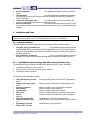
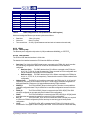
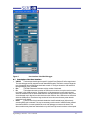
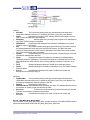
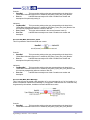
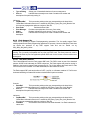
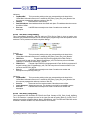
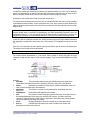
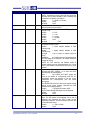
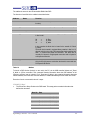
DSP_File This field indicates if DSP code is present in the on-board Flash. When this field
indicates a DSP code the associated symbols are usually loaded from Flash as well and can be
used to interact with the code that is running.
FPGA_File This field indicates if FPGA logic is present in the on-board Flash and is active. This
field is empty when the board is reset.
USB LabVIEW Interface
9.1 Preliminary Remarks
This new LabVIEW USB interface has been completely reworked to support two architectures:
•
•
The old SignalRanger_mk2 boards. To be under the control of the new interface the old boards
must have a new PID that allows them to be bound to the new x86/x64 driver. These boards are
designated SignalRanger_mk2_Next_Generation or SR2_NG.
The new SignalRanger_mk3 boards, designated SR3.
Since it manages both architectures some of its features may not apply to the target board. For
instance the concept of Program, Data and IO spaces does not apply to the SignalRanger_mk3
architecture. The corresponding parameters are simply ignored. Also only the SignalRanger_mk3-Pro
board has an FPGA.
9.2 Product Development Support
The LabVIEW interface is designed to support the designer through the development and deployment
of products. A product usually includes a hardware device based on one of the boards in the
SignalRanger series, as well as a product-specific host application designed to manage and support
the hardware.
Any product-specific application must be aware of the particular hardware product it is accessing,
including its exact hardware characteristics, firmware and other details. Failure to recognize the specific
firmware revision for instance may lead to an inconsistency between functions at the host application
level and functions at the DSP level.
Also because different OEMs use the SignalRanger series as the hardware basis of different products,
a situation arises where the same target board may represent a number of different products in the
field. These different products can possibly be simultaneously connected to the same PC and managed
by different product-specific applications designed by different OEMs.
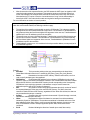
To the host application, knowledge of the target and its parameters is based on the following
information embedded in the target board:
•
A USB VID/PID pair:
This VID/PID pair is present at the level of the USB
protocol. It is used to open the target board. Therefore the information it carries is implicit. Only
boards with the correct VID/PID pair can be opened by the host application. This information
defines the particular type of board being opened, and implicitly its hardware characteristics. This
VID/PID pair cannot be modified by the developer. Every board of a given model in the
SignalRanger series has the same VID/PID pair that is decided when the board is designed. A
database included in the LabVIEW interface contains information for all the standard and custom
boards that have been designed. New information is added to this database on an ongoing basis
as new boards are designed. If a particular board is not recognized by the LabVIEW interface it is
usually because the revision number of the LabVIEW interface is too low to support this particular
board model.
Signal Ranger mk3 Pro - User’s Manual
33