1
11
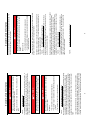
After loading, be sure to check that none of the axles are overloaded.
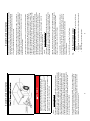
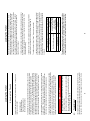
In the table below, the second column shows the rule of thumb percentage of
total weight of the trailer plus its cargo (Gross Trailer Weight, or “GTW”) that
should appear on the tongue of the trailer. For example, a trailer with a
gooseneck hitch, with a loaded weight of 12,000 pounds, should have 20-25% of
12,000 pounds (2400-3000 lbs.) on the gooseneck. A dump trailer will have the
proper weight distribution if the load is evenly distributed in the dump bed. For
non-flowable (discrete) loads locate the load such as to provide the proper
tongue weight.
1.2.10.
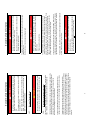
UNSAFE LOAD DISTRIBUTION
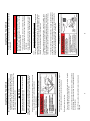
Improper front / rear load distribution can lead to poor trailer sway stability or poor
tow vehicle handling. Poor trailer sway stability results from tongue weights that
are too low, and poor tow vehicle stability results from tongue weights that are too
high. Refer to Chapter heading “Loading the Trailer” for more information.
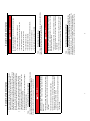
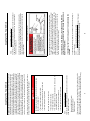
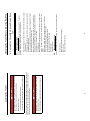
Do not load a trailer so that the weight on any tire exceeds its rating.
Do not exceed the trailer Gross Vehicle Weight Rating (GVWR) or an
axle Gross Axle Weight Rating (GAWR).
An overloaded trailer can result in loss of control of the trailer, leading
to death or serious injury.
^ WARNING
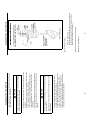
1.2.9.
IMPROPER LOADING
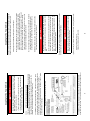
The total weight of the load you put in or on the trailer, plus the empty weight of
the trailer itself, must not exceed the trailer's Gross Vehicle Weight Rating
(GVWR). If you do not know the empty weight of the trailer plus the cargo
weight, you must weigh the loaded trailer at a commercial scale. In addition, you
must distribute the load in the trailer such that the load on any axle does not
exceed the Gross Axle Weight Rating (GAWR). If your trailer is equipped with a
Tire & Loading Information Placard, mounted next to the Certification / VIN label,
the cargo capacity weight stated on that placard is only a close estimate. The
GVWR and GAWR’s are listed on the Certification / VIN label mounted on the
front left side of the trailer.
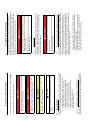
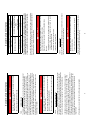
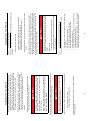
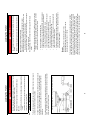
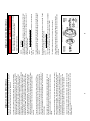
Be sure lug nuts are tight before each tow.
12
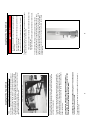
If the door latch is equipped with a catch that has a hole for a linchpin, use a
linchpin to prevent the door latch from opening.
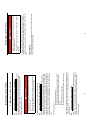
Tie down all loads with proper sized fasteners, ropes, straps, etc.
Shifting cargo can result in loss of control of the trailer, and can lead to
death or serious injury.
^ WARNING
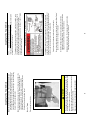
1.2.11.
SHIFTING CARGO
Since the trailer “ride” can be bumpy and rough, you must secure your cargo so
that it does not shift while the trailer is being towed.
• Keep the center of gravity low.
• Distribute the load evenly, right and left.
• Distribute the load front-to-rear to provide proper tongue weight (see
chart). For dump trailers a flowable load should be evenly
distributed throughout the bed.
Be sure to:
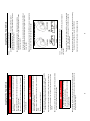
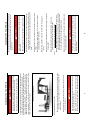
Make certain that tongue weight is within the allowable range.
Improper tongue weight (load distribution) can result in loss of control
of the trailer, leading to death or serious injury.
^ WARNING
Uneven left / right load distribution can cause tire, wheel, axle or structural failure.
Be sure your trailer is evenly loaded left / right. Towing stability also depends on
keeping the center of gravity as low as possible.
The numbers quoted above are for example purposes only and should be
tailored to the specific trailer. For questions regarding the actual percent
of tongue weight for the trailer, check with the manufacturer for specifics.
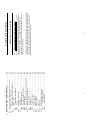
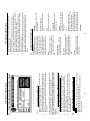
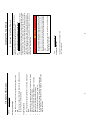
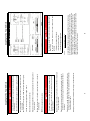
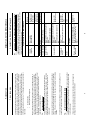
Tongue Weight as a Percentage of Loaded Trailer Weight
Type of Hitch
Percentage
10–15%for large trailers
6-10% for smaller utility and cargo
Ball Hitch (or Bumper Hitch)
trailers
4-6% for boat trailers
Gooseneck Hitch
20–25%
Fifth Wheel Hitch
20-25%
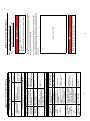
^ WARNING
Improper lug nut torque can cause a wheel separating from the trailer,
leading to death or serious injury.
General Safety Information
General Safety Information