1
A Guide to Working and Breastfeeding
And Advice on Other Breastfeeding Problems
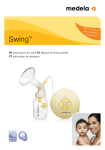
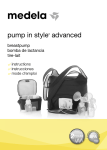
Congratulations on the purchase of your Medela electric breastpump!
You will just love your pump, but you need to know how to care for it
best. Even if you are a person who doesn’t like reading instructions,
please read your instruction manual carefully.
When using your electric breastpump, keep the pump upright and
ensure you don’t have any overflow of milk going into the motor (when
this happens, it bubbles out the side). To make sure this doesn’t
happen, don’t let the bottle get too full or tip over (use the stand). In
fact, empty it when your milk is at about 120ml (or 2cm from the valve
membrane), or attach a bigger bottle. This will not reduce the
effectiveness or the vacuum of the pump. If your pump ever ‘bubbles’
when it is older, maybe you need a new valve head and membrane.
Keep the valve head and membrane to right side when pumping.
When using the Swing, Swing Maxi or Freestyle, the tubes must be
kept clean and dry. Extra tubes can be ordered – please phone 011
788 9102/72.
For greatest comfort, before you start to express with any pump,
wet the breast shield and the areola surrounding the nipple with a little
hand expressed milk or cool sterile water. Also, make sure your nipple
is pulling central to the vacuum action, not too high or too low, but in
the middle. When you are pumping, the nipple (when wet first), will
move easily in and out as the pump sucks and lets go, like a baby
sucks. This is the most comfortable. Different size nipple fittings are
available.
When to Express
In the early days, when you are not yet working and you want to
express occasionally, it is best to pump after a feed, particularly if the
baby did not feed from the breast. Expressing after the morning
feeds will yield the most milk. As well as after any feed if you still feel
quite full (maybe baby did not empty you well). Remember the golden
rule, the more you pump the more milk you will make.
If Baby Misses a Feed
Occasionally babies miss the 10pm feed. This is the ideal time to
pump because it will both stimulate your milk supply and reduce the
feeling of fullness when you wake up in the morning. You can express
a whole feed or just to a comfortable level.
If You Go Out:
Leave baby a cup feed or bottle. On the same day that you are not
there to feed baby, you need to express for the feed that you miss.
This will ensure you maintain your milk supply as well as help prevent
you from getting sore from overfilling later. See notes on cup feeds
before 6 weeks. Enclosed Baby cup information.
When You Go Back to Work or Go Out
You will need to pump enough milk to leave with your baby’s caregiver
for a day’s feed and a little spare in the freezer for emergencies. If your
milk supply ever drops, remember, the more you pump, the more you
make. Working mothers have more milk on Mondays and less on
Fridays.
Choose How to Leave Enough Milk
You have various options and basically you need to pump enough milk
today to leave with baby’s caregiver tomorrow.
The Early Morning Feed
To pump after the 6am feed or while you feed baby on one side saves
time. You will usually have extra milk after both morning feeds.
Not at All
The other alternative is not to pump at work at all (especially if you only
work half day). Pump and feed before you leave, and pump and feed
when you return home and maybe once in the evening. This milk is
usually enough for the following day.
Where to Pump at Work
If you have your own office, you have it made. You can lock the door
and pump while you work. Some mothers even manage to work a
computer and pump, although we would rather you take a break, put
your feet up eat your lunch and read a book and pump, all at the same
time. You could borrow an office if you don’t have your own.
Using the Battery & Car Options
We suggest using re-chargeable batteries. If you have to go to the
bathroom or ladies restroom and there is no electric plug and you prefer
the electric option, a light gauge extension will do. The Mini Electric only
uses 3 volts, the Mini Electric Plus 6 volts. A car cigarette lighter
adapter can also work if you travel around, but make sure you set it to
exactly the correct voltage for your pump.
Pumping in the Car
Some mothers travel a lot. They stop in a quiet spot and discreetly
pump in the car. I even know a mother who pumped in the train on her
way to work. Maybe hubby can drive and you can pump under your
jersey. Mothers can be really inventive. The Medela Swing Maxi and
Freestyle are also ‘double pumps’. Freestyle has its own long life
rechargeable battery built in.
Tips That May Help Expressing & the Let-down
Relax, think of the baby, talk to the caregiver, look at a picture of baby,
feed baby on one side, express next to the baby if baby is in hospital.
Express when you are full. Not all mothers feel a letdown, some only
see it, some neither. Pumping after a hot shower helps. Practice,
relaxation and correct use of the pump helps the most. Different size
breastshields (funnels) are available for maximum comfort and
efficiency.
Before You Go Back to Work
Negotiate the best options. Your bargaining power is better before you
get back to work. Maybe you can get the firm to buy a hospital grade
Medela Lactina (double or single pumping) that you can use at work and
pumping will be even quicker. Every mother has her own personal
pump kit for the Lactina that doubles as a manual pump for use at
home.
How to Pump as Little as Possible & Feed Your Baby More
Different mothers have different circumstances and different
preferences. Some can take their baby to work and for them this is the
best option. Others even feed while working, if they have their own
office, and some get permission to feed in meetings – a new idea!
Others get a crèche opened at work and can feed at lunch and tea
breaks.
About ‘Top-up Feeds’
Breastfeed baby before you leave him with the caregiver and again
when picking him up in the afternoon – this reduces the amount of time
you need to spend pumping. Maybe your mother is the caregiver and
you can sit and enjoy discussing the day’s happenings with her, while
you feed baby.
The wise caregiver will only give the hungry baby a small cup feed or
even only a little water, if she expects mother to arrive soon, with full
breasts ready to feed. Phone and tell your caregiver when you will
be arriving for just this reason.
Pump for the Feed You Miss
At work, most mothers pump once or twice for the feeds they miss –
especially if you work a full day. Pumping when the breasts are full is
quick and double pumping is even faster than single pumping.
1
Guide to Working & Breastfeeding 13052013TM
HIV
The virus can be transmitted through breast milk so make sure your
caregiver knows not to breastfeed your baby herself. It may be best
if your caregiver is not herself breastfeeding a baby.
Transporting Milk To and From Work
It is best to transport milk in a bag with a separate freezer compartment
with frozen cooler bricks. Medela have a fabulous new City Style
Breastpump Bag, with a separate small compartment for keeping your
milk really cold (see picture on next page).
Collecting Milk for a Feed
In the beginning, when you are not missing a feed, you will usually
have to pump twice, to get enough milk for a feed. If you are collecting
milk over a period of a day, do not mix warm milk with cold milk. Only
add it to the cold milk when the new milk is also chilled.
If you use a six pack cooler case, put a few frozen pure fruit juice packs
in it to keep your milk cool. They freeze very cold and you can drink one
on your way home. It is good to keep fluid levels up before
breastfeeding baby or expressing.
Washing Your Hands at Work
Always wash your hands before expressing. Take your own paper towel
to dry your hands (don’t use commercial towels). You will need your
own plastic bowl, etc. if you need to wash your pump at work, as well as
the necessary sterilizing utensils. You can sterilize at home and use
your pump at work. It does not stay sterile for more than six hours and
needs to be kept covered and stored in a cool place. Re-sterilise before
using again.
Adding to Frozen Milk
When adding fresh milk to frozen milk, be sure to chill it first and never
add a greater quantity than the original amount of frozen milk. Freeze it
in quantities you think you will use, and do not thaw it and refreeze.
Medela freezer bags are excellent. They have a nylon protective lining
are double walled, are packed sterile and are BPA free.
How Long Does it Take?
This is the question everyone asks. Some can express a feed in 5 or
10 minutes, others must express twice to get a full feed. Some say
they can pump faster than they can feed. It also depends on how full
your breasts are and how accustomed you are to pumping, also how
gentle and yet effective your pump is. Usually, the more comfortable
you are, the quicker you pump, but double pumping is undoubtedly
faster than single pumping and helps you maintain your supply longer,
if you have a hospitalized baby.
Expressing All the Milk
For the first few months that you are back at work it is best to express all
the milk your baby needs. This means your baby doesn’t get any
formula and you maintain your supply at a high level. If he
sometimes is cup fed, your chances of maintaining breastfeeding
happily will be even greater (see cup feeds on last page). It is
suggested that you exclusively breastfeed for the first six weeks, without
any bottles, allowing breastfeeding to become well established.
How Much Milk to Leave for a Feed?
Working mothers always ask how much milk they should leave for the
baby for a feed when they are at work.
Starting solids
When baby starts on solids after six months, his need for breastmilk will
be less. There will be less expressing and it will get easier and easier
for you to continue breastfeeding.
You take baby’s weight in kilograms and multiply by 120ml breastmilk
or 150ml breastmilk substitute (formula) and divide by the number of
feeds baby has in 24 hours.
If he is not an allergic baby and you do introduce a bottle of formula, you
also run the risk of your supply dropping and your baby might prefer the
faster flowing bottle to the breast. So best to express all feeds and keep
up your supply.
E.g. 4 kg baby = 4 x 150 = 600ml in 24 hour, feeding four hourly = 6
feeds in 24 hours.
600ml divided by 6 = 100ml per feed.
The Big Reward for the Working & Breastfeeding Mother
After a long days work, you will have the pleasure of holding your baby
in your arms and breastfeeding him, knowing that he is getting
antibodies from even the smallest amount of breastmilk and protecting
him from many illnesses. Babies on breastmilk have fewer infections
than formula fed babies. This is especially important for babies in
crèches, who are exposed to many more germs.
Mix Foremilk & Hind milk
When you breastfeed baby, the first milk he receives is very watery, to
quench baby’s thirst. The middle milk looks like ordinary milk and the
hind milk, or the last milk to be drawn off the breast, is rich and creamy
(lots of calories). When leaving a feed for baby it is important to mix
the foremilk and the hind milk. In other words, expressing an entire
feed is easiest. If you express before a feed, ensure you also express
towards the end of a feed to give baby a mixture of fore and hind milk.
Mothers Cope in so Many Ways
Do remember that these are only guidelines, as I wrote in the article for
the Expectant Mothers Guide, ‘Working Mothers cope in many different
ways. It is amazing what (wonderful and varied) solutions they find if
they really want to work and still enjoy the pleasure of breastfeeding’.
Storage
Normally, the milk you express today, you give baby tomorrow. Date
your milk, so you can use the oldest first.
How long does breast milk last?
•
6 hours at room temperature, and then it must be used directly
•
2 days in the refrigerator
•
2 weeks in the little freezer compartment at the top of a fridge
•
3 months in an upright freezer
If you have some bright ideas, please email us at [email protected]
© Jane Pitt RSA 2000
Nothing gives you more confidence than knowing you have a little extra
milk saved and stored for a ‘dry’ day. So when someone suggests your
baby is hungry, you could either give him an extra breastfeed or say, ‘I
have heaps of frozen breastmilk, he gets plenty of milk from me’.
FREE!
Download your
free Breastfeeding Guide
from our website
www.breastpumps.co.za
Preparing a Feed
When preparing baby a feed, you must not let your frozen breast milk
stand at room temperature. You must put the bottle of milk in lukewarm
water and shake it while thawing. Then use it directly. Do not warm
milk in the microwave.
2
Guide to Working & Breastfeeding 13052013TM