1
Eye On Electronics
challenges in the refurbishment business. The first is testing. Somehow,
those enormous piles of so-called bad
batteries have to be combed through,
tested and evaluated. The good ones
can be cleaned up and prepared for resale. This testing is not simple; it takes
equipment and training and can still
leave gray areas of uncertainty.
The second challenge is finding
those batteries whose performance is
truly not up to snuff. There are some
techniques that can be used to bring
them back to a reasonable level of
performance. These batteries will
need even more investment in terms
of time, effort and technology than
those that were never truly bad in the
first place. In fact, you could make
the point that there are more than
enough still-good batteries out there
to satisfy the market for lower cost
refurbished batteries, so why bother
trying to fix the others at all?
The third challenge to refurbishment will be those batteries that are
genuinely bad and unrepairable. This
includes batteries with mechanical
problems such as cracked cases, broken
terminals and internal opens or shorts.
This group includes the end-of-life batteries that are simply used up. These
batteries are recycled.
For recycling, batteries are disassembled and the metals salvaged. Doing this correctly is not without risk.
Lead is toxic and battery acid is corrosive. A number of former locations for
battery recycling plants (Haina in the
Dominican Republic is one example)
are well-known environmental hot
spots. Problems include lead contamination in the soil, air and water. In
Haina, they found that one-third of
the soil in the area of the former battery plant was actually lead.
So, how did all these good batteries
get condemned in the first place? The
BU website says that low charge and
acid stratification are the most common
causes of apparent battery failure. The
low-charge circumstance is well illustrated by the typical use pattern for
cars in Japan. Motorists there drive an
average of 8 miles a day in congested
cities. At typical low speeds, the batteries just never really get fully recharged.
Poorly charged batteries are also a
problem in large luxury vehicles.
Electric power steering, electrically
controlled suspension systems, HVAC
systems and so on add loads to the
battery. If the alternator does not spin
fast enough and long enough to generate the needed power, then the battery has to supply that power. Depending on how a motorist uses his
vehicle, the battery may be in a constant state of undercharge.
The direct result of leaving a battery in a chronic undercharge state is
sulfation. Sulfation is a phenomenon
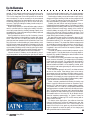
If all you wanted to do, is turn this
off
...then any “ole code reader” would do!
But if real diagnostics and fixing the TPMS is your goal...
Then BARTEC is the TPMS tool
partner you’ve been looking for!
þ
Innovation where it counts means better features
þ
Advanced diagnostics to fix it right the first time
þ
Better OBDII coverage for easier and faster relearns
þ
Real technical support means help when you need it
Coming
Soon!
Industry’s First Wireless
TPMS Service Tool
visit:
TIA INSIDE
www.bartecusa.com
call:
Circle #13
20
May 2014
Bartec
TPMS
Diagnostics
Keeps
This
Light Off!
[855]877-9732