1
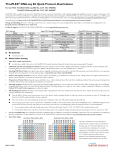
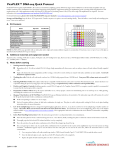
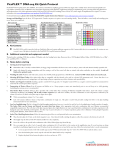
ThruPLEX® Plasma-seq Kit Quick Protocol ThruPLEX® Plasma-seq is built with ThruPLEX chemistry to generate high quality DNA libraries from cell-free DNA extracted from plasma samples. Each kit contains all necessary reagents for preparing indexed Illumina NGS libraries, including optimized Illumina®-compatible adapters and indexing reagents. Each kit provides sufficient reagents for manual use up to 4 separate times. For more information, please visit www.rubicongenomics.com/products/ThruPLEX-Plasma-seq/. For detailed protocol, refer to the ThruPLEX Plasma-seq Kit Instruction Manual at www.rubicongenomics.com/resources/manuals/. Storage: Store kit at –20°C upon arrival. Technical support: Call (734)-677-4845 (9AM-5:30PM Eastern Time) or contact [email protected]. Kit Contents Name Template Preparation Buffer Template Preparation Enzyme Library Synthesis Buffer Library Synthesis Enzyme Library Amplification Buffer Library Amplification Enzyme Nuclease-Free Water Indexing Reagents Quick Protocol Input DNA Sample Requirements Cap Color Red Red Yellow Yellow Green Green Clear 12S Kit CAT. NO. R400490 1 Tube 1 Tube 1 Tube 1 Tube 1 Tube 1 Tube 1 Tube 12 Tubes 48S Kit CAT. NO. R400491 1 Tube 1 Tube 1 Tube 1 Tube 1 Tube 1 Tube 1 Tube 1 Single Index Plate 96D Kit CAT. NO. R400492 2 Tubes 2 Tubes 2 Tubes 2 Tubes 2 Tubes 2 Tubes 1 Tube 1 Dual Index Plate Source Type Recommended Input Amount* Input volume Input buffer Requirement Plasma Cell-free DNA 1 – 30 ng 10 µL ≤ 10 mM Tris, ≤ 0.1 mM EDTA *Quantified by Qubit® Fluorometer or equivalent methods. A. Notes Before Starting 1. Input DNA Sample Requirements: See table above right. QIAamp® Circulating Nucleic Acid Kit (Qiagen, CAT. NO. 55114) is the recommended method for extracting cell-free DNA from plasma samples. 2. Additional Materials and Equipment Needed: Thermal cycler with 50 µL reaction volume capability and heated lid; centrifuge; PCR tubes or plates; PCR plate seals; low binding barrier tips; fluorescent dyes; Agencourt® AMPure® XP (Beckman Coulter, CAT. NO. A63880), 80% v/v Ethanol. 3. PCR Plates/Tubes: Select plates/tubes that are compatible with the thermal cyclers and/or real-time PCR instruments used. Ensure that there is no evaporation during the cycling process by using proper seal/caps as evaporation may reduce reproducibility. 4. Positive and Negative Controls: If desired, include a positive control DNA and a No Template Control (NTC) as a negative control in parallel to ensure that the reaction proceeded as expected. 5. Preparation of Master Mixes: Prepare 5% excess of each master mix to allow for pipetting losses. Each kit contains sufficient reagents to prepare master mixes up to 4 separate times. Keep all enzymes, buffers, and master mixes on ice until use. Transfer the enzymes to ice just prior to use and centrifuge briefly to collect contents at the bottom of the tube. Thaw the buffers, vortex briefly and centrifuge prior to use. The Library Synthesis Master Mix and Library Amplification Master Mix can be prepared during the last 15 minutes of the previous step’s cycling protocol and kept on ice until used. 6. Indexing Reagents: Indexing Reagents can be frozen and thawed no more than four times. The 12S Kit is provided with 12 Indexing Reagents pre-dispensed in tubes. They have sufficient reagents for up to 8 uses and contain 8-nucleotide Sanger indexes that share the same sequences in the first 6 bases as the Illumina TruSeq ® LT indexes AD001 through AD012. The 48S Kit is provided with a Single Index Plate (SIP) containing 48 Illumina-compatible single indexes, each with a unique 8-nucleotide Sanger index sequence. Each well has sufficient volume for a single use. The 96D Kit is provided with a Dual Index Plate (DIP) containing 96 Illumina-compatible dual indexes. Each well has sufficient volume for a single use and contains a unique combination of Illumina’s 8-nucleotide TruSeq HT i5 and i7 index sequences. 7. Index Plate Handling Instructions: The Index Plate is sealed with pierceable sealing foil. Follow the instruction below to avoid cross contamination. Thaw the Index Plate for 10 min on the bench top prior to use. Once thawed, briefly centrifuge the plate to collect the contents to the bottom of each well. Thoroughly wipe the foil seal with 70% ethanol and allow it to dry completely. Pierce the seal above each well containing the specific index combination with a clean 20 µL pipette tip with filter barrier; discard the tip. Use a new pipette tip to collect 5 µL of a specific index combination and add it to the reaction mixture at the Library Amplification Step. A multichannel pipette may be used if needed. If indexes from the entire plate are not used at the same time (low level multiplexing), follow the instructions below to avoid contamination: Cover any pierced index wells with scientific tape (such as VWR General Scientific Tape 0.5", CAT. NO. 89097-920) to mark the index as used. Wipe the seal with 70% ethanol and let it dry completely. Replace the plastic lid, return the plate to its sleeve and store at –20°C. 8. Low Level Multiplexing: Select appropriate index combinations that meet Illumina recommended compatibility requirements. For more information on multiplexing and index pooling, refer to the ThruPLEX Plasma-seq Kit Instruction Manual at www.rubicongenomics.com/resources/manuals/. 9. Index Sequences and Index Plate Maps: Refer to the ThruPLEX Plasma-seq Index Guide at www.rubicongenomics.com/resources/manuals/. 10. Library Purification, Quantification, and Sequencing: For instructions and recommendations, refer to the ThruPLEX Plasma-seq Instruction Manual at www.rubicongenomics.com/resources/manuals/. ThruPLEX® Plasma-seq Kit is for research use only. It may not be used for any other purposes including, but not limited to, use in diagnostics, forensics, therapeutics, or in humans. ThruPLEX Plasma-seq may not be transferred to third parties, resold, modified for resale or used to manufacture commercial products without prior written approval of Rubicon Genomics, Inc. ThruPLEX Plasma-seq is protected by U.S. Patents 7,803,550; 8,071,312; 8,399,199; 8,728,737 and corresponding foreign patents. Additional patents are pending. QAM-186-001 B. Quick Protocol I. Template Preparation Step 1. 2. Add 10 µL of DNA sample to each well of a PCR plate or tube. If desired, include control samples. Depending on the number of reactions, prepare the Template Preparation Master Mix as described in the table below. Mix thoroughly with a pipette. Keep on ice until used. Template Preparation Master Mix Component Cap Color Volume/Rxn Template Preparation Buffer Red 4 µL Template Preparation Enzyme Red 1 µL 3. 4. 5. 6. 7. To each 10 µL sample from step 1 above, add 5 µL of the Template Preparation Master Mix. Mix thoroughly with a pipette. Note: Final volume at this stage will be 15 µL. Seal the PCR plate using proper sealing film or tightly cap the tube(s). Centrifuge briefly to collect contents to the bottom of each well or tube. Place the plate or tube(s) in a thermal cycler with a heated lid set to 101C – 105C. Perform the Template Preparation Reaction using the conditions in the table below. Template Preparation Reaction Temperature Time 22°C 25 min 55°C 20 min 22°C Hold ≤ 2 hours 8. 9. Remove the plate or tube(s) from the thermal cycler and centrifuge briefly. Continue to the Library Synthesis Step. 6. 7. Library Synthesis Reaction Temperature Time 30°C 40 min 4°C Hold ≤30 min 8. 9. Prepare Library Synthesis Master Mix as described in the table below. Mix thoroughly with a pipette. Keep on ice until used. Library Synthesis Master Mix Component Cap Color Volume/Rxn Library Synthesis Buffer Yellow 2.5 µL Library Synthesis Enzyme Yellow 2.5 µL 2. 3. 4. 5. Remove the seal on the plate or open the tube(s). Add 5 µL of the Library Synthesis Master Mix to each well or tube. Mix thoroughly with a pipette. Note: Final volume at this stage is 20 µL. Seal the PCR plate using proper sealing film or tightly cap the tube(s). Remove the plate or tube(s) from the thermal cycler and centrifuge briefly. Continue to the Library Amplification Step. 6. 7. 8. III. Library Amplification Step 1. Remove the Indexing Reagent from the freezer and thaw for 10 min on bench top. Prior to use, centrifuge the Indexing Reagents to collect the contents at the bottom. Wipe the Index Plate foil seal with 70% ethanol and allow to dry. 2. Prepare Library Amplification Master Mix as described in the table below. Mix thoroughly with a pipette. Keep on ice until used. Library Amplification Master Mix Component Cap Color Volume/Rxn Library Amplification Buffer Green 21.5 µL Library Amplification Enzyme Green 1.0 µL Fluorescence Dyes 2.5 µL (or Nuclease-Free Water) II. Library Synthesis Step 1. Centrifuge briefly to collect contents to the bottom of each well or tube. Return the plate or tube(s) to the thermal cycler with a heated lid set to 101C – 105C. Perform Library Synthesis Reaction using the conditions in the table below. 3. 4. 5. Fluorescence Dyes (for detection and optical calibration) are added when monitoring amplification in real time during cycling. Refer to the real-time PCR instrument's user manual for calibration dye recommendations. The volume of detection and calibration dyes should not exceed 2.5 µL. If a regular thermal cycler is used, there is no need to add the dyes; use 2.5 µL of nuclease-free water. Example: EvaGreen®/Fluorescein dye mix. Prepare by mixing 9:1 v/v ratio of EvaGreen Dye (20X in water, Biotium, CAT. NO. 31000-T) and 1:500 diluted Fluorescein Calibration Dye (Bio-Rad Laboratories, CAT. NO. 170-8780); add 2.5 µL of this mix per reaction. Remove the seal on the PCR plate or open the tube(s). Add 25 µL of Library Amplification Master Mix to each well or tube. Add 5 µL of the appropriate Indexing Reagent to each well or tube. Note: For the 48S and 96D Kits, follow the Index Plate handling instructions (section A.7) to avoid index cross contamination. Mix thoroughly with a pipette. Avoid introducing excessive air bubbles. Note: Final volume at this stage is 50 µL. Seal the plate or tube(s) tightly and centrifuge briefly to collect contents to the bottom of each well or tube. Return plate or tube(s) to the real time PCR thermal cycler/thermal cycler with a heated lid set to 101C – 105C. Perform Library Amplification Reaction using the cycling conditions from the tables below. Caution: Ensure that the thermal cycler does not have a denaturing step programmed until Stage 3. Extension & Cleavage Denaturation Addition of Indexes No. of Cycles 1 1 1 4 5 to11 see table below 6 4°C Hold 1 *Acquire fluorescence data at this step, if monitoring in real-time. Library Amplification Selecting the optimal number of amplification cycles: The number of PCR cycles required at Stage 5 of the Library Amplification Reaction is dependent upon the amount of input DNA and the thermal cycler used. The table below provides the suggested number of PCR cycles at Stage 5 for different input amounts of cell-free DNA. Stage 5 Amplification Guide DNA Input (ng) Number of Cycles 30 5 5 7 1 11 9. Yield: The amount of amplified library can vary depending upon sample condition, composition, and thermal cycler used. When starting with Qubit-quantified cell-free DNA and following this protocol, the typical yields range from 500 ng to 1000 ng. Remove the plate or tube(s) from the thermal cycler and centrifuge briefly. Note: At this stage, samples can be processed for next generation sequencing (NGS) immediately or stored frozen at –20°C for up to 2 weeks. For instructions and recommendations on library, pooling, purification, quantification, and sequencing, please refer to the ThruPLEX Plasma-seq Kit Instruction Manual at www.rubicongenomics.com/resources/manuals/. Technical Support: Call (734)-677-4845 (9AM-5:30PM EST) or contact [email protected]. Trademarks: ThruPLEX®; Illumina®, TruSeq® (Illumina Inc.); EvaGreen® (Biotium Inc.); Agencourt®, AMPure® (Beckman Coulter, Inc.); Qubit® (Life Technologies Corporation); QIAamp® (Qiagen GMBH). QAM-186-001 Library Amplification Reaction Stage Temperature Time 1 72°C 3 min 2 85°C 2 min 3 98°C 2 min 98°C 20 s 4 67°C 20 s 72°C 40 s 98°C 20 s 5 *72°C 50 s