1
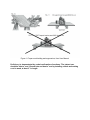
Specific Tool Training: Jig Saw All general principles from the primary Small Tools training apply. In addition, for the jigsaw, The trained user should know: ● The location of the trigger lock. ● How to choose and install blades. (The jigsaw takes Tshank blades only) ● The direction of cut & how to appropriately secure workpiece. ● How to adjust the angle of the blade. ● How to choose a cut speed and cut mode. ● What to do in the event of a stuck blades. About this jigsaw (Dewalt DCS331) ● The jigsaw can be adjusted to any bevel angle between 0 and 45 degrees, and has detents at 15, 30 and 45 degrees. ● There are two cutting modes: orbital and straight. They are labeled 03 on a lever on the left side of the saw. ○ Orbital mode (cutting modes 1, 2 and 3) moves the blade forward and back in addition to up and down during the cut. It is faster, but less smooth. Orbital mode should only be used on soft materials, i.e. wood and plastic. The levels, 1, 2 and 3 correspond to increasing levels of “aggression” of the cut. ○ Straight mode (cutting mode 0) should be used for metals or hardwoods, with an appropriate blade. ● A dust blower lever on the right side of the jigsaw blows chips away from the cut area. General dos and don'ts: ● All dos and don’t in the primary training document apply. ● Never cut hardwoods or metals in orbital action. ● Start the saw and wait for it to run at full speed before beginning a cut, to prevent stalling the motor. ● Cut wood and soft metals (aluminum, copper, brass, galvanized pipe) at high speeds. Cut plastics, tile, laminate, hard metals, cast iron, at low speeds. ● If cutting thin sheet metal, clamp the metal to wood to reduce vibration and produce a clean cut. Proficiency is demonstrated by verbal confirmation of sections “The trained user should be able to” and “General dos and don’ts” and by installing a blade and making a cut in wood, at least 3” in length.