1
SIDECAR ALIGNMENT
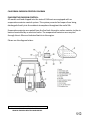
The sidecar should be installed in a definite position relative to the motorcycle. The
position is determined by the camber and toe-in of the motorcycle and the side car
wheels. An incorrectly aligned side car will drag the motorcycle to either side and cause
extensive tire wear. If the motorcycle is not stable on the road or is difficult to steer,
check the alignment. Checking and measuring the alignment should be done on level
ground.
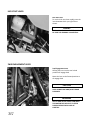
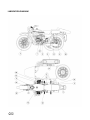
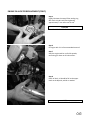
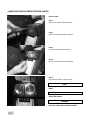
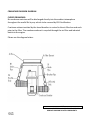
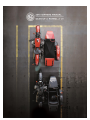
Check toe-in of the motorcycle and the side car wheels with two straight bars applied to
the side faces of the wheels just below the ax les. The toe-in should be 3 to 8mm (2wd
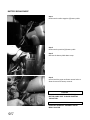
models) or 8 to 12mm (1wd models) at the front wheel. When adjusting, unbolt the top
of the strut legs fastening the side car to the motorcycle, loosen the bolt clamping the
lower rear bracket, and adjust the position of the bracket relative to the rear tube of the
side car frame to obtain necessary toe-in of the wheels. Tighten up the bolt fastening
the bracket, adjust the length of the strut legs and secure them with bolts.
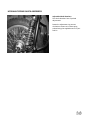
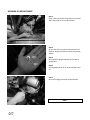
Check the lean-out of the motorcycle using a level gauge or protractor with a plumb bob
and a ruler; standard lean-out is 1-2 degrees. Adjust the two inclined legs by screwing
the forks in or out. When the lean-out is correct, the rider will remain vertical while
riding on the local roads which may be slightly sloped to assist with water runoff.
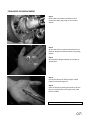
Check the toe-in while the motorcycle is running on the road. With the toe-in properly
adjusted, the motorcycle will not pull to either side while running at normal road speed.
If it pulls to the right, increase the toe-in, if it pulls to the left, decrease the toe-in.
CAUTION
DOUBLE CHECK FOR CORRECT TOE-IN BEFORE MAKING ANY CHANGE TO LEAN-OUT.