1
TM
PCSK9-LDLR in vitro Binding Assay Kit
User’s Manual
For Research Use Only, Not for use in diagnostic procedures
On
Introduction
ly
!
CircuLex
Principle of the Assay
Pu
rp
os
e
PCSK9 (also known as neural apoptosis-regulated convertase, NARC-1) is a 692-residue extracellular
protein expressed primarily in the kidneys, liver and intestines (1) representing the 9th member of the
secretory subtilase family. Various genetic observations subsequently mapped PCSK9 as the third gene
(along with LDLR and APOB) to cause autosomal dominant hypercholesterolemia (ADH). These studies
suggested that gain of function mutations increase plasma levels of LDL-c (2–6), whereas nonsense or
missense (loss-of-function) mutations, which interfere with folding or secretion of PCSK9, lead to a
reduction of plasma levels of LDL-c and an 88% decrease in the risk of coronary heart disease (CHD)
(5). In mice, adenoviral overexpression of PCSK9 results in increased plasma LDL-c level in normal
mice but not in LDLR-deficient mice (7). Deletion of PCSK9 causes an increase in level of LDLR
protein but not mRNA (8). These findings lead to a hypothesis that PCSK9 exerts its role in cholesterol
metabolism through posttranslational down-regulation of LDLR, the receptor responsible for clearing
LDL-c from plasma.
Evidence is consistent with the secreted form of PCSK9 binding directly to the LDLR and resulting in
degradation of the receptor (9, 10). Zhang et al. (11) localized the binding site of PCSK9 in the LDLR to
the first epidermal growth factor-like repeat (EGF-A) of the extracellular domain and showed that
PCSK9 binding to this site is required for LDLR degradation. In light of these observations and the fact
that PCSK9 in the circulation may cause the degradation of hepatic LDLR in the liver, PCSK9 would
seem to be an attractive drug target for lowering LDLC.
rR
ef
er
en
ce
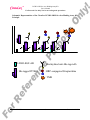
The CycLex Research Products CircuLex PCSK9-LDLR in vitro Binding Assay Kit is a
semi-quantitative solid phase binding assay between recombinant His-tagged PCSK9 and recombinant
LDLR-AB domain. Plates are pre-coated with a recombinant LDLR-AB domain, which contains binding
site for PCSK9. Biotinylated anti-His-tag monoclonal antibody specifically reacts with recombinant
His-tagged PCSK9 that has been trapped with recombinant LDLR-AB domain immobilized on the
microplate surface. The CircuLex PCSK9-LDLR in vitro Binding Assay Kit may be used to
characterize PCSK9-LDLR interaction as well as to screening inhibitors of PCSK9-LDLR interaction in
vitro.
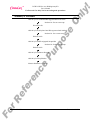
To perform the test, the recombinant His-tagged PCSK9 is diluted in Reaction Buffer, pipetted into
the wells and allowed to bind recombinant LDLR-AB domain immobilized on the wells. After wash the
plate, the amount of bound recombinant His-tagged PCSK9 is measured by binding it with biotinylated
anti-His-tag monoclonal antibody, followed by binding with horseradish peroxidase conjugated
Streptavidin, which then catalyzes the conversion of the chromogenic substrate tetra-methylbenzidine
(TMB) from a colorless solution to a blue solution (or yellow after the addition of stopping reagent). The
color is quantitated by spectrophotometry and reflects the relative amount of recombinant His-tagged
PCSK that binds to recombinant LDLR-AB on the microplate.
For screening inhibitors of PCSK9-LDLR interaction in vitro, test compounds or the inhibitor
candidates including monoclonal antibody is added to appropriate amount of His-tagged PCSK9 in the
wells that have been coated with recombinant LDLR-AB domain in a similar fashion as described above,
followed by evaluation of inhibitory effect on PCSK9-LDLR interaction by measuring the amount of
His-tagged PCSK9 on the wells.
Fo
Cat#: CY-8150
2
Version#: 120420