1
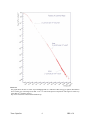
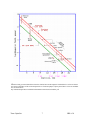
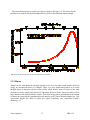
Most galactic cosmic rays have an energy range of 100MeV to 10GeV or a velocity range of
46% to 99.5% the speed of light. The number of cosmic rays with energies above 1 GeV
decreases by a factor of 50 for every factor of 10 increase in energy. The highest energy rays
measured to date is 1020 eV (Reference 1).
It is believed that most galactic cosmic rays derive their energy from supernova explosions,
which occur approximately once every 50 years in our galaxy. For cosmic rays to maintain their
intensity over millions of years requires only a few percent of the 1044 J released by the typical
supernova explosion. There is also evidence that cosmic rays are accelerated as the shock waves
from these explosions traveling through interstellar gas. The energy contributed to the Galaxy by
comic rays is about that contained in galactic magnetic fields, and in the thermal energy of the
gas that passes through the space between the stars. This is approximately 1 eV per cm3
(Reference 1).
While we might be able to detect cosmic ray energies, we do not always know how they are
accelerated to such a high velocity. In fact, the source of energy greater than 1015 eV is unknown.
It is believed that they might originate from outside our galaxy from active galactic nuclei,
quasars, or gamma ray bursts, but it can also be some exotic new physics such as superstrings,
exotic dark matter, strongly-interacting neutrinos, or topological defects in the very structure in
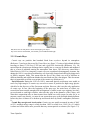
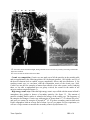
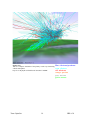
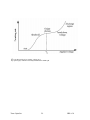
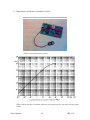
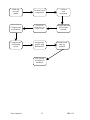
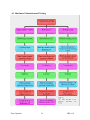
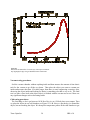
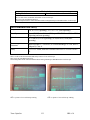
the universe (Reference 3).To better see this, see figures 3.2 and 3.3.
Team CajunSat
4
FRR v3.0