1
USER MANUAL
wing, and with it also its ability to cope with turbulences and overall
penetration. As forces on the brakes grow at high speeds, the weightshifting
or steering with TST system becomes increasingly effective. Turns executed
in this way are slightly wider, but needed steering force will be smaller and
airspeed will not decrease.
With slow trimmer settings (red area) there is an improvement in sink and
steering forces diminish, so exploring the thermals becomes possible.
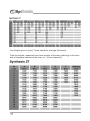
Worth noting is the Synthesis impressive speed range - the maximum speed
is almost three times greater than stall speed.
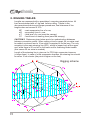
Study drawings of trimmers and speed-system setting, as well as their
influence on the wing shape.
Independent of the current wing configuration and speed, turns can be much
tightened and more effective with differential brake operation. Slight use of
the outer brake (with considerable amount of the inner one) will diminish the
loss of lift during turn. Turns can be much improved by additional use of
throttle, speed-system etc. as well. Once with growing experience you will
master these techniques, you will be able to execute fully coordinated and
effective turns, that will bring to mind the aeroplane handling.
Remember:
$
Trimmer setting is another part of the pre-start check list!
$
If it will be asymmetric, the wing will be turning all the time. And if you
will inadvertently set them off, the reflex profile of the Synthesis will
keep the wing level, so after opening the throttle you'll start to descend
with increased speed instead of climbing.
3.3.3 LANDING
In PPG flying there are two kinds of landing: with and without power.
Power off landing
At an altitude of 50 metres switch the engine off and start gliding as on a
conventional paraglider. It reduces the chances of damaging the propeller on
landing, but on the other hand there is only one attempt possible - so it has
to be done right!
With or without power Synthesis better copes with turbulence on open
trimmers (blue area). So, if the conditions are rough, it is better to make an
approach with greater speed, plan a lot of space (as for a hangglider) and
wear that speed off before touching down. Synthesis preserves the energy
well, so there is a long float necessary to exchange the abundant speed for
lift.
19