1
Method | 35
example an Ethernet adapter, then IP data is simply encapsulated as an Ethernet frame for transport.
This new network adapter interface is even more appropriate for today’s all IP networks.
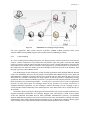
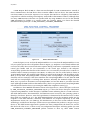
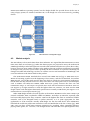
Before continuing with the next subsection, we need to clarify the two interfaces of a mobile
terminal (i.e. USB dongle), and we borrow the names Um and Rm introduce by Sang Woo Park in US
Patent 20100074155 [40] to describe these two interfaces. In our case, Um is the air interface between
a USB dongle and a base station or WLAN access point. Rm is the physical data communication
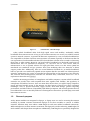
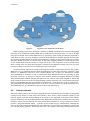
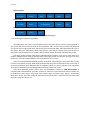
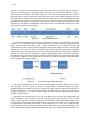
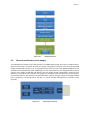
interface between a dongle and a laptop computer. The two interfaces are illustrated in Figure 3-20.
The scope of this thesis focuses on the Rm interface. Despite heterogeneous wireless networks and the
need for multiple Um interfaces - such as GSM/3G/4G/WLAN, we only need one Rm interface for
these various Um interfaces.
Figure 3-20:
3.4.2
Two interfaces of USB dongle
Remote Network Driver Interface Specification
Both academia and industry have realized the deficiency of USB dongle working as a dial up modem,
and several protocols to provide Ethernet-style networking over USB have been designed in recent
years. The USB Implementers Forum (USB-IF) defined a number of USB Communications Device
Class (CDC) protocols to provide this virtual Ethernet functionality, such as CDC ACM (Abstract
Control Model) and CDC Network Control Model (NCM). Microsoft defined its proprietary protocol
Remote Network Driver Interface Specification (RNDIS) to provide a virtual Ethernet link over USB to
most versions of the Windows operating systems. Although RNDIS is not recommend by certain
companies, such as MCCI [41], given Microsoft Windows 91.07% market share in desktop and laptop
computers operating systems [42], Microsoft Windows still has a dominant position in the market, so
we select RNDIS as the protocol to examine in our research. RNDIS is naturally compatible with
recent Windows systems which are used by the overwhelming majority of customers. This large
number of potential customers leads to greater opportunities for all participants in the value chain.
For Apple Mac users, it is also possible to use RNDIS by installing drivers, for example,
HoRNDIS [43].
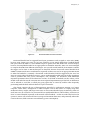
RNDIS is based on NDIS which was developed by Microsoft and 3Com to provide an application
programming interface for network adapters in Windows systems. The NDIS interface is located
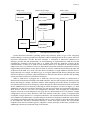
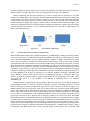
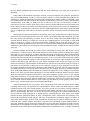
between the physical network adapter and upper layers such as TCP/IP. As shown in Figure 3-21,
NDIS contains three types of drivers; from top to bottom, these are a protocol driver, intermediate
driver, and miniport driver. The NDIS miniport driver interacts with network adapter, normally this
driver varies with the hardware and it is developed by network adapter manufacturers. The NDIS
protocol driver is independent of the underlying hardware and it is responsible to handle various
upper layer protocols such as TCP/IP and to transport packets to the next lower level. The NDIS
intermediate driver is in the middle and it has two different interfaces to communicate with its upper
and lower drivers (respectively). The protocol driver looks like an intermediate driver to a miniport
driver, whereas the intermediate driver looks like a protocol driver from the miniport driver's view.
NDIS can deal with a USB dongle as a network adapter. Modern personal computer operating systems
have quite good support for Ethernet and WLAN network adapters, so NDIS mode can have a better
performance than RAS mode when carrying TCP/IP traffic. Some vendors have produced USB