1
>> python AssessInteractions1.0.py
Furthermore, the source code can be edited and modified using any text editor.
3.2.2 Folder 01_scenario_database/
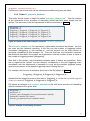
This folder should contain a single file called “scenario_database.txt”. This file contains
all the information of the scenarios of cascading effects that have been loaded into the
system. The structure of the file is presented in the format shown in Figure 4.
Ntriggering= 4
Nscenarios= 16
Triggering_1 Triggered_11 Triggered_21 Triggered_31
Triggering_2 Triggered_12 Triggered_22 Triggered_32
Triggering_3 Triggered_13 Triggered_23 Triggered_33
Triggering_n Triggered_1n Triggered_2n Triggered_mn
Figure 4 Format of the data contained in the file “scenario_database.txt”.
The scenario_database.txt file represents a data matrix structured as follows: the first
two rows are two headers indicating, in the first row the number of triggering events
considered (Ntriggering, in this example 4), and the second row the total number of
scenarios considered (in this example, 16). From the third row, the interaction scenarios
identified and included in the system are organized so that the number of rows is equal to
the number of triggering events (Ntriggering).
Note that in this system, only interactions between pairs of events are quantified. Each
row is organized as follows: the first element corresponds to the first triggering event
considered, and the subsequent m elements in a row are the possible triggered events
given the occurrence of the specific triggering event initiating the row.
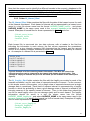
For example, the first row of scenarios (third row in the file) shown in Figure 4:
Triggering_1 Triggered_11 Triggered_21 Triggered_31
Indicate that the triggering event in this case is Triggering_1, and that three possible triggered
events are considered: Triggered_11 Triggered_21 Triggered_31.
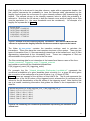
FIG shows an example of a scenario_database.txt file with some scenarios of cascading
effects considered for a given area.
Ntriggering= 3
Nscenarios= 9
Volcanic_unrest Earthquake Ground_deformation Landslide
Earthquake Landslide Fire Natech
Extreme_precipitation Floods Landslide Natech
Figure 5 Example of cascading scenarios
17