1
2 1. Introduction
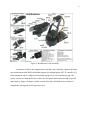
The Robotic Arm, known as the AL5A Robotic Arm features “base rotation, single plane
shoulder, elbow, wrist motion, a functional gripper, and optional wrist rotate.”[1]. There have
been several previous projects done with it, some with control via Windows Embedded [2][3]
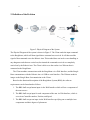
and one with Linux[4] [5]. The current project aims to interface it through a Beaglebone board
[6]. The Beaglebone is a low cost development board that is able to boot off of a popular
operating system such as Linux, and features network connectivity and serial interfacing.
It is intended to restore the state of the AL5A Arm to a point where one can control it
remotely through the Beaglebone on an Internet connection. Monitoring the Arm through a
Webcam is also within the scope of the project.
The AL5A Arm is operated via a series of Servo motors. The motors connect through the
SSC-32 Servo controller, featuring MiniSSC-II emulation, which utilizes an Atmega 186
processor [7]. Servos are placed in ports 1-5 on the board, which communicates off of a RS-232
serial interface. The effective Baud rate is either 2400 or 9600, with 115200 for PC
communication. Baud rate is defined as the oscillation of bits per second, which controls how
often electronic pulses are received [8].
Under Linux, the serial inputs are seen as ttyS0 or ttyS1. Searching with dmesg and
using grep can help find the serial input. From there, the minicom utility can be used to
interact with a serial interface, even if this interface is operated on USB protocol [9].
Since control of the SSC-32 chip is based on Atmel, AVR-libc is a library toolset to
interact on a serial interface. This utility allows debugging, as well as systems level
programming in C, the intended language of use for this project [10].