1
US005642481A
O
Umted States Patent [19]
[11] Patent Number:
Pedrizetti
[45] Date of Patent:
[54]
METHOD AND SYSTEM FOR VALIDATING
A MEMORY WINDOW 1N SYSTEM
ADDRESS SPACE
7
[ 51 Inventor
2
.
-
Jun. 24, 1997
5,371,892 12/1994 Petersen et a1. ...................... .. 395F100
5,448,710 9/1995 Liu .................... ..
395/497.03
-
sigma D Pedmem’ Issaquah’
5,450,570
9/1995 Richek et a1
5,497,490
3/1996 Harada etal
.... ..
395/700
5,519,851
5/1996 Bender eta]
.... ..
395/500
5,553,245
9/1996 Su et a1. ................................ .. 395/284
5,530,858
"
[73] Assignee: Microsoft Corporation, Redmond.
wash
5,642,481
...... .. 395/500
6/1996 Stanley et a1 .... ..
[21] APPL No; 412,558
_
Pnmary Examiner-Robert W. Beausoliel. Jr.
Assistant Examiner—A1bert Decady
Attorney, Agent, or Fim1-—Jones & Askew
[22] Filed:
[57]
[51]
52
Mar. 29,1995
Int. Cl.6 .................................................... .. G06F 11/34
US CL "
“ 95[18501;
4
{58} Fid d of Search
395
33,95,185 01 31985332
283 28;‘ 5’00 7'00’
’
’
’
’
8
3,929’
’
[56]
ABSTRACT
The Pmsent inven?m Pmvidcs a System and mcmod for
vahdaung system address space for adapter cards havmg an
mfonnatlon structure of a prede?ned format. Validation is
accomplished by verifying the prede?ned format of the
information structure via a memory window. Because veri
?cation is conducted via a memory window, it is only
successful when the address space of the memory window is
free of control by other components of the computer that
Refemnc es Cited
US. PATENT DOCUMENTS
4905182 2/1990 Fitch a al
4:931:923 6/1990 Fitch et a1.
5,056,060 10/1991 Fitch et a1.
395/650
would otherwise have interfered with veri?cation. Thus,
364/900
364/200
395/282
only a memory window that is suitable for adapter card
anocauon ‘5 vahdalcd‘
5,161,102 11/1992 Gri?in 61.31. ......................... .. 395/800
18 Chum‘s, 3 Drawmg' Sheets
52
REREAD A SE1‘ OF TUPLES OF TTE
CARD VIA THE MEMORY WINDOW
DE'T'ECT‘ A VALIDATION EVENT
l
RETRIIVE A hEMORY WINDOW
CALCULATE A SUBSEQUENT CYCLIC
REDUNDANCY CHECK VALUE BASED ON
THE DEAD TUPLES
56
ATTEMYI
TO VERIFYTRE ll PLE
FORMAT BY WALKING THOUGH
THE TUPLES VIA THE MEMORY
WINDOW_ ARE THE
ARE TIE
NO
HAVE 8
READASET OFT'UPIE OFTHE CARD
VIA THE MEMORY WINDOW
1
CALCULATE A CYCLIC REDUNDANCY
CHECK VALUE BASED ON THE READ
TUPIES
CYCLIC REDUNDANCY
CHECK VALUES
CONSISI‘ENI‘.’
ITERATTONS BEEN
COMPIEI'ED?
72
YES
ALLOCATE THE MEMORY WINDOW
READ THE SET OF TUPLES OF THE
CARD VIA m ALLOCATED MEMORY
M71
UNALLOCATE THE ALLOCATED
MEMORY WINDOW
W1ND( )W
DETERMBIE AN ALLOCATl-l) CYCLIC
REDUNDAN CY CHECK VALUE BASH) 0N
ARE THE CYCLIC
REDUNDANCY CHECK
VALUES CONSIS 1 EN 1 3
US. Patent
Jun. 24, 1997
5,642,481
Sheet 2 of 3
REREAD A SET OF TUPLES OF THE
CARD VIA THE MEMORY WINDOW
DETECT A VALIDATION EVENT
1
CALCULATE A SUBSEQUENT CYCLIC
I
REDUNDANCY CHECK VALUE BASED ON
THE READ TUPLES
RETRIEVE A MEMORY WINDOW
66\_>
L 54
56
ARETHE
CYCLIC REDUNDANCY
A'I'I‘ENIPT
TO VERIFY THE TUPLE
FORMAT BY WALKING THROUGH
THE TUPLES VIA THE MEMORY
WINDOW. ARE THE
TUPLES VALID
NO
CHECK VALUES
CONSISI‘ENT?
NO
‘)
YES
(
60
70
HAVE 8
ITERATIONS BEEN
READASET OFTUPLES OFTHECARD
VIA THE MEMORY WINDOW
CALCULATE A CYCLIC REDUNDANCY
CHECK VALUE BASED ON THE READ
TUPLES
COIVIPLETED?
"7
ALLOCATE THE MEMORY WINDOW
1
READ THE SET OF TUPLES OF THE
CARD VIA THE ALIDCATED MEMORY
WINDOW
62
so?
NJ
UNALLOCATE THE ALLOCATED
MEMORY WINDOW
DETERMINE AN ALLOCATED CYCLIC
REDUNDANCY CHECK VALUE BASED ON
THE READ TUPLES
‘L____ 76)
78
F%_2
ARE THE CYCLIC
REDUNDANCY CHECK
VALUES CONSISTENT?
NO
US. Patent
Jun. 24, 1997
Sheet 3 of 3
5,642,481
s4
3
INTERROGATING A MEMORY
MANAGER TO DETERMINE IF
A NEXT ADDRESS SPACE IS
AVAILABLE AS A MEMORY
WINDOW BETWEEN lIVfB AND
16 MB ?
86
INTERROGATING A NIEMORY
MANAGER TO DETERMINE IF
A NEXT ADDRESS SPACE IS
AVAILABLE AS A NIEMORY
WINDOW BETWEEN D0000 AND
F0000 ?
INTERROGATING A MEMORY
MANAGER TO DETERMINE IF
A NEXT ADDRESS SPACE IS
AVAILABLE AS A MEMORY
WINDOW BETWEEN C0000 AND
D0000 ?
ALLOCATE FIRST AVAILABLE MEMORY
ADDRESS SPACE AS MEMORY WINDOW
EVEN THOUGH IT CANNOT BE VERFIED
5,642,481
1
2
METHOD AND SYSTEM FOR VALIDATING
A MEMORY WINDOW IN SYSTEM
ADDRESS SPACE
ration often presented a complex series of technical tasks
because many personal computers cannot determine which
components are connected to the computer. Furthermore, the
connected components often failed to detect con?icts when
another component attempted to share the same resource.
TECHNICAL FIELD
Accordingly, a user typically had to resolve a resource
The present invention relates generally to adapter cards
for computing devices, and more particularly to an improved
system for, and method of, validating a memory window in
system address space to support adapter card con?guration.
con?ict by ?rst identifying the problem and thereafter
experimenting with hardware and software con?gurations in
an attempt to correct the resource con?ict.
More recently, a computer-implemented process for
dynamically con?guring adapter cards in a computer system
has been developed. This computer-implemented con?gu
ration process is disclosed by U.S. patent application Ser.
No. 08/250,698, which is commonly assigned with this
application and is incorporated herein by reference. In
BACKGROUND OF THE INVENTION
From the late 1970’s to the present day, the use of
computers has proliferated in businesses, homes, academia,
and a multitude of other environments. This proliferation has
been due, in part, to the development of standardized
accordance with the process disclosed in US. patent appli
cation Ser. No. 08/250,698, adapter cards are con?gured by
automatically collecting information from a card about its
con?guration when the card is inserted into an expansion
slot. On the basis of this information, the computer system
computers that can be mass produced at affordable costs and
that include expansion capabilities to support user customi
zation.
A standardized computer typically comprises a power
supply, a central processing unit, system address space,
input/output ports, and a card expansion system. The com
ponents of the computer communicate with one another by
transmitting and receiving signals on a system bus, which is
a group of electrical connections between the components.
then allocates resources to con?gure the card
25
Before a computer system can obtain con?guration infor
mation from a card, however, an address space, or “memory
window”, must be allocated to the card from system address
space. The memory window enables communications
Each component on the bus has its own address or set of
between the computer system and the card via the system
addresses and electronically monitors the bus for signals
coded with that address. Thus, each component receives all
signals that are transmitted on the bus, but responds only to
information.
Address space that is available for allocation to support
bus by providing an address for transmitting and receiving
adapter card con?guration is typically listed by a memory
manager of the computer system. As used herein, the phrase
available address space means system address space that is
signals with its address or set of addresses.
Card expansion systems typically comprise a plurality of
expansion slots connected to the system bus by means of an
expansion bus. The expansion bus may be of a variety of bus
standards, such as Industry Standard Architecture (ISA),
Extended Industry Standard Architecture (EISA), Small
Computer Systems Interface (SCSI) or Personal Computer
Memory Card International Association (PCMCIA). These
bus standards and others were developed by the computer
industry to allow a variety of adapter cards to be designed
listed by a computer system as available for adapter card
35
allocation, regardless of the actual suitability of the address
space for such allocation.
A problem associated with allocating available address
space as a memory window is that the space may already be
associated with another component of the computer. Such
allocation of address space creates a problem because con
for operation with computer systems through expansion
?guration information received through such a memory
busses.
As used herein, the phrase “adapter card” means a card
having a circuit board for installation in an expansion slot of
a computing device such that it operates in conjunction with
window will be inaccurate due to interference from the other
component, with which the address space is already asso
ciated.
For example, an address space associated with aread only
memory (ROM) socket may appear available when a ROM
45
the computer system to perform certain functions. Cormnon
types of adapter cards are video display adapters, disk
device is not plugged into the socket. However, decoding
logic of the ROM socket will attempt to drive the bus
controllers, expanded memory boards, serial/parallel
adapters, mouse controllers, network links and communica
through the socket’s bus drivers when information is com
tion adapters.
municated through that address space. Thus, if that address
When an adapter card is inserted into an expansion slot of
a computer, the card must be con?gured by allocating to the
space is allocated as a memory window for the computer
card, or to a controller of the card if one is present, certain
system resources with which it can communicate with other
components of the computer. Such system resources include
interrupts, direct memory access (DMA) channels, memory
55
addresses, and input/output (I/O) ports. Interrupts allow the
adapter card to interrupt the central processing unit, suspend
used herein, the term free address space means system
address space that is free from interference caused by other
components of the computer system. Therefore, a need
exists in the art for a system for, and method of, validating
system address space in a computer system to support
the current program and execute a set of instructions asso
ciated with the interrupt A direct memory access (DMA)
channel allows the adapter card to address memory without
the assistance of the central processing unit. Memory
addresses permit access to the card through system address
space. The input/output ports allow access to the card
through input/output address space.
In the past, the resources assigned to adapter cards were
generally con?gured manually by a user. Manual con?gu
system to communicate with an adapter card, the con?gu
ration information received through the memory window
will be inaccurate due to the interference caused by the
ROM socket’s bus drivers.
At present, however, no means exist for determining
whether available address space is free address space. As
adapter card con?guration.
65
SUMMARY OF THE INVENTION
The present invention provides a better solution to solving
the problems in the art described above by providing a
5,642,481
3
4
method and system for validating system address space for
represent speci?c electrical or magnetic elements. These
symbolic representations are the means used by those skilled
in the art of computer programming and computer construc
tion to most e?’ecu'vely convey teachings and discoveries to
adapter cards having an information structure of a pre
de?ned format. Validation is accomplished by verifying the
prede?ned format of the information structure via a memory
window. Because veri?cation is conducted via a memory
window, it: is only successful when the address space of the
memory window is free of control by other components of
the computer that would otherwise have interfered with
veri?cation. Thus, only a memory window that is suitable
for adapter card allocation is validated.
others skilled in the art.
For the purposes of this discussion, a process is generally
conceived to be a sequence of computer-executed steps
leading to a desired result. These steps generally require
physical manipulations of physical quantities. Usually,
10
though not necessarily, these quantities take the form of
electrical, magnetic, or optical signals capable of being
stored, transferred, combined, compared, or otherwise
In response to a validation event, the method and system
of the present invention ?rst retrieve an available address
space as a memory window. The information structure of an
manipulated. It is conventional for those skilled in the art to
adapter card is then veri?ed via the memory window as
having a prede?ned format. If the information structure is
not of the prede?ned format as veri?ed via the memory
window, it is assumed that the memory window is associated
with another component of the computer and is not suitable
refer to these signals as bits, values, elements, symbols,
characters, terms, numbers, records, ?les or the like. It
should be kept in mind, however, that these and similar
terms should be associated with appropriate physical quan
for allocation to support adapter card con?guration.
merely conventional labels applied to physical quantities
tities for computer operations, and that these terms are
Accordingly, a next available address space is retrieved as 20 that exist within and during operation of the computer.
another memory window until the information structure of
It should also be understood ?iat manipulations within the
the adapter card is veri?ed via a memory window as having
computer are often referred to in terms such as adding,
the prede?ned format.
Thus, it is an object of the present invention to provide a
system for, and method of, validating a memory window in
system address space.
It is another object of the present invention to provide a
system for, and method of, validating a memory window for
adapter cards having an information structure of a pre
de?ned format.
It is a fm'ther object of the present invention to provide a
25
operations described herein are machine operations per
interacts with the computer. The machines used for perform
ing the operation of the ‘present invention, as will be
understood, include general purpose digital computers or
other similar computing devices.
system for, and method of, validating a memory window for
In addition, it should be understood that the programs,
35
appended claims.
BRIEF DESCRIPTION OF THE DRAWlNG
processes, methods, etc. described herein are not related or
limited to any particular computer or apparatus. Rather,
various types of general purpose machines may be used with
programs constructed in accordance with the teachings
described herein. Similarly, it may prove advantageous to
construct specialized apparatus to perform the method steps
described herein by way of dedicated computer systems with
hard-wired logic or programs stored in nonvolatile memory,
such as read only memory.
This invention will be described with speci?c reference to
a system for, and method of, validating a memory window
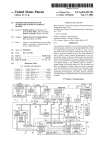
FIG. 1 is a diagrammatic view of the components of a
computer system used in connection with the preferred
embodiment of the present invention for validating a
memory window.
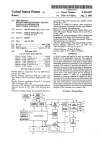
FIG. 2 is a logical ?ow diagram of the process for
validating a memory window in accordance with the present
invention.
FIG. 3 is a logical ?ow diagram of the process for
retrieving a memory window for validation in accordance
with the present invention.
be understood that no involvement of a human operator is
necessary or even desirable in the present invention. The
formed in conjunction with a human operator or user that
adapter cards having an information structure of a pre
de?ned format to support adapter card con?guration.
Further objects, features and advantages of the present
invention will become apparent upon reviewing the follow
ing description of the preferred embodiments of the
invention, when taken in conjunction with the drawings and
comparing, moving, etc. which are often associated with
manual operations performed by a human operator. It must
to support PCMCIA (Personal Computer Memory Card
International Association) adapter card con?guration. The
standards for PCMCIA adapter cards and associated systems
are incorporated herein by reference and may be obtained
50
from the Personal Computer Memory Card International
Association, 1030 E. Duane, Suite G, Sunnyvale, Calif.
94086. However, this invention should be also understood as
applicable to validating a memory window to support con
?guration of other types of adapter cards that have a pre
DETAILED DESCRIPTION
55 de?ned information structure.
Referring now in more detail to the drawings, in which
Turning ?rst to the nomenclature of the speci?cation, the
like numerals refer to like parts throughout the several
detailed description which follows is represented largely in
terms of processes and symbolic representations of opera
tions by conventional computer components, including a
central processing unit (CPU) associated with a general
purpose computer system, memory storage devices for the
CPU, and connected pixel-oriented display devices. These
operations include the manipulation of data bits by the CPU
views, FIG. 1 shows the components of the preferred
operating environment, a computer system 12 with a PCM
CIA card expansion system 13. The computer system 12
comprises a central processing unit (CPU) 14 that operates
the computer system 12 in conjunction with an operating
system 18 to retrieve, process, store and display data.
and the maintenance of these bits within data structures
The CPU 14 is typically implemented as a
resident in one or more of the memory storage devices. Such 65 microprocessor, such as the models 80386 or 80486 manu
data structures impose a physical organization upon the
collection of data bits stored within computer memory and
factured by Intel Corporation, Santa Clara, Calif. The CPU
14 communicates control, address, and data signals with the
5,642,481
5
6
operating system 18 and with the remaining components of
con?guration. The controller card 36, in turn, maps the
allocated memory window onto the adapter cards 42 during
the con?guration process. It will be understood by those
skilled in the art, however, that a memory window can be
directly allocated for each adapter card when they commu
nicate directly with the system bus 15.
the computer system 12 through a system bus 15.
The operating system 18 comprises a set of computer
programs that control the internal functions of the computer
system 12, thereby allowing the computer 12 to run appli
cation software (not shown). In the preferred embodiment,
The PCMCIA adapter cards 42 each include a card
information structure (C18) 46 containing a series of pre
de?ned information structures called tuples 48. The tuples
48 are of variable length and are stored in tuple sets. Each
tuple 48 starts with a byte tuple code, which is usually
followed by a link byte that indicates the relative offset to the
next tuple of the set. The byte tuple code is not followed by
a link byte when the next tuple immediately follows or when
the present tuple is the last of a tuple set.
In the preferred embodiment, the process of the present
invention for validating system address space to support
adapter card con?guration is installed in a mass storage
the operating system 18 includes a memory manager 25,
from which available address space can be ascertained. It
will be understood by those skilled in the art, however, that
the present invention can directly ascertain available address
space by well known methods if the operating system 18
does not include a memory manager 25.
The operating system 18 is installed in a mass storage
device, such as a hard disk drive, a ?oppy disk drive, or a
ROM chip. During boot up (initialization) of the computer
system 12, the operating system 18 is loaded into system
address space 16.
In the preferred embodiment, the operating system 18 is
a graphic-based operating system capable of automatically
con?guring adapter cards. To accommodate automatic
device, such as a hard disk drive, a ?oppy disk drive. or a
20
validation sequence is loaded into system address space 16
and executed by the CPU 14. It will be understood by those
skilled in the art. however, that the process of the present
adapter card con?guration, the preferred operating system
18 includes a driver 19 for detecting the insertion or removal
of adapter cards from the computer system 12 and for
allocating con?guration resources. The function and opera
tion of the driver 19 are described in detail in US. patent
invention can be stored in the controller card 36 or in each
25
application Ser. No. 08/250,698, which is already incorpo
rated herein by reference.
An example of an operating system capable of automati
cally con?guring adapter cards is the “WINDOWS 9 ”
operating system, which is due to be released by the assignee
in this application, Microsoft Corporation, Redmond, Wash.
Further information regarding the “WINDOWS 95” oper
ating system and its automatic adapter card con?guration is
available from a variety of publications, including INSIDE
WINDOWS 95 by Adrian King, which is published by
30
to step 52. At step 52 a validation event is detected. In the
preferred embodiment, the validation events are the genera
tion of an interrupt signal when a ?rst PCMCIA adapter card
42 is inserted into an expansion slot 40 or during the ?rst
boot of a computer system 12 that has a preinstalled PCM
CIA adapter card 42. If an interrupt signal is not generated
35
upon the insertion of a PCMCIA adapter card 42, the
expansion slots 40 are intermittently polled by the driver 19
to determine if a PCMCIA adapter card 42 has been inserted.
The expansion slots 40 are preferably polled every two
seconds in such a case.
Upon the occurrence of a validation event, a next avail
able address space is identi?ed from the memory manager
25 and retrieved as a memory window at step 54, the process
for which is described below in detail. As used herein, the
phrase next available address space means the ?rst address
space available above either a preset starting address or a
on the computer system 12 and performs input/output ser
vices as requested by those programs. These functions and
operations of conventional BIOS programs are Well known
and will not be further described herein.
displayed in electronic and printed form, respectively.
adapter card when no controller card 36 is present.
As shown by FIG. 2, the method of the present invention
for validating adapter cards begins at step 50 and proceeds
Microsoft Press and incorporated herein by reference.
A basic input/output system (BIOS) program 20 is stored
in system address space 16 along with the operating system
18. The BIOS program 20 supplies the device-level control
or support services for the primary input/output devices of
the computer during the boot “initialization” process. After
a boot, the BIOS program 20 accepts requests from appli
cation programs and from the operating system 18 running
A series of peripheral ports 22 are provided for receiving,
transmitting and displaying data. Data is received through a
keyboard port 24, an external disk drive port 30, or a
network port 32. Data is transmitted from the computer
system 12 through the network port 32 and a phone port 34,
which is typically connected to a modem (not shown). A
monitor port 26 and a printer port 28 allow data to be
ROM chip. During con?guration operations, the memory
50
55
previous address space that failed validation. Furthermore,
the term retrieve means to get, either by actively procuring
or by receiving.
The memory window to be validated is preferably 4
kilobytes in size. It will be understood by those skilled in the
art, however, that the size of the memory window can be
varied within the scope of the present invention.
Proceeding to decisional step 56, an attempt is made to
verify the format of the tuples 48 via the memory window.
The purpose of verifying the tuple format is to test the
memory window for interference caused by bus contention,
which would result in a veri?cation failure. Thus. the present
invention assumes that the tuples 48 of the PCMCIA adapter
card 42 are of the proper prede?ned format and thus that a
failure of veri?cation is due to interference with the memory
window.
The PCMCIA card expansion system 13 comprises a
controller card 36 connected by a PCMCIA expansion bus
38 to a pair of expansion slots 40 for receiving PCMCIA
adapter cards 42. The controller card 36 is connected to the
system bus 15 and interfaces the CPU 14 with the PCMCIA
Veri?cation of the tuple format is attempted by walking
adapter cards 42. Thus, the controller card 36 receives,
through all the tuples 48 of the PCMCIA adapter card 42 via
processes and retransmits information between the PCMCIA
the memory window. As used herein the phrase walking
adapter cards 42 and the system bus 15. Therefore, the CPU
14 accesses the PCMCIA adapter cards 42 through the 65 through means to step through the tuple sets one at a time
looking for control tuples that indicate a link to other tuple
controller card 36, and it is the controller card 36 to which
sets and counting the valid tuple sets. Veri?cation is suc
a memory Window must be allocated for adapter card
5,642,481
7
8
cessful if at least one valid set of tuples exists and the tuple
provides a last check that is especially useful because it is I
sets can be walked through Without an error.
An error occurs if the ?rst tuple is not a CISTPL-DEVICE
further spaced apart in time than the earlier cyclic redun
tuple and one of the following three exceptions does not
apply, which are allowed for compatibility with existing C18
46 structures. First, the CISTPL-DEVICE tuple may be
Step 76 leads to decisional step 78 where it is determined
whether the allocated redundancy check value is consistent
with the redundancy check value. If the redundancy check
values are not consistent, the NO branch of decisional step
78 leads to step 80 where the allocated memory Window is
unallocated. Step 80 returns to step 54 where another
memory window is retrieved. If the redundancy check
values are consistent at decisional step 78, validation is
complete with no bus contention having been detected for
the memory window, and ?re YES branch leads to the end
of the validation process at step 81.
As best shown by FIG. 3, the process for retrieving a
memory window begins at step 82 and proceeds to deci
sional step 84. At decisional step 84, the memory manager
25 is interrogated to determine if a next address space is
available between the 1 Meg and the 16 Meg addresses of
dancy checks.
preceded by an arbitrary number of CISTPL-NULL tuples.
Second, if attribute memory is separate from common
memory, the ?rst tuple in attribute memory can be a
CISTPL-END tuple if common memory begins with a
10
CISTPL-LINKTARGET tuple. Attribute and common
memory are ditferent areas of memory speci?ed by the
PCMCIA architecture of the adapter card 42. Third, to
support old cards formatted by the “MEMCARD” utility,
which is sold by the assignee in this application, Microsoft
Corporation, Redmond, Wash, the ?rst tuple may also be a
CIS'I‘PDLINKTARGE'I‘ tuple. In each of these exceptions,
the CISTPL-DEVICE tuple must follow the exceptions.
Additionally, an error occurs if the target of a link tuple
does not start with a CIS'I'PL-LlNK'I‘ARGE'I‘ tuple. Thus, if
20
the target is not valid, an error occurs. Furthermore, an error
occurs if more than 256 tuples are walked through because
that is the prede?ned limit.
If the format of the tuples 48 is veri?ed, the YES branch
of decisional step 56 leads to step 60. If an error occurs and 25
the tuple format could not be veri?ed, it is assumed that the
memory window is not ?'ee of bus contention, and the NO
branch of decisional step 56 returns to step 54 where another
memory window is retrieved.
At step 60, a tuple set is read via the memory window. A
cyclic redundancy check value is then calculated at step 62
from the tuple set that was read at step 60. Next, at step 64
the tuple set is reread via the memory window. At step 66,
a subsequent cyclic redundancy check value is calculated
from the tuple set that was read at step 64. It will be
understood by those skilled in the art that another type of
address space is retrieved as the memory window, and the
YES branch of decisional step 84 returns to step 56 for
validation of the memory window. If a next address space is
not available between the 1 Meg and the 16 Meg addresses,
the NO branch of decisional step 84 leads to decisional step
86.
At decisional step 86, the memory manager 25 is inter
rogated to determine if a next address space is available
between the D0000 and the F0000 addresses of system
address space 16. If a next address space is available
between the D0000 and the F0000 addresses, that next
address space is retrieved as the memory window, and the
YES branch of decisional step 86 returns to step 56 for
35
validation of the memory window. If a next address space is
not available between the D0000 and the F0000 addresses,
the NO branch of decisional step 86 leads to decisional step
88.
At decisional step 88, the memory manager 25 is inter
error detection method can be used within ?ie scope of the
present invention.
Proceeding to decisional step 68, it is determined whether
the subsequent cyclic redundancy check value is consistent
with the cyclic redundancy check value. If the cyclic redun
rogated to determine if a next address space is available
between the C0000 and the D0000 addresses of system
address space 16. If a next address space is available
dancy check values are not consistent, the NO branch of
decisional step 68 returns to step 54 where another memory
Window is retrieved. If the cyclic redundancy check values
are consistent, the subsequent cyclic redundancy check
value becomes the cyclic redundancy check value, and the
YES branch of decisional step 68 leads to decisional step 70.
At decisional step 70, it is determined whether eight (8)
iterations, for determining if the subsequent error detection
system address space 16. If a next address space is available
between the 1 Meg and the 16 Meg addresses, that next
45
between the C0000 and the D0000 addresses, that next
address space is retrieved as the memory window, and the
YES branch of decisional step 88 returns to step 56 for
validation of the memory window. If a next address space is
50
not available between the C0000 and the D0000 addresses,
the NO branch of decisional step 88 leads to step 90.
It will be understood that step 90 is reached only when a
memory window from the system address space 16 could
value is consistent with the error detection value, have been
not be validated. In such a case, the ?rst available address
completed. If eight (8) iterations have not been completed,
space between the 1 Meg and the 16 Meg addresses is
the NO branch of decisional step 70 returns to step 64 where
the tuple set is reread via the memory window. If eight (8)
iterations have been completed, the YES branch of deci
sional step 70 leads to step 72.
At step 72, the memory window is allocated to support
allocated as a default.
adapter card con?guration. The perfunctory steps of alloca
tion are preferably carded out by the operating system 18.
Thus, as used herein, the term allocate means to allocate the
memory window or to instruct the proper component of the
computer system 12 to allocate the memory window. Pro
ceeding to step 74, the tuple set is read via the allocated
memory window. An allocated cyclic redundancy check
55
It will be further understood that the order in which the
memory manager 25 is interrogated for available address
space may be varied within the scope of the present inven
tion. Interrogating the memory manager 25 ?rst for available
address space between the 1 Meg and the 16 Meg addresses
is preferred because that region of system address space 16
is most likely to have a valid memory window. Similarly, the
region of system address space 16 between the D0000 and
the F0000 addresses is more likely to have a valid memory
window than the region between the C0000 and the D0000
addresses. The remaining regions of system address space
value is then calculated at step 76 from the tuple set that was 65 16 are unlikely to have a valid memory window.
read at step 74. Due of the length of time that the mechanics
From the foregoing description of the preferred embodi
of allocation require, the allocated cyclic redundancy check
ments and the several alternatives, other alternative con
5,642,481
10
structions of the present invention may suggest themselves
detection value becoming the error detection value
and going to step (i); otherwise
to those skilled in the art. Therefore, the scope of the present
invention is to be limited only to the claims below and the
(2) returning to step (b);
equivalents thereof.
(i) determining if N iterations of determining if the
I claim:
1. A method of validating system address space of a
subsequent error detection value is consistent with the
error detection value have been completed;
computer system comprising the steps of:
(1) if N iterations have been completed, going to step
(j); otherwise
(2) returning to step (f); and
(j) allocating the memory window.
(a) detecting a validation event;
(b) retrieving a next address space as a memory window;
(0) attempting to verify via the memory window that an
4. The method of validating system address space of a
information structure of an adapter card is of a pre
computer system as recited in claim 3 wherein N is an
de?ned format;
(l) if the information structure is of the prede?ned
format, going to step (d); otherwise
(2) returning to step (b);
integer between, and including 3 and 10.
15
integer of 8.
(d) reading the information structure via the memory
6. The method of validating system address space of a
computer system as recited in claim 3 further comprising the
window;
(e) calculating an error detection value based on the read
steps of:
information;
(k) reading the information structure via the allocated
(f) rereading the information structure via the memory
memory window;
window;
(g) calculating a subsequent error detection value based
on the reread information; and
(h) determining if the subsequent error detection value is
(1) calculating an allocated error detection value based on
the information read via the allocated memory window;
25
cated error detection value is not consistent with the
error detection value, unallocating the memory window
window; otherwise
and returning to step (b).
(2) returning to step (b).
7. The method of validating system address space of a
computer system as recited in claim 1 or 3 wherein the
adapter card is a PCMCIA card having at least one triple of
2. The method of validating system address space of a
the prede?ned format.
35
(j) calculating an allocated error detection value based on
the information read via the allocated memory window;
and
9. The method of validating system address space of a
computer system as recited in claim 1 or 3 wherein the
memory window is 4 ln'lobytes in size.
10. The method of validating system address space of a
computer system as recited in claim 1, 2, 3 or 6 wherein the
error detection value, the subsequent error detection value,
cated error detection value is not consistent with the
error detection value, unallocating the memory window
and returning to step (b).
45 and the allocated error detection value are calculated by a
cyclic redundancy check.
computer system comprising the steps of:
11. The method of validating system address space of a
(a) detecting a validation event;
computer system as recited in claim 1 or 3 wherein retriev
(b) retrieving a next address space as a memory window;
ing a next address space as a memory window as recited in
(c) attempting to verify via the memory window that an
step (b) comprises the steps of:
information structure of an adapter card is of a pre
(b) (1) interrogating a memory manager to determine if a
de?ned format;
(1) if the information structure is of the prede?ned
format, going to step (d); otherwise
(2) returning to step (b);
(d) reading the information structure via the memory
55
(B) going to Step (bXZ);
(e) calculating an error detection value based on the read
(2) interrogating a memory manager to determine if a next
address space is available below the M address in
information;
(f) rereading the information structure via the memory
system address space;
Window;
(A) if a next address space is available below the M
address, retrieving the next address space as the
(g) calculating a subsequent error detection value based
on the reread information;
(h) determining if the subsequent error detection value is
consistent with the error detection value;
next address space is available above an address of M
in a system address space;
(A) if a next address space is available above the M
address, retrieving the next address space as the
memory window and going to step (c); otherwise
window;
(1) if the subsequent error detection value is consistent
with the error detection value, the subsequent error
8. The method of validating system address space of a
computer system as recited in claim 7 wherein the pre
de?ned format of the information structure is veri?ed by
walking through the tuples of the PCMCIA card.
(k) determining if the allocated error detection value is
consistent with the error detection value, if the allo
3. A method of validating system address space of a
and
(In) determining if the allocated error detection value is
consistent with the error detection value, if the allo
consistent with the error detection value;
(1) if the subsequent error detection value is consistent
with the error detection value, allocating the memory
computer system as recited in claim 1 further comprising the
steps of:
(i) reading the information structure via the allocated
memory window;
5. The method of validating system address space of a
computer system as recited in claim 3 wherein N is an
65
memory window and going to step (0); otherwise
(B) no memory window could be veri?ed, going to step
(b)(3); and
(3) reinterrogating the memory manager and allocating a
?rst available address space above the M address.
5,642,481
11
12
12. The method of validating system address space of a
computer system as recited in claim 11 wherein M is an
(b) an expansion slot for receiving an adapter card with an
information structure having a prede?ned format, the
expansion slot connected to the system bus;
address of 1 Meg.
13. ‘The method of validating system address space of a
(0) means for retrieving a next address space as a memory
computer system as recited in claim 1 or 3 wherein retriev
window;
ing a next address space as a memory window as recited in
step (b) comprises the steps of:
.
(b) (1) interrogating a memory manager to determine if a
next address space is available between an address of
M and an address of L in a system address space;
(A) if a next address space is available between the M
and the L addresses, retrieving the next address space
as the memory window and going to step (c); oth
erwise
(B) going to step (b)(2);
(d) means for verifying via the memory window that the
information structure of the adapter card is of the
prede?ned format;
10
which the information structure has been veri?ed as
having the prede?ned format;
15
20
(B) going to step (b)(3);
(3) interrogating a memory manager to determine if a next
address space is available between an address of P and
25
the address of Q in system address space;
30
(4) reinterrogating the memory manager and allocating a
computer system comprising:
(a) a central processing unit connected to system address
space of a computer system by a system bus;
(k) means determining if the allocated error detection
value is consistent with the error detection value; and
(1) means for unallocating the memory window if the
allocated error detection value is not consistent with the
error detection value.
(b)(4); and
?rst available address space between the M and the L
addresses.
14. The method of validating system address space of a
computer system as recited in claim 13 wherein M is an
address of 1 Meg, L is an address of 16 Meg, P is a
hexadecimal address of C0000, Q is a hexadecimal address
of D0000 and R is a hexadecimal address of F0000.
15. A system for validating system address space of a
16. The system for validating system address space of a
computer system as recited in claim 15 further comprising:
(i) means for reading the information structure via the
allocated memory window;
(i) means for calculating an allocated error detection value
based on the information read via the allocated memory
window;
(A) if a next address space is available between the P
and the Q addresses, retrieving the next address
space as the memory window and going to step (c);
otherwise
(B) no memory window could be verified, going to step
(f) means for reading the information structure via the
memory window at dilferent time intervals;
(g) means for calculating an error detection value based
on the read information at each time interval; and
(h) means for determining if the error detection values are
consistent with one another.
(2) interrogating a memory manager to determine if a next
address space is available between an address of Q and
an address of R in system address space;
(A) if a next address space is available between the Q
and the R addresses, retrieving the next address
space as the memory window and going to step (0);
otherwise
(e) means for allocating the memory window through
35
17. The system for validating system address space of a
computer system as recited in claim 15 further comprising a
controller card connected to the central processing unit and
the system address space by the system bus, and wherein the
expansion slot is connected to the system bus through the
controller card.
18. The system for validating system address space of a
computer system as recited in claim 17 wherein the adapter
card is a PCMCIA card having at least one tuple of the
prede?ned format.