1
6
1
Pinnacle Cart Core Design Manual
Introduction
Welcome to the Pinnacle Cart design documentation for cart versions 3.7 and above. Within this
document we will cover the core principles behind the templating system, how the skins
themselves are structured, how to construct your own skin, as well provide key things to know
when building the skins and also some tools that will assist in the skin creation. It is the intent of
this documentation to be used by designers who do not wish to use "Design Mode" to create their
skins and strictly plan on using raw file editing and/or managing. We strongly encourage that you
commit to this method 100% to prevent any conflicts that can occur, which we will touch on later
in this document.
1.1
Overview
The templating engine is built around the concept of being able to push core changes to the skin
templates during an update/upgrade without interrupting the design that has been created. To
achieve this, we have created a tiered or "layered" design platform that compiles into one final
skin by essentially stacking on top of each other and getting pushed into a final compilation
directory.
The primary folders used to achieve this are the following:
Base template folder: \content\engine\design
Prebuilt template folder: \content\skins\(Prebuilt template name)
Custom template folder: \content\skins\_custom
Compiled folder: \content\cache\skins\(Custom template name)
The first three skins get layered on top of each other during compilation of the skin then get
saved into the \content\cache\skins\(Prebuilt template name) folder where (Prebuilt template
name) is equal to the name of your active skin. An example name would look like
\content\cache\skins\SimpleGreen . In this process the core design is pulled
from \content\engine\design then any changes from \content\skins\(Prebuilt template name)
are added on top with a higher priority. After this occurs, any changes from
\content\skins\_custom are then added as the final layer with the highest priority and the
resulting skin files are then fully published into \content\cache\skins\(Prebuilt template name)
which is what the end user will see. Below is are more visual examples of how this would work
with any files and/or elements:
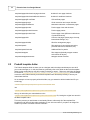
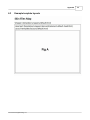
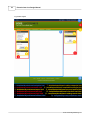
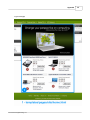
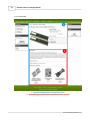
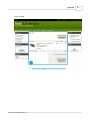
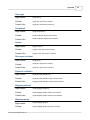
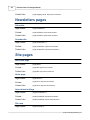
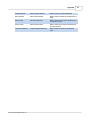
Example A
Base says header is
gray
Prebuilt says header is
teal
Custom says header is
pink
Header is pink due to
Custom having highest
priority
© 2011 Desert Dog Marketing, LLC