1
• Be sure to route the power cord to the outlet in a way that will prevent the cord from being tripped over or interfered with by
chairs or other furniture.
• Using this device at an incorrect altitude setting could result in airflow pressures higher or lower than the prescribed setting.
Always verify the altitude setting when travelling or relocating, and adjust the system accordingly.
• This device is activated when the power cord is connected.
• For safe operation when using a humidifier, the humidifier must always be positioned below the breathing circuit connection at
the mask and the air outlet on the device. The humidifier must be level for proper operation.
Note: Please see the “Limited Warranty” section of this manual for information on warranty coverage.
Cautions
A Caution indicates the possibility of damage to the device.
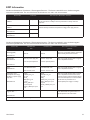
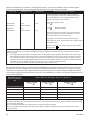
• Medical electrical equipment needs special precautions regarding EMC and needs to be installed according to EMC information.
Contact your home care provider regarding EMC installation information.
• Mobile RF communications equipment can affect medical electrical equipment.
• Pins of connectors marked with the ESD warning symbol shall not be touched and connections shall not be made without
special precautions. Precautionary procedures include methods to prevent build-up of electrostatic charge (e.g., air conditioning,
humidification, conductive floor coverings, non-synthetic clothing), discharging one’s body to the frame of the equipment or
system or to earth. It is recommended that all individuals that will handle this device understand these precautionary procedures
at a minimum as part of their training.
• Before operating the device, ensure that the SD card cover is replaced whenever any of the accessories such as the Link Module
or Modem are not installed. Refer to the instructions that came with your accessory.
• Condensation may damage the device. If this device has been exposed to either very hot or very cold temperatures, allow it to
adjust to room temperature (operating temperature) before starting therapy. Do not operate the device outside of the operating
temperature range shown in the Specifications.
• Do not use extension cords with this device.
• Do not place the device directly onto carpet, fabric, or other flammable materials.
• Do not place the device in or on any container that can collect or hold water.
• A properly installed, undamaged reusable foam inlet filter is required for proper operation.
• Tobacco smoke may cause tar build-up within the device, which may result in the device malfunctioning.
• Dirty inlet filters may cause high operating temperatures that may affect device performance. Regularly examine the inlet filters as
needed for integrity and cleanliness.
• Never install a wet filter into the device. You must ensure sufficient drying time for the cleaned filter.
• Always ensure that the DC power cord securely fits into your therapy device prior to use. Contact your home care provider or
Philips Respironics to determine if you have the appropriate DC cord for your specific therapy device.
• When DC power is obtained from a vehicle battery, the device should not be used while the vehicle’s engine is running. Damage
to the device may occur.
• Only use a Philips Respironics DC Power Cord and Battery Adapter Cable. Use of any other system may cause damage to the
device.
Contraindications
When assessing the relative risks and benefits of using this equipment, the clinician should understand that this device can deliver
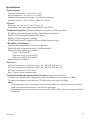
pressures up to 20 cm H2O. In the event of certain fault conditions, a maximum pressure of 30 cm H2O is possible. Studies have
shown that the following pre-existing conditions may contraindicate the use of CPAP therapy for some patients:
• Bullous Lung Disease
• Pathologically Low Blood Pressure
• Bypassed Upper Airway
• Pneumothorax
• Pneumocephalus has been reported in a patient using nasal Continuous Positive Airway Pressure. Caution should be used when
prescribing CPAP for susceptible patients such as those with: cerebral spinal fluid (CSF) leaks, abnormalities of the cribriform
plate, prior history of head trauma, and/or pneumocephalus. (Chest 1989; 96:1425-1426)
The use of positive airway pressure therapy may be temporarily contraindicated if you exhibit signs of a sinus or middle ear
infection. Not for use with patients whose upper airways are bypassed. Contact your health care professional if you have any
questions concerning your therapy.
User Manual
3