1
Linux System Administrator’s Survival Guide
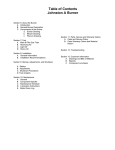
Figure 3.1
The boot and root directory entries for 1.44M floppy disk images, which are used to create the boot and root floppy disks needed to install Linux.
The types of boot kernels usually available are described in a file in the kernel image directories (usually called README, READ.ME, or WHICH.ONE). The
boot kernel images are named to reflect the hardware for which they have drivers installed into the kernel. For example, the scsi kernel image has drivers in
the kernel for SCSI-based systems; if you are on a PC that has a SCSI controller, hard disk, and CD-ROM, this is the image you want to copy to your boot
floppy disk. The number of boot images available is quite large. These are the primary images available from most CD-ROMs and FTP sites and the
hardware they are designed to handle:
aztech
IDE and SCSI hard disk drivers, and Aztech non-IDE CD-ROM support, including Aztech, Okana, Orchid, and Wearnes non-IDE CD-ROM
drives
bare
IDE hard disk drivers only (no CD-ROM support)
cdu31a
IDE and SCSI hard disk drivers, with a Sony CDU31 or Sony CDU33a CD-ROM drive
cdu535
IDE and SCSI hard disk drivers, with a Sony 535 or Sony 531 CD-ROM drive
idecd
IDE and SCSI hard disk drivers, with IDE or ATAPI CD-ROM drive
Mitsumi
IDE and SCSI hard disk drivers, with a Mitsumi CD-ROM drive
net
IDE hard disk drivers and Ethernet network card drivers
sbpcd
IDE and SCSI hard disk drivers with Sound Blaster Pro or Panasonic CD-ROM drivers. This image is for CD-ROM drives run off a Sound
Blaster card (as supplied in many Sound Blaster multimedia kits).
scsi
IDE and SCSI hard drivers with SCSI peripherals (CD-ROM drives)
scsinet1
IDE and SCSI hard disk drivers, SCSI CD-ROM driver, and Ethernet drivers for networking. The SCSI drivers support Adaptec 152X, 1542,
1740, 274x, and 284x adapters, Buslogic adapters, EATA-DMA adapters (such as DPT, NEC, and AT&T cards), Seagate ST-02 adapters,
and Future Domain TCC-8xx and 16xx adapters. SCSI adapters compatible with any of these cards will also work.
scsinet2
IDE and SCSI hard disk drivers, SCSI CD-ROM driver, and Ethernet drivers for networking. The SCSI drivers support NCR5380-based
adapters, NCR 53C7 and 8xx adapters, Always IN2000 adapter, Pro Audio Spectrum 16 adapter, Qlogic adapter, Trantor T128, T128F, and
T228 adapters, Ultrastor adapters, and the 7000 FASST adapters. Compatibles of any of these cards should also work.
xt
IDE and IBM PC-XT-compatible hard disk drivers
With some distributions, an extension is added to the kernel image name to indicate the floppy disk type. For example, if the kernel image is for a 1.44M
floppy disk, it will have the filetype .144 as part of the name. Similarly, a filetype of .12 indicates a 1.2M image. You cannot interchange these images, or
the diskette will be useless (in other words you cannot load a .12 image onto a 1.44M diskette). Most distributions don't bother with this convention, since
the files are in the appropriate directories for the floppy disk size.
You have fewer choices for the root floppy image. Most distributions include four basic images, although a few more esoteric images also appear from time
to time. Each of the root images has the disk size as part of its name (color144 and color12, for example). The basic root floppy images are the following:
•
The color image offers a full-screen color-based installation script for installing Linux.
•
The tape image is designed to support Linux installation from a cartridge tape. This kernel has limited functionality and depends on the type of
tape drive used. Typically, QIC drives are supported, but users of some models have reported problems.
Página 19