1
3. THE FIRST FLIGHT
3.1 CHOOSE THE RIGHT PLACE
We recommend that the first flight with your ARTIK is made on a smooth
slope (aschool slope) or in your usual flying area accompanied by a qualified
instructor.
3.2 PREPARATION
Repeat the procedures detailed in chapter 2 (UNPACKING AND ASSEMBLY)
in order to prepare your equipment.
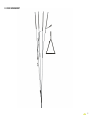
Choose a location which is appropriate for the direction of the wind. Position
the paraglider as if it were part of a large circle, taking into account the shape
of the canopy in flight. All this will assist in a trouble free take-off.
3.6 LANDING
The ARTIK lands excellently, it transforms the wing speed into lift on the
pilot’s demand, allowing an enormous margin of error. You will not have to
wrap the brake lines around your hand to get greater braking efficiency.
3.3 FLIGHT PLAN
Draw out a flight plan before take-off in order to avoid possible flight errors.
3.4 PRE-FLIGHT CHECK LIST
Once you are ready, but before you take-off, carry out another equipment
inspection. Ensure correct installation of all equipment and that all lines are
free of hindrances or knots. Check that the weather conditions are suited for
your flying skills.
3.5 WING INFLATION, CONTROL, AND TAKE-OFF
Smoothly and progressively inflate the wing (chapter 2.6 INSPECTION AND
WING INFLATION ON THE GROUND). The ARTIK inflates easily and does
not require excessive energy. It does not tend to over-take you, so the wing
inflation phase is carried out without anguish. These take off characteristics
provide a perfect control phase and enough time for the pilot to decide
whether to accelerate and take off.
Whenever the wind speed allows it, we recommend a reverse launch
technique, this type of launch allows you to carry out a better visual check
of the wing. The ARTIK is especially easy to control in this position in strong
winds. However, wind speeds up to 25 to 30 km/h are considered strong and
extra consideration should be given to any thought of flight.
Preparation and positioning of the wing on the take off is especially important.
7