1
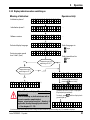
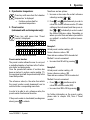
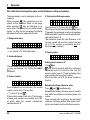
5. Operation 5.7 Defrosting The Leica CM3050 S has 3 (instruments without specimen cooling: 2) different defrosting options. - Automatic chamber defrost cycle - Manual chamber defrost cycle - Specimen head defrosting (manual) - instruments with specimen cooling only. Read the safety instructions in chapter 2.3.7 Defrosting / frozen specimens ! Make sure to remove sensitive specimens from the cryochamber before the defrost cycle starts! 5.7.1 Automatic chamber defrost cycle The specimen head refrigeration is automatically switched back on when: at least 4 hours have passed since the defrost cycle was completed; and the actual chamber temperature deviates less than 5 K from set value. After the specimen head refrigeration has been switched back on, the specimen head temperature rises briefly to +10 °C and then decreases until it reaches the set value. Switching specimen cooling back on immediately after defrosting: As soon as the chamber defrost cycle is completed, specimen cooling can be switched back on immediately: Press until menu item Set specimen temperature is displayed: S E T T EMP O T - 3 5 ° C d - T EMP O T - 3 5 ° C dd The automatic defrost cycle is carried out once every 24 hours at the preselected time. (For details see chapter 5.3.4 Menu functions items 6 and 7). Press During the defrost cycle, the corresponding asterisk is displayed inversely: Specimen cooling is switched back on. C T - 3 0 ° C n n H OM E O T - 3 5 ° C dd Once the defrost cycle is finished, the instrument automatically switches back to refrigeration. Instruments with specimen cooling: When defrosting starts, to avoid icing the specimen head is automatically adjusted to a temperature between -10 °C and -5 °C, i.e. the set temperature value is deactivated temporarily. 44 . S E T Despite the possibility of switching the specimen cooling system back on immediately after the automatic chamber defrost cycle, we recommend the automatic defrost cycle be set at a point in time when the entire procedure can be controlled automatically. (See also information on menu items 6 and 7 in chapter 5.3.4 Menu functions). Instruction Manual V1.1 02/2000