1
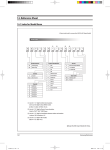
14. Reference Sheet 14-1 Index for Model Name Project model code for Middle East product. Model Code C C D C F S Product Type Duct 4-Way CST Ceili ng Mini 4-Way CST C H Mode Coolin g Onl y Heat pump Capacity(k Btu) 14-1 2 4 B T FT BT GT ET VA / Powe r Supp ly 220V,60Hz 3 Phase 220V,60Hz 1 Phase 380~415V,50H z 3Phase 220~240V,50H z 1Phase Indoor/Outdoor Uni t Premium Indoor Uni t Outdoor Uni t Model Indoor Uni t Value Model Outdoor Uni t U M G Miscellaneous Change Space Basic Modle 1 1st Change Model 2 2nd Change Model 3 3rd Change Model Buyer Code A X VA VX Samsung Electronics 14-2 Q & A for Non-trouble Classification Class Description Q The cooling is weak. A When it is hot outside, its cooling capacity decreases due to the increase of the ambient temperature. When the dust filter gets blocked or warm outside air gets in, the cooling capacity will decrease. So, make sure to clean the dust filter frequently, prevent heat loss by closing the doors and insulate the cooling area by using curtains, blinds, shades or window tinting. Q The cooling is good generally. But, it gets weak when it is considerably hot. A It occurs when the outdoor unit is exposed to direct sun light and heat-up air is not ventilated well. So, set up a sunblind over the outdoor unit and keep stuff away from the unit to increase the ventilation. When the cooling capacity decreases during a heat wave, clean the heat exchanger of the outdoor unit or spray some cold water to the heat exchanger to increase the cooling capability. Q The cooling is weak. Does it need refrigerant charging? A It is not correct charging refrigerant regularly. Except that you have moved in several times or the connection pipes are broken, the refrigerant does not run low. So, when refrigerant is additionally charged, it could be costly and cause a product's failure. When the refrigerant leaks, all of it will escape in a short time resulting in cooling failure and no water coming out of the drain hose. So, if water comes out from the drain hose, it indicates the normal operation of the product and it does not need refrigerant charging. Q It fails to do cooling. A When the air conditioner is set to Ventilation or the desired temperature is set higher than the current temperature, it fails to do cooling. In this case, select Cooling or set the desired temperature lower. Q It floods the floor. A Place the drain hose properly. When it is not placed properly, the drain water would flow back flooding the floor. So, straighten out the drain hose for the water to be drained well. Q Water drips at the drain connection (service valve) of the outdoor unit. A When a glass bottle is taken out of the refrigerator, moisture gets condensed on its surface due to the temperature differences. The same principle applies to the air conditioner. When cold refrigerant goes through the copper tube, moisture gets condensed on the surface of the tube and the connection areas. To prevent the water condensation, the pipes are insulated. But, the connection areas of the outdoor unit are not insulated for the purpose of maintenance or repair, and water gets condensed due to the temperature differences and drips down. Generally, it evaporates right away. But, when it drips much during muggy days, put a water pan on the floor. Q It leaks even though a drain pump is used. A It occurs when the drain pump is plugged out or it is out of order. Check the power of the drain pump and the position of the drain hose, and when the pump is faulty, contact the drain pump manufacturer. Samsung Electronics do not manufacture drain pumps. So, we are not able to correct the drain pump problems. Q Whenever the air conditioner is turned on, it irritates my eyes and gives me a headache. A There are no components in the air conditioner irritating the eyes and sending out chemical smells. But, when the air conditioner is turned on, other smell sources are sucked into the air conditioner and get out of it. So, find and root out the smell sources. Generally, it occurs at a interior renovated place, a pharmacy, a gasoline handling place, a tire shop, a second-hand book shop or an electronic component handling place; when its chemical or musty smells are sucked in and sent out, it can be misled that the air conditioner generates them. So, find and root out the problem or refresh the room frequently. Cooling Leakage Smells Samsung Electronics 14-2 Q & A for Non-trouble(cont.) Classification Smells Operation 14-3 Class Description Q Whenever the air conditioner is turned on, it stinks. A There are no components in the air conditioner sending out chemical smells. But, when the air conditioner is turned on, other smell sources are sucked into the air conditioner and get out of it. So, find and root out the smell sources. Generally, when the drain hose is taken out to the washing room or there are sources of smells such as a diaper bin, a shoe shelf or a socks bin, bad smells generate. Also, it occurs where glass cleaners or air fresheners are used; when they are sucked in interacting with dusts and moistures inside, bad smells generate. These kinds of organic materials noxious to human bodies. So, we recommend against the use of them. Q Whenever the air conditioner is turned on, it smells sour. A When the room is papered recently, its paste smells would be sucked inside. Also, when the air conditioner is installed in the study room of young boys loving sweat-generating activities such as the basketball, excessive sweats evaporate and get sucked into the air conditioner resulting in bad smells. So, find and root out the problem or refresh the room frequently. Q Whenever the air conditioner is turned on, it smells musty. A It is due to the improper keeping of the product after its use. When keeping the product, dry up the inside with the operation of Ventilation to prevent must. When the product is kept without drying up the inside with Ventilation, mold would grow inside resulting in must. So, open the windows and switch on the Ventilation function to get rid of the saturated smell inside. Q Whenever the air conditioner is turned on, it sends out bad smells such as stale smells. A It occurs generally when there are pet animals in the house. Their smells stay at the same place. But, when the air conditioner is turned on, the air gets circulated resulting in the circulation of the smells. So, find and root out the problem or refresh the room frequently. Q It sends out bad smells. A When the air filter is filthy, it could send out bad smells. So, clean the filter and ventilate the room with the windows open while operating the Ventilation function. Q It won't start. A There is a power failure or it is plugged out. Also, check if the power distribution panel is switched off. Q It goes off during operation. A When the hot air does not escape properly, it goes off during operation. It occurs when it does not ventilate properly because the outdoor unit is covered, the back of the outdoor unit is blocked by a cardboard or a plywood panel, and the front of the outdoor unit is blocked by the closed window or other obstacles. Clear the above obstacles from the outdoor unit. Q It generally works properly. But, when it's considerably hot, it goes off during operation. A It occurs when the outdoor unit is exposed to direct sunlight and the hot air does not escape properly. Set up a sun blind over the outdoor unit and clear the neighboring obstacles from the outdoor unit to provide good ventilation. When it goes off frequently during a heat wave, it would prevent the turnoff and increase the cooling capacity cleaning the outdoor unit or spraying some water to the heat exchanger. Q The remote controller won't operate. A When the batteries run out or the transmitter or receiver of the remote controller is blocked by obstacles, change the batteries or keep the obstacles away from the controlling area. Also, the remote controller may not work under intensive light from a 3-wave length lamp or a neon sign due to the EMI. In this case, take the remote controller closer to the receiver. Samsung Electronics 14-3 Cleaning/Filter Change For the best use of your air conditioner, you must clean it every 2 weeks to remove the dust accumulated on the air filter. • Before cleaning your air conditioner, check if you have turned off the circuit breaker. 1. Disassembly the Front Grille(Refer to Indoor Unit disassembly). 2. Bend the hook, and Pull out the air filter in the direction of the arrow. 3. Remove all dust on air filter with a vacuum cleaner or a brush. In case of serious dust accumulation, put the air filter in warm detergent water and shake it vertically. 4. Dry the air filter. 5. When you have finished, insert the filter into the unit. 6. Clean the outdoor unit with a vacuum cleaner or a brush once a month. Note : • After cleaning the air conditioner, press the Filter Reset button. Wired Remote Controller Samsung Electronics Wireless Remote Controller 14-4 14-4 Installation 14-4-1 Before Installation Keep the air conditioner outlet and inlet free from its surroundings. In case of installation, keep the symmetry and fix it to prevent vibration. The pipe length shall meet the standard as far as possible. 14-4-2 Installation Procedure Location Install the product in an area to guarantee the best cooling effect, convenience of piping and electric work, and inexistence of vibration or wind Fixing Indoor Unit & Outdoor Unit Fix the air conditioner indoor unit securely to the wall. Secure the outdoor unit in a suitable position. Pipe Spooling & Connecting You shall cut the pipe with a pipe cutter and grind all the burrs of the cut surface. Pipe expansion may continue until the pipe surface becomes uneven or torn apart. Be sure to use a torque wrench to tighten pipes or flare nuts. <Torque & Depth> Outer Diameter(D) Torque(kgf·cm) Depth(A) 6.35mm(1/4") 140~170 1.3mm 9.52mm(3/8") 250~280 1.8mm 12.70mm(1/2") 380~420 2.0mm 15.88mm(5/8") 440~480 2.2mm 19.05mm(3/4") 990~1,210 2.2mm 22.23mm(7/8") 990~1,210 2.2mm D A Leak Test Put an inert gas like nitrogen in the outdoor unit pipe and put soap bubbles or other test liquids on the pipe surface for the leak test. Drain Hose Connecting Install the drain hose downward to drain water naturally. Be sure to pour water into the hose to check if it drains well. Testing Drainage Pure water into the drain pan in the indoor unit, and confirm that the water flows out the drain hose. Electric & Earth Work Electric and earth work shall meet the "Electric Facility Technology Standard" and the "Internal Wire Regulation" of the Electric Business Laws. Inspection & Trial Run Upon completion of the tests, you shall make a trial run while you explain the main functions of the air conditioner to finish the installation. 14-5 Samsung Electronics 14-5 Installation Diagram of Indoor Unit and Outdoor Unit 14-5-1 Air-Purge Procedure 1) Connect each assembly pipe to the appropriate valve on the outdoor unit and tighten the flare nut. Indoor unit Outdoor unit A Gas pipe side C B Liquid pipe side D 2) Connect the charging hose of low pressure side of manifold gauge to the packed valve having a service port as shown at the figure. 3) Open the valve of the low pressure side of manifold gauge counter-clockwise. 4) Purge the air from the system using vacuum pump for about 30 minutes. – Make sure that pressure gauge show -0.1MPa(-76cmHg) after about 30 minutes. – This procedure is very important in order to avoid gas leak. – Turn off the vacuum pump. – Close the valve of the low pressure side of manifold gauge clockwise. – Remove the hose of the low pressure side of manifold gauge. Vacuum Pump 5) Set valve cork of both liquid side and gas side of packed valve to the open position. Valve stem 6) Mount the valve stem nuts and the service port cap to the valve, and tighten them at the torque of 183kgf•cm with a torque wrench. Stem cap A (gas) B (liquid) 7) Check for gas leakage. - At this time, especially check for gas leakage from the 3 way valve’s stem nuts, and from the service port cap. Samsung Electronics 14-6 Operating Sheet Reference Instructions and Installation 14-5-2 “Pump down” Procedure Pump down will be carried out when an evaporator is replaced or when the unit is relocated in another area. 1) Remove the caps from the 3 way valve and the 3 way valve. 2) Turn the 3 way valve clockwise to close and connect a pressure gauge (low pressure side) to the service valve, and open the 3 way valve again. 3 way Valve 2 way Valve 3) Set the unit to cool operation mode. (Check if the compressor is operating.) 4) Turn the 3 way valve clockwise to close. 5) When the pressure gauge indicates "0" turn the 3 way valve clockwise to close. 6) Stop operation of the air conditioner. 7) Close the cap of each valve. Relocation of the air conditioner • Refer to this procedure when the unit is relocated. • Carry out the pump down procedure (refer to the details of 'pump down'). • Remove the power cord. • Disconnect the assembly cable from the indoor and outdoor units. • Remove the flare nut connecting the indoor unit and the pipe. • At this time, cover the pipe of the indoor unit and the other pipe using a cap or vinyl plug to avoid foreign material entering. • Disconnect the pipe connected to the outdoor unit. At this time, cover the valve of the outdoor unit and the other pipe using a cap or vinyl plug to avoid foreign material entering. • Make sure you do not bend the connection pipes in the middle and store together with the cables. • Move the indoor and outdoor units to a new location. • Remove the mounting plate for the indoor unit and move it to a new location. 14-7 Samsung Electronics MEMO Samsung Electronics 14-8 ELECTRONICS GSPN(Global Service Partner Network) Area North America Latin America CIS Europe China Asia Mideast & Africa Web Site http://service.samsungportal.com http://latin.samsungportal.com http://cis.samsungportal.com http://europe.samsungportal.com http://china.samsungportal.com http://asia.samsungportal.com http://mea.samsungportal.com This Service Manual is a property of Samsung Electronics Co., Ltd. Any unauthorized use of Manual can be punished under applicable International and/or domestic law. © Samsung Electronics Co., Ltd. June. 2007. Printed in China. Code No. DB98-28097A(1)